Category:

New Caledonia Ramps Up Climate Action as Effects Intensify
The New Caledonian government is intensifying efforts to adapt to climate change as the Pacific territory experiences increasingly severe impacts, from rising sea levels and wildfires to extreme heat and flooding.
Climate scientists have confirmed that 2024 was the hottest year on record, and with global temperatures having already risen over 1.3 Degree Celsius in New Caledonia over the past 50 years, local authorities are acting urgently. The Intergovernmental Panel on Climate Change (IPCC) recently declared that the Paris Agreement’s goal of limiting global warming to 1.5 Degree Celsius is now out of reach.
“These alarming signals encourage us to redouble our efforts to combat these changes, which threaten our lifestyles, our ecosystems, and our economy,” the New Caledonian government said in a statement.
In response, New Caledonia has adopted a comprehensive Climate Change Strategy, officially approved by Congress on 29 April 2025. The strategy is the result of an inclusive process launched in 2024, involving more than 110 experts and over 2,700 public contributions. It outlines adaptation priorities across five sectors: agriculture and food transition, infrastructure and buildings, territorial planning and development, ecosystem preservation, and daily life.
To sustain the momentum, the government—together with the University of New Caledonia (UNC)—will host the second edition of the Caledonian Climate Change Forum this year. The inaugural forum in April 2024 drew more than 400 participants at the Origin Cinema in Dumbéa.
"The government is implementing the New Caledonian Climate Change Strategy, which has just been passed by Congress," said Jérémie Katidjo Monnier. "It is essential that all stakeholders be able to share their experiences and projects, and that we find ways together to deploy this strategy across the country.
Monnier said that the success of this strategy depends in particular on all stakeholders sharing the most recent data in order to adapt their initiatives.
This year’s forum will feature roundtable discussions led by institutional officials, scientists, business representatives and community actors. Afternoon sessions will include focused mini-seminars on research, nature-based adaptation, sustainable agriculture, water management, and youth engagement.
"This forum is, of course, open to all Caledonians who have questions about climate change. They will be able to get answers from experts and stakeholders who work on this issue on a daily basis," added the government official.
A youth-focused platform will also allow young Caledonians to express their views directly to decision-makers. Alongside the sessions, a “village” of exhibitions and stands will showcase local associations and organisations working on practical climate adaptation initiatives.
The government’s commitment reflects a growing consensus in the region that climate adaptation is no longer optional but essential. As the Pacific faces rising environmental threats, New Caledonia hopes its strategy and inclusive approach will serve as a model for island resilience.
Participation in the round tables and seminars is by registration by clicking on the following link: https://docs.google.com/forms/d/e/1FAIpQLSdWKD8fpBaQ9frD7u0A1Kw6wEAY6Hb-RpmeI39Sq2nUsqVVZA/viewform

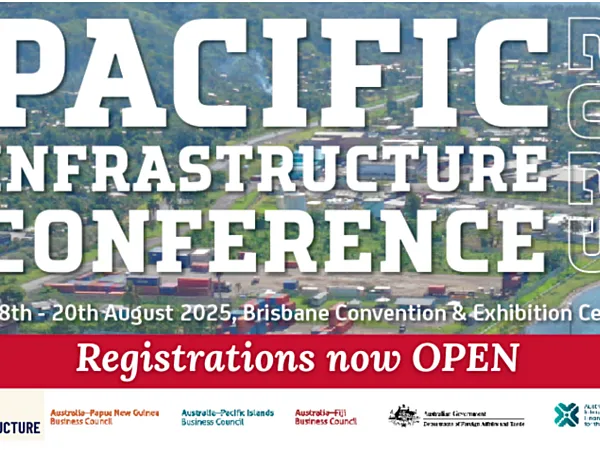
Pacific Infrastructure Conference 2025 to Tackle Regional Priorities, Financing, and Climate Resilience
Expected to draw hundreds of leaders and stakeholders from across the region, the Pacific Infrastructure Conference 2025 will centre its discussions on accelerating sustainable infrastructure delivery, bridging financing gaps and advancing climate-resilient development across Pacific Island nations.
Set to be held in Brisbane, the conference will bring together ministers, senior government officials, industry leaders, development partners and multilateral agencies to align on pressing infrastructure priorities. With more than 600 participants anticipated, the event is poised to become the premier platform for forging regional cooperation, investment and innovation in infrastructure development.
Top of the agenda will be strategies to strengthen project pipelines, improve regional connectivity, and leverage blended financing models to meet increasing demand. Delegates will also examine how to ensure infrastructure projects are locally led, climate-smart and aligned with national development plans and the broader 2050 Strategy for the Blue Pacific Continent.
Speaking during Austrade’s Pacific Infrastructure Roadshow in Melbourne, Simon Gorman, president of the Australia Pacific Islands Business Council (APIBC), underscored the event’s value for those seeking to do business in the region.
“The Pacific Infrastructure Conference is expected to bring together between 600 and 800 participants from across the Pacific, including ministers, parliamentarians, contractors, and suppliers,” Gorman said. “It’s a unique opportunity to meet the region’s key decision-makers all in one place. If you’re serious about doing business in the Pacific, this event saves you a trip to 14 different countries – just come to Brisbane on those dates.”
The conference will focus on key infrastructure sectors—transport, energy, ICT, and urban development—while offering in-depth discussions on inclusive growth, environmental safeguards, and responsible lending practices. These themes will be guided by the Pacific Quality Infrastructure Principles, a regional framework aimed at promoting high-quality, sustainable investments with long-term social and economic impact.
With the Pacific Islands grappling with challenges such as geographic isolation, limited access to capital and heightened vulnerability to climate change, infrastructure development is central to building resilience, enabling trade and expanding access to essential services.
In recent years, governments and private partners have increased collaboration on infrastructure delivery, but funding shortfalls and implementation delays remain. The Pacific Infrastructure Conference 2025 offers a critical opportunity to close these gaps by fostering new partnerships and prioritising projects that are future-ready and community-focused.
An industry expo will run alongside the main sessions, offering organisations the chance to showcase technologies, services, and solutions aligned with the region’s infrastructure goals. Early registration is encouraged, with the APIBC noting strong interest across government, finance, and the private sector.
To register or learn more, visit the official conference website: https://www.pacificinfrastructureconference.com
The conference is expected to shape the next wave of regional infrastructure initiatives and reinforce a shared commitment to building a resilient and inclusive Pacific.