The Bahomea and Malango Community Benefit Sharing Trust Fund has begun developing a five-year strategic plan to guide the distribution of benefits from the Tina River Hydropower Development Project to communities in Central Guadalcanal.
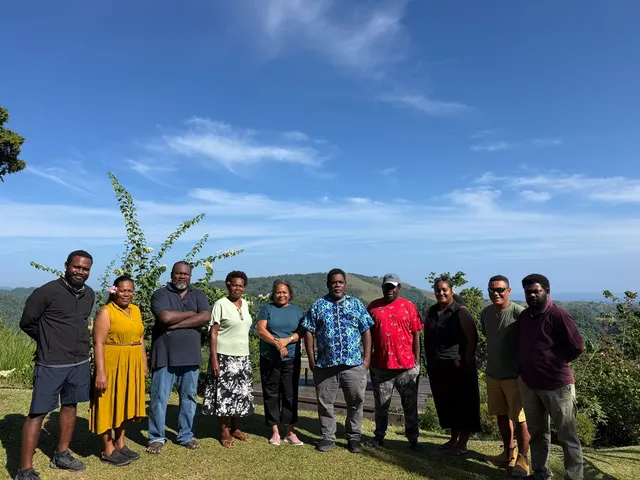
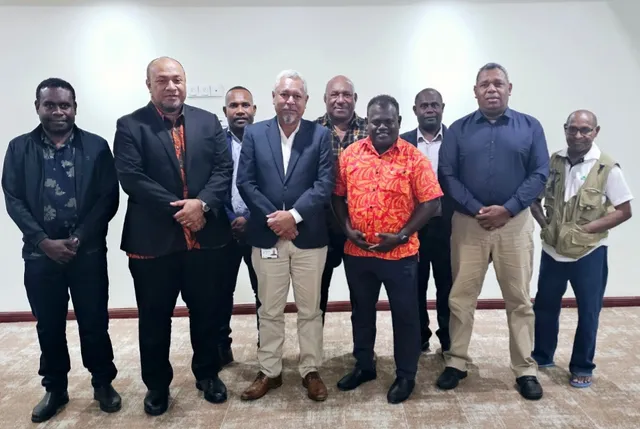
The fund’s Board of Trustees and Fund Management Office held a two-day strategic planning workshop on October 15–16 at Parangiju Mountain Lodge in Central Guadalcanal, laying the groundwork for the 2027–2031 plan.
Facilitated by consultant Lilly Lomulo, the workshop brought together trustees, fund management staff and institutional partners to establish an operational roadmap for the fund’s transition into a standalone project implementation entity.
Board chairman Denson Denni said the plan would help establish the fund’s long-term operational independence and ensure that hydropower revenues delivered sustainable benefits to communities.
He said the strategic priorities included infrastructure, education, livelihoods, food security, social inclusion, climate resilience and community empowerment.
The fund aims to ensure that benefits from the hydropower project are distributed equitably across the target communities of Bahomea, Malango and Ado/Belaha.
Established in 2023 under the Charitable Trusts Act, the fund forms part of the World Bank-funded Solomon Islands Community Benefits Sharing Project – Phase 2.
It is designed to channel power-generation revenues into long-term socio-economic development, climate-resilient infrastructure and community development initiatives in areas affected by the hydropower project.
Denni said the board had a fiduciary responsibility to safeguard community assets and establish a transparent framework for managing the benefits.
The workshop’s outcomes will be consolidated into a synthesis report and draft strategic plan, including an implementation workplan, key performance indicators and financing strategies.
Once finalised and formally approved by the board, the plan will guide the fund’s transition from grant-funded pilot operations to long-term benefit allocations following the hydropower project’s commercial operation date.
The Tina River Hydropower Development Project is Solomon Islands’ first large-scale renewable energy project. It is intended to improve access to cleaner, more reliable and affordable electricity.
The project is being implemented by the Solomon Islands government with support from international development partners, including the Asian Development Bank, the World Bank, the Australian government and the Green Climate Fund.
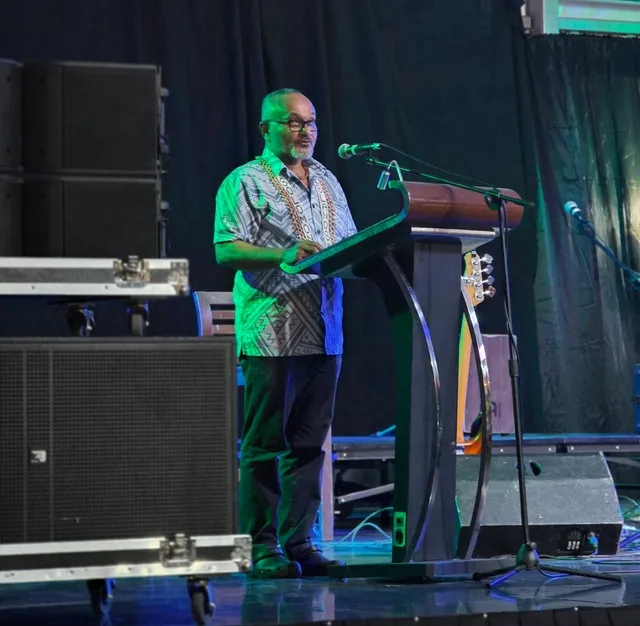
Solomon Islands Prime Minister Matthew Wale has championed the revival of the country’s “Hapi Isles” identity as part of efforts to strengthen its tourism profile and ensure the industry delivers greater benefits to local communities.
Speaking at a welcome reception for the Council of Tourism Ministers Meeting in Honiara, Wale said the identity reflects the country’s welcoming people, cultural diversity and natural attractions.
He announced that the Hapi Isles brand would be soft-launched at the close of the meeting and called on regional partners to help promote Solomon Islands internationally.
“We are not chasing visitor numbers alone. We want visitors who stay longer and spend locally, so that the value stays in our islands and with our people,” Wale said.
He said tourism development should prioritise local businesses, communities and families rather than focus solely on increasing visitor arrivals.
Wale said the government’s principles of Solomonisation and First Bite should guide the industry, ensuring Solomon Islanders remain at the centre of development and benefit from the country’s land, culture and heritage.
He also stressed the importance of regional cooperation in advancing the country’s tourism ambitions, citing improved air connectivity, joint marketing, private-sector partnerships and greater access to opportunities for emerging destinations.
“Our goal is simple: strong destinations within an even stronger Pacific,” he said.
Wale acknowledged the South Pacific Tourism Organisation’s role in promoting tourism as a driver of regional development, in line with the 2050 Strategy for the Blue Pacific Continent.
He said the Hapi Isles identity could help showcase Solomon Islands to international visitors while ensuring tourism growth supports local livelihoods, protects cultural heritage and strengthens the country’s economic future.
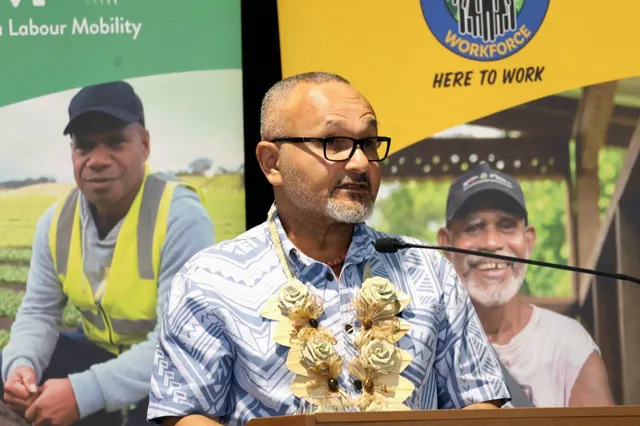
Prime Minister Matthew Wale has challenged employers approved under Australia’s Pacific Australia Labour Mobility (PALM) Scheme to help recruit 5,000 Solomon Islanders annually for work opportunities in Australia.
Wale issued the challenge when he officially opened the inaugural PALM Scheme Approved Employer Expo at the Aquatic Centre in Honiara, bringing together representatives from 25 approved employers, Australian government officials and local labour mobility stakeholders.
“Approved Employers, ensure that our work-ready pool is empty by the end of this week, and the target of 5,000 workers per annum is met. I challenge you and my team at the Labour Mobility Unit to make these happen,” Wale said.
He said expanding labour mobilitay was among his requests to the Australian government as Solomon Islands seeks to reset and reform its economy while creating more domestic employment opportunities.
Since 2018, more than 13,000 Solomon Islanders have participated in the PALM Scheme across various sectors and industries, supporting their families and communities while contributing to Australian businesses and the economy.
Wale said reaching the annual target would require stronger cooperation between the Solomon Islands and Australian governments, approved employers, training providers and other stakeholders.
Earlier this month, government agencies held an intergovernmental dialogue facilitated by the Labour Mobility Unit to identify structural bottlenecks and discuss ways to improve the labour mobility system.
The priorities include strengthening coordination, ensuring adequate resources and reviewing the National Labour Mobility Policy.
Wale said labour mobility offered benefits beyond employment and income, allowing Solomon Islanders to develop skills and gain industry experience that could be applied in their home communities.
“It enables Solomon Islanders to develop new skills, gain industry experience and bring valuable knowledge and confidence back to their communities,” he said.
He welcomed seven approved employers engaging with Solomon Islands for the first time and urged participating employers to use the expo to better understand the local workforce and establish long-term recruitment partnerships.
Wale said the government aimed to expand labour mobility sustainably, creating meaningful opportunities for Solomon Islanders while meeting the workforce needs of Australian employers and communities.
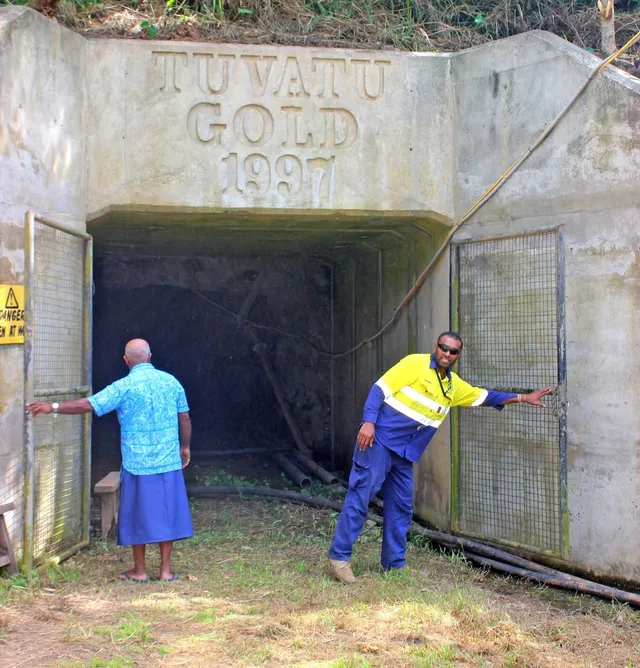
Canadian gold producer Lion One Metals Ltd. reported a record quarterly gold delivery of 4,678 ounces from its Tuvatu Gold Mine in Fiji, supported by higher production and improved mill throughput in the three months to September.
The company said on Tuesday that it recovered 3,796oz of gold from mill operations during the quarter ended September 30, up 15 per cent from 3,291oz in the previous quarter and 39 per cent from the quarter ended March 31.
A further 882oz came from the drawdown of gold held in the processing circuit and shipments of gold-bearing carbon for off-site processing, bringing total quarterly gold production to 4,678oz.
The average head grade was 4.3 grams of gold per tonne, while gold recovery reached 83.8 per cent. The mill processed 32,588 tonnes of mineralised material, with utilisation averaging 95.1 per cent.
Lion One said mill utilisation reached 97.4 per cent in August and 98.3 per cent in September, marking consecutive monthly records.
The increased throughput helped offset a slight decline in recovery from the previous quarter’s 84.9 per cent. Average head grade remained unchanged at 4.3 grams per tonne.
Underground development and safety
The company completed 1,539 metres of underground mine development during the quarter, including 359m of capital development and a record 1,181m of operating development.
Although development was down from 1,660m in the previous quarter, it remained above the long-term quarterly average of 1,445m recorded between January 2025 and September 2026.
Lion One said equipment availability affected capital development, with underground drilling jumbos available for 59 per cent of the quarter, partly because of unplanned downtime in September.
The company recorded one lost-time incident and two medical-aid incidents during the quarter. Its total recordable incident frequency rate improved to 1.83 incidents per 200,000 hours worked, compared with 4.37 in the previous quarter and 6.55 in the first quarter.
New underground drill begins operation
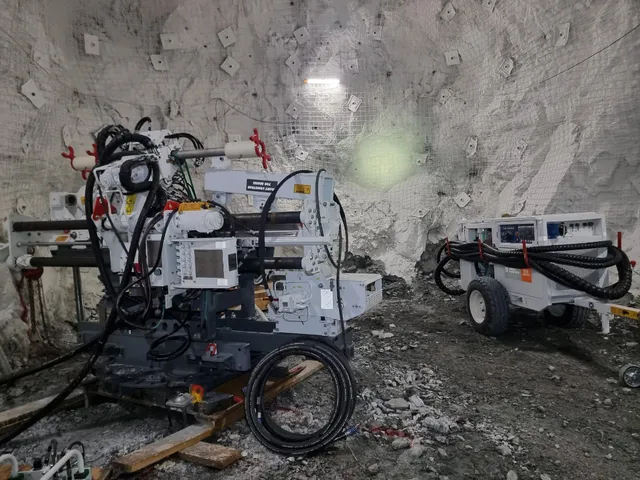
Lion One also confirmed that its new Boart Longyear LM90 underground core drill had arrived at Tuvatu ahead of schedule and entered operation following operator training.
The drill will target the Zone 500 and West Zone from underground to support resource expansion and upgrades.
The company said the equipment would allow shorter, faster and lower-cost drill holes, with improved intersection angles in both areas.
The addition brings Lion One’s active drilling fleet to four underground drills and two surface drills.
Lion One, headquartered in North Vancouver, British Columbia, began operations at its wholly owned Tuvatu project in Fiji in late 2023. The project includes the underground gold mine, a pilot plant and an assay laboratory, while the company holds an exploration licence covering the wider Navilawa Caldera.
The latest results are preliminary operating figures. The company said its technical information had been reviewed and approved by William J. Witte, its principal adviser and qualified person under Canadian mineral project disclosure rules.
Fiji’s Cabinet has endorsed proposed reforms to the country’s mining laws, paving the way for new legislation aimed at strengthening landowner rights, improving mine safety and tightening regulation of mineral exploration, mining and quarrying.
The proposed Mineral Exploration and Mining Bill 2026 and Mine Safety Management Bill 2026 follow a review of the Mining Act 1965 and Quarries Act 1939, jointly conducted by the Ministry of Lands and Mineral Resources and the Fiji Law Reform Commission.
The review involved 62 stakeholder consultations nationwide, including landowners, mining operators, workers, affected communities and other stakeholders.
The review sought to address gaps in legislation that has governed Fiji’s mining and quarrying industries for decades. It also considered regulatory practices in other jurisdictions, including Australia and Papua New Guinea, to inform proposed changes to transparency, accountability and resource management.
The proposed legislation aims to improve benefit-sharing and compensation arrangements, strengthen landowner rights and promote greater transparency and accountability in the mining sector.
Land access and the distribution of mining benefits have been key issues in the reform process. The government has highlighted the importance of ensuring that mining communities benefit not only through royalties but also through employment, local procurement and greater participation in resource development.
The reforms also seek to improve workplace safety, environmental protection and dispute resolution, while introducing digital management systems to strengthen regulatory oversight of mining activities.
The government has also pursued more data-driven monitoring of mining operations. Filimoni Vosarogo, minister for lands and mineral resources, previously said a pilot system using sensors to monitor a tailings storage facility was being tested at the Tuvatu mine. The system is intended to help mine managers and government inspectors identify potential problems earlier.
Fiji’s mining sector produces gold and iron sand, among other mineral products, making the regulatory review relevant to both existing operators and prospective investors.
Before the proposed bills are tabled in Parliament, a special consultation will be held with the Bose Levu Vakaturaga, or Great Council of Chiefs, through the Ministry of iTaukei Affairs.
The proposed legislation would update the legal framework governing Fiji’s mining and quarrying industries, with implications for landowners, mining companies, workers and communities affected by resource development.
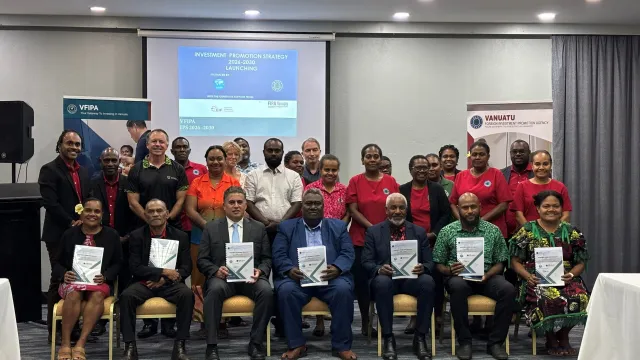
Vanuatu has launched its first Foreign Investment Promotion Strategy for 2026–2030, setting out a framework to attract and retain foreign investment, support private sector growth and create jobs as the Pacific island nation seeks to strengthen its economic resilience.
The strategy, launched by the Vanuatu Foreign Investment Promotion Agency (VFIPA), outlines priorities for investment promotion, policy reform, investor services and targeted sector development. It is aligned with Vanuatu 2030 – The People’s Plan, the country’s national sustainable development framework.
The strategy aims to position Vanuatu as a competitive and responsible investment destination while ensuring foreign direct investment contributes to inclusive and sustainable economic growth.
VFIPA chief executive Raymond Vuti described the launch as a milestone for the agency and the country, saying the strategy reflects a shared vision of building an investor-ready economy.
He said the framework would guide the agency’s work with government and private sector partners during implementation.
The strategy was developed through consultations involving government agencies, private sector representatives, provincial authorities, civil society and traditional institutions.
Vuti credited Carlos Griffin with leading and coordinating the national consultation process, saying his work helped ensure the strategy reflected the priorities and concerns of Ni-Vanuatu communities.
The Ministry of Trade and Commerce provided policy guidance during the strategy’s development, while the Vanuatu Aid for Trade Management Unit supported efforts to advance investment and trade reforms.
The Enhanced Integrated Framework provided financial and technical assistance for the strategy’s design, consultations and publication. The World Association of Investment Promotion Agencies also contributed technical guidance to align the framework with international investment promotion practices.
VFIPA said the strategy would strengthen its capacity as the country’s lead agency for foreign investment facilitation and support efforts to attract responsible investment that generates long-term economic opportunities.
The agency did not specify investment targets or sector-specific priorities in its announcement.
NiuPay Limited, the Papua New Guinean technology company that designs, builds and operates mission-critical digital platforms for government and enterprise, has appointed Vontis Paska as general manager for the Northern Region, effective November 2, 2026.
Paska will lead NiuPay’s permanent presence in Lae, which the company announced on September 28 at a Lae Chamber of Commerce and Industry (LCCI) business breakfast. He will serve as NiuPay’s main point of contact for Lae City Authority (LCA), ServiceLink users and organizations across Morobe Province and the wider Northern Region, supported by a locally recruited team.
Paska has worked closely with LCA on ServiceLink, the city’s online platform for Land Tax and other municipal services, since the project began. He has also worked with the Department of Lands and Physical Planning (DLPP) on its eLands and GoLands land administration platforms and on the delivery of Papua New Guinea’s first digital strata titles.
Before joining NiuPay in 2023, Paska worked at the Internal Revenue Commission (IRC), where he helped deliver MyIRC, the country’s first online tax payment system, in 2021. He has more than 10 years of experience across the PNG public service and private sector and is an executive board member of the PNG ICT Cluster.
“Vontis has worked alongside Lae City Authority from the start, and he has earned the trust of the people he works with. He knows how to make government platforms work for the people who use them. Lae is in very good hands,” said Trevor Manokore, NiuPay’s chief operating officer.
“Lae is the industrial capital of PNG and the engine room for driving economic growth and innovation,” Paska said. “My priority is to foster trust and confidence in our digital solutions by supporting Lae City Authority and working with organizations across Momase and the Highlands on practical ways to digitize.”
Paska and the NiuPay team will participate in the Morobe Show on October 24–25 to support LCA’s registration and Land Tax payment drive.
About NiuPay Limited
NiuPay Limited is a Papua New Guinean technology company that designs, builds and operates mission-critical digital platforms for government and enterprise across the Pacific Islands. Headquartered in Port Moresby, NiuPay is an AWS Select Tier Services Partner. Its work includes the AI-assisted visa processing system for PNG’s Immigration and Citizenship Authority, documented in a published AWS case study, and PNG’s first digital strata titles. Visit niupay.com.pg.
About Lae City Authority
Lae City Authority is responsible for the administration of Lae City and the delivery of city services, including Land Tax. ServiceLink is LCA’s online platform for registering and linking properties, viewing property statements and paying city charges.
FUCHS Lubricants and Remote Global are combining global lubrication technology, mining expertise and technical support with established local supply, logistics and on-the-ground capabilities to support Papua New Guinea’s mining and industrial sectors.
For mining and industrial operations in Papua New Guinea, reliability depends on more than the performance of individual products. It also requires the right products to be available when needed, technical expertise close at hand and a supply chain capable of reaching some of the region’s most challenging operating environments.
That is the thinking behind the partnership between FUCHS Lubricants and Remote Global, which combines FUCHS’ specialist lubrication technology, extensive mining experience and technical services with Remote Global’s established procurement, logistics, local stockholding and in-country support capabilities.
For FUCHS, the partnership represents an important step in expanding its presence and support capabilities in Papua New Guinea, particularly in the mining sector, where customers are increasingly focused on improving equipment reliability, extending component life and reducing the operational impact of unplanned downtime.
The initial focus covers underground and surface mining, fixed plant, specialist applications, open-gear lubrication and associated reliability services.
Combining technology with local capability
Remote Global has operated across Papua New Guinea and the South Pacific since 2010, supporting customers in the resources, energy, infrastructure and industrial sectors through procurement and complex logistics. The business holds inventory in PNG and Australia and manages activities including dangerous-goods freight, customs clearance, remote-site delivery and ongoing inventory requirements.
Importantly, its PNG operations extend beyond simply getting products into the country. Remote Global provides technical services, training and on-site support, with qualified personnel working locally. The company has also been expanding its local infrastructure and stockholding to position critical industrial products closer to customers, reduce lead times and improve its ability to respond to urgent operational requirements.
This capability complements FUCHS’ approach to lubrication, which places considerable emphasis on application expertise and technical support alongside the lubricant itself.
FUCHS has extensive experience supporting mining and heavy industry in Australia and internationally, including through specialist solutions for mobile equipment, fixed plant and open gearing. Its open-gear capabilities encompass products and services such as operational and static inspections, thermography, alignment, lubricant-system support and inspection reporting.
Together, the two organisations can offer PNG customers a more comprehensive service encompassing products, supply security, application expertise and ongoing technical support.
A long-term approach to PNG
For both companies, the partnership is ultimately about building capability rather than simply establishing another distribution channel.
Remote Global brings an established understanding of PNG, supply-chain management expertise and personnel on the ground. FUCHS contributes specialist lubricant technology, application knowledge, a comprehensive product portfolio and decades of experience supporting demanding mining and industrial operations.
Together, the companies aim to help PNG businesses protect critical assets, improve reliability and gain greater confidence in the products they use and the supply chains and technical support behind them.
Rob Fryer, FUCHS general manager and regional mining lead for Asia-Pacific excluding China (APEC), said:
“Papua New Guinea’s mining industry operates in some of the most demanding environments in the world, making supply security and technical support just as important as lubricant performance. Together with Remote Global, FUCHS offers miners a complete lubrication solution for underground and surface operations, supported by local inventory, agile logistics and experienced technical specialists on the ground. Our focus is not simply supplying products, but helping customers optimise asset life, improve uptime and drive continuous improvement across their maintenance practices.”
For operations where uptime matters and supply is rarely straightforward, the combination of global expertise and local capability can make a meaningful difference.
The Remington Group has announced its appointment as an authorised Xerox dealer in Papua New Guinea and the wider Pacific region.
Through its business unit, FX Business Centre, the partnership will bring Xerox’s office technology to local markets, expanding the group’s product offerings and service capabilities across the region.
Under the agreement, FX Business Centre will distribute a range of Xerox multifunction devices (MFDs), from compact A4 desktop units to high-volume A3 enterprise printing systems.
Xerox, a pioneer in document technology, invented the plain-paper photocopier and has driven workplace innovation for decades. Bringing its technology, known for reliability, security and sustainability, to the region is expected to help improve operational efficiency for government agencies and private-sector businesses in Papua New Guinea and neighbouring markets, including the Solomon Islands.
“Xerox fills a gap in what we can offer, and it opens the door to new markets for us across the Pacific,” said Remington Group chief executive officer Justin Kieseker.
“We know what it takes to do business in this part of the world, and we’re excited to bring that experience, and Xerox technology, to customers in the Solomon Islands, Vanuatu, Samoa, Tonga and the Cook Islands.”
The full range of Xerox MFDs, genuine consumables and certified technical services is now available through the Remington Group in Papua New Guinea and the Solomon Islands.
Augustus Minerals Ltd is preparing exploration programmes for two gold projects in Papua New Guinea, having compiled historical geological data and stepped up engagement with landowners while awaiting decisions on its exploration licenceapplications.
The Australian Securities Exchange-listed company said in a 15 October 2026 announcement that its subsidiary, ACM Contract Mining (PNG) Ltd, had completed a technical information memorandum for the Mt Kare gold and silver project in EngaProvince. It is also reviewing historical exploration records for the Vanapa River project in Central Province and considering an airborne magnetic survey.
Both projects remain at the application stage. The company has no guarantee of securing either licence, and its Mt Kare application remains contested.
Augustus holds the second-in-time exploration licence application for Mt Kare, about 15 kilometres from the Porgera gold mine. Private company Tribune Mt Kare Gold Ltd is first in line after the PNG Mineral Resources Authority removed the original first applicant, Global Mining Group Ltd, from the assessment list following a Supreme Court order on 30 May 2025.
The company said the licensing process could take time but maintained that its preparatory work would allow it to move quickly if approval were granted.
Mt Kare data review completed
ACM PNG purchased all available open-file historical exploration data for Mt Kare from the MRA in 2026 and commissioned Geosyntec Consultants Pty Ltd, based in Perth, Western Australia, to compile the information into a technical memorandum.
The review covers geological information and exploration activities dating back to the deposit's discovery in 1987 by Conzinc Riotinto of Australia. It examines the area's geology, geochemistry, mineralisation styles and historical mineral resource estimates.
The deposit has undergone substantial previous exploration. Drilling included an initial 2,000-metre diamond drilling programme in 2011, followed by further work that produced 58 diamond drill holes totalling 7,790 metres. Results released in 2013 validated historical high-grade intersections and identified gold and silver mineralisation, according to Augustus.
The company plans to use the compiled information to prepare for further exploration, subject to the grant of the licence.
Its proposed programme includes underground access and development, diamond drilling and feasibility studies. The company has also outlined the possibility of collecting bulk samples and assessing underground mining options, alongside further consideration of open-pit scenarios.
Augustus Executive Chairman Brian Rodan said Mt Kare shared geological characteristics with Porgera, including roscoelite mineralisation and high-grade gold zones.
However, the company cautioned that its position in the application process does not give it a current or contingent right to undertake exploration or development at Mt Kare. The application has not been granted, and there is no assurance that it will result in a licence.
Vanapa River project covers 1,900 square kilometres
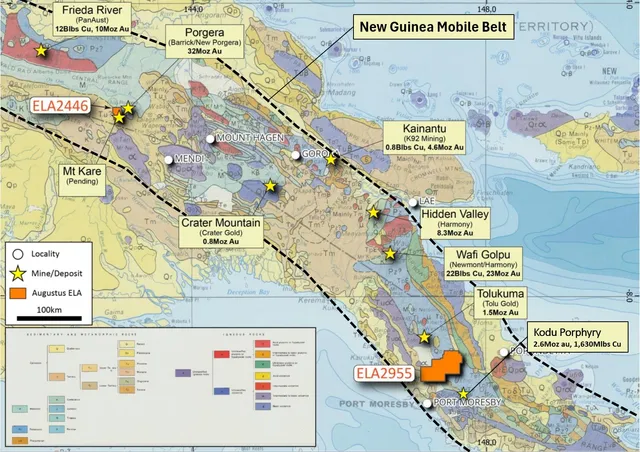
At Vanapa River, ACM PNG holds exploration licence application ELA2955 over approximately 1,900 square kilometres in the Kira Koiari District of Central Province, about 35 kilometres from Port Moresby.
The project lies approximately 40 kilometres south-east along strike from the Tolukumagold mine, which Augustus identifies as a 1.5-million-ounce deposit.
During a three-day site visit in October 2025, company personnel and local landowners inspected artisanal alluvial gold workings along the Vanapa River and its tributaries. The visit did not identify the source of the alluvial gold, the company said.
ACM PNG subsequently acquired available historical exploration data held by the MRA in Port Moresby and is reviewing the records. It is also seeking proposals for an airborne magnetic survey.
The proposed survey would help map geological structures, rock types and alteration beneath the area's thick tropical forest. These features could guide the identification of targets for further exploration, although the company has yet to report results from such a survey.
Augustus said the Vanapa River application lies within the New Guinea Metallogenic Belt, a mineralised corridor extending approximately 2,300 kilometres through Papua New Guinea. The belt hosts major gold and copper deposits, including Porgera, Lihir, Hidden Valley, Kainantu and Wafi-Golpu.
The company has also conducted introductory meetings with communities in the application area as it seeks to build relationships with customary landowners.
Landowner engagement and regional prospects
ACM PNG has held meetings with landowner representatives and officials from Enga, Hela and Central provinces during 2025 and 2026, according to the announcement.
The company said these discussions were intended to maintain communication with groups whose support and engagement are important to the progression of exploration licence applications in Papua New Guinea.
In September 2026, ACM PNG provided equipment, materials, food and other supplies to customary landowners seeking to re-establish a settlement at Mt Kare. The assistance followed a request from landowners and consultations with clan leaders, Augustus said.
The subsidiary has also registered an expression of interest with the MRA covering prospective areas in the Goroka region of the Highlands. It has held preliminary meetings with local landowner groups and continued engagement with officials and clan representatives.
Augustus said the acquisition of ACM PNG had strengthened its opportunity to pursue Mt Kare and identify other exploration prospects in Papua New Guinea.
The company is also exploring gold, copper and other mineral opportunities in Western Australia. Its Papua New Guinea strategy, however, remains dependent on the outcome of the licence applications and any subsequent exploration results.
Augustus said its work to compile historical data and engage with landowners had positioned it to advance the projects if the necessary approvals were secured. Neither the timing nor the outcome of the applications is certain.
Kalo Gold Corp has reported a high field-screening result from a new gold occurrence at its Wainikoro exploration area in Fiji, as the Canadian-listed explorer advances preparations for drilling planned for January 2027.
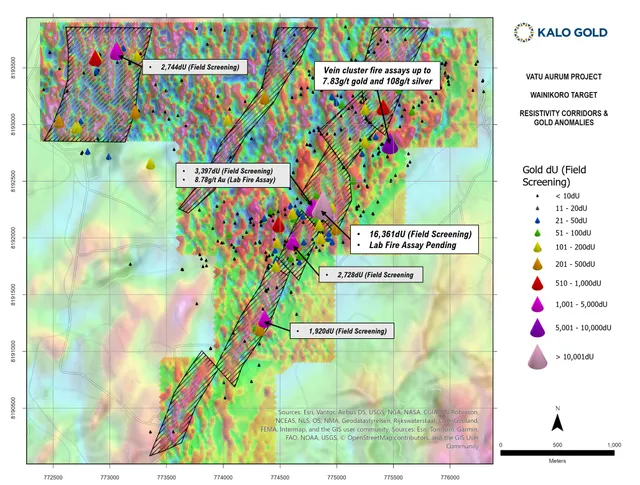
The company said a rock sample from Kope Road North returned 16,361 detectORE units, equivalent to an estimated 16.36 grammes of gold per tonne for contextual reference. Follow-up sampling also produced three additional elevated readings, expanding the area of interest at the company's 100%-owned Vatu Aurum Project on Vanua Levu.
Kalo stressed that the detectORE readings are semi-quantitative field-screening results, not certified laboratory assays. The estimated grades cannot be relied upon as definitive measurements of gold content.
The company plans to submit the highest-reading sample to ALS Ltd in Australia for fire-assay analysis and multi-element testing.
Follow-up samples return additional gold indications
The highest result came from sample KRN-LR26-G-035D, described as quartz-rich, silicified and brecciated tuff. The original outcrop had been disturbed by road construction, so the company collected samples from large pieces of rock uncovered at the site.
A subsequent sampling traverse returned readings of 3,956 units, equivalent to an estimated 3.96 grammes per tonne, from silica-rich breccia; 2,110 units, or about 2.11 grammes per tonne, from silicified brecciated tuff; and 863 units, or about 0.86 grammes per tonne, from silicified quartz-vein material.
Kalo said the results provided additional targets for geological mapping, geophysical surveys and trenching. However, the samples were selective rock samples and do not establish the average grade or continuity of mineralisation.
The Kope Road North occurrence is about 900 metres south-west of the New Vein Cluster, where previously reported certified assays returned up to 7.83 grammes of gold per tonne and 108 grammes of silver per tonne.
Both areas lie along an interpreted induced polarisation (IP) resistivity corridor. Kalo cautioned that their proximity does not demonstrate continuity of mineralisation.
Surveys and road works advance ahead of drilling
Kalo has completed a gradient-array IP survey at Wainikoro and is conducting controlled-source audio-frequency magnetotelluric (CSAMT) surveying to investigate the geometry and depth of interpreted resistivity corridors.
Mechanised trenching at Kope Road North is providing additional geological exposure to help assess the geophysical targets.
The company has also begun road upgrades to prepare for drilling during the wet season. About 1.6 kilometres of road improvements have been marked out, including the installation of three culverts and the placement of aggregate to improve access and safety.
Kalo plans to deploy one drill rig from January 2027 to test priority targets at Wainikoro. The schedule remains subject to factors including weather, ground access, equipment availability and financing.
President and chief executive Terry Tucker said the follow-up sampling had identified multiple gold responses around the original sample and that the company was moving towards systematic drill testing.
The company intends to combine the IP and CSAMT data with trenching, geological and structural mapping, geochemistry, field screening and certified laboratory assays to refine its geological model and prioritise drill targets.
Exploration targets remain unproven
Vancouver-based Kalo Gold is exploring the 367-square-kilometre Vatu Aurum Project, which comprises Special Prospecting Licences 1511 and 1464 on Vanua Levu. Its exploration programme focuses on a north-east-trending corridor of low-sulphidation epithermal gold targets, including Wainikoro and the flagship Aurum Prime area.
The company said its exploration work has identified multiple structurally controlled targets supported by drilling, trenching, soil geochemistry, structural mapping and airborne geophysics.
No mineral resource or mineral reserve has been estimated for the Vatu Aurum Project, and the targets remain conceptual.
Kalo said the results from the pending fire assay, together with ongoing geophysical work and trenching, would help determine the next steps in evaluating the Wainikoro targets.
A Solomon Islands Government technical team has completed a fact-finding mission to Papua New Guinea to examine its approach to mineral resources management, gold refining and downstream processing as Honiara prepares to strengthen its mining sector framework.
The delegation visited Port Moresby from 20 to 26 September, holding discussions with government agencies, financial institutions and private-sector operators on the policy, regulatory and institutional arrangements supporting PNG’s minerals industry.
The mission was led by Chris Vehe, permanent secretary for mines, energy and rural electrification, and included senior officials from the Ministry of Mines, Energy and Rural Electrification and the Ministry of Finance and Treasury.
Sam Kaupa, mineral sector adviser to the Prime Minister’s Office, and Mckinnie Dentana, a former finance and treasury permanent secretary, also joined the delegation. Solomon Islands High Commissioner to PNG William Soaki helped coordinate the programme.
The team met representatives of the Mineral Resources Authority, Bank of Papua New Guinea, Kumul Minerals Holdings Ltd, Italpreziosi South Pacific Ltd and the Mineral Resources Development Company.
Discussions covered the roles of government agencies, state-owned enterprises, financial institutions and private companies in managing mineral resources, as well as opportunities to develop domestic refining and processing capacity.
The delegation also examined how downstream value addition could help retain more economic benefits from mineral resources within the country, including the opportunities and challenges involved in establishing local processing industries.
The visit comes as Solomon Islands works to strengthen its legislative and institutional framework for responsible and sustainable mineral development. A Mineral Resources Bill is expected to be presented to Parliament soon, according to the Solomon Islands Government.
The government said the mission provided an opportunity to study PNG’s practical experience and consider approaches that could inform its own policy, legislative and institutional development.
The Solomon Islands Government thanked its PNG counterpart, participating institutions and companies for sharing their technical knowledge and experience.
The High Commission of Solomon Islands in PNG said it looked forward to continued cooperation between the two countries as Honiara pursues the development of a responsible, sustainable and economically beneficial minerals sector.
The Pacific’s digital transformation is entering a more demanding phase. After years of investment in telecommunications and connectivity, the challenge is increasingly to build the trusted digital systems that turn infrastructure into reliable public services. NiuPay is taking its experience with proven digital systems across the Pacific into Fiji, building on its work with Papua New Guinea’s Immigration and Citizenship Services Authority (ICSA), the country’s first digital land-title system and a border-processing system deployed during the Pacific Games. These operational deployments form the foundation for the company’s expanding regional work.
The Papua New Guinea-founded company established a presence in Suva this year, appointing Seta Daulako as Fiji country manager and hiring its first Fiji-based engineer in September. The appointment also marks the company’s first Autonomous AI Systems Engineer, extending its technical capabilities beyond its home market.
NiuPay plans to invest several million Fiji dollars in the country over five years as it expands operations in Suva and Nadi. It expects to grow its Fiji team to between eight and twelve staff over the next 12 months. Chief Operating Officer Trevor Manokore said the company was committing the money upfront to demonstrate its long-term commitment to the market and to supporting customers locally. For a regional technology firm, the investment signals an intention to build capacity in Fiji rather than serve the market remotely from Port Moresby.
These commitments extend beyond a conventional sales operation towards building local engineering capability. Strategic investment from Kina Bank and NiuPay’s status as an Amazon Web Services (AWS) Select Tier Services Partner provide further support for its growth. The Fiji operation builds on the company’s existing work in the Pacific and provides a base for extending its digital systems and technical expertise to other markets in the region. Governments across the Pacific face similar pressures to turn connectivity into secure, practical digital services, although each market retains its own laws, institutions and needs.
Proven systems provide foundation for expansion
Connectivity remains essential, but submarine cables and telecommunications networks do not, by themselves, deliver better public services. Governments also need secure applications, interoperable systems, digital identity infrastructure and the technical expertise to manage these platforms over time.
Fiji offers a useful example of the demands facing governments. The country is connected to international telecommunications networks through seven submarine cables and has set a target of bringing most government services online by 2030 under its National Digital Strategy. Plans for national digital identity infrastructure and a new cybersecurity strategy add to the demands on public institutions as more services move online.
The policy question is how to translate those ambitions into systems that are operational, secure and responsive to local needs. That requires more than procuring technology. It also means developing the people, governance arrangements and institutional capabilities needed to maintain systems, manage data and oversee external technology providers.
Designing technology for Pacific conditions
Part of the challenge is a problem the region has faced for decades: technology designed for other markets is often introduced into the Pacific with little adaptation. Systems built for large economies may assume reliable high-speed internet everywhere, widespread card payments, formal street addresses, complete central records and a deep pool of local specialists to maintain them.
When those assumptions fail, the costs emerge later. Agencies may pay licence and support fees in foreign currency, wait for help desks in distant time zones and run manual workarounds alongside systems that do not reflect how services are actually used. Customary land ownership, cash-based household economies, multiple languages and populations spread across remote islands are not exceptions in the Pacific; they are part of the operating environment. Donor-funded projects can compound the problem when systems are delivered to meet a project timeline and lose support after funding ends.
Regional providers argue that they are better placed to bridge this gap. Manokore describes NiuPay’s approach this way: “It’s not a piece of software we built somewhere trying to sell it.” Although NiuPay has teams in Australia and India, Manokore said the company does not build its solutions for the Australian, New Zealand or Asian markets. Instead, it designs its work around how Pacific customers operate, pointing to similarities among Fiji, Tonga and Papua New Guinea.
NiuPay’s existing deployments demonstrate how that approach has been applied in practice. Fiji has its own laws, institutions and public expectations, and a provider moving between Pacific markets must design for the new setting rather than simply repeat what worked elsewhere. Building on an established technical track record does not remove the need for local adaptation; it gives the company experience to draw on as it develops systems for different jurisdictions.
From digital land titles to AI-powered immigration
NiuPay’s regional expansion builds on three established deployments. In Papua New Guinea, the company developed the country’s first digital land-title system and the MyICSA Analysis Engine for the Immigration and Citizenship Services Authority. Its traveller-entry system was also used during the 2023 Pacific Games in Honiara, helping reduce processing times from 43 seconds to 10 seconds for delegations from 24 nations. Together, these deployments demonstrate the company’s experience delivering digital systems for land administration, government immigration processing and border management.
One of the most documented examples is NiuPay’s work with PNG’s Immigration and Citizenship Services Authority. A case study published by Amazon Web Services describes the MyICSA Analysis Engine, built by NiuPay on AWS, as the first known use of generative AI in a live government system in the Pacific Islands. Short-term visas that could take up to two weeks to process are now handled in minutes. According to AWS, about 95% of short-term applications are processed automatically, and the authority can handle up to 1,000 a day. ICSA Chief Migration Officer Wellington Navasivu told AWS that the average processing time for short-term visas had fallen to four minutes.
Two details in the case study speak directly to the wider implementation challenge. First, AWS says the system was built and trained locally for PNG’s needs, contrasting with the imported-model approach the region has long relied on. Second, the system does not make every decision autonomously: it approves a visa automatically only when it is fully certain, while less certain cases go to an immigration officer. Officers can also update the rules without technical help. That design keeps policy decisions with the authority rather than the technology. ICSA plans to extend the system to work permits and passport processing.
The ICSA platform, digital land-title system and Pacific Games border-processing system show how NiuPay’s work has progressed to operational deployment. The examples demonstrate the application of digital technology to public administration, from immigration processing and land records to the management of international arrivals. The ICSA case also illustrates how automation can accelerate administrative processes while leaving decisions requiring human judgement with government officers.
Digital sovereignty requires government oversight
Institutional control is central. As governments adopt digital services, they must consider who controls the underlying systems, how sensitive information is handled, whether platforms can be maintained locally and how dependent agencies become on individual vendors. The ability to retain operational and governance control can be as important as the initial deployment of a technology.
For Fiji and other Pacific economies, partnerships with regional technology providers may create opportunities to develop services that better reflect local administrative environments. But a local presence alone does not guarantee digital sovereignty. Governments still need clear procurement standards, cybersecurity requirements, data-governance rules, technical oversight and arrangements that preserve their ability to change providers or systems when necessary.
Building local skills for regional growth
NiuPay’s regional engagement also extends beyond commercial contracts. The company has participated in the Pacific Fiber Conference in Suva, sponsored NCIT 2026 and entered a three-year partnership with Pacific Women in Telecommunications to provide internships and mentoring opportunities for young women across the region.
Those initiatives address another constraint on digital transformation: the availability of skilled workers. Hiring locally can help build the technical expertise needed to implement and maintain systems, while regional training partnerships may widen access to technology careers. Developing local talent alongside deploying technology can help build the expertise required to maintain digital services over time and reduce reliance on external support.
NiuPay’s expansion is supported by strategic investment from Kina Bank and its relationship with AWS, reflecting how regional capital and global technology infrastructure can help Pacific technology companies grow. Its next phase of regional work will build on this combination of locally developed applications, global cloud infrastructure and growing in-market engineering capability. For governments, the priority remains ensuring that essential technical knowledge, data governance and operational decision-making remain accessible to the institutions and communities they serve.
Taking proven digital capabilities across the Pacific
The implications extend beyond Fiji. Across the Pacific, governments are seeking to convert digital infrastructure into more accessible public services and stronger economic opportunities. NiuPay’s investment in Fiji, local recruitment and technical appointments build on systems already operating in the region, providing a platform for further deployments tailored to individual countries. Extending these capabilities across different jurisdictions will require sustained investment, local partnerships and solutions adapted to each country’s laws, institutions and operating conditions.
NiuPay’s track record in the Pacific includes a live government immigration platform, the country’s first digital land-title system and a border-processing system used during the Pacific Games. These deployments establish a practical foundation for its expansion into Fiji and other regional markets, demonstrating how digital technology can support public administration and improve operational efficiency.
As NiuPay grows its Fiji team and extends its regional presence, it is building on systems already delivered rather than starting from an unproven proposition. Governments will still need sound procurement, cybersecurity and data-governance frameworks, alongside investment in local skills and institutional capacity. With those foundations in place, NiuPay’s existing deployments provide a basis for extending proven digital capabilities across the Pacific.
Vanuatu’s government and Royal Caribbean Group have agreed to hold the groundbreaking ceremony for the VT6.5 billion Royal Beach Club Lelepa in November, as the country seeks to expand cruise tourism investment and increase opportunities for local businesses.
Minister of Trade and Commerce Robson Iavro confirmed the planned ceremony following high-level talks with Royal Caribbean executives at the company’s headquarters in Miami, Florida, on Sept. 28.
The meeting advanced discussions on the tourism project, which is being developed on Lelepa Island, north of Efate. The government said the groundbreaking would take place during Parliament’s second ordinary session in November, allowing lawmakers, local communities and company executives to attend.
The project, funded by Royal Caribbean Group, is described by the government as Vanuatu’s largest tourism investment to date and the cruise operator’s first exclusive destination in the Southern Hemisphere. The first ship call is scheduled for the 2027 season.
Iavro said the Miami meeting allowed the government to discuss the project directly with company executives responsible for regional deployment and investment decisions.
“The groundbreaking in November will be a milestone for our country, and the Government is committed to making sure that the jobs, the supply opportunities and the benefits of this project reach the people of Lelepa and the wider economy,” he said.
Local jobs and suppliers
The development is expected to require between 300 and 400 workers during construction. More than 150 staff are expected to be recruited to operate the destination on a rotational basis, with an additional team living on site full time, according to the government.
Royal Caribbean also intends to source as many goods and services locally as possible. The company will send a food and beverage supply chain specialist to Vanuatu to assess local production capacity and identify products that could be supplied to the destination.
The project will include an arrivals area, a Mamas Market, beach precincts on the eastern and western shores, food and beverage outlets, a children’s playground, water activity rentals and a nature trail. Supporting facilities will include staff housing and utilities.
The company also outlined plans for community engagement, including training and workshops to help local entrepreneurs meet hospitality standards and the requirements of the cruise industry.
Director of the Department of Tourism Paul Pio said the next priority was to prepare tourism operators, producers and communities for the destination’s planned opening.
“The timelines are confirmed, the groundbreaking is agreed and the company has made clear that its interest in Vanuatu does not stop at Lelepa,” Pio said.
Government seeks wider tourism investment
The Miami meeting also covered outstanding matters between Royal Caribbean and the government, which Iavro undertook to progress with the relevant ministries.
The minister invited the company to explore additional investment opportunities elsewhere in Vanuatu, including on Espiritu Santo, and invited its senior executives to visit the island.
Royal Caribbean is among the major cruise operators serving Vanuatu and carries a substantial share of the cruise visitors arriving each season, according to the government.
The Miami visit followed a meeting between Iavro and Royal Caribbean International on the sidelines of the 2026 Australian Cruise Association Conference in Brisbane in September.
The visit was initially planned as part of Prime Minister Jotham Napat’s trip to the United States for the 81st session of the United Nations General Assembly. However, Napat withdrew following the MV Matui tragedy to remain with affected families and communities, authorizing Iavro to represent him in Miami.
Iavro said the government wanted to ensure that the project’s employment and supply-chain opportunities benefited local communities while strengthening Vanuatu’s position as a cruise tourism destination.
The Asian Development Bank (ADB) and the Australian government have committed $12.85 million to the fifth phase of the Pacific Private Sector Development Initiative (PSDI), aimed at improving business regulations, expanding access to finance and encouraging private sector investment across the Pacific.
In a statement on October 12, ADB said the renewed funding would support reforms designed to make it easier for businesses to start, operate and expand, while addressing emerging challenges involving digitalisation, climate resilience and financial regulation.
The initiative, launched in 2007, has supported more than 500 reforms across ADB's 14 Pacific developing member countries, including improvements to business registration systems, financial markets and state-owned enterprise governance.
The fifth phase will receive $3 million from ADB's Technical Assistance Special Fund and $9.85 million in co-financing from the Australian government.
ADB Pacific Department Regional Head for Private Sector Development Haroun Khawaja said the funding would allow the programme to continue modernising the legal and regulatory frameworks governing business activity.
“With this commitment, PSDI’s important work to modernize the laws and frameworks that underpin business activity will continue, and so too will its efforts to ensure those reforms work in practice: stronger institutions, digital systems that simplify business processes, and finance that reaches small enterprises and women entrepreneurs,” Khawaja said.
He also acknowledged Australia's longstanding support for the initiative, which has helped Pacific governments implement private sector reforms for nearly two decades.
Focus on business reforms and access to finance
Under Phase V, PSDI will work with Pacific governments to modernise business, investment and financial sector laws while strengthening the institutions responsible for implementing regulatory reforms.
The programme will continue supporting online business registries, which have reduced the time and cost of establishing businesses in participating countries.
It will also develop financing mechanisms for micro, small and medium-sized enterprises (MSMEs), building on earlier reforms involving secured transactions frameworks, capital markets and innovative financing arrangements.
ADB said Pacific economies continued to face significant barriers to private sector growth, including small and geographically dispersed markets, high operating costs, limited access to finance and exposure to climate-related disasters.
Outdated legal and regulatory frameworks have also constrained investment, employment and business opportunities, particularly for women and small enterprises.
The new phase will therefore place greater emphasis on digital government, climate and disaster resilience, anti-money laundering and combating the financing of terrorism (AML/CFT), and disability inclusion.
Expanding opportunities for women
Women's economic empowerment will remain a priority, with PSDI seeking to strengthen the data, systems and institutions that support women's participation in business and leadership.
Previous phases helped develop a pipeline of qualified women for senior executive and board positions across the region.
The initiative has also supported reforms intended to improve financial inclusion and create opportunities for women entrepreneurs.
Under the latest programme, ADB said these efforts would be expanded alongside institutional reforms and knowledge-sharing activities aimed at encouraging governments and businesses to adopt improved regulatory practices.
The programme will also continue efforts to strengthen the governance and performance of state-owned enterprises, which play important roles in delivering essential services and supporting economic activity across Pacific countries.
Nearly two decades of regional support
Since its establishment in 2007, PSDI has received substantial financial backing from Australia, New Zealand and ADB.
Across its first four phases, the Australian government contributed $76.2 million, while New Zealand provided $8.9 million and ADB committed $11.1 million.
The latest $12.85 million commitment brings total funding for the initiative across its five phases to approximately $109.05 million.
ADB said the programme would continue working with partner governments to ensure regulatory reforms translate into stronger institutions, more efficient business processes and greater opportunities for private sector development.
The initiative forms part of ADB's broader efforts to promote sustainable, inclusive and resilient economic growth across Asia and the Pacific.
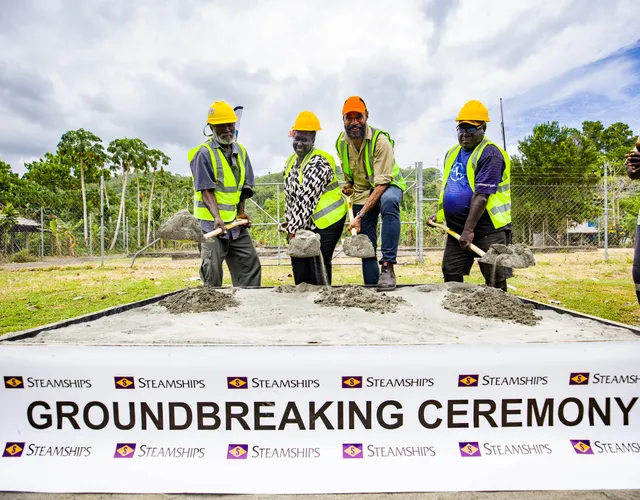
Steamships today marked a significant milestone in its long-term commitment to Bougainville with the groundbreaking ceremony for its new corporate office and accommodation facility in Toniva, Central Bougainville.
The new single-storey modular office and accommodation facility will re-establish Steamships’ permanent presence in Bougainville, providing a local base to support its investment pipeline, develop sustainable partnerships with the people of Bougainville and maintain ongoing engagement with key stakeholders. Construction is expected to be completed by December 2026.
The development follows a memorandum of understanding signed between the Autonomous Bougainville Government (ABG) and Steamships in May 2026, establishing a framework for collaboration on land management, community governance and economic development in Bougainville.
Steamships Managing Director Chris Daniells said the project reflects the company’s confidence in Bougainville’s future and the strong relationships built since 2022 through ongoing engagement, consultation and collaboration with traditional land custodians and the ABG.
“I thank the traditional land custodians and the ABG for their trust, partnership and commitment throughout this process. Today’s groundbreaking is an important milestone that reflects the strong foundation we have built together through engagement, consultation, collaboration and a shared vision for Bougainville’s future. It marks the start of the next phase as we continue working together to support sustainable development, attract investment and create long-term economic opportunities for the people of Bougainville.”
Toniva was selected for its strategic location within North Nasioi, Central Bougainville. The area is earmarked to become a future economic corridor, with strong potential to support the revival of commercial, logistics and light industrial activities.
Steamships currently holds title to 19 properties in the Toniva area, acquired before the Bougainville Crisis. The company views the development as an important step towards supporting future investment and economic activity in the region.
The Solomon Islands Agriculture Rural Transformation (SIART) Project has completed a series of two-day training sessions for pig farmers in South Malaita to improve livestock management, animal health and agribusiness skills.
The training involved members of five agribusiness producer organisations (ABPOs): the Waiasi Piggery Farmers Association, Mamanaha Indigenous Piggery Farmers Association, Apatarau Tribe, Kauhata Piggery Project and Ikoru Raku Farmers Association.
The initiative forms part of SIART's support for rural agricultural enterprises through funding, capacity-building and technical assistance aimed at improving livelihoods and agricultural productivity.
In Malaita Province, the project supports 16 ABPOs engaged in pig farming, representing an investment of SBD6.9 million.
The sessions were facilitated by SIART project representatives and livestock officers from the Ministry of Agriculture and Livestock (MAL) based in Malaita Province.
SIART Agribusiness Officer for Malaita Province Betty Arumae said the training covered pig husbandry, animal health, production quality, marketing, promotion and different farming systems.
She said the sessions were tailored to the needs of local farmers and included practical guidance on constructing suitable pig housing, providing clean water, preparing feed from locally available ingredients, and caring for sows and piglets.
The animal health component focused on identifying symptoms of common pig diseases and understanding appropriate prevention and treatment measures.
Farmers also received guidance on managing their operations as businesses, including keeping records of mating and farrowing dates, litter sizes, feed mixtures and quantities, and medication use.
The training also introduced participants to quality pig production for the market, focusing on raising healthy, lean pigs efficiently to meet customer preferences and market demand.
Fr Steven Unu'iwao of the Waiasi Piggery Farmers Association in Waipina Village, South Malaita, said the training provided practical knowledge that could help rural communities manage their pig farms and agribusinesses.
He said the sessions and practical demonstrations were particularly valuable because they introduced information that participating farmers had not previously encountered.
Unu'iwao added that the knowledge gained could improve pig farming operations and strengthen the community's agribusiness activities supported by SIART.
He said agricultural activities remained central to livelihoods in rural and remote communities, making practical training important for farmers in the provinces.
The training forms part of SIART's broader efforts to strengthen Solomon Islands agriculture through capacity-building, market linkages and sustainable farming practices.
Funded by the World Bank, SIART is implemented by the Ministry of Agriculture and Livestock.
Fiji, Tuvalu and Vanuatu are exploring ways to strengthen cross-border paperless trade to reduce administrative costs, improve trade efficiency and expand opportunities for businesses across the Pacific.
The three countries held national workshops in August to examine progress in trade digitalisation and identify ways to enable the secure exchange of electronic trade documents and data across borders.
Organised by the respective government ministries in partnership with the United Nations Economic and Social Commission for Asia and the Pacific (UNESCAP), the workshops took place in Tuvalu on 12 August, Fiji on 14 August and Vanuatu on 17 August.
The discussions focused on how countries could connect their national trade systems and improve interoperability through the United Nations Framework Agreement on Facilitation of Cross-Border Paperless Trade in Asia and the Pacific (CPTA).
The agreement, which has been ratified by 15 countries, provides a framework for countries to cooperate on exchanging electronic trade-related data and documents across borders.
The workshops built on existing trade facilitation reforms, including commitments under the World Trade Organization's Trade Facilitation Agreement and efforts to digitalise national trade systems.
Participants examined country experiences, opportunities and challenges in implementing cross-border paperless trade, as well as the legal frameworks, international standards and regional cooperation needed to support secure and interoperable systems.
During the Fiji workshop, the Pacific Islands Forum Secretariat's Pacific E-commerce Unit presented the Pacific E-commerce Initiative and the Pacific Regional E-commerce Strategy and Roadmap.
The presentation highlighted the link between the CPTA and Key Priority Area 3 of the regional strategy, which focuses on trade facilitation and logistics. Measure 3.1.3 encourages Pacific island countries to accede to the agreement to support cross-border paperless trade.
UNESCAP Chief of Trade Policy and Facilitation Yann Duval said the transition required sustained cooperation and capacity-building.
The CPTA provides an inclusive platform for Pacific island countries to strengthen their capabilities and accelerate existing efforts to digitalise trade processes, he said.
Cross-border paperless trade can reduce paperwork, simplify administrative procedures and lower transaction costs for businesses. Improved digital connectivity between national trade systems could also help micro, small and medium-sized enterprises participate more effectively in regional and international markets.
The workshops mark a further step towards developing secure, interoperable and digitally enabled trade facilitation systems across the Pacific, where countries are seeking to improve regional commerce through digitalisation.Tags: Fiji, Tuvalu, Vanuatu, UNESCAP, Pacific Islands Forum Secretariat, Pacific E-commerce Initiative, cross-border paperless trade, digital trade, trade facilitation, e-commerce, WTO, CPTA, MSMEs, Pacific trade.
Fiji has pledged US$10 million to the Pacific Resilience Facility (PRF), as Pacific nations step up efforts to secure climate and disaster resilience financing ahead of the COP31 climate summit.
Fiji Prime Minister Sitiveni Rabuka announced the contribution during the high-level event Turning Climate Finance into Community Resilience, held on the sidelines of the Pacific Pre-COP31 meetings in Nadi on 9 October.
Denmark also announced a contribution of US$2.3 million, while the Netherlands pledged a further US$1 million to support the facility's operationalisation.
The latest commitments bring total pledges to the PRF to US$190 million, moving the regional initiative closer to its initial capitalisation target of US$500 million. The facility aims to build towards US$1.5 billion to support climate resilience efforts aligned with limiting global warming to 1.5°C.
Established by Pacific Islands Forum members, the PRF is designed to provide accessible, predictable and sustainable financing for climate and disaster resilience, with Pacific priorities, ownership and decision-making at the centre of its operations.
Pacific Islands Forum leaders reaffirmed the facility as the region's leading climate investment priority at their annual meeting in Palau in early September.
Pacific Islands Forum Secretary-General Baron Divavesi Waqa welcomed the new contributions, describing the facility as an expression of regional leadership in developing solutions to climate change.
He said the initiative placed Pacific priorities, ownership and solutions at the centre of efforts to build a more resilient region, while acknowledging the continued support of forum leaders, members and international partners.
The PRF is intended to help Pacific communities access funding for climate adaptation and disaster resilience, addressing the region's efforts to translate international climate commitments into practical support for communities exposed to climate-related risks.
As the Pacific prepares for COP31, the facility is expected to play a central role in the region's push for climate financing mechanisms that respond to local needs and strengthen community resilience.
Solomon Islands Prime Minister Matthew Wale has called on major greenhouse gas emitters to make deep, economy-wide emissions cuts, warning that the world is on track to exceed the 1.5°C global warming threshold.
Addressing the leaders’ plenary at the Pacific Pre-COP31 meeting in Nadi, Wale said decades of climate negotiations had failed to deliver the ambition required under the Paris Agreement.
“COP31 cannot be another talkfest,” Wale said, urging Group of Seven (G7) countries to increase their climate ambition in line with their historical responsibility and major emerging economies, including BRICS members, to lead on emissions reductions.
He highlighted the scale of fossil fuel subsidies, citing International Monetary Fund estimates of US$7.43 trillion, which he said exceeded global climate finance of US$2.1 trillion in 2025 by more than three times.
“We are paying to fuel the overshoot,” he said.
Wale also criticised global spending priorities, noting that military expenditure reached nearly US$2.9 trillion last year, more than 16 times official development assistance, even as aid declined by almost a quarter.
“The shortfall in what reaches us is not because the world lacks money. It is because it lacks political will,” he said.
He called for climate finance to be grant-based, demand-driven and channelled through national systems. He also urged development partners, multilateral development banks and climate funds to use the Multi-Dimensional Vulnerability Index (MVI) when determining access to funding.
“Finance must follow vulnerability,” he said.
Wale further called for published disbursement timelines, independent tracking of pledges against actual delivery, full capitalisation of the Pacific-led Pacific Resilience Facility (PRF) and a strong third replenishment of the Green Climate Fund.
Solomon Islands calls for accessible climate finance
Solomon Islands Environment, Climate Change, Disaster Management and Meteorology Minister Wayne Ghemu echoed the call for climate finance that responds to the needs of vulnerable Pacific communities.
Speaking at Pre-COP31, Ghemu said adopting the MVI would better reflect the circumstances of small island developing states and help unlock development and climate finance from public and private sources.
He cited Tropical Cyclone Malia, which caused more than US$30 million in damage to Solomon Islands, as an example of why funding mechanisms must be suited to the needs of climate-vulnerable countries.
Ghemu said Pacific governments were strengthening their own financial management systems through measures such as climate budget tagging and linking public spending to vulnerability assessments.
“These reforms are about Pacific leadership, ownership and agency,” he said.
However, he stressed that stronger national systems did not diminish the responsibility of international partners to provide adequate and predictable funding.
“The international community must continue to meet its responsibility to provide climate financing that is adequate, predictable and accessible for vulnerable countries like ours that are at the frontline of climate change,” he said.
Ghemu also welcomed the PRF, which Pacific leaders backed at their September 2025 meeting in Honiara and which is already supporting community projects in nine Pacific countries.
He urged development partners to convert their pledges into paid-in capital to enable the facility to expand its support for climate resilience across the region.
The calls from both leaders underscore the Pacific's push for stronger emissions reductions, funding arrangements that account for countries' vulnerability, and greater accountability for climate finance commitments ahead of COP31.
The Asian Development Bank (ADB) and the Australian government have committed $12.85 million to the fifth phase of the Pacific Private Sector Development Initiative (PSDI), continuing efforts to improve the business and investment environment across the region.
The initiative will help governments in ADB’s 14 Pacific developing member countries modernize business, investment and financial sector regulations, strengthen institutions and expand access to finance for micro, small and medium-sized enterprises.
Since its launch in 2007, PSDI has supported more than 500 reforms, including improvements to business laws, online business registries, secured transactions frameworks and capital markets. It has also supported reforms to strengthen state-owned enterprises and increase women’s representation in senior executive and board positions.
ADB Pacific Department Regional Head for Private Sector Development Haroun Khawaja said the new funding would sustain efforts to modernize business regulations and strengthen institutions, digital systems and financing mechanisms for small enterprises and women entrepreneurs.
ADB also cited its long-standing partnership with Australia as central to the initiative’s work since 2007.
Pacific economies face high business costs, limited access to finance and small, geographically dispersed markets. Exposure to climate-related disasters and regulatory frameworks that have not kept pace with changing business needs also constrain investment and job creation.
PSDI Phase V will support reforms to business and financial regulations, strengthen business registries and state-owned enterprises, and develop financing approaches for smaller businesses.
The program will also promote women’s economic empowerment through improved data, systems and institutional support, while producing research and outreach materials to encourage reform.
New priorities include climate and disaster resilience, digital government, anti-money laundering and countering the financing of terrorism, and disability inclusion.
The latest phase is funded by $3 million from ADB’s Technical Assistance Special Fund and $9.85 million in Australian government cofinancing.
Across its four previous phases, PSDI received $76.2 million from Australia, $8.9 million from New Zealand and $11.1 million from ADB.
ADB is a multilateral development bank established in 1966 to support sustainable, inclusive and resilient growth across Asia and the Pacific. It is owned by 69 members, including 50 from the region.
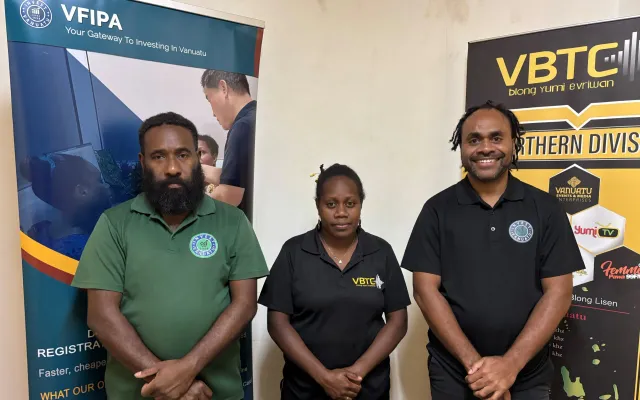
The Vanuatu Foreign Investment Promotion Agency (VFIPA) has identified potential investment opportunities in Santo as it steps up efforts to attract domestic and international investors to provincial economies.
The agency completed an investment profiling mission in Santo, engaging with businesses, private-sector representatives and other stakeholders to assess the island's investment environment and identify opportunities aligned with Vanuatu's Foreign Investment Promotion Strategy 2026–2030.
VFIPA said the exercise would help build a pipeline of credible, investment-ready opportunities for targeted promotion to prospective investors.
The profiles will provide information on specific opportunities, available assets, locations and sector potential, helping investors conduct preliminary assessments and engage with businesses and local stakeholders.
The mission was led by VFIPA Manager for Investment Promotion and Facilitation Alick Robsen Joe, assisted by Senior Investment Promotion Officer Lee Tabi, who is based at the agency's Northern Office in Santo.
VFIPA chief executive Raymond Vuti supported the initiative as part of the agency's efforts to strengthen investor engagement and give greater visibility to investment opportunities outside the capital, Port Vila.
During the mission, the team consulted businesses and private-sector representatives to understand existing commercial activities, ongoing developments and areas where additional investment could support Santo's economic growth.
Real estate companies operating in Santo also helped connect VFIPA with businesses and stakeholders, providing local knowledge of property developments, commercial activity and the broader investment environment.
The agency identified potential opportunities across tourism, hospitality, commercial activities, property development, professional services and other areas of the local economy.
VFIPA expands provincial outreach
The mission also marked VFIPA's first awareness programme through VBTC's Vois Blong NOT, providing a platform to explain the agency's mandate, services and investment facilitation support to businesses and communities in Northern Vanuatu.
The initiative forms part of VFIPA's broader effort to improve access to investment-related information beyond Port Vila and strengthen engagement with provincial businesses and potential investors.
VFIPA said the programme also laid the groundwork for further collaboration with VBTC on future awareness activities.
The agency's Q2 2026 foreign direct investment update recorded 80 approved FDI registrations nationally, with Sanma Province accounting for nine registrations, or 11.3% of the total.
Sanma, where Santo is located, is an important source of investment activity outside the capital, according to VFIPA.
The profiling mission is intended to build on this activity by providing a clearer picture of available investment opportunities and strengthening links between local businesses and potential investors.
Focus on investment-ready projects
VFIPA said the mission reflected a more proactive approach to investment promotion, moving beyond responding to investor enquiries towards identifying opportunities, assessing local market conditions and preparing information that can be used in targeted promotional activities.
The information gathered in Santo will contribute to future investment profiles, promotional materials, investor engagement and facilitation efforts.
The agency will continue working with businesses, real estate companies, the Santo Provincial Headquarters, government agencies, VBTC and other partners to strengthen the island's investment environment.
VFIPA's latest quarterly update also showed that service industries accounted for the majority of approved foreign investment activity nationally, while tourism, professional services and construction recorded notable activity during the quarter.
The agency said these trends provided a basis for exploring Santo's potential in tourism, accommodation, hospitality, commercial development, professional services and property development.
The investment profiling initiative forms part of VFIPA's implementation of the 2026–2030 strategy, which aims to promote investment opportunities across Vanuatu and support economic diversification, business expansion, employment creation and greater private-sector participation in provincial economies.
Fiji is seeking to expand financing for climate-resilient infrastructure and attract greater private investment as Pacific countries face growing climate risks, the Ministry of Finance said.
Finance Minister Esrom Immanuel and ministry officials participated in Pre-COP31 discussions focused on climate resilience, infrastructure development and access to finance across the Pacific.
At the invitation of the World Bank, Immanuel joined a panel discussion titled “Building Resilience Without Sacrificing Growth: Pathways for the Pacific”, which examined how countries can strengthen climate resilience while sustaining economic growth.
Drawing on the World Bank Group's Country Climate and Development Reports for Fiji, Kiribati, Tuvalu and the Republic of the Marshall Islands, participants discussed investment priorities in infrastructure, tourism, fisheries, human capital, clean energy and ecosystem protection.
The discussions also covered climate finance, governance and practical measures to implement these priorities.
Immanuel attended a bilateral meeting between Prime Minister Sitiveni Rabuka and Asian Development Bank President Masato Kanda, which highlighted the development bank's support for Fiji and the wider Pacific, particularly in infrastructure development.
Following the meeting, Immanuel and ADB Pacific Department Director General Emma Veve signed an agreement. The ministry's announcement did not specify the agreement's details.
Ministry officials also attended a KPMG-organised side event, “From Ambition to Investment: Financing Pacific Infrastructure”, represented by Debt Management Unit Manager Sisilia Nalaide and Infrastructure Sector Manager Tevita Tuibau.
The event brought together government representatives, development partners, financiers and private sector leaders to explore ways to mobilise investment in sustainable and climate-resilient infrastructure across the region.
Another plenary session, “Vulnerable to Investable: Reimagining Finance for the Pacific”, examined ways to improve climate readiness and increase funding for national and regional priorities.
Participants discussed attracting financing beyond public funds, including private investment, philanthropic support and blended finance combining public and private capital.
The discussions reflect efforts by Pacific governments and development partners to mobilise additional funding for infrastructure and climate adaptation, while balancing resilience requirements with economic growth.
More than 66,000 people in Papua New Guinea and Bougainville are expected to benefit from two new renewable energy projects under Australia's REnew Pacific programme, which aims to expand access to reliable electricity in remote communities across the Pacific.
Australian Minister for Climate Change and Energy Chris Bowen announced the three new projects, including a third in Fiji, at a Pre-COP31 event in Fiji this week.
In Papua New Guinea's Oro Province, Sola PayGo and MiBank will deploy pay-as-you-go solar home systems, streetlights and education servers in 19 communities between Popondetta and the Kokoda Track, reaching about 55,000 people.
The project will also provide training in technical skills, financial literacy and digital literacy to support local livelihoods and improve access to education.
In Bougainville, Save the Children and the Autonomous Bougainville Government's Department of Education will install solar power and battery storage systems at five remote schools in Tinputz.
A school-managed solar lantern scheme will also provide safer lighting to as many as 2,000 nearby households, benefiting more than 11,400 people.
The projects are intended to improve electricity access for communities where reliable power remains a challenge, while supporting education, household needs and local economic activity.
The third project, led by the It's Time Foundation in partnership with Fiji's Ministry of Education, will install solar systems with battery storage at 13 remote schools and teachers' homes across Vanua Levu, Viti Levu, Taveuni and the Yasawa Islands. It will also provide Starlink internet, laptops and smart televisions, benefiting more than 1,200 students.
The announcements were made during a special Pre-COP31 session, *Powering the Pacific: Electrification for Climate Resilience, Energy Security and Development*, which brought together Pacific and Australian leaders, communities and experts to discuss renewable energy's role in regional development and energy security.
The three projects bring REnew Pacific's portfolio to 13 locally led projects across seven countries: Fiji, Kiribati, Papua New Guinea, Samoa, Solomon Islands, Vanuatu and the Republic of the Marshall Islands.
Launched less than two years ago, the programme now reaches more than 255,000 people through projects supporting more than 8,100 homes, 98 schools and 49 health centres.
REnew Pacific builds on the Australian Government's Off-Grid Renewable Energy Partnerships pilots, launched in 2024 across Fiji, Kiribati, Papua New Guinea, Solomon Islands, Timor-Leste and Vanuatu.
Combined, the two initiatives comprise 26 projects, 15 of which have been completed, reaching more than 428,000 people across 215 schools, health centres and communities.
Follow on LinkedIn:
Pacific Business Review
Be the "First" to get our exclusive Digital Magazine & Weekly Newsletter.