More than 66,000 people in Papua New Guinea and Bougainville are expected to benefit from two new renewable energy projects under Australia's REnew Pacific programme, which aims to expand access to reliable electricity in remote communities across the Pacific.
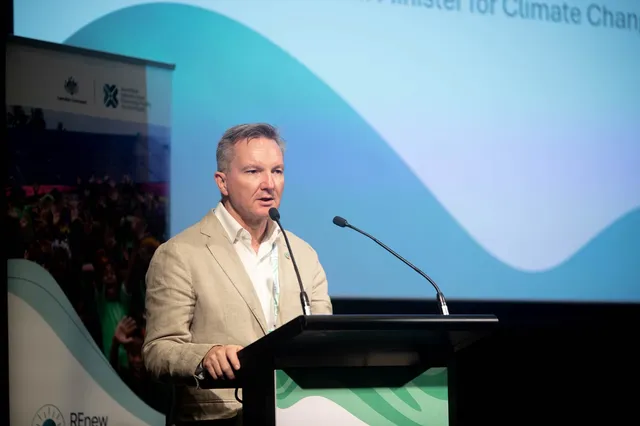
Australian Minister for Climate Change and Energy Chris Bowen announced the three new projects, including a third in Fiji, at a Pre-COP31 event in Fiji this week.
In Papua New Guinea's Oro Province, Sola PayGo and MiBank will deploy pay-as-you-go solar home systems, streetlights and education servers in 19 communities between Popondetta and the Kokoda Track, reaching about 55,000 people.
The project will also provide training in technical skills, financial literacy and digital literacy to support local livelihoods and improve access to education.
In Bougainville, Save the Children and the Autonomous Bougainville Government's Department of Education will install solar power and battery storage systems at five remote schools in Tinputz.
A school-managed solar lantern scheme will also provide safer lighting to as many as 2,000 nearby households, benefiting more than 11,400 people.
The projects are intended to improve electricity access for communities where reliable power remains a challenge, while supporting education, household needs and local economic activity.
The third project, led by the It's Time Foundation in partnership with Fiji's Ministry of Education, will install solar systems with battery storage at 13 remote schools and teachers' homes across Vanua Levu, Viti Levu, Taveuni and the Yasawa Islands. It will also provide Starlink internet, laptops and smart televisions, benefiting more than 1,200 students.
The announcements were made during a special Pre-COP31 session, *Powering the Pacific: Electrification for Climate Resilience, Energy Security and Development*, which brought together Pacific and Australian leaders, communities and experts to discuss renewable energy's role in regional development and energy security.
The three projects bring REnew Pacific's portfolio to 13 locally led projects across seven countries: Fiji, Kiribati, Papua New Guinea, Samoa, Solomon Islands, Vanuatu and the Republic of the Marshall Islands.
Launched less than two years ago, the programme now reaches more than 255,000 people through projects supporting more than 8,100 homes, 98 schools and 49 health centres.
REnew Pacific builds on the Australian Government's Off-Grid Renewable Energy Partnerships pilots, launched in 2024 across Fiji, Kiribati, Papua New Guinea, Solomon Islands, Timor-Leste and Vanuatu.
Combined, the two initiatives comprise 26 projects, 15 of which have been completed, reaching more than 428,000 people across 215 schools, health centres and communities.
Australia will provide A$7.29 million ($4.8m) to strengthen energy security and accelerate the transition to renewable energy across the Pacific.
The funding package will support engineers in developing grid modelling tools for Pacific countries, helping governments assess how renewable energy can be integrated into existing electricity networks.
It will also support the Renewable Energy Commissioner and technical experts working on renewable energy project development and integration, as well as establish an early careers programme for energy professionals.
Australia said the package would also strengthen the capabilities of energy regulators across the Pacific by expanding training and development opportunities.
The announcement was made alongside a new memorandum of understanding with Vanuatu to support the country's renewable energy transition.
Under the agreement, Australia will provide tools and technical expertise to help integrate more solar power into Vanuatu's electricity grid while supporting the development of local technical skills.
The partnership will include technical expertise transfer, local capacity-building for infrastructure operations and maintenance, knowledge exchange with Australian institutions, and workforce planning and assessments.
Australian climate change and energy minister Chris Bowen said the agreement would help strengthen Vanuatu's energy sovereignty.
“Bringing more solar energy online will put downward pressure on prices while cutting emissions,” Bowen said.
The funding and Vanuatu agreement form part of Australia's A$50 million Australia-Pacific Partnership for Energy Transition, or APPET, which supports clean energy development across the region.
Australia has also signed APPET partnerships with Palau, the Marshall Islands, Tonga and Tuvalu.
For Pacific island countries, the initiative is aimed at increasing renewable energy deployment while strengthening local technical capacity and reducing exposure to energy supply and price pressures.
The Malatoha Women’s Association is exploring opportunities to expand its participation in the Tina River Hydropower Development Project, building on an existing arrangement to supply fresh produce to the project workforce.
The association’s fruit and vegetable supply partnership was among the key issues discussed during a meeting with its executive members at Chichinge Community in Malango.
Representatives from the Tina River Hydropower Development Project Office, Solomon Power, SMEC, Reeves Envico and Hyundai Engineering Company attended the consultation.
The existing supply arrangement has connected women producers in the Malango region with the project’s workforce, allowing association members to participate in the local supply chain and generate income from agricultural activities.
The women also discussed potential opportunities linked to the project’s transmission line component, which is being implemented by Solomon Power.
Project representatives provided updates on transmission line activities and discussed possible areas for participation, including services, business, food supply and training.
The meeting also allowed the association’s executive members to assess its progress and identify areas where additional support, skills and training could strengthen its capacity to engage with current and future project opportunities.
The consultation forms part of monthly engagements under the project’s Gender Component with women’s associations in project-affected communities.
The engagements provide women with project updates, direct access to project stakeholders and an opportunity to identify practical ways to participate in project activities.
The consultations are expected to continue across project-affected communities, with the next engagement planned with the Bahomea Women’s Association.
The Tina River Hydropower Development Project is the Solomon Islands’ first large-scale renewable energy project and is intended to support more affordable electricity and access to cleaner and more reliable energy.
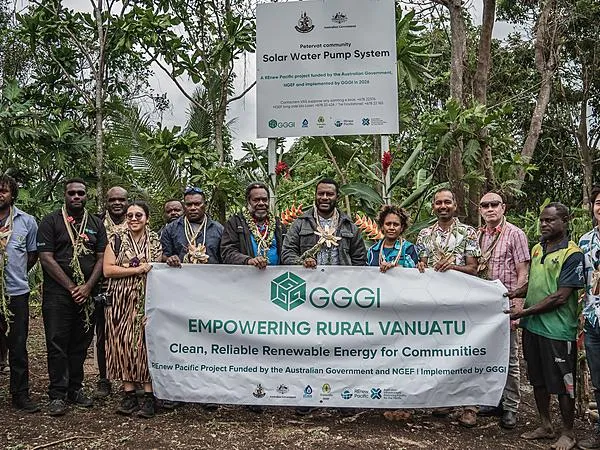
Families in the remote community of Petervat in north Malekula, Vanuatu, now have clean, reliable running water through a new solar-powered water system delivered under Australia’s REnew Pacific programme.
The system uses renewable energy to pump water from a natural spring directly to households, reducing reliance on fuel-based systems and improving water security for the rural community.
It was officially handed over last week by Malekula MP Paul Paolo and REnew Pacific Portfolio Manager Lindah Keremoi-Elton, representing the Australian High Commission, alongside local leaders and community members.
Vanuatu Minister for Climate Change, Adaptation, Geohazards, Meteorology and Energy Ralph Regenvanu said the project showed how renewable energy could improve essential services in rural communities.
“Projects like this show renewable energy can deliver a tangible impact,” Regenvanu said. “The Petervat community now has locally owned infrastructure providing reliable access to clean water while reducing reliance on costly fuel-based systems.”
He said he looked forward to further renewable energy projects under the Nakamal Agreement.
Australian High Commissioner to Vanuatu Max Willis said the project demonstrated the practical benefits of Australia’s partnership with Vanuatu.
“We launched REnew Pacific in Petervat a year ago, so it is a proud moment that clean water is now flowing, powered by the sun,” Willis said.
“This is what partnership looks like in action: climate-resilient infrastructure that improves daily life for rural ni-Vanuatu families.”
Petervat is one of nine rural communities across Santo, Paama, Tanna and Malekula receiving solar-powered water systems under the two-year project. The initiative is expected to improve water security for more than 5,100 people.
It will also provide 24 health centres and schools with solar photovoltaic systems and battery storage, while creating local employment and training opportunities.
For Petervat residents, the system reduces the time and effort previously required to collect water.
“In the past, we relied on water from the river, but now we have access to water from a natural spring,” said Jamie Vaxal, secretary of the Petervat Community Water Committee. “The water is piped directly to our houses, and daily life is much easier.”
The system was delivered by the Global Green Growth Institute in partnership with Vanuatu’s National Green Energy Fund. Community members have been trained to operate and maintain the infrastructure.
“This system now belongs to Petervat,” said Andres Toro, GGGI Vanuatu’s REnew Pacific project lead. “The community has been trained to run and maintain it, ensuring reliable access to clean water for years to come.”
The project is one of two REnew Pacific initiatives in Vanuatu. It builds on the recently completed Respond Global HELPR-1 project, which provided 24-hour solar power to 41 health facilities across the country’s six provinces, benefiting more than 70,000 people.
REnew Pacific is an Australian government commitment of A$75 million to expand clean, reliable off-grid renewable energy in rural and remote communities across the Pacific and Timor-Leste. It forms part of the A$350 million Pacific Climate Infrastructure Financing Partnership, delivered through the Australian Infrastructure Financing Facility for the Pacific.
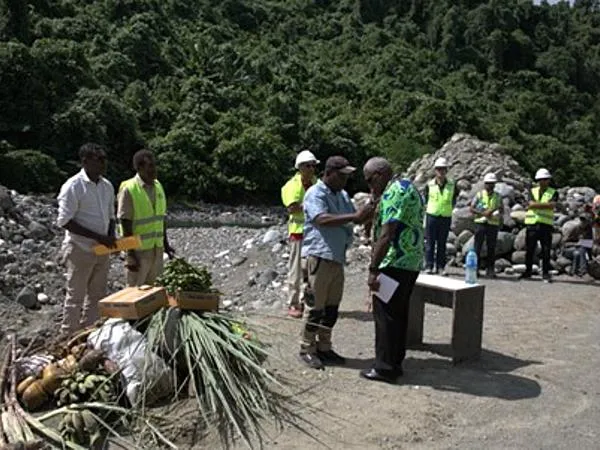
The Tina River Hydropower Development Project has formalised a customary reconciliation process with the Roha and Gaegae tribes through a Chupu Ceremony at the Powerhouse site, alongside the signing of a memorandum of understanding.
The ceremony, held on July 28 in Central Guadalcanal, brought together representatives of the Roha and Gaegae tribes, Habusi/Komureo and surrounding communities, the Tina River Hydropower Project Office, Tina Hydropower Limited, Hyundai Engineering Company and government agencies.
The Chupu is an important Guadalcanal customary protocol and was conducted to acknowledge the traditional land rights of the affected tribes and address the impact of project construction activities on Roha and Gaegae customary land.
It also provided an opportunity for the Project Office and Tina Hydropower Limited to reaffirm their respect for customary authority and engage with the tribes over the ongoing process of acquiring additional land around the Powerhouse area.
Customary protocol and land acquisition
The first Chupu was presented by Project Office representatives Baltazare Rongo and John Korinihona to the Roha Tribe and received by Chief Daniel Una.
A second Chupu was presented to representatives of Chango Land and received by Berry Kepulu on behalf of his father and Gaegae tribal representatives.
Project Manager Pradip Verma, speaking on behalf of the Ministry of Mines, Energy and Rural Electrification, thanked the tribes for accepting the Chupu and acknowledged complications in the land acquisition process.
Verma said the government was grateful for the patience and understanding shown by affected tribes while the Commissioner of Lands progresses the formal process.
Chief Una formally accepted the Chupu on behalf of the Roha Tribe and commended the Project Office and Tina Hydropower Limited for engaging with the tribes through customary protocol.
He described the approach as a demonstration of respect for Guadalcanal cultural traditions and called on members of the Roha Tribe to uphold the significance and intent of the customary presentation.
Berry Kepulu similarly accepted the Chupu on behalf of the Gaegae Tribe and Chango Land representatives, affirming their willingness to work with the relevant authorities to resolve outstanding land matters.
Surveyor General Leslie Volalia, representing the Commissioner of Lands, stressed that the Chupu Ceremony complements but does not replace the formal statutory land acquisition process.
He said the customary land identification and acquisition process would begin once the newly appointed Commissioner of Lands formally assumes office.
MOU reinforces cooperation
Chief Whitlam Kikolo, chairman of the Bahomea House of Chiefs, described the ceremony as an important step toward rebuilding relationships and strengthening cooperation among the parties.
He called on tribal members and other stakeholders to respect the significance of the ceremony and the government's gesture, noting the continuing importance of Chupu as a customary practice of the Guadalcanal people.
The ceremony concluded with the review, endorsement and signing of a memorandum of understanding involving representatives of the landowning tribes, the Project Office, Tina Hydropower Limited and Hyundai Engineering Company, witnessed by representatives of the participating parties.
The agreement and customary ceremony are intended to support continued communication and engagement while the statutory land identification and acquisition process proceeds.
The project office said the ceremony marked a milestone in strengthening goodwill and mutual respect between the Tina River Hydropower Development Project and customary landowners in the Powerhouse area.
It also highlighted the project's approach of incorporating customary cultural protocols into stakeholder engagement while maintaining compliance with the formal legal requirements governing land acquisition.
First large-scale renewable energy project
The Tina River Hydropower Development Project is the Solomon Islands' first large-scale renewable energy project and is intended to provide more affordable electricity and improve access to cleaner and more reliable energy for communities.
The project is being implemented by the Solomon Islands Government with financing and support from the Abu Dhabi Fund for Development, Asian Development Bank, Australian government, Green Climate Fund, Korea EX-IM Economic Development Cooperation Fund and World Bank.
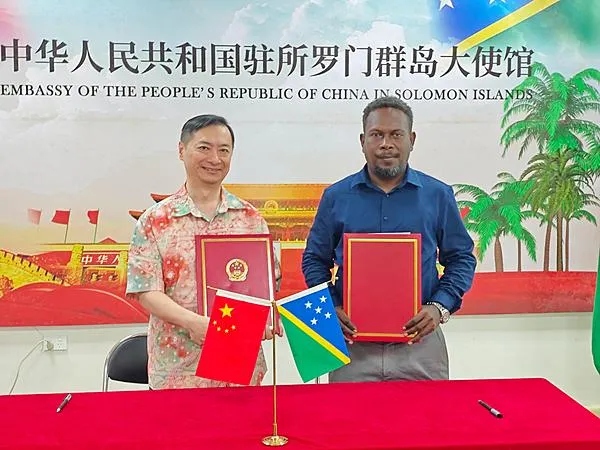
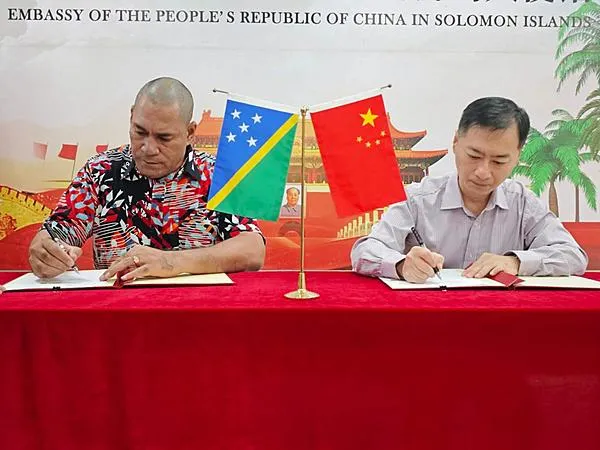
The Chinese Embassy in Solomon Islands and the Ministry of Environment, Climate Change, Disaster Management and Meteorology have signed a cooperation agreement for the second phase of a mini solar power project aimed at expanding access to clean and reliable energy in the country.
Chinese Ambassador Cai Weiming and Minister for Environment Ghemu signed the agreement on Aug. 24. Minister for Women Maneniaru, Minister for Forestry Tagini and representatives from constituencies participating in the project also attended the signing ceremony.
The cooperation follows an initiative announced by China at the Third China-Pacific Island Countries Foreign Ministers’ Conference in 2025 to implement a series of “Small yet Smart” livelihood projects in Pacific island countries.
Cai said the first phase of the mini solar power program received positive feedback and expressed confidence that the second phase would further support Solomon Islands in turning its renewable energy resources into tangible improvements in people’s livelihoods.
The project is also expected to strengthen energy self-reliance and promote social inclusion as Solomon Islands pursues sustainable development, according to the ambassador.
Ghemu expressed appreciation to the Chinese government and people for their continued support and partnership with Solomon Islands.
He said the cooperation would help improve access to affordable, reliable and sustainable energy while strengthening energy security, supporting environmental protection and improving the quality of life for Solomon Islanders.
Ghemu also highlighted the importance of continued cooperation between the two countries in addressing development challenges.
“Through strong partnerships, knowledge sharing, and mutual support between our two countries, SI could overcome challenges and build a more resilient future,” he said.
The second phase of the mini solar power project forms part of broader cooperation between China and Solomon Islands in clean energy and community development, with the initiative expected to contribute to greater energy access and resilience in participating communities.
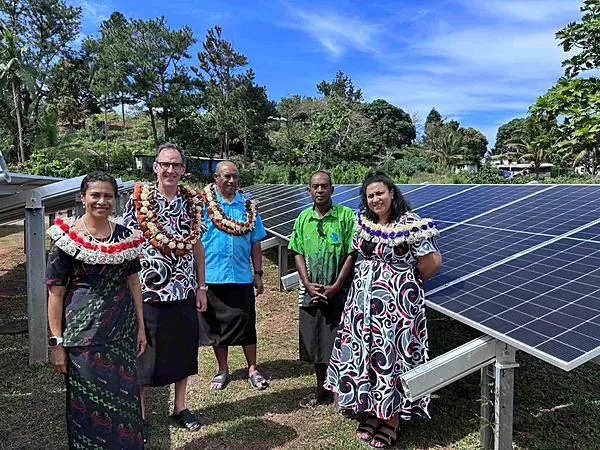
The Lakaro Solar Hybrid Power Plant has been commissioned at Vunisea Government Station in Kadavu, reducing diesel consumption and delivering new renewable energy capacity to one of Fiji's maritime communities.
Minister for Public Works, Meteorological Services and Transport Ro Filipe Tuisawau officially commissioned the facility, with Minister for Information, Environment and Climate Change Lynda Tabuya and New Zealand High Commissioner to Fiji Greg Andrews also attending.
The project, supported through a partnership between Fiji, New Zealand and the United Arab Emirates, is already reducing Vunisea's diesel consumption from about 60 drums to 20 drums a month.
The reduction is expected to save approximately $336,000 a year while lowering the community's reliance on imported diesel fuel.
The hybrid plant can provide up to 30% renewable energy, strengthening the reliability and security of electricity supply in Kadavu while reducing the environmental impact of diesel-based generation.
For remote and maritime communities, the project demonstrates how renewable energy can contribute not only to climate goals but also to energy security, resilience and lower costs for delivering essential services.
The government said it remains committed to working towards 100% renewable energy generation for Vunisea and expanding sustainable energy solutions across Fiji's maritime communities.
The project reflects cooperation between Fiji, New Zealand and the United Arab Emirates in developing renewable energy infrastructure and reducing dependence on imported fossil fuels.
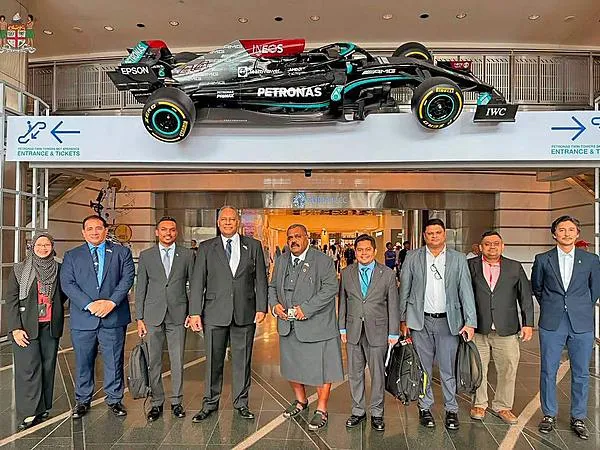
Fiji is exploring potential cooperation with Malaysian state-owned oil and gas company PETRONAS to strengthen fuel security and build greater resilience in its energy supply chain amid continuing volatility in global fuel markets.
Fiji Minister for Foreign Affairs and External Trade Sakiasi Ditoka met with PETRONAS Executive Vice President and Chief Executive Officer, Downstream, Datuk Sazali Hamzah, in Kuala Lumpur during an official working visit to Malaysia.
Discussions included the possibility of Fiji being considered under PETRONAS’ existing arrangements for oil storage and stockpiling with international partner countries.
The talks also covered potential technical support for Fiji’s development of a National Fuel Security Strategy, as well as fuel storage and supply-chain infrastructure.
Ditoka said Fiji’s dependence on imported petroleum products leaves the country vulnerable to disruptions in international shipping, higher freight costs and congestion, with consequences extending across the wider Pacific.
“The recent global fuel volatility and Middle East shipping disruptions have underscored that small island developing nations cannot rely solely on spot-market arrangements,” Ditoka said.
“Securing Fiji’s energy supply chain is vital not only for our 900,000 citizens but also for our maritime neighbours who rely on Fiji as a regional hub.”
He said working with a global energy company such as PETRONAS could help Fiji build longer-term energy resilience.
“Partnering with a global energy leader like PETRONAS allows the Coalition Government to build true long-term resilience for Fiji and the wider Blue Pacific,” Ditoka said.
The discussions also examined PETRONAS’ investments in renewable energy, sustainable biofuels and lower-carbon energy solutions.
Fiji expressed interest in Malaysian expertise and potential investment in these areas as it seeks to develop cleaner and more resilient energy systems.
“Fiji is looking to build resilience, not dependence. We want to work with partners who can help us strengthen our systems, diversify our options and prepare for the future,” Ditoka said. “We see PETRONAS as a potential partner in that journey.”
Fiji and PETRONAS agreed to continue discussions through technical and official channels to identify practical areas for potential cooperation.
The proposed cooperation comes as Pacific island countries face heightened exposure to global energy and supply-chain disruptions, underscoring the importance of fuel storage, diversified supply arrangements and stronger regional energy resilience.
Reeves Envico and CE Group have commenced work on the 22-kilometre transmission line that will connect renewable energy from Tina River with the homes, businesses and essential services of Honiara.
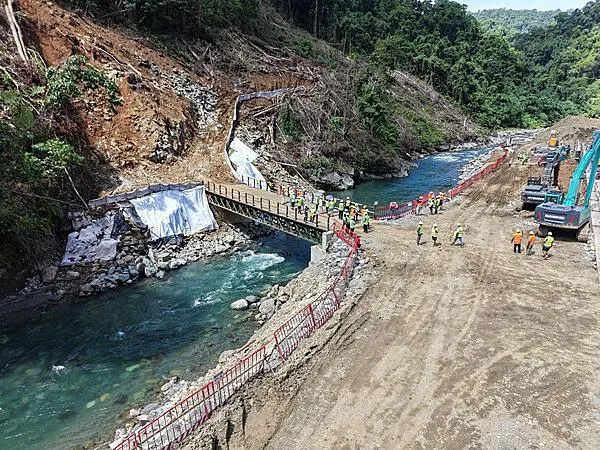
Against the rolling hills and demanding terrain of Guadalcanal, work is beginning on a connection that will carry more than electricity.
The new transmission line will extend 22 kilometres from the Tina River Hydropower Facility to Lungga Power Station and the Honiara national electricity grid. Once complete, it will carry up to 15 megawatts of renewable power to the capital, helping reduce reliance on imported diesel and supporting cleaner, more reliable and more affordable energy for Solomon Islanders.
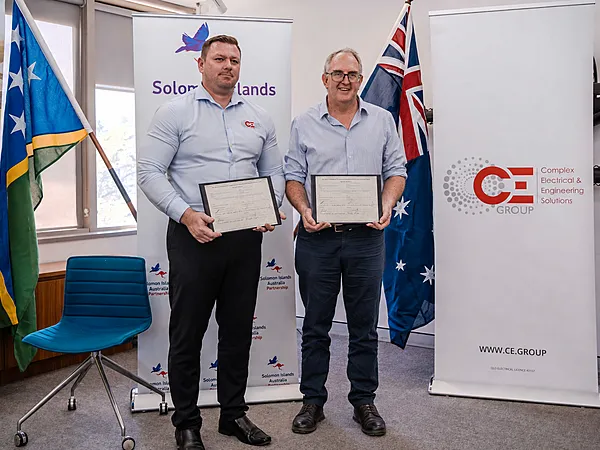
The commencement of construction was marked at a signing ceremony in Honiara attended by representatives of the Solomon Islands Government, Solomon Power, Australia, Reeves Envico and CE Group.
The ceremony recognised a significant step forward for the Tina River Hydropower Development Project-the largest renewable energy initiative undertaken in Solomon Islands.
Reeves Envico is delivering the transmission line works as principal contractor, with CE Group engaged as the Electrical Infrastructure Partner. The relationship brings together Reeves Envico’s longstanding connection with Solomon Islands and CE Group’s experience delivering complex electrical works in remote and operationally challenging environments.
The scale of the undertaking is significant.
The route crosses rolling hills, changing elevations and areas where weather, access and terrain will influence the movement of workers, equipment and materials. Delivering the line will require disciplined planning, technical capability and close coordination with Solomon Power, national workers, communities and the broader project team.
It is a demanding scope, but its purpose is deeply human.
Reliable electricity supports hospitals, classrooms, communications, refrigeration, government services and local businesses. Its value is felt when essential equipment continues operating, when a student can study and when a business can remain productive.
For Reeves Envico and CE Group, those everyday outcomes give the partnership its meaning.
Reeves Envico Managing Director Simon Gorman said the signing marked a deeply significant return to the country where the company’s story began.
“Reeves’ connection with Solomon Islands began in 1988, with our very first project. To return today and sign this contract is more than an important milestone-it is a privilege,” Gorman said.
That history brings both experience and responsibility. The partnership between Reeves Envico and CE Group is grounded in trust, integrity and a shared commitment to deliver work that supports Solomon Islands’ national priorities.
For CE Group, the project is its largest contract to date and an opportunity to apply its electrical engineering and construction capability to work of lasting national value.
CE Group Managing Director Ryan Johnson said the signing reflected the strength of the relationships that continue to connect Solomon Islands and Australia.
“Today’s signing honours that enduring partnership and opens the door to new opportunities for the people of both our nations," Johnson said.
Those opportunities extend beyond the physical delivery of the transmission line.
More than 190 Solomon Islanders are currently employed across the broader Tina River Hydropower Development Project, with further opportunities expected as construction progresses.
Behind that number are workers developing experience, families supported by employment and national capability that will remain beyond the construction period. The wider project also includes education and training initiatives and measures supporting safe employment opportunities for women and girls.
Australia is contributing approximately SBD$180 million to the transmission line project through the Australian Infrastructure Financing Facility for the Pacific, combining concessional financing and grant funding.
The project is expected to be completed in early 2028.
Its magnitude can be measured in kilometres, megawatts and the difficulty of the landscape. Its true legacy, however, will be measured by what it enables: stronger energy security, more dependable essential services, national employment and new possibilities for Solomon Islands communities.
For Reeves Envico and CE Group, the intention is clear: to honour the trust placed in the partnership, deliver with integrity and remain focused on the people the work is ultimately intended to serve.
The signing ceremony marked the beginning of that responsibility-not its conclusion. The lasting measure of the partnership will be found in the work delivered, the relationships strengthened and the benefits carried forward for Solomon Islands.
Beyond borders, progress is built through partnership.
The Tina River Hydropower Development Project (TRHDP) has released the findings of its Mid-Term Socioeconomic Survey, showing improvements in household livelihoods and quality of life in affected communities while highlighting persistent concerns over benefit sharing, environmental impacts and social issues.
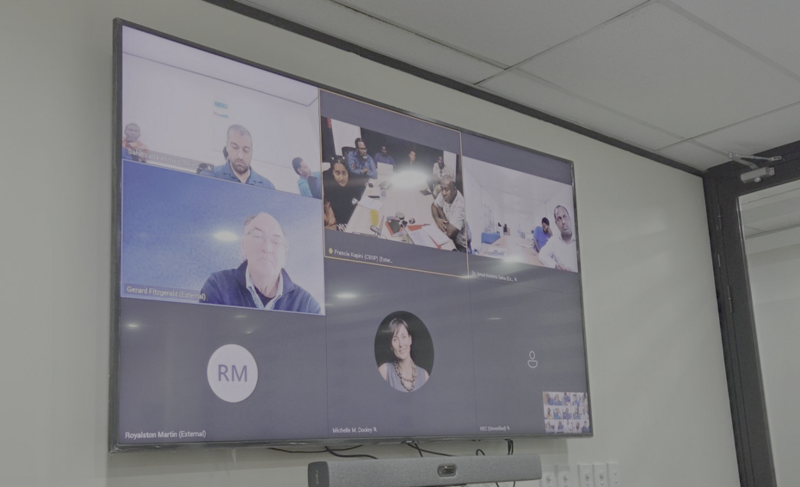
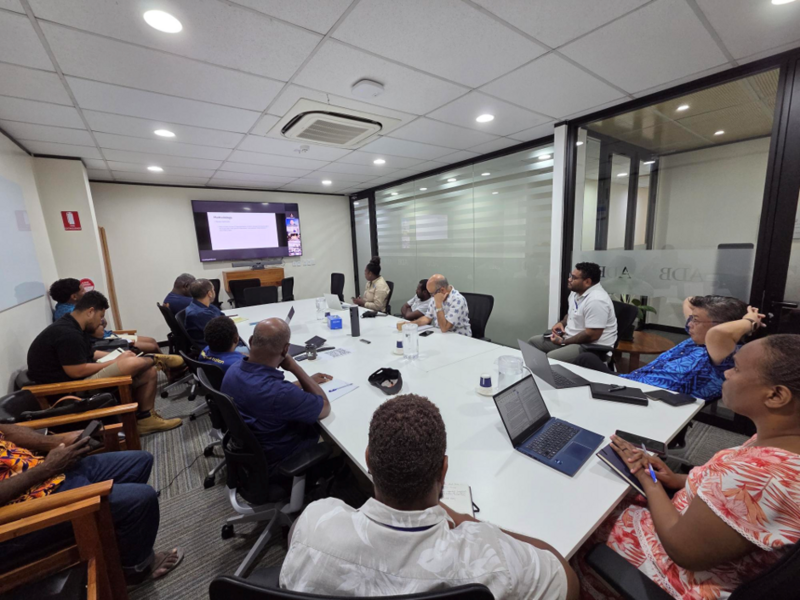
The survey, presented by consultant Gerard Fitzgerald to project stakeholders and development partners, assessed changes in social and economic conditions since the 2020 baseline study conducted before construction began. Participants included representatives from Tina Hydropower Ltd., Solomon Power, the Asian Development Bank (ADB), the World Bank, and other project partners.
The study found that household livelihoods have shifted significantly, driven largely by the growth of artisanal gold panning alongside cocoa production and employment opportunities created during the project's construction. While household incomes have generally increased, the gains have been uneven, with a higher proportion of households living below the international poverty line compared with the 2020 baseline.
Researchers also reported improvements in housing, road access, electricity, water supply and access to basic services. More than half of survey respondents said the project had positively affected their communities, citing employment opportunities, infrastructure improvements and stronger engagement with project developers.
However, residents continued to raise concerns over river turbidity, dust, traffic safety and other construction-related impacts. The survey also found that many households still rely on rivers for water because some water supply systems remain non-operational, while perceptions of unequal distribution of project benefits and unmet community expectations persist.
The study identified emerging social challenges, including increased alcohol consumption, road safety issues and concerns about the long-term sustainability of community infrastructure. Project officials said the findings will help guide ongoing social monitoring, community engagement and project planning as construction progresses.
The Tina River Hydropower Development Project is the Solomon Islands' first utility-scale renewable energy project. Once completed, it is expected to provide cleaner, more reliable and more affordable electricity while reducing the country's dependence on imported diesel for power generation.
The project is being implemented by the Solomon Islands government with financing and support from the Asian Development Bank, World Bank, Green Climate Fund, Abu Dhabi Fund for Development, the Government of Australia, and the Export-Import Bank of Korea's Economic Development Cooperation Fund.
The Solomon Islands has completed the first phase of a Chinese-backed mini solar power project that installed renewable energy systems across 25 constituencies, with a second phase set to begin once financing arrangements are finalised by China.
The Ministry of Environment, Climate Change, Disaster Management and Meteorology (MECDM) announced on Monday that Phase 1 of the Mini Solar Power Project had been successfully completed under a cooperation agreement signed on 21 August 2025 between the ministry, the Chinese Embassy in the Solomon Islands and Ever Exceed SI Company Ltd.
The ministry said installations had been verified and project documentation completed across all participating constituencies nationwide.
Phase 1 involved the supply and installation of 6.2-kilowatt-hour and 5-kilowatt-hour solar power systems valued at more than SBD 800,000.
The project covered 25 constituencies: East Makira, West Makira, Central Makira, Ulawa Ugi, East Kwaio, West Kwaio, East Are'Are, West Are'Are, Small Malaita, East Malaita, Central Kwara'ae, West Kwara'ae, North Malaita, Lau Mbaelelea, Baegu Asifola, Fataleka, Aoke Langalanga, South Malaita, East Guadalcanal, Central Guadalcanal, North Guadalcanal, West Guadalcanal, South Guadalcanal, Shortlands, and Gizo-Kolombangara.
MECDM said the project represents a significant step towards expanding access to renewable energy, strengthening community resilience and advancing climate action across the country. It also reflects growing practical cooperation between the Solomon Islands and China and supports the government's commitment to sustainable development and low-carbon energy.
Phase 2 will commence once financial arrangements are finalised by the People's Republic of China. The next stage is expected to extend the programme to additional communities and strengthen the country's long-term energy security.
"The completion of Phase 1 demonstrates the power of partnership and shared vision," the ministry's permanent secretary said.
"We look forward to the timely commencement of Phase 2, which will further illuminate our communities and strengthen our cooperation."
The ministry also thanked the Chinese Embassy and Ever Exceed SI Company Ltd for their continued collaboration and technical support throughout the implementation of the project.
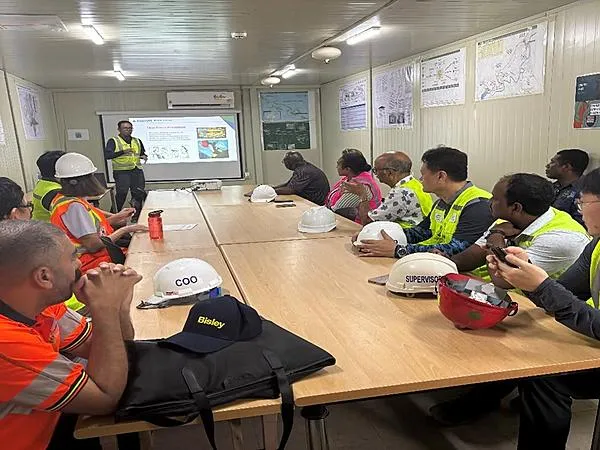
The World Bank's Environment and Social Framework (ESF) Practice Manager, Africa Olojoba, has visited the Tina River Hydropower Development Project (THDP) in Solomon Islands, highlighting construction progress, strong safety practices and environmental stewardship at the country's first large-scale renewable energy project.
Olojoba was joined by a World Bank delegation comprising Lead Environmental Specialist Nathalie Staelens, Environmental Specialist Khine Thwe Wynn, Social Development Specialist Joyce Onguglo and Energy Specialist Yulia Zakrevskaia during the March 27 site visit.
The delegation began its visit at the Hyundai Engineering Company site office, where project officials provided a safety induction briefing outlining workplace health and safety protocols. The team then toured the dam site and the powerhouse site, including the main tunnel system currently under development.
Speaking during a meeting at the Garivera camp site, Olojoba outlined three key observations from the visit.
He cited the project's substantial development progress, noting the advancement of major structures, ongoing construction activities and milestones achieved to date.
Olojoba also commended project teams for maintaining strong occupational health and safety standards across the construction site.
In addition, he highlighted the project's environmental performance, particularly areas of natural revegetation and the replantation programme being implemented as part of biodiversity management efforts.
The World Bank is one of the principal financiers of the Tina River Hydropower Development Project and has played a key role in supporting the project's objective of delivering clean, affordable and sustainable energy to Solomon Islands.
Once completed, the hydropower facility is expected to reduce the country's dependence on diesel-fired electricity generation, lower power costs for consumers and support national climate commitments.
The Tina River Hydropower Development Project is being led by the Solomon Islands government with financing and support from the Abu Dhabi Fund for Development, the Asian Development Bank, the Australian government, the Green Climate Fund, Korea EXIM Economic Development Cooperation Fund and the World Bank.
The project is the first large-scale renewable energy development undertaken in Solomon Islands and is expected to improve access to cleaner and more reliable electricity for households and businesses while supporting the country's long-term energy transition.
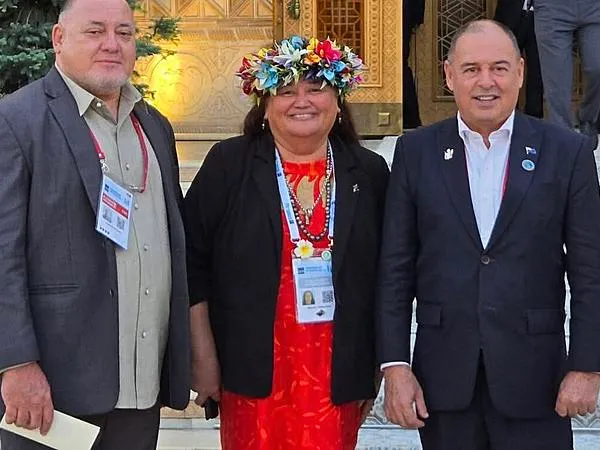
Cook Islands Prime Minister Mark Brown has called for greater financial support for Pacific renewable energy transitions, describing the shift away from imported fuel as an economic security strategy rather than a climate concession.
Speaking at the 59th Annual Meeting of the Asian Development Bank, or ADB, in Samarkand, Brown said Pacific Island countries remain highly exposed to global fuel price shocks and supply disruptions due to dependence on imported energy.
“The Pacific energy transition is not a climate concession. It is an economic security strategy. The same investments that lower our emissions also lower our exposure to the next global shock,” Brown said in his Governor’s Statement.
Brown said the Cook Islands was working closely with the ADB on financing solutions aimed at strengthening energy security and accelerating renewable energy development across Pacific Island countries.
“The Cook Islands is working closely with the ADB on financial solutions that support security of supply for Pacific Island countries, and that fast-track our energy transition to renewables,” he said.
The prime minister said the financing initiatives would support renewable energy projects across the Pa Enua, including solar farms, battery storage systems and electricity grid upgrades aimed at reducing long-term reliance on imported fuel.
Brown also highlighted domestic conservation measures currently underway in the Cook Islands, including coordination work led by the Energy Response Technical Working Group involving government agencies, the tourism sector and communities.
“Conservation is a real lever. Every litre saved is fuel for our hospital, our schools, our airports,” he said.
During the meeting, Brown urged the ADB to expand innovative financing tools for Pacific small island developing states, including blended finance, climate-linked financing mechanisms and local currency debt conversion measures to reduce exposure to foreign exchange risks.
He said concessional financing access for Pacific states should continue to reflect vulnerability to economic and climate shocks rather than income levels alone.
“Graduation thresholds were not designed for economies that can lose a year of gross domestic product in a single cyclone, or absorb a global energy shock with no domestic substitute,” Brown said.
Brown also welcomed the ADB’s developing work on critical minerals and called for Pacific small island states to be actively included in related initiatives.
The prime minister said the Cook Islands currently generates just over 30 percent of its electricity from renewable energy sources and aims to increase that figure to 60 percent by 2030.
“We will use this period to push our renewable energy goals harder, not slower,” Brown said.
Pacific Islands Forum leaders have invoked the Biketawa Declaration to coordinate a regional response to worsening fuel supply risks linked to ongoing instability in the Middle East, amid growing concerns over the vulnerability of Pacific economies to global energy disruptions.
The move was announced following discussions among the Pacific Islands Forum (PIF) Troika, comprising Solomon Islands Prime Minister Jeremiah Manele, Palau President Surangel Whipps Jr., and Tonga’s Prime Minister Lord Fakafanua. The leaders agreed to activate the region’s crisis response mechanism as Pacific nations face rising fuel costs and the threat of supply shortages.
According to the Forum, the declaration was invoked to enable a coordinated regional approach to the emerging energy crisis and to strengthen preparedness measures across member states. Leaders said early intervention was necessary as global fuel supply chains continue to face disruption.
The Biketawa Declaration, adopted by Pacific Islands Forum members in 2000, provides a framework for collective regional action in response to crises affecting peace, security and regional stability. It was previously invoked during the COVID-19 pandemic and ahead of the Regional Assistance Mission to Solomon Islands (RAMSI).
Regional governments are already grappling with elevated fuel prices, while some countries have begun implementing emergency measures to manage fuel consumption and maintain essential services. Reports indicated that Tuvalu had declared a state of emergency over fuel supply concerns, while other Pacific nations were reviewing contingency plans.
The Pacific Islands Forum Secretariat said the coordinated response would focus on strengthening regional energy security, supporting emergency planning, and ensuring continued access to fuel supplies for essential services and economic activity.
Australian Foreign Minister Penny Wong said Australia supported the Forum’s decision and would work closely with Pacific governments and regional institutions to help maintain supply stability across the region.
Analysts and regional observers have warned that prolonged disruptions to global oil markets could have severe economic and humanitarian consequences for Pacific island nations, many of which remain heavily dependent on imported fuel for electricity generation, transport and food supply chains.
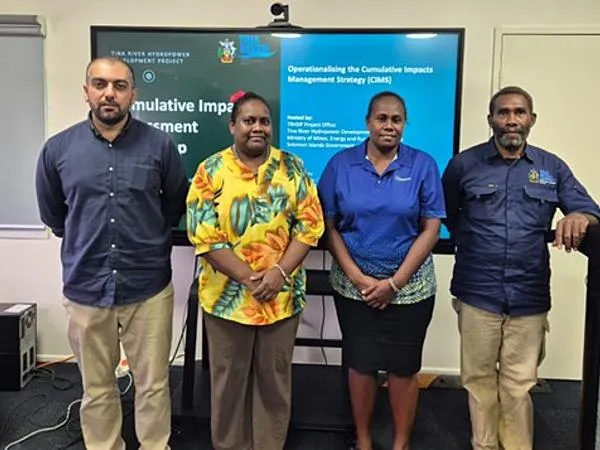
The Solomon Islands has established a regional cumulative impacts working group as part of efforts to strengthen environmental and social oversight of the Tina River Hydropower Development Project, a key national infrastructure initiative aimed at transforming the country’s energy sector.
The working group is designed to coordinate the identification, assessment and management of cumulative impacts arising not only from the hydropower project itself but also from other activities within the Tina and Ngalimbiu river catchment.
Coordinated approach to overlapping impacts
The initiative reflects growing recognition that large-scale infrastructure developments do not operate in isolation, particularly in environmentally and socially sensitive areas such as Guadalcanal.
The Tina River Hydropower Development Project, located about 30 kilometres from Honiara, involves a 15-megawatt facility comprising a dam, reservoir, tunnel and powerhouse system.
Project documentation highlights that cumulative impacts — defined as the combined effects of multiple activities over time — could affect environmental sustainability and social outcomes if not properly managed.
The newly established working group is expected to facilitate collaboration between government agencies, project developers and other stakeholders to address these overlapping risks in a structured and coordinated manner.
Broad range of environmental and social pressures
The Tina/Ngalimbiu river basin is already subject to a range of existing and potential pressures, including logging, agriculture, mining activities and infrastructure development.
Project assessments note that these activities can contribute to cumulative effects such as increased sedimentation, water quality degradation, habitat loss and changes in land use.
In particular, logging and road development may increase erosion and sediment loads in the river system, while agricultural runoff and other land-based activities could affect aquatic ecosystems and downstream communities.
The hydropower project itself may also contribute to cumulative impacts, including changes in sediment flow, river morphology and land tenure arrangements, although mitigation measures are being incorporated into project design and management plans.
Community and livelihood considerations
Beyond environmental factors, cumulative impacts extend to social and economic dimensions.
The Tina River catchment supports a mix of indigenous communities, including Malango and Lengo groups, whose livelihoods depend on agriculture, fishing and access to natural resources.
Project-related changes — combined with broader economic activity — may influence employment patterns, land ownership structures and community dynamics.
While the hydropower project is expected to generate jobs and economic opportunities, assessments highlight potential risks such as land disputes, increased dependence on the cash economy and pressures on food security if not carefully managed.
Supporting long-term sustainability
The establishment of the working group aligns with international best practices in environmental and social governance, particularly for projects supported by multilateral institutions such as the World Bank and Asian Development Bank.
The Tina Hydro project forms part of a broader effort to reduce Solomon Islands’ reliance on diesel-generated electricity and transition to renewable energy.
Once operational, the project is expected to significantly lower energy costs and reduce greenhouse gas emissions, while improving the reliability of power supply in Honiara.
However, stakeholders have emphasised that achieving these benefits will depend on effective management of cumulative impacts across the wider project area.
Strengthening governance and stakeholder coordination
The working group is expected to play a central role in aligning regulatory oversight, monitoring programmes and stakeholder engagement processes.
This includes integrating data from environmental and social monitoring systems, identifying emerging risks and coordinating responses across multiple sectors and jurisdictions.
By bringing together government, industry and community stakeholders, the initiative aims to ensure that the Tina Hydro project delivers long-term benefits while safeguarding environmental integrity and community well-being.
The move also signals a broader shift towards more integrated resource management in the Solomon Islands, as the country advances major infrastructure projects alongside ongoing economic development activities.
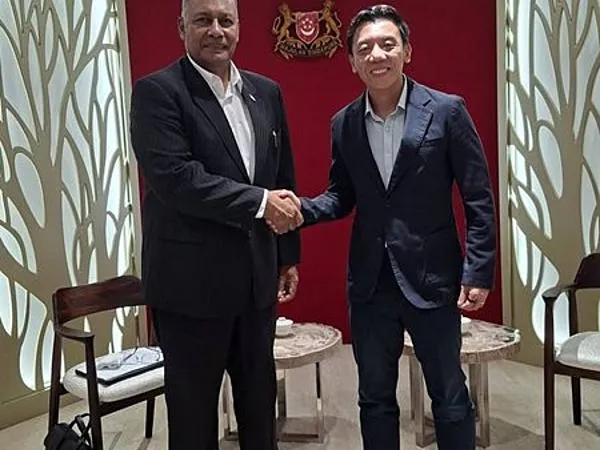
Fiji and Singapore have reaffirmed their strategic partnership with a renewed focus on energy security and supply chain resilience, as global fuel market uncertainties continue to weigh on Pacific economies.
Fiji’s Minister for Foreign Affairs and External Trade, Sakiasi Ditoka, met with Singapore’s Assistant Minister for Transport and Senior Minister of State for Finance, Jeffrey Siow, on April 16 in Singapore to advance bilateral cooperation in critical sectors.
Talks centred on ensuring fuel supply continuity, strengthening logistics systems and enhancing resilience across regional supply chains, amid ongoing volatility in global energy markets.
Ditoka underscored Fiji’s growing challenges, including elevated fuel costs and persistent shipping delays, while highlighting the country’s strategic role as a fuel distribution hub for Pacific Island states.
“The security of Fiji is inseparable from the security of the Blue Pacific,” Ditoka said, noting that discussions are shifting from short-term crisis management toward long-term energy resilience planning.
Singapore officials reiterated that, despite tight global supply conditions, the country has implemented safeguards such as strategic fuel reserves and supply management systems to maintain stability. Both sides also acknowledged that port congestion and shipping delays are expected to ease in the near term.
The meeting explored longer-term collaboration, including support for Fiji in developing a national fuel security strategy, expanding storage capacity and strengthening domestic supply systems. Opportunities in energy transition pathways were also discussed as part of broader sustainability goals.
Officials agreed to continue technical engagements between relevant agencies to advance these priorities.
Beyond energy cooperation, both countries reaffirmed their shared commitment to a rules-based international order, particularly under the United Nations Convention on the Law of the Sea, emphasizing the importance of maritime stability for island economies.
Singapore also acknowledged Fiji’s support in multilateral processes, including elections at the International Maritime Organization, reflecting close coordination on global maritime governance.
Both sides welcomed ongoing collaboration in maritime and aviation sectors, including training and capacity-building initiatives for Fijian officials aimed at strengthening regional connectivity.
The meeting concluded with both countries expressing confidence in expanding practical cooperation to enhance energy security, economic resilience and sustainable development across Fiji and the wider Pacific region.
Follow on LinkedIn:
Pacific Business Review
Be the "First" to get our exclusive Digital Magazine & Weekly Newsletter.