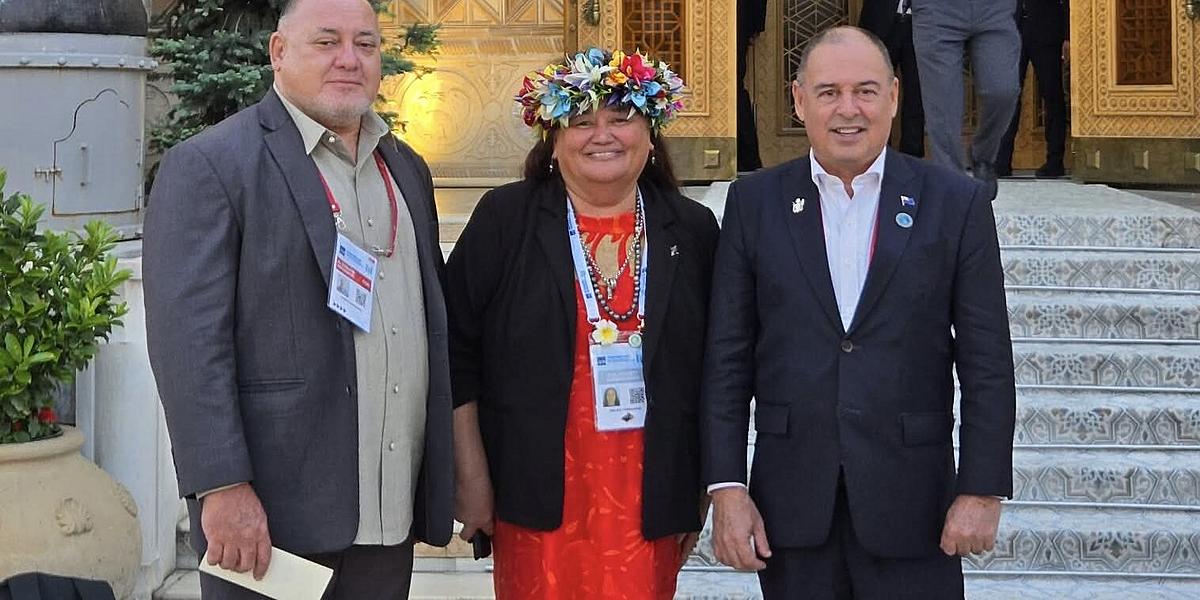
Cook Islands Prime Minister Mark Brown has called for greater financial support for Pacific renewable energy transitions, describing the shift away from imported fuel as an economic security strategy rather than a climate concession.
Speaking at the 59th Annual Meeting of the Asian Development Bank, or ADB, in Samarkand, Brown said Pacific Island countries remain highly exposed to global fuel price shocks and supply disruptions due to dependence on imported energy.
“The Pacific energy transition is not a climate concession. It is an economic security strategy. The same investments that lower our emissions also lower our exposure to the next global shock,” Brown said in his Governor’s Statement.
Brown said the Cook Islands was working closely with the ADB on financing solutions aimed at strengthening energy security and accelerating renewable energy development across Pacific Island countries.
“The Cook Islands is working closely with the ADB on financial solutions that support security of supply for Pacific Island countries, and that fast-track our energy transition to renewables,” he said.
The prime minister said the financing initiatives would support renewable energy projects across the Pa Enua, including solar farms, battery storage systems and electricity grid upgrades aimed at reducing long-term reliance on imported fuel.
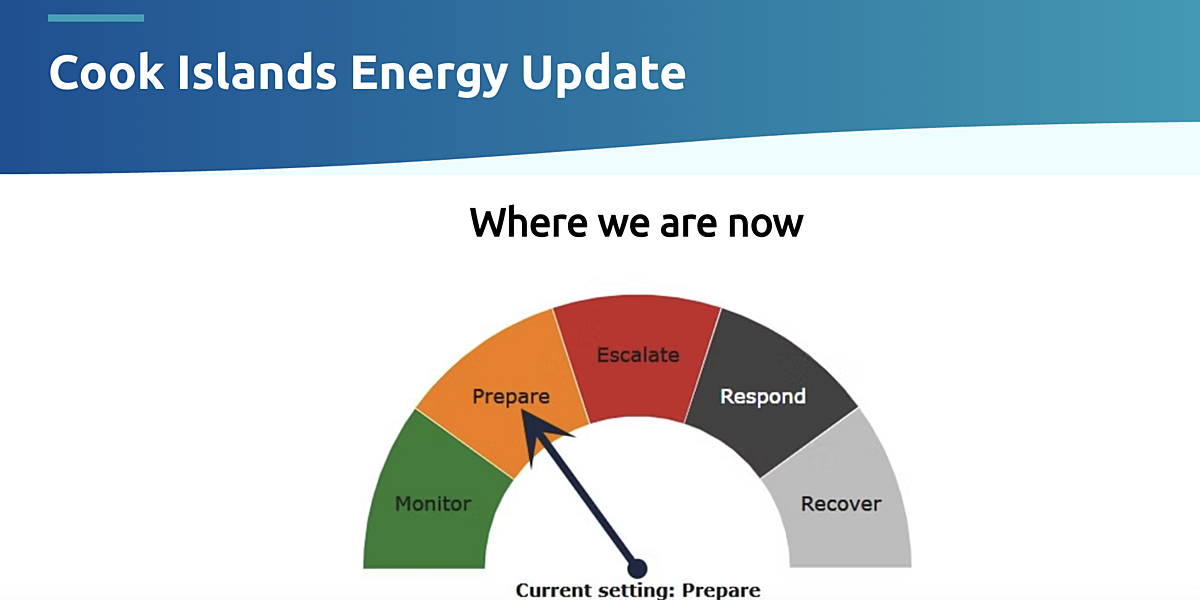
Brown also highlighted domestic conservation measures currently underway in the Cook Islands, including coordination work led by the Energy Response Technical Working Group involving government agencies, the tourism sector and communities.
“Conservation is a real lever. Every litre saved is fuel for our hospital, our schools, our airports,” he said.
During the meeting, Brown urged the ADB to expand innovative financing tools for Pacific small island developing states, including blended finance, climate-linked financing mechanisms and local currency debt conversion measures to reduce exposure to foreign exchange risks.
He said concessional financing access for Pacific states should continue to reflect vulnerability to economic and climate shocks rather than income levels alone.
“Graduation thresholds were not designed for economies that can lose a year of gross domestic product in a single cyclone, or absorb a global energy shock with no domestic substitute,” Brown said.
Brown also welcomed the ADB’s developing work on critical minerals and called for Pacific small island states to be actively included in related initiatives.
The prime minister said the Cook Islands currently generates just over 30 percent of its electricity from renewable energy sources and aims to increase that figure to 60 percent by 2030.
“We will use this period to push our renewable energy goals harder, not slower,” Brown said.