Latest News
Trending News
The Government of the Cook Islands in Febuary 2026 officially opened the IORIS Foundational and Leadership Training, a comprehensive two-week programme designed to enhance national maritime security capabilities, strengthen inter-agency coordination, and improve information-sharing across government departments.
Delivered under the European Union-funded CRIMARIO (Critical Maritime Routes Indo-Pacific) project, the training focuses on the use of IORIS—a secure, web-based platform that facilitates real-time coordination and intelligence sharing between national and regional agencies involved in maritime security.
Participation in IORIS reflects the Cook Islands’ commitment to regional security frameworks and declarations that prioritise cooperation, interoperability, and collective responses to transnational maritime threats spanning the Pacific and Indo-Pacific regions. This initiative also directly supports key objectives within the Cook Islands National Security Policy, especially the protection of the country’s expansive Exclusive Economic Zone (EEZ) and strengthening whole-of-government operational coordination.
At the opening ceremony, Chief of Staff of the Office of the Prime Minister, Karopaerangi Ngatoko, underscored the value of modern technology and skills in addressing increasingly complex maritime security challenges.
“This training is a direct investment in our national security capability,” said Ms Ngatoko. “IORIS equips our agencies with contemporary tools and techniques to share information more effectively, coordinate responses swiftly, and keep pace with evolving maritime risks. The Office of the Prime Minister remains firmly committed to supporting our law enforcement partners and stakeholders in safeguarding the Cook Islands EEZ against both internal and external threats. We deeply value partnership, coordination, and readiness, and see this training as a meaningful investment in all three.”
The Cook Islands was first introduced to the IORIS platform in 2023 through training hosted by the Pacific Fusion Centre in Vanuatu. Since then, the Office of the Prime Minister has facilitated the platform’s adoption across nine government agencies, with nineteen registered users nationwide. Additionally, Cook Islands agencies have participated in regional tabletop exercises utilizing IORIS alongside partners from the Pacific and Latin America.
The current Foundational and Leadership courses aim to develop advanced users and national administrators, enabling Cook Islands agencies to manage country-specific coordination areas within IORIS and provide ongoing technical support to users.
The Government expressed appreciation for the continued support of the CRIMARIO project, which has provided the IORIS platform to the Cook Islands at no cost, along with sustained training and technical assistance through the IORIS Instructor and Pacific Lead role.
Special thanks were extended to the Cook Islands Police Service and Customs Service for co-hosting the training sessions, as well as to the Heads of Agencies who nominated participants for the programme.
This training reinforces the Cook Islands’ dedication to collaborative governance and regional partnerships aimed at safeguarding maritime security and protecting the nation’s vital interests in the Indo-Pacific.
Pacific Lime and Cement Limited has reported progress on its December 2025 Quarterly Activities and Cash Flow, confirming that its Central Lime Project (CLP) in Central Province remains on schedule and within budget. The company continues to target first production within its planned 18-month development window, aiming for early 2027.
Quarterly Activities and Cash Flow Overview
During the quarter, construction momentum accelerated across civil works, access infrastructure, wharf works, camp and support facilities, and early kiln foundation preparation. Physical progress remains marginally ahead of baseline, with forecast costs tracking in line with the approved budget. The company reported no lost-time injuries during the quarter.
Key highlights for the December 2025 quarter include:
CLP Construction on Schedule: Bulk earthworks, drainage, platform formation, and kiln foundation preparation advanced well. Geotechnical investigations were completed, and foundation drawings were issued to allow procurement of reinforcing steel and formwork.
Access Road and Bridges: Construction progressed materially on the 27.6-kilometre road linking the project to Port Moresby. Reinforced concrete culverts were installed, two modular steel bridges were procured for river crossings, and bridge abutment installation is scheduled for early 2026.
Wharf Development: Stage 3 of the dedicated wharf progressed into procurement as the design reached substantial completion. The port remains operational and able to accept vessels during construction.
Heavy Equipment Mobilisation: 30-tonne and 150-tonne cranes arrived on site, supporting piling, batch plant, and foundation works. A concrete batch plant was delivered and assembly commenced, alongside fuel storage, power generation units, and a mobile fleet workshop.
Camp and Support Infrastructure: Stage 2 modular accommodation mobilisation continued, and office, kitchen, and laundry facilities advanced. Camp foundations were completed ahead of installation.
Commercial and Strategic Progress
The company delivered quicklime to Western Australian gold producers via its newly established logistics hub, demonstrating early operational capability. Pacific Lime also formalised its Project Development Agreement (PDA) with the Government of Papua New Guinea at PNG Investment Week and entered a strategic partnership with the International Finance Corporation (IFC) to advise on technical, commercial, and ESG aspects of the Central Cement Project.
A strategic partnership with PowerChina (SinoHydro) was signed to accelerate development of the Orokolo Bay Industrial Sands Project (magnetite). The company also advanced renewable energy initiatives, including feasibility studies for a solar photovoltaic and battery storage system in PNG, supporting its broader low-carbon strategy for the construction, mining, and resources sectors.
Pacific Lime commenced trading on the PNG Stock Exchange in December 2025 under the ticker “PLC,” expanding access to local investors.
Cash Flow and Financial Position
While the company did not disclose exact cash flow figures in the quarterly report, PLC confirmed that project expenditure remained within the approved budget and that forecast costs for the CLP are aligned with financial planning. Disciplined risk and opportunity management, local workforce deployment, and improved logistics coordination have underpinned construction efficiency and financial control.
Outlook
Early-2026 priorities include completion of Kiln 1 foundations and upper concrete structures, continued road and bridge construction, and assembly of batch plants and heavy lifts. The Central Lime Project continues to integrate a quicklime plant, international wharf, quarry, and supporting infrastructure. Pacific Lime remains committed to community engagement and internationally recognised Environmental, Social, and Governance (ESG) standards.
The company aims to deliver high-quality, lower-cost, and sustainable building materials for Papua New Guinea and the wider Asia-Pacific region while maintaining a disciplined, on-budget development schedule.
The operator of the PNG LNG Project, ExxonMobil PNG Limited, recently welcomed 75 outstanding ninth-grade girls from five Port Moresby schools for a day of hands-on science experiments, mentorship, and exciting activities designed to spark their curiosity and build their confidence in engineering.
Now in its second year in Papua New Guinea, ExxonMobil’s Introduce a Girl to Engineering Day — held at its LNG Plant at Caution Bay — was a resounding success.
This year’s theme, “Design Your Future,” encouraged students to imagine the possibilities of a STEM career (Science, Technology, Engineering, and Math). Supported by 42 passionate employee volunteers from ExxonMobil’s Women in Energy Network, the students explored key engineering concepts and learned directly from Papua New Guinean engineering professionals.
ExxonMobil PNG Chairman and Managing Director Dinesh Sivasamboo visited the students during their practical sessions and was impressed by both their enthusiasm and teamwork.
“It’s great to see that even though you’ve come from different schools, you have quickly made new friends and learned to work together effectively as a team to solve real-world problems. These are important skills and experiences that will help you excel in your lives and your careers,” Sivasamboo said.
“Papua New Guinea’s energy future looks quite bright, so there will be opportunities for students like you throughout our industry. I hope you will continue to apply yourselves to your studies so that you might join us as engineers one day,” he concluded.
Students expressed their gratitude and excitement about the experience, saying it opened their eyes to new possibilities in engineering.
“I didn’t think much about taking on engineering, but after today, I might have a change of mind,” said Zillar Naku Pa’aka from Gordon Secondary School. “Once we started the practical activities, I really enjoyed it.”
“I really enjoyed the electrical engineering activity with the circuit boards,” added Sylvia Mero from Jubilee Catholic Secondary School. “When the lights lit up, it felt like it lit something in me. I think after today, I’d like to become an engineer.”
The students represented Gordon Secondary School, Charles Lwanga Secondary School, Jubilee Secondary School, Bavaroko Junior High School, and Ororo Junior High School. The day concluded with lunch at the Plant site mess and a small gift pack for each participant to take home.
ExxonMobil PNG is proud to help inspire the next generation of innovators by empowering more girls to dream big and engineer boldly.
Solomon Islands has been elected as Vice President for the Asia-Pacific Group at the 16th Assembly of the International Renewable Energy Agency (IRENA), recently held in Abu Dhabi, United Arab Emirates. The position was previously held by the UAE during the last Assembly.
The Minister for Mines, Energy and Rural Electrification, Derek Rawcliffe Manu’ari, expressed gratitude for the strong support and confidence placed in Solomon Islands to represent the highly diverse Asia-Pacific region.
“While Solomon Islands is a Small Island Developing State in the Pacific, we look forward to working closely with all Member States to ensure that energy transition pathways are just, inclusive and seamless—pathways that put people first and respond to the renewable energy needs of SIDS within their unique development contexts,” said Manu’ari.
He further highlighted that for Solomon Islands and other Pacific Small Island Developing States (SIDS), the energy transition goes beyond decarbonisation.
“It is about survival, resilience and dignity. A just transition means affordable access to energy, stronger and more empowered communities and resilient energy systems capable of withstanding the impacts of future cyclones,” Manu’ari added.
As Vice President, Solomon Islands will consult and coordinate with Asia-Pacific Member States on matters relating to IRENA’s work, ensuring that issues are addressed constructively and in the best interests of all Members. The Vice Presidency is a rotational role that provides guidance and support to the IRENA Secretariat, Council and Member States.
A key focus during Solomon Islands’ tenure will be the withdrawal of the United States from IRENA, a development expected to influence the Agency’s work programme and budget. Manu’ari stressed that support for SIDS must remain a priority and any revisions to the work programme or budget should not undermine assistance to these nations.
On the sidelines of the Assembly, Manu’ari also chaired a High-Level Panel discussion on “Advancing Sustainable Aviation Fuel through Partnership and Finance,” underscoring the critical role of collaboration and investment in accelerating sustainable solutions within the aviation sector.
The election of Solomon Islands as Vice President reflects its growing role in international renewable energy governance and its commitment to advocating for inclusive and resilient energy transitions that meet the unique needs of Small Island Developing States.
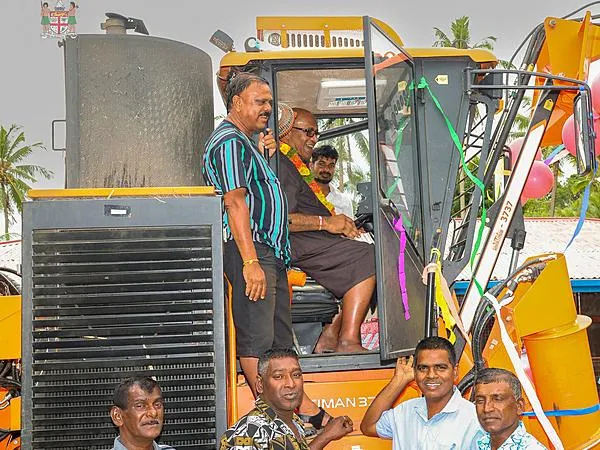
The Government of Japan has officially handed over a dredger to Fiji’s Ministry of Agriculture, Waterways and Sugar Industry, strengthening the country’s flood mitigation capacity and long-term climate resilience. The handover ceremony took place at the Ministry’s Luvuluvu Station in Nausori.
Officiating at the event, the Counsellor and Deputy Head of Mission of the Embassy of Japan to Fiji, Mr. Isami Takada, said the dredger—funded under Japan’s Grant Aid for Economic and Social Development—represents a strategic shift from disaster response to long-term resilience building.
Takada noted that in 2020, Japan pledged disaster risk reduction equipment valued at JPY 848 million to support Fiji. This package includes tsunami early warning systems, an ice-making plant already handed over in Lautoka, and the newly delivered dredger. The tsunami early warning systems are expected to be provided soon to Fiji’s National Disaster Management Office.
He emphasised that the dredger will play a critical role in reducing flood risks by improving drainage systems and river mouths, protecting farmland from siltation and waterlogging, and ensuring safer navigation along coastal and river routes. These outcomes, he said, will help safeguard livelihoods before, during and after disaster events.
Receiving the dredger, the Minister for Agriculture, Waterways and Sugar Industry, Tomasi Tunabuna, described the handover as another milestone in the strong and enduring partnership between Fiji and Japan.
He highlighted that between 2020 and 2025, the Ministry has received excavators, wheel loaders and dump trucks through Japan’s Grant Assistance for Grassroots Human Security Projects. These assets are now actively supporting rural and maritime communities across the country.
Minister Tunabuna underscored Fiji’s vulnerability to climate change and recurring floods, which continue to threaten infrastructure, livelihoods and national food security. He said the newly handed-over dredger will be a key asset in clearing silted waterways, increasing river discharge capacity, and protecting agricultural land and nearby communities.
Reaffirming the deep Kizuna—or bond—between Fiji and Japan, Minister Tunabuna assured that the dredger will be properly used and maintained to ensure long-term benefits for all Fijians.
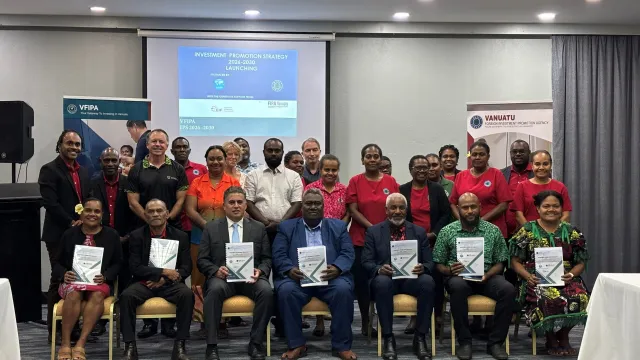
The Pacific Sustainable Development Initiative (PSDI) Financing Growth team visited Fiji to assist the Government of Fiji in implementing the Access to Business Funding (A2BF) Act 2025, a groundbreaking legislative framework designed to facilitate innovative financing mechanisms including small offers, peer-to-peer (P2P) lending, and crowdfunding.
A significant highlight of the visit was the official launch of a Request for Proposals (RfP) seeking a company or consortium to develop and operate Fiji’s first P2P lending platform. P2P lending leverages technology to provide an alternative lending approach that reduces or removes collateral requirements, thereby increasing financial access for micro, small, and medium-sized enterprises (MSMEs) that often face challenges obtaining traditional financing.
The RfP was launched jointly by the Ministry of Commerce and Business Development and the Reserve Bank of Fiji at a press conference, marking a crucial step towards bringing the new law into practical operation.
During their visit, PSDI facilitated a knowledge-sharing exchange with senior representatives from MicroLeap, a Malaysian P2P lending provider with experience in markets similar to Fiji. The MicroLeap team engaged with key stakeholders including the Ministry of Commerce and Business Development, Ministry of iTaukei Affairs, and the Fiji Investment Corporation to explore how P2P lending could complement government assistance programs that provide substantial grant funding to targeted sectors.
MicroLeap also held two separate sessions with MSMEs, MSME support organizations, and business development service providers. These interactive sessions aimed to familiarize the local business community with the benefits of P2P lending and how it could improve their access to capital.
Additionally, the MicroLeap team collaborated with the Reserve Bank of Fiji to review draft regulations and guidelines for P2P lending, sharing insights on best practices from Malaysia as well as potential regulatory challenges to consider in Fiji’s context.
PSDI further participated in the fourth A2BF Act implementation task force meeting, providing updates on regulatory developments for P2P lending and equity crowdfunding, and discussing plans to create a startup support package for the successful P2P lending platform operator.
PSDI is proud to partner with the Ministry of Commerce and Business Development and the Reserve Bank of Fiji in advancing the implementation of the Access to Business Funding Act and expanding equitable access to finance for Fijian businesses, driving economic growth and entrepreneurship across the country.
Vanuatu has taken a significant step in strengthening its tourism and aviation links with New Zealand, following the announcement of expanded year-round direct services to Port Vila by Solomon Airlines. The Vanuatu Tourism Office (VTO) has welcomed the development, describing it as a major boost for air connectivity and the national tourism industry.
From 1 July 2026, Solomon Airlines will launch a new direct Christchurch–Port Vila service, operating twice weekly on Thursdays and Sundays. This marks the first-ever direct air link between New Zealand’s South Island and Vanuatu, opening an important new source market and making the destination more accessible to South Island travellers seeking a tropical Pacific getaway.
In addition, Solomon Airlines will introduce a fourth weekly service from Auckland to Port Vila from the same date. Together, these expansions will deliver a total of six direct flights per week from New Zealand—four from Auckland and two from Christchurch—significantly increasing capacity and travel choice for visitors.
Under the new schedule, Auckland–Port Vila services will operate on Mondays, Wednesdays, Fridays and Saturdays, with return flights departing Port Vila on Tuesdays, Thursdays, Fridays and Sundays. Christchurch–Port Vila flights will depart Christchurch on Thursdays and Sundays, with return services from Port Vila on Wednesdays and Saturdays.
The expanded services will provide approximately 900 seats per week, equating to around 46,800 seats annually. This represents a substantial increase from 17,400 seats in 2025 and creates strong growth opportunities for accommodation providers, tour operators, transport services and the wider tourism sector.
Vanuatu Tourism Office Chief Executive Officer, Mrs Adela Issachar Aru, said the announcement represents a major milestone for the destination.
“We are delighted to support Solomon Airlines as they continue to invest in the New Zealand market,” Mrs Issachar Aru said. “The launch of direct services from Christchurch and the increased frequency from Auckland significantly strengthen access to Vanuatu and support long-term tourism growth. This expanded connectivity opens new markets, particularly from the South Island, and supports increased visitation across leisure, family and adventure travel segments.”
She added that improved air access also presents strong commercial opportunities for both New Zealand and Vanuatu tourism businesses.
“With six direct services per week, Vanuatu is now easier to sell than ever before. This creates strong opportunities for our local operators, resorts, guides and transport providers to capture increased demand,” she said.
To support the growth in connectivity, the Vanuatu Tourism Office will roll out a comprehensive famil programme throughout 2026, enabling New Zealand travel agents to experience the destination first-hand. The programme will showcase Vanuatu’s accommodation offerings, attractions, cultural experiences and culinary landscape, helping to drive bookings and encourage longer stays.
The new Vanuatu Industry Training Platform will also be launched in February 2026 to ensure travel agents are well equipped to confidently sell the destination. These initiatives will be complemented by trade engagement, cooperative marketing campaigns and ongoing training support.
The increased capacity underscores Vanuatu’s commitment to strengthening its presence in the New Zealand market and driving sustainable tourism growth that delivers lasting benefits for local communities and businesses across the country.
Authors:
Dentons
Matt Coleman — Partner, Construction, Melbourne (bio link)
Wavie Kendino Leki — Partner and Head of Office, Port Moresby (bio link)
Steve Patrick — Partner, Commercial/Corporate, Port Moresby (bio link)
Ian Clarke, OBE — Special Counsel and Consultant, Corporate, Sydney (bio link)
Executive Summary
The Pacific Quality Infrastructure Principles (PQI), endorsed by Pacific leaders in 2021, set out a bold vision for infrastructure that is resilient, inclusive, and locally led. At the 2025 Pacific Infrastructure Conference in Brisbane, that vision was tested and, in many cases, realised. Across dozens of sessions, case studies, and bilateral dialogues, the region’s governments, contractors, financiers, and communities demonstrated how the PQI are being embedded in practice.
The following sections explore how the PQI are being operationalised across the Pacific, drawing on examples from infrastructure planning, procurement reform, climate finance, and delivery models. It also considers the legal architecture that enables and scales these efforts, positioning the law as a foundational enabler of PQI implementation and supporting high-quality infrastructure across the region.
Local Content and Workforce Development — From Policy to Practice
The PQI’s first principle — that infrastructure should build local capacity beyond physical assets — is increasingly being realised across the Pacific. The shift from participation to empowerment is evident in how governments, chambers of commerce, and contractors are rethinking delivery models.
In Tuvalu, the Chamber of Commerce has articulated a clear vision for infrastructure that leaves behind skills, not just structures. With a small but resilient workforce and growing interest in trades and entrepreneurship, Tuvalu is seeking partnerships that embed training, subcontracting, and supply-chain inclusion. Similar sentiments were expressed by Niue, Kiribati and the Federated States of Micronesia, where local businesses are eager to participate in logistics, catering, and construction.
Fiji’s Commerce and Employers’ Federation (FCEF) highlighted a workforce of more than 300,000, with 17,000 annual graduates and a proven track record in delivering donor-funded projects. FCEF is actively connecting contractors with skilled tradespeople, suppliers and workforce development partners — demonstrating that local engagement is not only a social benefit but also a commercial advantage.
Contractors are responding. Reeves Envico’s work in Kiribati includes training women in carpentry, painting, and site administration. Hatanga’s partnership with BY Group in Solomon Islands is delivering projects with 90% local procurement and workforce participation. Hall Contracting’s wharf project in Nui, Tuvalu, overcame extreme remoteness and corrosive conditions through pre-planning, prefabrication, and local labour mobilisation.
Collectively, these examples illustrate that local content is no longer merely a compliance requirement — it is a strategic imperative. However, scaling these efforts requires legal frameworks that embed local participation into procurement, contracting, and performance management. This includes:
mandating local labour quotas in public procurement
structuring joint ventures with local firms
recognising local training and certification pathways
embedding local content into bid evaluation criteria
Climate Resilience and Lifecycle Planning — Infrastructure That Endures
The PQI place climate resilience at the heart of infrastructure planning and delivery. In a region where rising seas, cyclones, and extreme weather events are lived realities, resilience is not a luxury — it is a necessity. At the 2025 Pacific Infrastructure Conference, this principle was demonstrated through a diverse array of projects, strategies, and institutional reforms.
One of the most compelling examples came from Samoa, where the Green Ports Initiative has transformed Apia Port into a model of climate-smart infrastructure. Supported by the Asian Development Bank and technical experts from Haskoning, the initiative delivered 42 targeted upgrades across five domains: environmental management, operational efficiency, disaster preparedness, climate resilience, and social sustainability. Upgrades included solar PV installations, smart lighting, rainwater harvesting, and electrification of port operations. The initiative also produced a Green Ports Policy, a Practice Manual, and a Multi-Hazard Preparedness Plan — tools now being replicated in Tonga and Fiji.
In the Cook Islands, a quantitative adaptation planning framework was used to assess climate risks to critical assets such as Rarotonga International Airport and Avatiu Harbour. The methodology combined detailed asset-level data with multi-hazard modelling of heat stress, sea-level rise, storm surge and extreme rainfall. The result was a set of adaptation scenarios ranging from business-as-usual to maximum protection, each evaluated through multi-criteria analysis. This evidence-based approach now informs national infrastructure strategies and investment prioritisation.
The Federated States of Micronesia (FSM) has also made significant strides. Entura, the consulting arm of Hydro Tasmania, has worked across all four states to deliver renewable energy projects aligned with FSM’s nationally determined contributions under the Paris Agreement. These included solar and battery energy storage systems (BESS), disaster-proof generation equipment and feasibility studies for future investments. Entura’s work is notable for integrating climate risk assessments, stakeholder engagement and capacity building.
In Papua New Guinea (PNG), the Resilient Infrastructure Guide — developed by the Economic and Social Infrastructure Program (ESIP) with the Government of PNG — provides a comprehensive framework for embedding resilience throughout the infrastructure lifecycle. It outlines principles for climate risk assessment, stakeholder alignment and whole-of-life value, with practical tools for integrating resilience into procurement, design, construction and maintenance. Case studies from Lae Market and Metoreia Health Centre illustrate how resilience can be built into materials selection, ventilation systems, water harvesting and maintenance planning.
Together, these initiatives reflect a regional shift from reactive adaptation to proactive resilience. Infrastructure is no longer designed solely for functionality — it is designed for durability. This shift requires governments to embed resilience into planning codes, procurement criteria and performance standards; donors and financiers to require climate risk integration; and contractors to adopt lifecycle costing and resilience metrics.
Community-Led Design and Social Inclusion — Infrastructure That Reflects Local Realities
The PQI emphasise that infrastructure must be designed not simply for communities, but with them. Community-led design is increasingly recognised as essential to ensuring infrastructure is inclusive, sustainable and fit for purpose. At the 2025 Pacific Infrastructure Conference, this principle was demonstrated through various projects across the region.
In Solomon Islands, the Buala Market project shows how infrastructure can be shaped by local needs. Community input informed layout, access, and functionality, resulting in a facility that supports local livelihoods, enhances food security and strengthens social cohesion. Climate-resilient design features mitigate flood risk and support long-term maintenance.
In Kiribati, the redevelopment of Betio Hospital’s maternal and children’s wing was guided by principles of simplicity, durability and cultural appropriateness. The design prioritised ease of cleaning, passive ventilation and family congregation spaces, all informed by local consultation. The project also created employment opportunities for women in skilled trades.
The Hatanga–BY Group partnership in Solomon Islands further demonstrates community-embedded delivery models. Their work in Temotu Province involved local engineers in geotechnical investigations, concrete mix design and prefabrication. The model — combining Australian certifications with Solomon Islands labour and logistics — is now being scaled to Tuvalu, Vanuatu and Honiara.
Workforce inclusion is also being advanced through the IFC’s Meri Save Trades program, which helps firms recruit and retain women in construction. Support includes inclusive recruitment guidance, gender-sensitive workplace policies, appropriately fitted PPE and menstrual health accommodations. Participating firms report improved retention, productivity and workplace culture.
Reeves Envico’s training programs in Kiribati include forklift certification, Gender Equality, Disability and Social Inclusion (GEDSI) workshops and career development pathways — all embedded into project delivery rather than treated as add-ons.
From a legal perspective, community-led design requires frameworks that go beyond consultation. Governments must embed inclusive design principles into planning codes, procurement templates and performance standards. Contractors must demonstrate how projects reflect community needs and support social outcomes. Donors and financiers must integrate social safeguards into funding agreements.
Community-led design is ultimately about co-creation. It recognises that infrastructure is not neutral — and that its design, delivery and operation must reflect the values and aspirations of the people it serves.
Governance, Standards and Procurement Reform — Enabling Quality Delivery
The PQI call for governance frameworks that support quality outcomes. This includes the legal architecture of procurement and contracting, as well as the technical standards, institutional capacity and performance management systems that underpin infrastructure delivery.
Across the Pacific, governments and regional bodies are strengthening these foundations. The South Pacific Engineers Association (SPEA) is leading efforts to harmonise engineering standards across PNG, Fiji, Samoa, Tonga, Cook Islands and Vanuatu. Its partnership with Engineering New Zealand (ENZ) and New Zealand’s Ministry of Foreign Affairs and Trade (MFAT) aims to provide online access to New Zealand and Australian design codes, expand continuing professional development (CPD) pathways, and create accreditation routes for technicians and engineers. These initiatives enable regional labour mobility and ensure consistent infrastructure quality.
In PNG, the Business Council is advocating for reforms to streamline procurement, clarify public-private partnership (PPP) guidelines and digitise permitting systems. Technical working groups on macroeconomics, ESG, revenue and infrastructure are producing policy papers feeding into government-business consultative forums that align public and private priorities.
In Tonga, the National Transport Research Organisation (NTRO) is implementing a Strategic Transport Infrastructure Advisory Program across six islands. It includes surveying 500 km of roads, inspecting six airports and developing asset management systems, laboratory certification, training programs and sustainability analysis aligned with the UN Sustainable Development Goals. NTRO’s approach provides a model for embedding technical advisory in national planning.
These efforts demonstrate that governance is not only about rules — it is about capability. Legal frameworks must support standards harmonisation, procurement reform and institutional strengthening. This includes:
drafting procurement laws that embed the PQI
creating bid evaluation criteria that reward quality, resilience and inclusion
establishing independent infrastructure commissions or technical panels
aligning national standards with international benchmarks (e.g. ISO, IEC, ASTM)
Financing and Delivery Models — Matching Vision with Resources
SPEA’s work to harmonise engineering standards and expand accreditation pathways is essential to enabling regional mobility and technical consistency.
Regional integration also requires legal frameworks that support mutual recognition, cross-border procurement and trade facilitation. This includes:
drafting mutual recognition agreements for engineering and construction professionals
creating regional procurement platforms and standardised tender documents
aligning customs and logistics regulations to support infrastructure delivery
supporting regional infrastructure corridors (e.g. undersea cables, aviation agreements)
Conclusion: From Principles to Practice
The PQI are no longer aspirational — they are being embedded in the region’s infrastructure landscape through community-led design, climate-resilient planning and inclusive delivery models. The 2025 Pacific Infrastructure Conference showcased a region that is not only committed to these principles but actively shaping its future around them.
To sustain momentum, Pacific governments, development partners and the private sector must now focus on institutionalising these gains. This means embedding the PQI into legislation, procurement systems and performance frameworks — not as optional guidelines, but as core requirements.
Legal frameworks will determine whether tomorrow’s infrastructure reflects today’s values. In the Pacific, those values are clear: resilience, inclusion and regional solidarity. The challenge now is to translate these values into enforceable standards, scalable models and enduring partnerships.
The PQI agenda is not just about building infrastructure — it is about building trust, opportunity and shared prosperity. From principles to practice, the journey continues.
For more information, visit the Pacific Quality Infrastructure Principles online.
Pacific Towing (PacTow) has successfully refloated the grounded Coral Expeditions cruise vessel Coral Adventurer (IMO 9838644).
The refloating operation was completed on the afternoon of December 30, 2025, near Dregerhafen, approximately 65 miles north-east of Lae, Papua New Guinea.
Following the vessel’s grounding, Pacific Towing was engaged to lead the salvage and recovery operation. The successful outcome was achieved through prompt and professional coordination between the crew onboard Coral Adventurer and shore-based support teams from Coral Expeditions, the National Maritime Safety Authority (NMSA), and Pacific Towing.
Pacific Towing’s diving and salvage specialists coordinated the refloating operation, with support from the PacTow tug Langila (IMO 9018933).
“We are very pleased with the result of this operation,” said Gerard Kasnari, General Manager of Pacific Towing.
“Our rapid response and the strong teamwork demonstrated by all parties ensured a safe and efficient refloat, while maintaining safety, the integrity of the vessel and protection of the marine environment as our top priorities," he added.
Pacific Towing is Papua New Guinea’s and Melanesia’s market leader in marine services and salvage, with operations extending across the broader region. The company has been operating for nearly 50 years and is a full member of the International Salvage Union (ISU) and the International Spill Control Organisation (ISCO).
Pacific Towing provides marine services to both upstream and downstream oil and gas clients, as well as a wide range of other industry sectors. The company owns and operates a fleet of 21 vessels and maintains its own Australian-trained and certified commercial dive team.
Employing more than 200 people, of whom 97 per cent are national employees, Pacific Towing is committed to workforce development and diversity. The company partners with the Australian Government on female cadetship training programmes.
With operations across Papua New Guinea’s major ports and in the Solomon Islands, Pacific Towing is headquartered in Port Moresby at its dedicated tug base and HACCP-certified camp. The company is ISO certified to international standards ISO 9001, ISO 14001 and ISO 45001.
Fiji’s business community came together in grand style on Saturday, November 29, at the Sheraton Fiji Golf & Beach Resort for the 33rd Prime Minister’s International Business Awards (PMIBA) 2025, drawing over 700 guests for an elegant gala recognising the nation’s top-performing companies.
Organised by Investment Fiji and supported by sponsors including major sponsor FIJI Water, the awards celebrated excellence across 18 categories, recognising achievements in sectors ranging from manufacturing, agriculture, tourism and services to innovation and export. A total of 18 winners were honoured, reflecting the diversity and dynamism of Fiji’s business landscape.
The awards, themed “Navigating Global Winds – Resilience, Innovation and Sustainable Growth,” highlighted companies demonstrating exceptional performance, sustainable practices, and a commitment to innovation despite global economic challenges. Attendees included business leaders, industry partners, government representatives and stakeholders, who praised the event as a platform that celebrates resilience, growth, and competitiveness in both local and international markets.
Delivering the keynote address on behalf of the Prime Minister and Minister for Foreign Affairs, Civil Service & Public Enterprise, Hon. Sitiveni Rabuka, Member of Parliament Hon. Manoa Kamikamica, the Chief Guest, emphasised the critical role of the private sector in Fiji’s economic future.
“Fiji’s private sector remains a vital driver of our economy, creating jobs, boosting exports and supporting diversification. With 212 investment projects worth over $6.2 billion in the pipeline and foreign direct investment forecasted to grow by 23%, this reflects strong confidence in the stability and direction of our economy,” Hon. Kamikamica said.
Investment Fiji Chair Ms. Jenny Seeto highlighted the quality of entries, noting over 200 applications were received this year. “The calibre of entries reflects the strength and ambition of Fiji’s business sector. I congratulate all our winners and finalists, and sincerely thank our sponsors whose support forms the backbone of these awards,” she said.
FIJI Water Associate Vice President Susie Waqanibaravi added, “FIJI Water is proud to support a platform that recognises business excellence and the leaders driving Fiji forward. We extend our warmest congratulations to Rosie Holidays as the Supreme Award winner, as well as all other category winners. Vinaka vakalevu to Investment Fiji for delivering another remarkable celebration of business achievement.”
Key Category Winners:
Supreme Award (FIJI Water): Rosie Holidays
Premier Large Business Operating Internationally (BSP Financial Group Limited): Fiji Airports Ltd
Premier Medium Business Operating Internationally (Westpac Fiji): Vuvale Outsourcing Pte Ltd
Premier Small Business Operating Internationally (DHL Express Fiji): Bula Coffee
Excellence in Innovation (Swire Shipping): DUCO Consultancy Pte Ltd
Excellence in E-Commerce Transformation (HFC Bank): Fiji Airways
Best Sustainability Initiative (Tropik Wood Industries Ltd): Waste Recyclers (Fiji) Ltd
Employer of the Year (Fiji National Provident Fund): Motibhai & Company Ltd
Excellence in Service (Tower Insurance): Rosie Holidays
Executive of the Year (Telecom Fiji): Mesake Nawari – Fiji Airports Ltd
Excellence in Outsourcing (Vodafone Fiji): KPMG Advisory (Fiji) Pte Ltd – Fiji Dynamic Delivery Centre
Excellence in Fisheries (Reserve Bank of Fiji): Pacific Fishing Company Ltd
Excellence in Agribusiness Innovation (Ministry of Agriculture & Waterways): Food Processors (Fiji) Pte Ltd
Excellence in Forestry (Ministry of Forestry): Tropik Wood Industries Ltd
Excellence in Yasana (Provincial) Aspiration (iTaukei Executive Forum): Rewa Provincial Holding Company Ltd
Recognition Awards: Jay Singh – Crowne Plaza Nadi Bay Resort & Spa, Damodar North Pte Ltd, Tappoo Group of Companies
The PMIBA remains one of Fiji’s most prestigious business accolades, reaffirming the partnership between government and the private sector in building a resilient, innovative, and sustainable economy. The evening served as both a celebration of past achievements and an inspiration for continued excellence in the years ahead.