
Authors:
Dentons
Wavie Kendino Leki — Partner and Head of Office, Port Moresby (bio link)
Matt Coleman — Partner, Construction, Melbourne (bio link)
Steve Patrick — Partner, Commercial/Corporate, Port Moresby (bio link)
Ian Clarke, OBE — Special Counsel and Consultant, Corporate, Sydney (bio link)
Jett Lobb — Solicitor, Melbourne
Executive Summary
The Pacific Quality Infrastructure Principles (PQI), endorsed by Pacific leaders in 2021, set out a bold vision for infrastructure that is resilient, inclusive, and locally led. At the 2025 Pacific Infrastructure Conference in Brisbane, that vision was tested and, in many cases, realised. Across dozens of sessions, case studies, and bilateral dialogues, the region’s governments, contractors, financiers, and communities demonstrated how the PQI are being embedded in practice.
The following sections explore how the PQI are being operationalised across the Pacific, drawing on examples from infrastructure planning, procurement reform, climate finance, and delivery models. It also considers the legal architecture that enables and scales these efforts, positioning the law as a foundational enabler of PQI implementation and supporting high-quality infrastructure across the region.
Local Content and Workforce Development — From Policy to Practice
The PQI’s first principle — that infrastructure should build local capacity beyond physical assets — is increasingly being realised across the Pacific. The shift from participation to empowerment is evident in how governments, chambers of commerce, and contractors are rethinking delivery models.
In Tuvalu, the Chamber of Commerce has articulated a clear vision for infrastructure that leaves behind skills, not just structures. With a small but resilient workforce and growing interest in trades and entrepreneurship, Tuvalu is seeking partnerships that embed training, subcontracting, and supply-chain inclusion. Similar sentiments were expressed by Niue, Kiribati and the Federated States of Micronesia, where local businesses are eager to participate in logistics, catering, and construction.
Fiji’s Commerce and Employers’ Federation (FCEF) highlighted a workforce of more than 300,000, with 17,000 annual graduates and a proven track record in delivering donor-funded projects. FCEF is actively connecting contractors with skilled tradespeople, suppliers and workforce development partners — demonstrating that local engagement is not only a social benefit but also a commercial advantage.
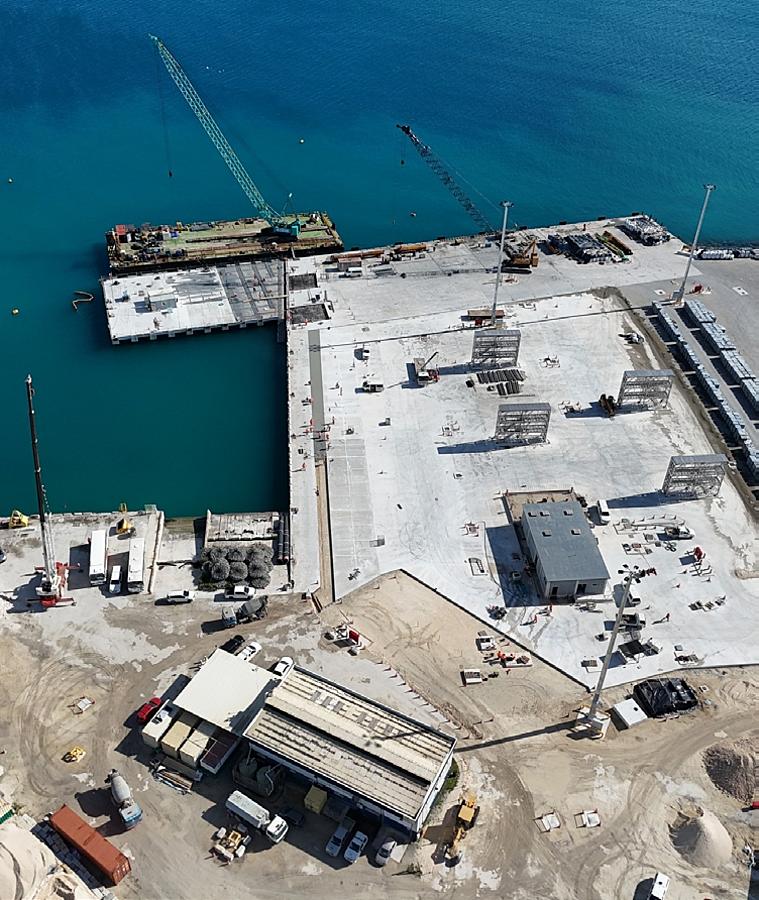
Contractors are responding. Reeves Envico’s work in Kiribati includes training women in carpentry, painting, and site administration. Hatanga’s partnership with BY Group in Solomon Islands is delivering projects with 90% local procurement and workforce participation. Hall Contracting’s wharf project in Nui, Tuvalu, overcame extreme remoteness and corrosive conditions through pre-planning, prefabrication, and local labour mobilisation.
Collectively, these examples illustrate that local content is no longer merely a compliance requirement — it is a strategic imperative. However, scaling these efforts requires legal frameworks that embed local participation into procurement, contracting, and performance management. This includes:
- mandating local labour quotas in public procurement
- structuring joint ventures with local firms
- recognising local training and certification pathways
- embedding local content into bid evaluation criteria
Climate Resilience and Lifecycle Planning — Infrastructure That Endures
The PQI place climate resilience at the heart of infrastructure planning and delivery. In a region where rising seas, cyclones, and extreme weather events are lived realities, resilience is not a luxury — it is a necessity. At the 2025 Pacific Infrastructure Conference, this principle was demonstrated through a diverse array of projects, strategies, and institutional reforms.
One of the most compelling examples came from Samoa, where the Green Ports Initiative has transformed Apia Port into a model of climate-smart infrastructure. Supported by the Asian Development Bank and technical experts from Haskoning, the initiative delivered 42 targeted upgrades across five domains: environmental management, operational efficiency, disaster preparedness, climate resilience, and social sustainability. Upgrades included solar PV installations, smart lighting, rainwater harvesting, and electrification of port operations. The initiative also produced a Green Ports Policy, a Practice Manual, and a Multi-Hazard Preparedness Plan — tools now being replicated in Tonga and Fiji.
In the Cook Islands, a quantitative adaptation planning framework was used to assess climate risks to critical assets such as Rarotonga International Airport and Avatiu Harbour. The methodology combined detailed asset-level data with multi-hazard modelling of heat stress, sea-level rise, storm surge and extreme rainfall. The result was a set of adaptation scenarios ranging from business-as-usual to maximum protection, each evaluated through multi-criteria analysis. This evidence-based approach now informs national infrastructure strategies and investment prioritisation.
The Federated States of Micronesia (FSM) has also made significant strides. Entura, the consulting arm of Hydro Tasmania, has worked across all four states to deliver renewable energy projects aligned with FSM’s nationally determined contributions under the Paris Agreement. These included solar and battery energy storage systems (BESS), disaster-proof generation equipment and feasibility studies for future investments. Entura’s work is notable for integrating climate risk assessments, stakeholder engagement and capacity building.
In Papua New Guinea (PNG), the Resilient Infrastructure Guide — developed by the Economic and Social Infrastructure Program (ESIP) with the Government of PNG — provides a comprehensive framework for embedding resilience throughout the infrastructure lifecycle. It outlines principles for climate risk assessment, stakeholder alignment and whole-of-life value, with practical tools for integrating resilience into procurement, design, construction and maintenance. Case studies from Lae Market and Metoreia Health Centre illustrate how resilience can be built into materials selection, ventilation systems, water harvesting and maintenance planning.
Together, these initiatives reflect a regional shift from reactive adaptation to proactive resilience. Infrastructure is no longer designed solely for functionality — it is designed for durability. This shift requires governments to embed resilience into planning codes, procurement criteria and performance standards; donors and financiers to require climate risk integration; and contractors to adopt lifecycle costing and resilience metrics.
Community-Led Design and Social Inclusion — Infrastructure That Reflects Local Realities
The PQI emphasise that infrastructure must be designed not simply for communities, but with them. Community-led design is increasingly recognised as essential to ensuring infrastructure is inclusive, sustainable and fit for purpose. At the 2025 Pacific Infrastructure Conference, this principle was demonstrated through various projects across the region.
In Solomon Islands, the Buala Market project shows how infrastructure can be shaped by local needs. Community input informed layout, access, and functionality, resulting in a facility that supports local livelihoods, enhances food security and strengthens social cohesion. Climate-resilient design features mitigate flood risk and support long-term maintenance.
In Kiribati, the redevelopment of Betio Hospital’s maternal and children’s wing was guided by principles of simplicity, durability and cultural appropriateness. The design prioritised ease of cleaning, passive ventilation and family congregation spaces, all informed by local consultation. The project also created employment opportunities for women in skilled trades.
The Hatanga–BY Group partnership in Solomon Islands further demonstrates community-embedded delivery models. Their work in Temotu Province involved local engineers in geotechnical investigations, concrete mix design and prefabrication. The model — combining Australian certifications with Solomon Islands labour and logistics — is now being scaled to Tuvalu, Vanuatu and Honiara.
Workforce inclusion is also being advanced through the IFC’s Meri Save Trades program, which helps firms recruit and retain women in construction. Support includes inclusive recruitment guidance, gender-sensitive workplace policies, appropriately fitted PPE and menstrual health accommodations. Participating firms report improved retention, productivity and workplace culture.
Reeves Envico’s training programs in Kiribati include forklift certification, Gender Equality, Disability and Social Inclusion (GEDSI) workshops and career development pathways — all embedded into project delivery rather than treated as add-ons.
From a legal perspective, community-led design requires frameworks that go beyond consultation. Governments must embed inclusive design principles into planning codes, procurement templates and performance standards. Contractors must demonstrate how projects reflect community needs and support social outcomes. Donors and financiers must integrate social safeguards into funding agreements.
Community-led design is ultimately about co-creation. It recognises that infrastructure is not neutral — and that its design, delivery and operation must reflect the values and aspirations of the people it serves.
Governance, Standards and Procurement Reform — Enabling Quality Delivery
The PQI call for governance frameworks that support quality outcomes. This includes the legal architecture of procurement and contracting, as well as the technical standards, institutional capacity and performance management systems that underpin infrastructure delivery.
Across the Pacific, governments and regional bodies are strengthening these foundations. The South Pacific Engineers Association (SPEA) is leading efforts to harmonise engineering standards across PNG, Fiji, Samoa, Tonga, Cook Islands and Vanuatu. Its partnership with Engineering New Zealand (ENZ) and New Zealand’s Ministry of Foreign Affairs and Trade (MFAT) aims to provide online access to New Zealand and Australian design codes, expand continuing professional development (CPD) pathways, and create accreditation routes for technicians and engineers. These initiatives enable regional labour mobility and ensure consistent infrastructure quality.
In PNG, the Business Council is advocating for reforms to streamline procurement, clarify public-private partnership (PPP) guidelines and digitise permitting systems. Technical working groups on macroeconomics, ESG, revenue and infrastructure are producing policy papers feeding into government-business consultative forums that align public and private priorities.
In Tonga, the National Transport Research Organisation (NTRO) is implementing a Strategic Transport Infrastructure Advisory Program across six islands. It includes surveying 500 km of roads, inspecting six airports and developing asset management systems, laboratory certification, training programs and sustainability analysis aligned with the UN Sustainable Development Goals. NTRO’s approach provides a model for embedding technical advisory in national planning.
These efforts demonstrate that governance is not only about rules — it is about capability. Legal frameworks must support standards harmonisation, procurement reform and institutional strengthening. This includes:
- drafting procurement laws that embed the PQI
- creating bid evaluation criteria that reward quality, resilience and inclusion
- establishing independent infrastructure commissions or technical panels
- aligning national standards with international benchmarks (e.g. ISO, IEC, ASTM)
Financing and Delivery Models — Matching Vision with Resources
SPEA’s work to harmonise engineering standards and expand accreditation pathways is essential to enabling regional mobility and technical consistency.
Regional integration also requires legal frameworks that support mutual recognition, cross-border procurement and trade facilitation. This includes:
- drafting mutual recognition agreements for engineering and construction professionals
- creating regional procurement platforms and standardised tender documents
- aligning customs and logistics regulations to support infrastructure delivery
- supporting regional infrastructure corridors (e.g. undersea cables, aviation agreements)
Conclusion: From Principles to Practice
The PQI are no longer aspirational — they are being embedded in the region’s infrastructure landscape through community-led design, climate-resilient planning and inclusive delivery models. The 2025 Pacific Infrastructure Conference showcased a region that is not only committed to these principles but actively shaping its future around them.
To sustain momentum, Pacific governments, development partners and the private sector must now focus on institutionalising these gains. This means embedding the PQI into legislation, procurement systems and performance frameworks — not as optional guidelines, but as core requirements.
Legal frameworks will determine whether tomorrow’s infrastructure reflects today’s values. In the Pacific, those values are clear: resilience, inclusion and regional solidarity. The challenge now is to translate these values into enforceable standards, scalable models and enduring partnerships.
The PQI agenda is not just about building infrastructure — it is about building trust, opportunity and shared prosperity. From principles to practice, the journey continues.
For more information, visit the Pacific Quality Infrastructure Principles online.