Kumul Petroleum Holdings Ltd has begun a comprehensive review of the Kumul Tower project following concerns over its procurement governance, management arrangements and expenditure exceeding US$120 million (about K500 million).
KPHL Board Chairman Ambassador Isaac Lupari and Acting Managing Director Luke Liria recently inspected the project site, where China State Construction Engineering Company has completed significant excavation, ground stabilisation, piling and foundation works.
However, the board said the inspection raised concerns about the governance of procurement and the project's management, including oversight by the external project manager.
An independent external auditor's recent forensic audit has confirmed the board's concerns regarding governance and accountability for project expenditure, KPHL said.
A detailed report outlining the audit findings and recommended actions will be submitted to the government.
“The Board has a duty to protect KPHL and the State. Before we make any further major commitment, we must establish clearly what has been delivered, whether the design remains appropriate, and which delivery and financing structure will provide the strongest long-term value,” Lupari said.
As part of the reset, KPHL will reassess the project's scope, design, cost and commercial viability.
The review will include consideration of reducing the proposed building from 27 storeys to a 15-storey development that the board described as more commercially viable.
KPHL will also engage independent project architects to review the building's design, engineering, functionality, constructability and cost.
The board will consider a mixed-use model incorporating hotel and office accommodation, while potential delivery and financing structures include a build-own-operate-transfer arrangement or a joint venture consortium involving local and international entities.
Lupari stressed that no delivery model had yet been selected.
“Any proposed option must undergo independent technical and commercial due diligence, demonstrate value for money, allocate risk appropriately, and comply with all governance and approval requirements,” he said.
KPHL said it remains committed to ensuring any future development of Kumul Tower is transparent, commercially sustainable and aligned with the long-term interests of the company, the State and the people of Papua New Guinea.
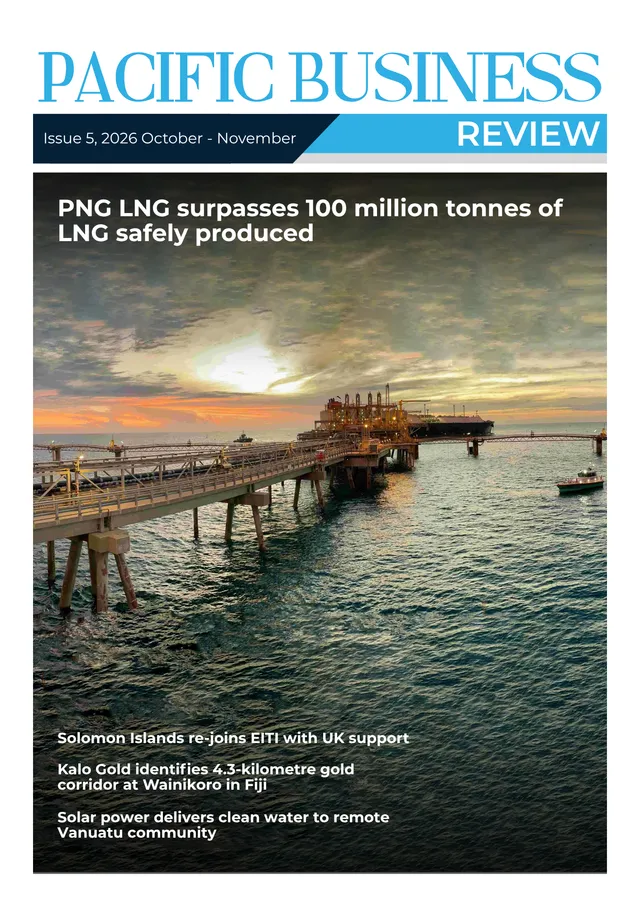
The PNG LNG Project has safely produced more than 100 million tonnes of liquefied natural gas since operations began in 2014, marking a major milestone for Papua New Guinea's petroleum industry.
The project, operated by ExxonMobil PNG Ltd., has connected Papua New Guinea's natural gas resources with global energy markets while supporting national development through employment, training, local business opportunities and community investment.
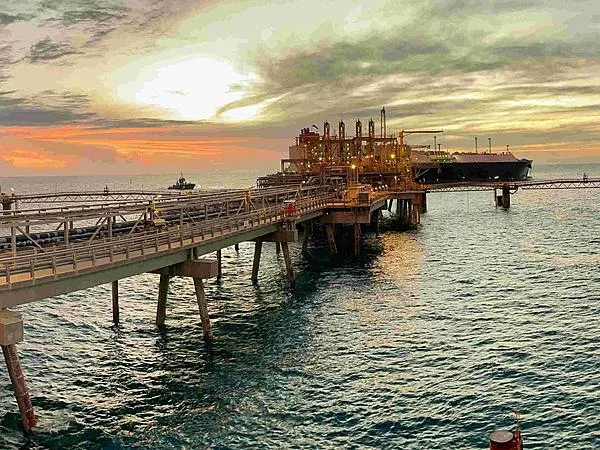
PNG LNG is an integrated gas development that produces natural gas from fields in Hela and Southern Highlands provinces. The gas is processed and transported through an approximately 700-kilometre pipeline network to a two-train liquefaction plant at Caution Bay in Central Province, where it is converted into LNG for export.
The project currently produces up to about 8 million tonnes of LNG a year, above its original nameplate capacity of 6.6 million tonnes. Since production began in 2014, it has supplied LNG primarily to customers in Asian markets.
The project's operations involve gas production and processing, pipeline transportation, liquefaction, storage and marine loading, forming an integrated value chain linking PNG's gas resources with international buyers.
ExxonMobil PNG Chairman and Managing Director Dinesh Sivasamboo credited employees, contractors and project partners for reaching the milestone.
“Reaching 100 million tons safely produced was only possible because of the unwavering commitment of generations of employees, contractors, and partners who embraced a shared purpose and maintained a relentless focus on doing the right things, the right way,” Sivasamboo said.
The milestone comes as Papua New Guinea continues to advance additional gas developments, including the proposed Papua LNG and P'nyang LNG projects, which are expected to build on the country's existing LNG industry.
ExxonMobil PNG said the achievement reflects the contribution of thousands of Papua New Guineans and project personnel who have supported PNG LNG's operations over more than a decade.
The company said it remains committed to creating long-term value for Papua New Guinea through the project's continued operations and its contribution to the country's energy and resources sector.
Here’s a PNG-focused news rewrite, leading with Santos’ increased stake and the implications for Papua LNG.
PORT MORESBY, Sept. 7, 2026 — Santos Ltd. will increase its participating interest in the Papua LNG project to 21% after agreeing to acquire an additional 3.3% stake from TotalEnergies as part of a broader restructuring of the project's ownership and operatorship.
TotalEnergies has agreed with ExxonMobil to transfer operatorship of Papua LNG to ExxonMobil PNG Antelope Limited, while partially selling down its participating interest to the other Papua LNG joint venture partners in proportion to their existing interests.
Santos said it has executed a binding agreement to acquire the additional 3.3% participating interest, calculated after the Papua New Guinea state's back-in, in PRL 15 and the Papua LNG project for approximately US$189 million.
The transaction remains subject to regulatory approvals and the project reaching a Final Investment Decision (FID), currently planned for the fourth quarter of 2026. If completed, the acquisition will be effective from Jan. 1, 2026.
Santos expects the additional interest to increase its equity LNG production from Papua LNG by about 19% to approximately 1.2 million tonnes per annum (Mtpa).
The company said the acquisition is consistent with its strategy of disciplined, value-accretive growth around existing infrastructure and increasing exposure to Asian LNG demand.
The proposed operatorship transfer would give ExxonMobil responsibility for Papua LNG while it continues to operate the existing PNG LNG project, a move Santos expects to generate operational synergies and strengthen project execution.
Santos Managing Director and CEO Kevin Gallagher said the transaction would better align the company's interests across PNG LNG and Papua LNG ahead of the planned FID.
“The Papua LNG project is a world-class development, strategically positioned to supply premium Asian markets and offering multiple value streams for Santos,” Gallagher said.
“ExxonMobil brings a proven track record of project delivery and reliable operations in Papua New Guinea, including PNG LNG, and is expected to realise significant synergies by operating both the upstream and midstream project scopes.”
Gallagher said Santos was prepared to increase its investment in Papua LNG because of the project's expected long-term production profile.
“Papua LNG is a world-class project and this is the right time to increase our position,” he said.
Santos said the proposed changes to equity interests and operatorship would improve alignment among the Papua LNG and PNG LNG joint venture participants.
Completion of Santos' acquisition remains conditional on regulatory approvals and Papua LNG achieving FID.
Santos said it will provide the market with an update at FID on the project's cost, schedule and economics.
The transaction comes as Papua LNG moves toward its targeted FID in the fourth quarter of 2026, a key milestone for the proposed development and its future LNG production capacity in Papua New Guinea.
Santos also acknowledged TotalEnergies for its work advancing Papua LNG over the past decade and said the project remains on track for FID later this year.
Fiji is exploring long-term cooperation with Malaysia to strengthen fuel security and shield the country from future global supply disruptions, including through strategic reserves and offshore fuel storage.
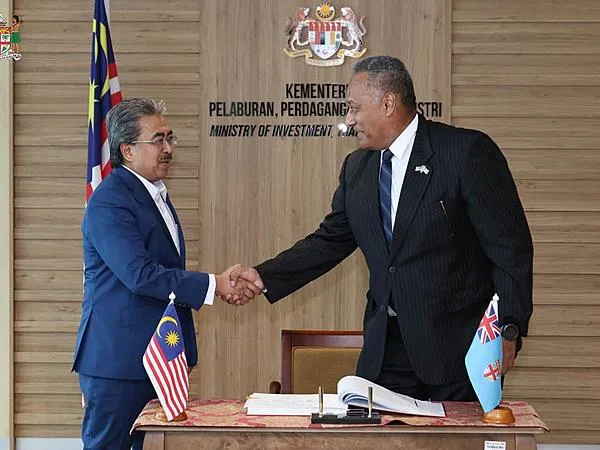
Discussions between Fiji and Malaysia in Kuala Lumpur on Aug. 10 focused on strategic fuel reserves, emergency supply assurances, resilient supply chains and long-term energy infrastructure. The talks also considered the possibility of pre-positioned offshore fuel storage and strengthened maritime supply arrangements.
Fiji’s Foreign Affairs and External Trade Minister Sakiasi Ditoka held discussions with Malaysia’s Investment, Trade and Industry Minister Johari Abdul Ghani, highlighting Fiji’s vulnerability as a small island developing state that relies heavily on imported fuel.
Johari outlined Malaysia’s work on strategic fuel security and stockpiling arrangements with international partners, giving Fiji an opportunity to assess how Malaysia’s experience and energy infrastructure could support its longer-term fuel security.
“Energy security is a critical component of national security for small island developing states,” Ditoka said.
“Malaysia’s advanced refining capabilities and world-class energy infrastructure make it a natural strategic partner. Exploring a formal and structured arrangement on fuel security and offshore stockpiling reflects our Coalition Government’s proactive commitment to protecting Fijian families and local businesses from international price shocks,” he said.
The discussions also covered opportunities to expand trade, investment, technology transfer and industrial cooperation, including increased Malaysian investment in Fiji and improved market access for Fijian products.
The reopening of Fiji’s High Commission in Kuala Lumpur is expected to provide a platform for further bilateral cooperation, with a focus on economic partnership, energy security and practical outcomes for both countries.
For Fiji, the discussions come as the government seeks to strengthen the resilience of its fuel supply system against disruptions in international markets and maritime supply chains.
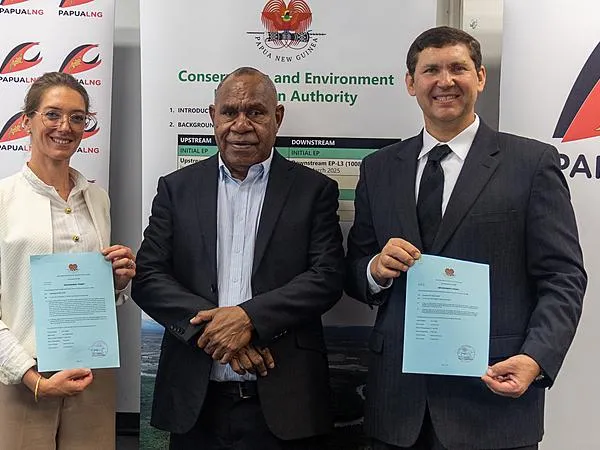
The upstream and downstream operators of the Papua LNG Project have been issued amended environmental permits by the Conservation and Environment Protection Authority (CEPA), following more than seven months of consultation between the regulator and project operators.
The amended permits were presented on May 29, 2026, following extensive discussions involving CEPA, upstream operator TotalEnergies EP PNG Limited and downstream operator ExxonMobil PNG Antelope Limited.
According to CEPA, the amendments reflect changes to both the upstream and downstream project designs and are expected to reduce potential environmental and community impacts associated with the development.
Michael Wau, executive director of CEPA's Non-Renewable Resources Environmental Protection Wing, said environmental permits are living documents that must be reviewed and updated to strengthen environmental protection, water resource management and biodiversity conservation.
"That is exactly what TotalEnergies EP PNG Limited and ExxonMobil PNG Antelope Limited have done by reviewing the project and requesting amendments to the environmental permits," Wau said.
The original environmental permits, EP-L3 (1008) and EP-L3 (1030), were issued in March and September 2025. They covered a range of planned activities, including the construction and operation of a Catenary Anchor Leg Mooring (CALM) buoy system and associated marine infrastructure.
Since the permits were issued, revisions to the project design have eliminated the need for several originally planned components, including the CALM buoy system, marine exclusion zones and related infrastructure.
Wau said the changes would significantly reduce environmental impacts, particularly in Caution Bay.
"There will be minimal environmental impact as the condensate pipeline, which was initially permitted to traverse Caution Bay, will instead connect with the Santos-owned Kumul Marine Terminal floating storage and offloading facility," he said.
According to CEPA, the amendments will deliver several environmental and community benefits, including:
• Avoiding extended travel times for local communities caused by marine exclusion zones;
• Preventing disruptions to artisanal and subsistence fishing activities; and
• Protecting sensitive marine and coastal habitats, including mangroves, intertidal zones and benthic environments.
"This is a great win for the environment and the people," Wau said.
TotalEnergies EP PNG Limited said it looks forward to continuing its collaboration with CEPA and other government agencies to ensure the Papua LNG Project is delivered in a sustainable, responsible and efficient manner.
"We are committed to delivering Papua LNG to the highest environmental standards in close partnership with CEPA," the company said.
ExxonMobil PNG Antelope Limited Chairman and Managing Director Dinesh Sivasamboo thanked CEPA for its review and approval of the amendments.
"We greatly value this collaboration and the constructive engagement throughout the process to ensure that the Papua LNG Downstream Project is delivered responsibly and in full compliance with the amended environmental permit," Sivasamboo said.
The amended permits are expected to support the continued development of the Papua LNG Project while reducing environmental impacts and preserving access to marine resources for surrounding communities.
The Cook Islands Government has launched a new online energy dashboard to provide households, businesses and communities with up-to-date information on the country's fuel position as authorities respond to ongoing global fuel supply pressures.
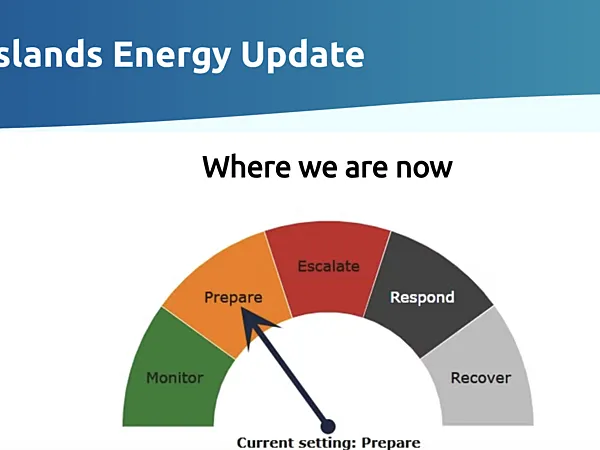
The dashboard forms part of the Government's broader response under the National Energy Response Framework, a Cabinet-approved plan that sets out how the country will respond to different stages of the global fuel crisis.
Developed by the Energy Response Technical Working Group (TWG), the framework uses a five-stage traffic-light system comprising Green (Monitor), Amber (Prepare), Red (Escalate), Black (Respond) and Recovery (Transition). The Cook Islands is currently operating under the Amber phase, reflecting rising pressure on global fuel supplies and prices while domestic fuel services continue to operate normally.
The dashboard is intended to strengthen fuel supply monitoring and improve transparency by providing regular updates on fuel stocks, shipment schedules, estimated days of supply remaining and the status of key fuel infrastructure.
According to the Government, monitoring fuel availability is a critical component of the Amber phase, helping ensure the country remains prepared and able to respond quickly to changing global conditions.
The dashboard tracks fuel availability across the Cook Islands, including stock levels on individual islands, fuel consumption rates and the timing of future fuel shipments. Officials said the information will support coordinated decision-making across government agencies and industry stakeholders while helping the public stay informed.
The TWG has established a set of core indicators that serve as an early warning system for potential supply disruptions. The indicators are designed to provide a clear and consistent picture of the country's fuel position and support timely intervention where required.
Current data show that Rarotonga has adequate supplies of all fuel types, with shipments continuing to arrive as scheduled.
Across the Pa Enua, the Government said it is working closely with island administrations and fuel suppliers to maintain fuel security through planned deliveries and ongoing monitoring. Authorities noted that transport and storage constraints in the outer islands require continued coordination between Island Governments, shipping operators and suppliers.
Prime Minister Mark Brown said the National Energy Response Framework provides a structured approach to managing the challenges posed by the global fuel situation.
“We are facing an external shock that we must respond to with discipline and care,” Brown said.
“This framework gives our community certainty about how Government will act at each stage, and what we are asking of every household and business. It also ensures that the Pa Enua are a priority in everything we do.”
“The most important step we can all take right now is to use fuel wisely. Every litre we save today is a litre that goes towards keeping our hospital running, our schools open, our airport moving, and our families supported,” he said.
Financial Secretary Garth Henderson said reliable information remains central to the Government's fuel security strategy.
“Our approach is to stay ahead of the situation by having clear, reliable information on our fuel position across the country,” Henderson said.
“We are tracking supply, usage, and incoming shipments closely, and sharing that information to support coordinated decision-making across Government.”
He said the framework brings together ongoing work across government into a single structure that allows both policymakers and the public to understand how decisions are made.
“What this framework does is take the work the Energy Response Technical Working Group has been doing — monitoring fuel supply, coordinating across agencies, supporting the Pa Enua, communicating with the public — and gives it shape and predictability,” Henderson said.
“Cabinet decisions to move between phases will be guided by clear criteria, and the community will know what phase we are in, what measures are in place, and what is being asked of them at each stage.”
Henderson emphasized that the country's fuel position remains stable despite global pressures.
“Importantly, our current supply position is stable, and shipments are continuing to arrive. We are in the Amber phase of the National Energy Response Framework, which means we have fuel and the most effective step every household and business can take is to use fuel wisely. Every litre saved helps extend our reserves and protect essential services,” he said.
Under the current Amber phase, several measures have already been implemented, including energy conservation directives for public sector agencies, restrictions on government vehicle use, the introduction of free bus services and additional public transport routes for three months, and extended income support for welfare beneficiaries.
Public awareness campaigns are also encouraging households, businesses and tourism operators to adopt energy conservation measures and avoid panic buying or fuel stockpiling.
The framework outlines additional measures that could be introduced if conditions deteriorate. Under the Red phase, the Government could implement spending limits on petrol and diesel purchases, restrictions on government travel and operating hours, and targeted support for low-income workers.
If conditions reach the Black phase, a National State of Emergency could be declared, with measures including temporary electricity rationing and restrictions on non-essential domestic travel.
The Government said all measures under the framework would be targeted, time-limited and assessed based on their effectiveness, economic impact and fiscal cost.
The framework also places the Pa Enua at the center of planning and response efforts, recognizing that outer islands face longer resupply times and more limited fuel storage capacity. Additional work is underway to strengthen fuel storage, improve supply coordination and build community resilience across the islands.
Officials said the dashboard will be updated weekly to ensure the public has access to the latest information on fuel availability and shipment schedules.
The Government added that the current fuel supply challenge reinforces, rather than delays, the Cook Islands' renewable energy ambitions. The country currently generates just over 30 percent of its electricity from renewable sources and is targeting 60 percent renewable electricity generation by 2030.
Authorities said they will continue working closely with suppliers, island administrations and regional partners to maintain fuel security while navigating ongoing global fuel market pressures.
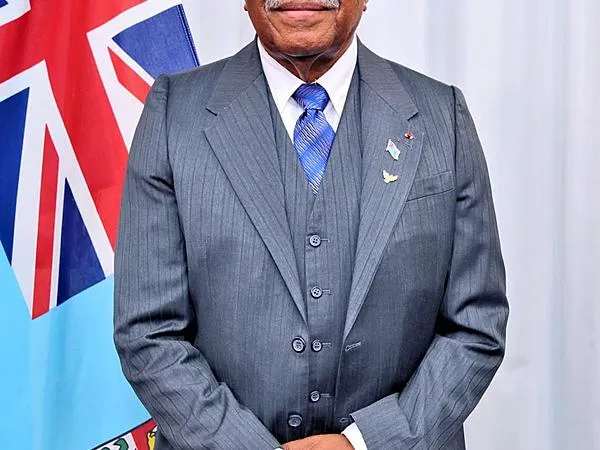
Fiji’s fuel supply remains stable despite mounting global price pressures, with the government moving to cushion households and key sectors from rising costs, Prime Minister Sitiveni Rabuka said.
In a national address, Rabuka said Fiji currently holds about 45 million litres of fuel in onshore storage, with a further 22 million litres expected before the end of April, bringing total supply for the month to roughly 67 million litres. Daily consumption stands at about 2.5 million litres.
He said stock levels are projected to fall to around 40 million litres, or 29 percent of storage capacity, by month-end — a normal cycle to accommodate incoming shipments.
Looking ahead, suppliers have committed to deliver about 118 million litres in May, which is expected to lift national reserves to more than half of total capacity, keeping the country in what authorities classify as a “Phase 1” or normal supply condition.
Rabuka stressed that Fiji is not facing a supply shortage but rather a price-driven challenge linked to global market disruptions, including tensions in the Middle East and shipping constraints around the Strait of Hormuz.
Domestic price adjustments, he noted, are determined by the Fijian Competition and Consumer Commission to reflect international purchasing costs, with another increase expected in May.
To mitigate the impact, Cabinet has approved the redeployment of FJ$56 million within the existing 2025–2026 budget, shifting funds from delayed projects to immediate relief measures.
The government has earmarked FJ$4 million to support bus operators, including absorbing a 10 percent fare increase for four months and providing a fuel rebate of 20 cents per litre to maintain affordable public transport.
Fuel subsidies will also be extended to power utility Energy Fiji Limited to ensure stable electricity generation, while social welfare recipients will receive a temporary 50 percent top-up for three months starting May.
In the agricultural sector, FJ$28 million has been allocated to support sugar cane farmers through a price top-up for the 2025 crop season.
Rabuka said all measures will be funded through internal budget savings, alongside cost-cutting directives across government agencies.
“Fuel is available. Government is acting. And Fiji is prepared,” he said, urging citizens to conserve fuel and energy amid ongoing global uncertainty.
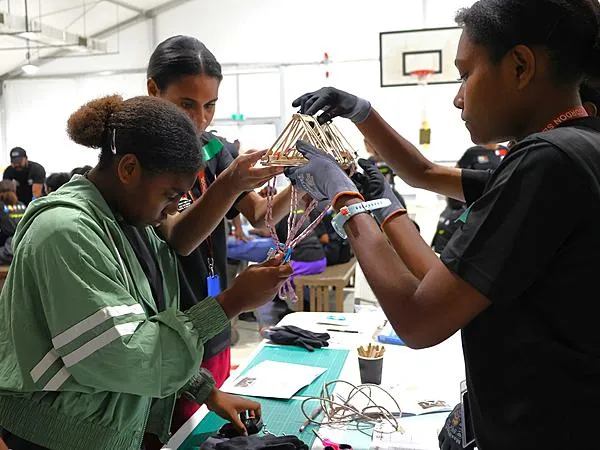
The operator of the PNG LNG Project, ExxonMobil PNG Limited, recently welcomed 75 outstanding ninth-grade girls from five Port Moresby schools for a day of hands-on science experiments, mentorship, and exciting activities designed to spark their curiosity and build their confidence in engineering.
Now in its second year in Papua New Guinea, ExxonMobil’s Introduce a Girl to Engineering Day — held at its LNG Plant at Caution Bay — was a resounding success.
This year’s theme, “Design Your Future,” encouraged students to imagine the possibilities of a STEM career (Science, Technology, Engineering, and Math). Supported by 42 passionate employee volunteers from ExxonMobil’s Women in Energy Network, the students explored key engineering concepts and learned directly from Papua New Guinean engineering professionals.
ExxonMobil PNG Chairman and Managing Director Dinesh Sivasamboo visited the students during their practical sessions and was impressed by both their enthusiasm and teamwork.
“It’s great to see that even though you’ve come from different schools, you have quickly made new friends and learned to work together effectively as a team to solve real-world problems. These are important skills and experiences that will help you excel in your lives and your careers,” Sivasamboo said.
“Papua New Guinea’s energy future looks quite bright, so there will be opportunities for students like you throughout our industry. I hope you will continue to apply yourselves to your studies so that you might join us as engineers one day,” he concluded.
Students expressed their gratitude and excitement about the experience, saying it opened their eyes to new possibilities in engineering.
“I didn’t think much about taking on engineering, but after today, I might have a change of mind,” said Zillar Naku Pa’aka from Gordon Secondary School. “Once we started the practical activities, I really enjoyed it.”
“I really enjoyed the electrical engineering activity with the circuit boards,” added Sylvia Mero from Jubilee Catholic Secondary School. “When the lights lit up, it felt like it lit something in me. I think after today, I’d like to become an engineer.”
The students represented Gordon Secondary School, Charles Lwanga Secondary School, Jubilee Secondary School, Bavaroko Junior High School, and Ororo Junior High School. The day concluded with lunch at the Plant site mess and a small gift pack for each participant to take home.
ExxonMobil PNG is proud to help inspire the next generation of innovators by empowering more girls to dream big and engineer boldly.
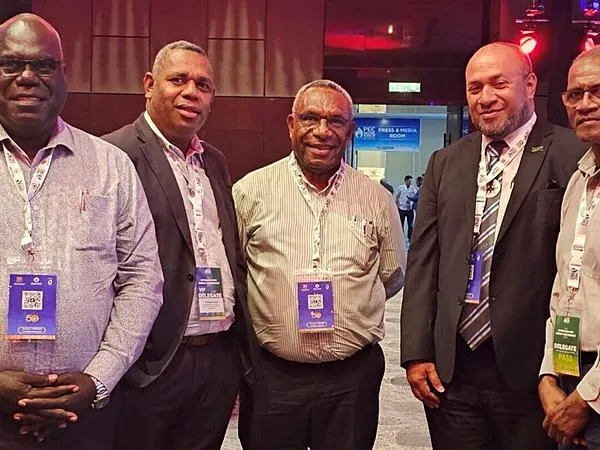
The Solomon Islands High Commissioner to Papua New Guinea, William McDonald Soaki, joined a Solomon Islands Government delegation led by Dr. Chris Vehe, Permanent Secretary for the Ministry of Mines, Energy and Rural Electrification, to attend the 2025 Papua New Guinea Petroleum and Energy Conference held in Port Moresby from October 8–9.
Also part of the delegation were representatives from South Pacific Oil Limited (SPOL) and the Solomon Islands National Provident Fund (SINPF), led by SINPF Chief Executive Officer Michael Wate.
The Solomon Islands was the only Pacific Island nation represented at the two-day event, reflecting its growing role in regional energy cooperation and commitment to learning from Papua New Guinea’s experience in the petroleum and energy sectors.
The conference, hosted by Kumul Petroleum Holdings Limited (KPHL), was officially opened by Papua New Guinea’s Minister for Petroleum Jimmy Maladina and attended by Minister for Energy Peter Isoaimo and Minister for State Enterprises William Duma.
As Papua New Guinea’s premier annual energy forum, the conference serves as a key platform for dialogue among government leaders, policy makers, industry experts, and investors. It highlights new developments and investment opportunities across the petroleum, gas, and renewable energy industries.
This year’s sessions covered topics such as power generation, renewable energy expansion, landowner participation, and evolving policy frameworks. The event attracted participants from both local and international sectors, reinforcing global interest in Papua New Guinea’s energy landscape.
High Commissioner Soaki commended the delegation’s participation, describing the conference as an opportunity to strengthen the Solomon Islands’ understanding of regional energy developments and foster cooperation with key partners.
“The Solomon Islands has much to learn from Papua New Guinea’s advancements in the petroleum and energy sectors,” Soaki said. “I encourage our officials to continue engaging with regional stakeholders and to explore opportunities for collaboration that align with the Solomon Islands’ national energy objectives.”
The Solomon Islands’ participation demonstrates the government’s commitment to promoting sustainable energy development, advancing strategic partnerships, and deepening regional collaboration in pursuit of long-term economic growth and national progress.
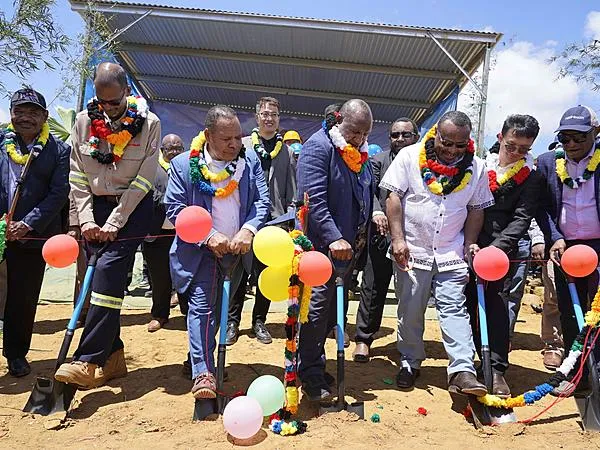
The Mineral Resources Development Company (MRDC) has announced four landmark projects set to transform the economic landscape of Papua New Guinea’s gas-rich Hela Province.
Formalised through key agreements signed in Tari on October 17, the projects mark a new phase of investment aimed at accelerating development and improving local livelihoods.
The initiatives include a 5MW power supply project from Hides to Tari, the signing and groundbreaking for the Hela Heritage Hotel, the opening of MRDC’s new Tari office, and an annual K1 million funding support from Petroleum Resources Kutubu (PRK) to the Hela Provincial Health Authority.
MRDC Managing Director Augustine Mano said the projects represent a long-awaited milestone in fulfilling the vision of Hela’s leaders and ensuring resource benefits reach the people.
“With ExxonMobil agreeing to provide gas for up to 5MW of power, landowners from the licence area in Hides, Tari town, its surrounds, and other districts of Hela will benefit from the cheapest power in PNG,” Mano said.
“This has been the dream of our leaders like the late Anderson Agiru and Prime Minister James Marape, who was then finance minister when they signed the PNG LNG Gas Agreement in 2009. It has taken a while to deliver because we had to negotiate, but it is finally a reality. I want to thank the leaders involved, and the landowners and Hela people for being patient.”
He said the introduction of reliable and affordable electricity would be a catalyst for further development in Hela.
“Through power, places change. Development happens through investments. Hela will get the cheapest power in all of PNG, and it’s reliable. There will be no blackouts,” he said.
Prime Minister James Marape, who is an MRDC trustee and the local MP for Tari, officiated the groundbreaking for the Hela Heritage Hotel, one of the province’s most significant upcoming investments.
Mano said the hotel, expected to be completed by early 2027, will serve both visitors and locals while promoting and preserving Hela’s distinctive culture.
“The hotel is to be the cultural center of Hela. Hela is beautiful with its unique culture — how do we show it? This hotel will provide the hub so that the culture of Hela must be appreciated, enjoyed, and preserved,” he said.
He added that the Heritage Hotel would create employment, stimulate business opportunities during construction, and complement existing accommodation facilities once operational.
As part of MRDC’s broader social investment, PRK has committed K1 million annually to the Hela Provincial Health Authority to help attract and retain medical professionals.
“We have many good doctors, but they don’t come to the provinces to work because of many challenges, so they must have incentives. This K1 million is their incentive. We have also done the same for Southern Highlands and Gulf provinces,” Mano said.
MRDC also strengthened its presence in Hela with the opening of a new office at the Hela 2 building complex in Tari. The office will handle landowner-related issues locally, reducing the need for travel to Port Moresby.
“The days of landowners flying to Port Moresby to have their issues addressed are over. We now have an office in Tari to deal with all that. I want to encourage landowners to stay in the province, deal with issues here, receive your royalty and equity benefits here, and spend it here so the Hela economy can prosper,” Mano said.
He also commended Hela Governor Philip Undialu for providing strong leadership, improving law and order, and building critical infrastructure to encourage investment.
Through these new initiatives, MRDC aims to position Hela as a province on the rise—one where resource wealth is being converted into tangible economic growth and lasting prosperity.
Follow on LinkedIn:
Pacific Business Review
Be the "First" to get our exclusive Digital Magazine & Weekly Newsletter.