The Cook Islands and Palau will co-lead a US$1.2 billion regional climate programme covering 14 Pacific countries after the Green Climate Fund (GCF) approved the initiative, marking the largest climate programme it has funded in the Pacific to date.
The Regional Programmatic Approach for Climate Action (RPACA), approved on October 26, comprises a US$250 million grant from the GCF and US$839 million in co-financing from the Asian Development Bank (ADB), which serves as the programme's accredited entity.
The 10-year programme will focus on developing climate-resilient infrastructure across the participating countries.
For the Cook Islands, priority investments include upgrades to at least four airports in the Southern Group, with projects to be identified through national planning processes.
Implementation will be led by the Ministry of Finance and Economic Management and Infrastructure Cook Islands.
Prime Minister Mark Brown welcomed the approval, saying the grant funding would help strengthen critical infrastructure serving communities in the country's outer islands, known locally as Pa Enua.
He said improved airport facilities would support travel, essential supplies and emergency response, while grant-based financing would avoid adding to the country's debt burden.
Brown said the focus would now shift to ensuring the programme's benefits reach communities across the islands.
Chief of Staff at the Office of the Prime Minister Karopaerangi Ngatoko said the approval reflected coordination among government agencies, with Climate Change Cook Islands leading regional negotiations and the finance and infrastructure agencies identifying national priorities.
He said the government would focus on implementation planning to ensure the country was ready to proceed once funding became available.
Climate Change Cook Islands Director Wayne King said the programme originated from a proposal he presented to the ADB at a GCF Board meeting in late 2024 to expand climate financing for the Pacific.
The ADB began preparing the full proposal in October 2025, securing approval 12 months later following consultations involving all 14 participating countries.
King said the programme's design was supported by ADB resources and two regional consultations to ensure it reflected the needs of participating countries.
He also acknowledged the contributions of Palau's co-chair, the ADB team and officials from the Cook Islands' finance, infrastructure and climate change agencies.
Further details on the Cook Islands' projects under RPACA will be released after national implementation planning is completed.
The programme is listed on the Green Climate Fund website under project reference FP318.
Pacific political leaders have called for urgent and tangible climate action at the 31st United Nations Climate Change Conference (COP31), urging the international community to translate global commitments into concrete outcomes for vulnerable island communities.
At a roundtable held at the Australian Pavilion on November 14, the Pacific Political Champions on Climate called for stronger action to keep the 1.5-degree Celsius warming limit within reach, secure accessible grant-based climate finance, strengthen community resilience and advance the ocean-climate nexus.
The leaders stressed that Pacific Island countries, despite contributing the least to global greenhouse gas emissions, continue to bear disproportionate consequences of climate change.
The Pacific Resilience Facility (PRF), a Pacific-led and owned financing mechanism, was also highlighted as a key regional initiative to help communities respond to climate impacts.
Pacific Islands Forum Secretary General Baron Divavesi Waqa said the political champions had helped bring Pacific priorities beyond formal negotiations and into decision-making spaces.
“What began at COP26 as an innovative Pacific initiative has evolved into a valuable mechanism for elevating Pacific priorities beyond the negotiating rooms and into the political spaces where critical decisions are shaped,” Waqa said.
The current champions addressed mitigation, gender equality and social inclusion, adaptation, oceans, and loss and damage, highlighting the interconnected nature of the climate crisis.
Tuvalu Minister for Home Affairs, Climate Change and Environment Maina Talia, the political champion for mitigation, said Pacific countries had repeatedly called for the same fundamental climate commitments over the past decade.
“1.5 degrees Celsius is the same song we have been singing since Paris,” Talia said, stressing that Pacific communities were already experiencing the consequences of rising temperatures.
Kiribati Minister of Women, Youth, Sports and Social Affairs Ruth Kwansing, the champion for gender equality and social inclusion, called for gender considerations to be integrated into climate negotiations and for funding to reach women-led organisations directly.
She said climate outcomes must protect children, young people and persons with disabilities, ensuring their communities and future generations are not left behind.
Marshall Islands Minister in Assistance to the President and Environment Jess Gasper Jr, the champion for adaptation, highlighted the personal consequences of displacement, drawing on his experience as a member of the Bikini Island community, which remains unable to return home because of the effects of nuclear testing.
He warned that exceeding the 1.5-degree limit would increase adaptation requirements and the costs of climate-related losses and damage.
Gasper called for a credible pathway to at least triple adaptation by 2035.
Niue's Special Envoy to the Prime Minister on Climate Change Mona Ainu’u, the oceans political champion, urged negotiators to integrate ocean considerations across COP31 discussions and outcomes.
She pointed to the effects of sea-level rise, ocean warming, coral bleaching and ocean acidification on Pacific communities, particularly their food security.
Tonga Minister of Public Enterprises and Health Siaosi Sovaleni, the champion for loss and damage, called for sustainable, grant-based financing to help Pacific countries address climate-related destruction and displacement.
He said loss and damage financing should be treated as an issue of climate justice rather than charity.
Established in 2021, the Pacific Political Climate Champions initiative seeks to elevate regional priorities and strengthen political-level advocacy within the United Nations Framework Convention on Climate Change process.
The current cohort is scheduled to conclude its two-year term following COP31.
The champions attending the conference also include Fiji Minister of Information, Environment and Climate Change Lynda Tabuya, representing climate finance, and Vanuatu Minister for Climate Change Adaptation Ralph Regenvanu, representing just transition.
Three new reservoirs and more than 10 kilometres of transmission pipelines have been commissioned in Honiara, expanding the capital's water storage capacity and strengthening supply for a growing urban population.
The facilities, commissioned on Nov. 3, were delivered under the Urban Water Supply and Sanitation Sector Project, a joint investment supported by the Asian Development Bank (ADB), World Bank, European Union, Global Environment Facility and Solomon Islands government.
The three reservoirs, located at Titinge, Tasahe and Panatina, add more than 8.5 million litres of storage capacity to the municipal water supply system operated by the Solomon Islands Water Authority (SIWA).
The infrastructure is expected to benefit more than 105,000 residents across Honiara and provide capacity to support a projected population of more than 300,000 by 2050.
ADB Country Director Anthony Gill said the commissioning demonstrated the value of partnerships in improving essential public services.
He said the investment would contribute to public health, economic growth, climate resilience and human development.
Minister for Mines, Energy and Rural Electrification Derrick Manu'ari said water security was not merely an infrastructure concern but a matter of national security, public health, economic resilience and social equity.
He said long-term water security would require integrated approaches to resource management, infrastructure planning, catchment protection, system efficiency and climate adaptation.
The project also involved installing more than 10 kilometres of transmission pipelines along key urban corridors, including Kongulai to White River, White River to Iron Bottom Sound, East Kola Ridge to Vura, and Panatina Reservoir to Burns Creek.
The new trunk mains are designed to ease network bottlenecks, improve water conveyance and provide more stable supplies to households and businesses.
The commissioning establishes a foundation for further investments to expand water network coverage, improve institutional performance and strengthen long-term water resilience across Solomon Islands.
Solomon Islands Deputy Prime Minister Francis Sade has backed a US$202.2 million Commonwealth conservation initiative aimed at accelerating efforts to protect at least 30% of the world's land and oceans by 2030.
Sade attended the launch of the Commonwealth Nature Initiative (CNI) on Nov. 2 during the 2026 Commonwealth Heads of Government Meeting (CHOGM) in St. John's, Antigua and Barbuda.
The initiative secured an initial US$202.2 million in pledges from governments, philanthropic organisations and conservation partners. It also aims to raise a further US$1 billion by 2030 to finance conservation programmes across Commonwealth member states.
Speaking at the launch aboard the Fortescue Green Pioneer, Sade said the initiative would provide an important platform for mobilising resources and coordinating conservation efforts, particularly for Small Island Developing States such as Solomon Islands.
" For our communities, nature is not just our environment, it is our life source," Sade said, adding that Solomon Islands would align its national development strategies with the initiative.
He said the country was committed to advancing conservation, sustainable resource management and climate resilience.
The CNI brings together governments, Indigenous peoples, local communities and philanthropic organisations across the Caribbean, Pacific, Africa and other regions.
Its priorities include establishing and expanding terrestrial and marine protected areas, strengthening Indigenous peoples' rights and local governance, and supporting conservation financing programmes.
These include the Eastern Caribbean's 30x30 Transformation Program, the Africa Keystone Protected Area Partnership and the Unlocking Blue Pacific Prosperity initiative.
The initiative supports the global 30x30 target, which calls for protecting at least 30% of the world's land and oceans by 2030.
The Commonwealth said its member countries collectively account for nearly a quarter of the world's land area and more than 40% of global ocean exclusive economic zones, giving the bloc a significant role in international biodiversity protection.
For Solomon Islands, participation in the initiative reinforces its efforts to protect marine and terrestrial ecosystems while strengthening climate resilience and supporting sustainable livelihoods.
The Asian Development Bank (ADB) and the Australian government have committed $12.85 million to the fifth phase of the Pacific Private Sector Development Initiative (PSDI), aimed at improving business regulations, expanding access to finance and encouraging private sector investment across the Pacific.
In a statement on October 12, ADB said the renewed funding would support reforms designed to make it easier for businesses to start, operate and expand, while addressing emerging challenges involving digitalisation, climate resilience and financial regulation.
The initiative, launched in 2007, has supported more than 500 reforms across ADB's 14 Pacific developing member countries, including improvements to business registration systems, financial markets and state-owned enterprise governance.
The fifth phase will receive $3 million from ADB's Technical Assistance Special Fund and $9.85 million in co-financing from the Australian government.
ADB Pacific Department Regional Head for Private Sector Development Haroun Khawaja said the funding would allow the programme to continue modernising the legal and regulatory frameworks governing business activity.
“With this commitment, PSDI’s important work to modernize the laws and frameworks that underpin business activity will continue, and so too will its efforts to ensure those reforms work in practice: stronger institutions, digital systems that simplify business processes, and finance that reaches small enterprises and women entrepreneurs,” Khawaja said.
He also acknowledged Australia's longstanding support for the initiative, which has helped Pacific governments implement private sector reforms for nearly two decades.
Focus on business reforms and access to finance
Under Phase V, PSDI will work with Pacific governments to modernise business, investment and financial sector laws while strengthening the institutions responsible for implementing regulatory reforms.
The programme will continue supporting online business registries, which have reduced the time and cost of establishing businesses in participating countries.
It will also develop financing mechanisms for micro, small and medium-sized enterprises (MSMEs), building on earlier reforms involving secured transactions frameworks, capital markets and innovative financing arrangements.
ADB said Pacific economies continued to face significant barriers to private sector growth, including small and geographically dispersed markets, high operating costs, limited access to finance and exposure to climate-related disasters.
Outdated legal and regulatory frameworks have also constrained investment, employment and business opportunities, particularly for women and small enterprises.
The new phase will therefore place greater emphasis on digital government, climate and disaster resilience, anti-money laundering and combating the financing of terrorism (AML/CFT), and disability inclusion.
Expanding opportunities for women
Women's economic empowerment will remain a priority, with PSDI seeking to strengthen the data, systems and institutions that support women's participation in business and leadership.
Previous phases helped develop a pipeline of qualified women for senior executive and board positions across the region.
The initiative has also supported reforms intended to improve financial inclusion and create opportunities for women entrepreneurs.
Under the latest programme, ADB said these efforts would be expanded alongside institutional reforms and knowledge-sharing activities aimed at encouraging governments and businesses to adopt improved regulatory practices.
The programme will also continue efforts to strengthen the governance and performance of state-owned enterprises, which play important roles in delivering essential services and supporting economic activity across Pacific countries.
Nearly two decades of regional support
Since its establishment in 2007, PSDI has received substantial financial backing from Australia, New Zealand and ADB.
Across its first four phases, the Australian government contributed $76.2 million, while New Zealand provided $8.9 million and ADB committed $11.1 million.
The latest $12.85 million commitment brings total funding for the initiative across its five phases to approximately $109.05 million.
ADB said the programme would continue working with partner governments to ensure regulatory reforms translate into stronger institutions, more efficient business processes and greater opportunities for private sector development.
The initiative forms part of ADB's broader efforts to promote sustainable, inclusive and resilient economic growth across Asia and the Pacific.
Fiji has pledged US$10 million to the Pacific Resilience Facility (PRF), as Pacific nations step up efforts to secure climate and disaster resilience financing ahead of the COP31 climate summit.
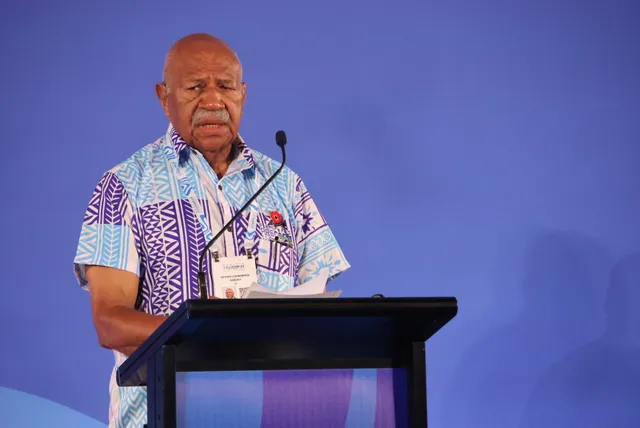
Fiji Prime Minister Sitiveni Rabuka announced the contribution during the high-level event Turning Climate Finance into Community Resilience, held on the sidelines of the Pacific Pre-COP31 meetings in Nadi on 9 October.
Denmark also announced a contribution of US$2.3 million, while the Netherlands pledged a further US$1 million to support the facility's operationalisation.
The latest commitments bring total pledges to the PRF to US$190 million, moving the regional initiative closer to its initial capitalisation target of US$500 million. The facility aims to build towards US$1.5 billion to support climate resilience efforts aligned with limiting global warming to 1.5°C.
Established by Pacific Islands Forum members, the PRF is designed to provide accessible, predictable and sustainable financing for climate and disaster resilience, with Pacific priorities, ownership and decision-making at the centre of its operations.
Pacific Islands Forum leaders reaffirmed the facility as the region's leading climate investment priority at their annual meeting in Palau in early September.
Pacific Islands Forum Secretary-General Baron Divavesi Waqa welcomed the new contributions, describing the facility as an expression of regional leadership in developing solutions to climate change.
He said the initiative placed Pacific priorities, ownership and solutions at the centre of efforts to build a more resilient region, while acknowledging the continued support of forum leaders, members and international partners.
The PRF is intended to help Pacific communities access funding for climate adaptation and disaster resilience, addressing the region's efforts to translate international climate commitments into practical support for communities exposed to climate-related risks.
As the Pacific prepares for COP31, the facility is expected to play a central role in the region's push for climate financing mechanisms that respond to local needs and strengthen community resilience.
Solomon Islands Prime Minister Matthew Wale has called on major greenhouse gas emitters to make deep, economy-wide emissions cuts, warning that the world is on track to exceed the 1.5°C global warming threshold.
Addressing the leaders’ plenary at the Pacific Pre-COP31 meeting in Nadi, Wale said decades of climate negotiations had failed to deliver the ambition required under the Paris Agreement.
“COP31 cannot be another talkfest,” Wale said, urging Group of Seven (G7) countries to increase their climate ambition in line with their historical responsibility and major emerging economies, including BRICS members, to lead on emissions reductions.
He highlighted the scale of fossil fuel subsidies, citing International Monetary Fund estimates of US$7.43 trillion, which he said exceeded global climate finance of US$2.1 trillion in 2025 by more than three times.
“We are paying to fuel the overshoot,” he said.
Wale also criticised global spending priorities, noting that military expenditure reached nearly US$2.9 trillion last year, more than 16 times official development assistance, even as aid declined by almost a quarter.
“The shortfall in what reaches us is not because the world lacks money. It is because it lacks political will,” he said.
He called for climate finance to be grant-based, demand-driven and channelled through national systems. He also urged development partners, multilateral development banks and climate funds to use the Multi-Dimensional Vulnerability Index (MVI) when determining access to funding.
“Finance must follow vulnerability,” he said.
Wale further called for published disbursement timelines, independent tracking of pledges against actual delivery, full capitalisation of the Pacific-led Pacific Resilience Facility (PRF) and a strong third replenishment of the Green Climate Fund.
Solomon Islands calls for accessible climate finance
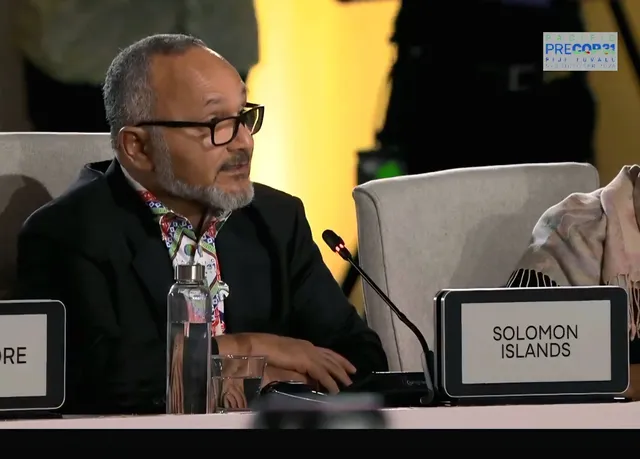
Solomon Islands Environment, Climate Change, Disaster Management and Meteorology Minister Wayne Ghemu echoed the call for climate finance that responds to the needs of vulnerable Pacific communities.
Speaking at Pre-COP31, Ghemu said adopting the MVI would better reflect the circumstances of small island developing states and help unlock development and climate finance from public and private sources.
He cited Tropical Cyclone Malia, which caused more than US$30 million in damage to Solomon Islands, as an example of why funding mechanisms must be suited to the needs of climate-vulnerable countries.
Ghemu said Pacific governments were strengthening their own financial management systems through measures such as climate budget tagging and linking public spending to vulnerability assessments.
“These reforms are about Pacific leadership, ownership and agency,” he said.
However, he stressed that stronger national systems did not diminish the responsibility of international partners to provide adequate and predictable funding.
“The international community must continue to meet its responsibility to provide climate financing that is adequate, predictable and accessible for vulnerable countries like ours that are at the frontline of climate change,” he said.
Ghemu also welcomed the PRF, which Pacific leaders backed at their September 2025 meeting in Honiara and which is already supporting community projects in nine Pacific countries.
He urged development partners to convert their pledges into paid-in capital to enable the facility to expand its support for climate resilience across the region.
The calls from both leaders underscore the Pacific's push for stronger emissions reductions, funding arrangements that account for countries' vulnerability, and greater accountability for climate finance commitments ahead of COP31.
The Asian Development Bank (ADB) and the Australian government have committed $12.85 million to the fifth phase of the Pacific Private Sector Development Initiative (PSDI), continuing efforts to improve the business and investment environment across the region.
The initiative will help governments in ADB’s 14 Pacific developing member countries modernize business, investment and financial sector regulations, strengthen institutions and expand access to finance for micro, small and medium-sized enterprises.
Since its launch in 2007, PSDI has supported more than 500 reforms, including improvements to business laws, online business registries, secured transactions frameworks and capital markets. It has also supported reforms to strengthen state-owned enterprises and increase women’s representation in senior executive and board positions.
ADB Pacific Department Regional Head for Private Sector Development Haroun Khawaja said the new funding would sustain efforts to modernize business regulations and strengthen institutions, digital systems and financing mechanisms for small enterprises and women entrepreneurs.
ADB also cited its long-standing partnership with Australia as central to the initiative’s work since 2007.
Pacific economies face high business costs, limited access to finance and small, geographically dispersed markets. Exposure to climate-related disasters and regulatory frameworks that have not kept pace with changing business needs also constrain investment and job creation.
PSDI Phase V will support reforms to business and financial regulations, strengthen business registries and state-owned enterprises, and develop financing approaches for smaller businesses.
The program will also promote women’s economic empowerment through improved data, systems and institutional support, while producing research and outreach materials to encourage reform.
New priorities include climate and disaster resilience, digital government, anti-money laundering and countering the financing of terrorism, and disability inclusion.
The latest phase is funded by $3 million from ADB’s Technical Assistance Special Fund and $9.85 million in Australian government cofinancing.
Across its four previous phases, PSDI received $76.2 million from Australia, $8.9 million from New Zealand and $11.1 million from ADB.
ADB is a multilateral development bank established in 1966 to support sustainable, inclusive and resilient growth across Asia and the Pacific. It is owned by 69 members, including 50 from the region.
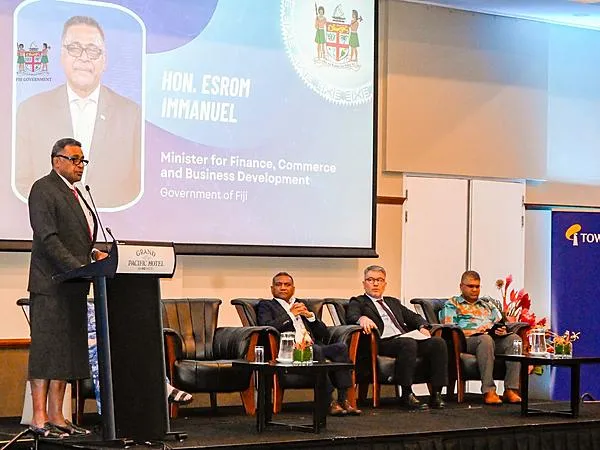
Fiji is seeking to expand financing for climate-resilient infrastructure and attract greater private investment as Pacific countries face growing climate risks, the Ministry of Finance said.
Finance Minister Esrom Immanuel and ministry officials participated in Pre-COP31 discussions focused on climate resilience, infrastructure development and access to finance across the Pacific.
At the invitation of the World Bank, Immanuel joined a panel discussion titled “Building Resilience Without Sacrificing Growth: Pathways for the Pacific”, which examined how countries can strengthen climate resilience while sustaining economic growth.
Drawing on the World Bank Group's Country Climate and Development Reports for Fiji, Kiribati, Tuvalu and the Republic of the Marshall Islands, participants discussed investment priorities in infrastructure, tourism, fisheries, human capital, clean energy and ecosystem protection.
The discussions also covered climate finance, governance and practical measures to implement these priorities.
Immanuel attended a bilateral meeting between Prime Minister Sitiveni Rabuka and Asian Development Bank President Masato Kanda, which highlighted the development bank's support for Fiji and the wider Pacific, particularly in infrastructure development.
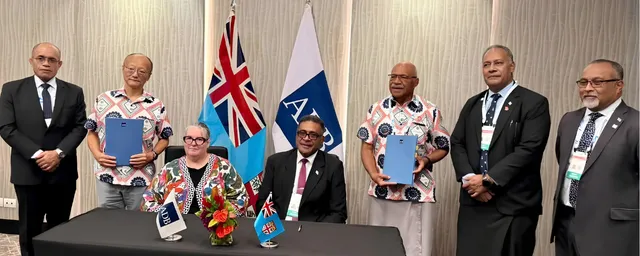
Following the meeting, Immanuel and ADB Pacific Department Director General Emma Veve signed an agreement. The ministry's announcement did not specify the agreement's details.
Ministry officials also attended a KPMG-organised side event, “From Ambition to Investment: Financing Pacific Infrastructure”, represented by Debt Management Unit Manager Sisilia Nalaide and Infrastructure Sector Manager Tevita Tuibau.
The event brought together government representatives, development partners, financiers and private sector leaders to explore ways to mobilise investment in sustainable and climate-resilient infrastructure across the region.
Another plenary session, “Vulnerable to Investable: Reimagining Finance for the Pacific”, examined ways to improve climate readiness and increase funding for national and regional priorities.
Participants discussed attracting financing beyond public funds, including private investment, philanthropic support and blended finance combining public and private capital.
The discussions reflect efforts by Pacific governments and development partners to mobilise additional funding for infrastructure and climate adaptation, while balancing resilience requirements with economic growth.
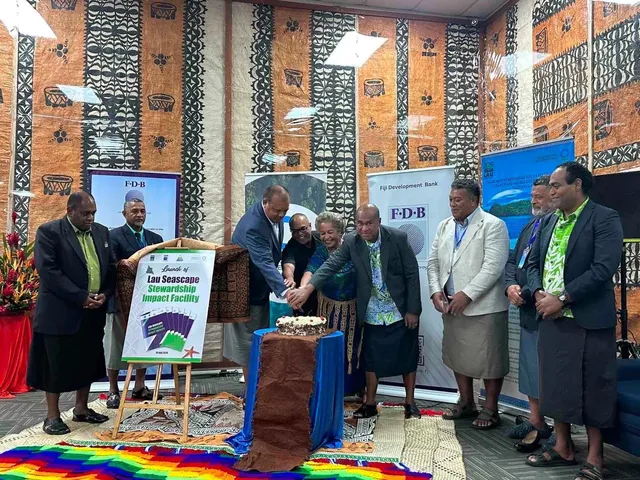
The Association of Development Financing Institutions in the Pacific (ADFIP) has highlighted the Fiji Development Bank’s (FDB) launch of the Lau Seascape Impact Facility Fund, a new financing mechanism designed to strengthen climate resilience, protect biodiversity and support sustainable economic development across Lau Province.
The facility was officially launched during the annual Matabose ni Yasana o Lau in the presence of traditional leaders and chiefs representing the 13 districts of Lau.
FDB is delivering the initiative in partnership with Conservation International (CI) Fiji, with the facility designed to provide more inclusive financial pathways for communities and businesses involved in sustainable economic activities.
The financing mechanism will support micro, small and medium enterprises (MSMEs), eco-tourism ventures and blue economy projects through a combination of concessionary climate loans, business coaching and financial literacy training.
The initiative seeks to address the financing needs of businesses and communities while supporting activities that contribute to the sustainable management of marine and coastal resources.
By integrating financial access with community training and traditional stewardship, the facility aims to link conservation with sustainable economic development, enabling communities to pursue livelihoods while strengthening environmental resilience.
The rollout is already underway in Yasayasa Moala. FDB and its partners are planning further visits to Matuku, Totoya, Lakeba, Vanua Balavu and Cicia, as well as neighbouring islands, to take the programme directly to communities in the outer islands.
The geographic rollout is intended to improve access to financial and technical support for communities outside Fiji’s main urban and economic centres, while recognising the role of local communities and traditional leadership in managing natural resources.
ADFIP said the initiative highlights the role development finance institutions can play in bridging financial inclusion and climate resilience.
The association said FDB’s work demonstrates how development financing can be structured to support not only access to capital but also the skills, knowledge and community structures needed to build sustainable businesses and livelihoods.
The facility also reflects FDB’s broader focus on climate risk financing, sustainable agriculture and community-driven development, particularly as Pacific communities face increasing environmental and economic pressures associated with climate change.
For Lau communities, the initiative provides potential financing and capacity-building support for activities linked to tourism, marine resources and the broader blue economy, while promoting conservation and sustainable use of natural resources.
ADFIP congratulated FDB and Conservation International Fiji on the launch of the facility, highlighting the initiative as an example of how development finance can support locally driven economic opportunities while strengthening climate and environmental resilience across the Pacific.
The Asian Development Bank (ADB) has approved a $12.6 million grant to strengthen urban resilience and disaster preparedness in Vanuatu’s Greater Port Vila area.
The financing is the third ADB grant for the Greater Port Vila Urban Resilience Project and is funded through the Asian Development Fund. It is complemented by a $5.6 million grant from the Green Climate Fund through the Community Resilience Partnership Program Investment Fund and a $700,000 in-kind contribution from the Vanuatu government.
“Vanuatu is highly exposed to disasters caused by natural hazards which are becoming increasingly frequent and severe,” said Jyotsana Varma, regional director of ADB’s Pacific Liaison and Coordination Office.
“This additional financing will build on the strong foundation already established through the project in providing shelter during such emergent situations,” she said.
The new financing will support the construction of three multipurpose emergency shelters in Agathis, Freshwind and Nambatri.
The shelters will provide safe and resilient facilities for vulnerable communities during disasters, while serving as community gathering spaces and markets during normal periods.
The financing will also support the development of an emergency shelter strategy to regularly assess shelter capacity, identify service gaps and guide the planning and prioritisation of future shelter investments.
ADB said the project is expected to directly benefit at least 23,400 people, including 11,700 women, by 2031 through improved access to resilient urban assets and services.
ADB began financing the project in 2020 with a $9.6 million grant to support urban service delivery, climate resilience and disaster preparedness in Vanuatu.
A further $2.9 million grant was provided in 2022 to expand urban resilience planning and infrastructure investments and launch nature-based coastal protection measures in Greater Port Vila.
Varma said ADB was working with the Vanuatu government and local communities on arrangements to use and maintain assets created under the project.
“We are pleased to be working closely with the government and local communities, including on arrangements to use and maintain the assets already created, so that these investments continue to serve people well into the future,” she said.
The Asian Development Bank has approved a new rapid-response financing project for Vanuatu, giving the Pacific island nation faster access to funds following disasters and other major emergencies.
The Vanuatu Rapid Response Contingent Project is the first project approved under ADB’s Rapid Resource Reprogramming and Deployment Option (3RDO), a region-wide mechanism that allows countries to redirect existing undisbursed ADB financing towards emergency response and early recovery.
ADB said the financing can be used to support affected families, provide essential supplies and equipment, and restore damaged public services and infrastructure.
“The economic shocks hitting the region from the conflict in the Middle East are the latest crisis, but they won’t be the last,” ADB President Masato Kanda said.
“Vanuatu will face any crises in the future with a financing route open and ready to move money where it is needed most. This project is designed to get help to families and restore essential services before a shock becomes a prolonged emergency.”
Disaster exposure
Vanuatu has suffered average annual disaster-related losses of $35.7 million since 2006, with weather-related events including tropical cyclones, droughts and floods accounting for 86 per cent of those losses, according to ADB.
The bank said Vanuatu’s dispersed islands, limited infrastructure and underlying social and economic vulnerabilities make disasters particularly disruptive to agriculture, fisheries, tourism, health, education and housing.
The new financing mechanism can be activated following earthquakes, tsunamis, tropical cyclones, severe droughts and El Niño-related impacts.
It can also respond to food, health and biological emergencies, pollution or contamination incidents, as well as economic crises, including external price shocks, disruption to connectivity and prolonged utility outages.
Under the 3RDO mechanism, small island developing states such as Vanuatu can reallocate up to 25 per cent of their undisbursed and uncommitted public-sector ADB portfolio through a pre-arranged rapid-response contingent project.
ADB said the mechanism would be integrated into Vanuatu’s national disaster risk-management system and complement existing disaster-risk financing instruments.
It is also intended to strengthen the country’s institutional preparedness so that financing can be deployed more quickly when a crisis occurs.
Regional mechanism
The Vanuatu project represents the first use of 3RDO since ADB introduced the mechanism to accelerate emergency financing across Asia and the Pacific.
The bank said the approach is intended to ensure that countries do not have to establish a new financing arrangement from scratch after a disaster, allowing resources to be redirected through a pre-arranged structure.
ADB said the mechanism would help Vanuatu respond to future shocks while supporting early recovery and the restoration of essential services.
The initiative comes as Pacific island countries face continuing exposure to climate-related disasters and economic disruptions, while their geographic dispersion and infrastructure constraints can increase the cost and complexity of emergency response.
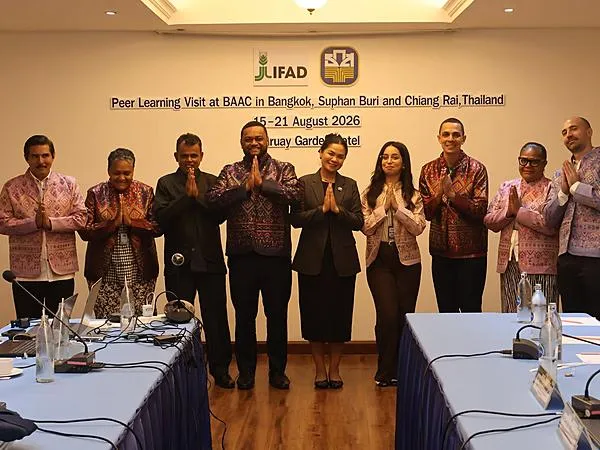
Fiji Development Bank staff are taking part in an international peer-to-peer learning exchange in Thailand aimed at strengthening approaches to agricultural, rural and climate finance.
The exchange, running from Aug. 17 to 21, brings FDB staff together with the Bank for Agriculture and Agricultural Cooperatives (BAAC) in Thailand. The programme is facilitated by the Agri-PDB Platform hosted by the International Fund for Agricultural Development (IFAD), in partnership with the Asia-Pacific Rural and Agricultural Credit Association (APRACA).
The two development-focused financial institutions are exchanging experiences on supporting smallholder farmers, rural communities and climate-resilient agriculture.
Key areas of the programme include climate-smart and agroecological agriculture, green and climate finance, blended finance and innovative financial instruments, agricultural and rural development financing, value-chain development and financial inclusion.
The exchange also covers institutional knowledge and capacity building, giving participants an opportunity to examine practical approaches and implementation challenges.
BAAC has more than five decades of experience in agricultural development finance and serves millions of farming households across Thailand.
FDB is Fiji's national development financial institution and is a Green Climate Fund Direct Access Accredited Entity. The bank said the exchange would help strengthen its role in financing Fiji's transition towards a more resilient and sustainable economy.
The programme is intended to go beyond a study visit by allowing the institutions to share experiences, identify effective approaches and bring lessons from the exchange back to Fiji.
FDB said stronger knowledge and partnerships can contribute to better financing solutions for farmers and rural communities while supporting more resilient communities and a sustainable future for Fiji.
Fiji’s Ministry of Tourism and Civil Aviation has opened applications for a pilot fund aimed at helping locally owned micro and small tourism businesses expand and diversify their products and services.
Applications for the Pilot Tourism Micro and Small Enterprise Fund for the 2026-27 financial year opened Wednesday and will remain open until Sept. 30, 2026.
The fund will provide grants to eligible Fijian-owned tourism businesses, with support covering both capital projects and operational activities.
The ministry said the initiative is intended to strengthen the sustainability of tourism micro and small enterprises and support the development of new tourism products and experiences that can benefit visitors and local communities.
Eligible applicants must be Fijian citizens aged at least 18 and own a registered business that has operated for a minimum of two years.
Businesses must be at least 51% Fijian-owned, generate the majority of their revenue from tourism and be able to contribute at least one-third of the total project cost.
Funding can be used for product and experience improvements, website upgrades and other efforts to improve business visibility, technology adoption, visitor amenities and signage, small-scale infrastructure such as trails, and equity funding through financial institutions.
The fund also covers activities involving culture and heritage, environmentally sustainable tourism such as birdwatching and trekking, accessibility improvements, heritage-site upgrades, agritourism and wellness tourism.
Businesses with annual turnover of more than F$300,000 are excluded from the program, along with proposals for debt refinancing, applications from civil servants and large-scale infrastructure projects.
The ministry said applicants should review the Pilot MSE Tourism Fund Policy before submitting their applications.
Applications are being submitted online through the Ministry of Tourism and Civil Aviation website. The ministry also has an appeal and grievance process for applicants who want to challenge aspects of the program or decisions made during assessment.
The fund is part of the government’s efforts to strengthen participation by smaller businesses in Fiji’s tourism industry, which relies heavily on micro, small and medium enterprises.
Applications close on Sept. 30, 2026.
Fiji has launched its first climate risk insurance product designed specifically for micro, small and medium enterprises (MSMEs), offering businesses rapid financial assistance after cyclones and floods through automatic payouts triggered by predefined weather conditions.
The product, unveiled by Minister for Commerce and Business Development Esrom Immanuel, uses parametric insurance, which differs from conventional insurance by releasing payments once agreed triggers—such as cyclone wind speeds or excessive rainfall—are met, eliminating the need for lengthy damage assessments.
The initiative aims to help affected businesses quickly replace inventory, repair damaged premises, retain employees and resume operations following extreme weather events.
The launch comes as climate-related disasters continue to impose heavy economic losses on Fiji. According to estimates by the Reserve Bank of Fiji, cyclones and floods cost the country more than US$500 million (about FJ$1.1 billion) annually, equivalent to more than 5 percent of gross domestic product.
MSMEs account for more than 80 percent of Fiji's registered businesses, yet many remain financially vulnerable. Studies presented during the launch showed that nearly 80 percent of MSMEs are affected by natural disasters each year, while many lack adequate insurance coverage.
"When MSMEs thrive, Fiji thrives; when they are vulnerable, our economy is vulnerable," Immanuel said.
"This product gives our entrepreneurs assurance that they can recover, rebuild and continue supporting their families, employees and communities."
The insurance product was developed following consultations with more than 850 MSMEs and through collaboration among the Fiji government, the Reserve Bank of Fiji, the United Nations Capital Development Fund (UNCDF), the United Nations Development Programme (UNDP), Tower Insurance and other partners.
The initiative forms part of the government's broader MSME development strategy, which includes more than FJ$140 million in planned investments during the new financial year for financial assistance, advisory services, financial literacy and entrepreneurship training.
The government said it will continue working with insurers and development partners to expand awareness and access to the insurance product, particularly among businesses in rural and maritime communities.
Officials said the scheme is expected to strengthen climate resilience by enabling faster business recovery, protecting livelihoods and preserving jobs across Fiji.
The Fijian government, together with the International Fund for Agricultural Development (IFAD) and the Global Environment Facility (GEF), has launched the Fiji Blue Economy and Green Community Development Programme (BE-GREEN), a $24.26 million initiative aimed at transforming rural livelihoods while restoring ecosystems on Vanua Levu.
The multi-phased investment program will help rural communities transition from subsistence farming to market-oriented enterprises, including agroforestry, seaweed farming and eco-tourism. It also seeks to restore degraded forests, mangroves and abandoned sugarcane fields while strengthening value chains for cocoa, root crops, beekeeping, seaweed and sea grapes.
Speaking at the launch on July 24, Prime Minister Sitiveni Rabuka said the initiative supports Fiji's National Development Plan 2025–2029 and Vision 2050, which aim to promote inclusive economic growth, environmental protection and development in rural and island communities.
Implemented by the Ministry of Agriculture, Waterways and Sugar Industry, in partnership with the Ministry of Environment and Climate Change, BE-GREEN will support community-led business and environmental plans through matching grants for rural entrepreneurs and cooperatives investing in eco-tourism, agricultural processing and value-added products.
The program will also pilot a partnership with the Reserve Bank of Fiji to encourage households to channel overseas remittances into productive rural savings and investments.
The first phase is expected to directly benefit about 6,550 households, or approximately 39,300 people, with a focus on women, youth and iTaukei communities.
IFAD Associate Vice President Donal Brown said the program demonstrates how restoring forests, freshwater systems and coastal ecosystems can improve rural incomes while protecting natural resources that support Fiji's agriculture and tourism sectors.
BE-GREEN aligns with IFAD's Pacific Islands Regional Strategic Opportunities Programme (RESOP), which guides the organization's investments across 13 Pacific Island countries through 2033 to address rural poverty, food insecurity, climate change and geographic isolation.
IFAD has supported development programs in the Pacific for more than four decades, mobilizing $557 million in investments, including $194 million from its own loans and grants, benefiting around 1 million people across the region.
Follow on LinkedIn:
Pacific Business Review
Be the "First" to get our exclusive Digital Magazine & Weekly Newsletter.