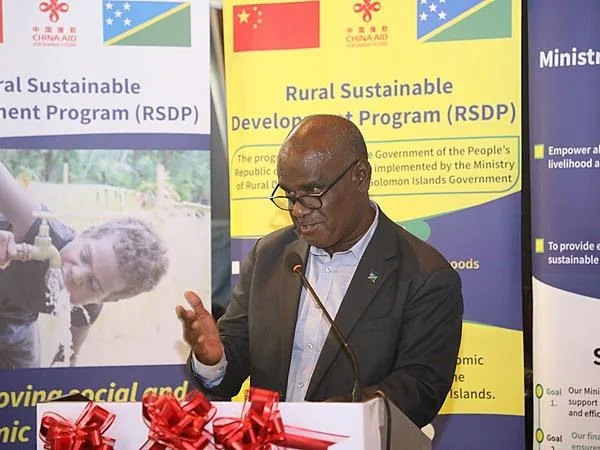
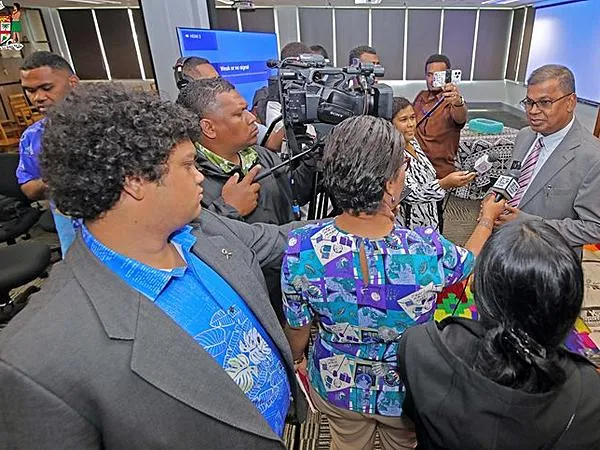
The Solomon Islands government today launched the second phase of the Rural Sustainable Development Program (RSDP), in partnership with China and backed by a $10 million grant. The move reflects deepening ties between the two nations since their formal diplomatic alignment in 2019.
The program aims to boost social and economic development, improve livelihoods, and support inclusive growth across rural communities nationwide. Funds under RSDP are earmarked for small community infrastructure projects, income-generating initiatives, and climate‑change–related interventions.
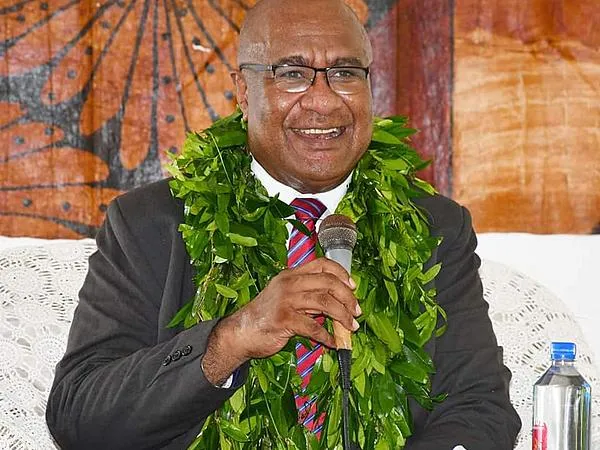
Prime Minister Jeremiah Manele emphasized the strength of the bilateral partnership and the expected positive impact on rural populations.
China’s diplomatic representative, Charge d’Affairs H.E. Yang Jie, reaffirmed Beijing’s commitment to supporting Solomon Islands’ development, stressing the program’s emphasis on people‑centered growth.
The RSDP dovetails with the Solomon Islands National Development Strategy. It aligns closely with national priorities such as poverty alleviation, improved food security, and sustainable rural livelihoods.
Under the RSDP, the Ministry of Rural Development will oversee implementation. Strict monitoring and reporting mechanisms are in place to ensure transparency and accountability.
Broader Chinese‑Led Cooperative Projects
The RSDP is part of a broader wave of Chinese‑funded or -supported development programs across the Solomon Islands since 2019. Over the past few years, Chinese assistance has contributed to major infrastructure and social‑service enhancements nationwide. Among them:
Delivery of key community assets: Through RSDP, several communities under the Malaita Outer Islands Constituency have received new vehicles to support mobility, economic activity and community programs.
Fisheries and livelihood projects: In Central Guadalcanal Constituency, RSDP has funded the creation of a fisheries center — including boats, engines, and materials — as well as poultry, piggery and agriculture projects to diversify income sources for rural families.
Telecommunications and connectivity upgrades: Under a Chinese‑assisted broadband initiative, dozens of 3G/4G base stations are being constructed across remote islands to connect previously isolated communities.
Health and social services: Chinese medical and public‑service cooperation — including mobile clinics and support to national health facilities — have helped improve access to care in all nine provinces.
According to the government, since RSDP’s inception in late 2023, the program has already delivered more than SBD 80 million in grants across communities nationwide. Under the second phase announced this week, each of the 50 constituencies will receive an allocation aimed at continuing and scaling up social‑economic and infrastructure investments.
Significance for Rural Communities
RSDP’s targeted interventions — from transportation and infrastructure to fisheries, agriculture, broadband connectivity, and social services — are designed to address long-standing rural challenges: limited access to markets, services, and opportunities. By channeling resources directly into constituencies, the program aims to reduce poverty, bolster food security, and enable sustainable livelihoods.
Prime Minister Manele said that this phase of RSDP represents not just financial support, but a renewed commitment to uplifting the lives of Solomon Islanders living outside urban centers.
The Government of the Cook Islands proudly announces that the Green Climate Fund (GCF) Board has approved the country’s second national funding proposal, titled “Direct Financing for Communities and Businesses to Respond to Climate Change in the Cook Islands.”
This marks another major milestone, just 19 months after the approval of our first national GCF project in March 2024, and reflects the Cook Islands’ growing capability and leadership in advancing climate resilience.
The Cook Islands face growing risks from climate change, particularly through the intensification of tropical cyclones. The country currently incurs, on average, around USD 5 million per year—about two per cent of GDP—in direct losses from cyclone-related impacts, with around 90 per cent of those losses occurring in the building sector. As cyclone intensity increases in the coming decades, these losses are expected to worsen. This threat is critical, as nearly all buildings across the country are privately owned and highly exposed to climate hazards.
The approved project unlocks USD 39.98 million in climate finance from the GCF, alongside USD 4.2 million in co-financing from the Government of the Cook Islands and the Bank of the Cook Islands (BCI). Together, these funds, totalling USD 44.2 million, will strengthen the resilience of homes, public buildings, and vulnerable communities against the impacts of tropical cyclones and extreme weather events.
This is the largest climate change project ever undertaken through Direct Access in the Cook Islands. It has been locally led and country-driven, developed primarily by our in-country team using local expertise. It demonstrates the professionalism and capability of our people to deliver climate solutions to international standards.
Prime Minister Mark Brown said the approval reflected years of sustained effort and partnership across government, financial institutions, and the community.
“The evolution of the Green Climate Fund and its Enhanced Direct Access modality is something our government has strongly supported over the years. It took significant effort to have both the Ministry of Finance and Economic Management and the Bank of the Cook Islands accredited as National Access Entities—that was a milestone in itself. To now have an EDA application of this size approved for the Cook Islands is another major step forward. It’s proof that our local systems, expertise, and leadership can deliver for our people. I want to congratulate everyone involved in this achievement.”
Led by the Ministry of Finance and Economic Management (MFEM), in partnership with the Office of the Prime Minister’s Climate Change Cook Islands (CCCI) and the Bank of the Cook Islands, the project will establish an Enhanced Direct Access (EDA) Facility—a first-of-its-kind mechanism that allows communities, individuals, NGOs, and small businesses to access climate finance directly through local institutions.
The EDA Facility will provide a unified framework for technical support, building retrofits, concessional finance, and public awareness, enabling scalable, country-owned solutions that integrate technical, financial, and institutional elements to build long-term resilience.
Financial Secretary Garth Henderson emphasised the collaborative nature of the initiative:
“This proposal reflects a powerful partnership between our communities, government, and the Bank of the Cook Islands. Together, we’re not waiting for change; we’re driving it. By working side by side, we’re building resilience from the ground up and ensuring climate finance reaches those who need it most.”
Chief of Staff for the Office of the Prime Minister, Ms Karopaerangi Ngatoko, highlighted the work done across government to understand and address asset challenges:
“This project comes from years of listening to our people and understanding the challenges they face in protecting their homes, businesses, and public buildings. We’ve focused on strengthening our building assets not just for disaster preparedness, but to adapt to the long-term changes already impacting our islands.”
Bank of the Cook Islands CEO Jennifer Henry spoke to the innovation behind the financing model:
“By combining grants and affordable loans through the new EDA Facility, we’re opening doors to climate finance for families and small businesses. This approach removes barriers and helps build long-term resilience where it matters most—in our communities.”
The EDA project will:
Upgrade over 2,150 homes and buildings to meet the 2019 Cook Islands Building Code for cyclone resilience.
Install water tanks and sanitation systems to improve health and water security.
Provide grants and concessional financing through a tiered approach, prioritising the most vulnerable.
Train and certify local tradespeople and inspectors in climate-resilient construction.
Establish a revolving fund to sustain access to climate finance beyond the project’s lifespan.
The programme is expected to protect a substantial portion of the population and reduce long-term damage to infrastructure, enabling faster post-disaster recovery and economic continuity. Improved access to clean water and better-functioning community facilities will enhance public health, while regional learning will be strengthened by positioning the Cook Islands as a model for climate-adaptive building practices among other Small Island Developing States.
The Government of the Cook Islands acknowledges the invaluable support of the GCF Board, Secretariat, and all partners who contributed to this transformative proposal.
This initiative builds on years of investment in readiness programmes and community engagement and aligns with the Cook Islands National Sustainable Development Agenda 2020+, Climate Change Policy, and Country Programme.
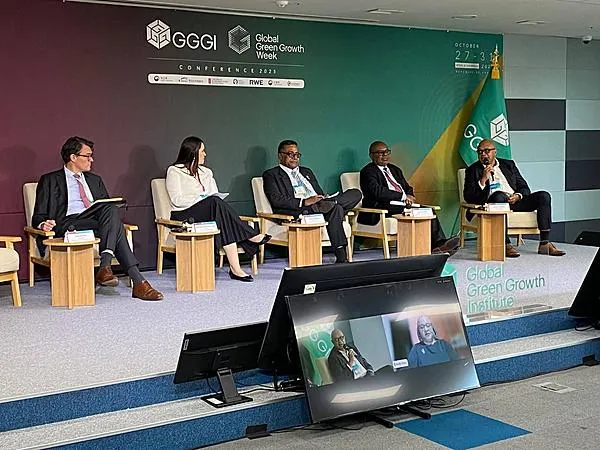
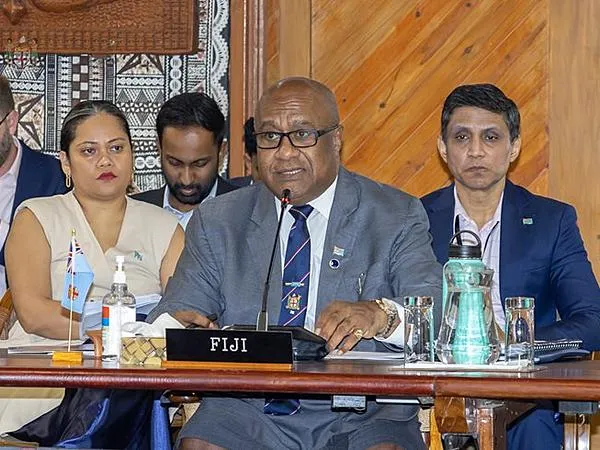
The Assistant Minister for Finance, Strategic Planning, National Development and Statistics Esrom Immanuel joined senior diplomats and international experts as a panelist at a high-level discussion on “Mobilizing Sustainable Finance in Caribbean and Pacific Developing States (SIDS).”
In his remarks, Immanuel underscored the urgent need for innovative and accessible financing mechanisms to address the escalating climate and development challenges and the existential risks faced by small island nations.
The event, convened by the Global Green Growth Institute (GGGI) in Seoul, South Korea, was held on the margins of Global Green Growth Week (GGGWeek) and ahead of the GGGI Assembly and Council Joint Session on 31 October, where the Assistant Minister will represent the Government of Fiji as a member of the GGGI Council. The panel brought together finance leaders from the Caribbean and the Pacific, alongside diplomats, climate experts, and international development practitioners.
Immanuel reaffirmed the importance of mobilizing sustainable finance at scale for SIDS like Fiji, emphasizing that such investments must prioritize climate resilience and the safety of island communities that are most vulnerable to the impacts of climate change.
“For SIDS, climate finance is not about money for the sake of money – it’s about the survival of our people and communities, and we must do what is necessary to make that happen,” said the acting minister.
“We need financing solutions that are accessible, predictable, and tailored to our scale and vulnerabilities. The time for incremental reform is over; we need systemic change that ensures fairness in how global capital flows to the most vulnerable nations. The onus is also on us to build the capacity and capability to manage these investments for the benefit of our people and communities.”
Immanuel highlighted Fiji’s pioneering efforts in sustainable finance, noting the country’s issuance of the world’s first sovereign green bond by an emerging economy in 2017, valued at FJD 100 million, which supported projects in climate-resilient water infrastructure, sustainable agriculture, and flood management. He also referenced Fiji’s issuance of the Pacific’s first sovereign blue bond in 2023, which raised FJD 50 million to enhance ocean-based resilience, sustainable fisheries, and marine biodiversity.
He further noted that Fiji adopted a comprehensive Sustainable Bond Framework in 2022, expanding the country’s financing options to include green, blue, and social bonds with ESG-aligned elements. “These instruments demonstrate that SIDS can innovate and lead by example in attracting private investment for sustainable growth,” he said, adding that “a clear and credible bond framework is the foundation of investor confidence.”
The assistant minister also emphasized that sustainable bonds offer an alternative mechanism for mobilizing finance to meet Fiji’s development needs, with the advantage of being quickly mobilized.
However, he cautioned that “bonds remain a debt instrument that often carry higher coupon rates compared to concessional loans from multilateral development banks such as the ADB and the World Bank. This underscores our continued effort to ensure that we have sufficient fiscal space, as well as an improved deficit position.”
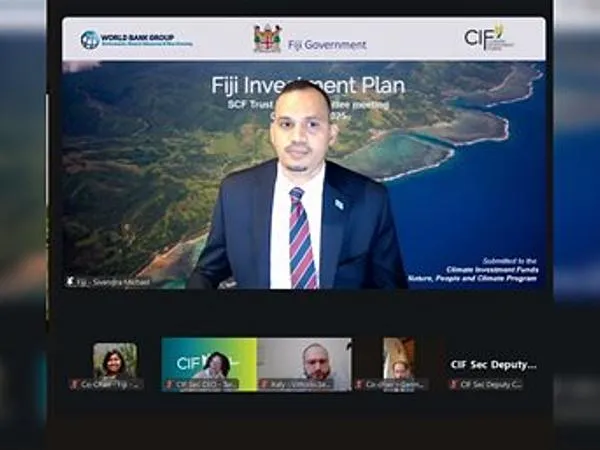
In a landmark decision, the Climate Investment Funds (CIF) governing board approved Fiji’s US$27 million Nature, People, and Climate (NPC) Investment Plan, developed in partnership with the World Bank.
The plan adopts a “mountain-to-ocean” approach to strengthen climate resilience across watersheds, coastal zones, and marine ecosystems. It is expected to benefit more than 80,000 Fijians while advancing biodiversity and sustainable livelihoods for generations to come.
Delivering the opening remarks during Fiji’s proposal defence, Deputy Prime Minister and Minister for Finance Prof. Biman Prasad said the endorsement reaffirmed the country’s development pathway towards building climate-resilient communities.
“Fiji has a clear vision: to accelerate growth towards high-income status by 2050 and eliminate poverty. This ambition is inseparable from our climate agenda. We must invest in smart, adaptive development that protects our people and natural assets from the escalating impacts of climate change. The support of the Climate Investment Funds will help us drive this transition in a way that is equitable, sustainable, and future-focused,” Prasad said.
Permanent Secretary for Environment and Climate Change Dr. Sivendra Michael, who defended Fiji’s investment proposal before the CIF Board, stressed that the plan embodies Fiji’s commitment to transformational change rooted in its people and landscapes.
“This Investment Plan captures our pathway to long-term, transformative change where people and nature can thrive together. For Fiji, climate action is not an abstract concept, it is an everyday reality that defines our economy, our communities, and our identity. The Government of Fiji has the policies, the plans, and the conviction to adapt. These resources will help us turn those commitments into tangible action by restoring our ecosystems, strengthening livelihoods, and protecting the heritage that binds us as a nation,” Michael said.
Fiji’s economy remains deeply tied to the health of its natural environment — with tourism contributing about 40 percent of GDP and 20 percent of jobs, and agriculture, fisheries, and forestry accounting for 32 percent of GDP and 40 percent of employment. However, the nation continues to face mounting threats from sea level rise, tropical cyclones, and coastal erosion, with climate-related losses estimated at five percent of GDP annually.
A dedicated US$4 million grant under CIF’s Dedicated Grant Mechanism (DGM) will further empower Indigenous Peoples and local communities to lead projects anchored in traditional knowledge, resilience, and sustainable resource management.
CIF Chief Executive Officer Tariye Gbadegesin welcomed the endorsement, commending Fiji’s leadership among island nations.
“Investing in nature is investing in a secure and prosperous future especially for Fiji, where the natural environment underpins the economy. Since 2008, CIF has been a committed partner to Small Island Developing States, particularly across the Pacific. Now we’re scaling up this work to help vulnerable communities in Fiji and beyond protect and manage the ecosystems that sustain them,” Gbadegesin said.
Fiji is the first Pacific Small Island Developing State (PSIDS) among eight countries selected under CIF’s NPC Investment Program, which supports nations in scaling nature-based solutions to strengthen climate resilience, biodiversity protection, and sustainable livelihoods.
The Government of New Caledonia has formalised the second phase of its state-guaranteed loan (PGE), following authorisation by the Congress on October 9. The agreement was signed on October 14 by Government President Alcide Ponga, High Commissioner of the Republic Jacques Billant, and the Regional Director of the French Development Agency (AFD) Safia Ibrahim.
Valued at one billion euros, the PGE was first released in March with an initial disbursement of €560 million. The second instalment will be released in two parts:
President Ponga expressed his gratitude to the French State for its continued support through the AFD.
“The State understood that the situation is very complex. This support is more than necessary to put New Caledonia on a trajectory and to ensure that Caledonian communities do not suffer from the current situation,” he said. “This is the whole point of the Durrieu mission — trying to capture this trajectory and make all stakeholders understand the urgent measures to be taken for New Caledonia.”
The signing was followed by a meeting of the Expanded Working Group of Executive Presidents (GTPE élargi), bringing together the presidents of the government, congress, and provinces, along with representatives from the two associations of mayors in New Caledonia.
This enlarged GTPE aims to define the procedures for allocating part of the loan known as the “Republican Solidarity Endowment”, amounting to €14 million, which will be distributed among local institutions to address pressing social and economic needs.
Deputy Prime Minister and Minister for Finance Biman Prasad met with Coalition for Disaster Resilient Infrastructure (CDRI) Global Director Ramesh Subramaniam on the sidelines of the 2025 IMF–World Bank Annual Meetings.
The discussion focused on Fiji’s leadership in disaster risk financing and infrastructure resilience across the Pacific, following the recent launch of the Fiji Disaster Risk Financing Report.
HPrasad highlighted that developing regions continue to face major infrastructure deficits, with around 20% of annual infrastructure spending lost to disasters, underscoring the urgent need for concessional financing and grant support from development partners and multilateral development banks.
Subramaniam invited Fiji to express its interest in co-chairing the CDRI from 2026, and discussions are underway to establish a CDRI regional office in Suva.
He also noted that the Infrastructure for Resilient Island States (IRIS) program will open its next call for proposals in November 2025, providing Pacific nations with funding opportunities for resilient infrastructure projects.
Throughout the week, Prasad will also meet with leaders from the World Bank, Asian Development Bank, New Zealand, and the Netherlands, among other key bilateral partners.
He is accompanied by the Assistant Minister for the Office of the Prime Minister Sakiusa Tubuna, the Permanent Secretary for Finance, and senior Ministry officials.
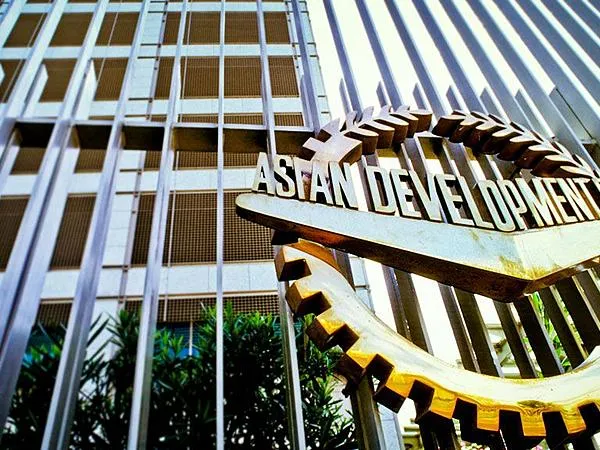
Economic growth in the Pacific is expected to pick up next year, buoyed by strong resource output in Papua New Guinea (PNG), according to the Asian Development Outlook (ADO) September 2025, released Monday by the Asian Development Bank (ADB).
The report projects Pacific economies to expand by 4.1 percent in 2025, before moderating to 3.4 percent in 2026, an upward revision from the April forecast. The ADB attributed the improvement mainly to the mining and petroleum-driven performance of PNG, the region’s largest economy.
“While it is good news that growth will accelerate in the Pacific subregion this year and inflation forecasts are adjusted down, geopolitical and trade tensions still pose risks to growth,” said ADB Director General for the Pacific Emma Veve. “ADB remains committed to helping build resilience to potential shocks such as extreme climate events and disruptions to global supply chains.”
PNG’s economy is forecast to grow by 4.6 percent in 2025, before easing to 3.6 percent in 2026 as output from major resource projects stabilizes. Inflation projections remain unchanged. The report said that new investment decisions in mining, petroleum, and related sectors could provide an additional boost to growth.
In Fiji, the Pacific’s second-largest economy, growth is forecast to remain steady at 3.0 percent in 2025, but to slow in 2026 due to the indirect impact of United States tariffs on its key trading partners. Inflation is expected to ease over the next two years as fiscal measures and lower global commodity prices help reduce consumer costs.
ADB said Fiji continues to face “large shocks due to limited fiscal buffers and climate risk,” but ongoing reforms and new spending on water security and coastal protection should strengthen long-term resilience.
In Solomon Islands, growth is expected to hold steady at 2.9 percent in 2025 and 3.2 percent in 2026, with the inflation outlook revised upward for next year before easing slightly in 2026. The government’s recent shift to an expansionary monetary policy is expected to support growth while keeping inflation contained.
Vanuatu’s 2025 forecast was trimmed to 1.5 percent, reflecting delays in post-earthquake reconstruction, though growth is expected to recover to 2.5 percent in 2026.
In the Central Pacific, growth projections were adjusted slightly downward for Kiribati and Nauru, now at 3.9 percent and 2.3 percent in 2025, and 3.3 percent and 2.5 percent in 2026, respectively. Tuvalu’s growth outlook remains unchanged at 2.7 percent in 2025 and 2.5 percent in 2026. Public infrastructure spending is expected to remain a key growth driver across these economies, though commodity price volatility and supply chain disruptions continue to pose risks.
In the North Pacific, forecasts were mixed. Growth was upgraded for the Marshall Islands to 3.0 percent in 2025 and 3.5 percent in 2026, supported by fisheries and construction. However, projections were lowered for the Federated States of Micronesia (FSM) and Palau—now at 0.8 percent and 8.2 percent in 2025, and 1.1 percent and 3.9 percent in 2026, respectively. The ADB cited slow utilization of Compact of Free Association funds in FSM and a gradual tourism recovery in Palau.
Growth prospects across the South Pacific are expected to remain uneven. The Cook Islands is projected to post the highest growth in the region at 10.4 percent in 2025, before slowing to 2.5 percent in 2026 as post-pandemic tourism demand stabilizes. Growth in Samoa is expected at 4.0 percent in 2025 and 2.7 percent in 2026, while Niue is forecast at 3.4 percent and 3.0 percent. Tonga is projected to grow 2.5 percent next year, moderating slightly to 2.3 percent in 2026.
“Tourism and construction remain key growth drivers” in the South Pacific, the report said, though weaker agriculture and fisheries output could weigh on Samoa’s outlook. Inflation is expected to continue moderating but could face renewed upward pressure from global price movements.
Founded in 1966, ADB is owned by 69 members, 50 of which are from the Asia-Pacific region. The Manila-based multilateral lender said it remains committed to “helping build resilience to potential shocks” and supporting inclusive, sustainable growth through innovation, infrastructure, and partnerships.
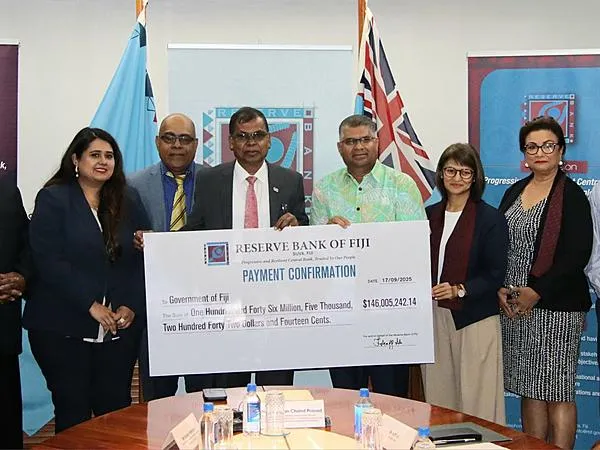
Acting Prime Minister and Minister for Finance Biman Prasad on Wednesday received the transfer of $146 million in profits from the Reserve Bank of Fiji, together with the presentation of the Bank’s audited financial statements for the year ending 31 July 2025.
Speaking at the handover, Prasad congratulated the Bank on achieving another record result.
“I would like to congratulate the RBF for making another record profit, surpassing the $135.5 million profit achieved in the last financial year. The increased level of profits over the last two years has been significantly driven by the high level of foreign reserves and higher interest rates in our trading partner economies for most of the year,” he said.
Prasad noted that while profitability is not the central bank’s main objective, the RBF has demonstrated sound financial management while meeting its mandates.
“As a central bank, making a profit is not the Reserve Bank’s primary objective. Nevertheless, the Bank has recorded strong profits while successfully meeting its monetary policy objectives of maintaining an adequate level of foreign reserves and stable inflation,” he said.
As of 16 September, foreign reserves stood at $3.89 billion, equal to 6.1 months of retained imports of goods and services, reflecting a strong balance of payments position. Inflation has also remained low, with Prasad highlighting recent positive trends.
“Inflation has been in negative territory for seven consecutive months, which means that since February this year, overall prices have been coming down compared to the same period last year. The inflation rate was recorded at minus 3.5 percent in August 2025, compared to 3.8 percent in August last year,” he said.
Acknowledging the Bank’s stewardship, Prasad said the profits reflect prudent management of Fiji’s reserves and investments.
“The exceptional profit reflects the Bank’s prudent management of the nation’s foreign reserves and its ability to capitalise on the high-yield investments offered by global financial markets,” he said.
He further emphasised the wider role of the central bank in supporting Fiji’s development.
“In a developing country like ours, one of the most important contributions of a central bank is to ensure macroeconomic stability, creating confidence and an environment conducive to increased levels of investment, leading to sustainable economic growth and development,” he said.
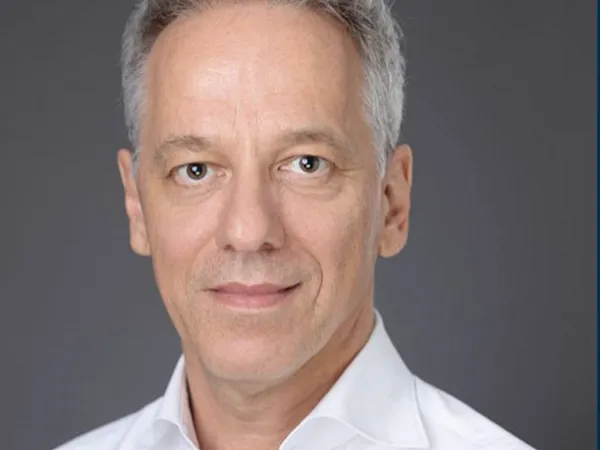
The World Bank has appointed Han Fraeters as its Division Director for Papua New Guinea, Solomon Islands and Vanuatu, effective 16 September.
Fraeters’ appointment marks the first time a director-level position has been based in Port Moresby, underscoring the World Bank’s commitment to bringing leadership closer to its clients. The move is part of a global shift to deliver faster, more effective, and higher-impact development support.
“I am honored to assume this role at such a critical time in the Pacific,” said Han Fraeters, World Bank's Division Director for Papua New Guinea, Solomon Islands and Vanuatu.
“Papua New Guinea, Solomon Islands and Vanuatu face urgent challenges. But their extraordinary human, natural and cultural wealth also provides enormous opportunities," Fraeters said. The official said that he is looking forward to working closely with partners, from the public and the private sector, and with communities, to identify and implement ambitious and sustainable solutions for those challenges that will benefit the people of Papua New Guinea, Solomon Islands and Vanuatu.
"Job creation will be central to the approach," he said.
The appointment comes as Papua New Guinea marks 50 years of independence and five decades of partnership with the World Bank Group.
Over the past 12 years, the Bank has expanded its portfolio more than sevenfold across Papua New Guinea and the Pacific, with commitments now standing at US$3.4 billion. Fraeters will oversee investments focused on energy, human development, and other sectors aimed at strengthening resilience across the three countries.
Key projects include the Learning Enhancement and Access Project in Papua New Guinea, which seeks to transform early learning for hundreds of thousands of children, and the Tina River Hydropower Development Project in Solomon Islands, the country’s first large-scale renewable energy initiative. The latter is expected to provide more than 70 percent of Honiara’s electricity needs from clean, renewable energy.
Fraeters, a Belgian national, has more than 20 years of experience with the World Bank, working largely in Africa and at the institution’s Washington, D.C. headquarters. Before joining the Bank, he worked as a digital transformation specialist in Europe’s education sector.
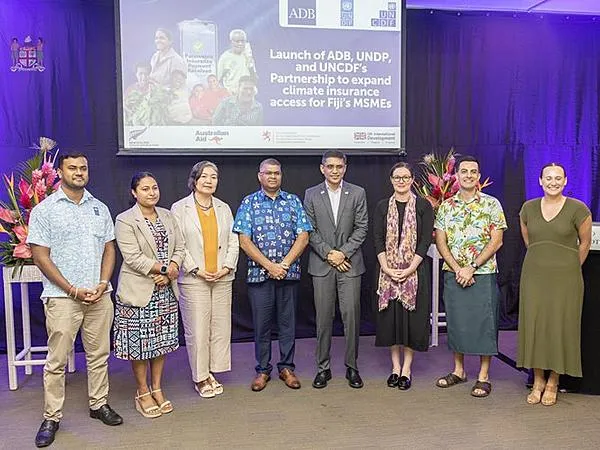
Fiji has become the first nation in the Pacific to help small and medium-sized businesses become resilient under the Global Climate Financing Partnership through a bold new partnership with the Asian Development Bank (ADB), the United Nations Development Programme (UNDP) and the United Nations Capital Development Fund (UNCDF).
The initiative will strengthen access to climate risk financing for micro, small and medium enterprises (MSMEs), the backbone of Fiji’s economy.
Speaking at the launch in Suva, Permanent Secretary for Trade, Co-operatives, MSMEs and Communications Shaheen Ali described MSMEs as “significant contributors to our GDP,” making up more than 80 percent of registered businesses, employing 60 percent of the labour force and contributing nearly $380 million in tax revenue before COVID-19.
“These are not just numbers; they are the market vendors in Nausori, the fishermen of Vanua Levu, the artisans of Lau and the young entrepreneurs in Suva. When we stand with MSMEs, we are standing with the future of Fiji. When they rise, Fiji rises with them,” Ali said.
At the centre of the partnership is parametric insurance, an innovation that delivers quick, automatic payouts once rainfall or cyclone thresholds are reached. This removes delays and bureaucracy, ensuring businesses can recover without losing momentum.
Its impact is already clear. In 2024, 535 individuals received payouts after heavy rainfall, while in March this year more than 1,700 beneficiaries were supported following devastating floods. Farmers like Ms Priya Devi were able to replant sugarcane within weeks, and entrepreneurs like Mr Ovini Singh used payouts to resume operations and even set aside savings for future shocks.
Ali underscored that resilience is about more than coping, saying that “Resilience is a farmer who can keep his land. A mother who can keep her stall. A family that can keep hope alive after the storm. This initiative represents recovery with dignity and renewal with confidence.”
The initiative builds on Fiji’s Five-Year MSME Strategic Plan, which embeds climate resilience at its core. The Reserve Bank of Fiji, the first in the Pacific to take national ownership of parametric insurance, and donor partners including New Zealand, Australia, Luxembourg, the United Kingdom and India are key supporters in advancing this agenda.
“This is the Fiji way: to meet challenges with courage, to forge partnerships grounded in trust and to turn innovation into reality for our people,” Ali said. “So today, let us be clear: when we stand with MSMEs, we are standing with the future of Fiji. When we invest in their resilience, we are investing in our nation’s resilience.”
“And when we launch this partnership, we are telling every market vendor in Nadi, every farmer in the interior, every artisan in the outer islands, every entrepreneur in Suva: you are not alone. We see you. We believe in you. And we will walk with you through every storm, side by side,” the official said
Fiji’s digital journey is set to accelerate as the government launches a phased rollout of 5G technology, starting this year in the nation’s busiest cities before extending to rural and maritime communities.
Deputy Prime Minister and Minister for Communications Manoa Kamikamica unveiled the Cabinet-endorsed 5G Spectrum Assignment and Rollout Strategy in Parliament, vowing that no Fijian will be left behind in the push for faster and more reliable mobile internet.
“The 5G structure requires infrastructure. This means fibre backhaul, three-phase power and modernised core networks,” he said. “In areas where 5G is not feasible yet, we’re prioritising infrastructure upgrades so every Fijian, regardless of location, has access to meaningful internet.”
The strategy will unfold in three phases over four years. Phase One (2025–2026) will focus on economic and tourism hubs—Suva, Nadi, Lautoka and Denarau—ensuring that businesses, emergency services and tourism operators can immediately access high-speed 5G networks. Phase Two (2026–2027) will extend coverage to Nasinu, Lami, Labasa and Savusavu, with an emphasis on supporting development in the Northern Division. By 2028, Nausori, Sigatoka, Navua, Ba, Tavua, Rakiraki, Korovou and Taveuni are expected to come online, with targeted investment to strengthen connectivity on Taveuni.
Operators licensed to deliver 5G will pay a base price of $2.92 million per 100 MHz block, but the government has adopted a commitment-based pricing model to encourage broader coverage. Companies rolling out services in remote and underserved areas between 2025 and 2028 will qualify for a coverage-based discount. Flexible payment terms allow 60 percent of the cost—after discounts—to be paid upfront, with the remainder spread over time. Performance-based incentives are also on the table.
Revenue from the spectrum assignment will be channelled into public services and digital equity: 50 percent to the Government Consolidated Fund, 30 percent to the Universal Service Obligation Fund to improve access in remote areas, and 20 percent to the Telecommunications Development Trust Fund to grow Fiji’s digital economy.
“This plan is not just about speed. It’s about making sure our farmers, our students, our health centres and our remote island communities can all benefit from the same opportunities,” Mr Kamikamica said.
The 5G rollout is expected to transform sectors from e-health to remote education. Faster, more reliable connections will enable telemedicine, real-time virtual classrooms, smart logistics and Internet of Things deployments in agriculture and utilities. Businesses across Fiji stand to modernise operations, expand market reach and deliver digital services at scale.
Still, challenges remain. Infrastructure upgrades demand significant investment in towers, small cells and backhaul connectivity. Policymakers must balance rollout speed with affordability and coverage while addressing technical concerns such as electromagnetic safety and signal interference. Digital literacy programmes may also be needed to help households and enterprises make the most of the new technology.
By giving the green light to 5G, Fiji is signalling its intent to embrace the next generation of telecommunications infrastructure, positioning itself as a technology leader in the Pacific. As the first connections go live in 2025, the nation’s path to becoming a fully connected digital society will begin—one tower, one town and one village at a time.
The Water Authority of Fiji (WAF) has been allocated $284.4 million in the 2025-2026 Budget to deliver major upgrades to water and wastewater infrastructure across the country.
The funding will go towards upgrading water sources and treatment plants, improving water pipes and supply systems, and reducing water loss. A further $4.9 million will be used to build a new 20-megalitre Water Treatment Plant to support the existing Tamavua facility, promising cleaner water, faster delivery and enough supply for Fiji’s growing communities.
In partnership with the Asian Development Bank, the government will also embark on a $300 million, five-year project to improve wastewater management. Plans include doubling the Kinoya Wastewater Treatment Plant’s capacity to better protect the marine environment.
For rural areas, $10.7 million has been allocated for water projects under WAF, along with $6.5 million for borehole development under the Ministry of Lands.
“Clean water and better wastewater services mean healthier families and a cleaner Fiji for you,” the government said in announcing the investment.
Finance Minister Professor Biman Prasad has announced that the Water Authority of Fiji will receive increased funding aimed at repairing infrastructure, upgrading water sources and treatment plants, expanding distribution networks and significantly reducing water losses.
“Our water infrastructure is outdated, with nearly half of the treated water lost due to leaks. This has constrained our ability to connect more people to safe, treated piped water and has limited economic development,” he said.
Fiji currently faces a 50 percent non-revenue water rate, meaning half of treated water never reaches consumers. The government plans to cut this figure to 20 percent within five years through a performance-based contract with a Spanish company, facilitated by the ADB. Payments will be tied to verified reductions in water losses, marking a first for Fiji and the Pacific region.
The government will maintain free water access for households earning $30,000 or less a year and continue a $9.5 million electricity subsidy that benefits 60,000 low-income households and more than 1,000 schools.
Professor Prasad said the government was committed to transforming the water sector into “a financially sustainable and technologically advanced system that ensures reliable and equitable access for all citizens.”
The Ministry of National Planning and Development Coordination (MNPDC) has begun a review of the Solomon Islands National Infrastructure Investment Plan (SINIIP) to ensure major projects are better prioritised and aligned with national development goals.
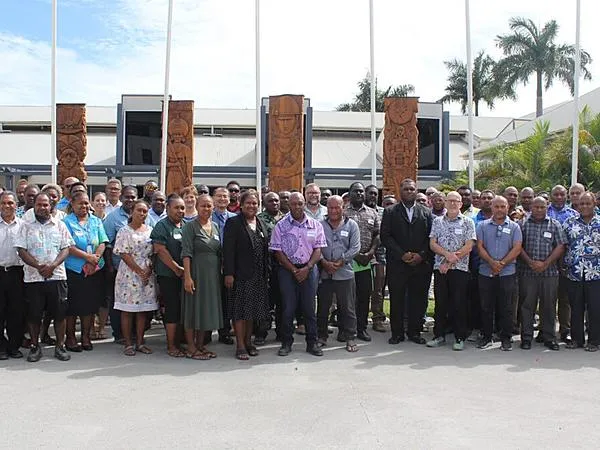
A national workshop was held on 13 August, bringing together senior government officials, state-owned enterprises, development partners and NGOs to validate and rank unfunded infrastructure projects.
Permanent Secretary Brian Lenga said infrastructure remained vital to driving sustainable and inclusive growth, adding that a well-prioritised project pipeline was essential for guiding national development.
The updated SINIIP will set out a clear process for assembling and prioritising projects in line with the National Development Strategy. The review is being led by experts from the Pacific Region Infrastructure Facility (PRIF) alongside international consultants.
During the workshop, participants examined potential projects, discussed prioritisation criteria and learned how to prepare Project Screening Notes to ensure proposals are investment-ready.
The revised plan will serve as a framework for prioritising large-scale capital investments across sectors including transport, energy, water and sanitation. MNPDC acknowledged the support of the Asian Development Bank and PRIF in the process.
The workshop’s findings will shape the final list of national priority projects and the preparation of a government-endorsed dossier for funding consideration.
Deputy Secretary Roy Mae thanked participants for their input and encouraged them to continue providing project information to strengthen the plan.
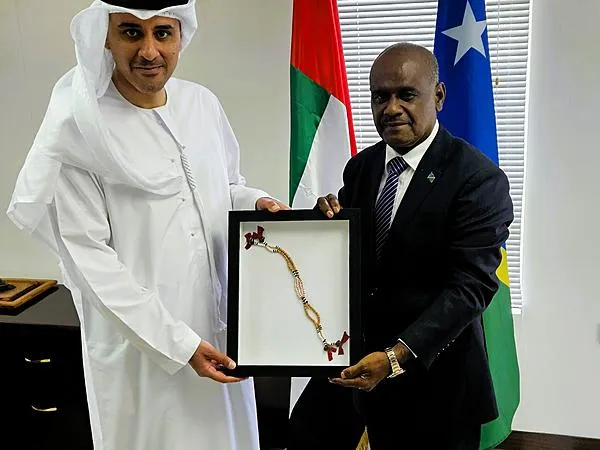
Prime Minister Jeremiah Manele has met with Dr. Fahad Al Taffaq, the United Arab Emirates Ambassador to Australia, in a bid to deepen ties and explore new avenues of cooperation between Solomon Islands and the UAE.
During talks in Honiara, Manele shared updates on the Bina Harbour project, describing it as a transformational initiative for the nation. Although the project has faced delays, he said the government remained confident it would be completed within this parliamentary term and was actively seeking investors.
“We are committed to advancing projects like Bina Harbour that will drive sustainable economic growth and create jobs for our people,” Manele said. “Our partnership with the UAE opens doors for investment and collaboration that will benefit our countries.”
The two leaders discussed broadening economic links, including the potential signing of an air services agreement. The UAE signalled its readiness to proceed but is awaiting formal communication from Solomon Islands.
Manele also addressed Solomon Islands’ postponed engagement with Pacific Islands Forum dialogue partners, voicing hope for renewed discussions soon.
Ambassador Al Taffaq outlined some of the UAE’s regional priorities, including waste management and land reclamation. He said the UAE hopes to appoint a new special envoy to the Pacific but will do so only after the Pacific Islands Forum Secretariat completes its ongoing review of regional architecture.
“The UAE is committed to supporting Solomon Islands and the Pacific region through partnerships that address shared challenges and opportunities,” Al Taffaq said. “We look forward to working closely with the Solomon Islands government to realise these goals.”
Both leaders expressed optimism about expanding cooperation across economic, environmental and diplomatic fronts.
Deputy Prime Minister and Minister for Communications Manoa Kamikamica opened the 2nd Pacific ICT Ministerial Dialogue on 8 August, 2025 with a strong appeal for renewed regional unity, collaboration and ambition in the digital space.
Speaking in Suva, Kamikamica reaffirmed the symbolic and strategic importance of the Lagatoi Declaration, first adopted at the inaugural Dialogue in Papua New Guinea, describing it as a shared roadmap for the Pacific’s digital transformation.
“The Declaration reaffirmed our resolve to harness ICT for sustainable development, economic growth and inclusive service delivery — no matter which island our people call home,” he said. “It acknowledged the urgent challenges we face — from climate change to cyber threats — and the need for stronger regional collaboration, innovation and resilience.”
Kamikamica pointed to Fiji’s recent milestones in advancing digital inclusion, including the rollout of Starlink satellite internet, preparations for the commercial launch of 5G, the establishment of the national Computer Emergency Response Team (CERT), and Fiji’s accession to the Budapest Convention on Cybercrime.
“We remain committed to connecting the unconnected, especially in rural and maritime communities,” he said. “Since our last meeting, one of our key achievements has been our accession to the Budapest Convention — demonstrating our commitment to a safer and more secure digital environment.”
He offered Fiji’s support to other Pacific countries considering joining the Convention, saying the nation was willing to share its experiences and lessons learned.
The deputy prime minister also highlighted progress in public service delivery through platforms such as the Fiji Integrated Licences and Permits Approval System, which is now entering its second phase to streamline construction permitting.
“Our goal is to deliver more transparent, coordinated and user-friendly government services through digital platforms,” he said.
Looking beyond the Pacific, Kamikamica urged ministers to ensure the region’s voice is heard in shaping global ICT policy. He noted the Pacific’s contributions to the UN Global Mechanism on ICT Security and welcomed the finalisation of the UN Convention on Cybercrime, which will open for signing in October.
The Dialogue aims to strengthen partnerships and coordinate efforts to deliver tangible outcomes, reaffirming the Pacific’s shared commitment to ensuring that no island is left behind in its digital transformation journey
Deputy Prime Minister and Minister for Finance Biman Prasad launched on 31 July the Compliance Improvement Strategy (CIS) 2025–2028 at the Fiji Revenue and Customs Service (FRCS).
The CIS introduces a new web-based platform that provides easier access to tax information and services, with a focus on addressing compliance challenges in sectors such as wholesale, retail and micro, small and medium enterprises.
The initiative aims to promote voluntary taxpayer compliance, raise awareness and education, and foster greater trust and fairness within the tax system. In launching the strategy, Prasad emphasised the core principles of a good tax system, highlighting the need for mutual trust between taxpayers and the FRCS.
He also underscored the Coalition Government’s commitment to engaging the private sector in national development planning and ensuring a level playing field for all economic actors.
“As we continue to build a stronger and more inclusive Fiji, we must recognise that a fair and effective tax system is not just a government mechanism. It is a shared commitment between the state and its people — one that enables us to fund our schools, hospitals, infrastructure and essential services, and to invest in the future,” he said.
“As a government, that is never enough because budgets are always limited and revenues are always limited; however, governments have to work within those constraints, which may include borrowing and managing a deficit.”
He added, “The idea behind this new compliance strategy is to create a culture where compliance is not feared but embraced.”
Prasad reiterated that voluntary compliance is the foundation of national development, saying taxpayers who register, file, pay on time and report accurately help build a stronger and fairer system that benefits everyone.
Taxpayers, businesses and public servants were urged to contribute to a culture of compliance through responsible service and shared accountability.
Follow on LinkedIn:
Pacific Business Review
Be the "First" to get our exclusive Digital Magazine & Weekly Newsletter.