Economic growth is slowing across the Pacific as countries face weak global conditions, natural hazards, and climate-related shocks. The World Bank’s flagship Pacific Economic Update projects regional growth to decline to 2.6 percent in 2025, down from 5.5 percent in 2023.
This slowdown coincides with the fading of post-COVID recovery, weakening tourism in some countries, and rising global policy uncertainty. Inflation is easing but remains above pre-pandemic levels—keeping the cost of living stubbornly high. Moreover, the region’s dependence on external aid, remittances and imported goods may leave many economies vulnerable to external shocks.
Aggregate growth among tourism- and remittance-led countries such as Samoa, Tonga, Palau and Vanuatu is expected to halve from 2024 to 2025. In Solomon Islands—the second-largest economy among the 11 Pacific Island Countries covered in the update—growth has hovered around 2.5 percent, constrained by structural challenges including declining logging revenues and limited economic diversification.
Inflation is projected to fall to 3.6 percent in 2025, down from a peak of 7.4 percent in 2023, but elevated prices continue to strain household budgets. Many Pacific economies remain highly exposed to natural disasters, climate shocks and external funding volatility, with foreign government grants comprising nearly 40 percent of gross national income in some countries.
Amid these challenges, the report identifies a major opportunity to boost long-term resilience and growth: increasing women’s participation in the workforce. On average, only 42.7 percent of working-age women are active in Pacific labour markets—more than 15 percentage points lower than male participation. Closing this gap could raise long-term GDP per capita by over 20 percent on average across the region.
“While Pacific nations can’t control global shocks, there is an opportunity to build stronger domestic foundations. Real economic resilience will come from addressing these long-standing challenges through structural reforms,” said Ekaterine Vashakmadze, senior economist at the World Bank.
“Engaging more women in work is one of the highest-impact reforms Pacific governments can pursue,” Vashakmadze added.
The report shows that in many Pacific countries, the lack of paid leave, childcare, and protections in the workplace keeps women out of work. Social norms often confine women to low-paid jobs and, even with higher levels of education, women remain underrepresented in high-demand sectors such as technology and engineering.
The Pacific Economic Update released in mid-July 2025 highlights that more inclusive labour markets can deliver broad-based benefits. Approximately half a million working-age Pacific women are currently outside the labour force and remain nearly invisible in many subsectors. Closing these gaps could significantly increase household incomes, support private sector development, and strengthen long-term fiscal sustainability.
For Part Two, the update emphasises the urgent need to boost women’s participation in the Pacific energy sector, where they hold just 5 percent of technical roles—positions that are well paid and central to the region’s energy transition. Building on the World Bank’s Pacific Women in Power programme with the Pacific Power Association, the report outlines steps to close these gaps, such as improving workplace safety, supporting families, and partnering with educators to empower both women and men for workforce entry.
“Utilities across the Pacific are stepping up—not just because it’s the right thing to do, but because a stronger, more resilient energy sector depends on it,” said Helle Buchhave, senior social development specialist at the World Bank.
The Pacific Economic Update is published twice yearly and covers 11 countries: the Federated States of Micronesia, Fiji, Kiribati, the Republic of the Marshall Islands, Nauru, Palau, Samoa, Solomon Islands, Tonga, Tuvalu and Vanuatu.
It aims to inform business leaders, citizens, international partners and policymakers about economic trends and key development issues in eleven Pacific Island countries.
The Republic of Vanuatu marked a significant milestone in its international outreach efforts with the successful hosting of its 2025 National (Financial) Resources Promotion Conference in Hong Kong.
Organised by the Embassy of Vanuatu in China, the event brought together Chinese and Hong Kong officials, business leaders, listed companies, media, and stakeholders from across the region, highlighting Vanuatu’s ambitions to expand economic ties—particularly in finance and tourism.
The afternoon event opened to the sound of traditional Melanesian music, setting the tone for a vibrant showcase of Vanuatu’s natural charm and emerging investment landscape.
Among the honoured guests was Deputy Prime Minister and Minister of Finance and Economic Management of Vanuatu, Johnny Koanapo Rasou, who spoke passionately about Vanuatu’s aspirations.
“We welcome Chinese guests to experience the hospitality of the Vanuatu people firsthand,” he said, extending an open invitation for deeper collaboration. “We hope to strengthen cooperation in various industries and fields, including finance, tourism and culture, with China and the Hong Kong Special Administrative Region.”
Also in attendance was Nguk Yang Dennis Nai, ambassador extraordinary and plenipotentiary of Vanuatu to the People’s Republic of China, who underlined the long-term opportunities for partnership. “We warmly welcome individuals from all sectors in China to explore more cooperation opportunities with Vanuatu,” he said.
The event blended cultural richness with economic ambition. In a visually engaging segment led by a travel influencer invited by the Vanuatu National Tourism Office, guests were taken on a virtual tour through Vanuatu’s signature attractions—from its volcanic landscapes and hidden blue holes to the enduring traditions of its village communities.
Osborne Taseru, first secretary at the Vanuatu Embassy in China, gave a detailed presentation on the country’s eco-tourism routes and seafood export advantages. “Vanuatu has enormous potential not just as a natural paradise but as a rising player in sustainable economic development,” he noted.
A central focus of the event was Vanuatu’s evolving financial sector. Cliff Chen, senior advisor to the Deputy Prime Minister, introduced key legislative frameworks such as the Virtual Asset Service Provider (VASP) Act, highlighting the nation’s openness to digital asset projects and fintech partnerships.
“We are committed to providing a transparent and forward-looking financial environment that supports innovation while ensuring regulatory clarity,” Chen said.
The momentum continued with a series of strategic Memorandum of Understanding (MOU) signings involving South Pacific Digital Holdings (SPDH).
MOUs were signed with two Hong Kong-listed firms—Crypto Flow Technology Limited and Unisound AI Technology Limited—as well as with Japanese digital asset exchange BitTrade and Australian fintech company Tridens Investment. The agreements were witnessed by Ambassador Nai and signify a bold step forward in Vanuatu’s fintech diplomacy.
Earlier in the day, Deputy Prime Minister Koanapo held high-level talks with Hong Kong Chief Executive John Lee Ka-chiu, the Financial Services and the Treasury Bureau, and the Hong Kong Monetary Authority.
Reflecting on those engagements, he expressed optimism: “I commend the progress made in both traditional and digital finance between our sides. We intend to deepen regulatory and sectoral cooperation through a series of MOUs, working together to advance financial development.”
As the event drew to a close amid applause and positive energy, organisers were quick to remind attendees that this was not a conclusion but the beginning of stronger, mutually beneficial ties.
“We are confident that in the days ahead, with its unique charm and immense potential, Vanuatu will attract more international partners to invest and engage in business,” the Deputy Prime Minister said.
The conference underscored Vanuatu’s proactive strategy in promoting itself as a serious economic partner—one that combines rich cultural heritage with modern economic aspirations in the heart of the South Pacific.
The Ministry of Rural and Maritime Development and Disaster Management today reaffirmed its commitment to building stronger and more financially resilient rural communities through the signing of an addendum to its Memorandum of Understanding (MoU) with the Reserve Bank of Fiji (RBF).
The expanded partnership now formally includes support for parametric insurance as a key financial safety net for rural families facing climate-related disasters.
“This addendum represents an important milestone in our existing collaboration with the Reserve Bank of Fiji. It formalises our shared commitment to empowering rural communities with tools that not only protect livelihoods but also enhance financial resilience in the face of natural hazards,” said the Permanent Secretary for Rural and Maritime Development and Disaster Management Isoa Talemaibua.
Fiji’s rural and maritime communities continue to face increasing risks from climate-induced events such as cyclones, droughts and flooding. In response, parametric insurance offers a proactive solution, providing timely and reliable financial relief to affected households following severe weather events.
“This new initiative bridges a critical gap in our national disaster response framework. It complements the work of the National Disaster Risk Management Office by ensuring that families receive early financial assistance, minimising vulnerability and supporting quicker recovery," Talemaibua said.
The strengthened partnership also aims to improve awareness and access to financial services, including insurance products tailored to the needs of rural populations. This reflects the Ministry’s broader commitment to integrating climate adaptation and financial innovation into sustainable development planning, he added.
The Ministry acknowledges the leadership of the Reserve Bank of Fiji in driving forward risk financing solutions and expresses gratitude to development partners who continue to support such forward-looking interventions.
“As a Ministry, we remain dedicated to working with all stakeholders to ensure this programme reaches those who need it most — efficiently, equitably and sustainably," Talemaibua said.
Pacific Island leaders have formally launched the Pacific Roadmap for Economic Development (PRED) 2025–2030, marking a new chapter in regional cooperation focused on inclusive growth, sustainable finance and economic resilience.
The announcement was made during the 2025 Forum Economic Ministers Meeting (FEMM) held in Suva, Fiji, where ministers from across the Blue Pacific endorsed the comprehensive strategy aimed at steering the region through mounting global economic, climate and geopolitical pressures.
Forum Secretary General Baron Waqa, in his welcome address on 24 July 2025, confirmed that PRED is now “officially under implementation,” adding that it is designed not merely as a technical framework but as a “model for the development of similar implementation plans” under the broader 2050 Strategy for the Blue Pacific Continent.
“PRED is now officially under implementation, and we shall have a formal launching of the PRED document during this meeting,” Waqa said.
The PRED outlines six key focus areas: economic management and public finance; private sector development and MSMEs; trade and investment; the digital economy; labour mobility and remittances; and inclusive economic development.
The roadmap had been developed through broad consultation with Member States, civil society, the private sector, and development partners. The framework will support both national and regional development goals, which is part of a regional architecture for economic development and resilience.
The roadmap aligns with the implementation of the Pacific Resilience Facility and the Climate Finance Access and Mobilisation Strategy, two other regionally endorsed tools intended to boost sustainable finance and disaster readiness.
Forum leaders say the roadmap offers a practical framework to strengthen institutional capacity, unlock financing, reduce trade barriers, and promote inclusive growth—particularly for women, young people, and communities in rural and outer islands.
Tongan Prime Minister and Finance Minister Dr Aisake Valu Eke, who chaired this year’s FEMM, said PRED represents a vital regional instrument for shared progress.
“The need for working together, amidst the increasing global uncertainties confronting our region is critical and cannot be overstated,” Eke said during the official opening of FEMM on 24 July 2025.
Eke had also endorsed the roadmap during a special FEMM held earlier in 2025, stating that it would help drive strategic cooperation across sectors such as finance, gender equity and climate action.
“I urge our Forum Economic Ministers and Forum Women Leaders to embrace this opportunity as a good example of regional cooperation,” he said.
The roadmap comes at a time of mounting fiscal and environmental pressure across the region. Pacific economies continue to grapple with supply chain disruptions, constrained public finances, inflationary shocks and heightened climate vulnerability.
A key challenge remains implementation. While PRED offers a well-articulated framework, Forum officials acknowledged the need for financing and institutional support. Secretary General Waqa noted that the Forum Secretariat will play a central role in coordinating progress reports, policy monitoring, and mobilising technical assistance.
The Secretariat said it would begin work immediately to establish a PRED monitoring framework and annual reporting mechanism. Each thematic area will be supported by tailored implementation plans developed in collaboration with Member States and regional agencies.
The launch of PRED 2025–2030 complements ongoing regional initiatives such as the 2050 Strategy, the Pacific Aid for Trade Strategy, and the Pacific Digital Economy Programme, with officials stressing that the roadmap is not intended to duplicate existing plans but to integrate them into a unified, results-oriented approach.
While the PRED is now active, Forum leaders agree that the real work begins with its execution—and ensuring that the plan does not remain just another regional document, but becomes a tool for lasting and inclusive change.
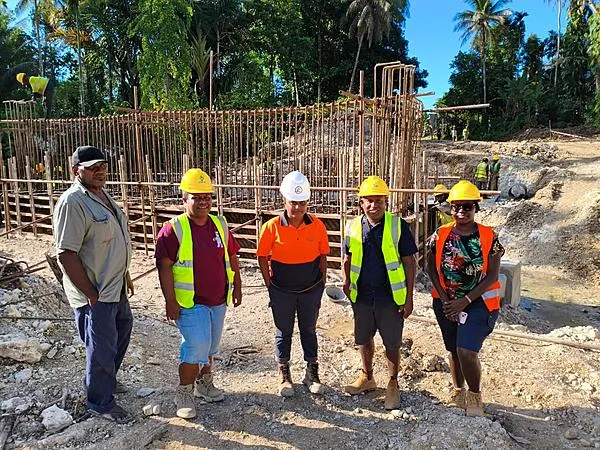
A joint inspection team led by the Ministry of Infrastructure Development (MID) Safeguards Unit has completed a review of four bridge construction sites in Malaita Province, engaging closely with local communities and project stakeholders along the way.
The visit, carried out last week, covered the Kolofe 1 and 2 bridges along the North Road, and the Su’u and Bira bridges along the West Kwaio Road. These projects form part of the broader Solomon Islands Roads and Aviation Project (SIRAP 2), supported by World Bank financing and aimed at improving transport connectivity and climate resilience in the country’s critical infrastructure.
Roxsley Basil, chief safeguards officer at MID, said the team included representatives from the Auki-based MID office, the Project Support Team, the construction supervision engineer EGIS, and the project contractor China Civil Engineering Construction Corporation (CCECC).
At each site, the team conducted not only engineering inspections but also face-to-face community engagements. “We began with the Kolofe 1 and 2 bridges, where we met with the Community Advisory Committee (CAC),” Basil said. “A few concerns were raised during the meeting, and these were noted by all stakeholders present for follow-up.”
Similar interactions were held during the visit to the Su’u and Bira bridges. The feedback sessions gave residents a chance to voice issues and expectations—an approach that officials say is helping to build trust and ensure long-term project sustainability.
As of now, the four bridge sites are approximately 48 percent complete, with physical work said to be progressing steadily despite the logistical challenges of working in remote locations.
The Malaita Bridges project is one of the most visible components of the government’s wider commitment to regional development. The aim is not just to lay concrete and steel but to transform the way communities move, trade, and interact.
When completed, the new bridges will offer more reliable access to markets, schools, and health facilities—especially during the rainy season, when flooding frequently isolates rural villages.
The bridge works fall under Component 2 of SIRAP 2, which focuses on Climate Resilience and Safety Investments in the Road Sector. The programme reflects a multi-year strategy to strengthen infrastructure across Solomon Islands in the face of rising climate risks.
While the Malaita component concentrates on bridges, SIRAP 2’s scope extends far beyond. It includes upgrades to Honiara and Munda airports, rehabilitation of the Santa Cruz Airfield, and improvements in air navigation systems to enhance aviation safety across the country.
The World Bank remains the principal financier of the SIRAP and SIRAP 2 initiatives. Its involvement has brought in not only funding but technical expertise and global best practices in safeguards and community consultation.
The Bank's emphasis on climate adaptation has also steered the design of the bridges to withstand more extreme weather events, including heavier rainfall and stronger floods—making them more than just access points, but lifelines during emergencies.
Economic growth in Pacific island nations is expected to hold steady this year but slow slightly in 2026, according to the Asian Development Bank’s latest Asian Development Outlook (ADO) released 23 July, 2025.
The ADB maintained its 2025 growth projection for the Pacific at 3.9 percent, while the 2026 forecast has been adjusted downward to 3.5 percent. The moderation reflects persistent challenges across the subregion, including limited capacity to scale up tourism, constraints in implementing public infrastructure, vulnerability to disasters, fiscal pressures and a high risk of debt distress.
The outlook is heavily influenced by Papua New Guinea and Fiji, the Pacific’s two largest economies. Growth forecasts for both countries remain unchanged.
Inflation across the Pacific is expected to average 3.4 percent in 2025 and 3.7 percent in 2026, broadly in line with international commodity price trends. However, the regional average conceals diverging movements among smaller island states.
In FY2025, inflation is projected to be lower in Samoa, while Palau and the Marshall Islands are expected to see higher inflation due to domestic price trends. For FY2026, inflation is forecast to rise in Palau, while Samoa and the Marshall Islands may see lower rates.
ADB cautioned that volatile fuel prices, geopolitical tensions and supply chain disruptions remain key risks that could complicate inflation management across the Pacific.
The Pacific’s growth outlook contrasts with broader trends across developing Asia, where the ADB has cut regional growth forecasts due to rising global trade tensions, U.S. tariffs and weakening demand from major economies such as China and India.
Still, the ADB urged governments across Asia and the Pacific to strengthen economic fundamentals and support open trade to drive long-term investment and employment.
Founded in 1966, ADB works across Asia and the Pacific to support inclusive, resilient and sustainable development. It is owned by 69 members, including 50 from the region.
Suva, Fiji – JMR Infotech, a global leader in core banking and digital technology solutions, convened the Pacific’s top financial minds for the JMR CXO Dialogue – Fiji 2025, held in the first week of July at the Tanoa Plaza Hotel in Suva.
Themed “The Future of Financial Services in the Digital Age,” the Dialogue offered an important platform for Fijian bank CXOs, government leaders and industry experts to explore how citizen-centric, digital-first innovation can reshape everyday banking and enable sustainable financial inclusion across the Pacific.
Discussions spanned customer experience transformation, integrated digital ecosystems, public–private partnerships (PPPs) and the power of scalable, locally relevant technologies to bridge service gaps and empower citizens.
The event was inaugurated by Hon. Manoa Kamikamica, Fiji’s Deputy Prime Minister and Minister for Trade, Co-operatives, Small and Medium Enterprises and Communications, who delivered the opening address.
“Fiji is not just a gateway to the Pacific—it is an emerging hub for digital innovation,” said Hon. Kamikamica. “JMR Infotech’s commitment to enabling smarter, more inclusive financial services aligns well with the government’s vision for a connected, tech-driven future.”
Jayafar Moidu, Founder and CEO of JMR Infotech, delivered the keynote address, emphasizing the need for contextual, inclusive transformation.
“This Dialogue reflects our belief that digital transformation must be both inclusive and rooted in local realities,” said Moidu. “With our on-ground presence in Fiji and our strong emphasis on Public–Private Partnerships, we aim to empower financial institutions across the Pacific to deliver everyday banking that is simple, secure, and people-first.”
JMR Infotech’s approach goes beyond core banking modernization. The company partners with governments on resource planning solutions that enable efficient, transparent service delivery while its proprietary IP-based platform, LivEzy, helps create unified digital ecosystems that seamlessly integrate payments, banking, commerce and e-government services.
As part of its long-term commitment to the region, JMR Infotech recently launched a new regional subsidiary in Fiji, reinforcing its dedication to fostering digital growth, financial inclusion and local capacity-building across Pacific Island nations. The company has been working with banks in the Pacific to enhance their digital capabilities and is now better positioned to co-create regionally relevant, scalable financial and government service solutions in partnership with local stakeholders.
The JMR CXO Dialogue – Fiji 2025 also featured a dynamic panel discussion on “Reimagining Everyday Banking: Growth, Inclusion and Innovation in the Pacific,” with expert contributions from:
Veilawa Rereiwasaliwa, CEO, Merchant Finance Ltd
Omid Saberi, CIO, BSP Fiji
Praneel Prasad, Project Manager, Reserve Bank of Fiji
Georgina Naigulevu, Director – Transformation, TetraTech
Together, these leaders shared insights on how financial institutions, technology providers and government agencies can collaborate to build inclusive, resilient financial ecosystems that deliver real impact for Pacific communities.
With a track record of 400+ turnkey projects and deep domain expertise across platforms like Oracle FLEXCUBE, OBDX, OFSAA and its own LivEzy digital platform, JMR Infotech is known for delivering core banking modernization, regulatory compliance, analytics, government resource planning and customer experience solutions across more than 75 countries worldwide.
SUVA, Fiji — The South Pacific Stock Exchange (SPX) has announced its admission as a member of the United Nations Sustainable Stock Exchanges (UN SSE) initiative, joining a global network of more than 130 exchanges working together to promote sustainable development.
The move signals SPX’s strong commitment to advancing sustainable finance and responsible investment, and supports the exchange’s broader vision of developing a market that not only drives economic growth but also aligns with Fiji’s long-term social and environmental priorities.
By joining the UN SSE, SPX will gain access to global resources, best practices, and peer exchange opportunities that support its market development agenda, including green finance, sustainability reporting and stakeholder engagement.
The Trinidad and Tobago Stock Exchange (TTSE) was also admitted alongside SPX. Island nations like Trinidad and Tobago and Fiji face unique and urgent challenges related to climate change, economic resilience and social equity.
SPX CEO Sheraj Obeyesekere said, “SPX is pleased to join stock exchanges around the world in a shared commitment to promote responsible investment and sustainability in capital markets. This is a timely and important step as we build a market that not only supports economic growth but also drives responsible and inclusive development. For us in the Pacific, one of the regions most vulnerable to climate change, embedding sustainability is not just good governance, but a necessity for resilience and long-term value creation.”
“We are delighted to welcome TTSE and SPX to the UN SSE family,” said Anthony Miller, chief coordinator of the UN SSE. “Their participation highlights the growing momentum among exchanges in small island states to harness sustainable finance as a tool for resilience, innovation and inclusive development.”
In its announcement, the UN SSE said it looks forward to working closely with both exchanges as they integrate sustainability into market practices and support listed companies on environmental, social and governance (ESG) disclosure, green finance and stakeholder engagement.
The UN SSE initiative is a UN Partnership Programme organized by the U.N. Conference on Trade and Development (UNCTAD), the U.N. Global Compact, the U.N. Environment Programme Finance Initiative (UNEP FI) and the Principles for Responsible Investment (PRI). Its mission is to provide a global platform for exploring how exchanges—working with investors, issuers, regulators, policymakers and international organizations—can enhance ESG performance and encourage sustainable investment, including financing of the U.N. Sustainable Development Goals.
The SSE works through a program of evidence-based policy analysis, multi-stakeholder forums and technical assistance and advisory services.
Follow on LinkedIn:
Pacific Business Review
Be the "First" to get our exclusive Digital Magazine & Weekly Newsletter.