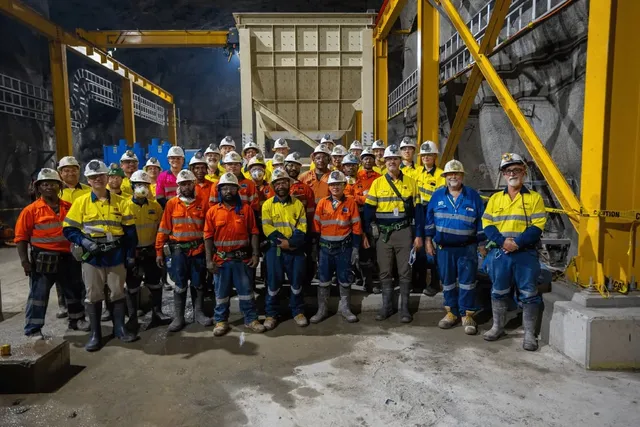
K92 Mining Inc. reported record cash and cash equivalents of US$389.9 million in the third quarter of 2026, as increased mining and processing activities at its Kainantu gold mine in Papua New Guinea (PNG) drove its second-highest quarterly production.
The Canadian miner said on Monday that its net cash position reached a record US$355.4 million as at September 30, while quarterly revenue stood at US$176.5 million.
Adjusted net earnings amounted to US$52.5 million, or US$0.21 per share, excluding a non-cash deferred tax expense of US$90.3 million related to withholding tax on unremitted earnings from its PNG subsidiary.
The company, however, recorded a net loss of US$39.5 million, or US$0.16 per share.
Gold-equivalent production reached 49,776 ounces, comprising 46,063 ounces of gold, 1.95 million pounds of copper and 55,746 ounces of silver.
Ore processed reached a quarterly record of 250,042 tonnes, up 82 percent from the same period last year and 11 percent from the second quarter of 2026.
K92 said the processing plant achieved record monthly throughput of 92,937 tonnes in September, while gold and copper recoveries stood at 94.1 percent and 94.9 percent, respectively.
Mine development also reached a quarterly record of 3,486 metres, up 41 percent year-on-year, while total material mined increased 37 percent to 485,812 tonnes.
The company said the operational improvements were supported by the ramp-up of its second mining front, upgraded material-handling infrastructure and the commencement of ore production from a third mining front at the Twin Incline in September.
K92 chief executive officer David Medilek said the Stage 3 expansion was gaining momentum, with approximately 98 percent of its growth capital either spent or committed as at the end of September.
The expansion remains on budget, with infrastructure upgrades and additional equipment expected to support higher mining rates and improved operating efficiency.
The company completed the electrification and commissioning of its Phase 4 primary ventilation upgrade in October, increasing underground airflow capacity from approximately 350 cubic metres per second to 600 cubic metres per second, with potential to reach 700 cubic metres per second.
K92 is also advancing its pastefill infrastructure, with commissioning of its underground paste plant targeted to begin in late 2026.
Meanwhile, exploration activities continued at the Kora, Judd and Arakompa deposits, with seven underground and seven surface drilling rigs operating during the quarter.
A maiden resource estimate for Arakompa is targeted for late 2026 or early 2027.
Medilek said the company expected the fourth quarter to be its strongest production period of the year and reiterated its 2026 production guidance.
K92 operates the Kainantu gold mine in Eastern Highlands Province and produces gold, copper and silver. It declared commercial production in February 2018 and is pursuing further expansion to become a mid-tier producer.
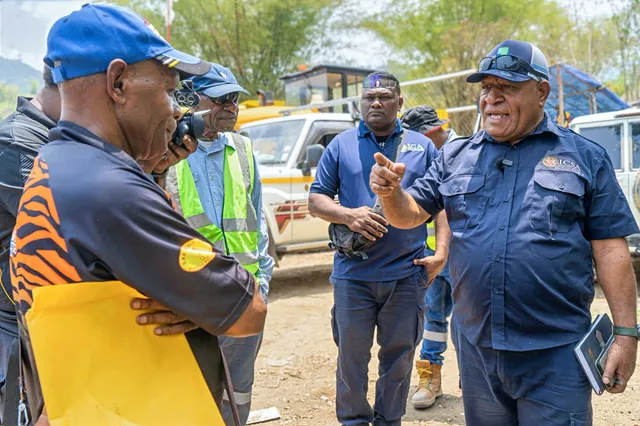
Papua New Guinea Mining Minister Solen Loifa has urged mining companies to put worker and community safety ahead of production targets and financial returns, as the government steps up enforcement against illegal alluvial mining operations nationwide.
Speaking through Vice-Minister Sam Basil Junior at the National Emergency Response Conference (NERC) in Lae, Loifa acknowledged the mining industry's contribution to the country's economic development but stressed that responsible mining must be measured by its ability to protect workers and communities.
“Our mining industry plays an important role in our national development aspirations through employment, investment, government revenue, infrastructural development, and opportunities for our people to improve their livelihood,” Loifa said.
However, he said financial performance must never take precedence over human life.
“No mineral, no production target, and no financial return is more valuable than the life of a mine worker and the lives of people living within the local mining communities,” he said.
Loifa said the government welcomed responsible investment in the mineral sector but emphasised that safety standards must be upheld throughout corporate structures, from senior management to workers on mine sites.
“Safety cannot be left entirely to regulators. It must be demonstrated every day by management, supervisors, contractors, and workers on mine sites,” he said.
He urged mining company leaders to make emergency preparedness a boardroom priority and ensure that safety commitments were reflected in practical measures at operational sites.
The minister also called on government agencies, regulators, mining operators and emergency response professionals to work together to strengthen safety standards and protect lives.
He said Papua New Guinea's mining industry should seek global recognition not only for its mineral wealth but also for its commitment to high safety standards and the protection of workers and local communities.
Loifa commended the Mineral Resources Authority (MRA) and its acting managing director, Harry Kore, for organising the NERC, describing the conference as an important platform for cooperation across the mining sector.
He said protecting workers and communities required collective responsibility among the government, regulators, industry operators and emergency response professionals.
Government launches illegal mining crackdown
The minister's call for responsible mining comes as the National Government intensifies efforts to curb illegal alluvial mining and gold smuggling through a coordinated enforcement campaign led by the MRA.
The Inter-Government Agency Team (IGAT), comprising six state agencies, launched a major compliance operation in the Wau-Bulolo region of Morobe Province on October 23.
The taskforce includes the MRA, Immigration and Citizenship Authority, PNG Customs Service, Royal Papua New Guinea Constabulary, Conservation and Environment Protection Authority, and Bank of Papua New Guinea.
Kore, who launched the operation with MRA's executive management, said the government was taking decisive action against unauthorised mining activities.
“The State is serious about law enforcement on illegal alluvial mining operations, and we are taking a decisive action,” he said.
The operation resulted in the apprehension of Chinese nationals working for Zhong Sin Mining Ltd at Nauti village along the Watut River on October 24.
The MRA verified that the site was operating illegally, while immigration officials confirmed that the foreign nationals were working without the required authorisation.
The individuals were detained in Lae pending further processing. The company employing them and the local landowner who allegedly facilitated the operation are also subject to further investigation under the Mining Act 1992, as amended, and other applicable laws.
The MRA said the operation followed intelligence gathering and coordination among state agencies over several years, with efforts intensified in recent months.
It marks the first enforcement campaign of its kind under the merged MRA following National Executive Council Decision No. 240/2025, which tasked the authority with improving regulation and addressing illegal alluvial mining and gold smuggling.
Alluvial mining contributes to gold exports
The government estimates that more than 120,000 alluvial miners operate across Papua New Guinea, producing about 90,000 ounces of gold annually and accounting for approximately 3% of the country's total annual gold exports.
The MRA said the contribution could increase if illegal mining and gold smuggling were addressed, allowing more gold production to enter regulated channels.
Kore said tackling illegal operations and smuggling could help recover millions of kina in lost national wealth, ease foreign exchange pressures and support currency stability.
He stressed that the campaign was not intended to eliminate legitimate alluvial mining or deprive local communities of lawful livelihood opportunities.
Instead, the objective was to establish a regulated sector that supports employment, local businesses and government revenue while protecting the environment and customary landowners' interests.
The MRA urged alluvial miners to regularise their operations by securing the necessary licences, permits and approvals before commencing activities. Landowner consent must also be obtained where required under applicable laws.
The authority said enforcement priorities would include identifying unauthorised operations through inspections and investigations, and taking legal action against operators working without the required approvals.
It also called on traditional landowners, community leaders, district and provincial authorities, and the public to report suspected illegal mining activities.
Kore said legitimate foreign investors remained welcome in Papua New Guinea, consistent with the Investment Promotion Act, but compliance with national mining laws and policies was non-negotiable.
The MRA said it would provide logistical and institutional support to IGAT as the government expands the campaign nationwide.
The authority said enforcement would be complemented by public awareness, accessible licensing processes, environmental management, community engagement and the development of lawful livelihood opportunities.
It urged miners to comply with regulatory requirements, warning that those who continued to operate illegally could face enforcement action and penalties under applicable legislation.
Solomon Islands has begun preparations to implement the Extractive Industries Transparency Initiative (EITI), following its readmission to the global transparency programme in September 2026.
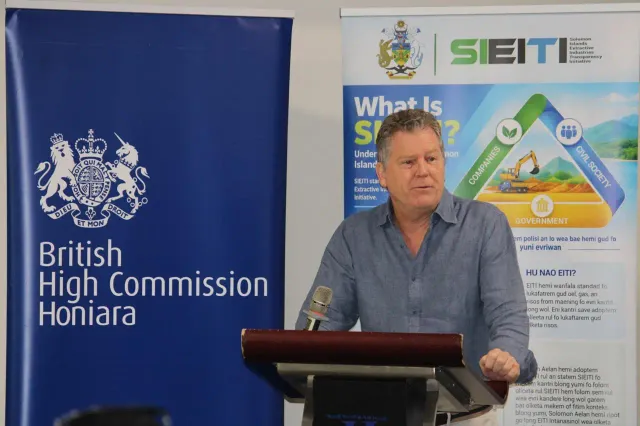
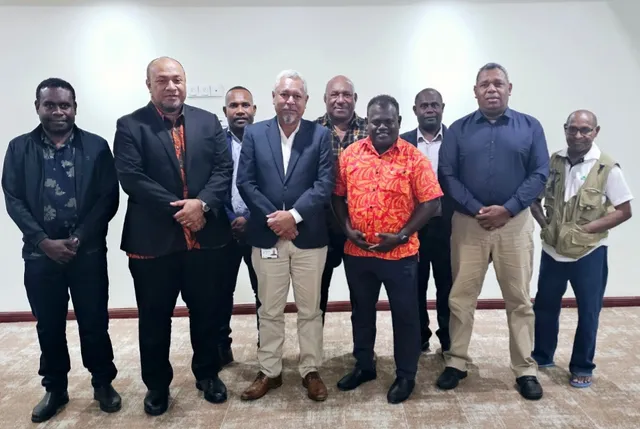
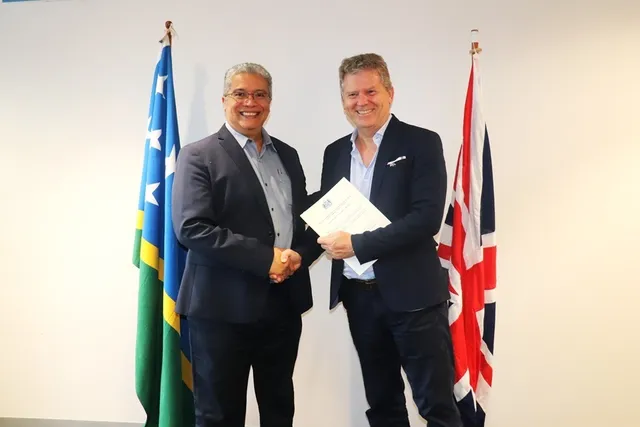
Representatives of the United Kingdom, EITI, the Solomon Islands government, mining companies and civil society met at Heritage Park in Honiara on Nov. 3 to discuss implementation priorities and the country's obligations under the EITI Standard.
The workshop focused on establishing a common understanding of the initiative's requirements and the role of the Multi-Stakeholder Group, which will oversee governance and information flows in the extractives sector.
EITI Senior Country Manager Sarah Hayton and British High Commissioner to Solomon Islands Paul Turner addressed the meeting, while the Ministry of Finance outlined the government's priorities as the country enters its first implementation period.
The British High Commission said the UK had supported Solomon Islands' readmission through technical assistance provided in partnership with the United Nations Development Programme.
Turner said the initiative could deliver benefits across the extractives sector, including stronger government oversight of tax revenues, greater participation by local communities in mining-related decisions and improved market access for mining companies.
He also stressed the importance of extending implementation beyond Honiara, saying information from remote provinces would be necessary to ensure the process covered the country nationally.
The workshop considered how strategic priorities could be translated into practical activities, including stronger reporting and monitoring arrangements across the provinces.
Turner said engagement should extend beyond meetings in the capital, calling for resources to be directed towards improving information flows and participation in remote communities.
The EITI is a global initiative that promotes transparency and accountability in the oil, gas and mining sectors through disclosure of information on extractive-sector revenues and government and company activities.
Solomon Islands' readmission in September marked the start of a renewed implementation process, with the multi-stakeholder framework expected to bring government, industry and civil society together in overseeing disclosure and accountability.
Kalo Gold Corp. has extended the identified surface gold mineralization corridor at its Wainikoro prospect in Fiji to 4.3 kilometres, strengthening exploration targets ahead of a planned drilling programme in January 2027.
The Canadian-listed exploration company said a quartz vein sample collected at its 100%-owned Vatu Aurum Project on Vanua Levu returned 616 detectORE units, equivalent to an estimated 0.62 grams per tonne of gold.
The sample, identified as NAK-JT26-G-002F, was collected about 1.8 kilometres southwest of the previous southernmost result along a structural corridor interpreted from an induced polarisation (IP) resistivity survey.
The latest finding extends the known occurrences of surface gold mineralization along the Wainikoro corridor to 4.3 kilometres.
Kalo said the sample came from a brecciated quartz vein containing iron oxide-filled cavities. It was collected downslope from an exposed quartz vein measuring up to 30 centimetres wide.
The company noted that detectORE results are semi-quantitative field-screening indicators and are not equivalent to certified laboratory assays. The estimated gold grade is provided for contextual reference and should not be relied upon for grade determination.
Previous sampling along the same corridor returned certified gold assays of up to 8.78 grams per tonne, as well as results of up to 7.83 grams per tonne of gold and 108 grams per tonne of silver.
Kalo President and Chief Executive Officer Terry Tucker said the latest result extended the surface mineralization footprint and highlighted the contribution of the company's field personnel.
The sample was identified by field staff while supporting geophysical survey crews, he said.
The company is now conducting follow-up prospecting and geological work to identify areas with sufficient width, grade and continuity to warrant drilling.
Geophysical surveys completed
Kalo said its controlled-source audio-frequency magnetotelluric (CSAMT) survey at Wainikoro was completed on October 26, while gravity surveying had also been completed.
The company is interpreting the geophysical data to refine exploration targets along the corridor.
Work scheduled through November and early December includes trenching to test resistivity anomalies identified through the gradient array IP survey, soil sampling, geological mapping and integration of the geophysical and geological datasets.
Tucker said the work would help the company identify priority targets for the planned January 2027 drilling programme.
The exploration programme is being conducted with support from Fender Geophysics and SGDS-HIVE, which worked alongside Kalo's field teams on the geophysical surveys.
The Vatu Aurum Project covers 367 square kilometres across Special Prospecting Licences 1511 and 1464 on Vanua Levu. It includes the Wainikoro and Aurum Prime exploration areas, which form part of a northeast-trending corridor of epithermal gold targets.
Kalo is using geological mapping, geochemical sampling, trenching, drilling and geophysical surveys to assess the project's mineral potential.
The company also disclosed that it granted 500,000 stock options to a consultant on October 23. The options are exercisable at $0.185 per share over five years, with half vesting after 12 months and the remainder after 24 months.
Kalo Gold is listed on the TSX Venture Exchange, OTCID Market and Frankfurt Stock Exchange under the symbols KALO, KLGDF and 9M51, respectively.
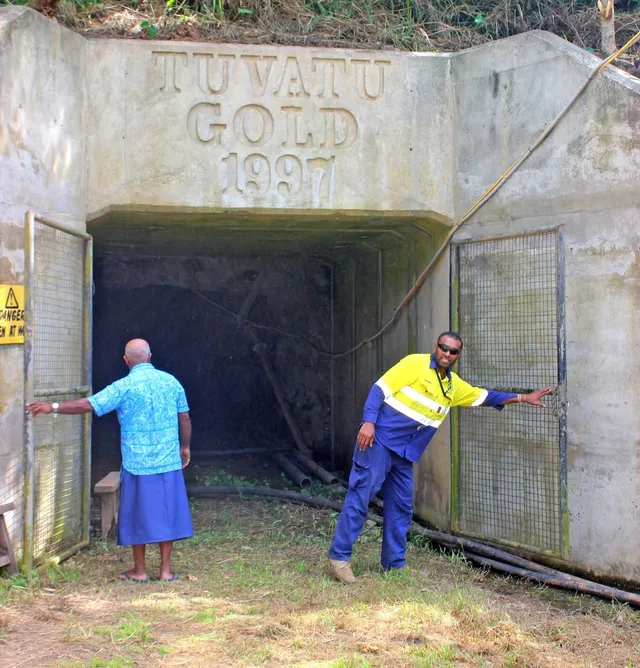
Lion One Metals Limited reported total gold production of 4,678 ounces from its Tuvatu Gold Mine in Fiji in the quarter ended 30 September 2026, supported by higher gold recovery and the drawdown of in-circuit gold inventory.
The Canadian gold producer said on 20 October that it recovered 3,796 ounces of gold from mill operations during the quarter, a 15% increase from the 3,291 ounces recovered in the previous quarter.
A further 882 ounces came from the drawdown of gold inventory and shipments of gold-bearing carbon for processing and recovery, bringing total quarterly gold production to a record level for deliveries from Tuvatu.
The mine recorded an average gold head grade of 4.3 grams per tonne and a recovery rate of 83.8%, while processing 32,588 tonnes of mineralised material. Mill utilisation reached 95.1%.
Lion One said the recovered gold represented a 39% increase from the quarter ended 31 March 2026, when production reached 2,726 ounces.
The company attributed the additional gold output partly to efforts to improve gravity recovery and carbon stripping. About 8.8 tonnes of carbon was removed from the leach circuit and replaced with fresh carbon, with the removed material shipped off-site for recovery of residual gold.
Underground mine development totalled 1,539 metres during the quarter, including 359 metres of capital development and a record 1,181 metres of operating development.
Although total development was below the previous quarter’s 1,660 metres, it remained above the long-term quarterly average of 1,445 metres recorded from January 2025 to September 2026.
Lion One said capital development was affected by equipment availability, with underground drilling jumbos recording overall availability of 59% during the quarter amid unplanned downtime in September.
The company also reported further improvement in its safety performance. It recorded one lost-time incident and two medical-aid incidents during the quarter, resulting in a total recordable incident frequency rate of 1.83 per 200,000 hours worked.
This compared with rates of 4.37 in the April-to-June quarter and 6.55 in the January-to-March period.
New underground drill begins operation
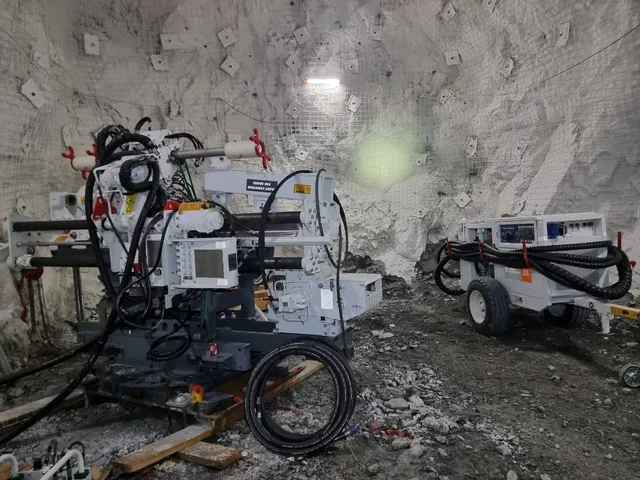
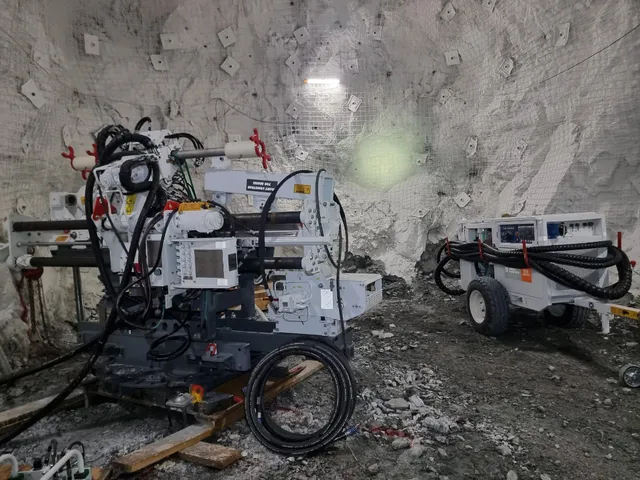
Lion One also announced that a new Boart Longyear LM90 underground core drill had arrived at Tuvatu ahead of schedule and entered operation following operator training.
The equipment will target the Zone 500 and West Zone from underground, supporting resource expansion and upgrades in both areas.
The company said the drill would allow shorter, faster and lower-cost holes with improved intersection angles, enabling more effective exploration of the two zones from deep underground.
With the addition of the LM90, Lion One’s active drilling fleet comprises four underground drills and two surface drills.
Lion One operates the Tuvatu Alkaline Gold Project, which includes the gold deposit, underground mine, pilot plant and assay laboratory. The company also holds an exploration licence covering the Navilawa Caldera, which contains multiple mineralised zones and exploration targets.
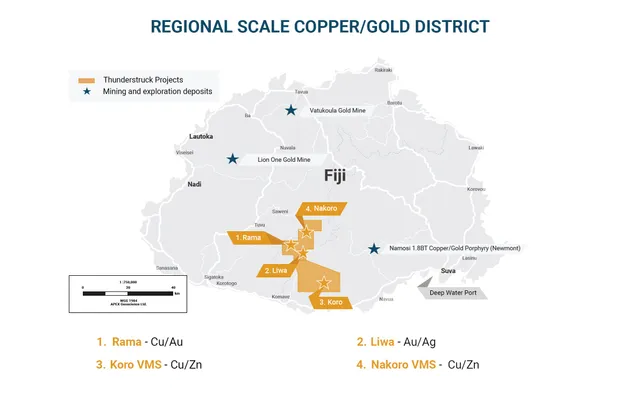
Canadian mineral exploration company Thunderstruck Resources Ltd. has commenced diamond drilling at its Liwa gold-silver project in southern Viti Levu, Fiji, in the first systematic test of approximately two kilometres of prospective strike extent.
In a statement dated 20 October, the company said the initial programme would target three of four known gold-silver prospects: Liwa Ridge, Jensen’s and Lower Vatuvatulevu.
The first four drill holes are expected to be completed by mid-December 2026, weather permitting, with initial assay results expected shortly afterwards.
Previous rock-chip and float sampling at Liwa returned elevated gold and silver values, including 41.6 grams per tonne of gold and 1,205 grams per tonne of silver from a float sample at Lower Vatuvatulevu.
The drilling programme is being undertaken by contractor Huakan Group using a track-mounted HYDX-6F rig.
Thunderstruck President and Chief Executive Officer Bryce Bradley said successive field campaigns had generated several high-quality targets for systematic drilling.
“Successive field campaigns at Liwa by Thunderstruck have generated a series of high quality gold-silver targets which we now have the opportunity to drill test in a systematic fashion for the very first time,” Bradley said.
He said the company, in partnership with its new major shareholder, Zhaojin International Gold Co. Ltd, and contractor Huakan Group, aimed to improve its geological understanding of the project and assess its resource potential.
The company interprets the mineralisation at Liwa as an intermediate-sulphidation style, with gold-silver deposits often controlled by northeast-trending fault zones and associated with kaolinite-poor argillic alteration.
Subject to weather conditions, Thunderstruck expects to move its drilling programme to the Korokayiu zinc-copper volcanogenic massive sulphide project in the first quarter of 2027.
Further drilling at the adjacent Rama porphyry copper-gold cluster and Nakoro zinc-copper massive sulphide targets is expected later in 2027.
Thunderstruck holds 100% ownership of two granted Special Prospecting Licences covering approximately 336 square kilometres in southern Viti Levu. The licences include the Liwa gold-silver, Rama copper-gold, Nakoro zinc-copper and Korokayiu zinc-copper projects.
The company also announced the grant of 200,000 incentive stock options to employees and consultants. The options were granted at an exercise price of C$0.11 and were initially stated to have a five-year exercise period, with an expiry date of 10 November 2028.
It also corrected an earlier announcement dated 30 June 2026, stating that 2.45 million options had been granted, rather than the 2.55 million initially reported.
Separately, the company said it had terminated a previously announced private placement of common shares at C$0.15 each. It anticipates a future fundraising in the fourth quarter of 2026, with details to be announced when determined.
Thunderstruck is listed on the TSX Venture Exchange under the symbol AWE and on the US over-the-counter market under THURF. Its exploration portfolio focuses on copper-gold porphyry, epithermal gold-silver and base-metal deposits in Fiji.
The European Union and New Caledonia have signed a strategic partnership to develop sustainable raw materials supply chains, strengthen investment and support local mineral processing.
The European Commission and the government of New Caledonia signed a memorandum of understanding on 20 October in Nouméa, establishing a framework for cooperation across the raw materials value chain.
The agreement was signed by European Commission Executive Vice-President for Prosperity and Industrial Strategy Stéphane Séjourné, New Caledonia government president Milakulo Tukumuli and Alcide Ponga, the government member responsible for energy and mining.
New Caledonia, a major nickel producer, accounted for 3.1% of global nickel production in 2024, according to the European Commission. The agreement is the EU’s 17th strategic raw materials partnership since 2021.
The partnership identifies five areas of cooperation: industrial integration and investment, sustainable mineral development, infrastructure, skills development, and research and innovation.
Under the agreement, the two sides will seek to develop projects of common interest, facilitate access to financing and mobilise support from EU institutions, member states, financial institutions and private investors.
The partnership also aims to increase local value creation from mineral resources while promoting responsible extraction and compliance with environmental, social and governance standards. Cooperation will cover mine closure and rehabilitation, as well as infrastructure needed to support raw materials production and processing.
The two sides will also work to strengthen skills along the supply chain through cooperation among educational institutions, vocational training providers, researchers and industry.
Research and innovation initiatives will cover prospecting, exploration, extraction, processing, refining and recycling technologies, as well as material substitution and circularity.
The Commission said the partnership would support efforts to diversify and strengthen the resilience of EU raw materials supply chains, in line with the Critical Raw Materials Act and the RESourceEU Action Plan.
Following the signing, the EU and New Caledonia will jointly develop a roadmap in consultation with EU member states, the European Investment Bank, industry and other partners. The roadmap will set out concrete actions to implement the partnership.
The initiative also forms part of the EU’s Global Gateway strategy, which seeks to strengthen international connections and mobilise investment in infrastructure and other strategic sectors.
Canadian gold producer Lion One Metals Ltd. reported a record quarterly gold delivery of 4,678 ounces from its Tuvatu Gold Mine in Fiji, supported by higher production and improved mill throughput in the three months to September.
The company said on Tuesday that it recovered 3,796oz of gold from mill operations during the quarter ended September 30, up 15 per cent from 3,291oz in the previous quarter and 39 per cent from the quarter ended March 31.
A further 882oz came from the drawdown of gold held in the processing circuit and shipments of gold-bearing carbon for off-site processing, bringing total quarterly gold production to 4,678oz.
The average head grade was 4.3 grams of gold per tonne, while gold recovery reached 83.8 per cent. The mill processed 32,588 tonnes of mineralised material, with utilisation averaging 95.1 per cent.
Lion One said mill utilisation reached 97.4 per cent in August and 98.3 per cent in September, marking consecutive monthly records.
The increased throughput helped offset a slight decline in recovery from the previous quarter’s 84.9 per cent. Average head grade remained unchanged at 4.3 grams per tonne.
Underground development and safety
The company completed 1,539 metres of underground mine development during the quarter, including 359m of capital development and a record 1,181m of operating development.
Although development was down from 1,660m in the previous quarter, it remained above the long-term quarterly average of 1,445m recorded between January 2025 and September 2026.
Lion One said equipment availability affected capital development, with underground drilling jumbos available for 59 per cent of the quarter, partly because of unplanned downtime in September.
The company recorded one lost-time incident and two medical-aid incidents during the quarter. Its total recordable incident frequency rate improved to 1.83 incidents per 200,000 hours worked, compared with 4.37 in the previous quarter and 6.55 in the first quarter.
Lion One also confirmed that its new Boart Longyear LM90 underground core drill had arrived at Tuvatu ahead of schedule and entered operation following operator training.
The drill will target the Zone 500 and West Zone from underground to support resource expansion and upgrades.
The company said the equipment would allow shorter, faster and lower-cost drill holes, with improved intersection angles in both areas.
The addition brings Lion One’s active drilling fleet to four underground drills and two surface drills.
Lion One, headquartered in North Vancouver, British Columbia, began operations at its wholly owned Tuvatu project in Fiji in late 2023. The project includes the underground gold mine, a pilot plant and an assay laboratory, while the company holds an exploration licence covering the wider Navilawa Caldera.
The latest results are preliminary operating figures. The company said its technical information had been reviewed and approved by William J. Witte, its principal adviser and qualified person under Canadian mineral project disclosure rules.
Fiji’s Cabinet has endorsed proposed reforms to the country’s mining laws, paving the way for new legislation aimed at strengthening landowner rights, improving mine safety and tightening regulation of mineral exploration, mining and quarrying.
The proposed Mineral Exploration and Mining Bill 2026 and Mine Safety Management Bill 2026 follow a review of the Mining Act 1965 and Quarries Act 1939, jointly conducted by the Ministry of Lands and Mineral Resources and the Fiji Law Reform Commission.
The review involved 62 stakeholder consultations nationwide, including landowners, mining operators, workers, affected communities and other stakeholders.
The review sought to address gaps in legislation that has governed Fiji’s mining and quarrying industries for decades. It also considered regulatory practices in other jurisdictions, including Australia and Papua New Guinea, to inform proposed changes to transparency, accountability and resource management.
The proposed legislation aims to improve benefit-sharing and compensation arrangements, strengthen landowner rights and promote greater transparency and accountability in the mining sector.
Land access and the distribution of mining benefits have been key issues in the reform process. The government has highlighted the importance of ensuring that mining communities benefit not only through royalties but also through employment, local procurement and greater participation in resource development.
The reforms also seek to improve workplace safety, environmental protection and dispute resolution, while introducing digital management systems to strengthen regulatory oversight of mining activities.
The government has also pursued more data-driven monitoring of mining operations. Filimoni Vosarogo, minister for lands and mineral resources, previously said a pilot system using sensors to monitor a tailings storage facility was being tested at the Tuvatu mine. The system is intended to help mine managers and government inspectors identify potential problems earlier.
Fiji’s mining sector produces gold and iron sand, among other mineral products, making the regulatory review relevant to both existing operators and prospective investors.
Before the proposed bills are tabled in Parliament, a special consultation will be held with the Bose Levu Vakaturaga, or Great Council of Chiefs, through the Ministry of iTaukei Affairs.
The proposed legislation would update the legal framework governing Fiji’s mining and quarrying industries, with implications for landowners, mining companies, workers and communities affected by resource development.
Augustus Minerals Ltd is preparing exploration programmes for two gold projects in Papua New Guinea, having compiled historical geological data and stepped up engagement with landowners while awaiting decisions on its exploration licenceapplications.
The Australian Securities Exchange-listed company said in a 15 October 2026 announcement that its subsidiary, ACM Contract Mining (PNG) Ltd, had completed a technical information memorandum for the Mt Kare gold and silver project in EngaProvince. It is also reviewing historical exploration records for the Vanapa River project in Central Province and considering an airborne magnetic survey.
Both projects remain at the application stage. The company has no guarantee of securing either licence, and its Mt Kare application remains contested.
Augustus holds the second-in-time exploration licence application for Mt Kare, about 15 kilometres from the Porgera gold mine. Private company Tribune Mt Kare Gold Ltd is first in line after the PNG Mineral Resources Authority removed the original first applicant, Global Mining Group Ltd, from the assessment list following a Supreme Court order on 30 May 2025.
The company said the licensing process could take time but maintained that its preparatory work would allow it to move quickly if approval were granted.
Mt Kare data review completed
ACM PNG purchased all available open-file historical exploration data for Mt Kare from the MRA in 2026 and commissioned Geosyntec Consultants Pty Ltd, based in Perth, Western Australia, to compile the information into a technical memorandum.
The review covers geological information and exploration activities dating back to the deposit's discovery in 1987 by Conzinc Riotinto of Australia. It examines the area's geology, geochemistry, mineralisation styles and historical mineral resource estimates.
The deposit has undergone substantial previous exploration. Drilling included an initial 2,000-metre diamond drilling programme in 2011, followed by further work that produced 58 diamond drill holes totalling 7,790 metres. Results released in 2013 validated historical high-grade intersections and identified gold and silver mineralisation, according to Augustus.
The company plans to use the compiled information to prepare for further exploration, subject to the grant of the licence.
Its proposed programme includes underground access and development, diamond drilling and feasibility studies. The company has also outlined the possibility of collecting bulk samples and assessing underground mining options, alongside further consideration of open-pit scenarios.
Augustus Executive Chairman Brian Rodan said Mt Kare shared geological characteristics with Porgera, including roscoelite mineralisation and high-grade gold zones.
However, the company cautioned that its position in the application process does not give it a current or contingent right to undertake exploration or development at Mt Kare. The application has not been granted, and there is no assurance that it will result in a licence.
Vanapa River project covers 1,900 square kilometres
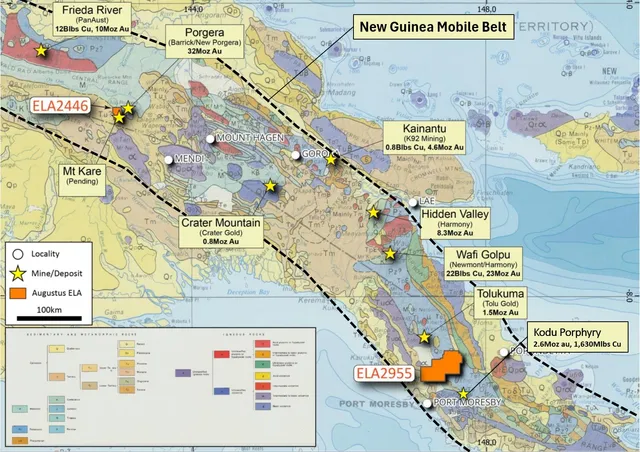
At Vanapa River, ACM PNG holds exploration licence application ELA2955 over approximately 1,900 square kilometres in the Kira Koiari District of Central Province, about 35 kilometres from Port Moresby.
The project lies approximately 40 kilometres south-east along strike from the Tolukumagold mine, which Augustus identifies as a 1.5-million-ounce deposit.
During a three-day site visit in October 2025, company personnel and local landowners inspected artisanal alluvial gold workings along the Vanapa River and its tributaries. The visit did not identify the source of the alluvial gold, the company said.
ACM PNG subsequently acquired available historical exploration data held by the MRA in Port Moresby and is reviewing the records. It is also seeking proposals for an airborne magnetic survey.
The proposed survey would help map geological structures, rock types and alteration beneath the area's thick tropical forest. These features could guide the identification of targets for further exploration, although the company has yet to report results from such a survey.
Augustus said the Vanapa River application lies within the New Guinea Metallogenic Belt, a mineralised corridor extending approximately 2,300 kilometres through Papua New Guinea. The belt hosts major gold and copper deposits, including Porgera, Lihir, Hidden Valley, Kainantu and Wafi-Golpu.
The company has also conducted introductory meetings with communities in the application area as it seeks to build relationships with customary landowners.
Landowner engagement and regional prospects
ACM PNG has held meetings with landowner representatives and officials from Enga, Hela and Central provinces during 2025 and 2026, according to the announcement.
The company said these discussions were intended to maintain communication with groups whose support and engagement are important to the progression of exploration licence applications in Papua New Guinea.
In September 2026, ACM PNG provided equipment, materials, food and other supplies to customary landowners seeking to re-establish a settlement at Mt Kare. The assistance followed a request from landowners and consultations with clan leaders, Augustus said.
The subsidiary has also registered an expression of interest with the MRA covering prospective areas in the Goroka region of the Highlands. It has held preliminary meetings with local landowner groups and continued engagement with officials and clan representatives.
Augustus said the acquisition of ACM PNG had strengthened its opportunity to pursue Mt Kare and identify other exploration prospects in Papua New Guinea.
The company is also exploring gold, copper and other mineral opportunities in Western Australia. Its Papua New Guinea strategy, however, remains dependent on the outcome of the licence applications and any subsequent exploration results.
Augustus said its work to compile historical data and engage with landowners had positioned it to advance the projects if the necessary approvals were secured. Neither the timing nor the outcome of the applications is certain.
Kalo Gold Corp has reported a high field-screening result from a new gold occurrence at its Wainikoro exploration area in Fiji, as the Canadian-listed explorer advances preparations for drilling planned for January 2027.
The company said a rock sample from Kope Road North returned 16,361 detectORE units, equivalent to an estimated 16.36 grammes of gold per tonne for contextual reference. Follow-up sampling also produced three additional elevated readings, expanding the area of interest at the company's 100%-owned Vatu Aurum Project on Vanua Levu.
Kalo stressed that the detectORE readings are semi-quantitative field-screening results, not certified laboratory assays. The estimated grades cannot be relied upon as definitive measurements of gold content.
The company plans to submit the highest-reading sample to ALS Ltd in Australia for fire-assay analysis and multi-element testing.
Follow-up samples return additional gold indications
The highest result came from sample KRN-LR26-G-035D, described as quartz-rich, silicified and brecciated tuff. The original outcrop had been disturbed by road construction, so the company collected samples from large pieces of rock uncovered at the site.
A subsequent sampling traverse returned readings of 3,956 units, equivalent to an estimated 3.96 grammes per tonne, from silica-rich breccia; 2,110 units, or about 2.11 grammes per tonne, from silicified brecciated tuff; and 863 units, or about 0.86 grammes per tonne, from silicified quartz-vein material.
Kalo said the results provided additional targets for geological mapping, geophysical surveys and trenching. However, the samples were selective rock samples and do not establish the average grade or continuity of mineralisation.
The Kope Road North occurrence is about 900 metres south-west of the New Vein Cluster, where previously reported certified assays returned up to 7.83 grammes of gold per tonne and 108 grammes of silver per tonne.
Both areas lie along an interpreted induced polarisation (IP) resistivity corridor. Kalo cautioned that their proximity does not demonstrate continuity of mineralisation.
Surveys and road works advance ahead of drilling
Kalo has completed a gradient-array IP survey at Wainikoro and is conducting controlled-source audio-frequency magnetotelluric (CSAMT) surveying to investigate the geometry and depth of interpreted resistivity corridors.
Mechanised trenching at Kope Road North is providing additional geological exposure to help assess the geophysical targets.
The company has also begun road upgrades to prepare for drilling during the wet season. About 1.6 kilometres of road improvements have been marked out, including the installation of three culverts and the placement of aggregate to improve access and safety.
Kalo plans to deploy one drill rig from January 2027 to test priority targets at Wainikoro. The schedule remains subject to factors including weather, ground access, equipment availability and financing.
President and chief executive Terry Tucker said the follow-up sampling had identified multiple gold responses around the original sample and that the company was moving towards systematic drill testing.
The company intends to combine the IP and CSAMT data with trenching, geological and structural mapping, geochemistry, field screening and certified laboratory assays to refine its geological model and prioritise drill targets.
Exploration targets remain unproven
Vancouver-based Kalo Gold is exploring the 367-square-kilometre Vatu Aurum Project, which comprises Special Prospecting Licences 1511 and 1464 on Vanua Levu. Its exploration programme focuses on a north-east-trending corridor of low-sulphidation epithermal gold targets, including Wainikoro and the flagship Aurum Prime area.
The company said its exploration work has identified multiple structurally controlled targets supported by drilling, trenching, soil geochemistry, structural mapping and airborne geophysics.
No mineral resource or mineral reserve has been estimated for the Vatu Aurum Project, and the targets remain conceptual.
Kalo said the results from the pending fire assay, together with ongoing geophysical work and trenching, would help determine the next steps in evaluating the Wainikoro targets.
A Solomon Islands Government technical team has completed a fact-finding mission to Papua New Guinea to examine its approach to mineral resources management, gold refining and downstream processing as Honiara prepares to strengthen its mining sector framework.
The delegation visited Port Moresby from 20 to 26 September, holding discussions with government agencies, financial institutions and private-sector operators on the policy, regulatory and institutional arrangements supporting PNG’s minerals industry.
The mission was led by Chris Vehe, permanent secretary for mines, energy and rural electrification, and included senior officials from the Ministry of Mines, Energy and Rural Electrification and the Ministry of Finance and Treasury.
Sam Kaupa, mineral sector adviser to the Prime Minister’s Office, and Mckinnie Dentana, a former finance and treasury permanent secretary, also joined the delegation. Solomon Islands High Commissioner to PNG William Soaki helped coordinate the programme.
The team met representatives of the Mineral Resources Authority, Bank of Papua New Guinea, Kumul Minerals Holdings Ltd, Italpreziosi South Pacific Ltd and the Mineral Resources Development Company.
Discussions covered the roles of government agencies, state-owned enterprises, financial institutions and private companies in managing mineral resources, as well as opportunities to develop domestic refining and processing capacity.
The delegation also examined how downstream value addition could help retain more economic benefits from mineral resources within the country, including the opportunities and challenges involved in establishing local processing industries.
The visit comes as Solomon Islands works to strengthen its legislative and institutional framework for responsible and sustainable mineral development. A Mineral Resources Bill is expected to be presented to Parliament soon, according to the Solomon Islands Government.
The government said the mission provided an opportunity to study PNG’s practical experience and consider approaches that could inform its own policy, legislative and institutional development.
The Solomon Islands Government thanked its PNG counterpart, participating institutions and companies for sharing their technical knowledge and experience.
The High Commission of Solomon Islands in PNG said it looked forward to continued cooperation between the two countries as Honiara pursues the development of a responsible, sustainable and economically beneficial minerals sector.
Kalo Gold Corp. has identified electrum, a naturally occurring gold-silver alloy, in drill core from its Wainikoro prospect within the Vatu Aurum Project in Fiji, providing further insight into the mineralisation and potential drill targets.
The Vancouver-based company said on 29 September that the electrum was identified in 2026 drill core from its 100%-owned project during an MSc research study conducted by Heidi Walton of the Camborne School of Mines at the University of Exeter.
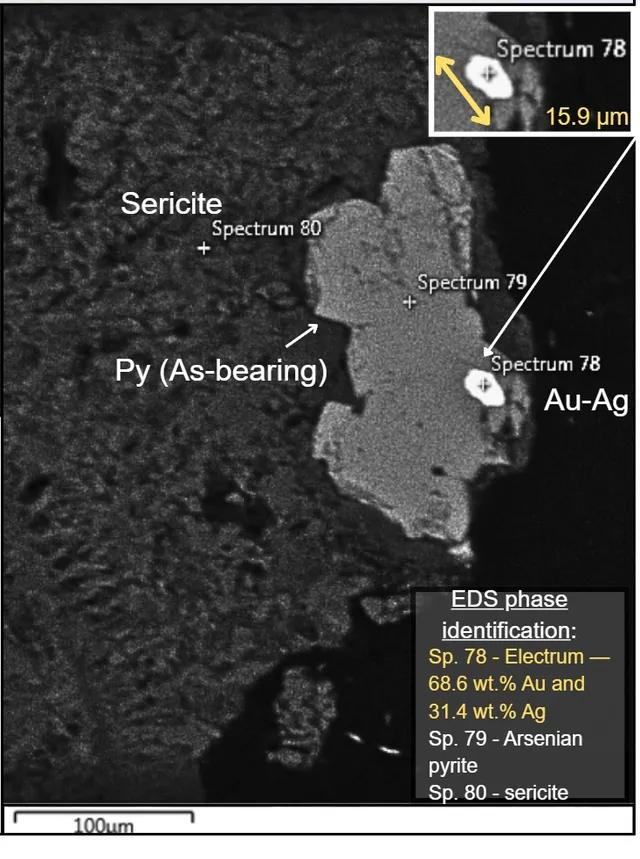
Scanning electron microscopy with energy-dispersive X-ray spectroscopy identified a discrete electrum grain measuring about 20 micrometres in drill hole VA26-DH19.
The grain contained approximately 68.6% gold and 31.4% silver by weight and occurred against the margin of an arsenian pyrite grain within a sericite-bearing matrix.
The sample was collected between 189.88 metres and 191 metres downhole and comprised polymictic volcanic breccia cut by quartz-carbonate veinlets and containing disseminated sulphides.
Kalo Gold president and chief executive Terry Tucker said the finding provided direct mineralogical evidence of a gold-silver phase within the Wainikoro hydrothermal system.
The company said the study supported a structurally controlled hydrothermal model in which repeated fracturing, brecciation and reopening of veins created pathways for mineralising fluids through volcanic rocks.
Additional analysis of drill core samples identified pyrite, arsenian pyrite, sphalerite, chalcopyrite and pyrrhotite associated with quartz-carbonate veining, sericite, chlorite and locally brecciated volcanic rocks.
Kalo Gold said the observed textures indicated multiple episodes of brittle fracturing, vein formation, reopening and sulphide deposition.
The principal assayed gold interval in VA26-DH19 returned 1.61 grams per tonne gold over 1.5 metres at about 150 metres downhole, a result previously reported by the company in June.
Material near the interval contained crackle brecciation, quartz-rich fracture infill, pyrite, arsenian pyrite and sphalerite.
The company said multivariate analysis of drill-core geochemistry also identified a broader gold-silver-arsenic-antimony-lead-molybdenum hydrothermal association.
Gold showed its strongest statistical relationships with lead, silver and molybdenum, while arsenic and antimony formed a broader pathfinder signature.
Prospectivity modelling identified areas where elevated gold and arsenic responses coincide with interpreted structural corridors. Kalo Gold said these areas would provide additional criteria for prioritising future trenching and drilling.
Surface mapping around trench TR009 and VA26-DH19 identified quartz and quartz-carbonate veins along northeast- and north-northwest-trending structures, while regional magnetic interpretation identified intersecting structural trends that may have created zones of increased permeability.
The company cautioned that only one discrete electrum grain was identified among the 12 polished thin sections examined. It said other fine-grained gold-bearing phases could remain undetected and that further mineralogical and gold-deportment studies would be required.
Kalo Gold also said the study does not establish the continuity, grade or economic significance of mineralisation at Wainikoro, with further trenching, drilling, assaying and mineralogical work required.
Canadian mineral exploration company Sankamap Metals Inc. is expanding its exploration programme at its 24,100-hectare Fauro property in Solomon Islands, with recent sampling identifying a new gold target in an area with no known historical sampling.
The company said on 29 September that its systematic prospecting programme had collected 829 samples across Fauro, with assay results for 798 samples still pending.
Recent silt sampling returned up to 6.78 grams per tonne (g/t) of gold from a previously unsampled area, while earlier surface sampling produced values of up to 116 g/t gold and 4% copper.
The results have prompted Sankamap to expand geological and geochemical work across the property as it seeks to refine existing exploration targets and identify new areas for further investigation.
Sankamap chief executive John Florek said the latest results provided further evidence of a gold-bearing system across the broader project area.
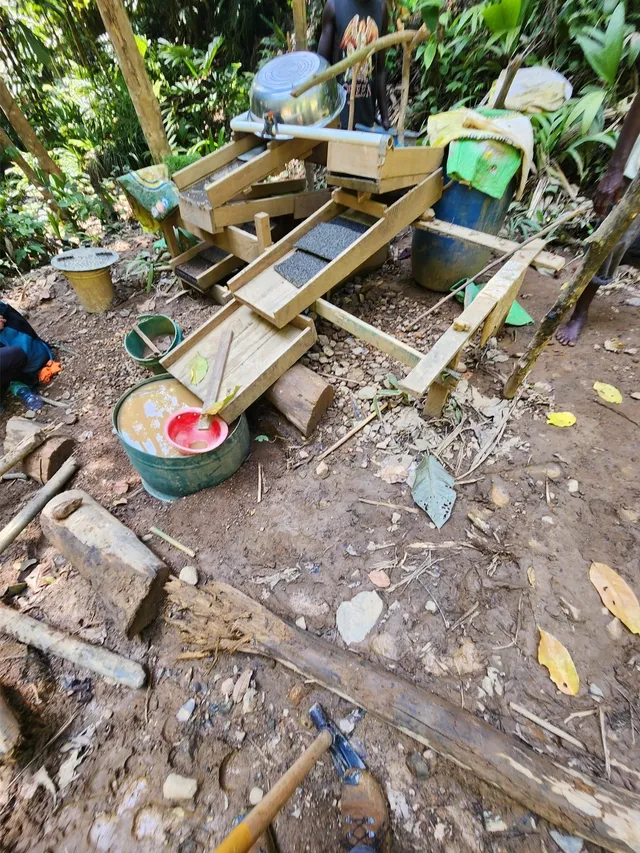
"During recent reconnaissance and prospecting activities, the exploration team encountered several drainages where local artisanal miners were actively panning for gold," Florek said.
"A representative grab sample of silt collected from one of these drainages returned 6.78 g/t Au, providing further evidence of an active gold-bearing system within the broader project area."
Fauro is located within a copper-gold metallogenic belt in the Solomon Islands that hosts major deposits including Lihir and Panguna. Sankamap said historical drilling, surface sampling and geophysical surveys have identified multiple prospective near-surface epithermal gold systems at Fauro.
At the Meriguna target, previous trenching returned 8 metres at 27.95 g/t gold and 14 metres at 8.94 g/t gold, while historical grab samples returned values of up to 173 g/t gold.
At Kiovakase, recent Sankamap sampling returned copper values of up to 4.09%, while limited historical shallow drilling at Fauro intersected 35 metres at 2.08 g/t gold.
The company plans to conduct an induced polarisation geophysical survey over high-priority targets to refine potential drill targets.
Sankamap is also planning an initial 2,000- to 3,000-metre drilling programme following the geophysical work.
The 2026-27 exploration programme is focused on geological mapping and geochemical sampling, with the company expanding its work into areas with limited or no historical exploration data.
Sankamap said the expanded dataset would be used to prioritise targets ahead of the planned geophysical surveys and drilling.
The Fauro property forms part of Sankamap's Oceania Project, which also includes the Kuma property in Solomon Islands. The company is listed on the Canadian Securities Exchange under the ticker SCU.
Solomon Islands has re-joined the Extractive Industries Transparency Initiative (EITI), with the UK government providing further support to help the country meet its transparency and governance commitments in the mining sector.
British High Commissioner Paul Turner and David Teika Dennis, permanent secretary of the Ministry of Finance and Treasury, formally launched the next phase of UK government support on 21 September.
The EITI Board welcomed Solomon Islands back as an implementing country on 16 September, following its withdrawal from the initiative in 2018 after failing to meet its commitments.
Under EITI requirements, Solomon Islands will now be expected to publish information on its mining sector to improve public management and transparency.
The UK government, working with the United Nations Development Programme (UNDP), has supported efforts to bring Solomon Islands back into the initiative and will continue assisting the country in meeting its EITI obligations.
The re-entry comes as Solomon Islands' mining sector is expanding, particularly in gold and nickel. Mining is expected to play a growing role in economic diversification, supported by the ramp-up of the Gold Ridge gold mine and the Kolosori nickel project.
"EITI can support Solomon Islands in strengthening its revenue collection and exports," Turner said.
"It is a win-win-win for government, local communities and for mining companies who will have greater export markets."
The EITI Board said it welcomed the government's renewed commitment to implementation and commended efforts by government, industry and civil society to promote a more equitable and environmentally responsible approach to mining decisions.
A new multi-stakeholder group comprising central and local government, mining companies, local communities and civil society will monitor activities across the sector.
The next phase of UK support will focus on developing a national plan for disclosing mining information across all provinces, strengthening the capacity of local stakeholders to monitor and report on the sector, and helping the government provide regular reports to the EITI Secretariat.
Turner said EITI membership could have a significant impact on Solomon Islands' mining sector.
"Membership of EITI has the potential to transform the mining sector in Solomon Islands," he said. "It will ensure that mining does not go the same way as logging did in this country."
The EITI Secretariat is based in Oslo, Norway.
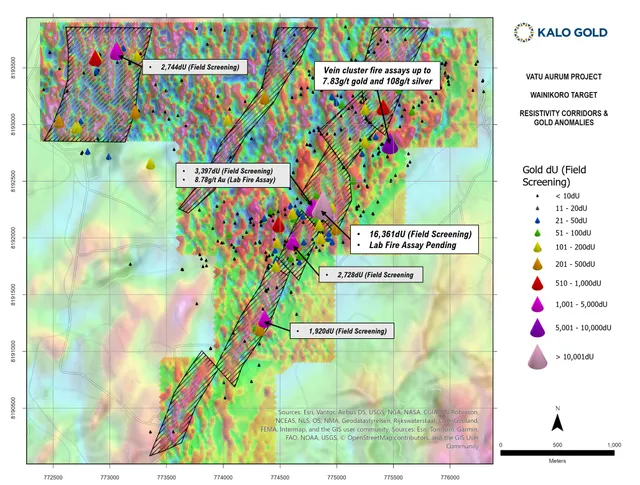
Kalo Gold Corp. has identified a 4.3-kilometre resistivity corridor at its Wainikoro target in Fiji, with gold results recorded along its length, including assays of up to 8.78 grams per tonne.
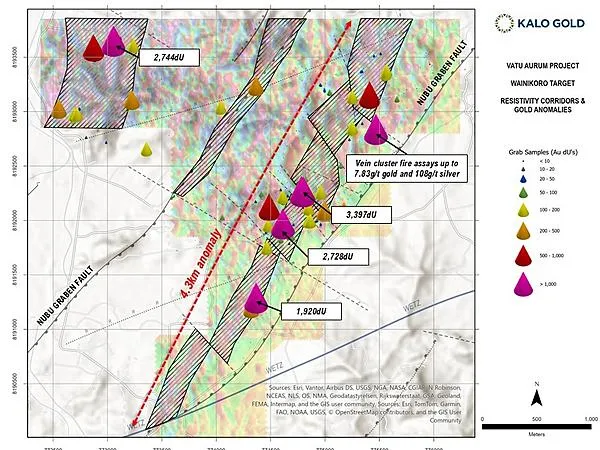
The Vancouver-based company said Sept. 24 that gradient array induced polarisation resistivity data had defined the principal corridor at its 100%-owned Vatu Aurum Project. The corridor remains open along strike.
Preliminary interpretation identified three predominantly north-south resistivity corridors. Elevated gold screening responses were concentrated along the margins of resistivity highs and lows within the main corridor and in a separate corridor about 2.5 kilometres to the west-northwest.
The eastern area returned up to 8.78 g/t gold by certified fire assay, while field screening of the same sample produced 3,397 detectORE units, which Kalo estimates at about 3.4 g/t gold. Several other results exceeded 1,000 dU, equivalent to about 1 g/t gold based on the company's estimates.
In the western area, field screening returned up to 2,744 dU, or an estimated 2.74 g/t gold.
The company said rock samples from the New Vein Cluster returned up to 7.83 g/t gold and 108 g/t silver. A previously reported chalcedonic quartz vein float sample returned 8.78 g/t gold, while a chalcedonic-banded epithermal quartz vein in silicified bedded tuff returned 4.78 g/t gold by certified fire assay.
Trenching across one of the eastern resistivity corridors exposed hydrothermally altered breccia, monomictic andesite breccia and andesitic wall rock. The hydrothermal breccia broadly corresponds with a resistivity-high area that may reflect silicification or quartz-rich cement.
Kalo said gold responses were not uniform throughout the breccia, with several occurring near lithological and geophysical margins. The company is evaluating whether contacts, secondary fractures and changes in permeability influenced mineralisation.
"The IP survey has given us a 4.3-kilometre resistivity corridor at Wainikoro with gold results along its length," President and CEO Terry L. Tucker said.
The company said the results support further evaluation of silicified hydrothermal breccias, resistivity margins and associated structural zones as priority exploration targets.
Kalo plans to begin controlled-source audio-frequency magnetotellurics, or CSAMT, surveying in late September and continue into October. The survey will test the width, orientation and depth continuity of the interpreted corridors, including potential branching, widening and crosscutting structures.
Additional work will include trenching, continuous channel sampling, structural mapping, alteration-mineralogy studies and certified laboratory analysis. The results will be integrated with existing geological, geochemical, induced polarisation, gravity, magnetic and radiometric data to refine targets for future drilling.
Kalo cautioned that not every resistivity feature is interpreted as mineralised, as resistivity contrasts can also reflect lithology, weathering, groundwater, clay content or survey effects.
The company also noted that grab, float and rock chip samples are selective by nature and may not represent mineralisation across the property.
Tighten the lead around the assayClarify the two corridor areas
Follow on LinkedIn:
Pacific Business Review
Be the "First" to get our exclusive Digital Magazine & Weekly Newsletter.