Pacific countries should proceed cautiously as interest in deep-sea minerals grows, according to the head of the United Nations-backed body responsible for regulating mining in international waters.
The caution comes as governments and mining companies increase their focus on seabed deposits containing cobalt, nickel, manganese and copper, minerals widely viewed as important for batteries, electric vehicles and other clean energy technologies.
The International Seabed Authority, or ISA, has warned against rushing into commercial extraction before adequate scientific understanding, environmental safeguards and regulatory frameworks are in place.
The issue has become increasingly significant for Pacific island countries, where proponents argue deep-sea mining could create new sources of government revenue, employment and economic development.
However, environmental groups and marine scientists continue to raise concerns about the potential impact of mining activities on deep-sea ecosystems, which remain among the least understood environments on Earth. Areas of concern include habitat disturbance, sediment plumes, underwater noise and possible long-term ecological effects.
The debate has intensified as demand for critical minerals grows alongside the global energy transition. Supporters of the industry argue that seabed resources could help diversify supplies of minerals required for renewable energy technologies and electric vehicle production.
Several Pacific nations have expressed interest in the sector, while others have called for a moratorium or stronger scientific evidence before commercial-scale mining is permitted.
The ISA has emphasised the importance of establishing robust governance arrangements before any extraction activities proceed, including environmental monitoring, compliance mechanisms and benefit-sharing arrangements.
For Pacific governments, the debate highlights the challenge of balancing potential economic opportunities with environmental protection and long-term resource management considerations.
K92 Mining has reported encouraging results from its maiden greenfields exploration program at the Wera prospect in Papua New Guinea, where work has defined a large low-sulphidation epithermal gold system approximately 10 kilometres southwest of the company's Kora and Judd deposits.
The company said the Wera system, first announced in September 2025, extends over an area measuring approximately 3.5 kilometres by 3.5 kilometres and lies within the same major north-north-east regional mineralised structural corridor that hosts the Kora, Judd and Arakompa deposits.
According to K92, the system remains open along strike in both directions, highlighting its potential for further expansion through ongoing exploration.
The prospect was identified through a combination of MobileMT airborne geophysical survey data and a review of historical exploration information.
Exploration activities at Wera commenced in July 2024, initially focusing on rock chip sampling and trenching programs. The company has since advanced the project to the drilling stage, with drilling currently underway.
Rock chip sampling has returned a number of high-grade gold results, including assays of 26.30 grams per tonne (g/t) gold, 25.06 g/t gold, 23.97 g/t gold, 22.06 g/t gold, 19.69 g/t gold, 19.23 g/t gold, 18.40 g/t gold, 18.03 g/t gold, 16.05 g/t gold and 13.83 g/t gold.
The Wera prospect forms part of K92's broader exploration strategy within the Kainantu district, one of Papua New Guinea's most prospective gold-copper regions.
The update comes as K92 continues to expand its operations at the Kainantu Gold Mine in Eastern Highlands Province. In its recently released 2025 Sustainability Report, the company highlighted the successful commissioning of its new 1.2-million-tonnes-per-annum Stage 3 expansion processing plant during what it described as a landmark year for the business.
K92 said it invested US$18 million in exploration activities in Papua New Guinea during 2025 and plans to increase exploration spending to between US$31 million and US$35 million in 2026. The company said the planned investment is intended to support continued growth across its exploration portfolio.
The miner also reported employing approximately 2,150 employees and permanent contractors in Papua New Guinea at the end of 2025, with total workforce numbers, including temporary contractors and casual workers, reaching about 3,100. Papua New Guinean nationals accounted for approximately 91% of the operational workforce.
K92 said it spent US$161.8 million on procurement from Papua New Guinea companies during 2025, representing 52% of its total annual procurement expenditure, while taxes and royalties paid or accrued in the country reached US$139.2 million.
The company also invested US$33.1 million in local joint ventures and reported ongoing progress on its first Infrastructure Tax Credit Scheme project, with the Konkua-Bilimoia road upgrade reaching 35% physical completion by the end of the year.
At its Kainantu operations, K92 reported zero reportable environmental incidents during 2025 and said it continued work on hydropower improvements and solar farm engineering studies aimed at reducing greenhouse gas emissions.
The company said exploration drilling at Wera will continue as it seeks to further define the scale and continuity of mineralisation within the newly identified gold system.
K92 operates the Kainantu Gold Mine and is engaged in the production of gold, copper and silver, as well as the exploration and development of mineral deposits in the immediate vicinity of the mine, including the Blue Lake copper-gold porphyry project.
Kalo Gold Corp. has updated its geological and structural interpretation of the Vatu Aurum Project in Fiji, identifying a series of structural controls that the company believes could help guide future gold exploration across the property.
The revised model follows the integration of LiDAR topography, surface mapping, a 2026 lineation survey, a recently completed high-resolution airborne magnetic survey and historical geophysical datasets at the 367-square-kilometre project on Vanua Levu.
The company said the updated interpretation suggests Vatu Aurum should be viewed as a single, multi-phase volcanic complex that has undergone multiple episodes of structural reactivation, rather than as a collection of separate exploration prospects.
According to Kalo, the revised model incorporates early intrusive and diatreme activity, regional extension, oblique faulting and later hydrothermal processes that together may have influenced the distribution of gold mineralisation across the project area.
A key feature of the interpretation is the identification of an east-west structural corridor known as the West-East Transfer Zone, or WETZ, which the company believes may have acted as a major pathway for hydrothermal fluids. The corridor is expressed as a continuous magnetic low and is interpreted to connect fault systems across the project area.
Kalo also reinterpreted the Nubu Graben as a segmented and locally offset structure rather than a single continuous feature. The company said this creates relay zones and structural step-overs that may provide favourable conditions for gold mineralisation.
In addition, the company identified a network of north-west to south-east trending oblique faults that it considers the dominant structural controls on gold mineralisation based on current geological interpretation. The fault network aligns with mapped gold-in-soil anomalies and recent trenching results, according to the company.
Kalo said exploration efforts will now focus on areas where the north-west to south-east fault network intersects the WETZ and the Nubu Graben, particularly near interpreted caldera-related volcanic features.
The company also highlighted the Wainikoro target, where a magnetic low coincides with arsenic and gold soil anomalies within structures linked to the WETZ.
President and Chief Executive Officer Terry Tucker said the reinterpretation represented an important shift in the company's understanding of the project.
"The most important interpretive shift in this update is the recognition that Vatu Aurum behaves as a single, multi-phase, structurally reactivated volcanic complex rather than as a series of separate prospects," Tucker said.
He said the updated framework, combined with ongoing trenching, mapping and soil sampling programmes, would help prioritise the next phase of exploration and target generation.
The company recently completed a 6,212-line-kilometre airborne magnetic survey flown at 100-metre spacing, with infill surveys at 50-metre spacing over priority target areas. Kalo said the final processed data are expected to improve the definition of fault systems, structural intersections and prospective exploration zones.
The Vatu Aurum Project comprises Special Prospecting Licences 1511 and 1464 and is focused on low-sulphidation epithermal gold systems in a volcanic back-arc setting on Vanua Levu.
Kalo Gold Corp. says it has completed almost half of a high-resolution airborne magnetic survey at its Vatu Aurum gold project in Fiji, as the company advances exploration targeting across the 367 square kilometre project area on Vanua Levu.
The company said 2,764 line-kilometres of the planned 6,212 line-kilometre heli-magnetic survey had been completed as of April 29, with 3,448 line-kilometres remaining.
The survey is being flown at 100-metre line spacing, with tighter 50-metre spacing planned over priority target areas to improve structural and geological interpretation across the project.
Kalo Gold said favourable weather conditions had supported productive daily flights, with operations focusing on completing tighter grid coverage where conditions allow.
The survey is being conducted using a helicopter-mounted tri-sensor magnetometer system capable of collecting total magnetic intensity and horizontal gradient data to better identify subtle structural features and geological contacts.
The company expects the remaining survey work to be completed in the coming days, subject to operating conditions and final line spacing requirements.
Kalo Gold said the airborne magnetic program forms a key part of its exploration strategy at Vatu Aurum and is expected to improve understanding of the project’s structural framework.
The survey aims to support the identification of fault systems and structural corridors, mapping of intrusive bodies and alteration zones, and refinement of drill targets across the Aurum Prime and Wainikoro prospects.
Final processed datasets, including magnetic intensity data and geophysical grids, will be integrated with existing geological and geochemical information to support future exploration targeting.
The technical information in the update was prepared and approved by Andrew Randell, principal geoscientist of SGDS-Hive and technical director of the Vatu Aurum Project.
Kalo Gold is focused on advancing low-sulphidation epithermal gold targets across a northeast-trending corridor extending from Matailabasa to Nayaroyaro on Vanua Levu. The company said previous exploration, including drilling, trenching and soil geochemistry, has identified multiple structurally controlled gold targets across the project.
Sandvik on 26 May launched AutoMine® Aura, a first-of-its-kind underground mining automation platform fully engineered for the future. The release represents the most significant evolution of AutoMine® since its introduction more than 20 years ago.
AutoMine® Aura transforms every layer of the AutoMine® platform, delivering full situational awareness with zero blind spots, enabling higher utilisation and consistent productivity in complex underground environments. The platform introduces a new navigation system with 3D perception — the most advanced and productive in the industry — which has been proven to move more than 15% additional material in one of the world’s harshest underground mines.
The platform integrates with existing networks and access control systems, eliminating the need for infrastructure changes. This evolution of the underlying platform enables mines to fully leverage future technologies while continuing to support current operations.
AutoMine® has achieved almost nine million hours without a lost time injury (LTI) since its launch, and safety remains foundational to its next generation. AutoMine® Aura builds on the proven safety principles and access control systems already in use today, while 3D perception and adaptive intelligence further enhance these capabilities. This strengthens safety in increasingly dynamic environments.
Operators also benefit from a wider, more intuitive interface that delivers full awareness of the mine environment. This enables the remote supervision and control of multiple machines, reducing exposure to dust, noise, vibration and other on-site hazards. The enhanced operator experience supports both safety and productivity, while also contributing to workforce development by transitioning operators into more technology-focused roles.
AutoMine® Aura will initially launch on underground loaders, with the platform set to expand across additional Sandvik product lines over time.
“AutoMine® is already a world-leading solution, proven across more than 140 mines globally,” said David Hallett, Vice President – Automation at Sandvik. “It has defined automation in mining for more than two decades across both surface and underground operations. With AutoMine® Aura, we have not built the next version; we have built an entirely new platform. The navigation system with 3D perception is the first of its kind in the industry, and the productivity gains — including moving more than 15% additional material — have been proven and validated at customer sites. This demonstrates what this technology means for our customers and for the future of mining.”
AutoMine® Aura will be presented to the global mining industry at Sandvik’s upcoming Future of Mining event in Tampere, Finland, from September 1–3, 2026.
Sandvik Group Sandvik is a global, high-tech engineering group providing solutions that enhance productivity, profitability and sustainability for the manufacturing, mining and infrastructure industries. The company is at the forefront of digitalisation and focuses on optimising customers’ processes. Its world-leading offering includes equipment, tools, services and digital solutions for machining, mining, rock excavation and rock processing. In 2025, the Group had approximately 42,000 employees and revenues of about SEK121 billion across more than 150 countries.
Business Area Mining Mining is a business area within the Sandvik Group and a leading global supplier of equipment, tools, parts, services, digital solutions and sustainability-driven technologies for the mining and construction industries. Application areas include rock drilling, rock cutting, loading and hauling, tunnelling, ground support and quarrying. In 2025, sales were approximately SEK69 billion, with about 18,000 employees. For further information, visit mining.sandvik.
The Metals Company, or TMC, says it is advancing plans for commercial-scale polymetallic nodule recovery in the Pacific Ocean following new regulatory and operational milestones linked to its deep-sea mining projects in the Clarion-Clipperton Zone.
In a first quarter corporate update, TMC announced that it had signed a commercial agreement with offshore engineering company Allseas for the development, commissioning and operation of what it described as the first commercial polymetallic nodule collection system.
The system is expected to have a production capacity of 3 million wet tonnes of nodules annually, with commissioning targeted to begin in the fourth quarter of 2027, subject to regulatory approvals.
TMC said the offshore collection system would operate in the Clarion-Clipperton Zone, an area of the Pacific Ocean containing polymetallic nodules used in energy, manufacturing, infrastructure and defense applications.
The company also announced that the US National Oceanic and Atmospheric Administration, or NOAA, determined that TMC USA’s consolidated application for an exploration license and commercial recovery permit complies with requirements under the Deep Seabed Hard Mineral Resources Act.
According to TMC, the application covers an area named TMC USA A in international waters of the Pacific Ocean and expands the proposed commercial recovery area to about 65,000 square kilometers.
TMC said it expects the NOAA permitting process to conclude before the end of the first quarter of 2027.
The company’s subsidiaries, Nauru Ocean Resources Inc., or NORI, and Tonga Offshore Mining Ltd., or TOML, also submitted environmental datasets to the International Seabed Authority’s DeepData database covering exploration activities in the Clarion-Clipperton Zone.
TMC said the submission included data from 777 equipment deployments and more than 4,800 environmental samples, generating about 76,000 biological records and 69,185 geochemical data points across the water column and seafloor environment.
Chairman and Chief Executive Officer Gerard Barron said the company continued to advance regulatory, engineering and offshore production activities tied to commercial nodule recovery operations.
“We believe we are uniquely positioned not only to maintain our first-mover advantage, but also to help accelerate development of a broader U.S.-led nodule industry,” Barron said.
Lion One Metals has appointed underground mining executive Eric Setchell as director of operations as the company advances operational improvements at the Tuvatu gold mine in Fiji, including higher development rates and expanded mining areas underground.
The company said Setchell previously served as Lion One’s director of operations from January to December 2025, during which time Tuvatu recorded steady improvements in gold production and mine development, culminating in record quarterly gold output in the December 2025 quarter.
Lion One Chairman and Chief Executive Officer Walter Berukoff said Setchell’s return comes as the company continues ramp-up activities at Tuvatu and focuses on increasing operational efficiency and mining performance.
According to the company, current mine development at Tuvatu remains ahead of budget, with underground operations now accessing additional mineralised zones as part of efforts to support higher production rates.
The company said recent operational improvements include enhanced mine planning, upgraded underground equipment availability and improved ore handling systems. Lion One added that stope production and development advance rates have continued to improve since the beginning of 2026.
Setchell is widely recognised for his experience in underground mining operations, operational optimisation, safety performance and team development. Lion One said his leadership previously contributed to operational improvements and stronger mine performance at Tuvatu.
Tuvatu is located on Fiji’s main island of Viti Levu and is positioned within the highly prospective Navilawa Caldera, which hosts multiple alkaline gold targets.
Lion One Metals Limited said it is prioritising operational reliability and disciplined execution at its Tuvatu gold mine in Fiji, as it advances development and infrastructure upgrades to support sustained production.
The Canada-based company reported that during March 2026, the mine achieved an average mill feed grade of about 4.97 grams per tonne of gold, above its budget of 4.65 g/t, while gold output tracked close to plan. Week 12 production reached 306 ounces, compared with a budget of 308 ounces.
Development performance improved toward the end of the month, with total development reaching 102% of plan and jumbo development at 135%. However, throughput remained below expectations due to equipment availability and power reliability constraints.
The company said improving equipment performance and stabilising power supply are central priorities for 2026. Measures include commissioning new underground loaders, refurbishing generators, upgrading the high-voltage network and enhancing performance at the Waimilika solar installation.
Lion One has also reinstated an approval for expenditure process to prioritise capital and maintenance spending linked to these reliability initiatives.
On the growth front, the company is advancing several projects to support medium-term production and operational resilience. These include the Stage 2B expansion of the tailings storage facility, development of a flotation circuit, and installation of an evaporation system.
Geological work is ongoing, with drilling continuing across key vein systems and additional rigs deployed. The western decline has reached the URA vein system, with ore development under way, opening a new production front.
For the coming quarter, Lion One aims to improve underground equipment availability, strengthen power reliability, deliver key infrastructure projects on schedule, and expand development across multiple high-grade zones.
Separately, the company said it has entered into a six-month investor relations agreement with Alliance Advisors Canada Corp., at a monthly fee of C$15,000, to support investor engagement and communications in North America.
Lion One Metals Limited has outlined progress and ongoing operational challenges at its Tuvatu gold mine in Fiji, as the company moves into a new phase focused on stabilising production and improving performance.
In its March 2026 operational update, the company said it is transitioning into what it described as “Phase 2”, following the successful commencement of production at the underground mine in late 2023.
The next phase is aimed at building a more consistent and resilient operation, with efforts focused on improving underground development rates, managing ore grade variability and advancing processing capabilities.
Lion One reported that while gold production has been steady, operational performance has been affected by variability in ore grades and the pace of underground development — challenges typical of early-stage underground mining operations.
To address these issues, the company is implementing targeted operational improvements, including enhanced mine planning, increased drilling, and adjustments to development strategies to better define high-grade zones.
The update follows a series of recent developments at Tuvatu, including the commissioning of a new flotation plant in March, which is expected to improve gold recoveries as the operation ramps up.
However, the company cautioned that the ramp-up process will take time, noting that early-stage performance variability is expected as the team builds operational experience with the processing circuit and ore characteristics.
Tuvatu is part of the broader Navilawa Caldera project area on Viti Levu, where Lion One holds extensive exploration licences covering multiple prospective mineralised zones.
The company said ongoing drilling and exploration activities are aimed at expanding the resource base and supporting longer-term production growth.
Lion One, listed on the TSX Venture Exchange, is positioning Tuvatu as a high-grade alkaline gold operation, with a focus on improving operational efficiency and extending mine life as development progresses.
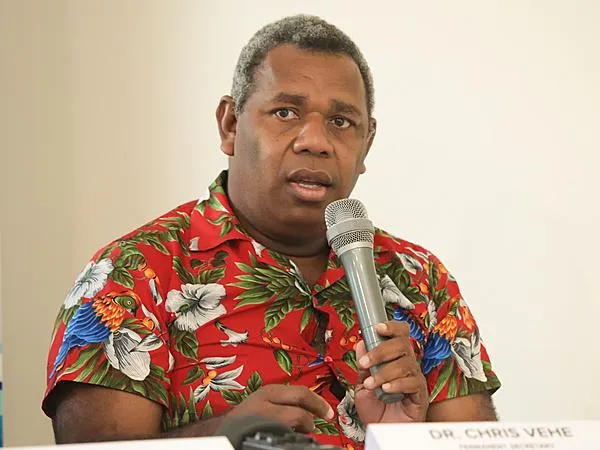
The Ministry of Mines, Energy and Rural Electrification is accelerating a wide-ranging reform agenda to modernise mining laws and improve fiscal, environmental and social oversight as the sector expands.
Permanent Secretary Chris Vehe said the reforms aim to position mining as a key economic pillar, while addressing longstanding regulatory gaps.
“The mining industry is now an emerging economic lifeline of our country,” he said.
At the core of the reforms is the Mineral Resources Bill 2025, described by policymakers as a landmark law to replace the outdated Mines and Minerals Act 1990 and establish a clearer regulatory regime for exploration and extraction.
The bill is intended to balance resource development with environmental protection, clarify rights and obligations among stakeholders, and ensure fair economic returns for present and future generations.
It also aligns with the country’s Minerals Policy 2017, which emphasises inclusive governance, local participation and stronger benefit-sharing arrangements with communities.
Alongside the bill, the ministry is finalising supporting regulations covering occupational health and safety, community development agreements and broader sector governance. Additional initiatives include a Strategic Environmental and Social Assessment (SESA), fiscal and revenue reforms, and frameworks on mine safety, gender inclusion and mineral pricing.
Most outputs are in advanced stages of drafting or consultation, with several expected to be submitted to cabinet between April and May. The reform push comes amid ongoing debate over landowner rights and consultation processes.
Civil society groups and international observers have raised concerns about ensuring free, prior and informed consent, equitable benefit-sharing and stronger environmental safeguards under the proposed framework.
Analysts note that mining governance in Solomon Islands has historically faced challenges linked to limited oversight, environmental risks and uneven distribution of benefits.
Government and development partners see significant upside if reforms unlock new mining projects, particularly in gold and nickel. Estimates suggest mining could add several percentage points to GDP and generate new fiscal revenues through royalties, export duties and profit-based taxes if projects reach full capacity.
The ministry said the reforms are designed to ensure that expansion is matched by stronger governance, transparency and accountability mechanisms. The overhaul reflects a broader transition in the Solomon Islands economy, where declining logging activity is shifting attention toward mining as a future growth driver.
Officials said the success of the reforms will depend on balancing investor certainty with community protection and environmental sustainability.
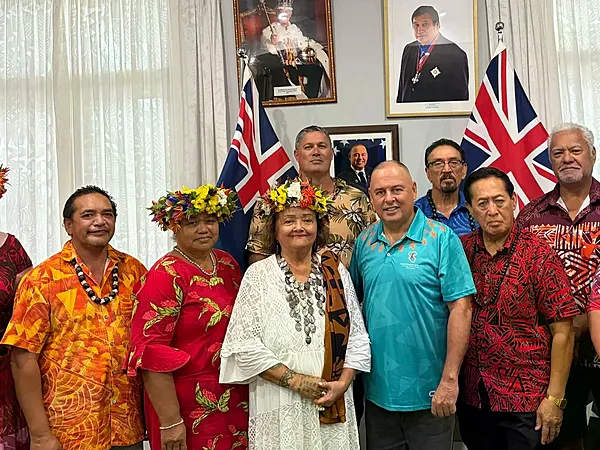
The Seabed Minerals Authority has formally appointed members of its Seabed Minerals Advisory Committee, in a move aimed at strengthening community representation in the development of the sector.
Prime Minister Mark Brown, who also holds the seabed minerals portfolio, said the committee will play a key role in ensuring that policy discussions reflect community perspectives and national priorities.
“The advisory committee helps ensure that policy considerations remain inclusive and grounded in our national values,” he said during the appointment ceremony held at the Office of the Prime Minister.
Advisory, not decision-making role
Seabed Minerals Commissioner Beverly Ataera said the committee serves as a facilitative body between government and the public, rather than a decision-making authority.
Its mandate includes providing recommendations, supporting public awareness, and fostering informed dialogue on seabed minerals policy, in line with its terms of reference.
Leadership retained, new members added
Tutai Pere was reappointed as chairman of the committee, while George Williamson was named vice chairman.
Continuing members include Maru Mariri-Tepou and Tamuera Peyroux-Napa, while new appointees are Phillip Vakatini Ariki, Ngara Katuke and Ngavaevae Papatuac.
Pere said the committee would work to represent diverse community views as the sector evolves, emphasising collaboration and integrity in its work.
Broad representation across society
The advisory committee comprises representatives from across Cook Islands society, including church, cultural, business and youth groups. Members are appointed for two-year terms and are expected to participate in consultations, meetings and training.
The body reports to the Seabed Minerals Authority and provides input on policy and sector developments.
Focus on governance and engagement
The appointments underscore the government’s push to strengthen transparency, accountability and community engagement in the seabed minerals sector, as interest in ocean-based resource development grows.
The authority said it will work closely with the committee to support informed decision-making and responsible stewardship of marine resources.
Lion One Metals has reported a series of operational and technical developments at its Tuvatu gold mine in Fiji, signalling a transition toward improved processing capability and longer-term operational stability as the project moves through its ramp-up phase.
The Canadian-listed company, which owns and operates the Tuvatu Alkaline Gold Project on Viti Levu, recently confirmed the commissioning of a new flotation plant, regulatory approval for a key water management system, and clarified its mining approach amid market speculation.
The updates collectively underscore a shift from initial production challenges toward optimisation of throughput, recovery rates and environmental compliance.
Processing ramp-up under way
Lion One said it has successfully commissioned a new flotation plant — a critical upgrade designed to enhance gold recovery from sulphide ores at Tuvatu. The commissioning marks a milestone in the mine’s development, although the company cautioned that the plant is still in its early operational phase.
Chief executive Campbell Olsen described the commissioning as an important step forward, while acknowledging that performance improvements will take time as operators build experience with the flotation circuit.
The company said the focus has now shifted to ramping up throughput and improving recovery rates, with early-stage variability expected as part of the learning curve. Key priorities include refining reagent chemistry, strengthening operator capability and progressively increasing production toward design capacity.
Lion One emphasised that the ramp-up will be gradual rather than linear, reflecting a strategy centred on sustainable operational performance rather than short-term output gains.
The flotation plant introduces a new processing dimension at Tuvatu, enabling the treatment of ore types that were previously more challenging under conventional gravity-based systems. This is expected to support improved overall recovery rates as the operation matures.
Evaporator system addresses water management constraints
In parallel with processing upgrades, the company has approved the installation of an evaporator system to manage excess process water at the mine’s tailings storage facility (TSF).
The system is designed to address a longstanding operational constraint: the accumulation of treated water that cannot be discharged due to regulatory and environmental limits. While the existing treatment plant can reduce copper levels, other parameters — including total dissolved solids — remain above thresholds required for river discharge.
The evaporator will provide a controlled mechanism to remove excess water through enhanced evaporation, replacing reliance on natural evaporation and temporary storage solutions.
Lion One said the approach eliminates the need to discharge process water into the Sabeto River, reducing environmental risk and regulatory uncertainty. The system is expected to improve operational resilience, particularly during periods of heavy rainfall when water volumes increase.
Beyond immediate operational benefits, the company positioned the evaporator as a long-term infrastructure investment that strengthens its environmental, social and governance (ESG) profile and supports its social licence to operate.
Clarification on mining methods
Lion One also moved to clarify its mining strategy following market commentary, stating that it has not abandoned shrinkage stoping — a method previously associated with the Tuvatu deposit.
Instead, the company said it is adopting a flexible, multi-method approach, selecting mining techniques based on the geological characteristics of specific zones within the orebody.
This approach is intended to optimise ore extraction while maintaining operational efficiency and safety, reflecting the complex nature of the high-grade alkaline gold deposit.
The clarification aims to address investor concerns and reinforce confidence in the company’s technical strategy as it continues to develop the underground mine.
Operational context and outlook
The Tuvatu project represents one of the few alkaline gold deposits under active development globally, with Lion One positioning it as a long-life, high-grade asset. The operation includes an underground mine, processing plant, tailings storage facility and associated infrastructure.
Since commencing operations in late 2023, the project has faced a combination of technical, operational and organisational challenges typical of early-stage mining developments. The recent updates suggest a coordinated effort to address these constraints through targeted capital investment and process optimisation.
The commissioning of the flotation plant is expected to play a central role in improving gold recoveries, while the evaporator system resolves a critical bottleneck in water management — a key issue for many tropical mining operations.
At the same time, the company’s clarification on mining methods highlights an adaptive approach to ore extraction, which may be necessary to fully unlock the deposit’s potential.
Looking ahead, Lion One indicated that the ramp-up phase will extend over several months, with incremental improvements anticipated as systems are optimised and operational expertise deepens.
The company also signalled a commitment to transparent reporting during this period, noting that early production results should be interpreted in the context of a developing operation rather than a steady-state mine.
Regional implications
While located in Fiji, the developments at Tuvatu are being closely watched across the Pacific mining sector, where governments and investors are increasingly focused on balancing resource development with environmental safeguards and community expectations.
The adoption of closed-loop water management systems, in particular, reflects a broader industry trend toward minimising environmental impact and reducing reliance on discharge permits.
Similarly, the integration of advanced processing technologies such as flotation aligns with efforts to maximise resource efficiency and improve project economics in a competitive global gold market.
For Lion One, the coming months will be critical in demonstrating that these investments translate into stable production and improved financial performance.
If successful, the Tuvatu mine could emerge as a benchmark for modern gold mining operations in the Pacific — combining technical innovation, environmental management and adaptive mining practices within a single integrated project.
Lion One Metals has received conditional approval from the TSX Venture Exchange for a non-brokered private placement with Arete Capital, in a move aimed at strengthening liquidity and accelerating operational improvements at its Tuvatu gold project in Fiji.
The company announced that the financing, expected to close on 27 March 2026, will raise gross proceeds of approximately C$15.05 million through the issuance of 44.26 million units priced at C$0.34 each.
Each unit comprises one common share and one warrant, with the latter exercisable at C$0.39 over a three-year period. On a pro forma basis, the shares issued will represent 9.9 percent of Lion One’s outstanding equity, excluding any exercise of warrants.
The transaction forms part of a broader strategic investment agreement signed in December 2025 and is subject to final regulatory approvals and customary closing conditions.
Funding operational improvements at Tuvatu
Lion One said proceeds from the placement will be directed toward addressing operational constraints at its Tuvatu Alkaline Gold Project, which commenced operations in late 2023.
Key priorities include improving mill throughput capacity, enhancing recovery rates through optimisation of the flotation circuit, advancing underground development to access higher-grade zones, and investing in additional mining equipment.
The company also plans to allocate a portion of the funds to support working capital requirements and maintain compliance with covenants under its existing senior debt facility, which is due to mature in August 2026. The financing underscores what the company described as an “urgent cash flow imperative” over the coming months, as it seeks to stabilise operations and improve production performance.
Strategic investor role and governance rights
As part of the transaction, Lion One and Arete Capital will enter into an investor rights agreement that grants Arete certain governance and participation rights as a significant shareholder.
Under the agreement, Arete will have the right to nominate one director to the company’s board, provided it maintains a minimum shareholding of 9.9 percent.
Arete will also be entitled to participate in future equity offerings to maintain its proportional ownership, subject to standard exclusions such as employee incentive schemes and pre-existing securities. In addition, the agreement includes provisions requiring Arete to align its voting with management recommendations on shareholder matters while its nominee remains on the board.
The company noted that any increase in Arete’s shareholding beyond 10 percent would require prior approval from the TSX Venture Exchange, while holdings above 20 percent would be subject to disinterested shareholder approval.
Management services agreement to support operations
Concurrent with the financing, Lion One plans to enter into a management services agreement with Arete, under which the investor will provide operational and advisory support for the Tuvatu project. The scope of services includes coordinating operational management, supporting project planning, and assisting in the development and execution of business plans and budgets.
While Arete will act as an independent contractor, it will operate under the oversight of Lion One’s board, which retains ultimate responsibility for management decisions.
The agreement includes a base management fee of C$750,000 per year, alongside potential performance-based incentives linked to key operational targets.
The initial term of the agreement is five years, with provisions for renewal by mutual consent.
Strategic context
The investment reflects a partnership-driven approach to advancing the Tuvatu project, combining capital injection with operational expertise from a specialist mining investor.
Arete Capital positions itself as an active operator with experience in optimising mid-tier mining assets, and the collaboration is expected to support Lion One’s efforts to improve productivity and financial performance at Tuvatu.
The project, located on Fiji’s main island of Viti Levu, is one of the few alkaline gold systems globally and is being developed as a high-grade underground operation with expansion potential.
Lion One said the financing will enable it to prioritise near-term, high-impact initiatives aimed at increasing output and improving margins, while maintaining financial flexibility during a critical phase of its development.
Outlook
The successful closing of the private placement will mark a key step in Lion One’s efforts to stabilise operations and address funding requirements ahead of its upcoming debt maturity.
With operational improvements under way — including recent commissioning of a flotation plant and planned upgrades to infrastructure — the company is positioning the Tuvatu project for a more consistent production profile.
At the same time, the partnership with Arete introduces a more hands-on operational model, with closer integration between capital providers and mine management.
As the company navigates its ramp-up phase, investor focus is likely to remain on whether these combined measures translate into improved output, stronger cash flow, and reduced financial risk over the near term.
ABG President and Minister for Mining Ishmael Toroama outlined key legislative reforms to strengthen governance of the mining sector during his address to Parliament.
The reforms form part of the ABG’s broader efforts to ensure that resource development in Bougainville is undertaken in a safe, responsible and internationally compliant manner, while supporting long-term economic development and independence aspirations.
In this context, the Bougainville Parliament recently passed the Bougainville Mining (Gold Production Levy Amendment) Act 2025, formalising the taxation of gold production and strengthening revenue mobilisation.
“The Government continues to strengthen the legislative framework governing the mining sector,” he said.
“Key developments include the passage of the Bougainville Mining (Gold Production Levy Amendment) Act 2025, which formalises taxation of gold production and strengthens revenue mobilisation.”
President Toroama said relevant agencies — including the Department of Mining and Petroleum, the Department of Law and Justice, the Bougainville Tax Office, and the Department of Commerce, Trade and Economic Development — are now working collaboratively to develop an implementation framework. This will enable the initial collection of the gold levy within the year.
In parallel, the President informed the House that a comprehensive review of the Bougainville Mining Act 2015 is under way to strengthen regulatory control and address implementation gaps.
“There is also an ongoing comprehensive review of the Bougainville Mining Act 2015, covering approximately 70 sections, including new provisions to address implementation gaps and strengthen regulatory control. Drafting instructions have been completed and endorsed by BEC for region-wide stakeholder consultations, expected in the third quarter of 2026 prior to finalisation of amendments.”
Further legislative work is progressing under the Panguna redevelopment framework to support the sector.
“In addition, under the Panguna redevelopment framework, work is progressing on priority legislation to support the sector, including mining safety and occupational health frameworks, environmental protection laws, and land and regulatory reforms.”
“These reforms will ensure that mining in Bougainville is undertaken in a safe, responsible and internationally compliant manner, consistent with our national development and independence objectives.”
LION One Metals Ltd. has begun upgrading drilling operations at its Tuvatu gold mine in Fiji, as part of a broader push to stabilise production and strengthen long-term performance.
The company said it has commenced a significant overhaul of its drill fleet, replacing ageing underground rigs that had exceeded their operational lifespan and constrained drilling output since mid-2025. The existing fleet will be replaced with three new high-performance underground drill rigs and an additional surface rig.
Initial improvements have already been recorded, with underground drilling metres per shift doubling following enhanced maintenance support and technical oversight. A track-mounted surface drill rig began operations on March 14 to support in-mine and near-mine drilling during the wet season, with plans to shift to wider exploration during the dry season.
Lion One said it is also in advanced negotiations to acquire four new underground drill rigs, targeting drilling rates of at least 25 metres per shift, compared with less than 10 metres earlier this year and 12 to 18 metres currently.
The company said improved drilling capacity would provide the geological data needed to support mine design, grade control and production scheduling, as well as enable multiple mining areas to be developed simultaneously.
The drilling upgrade forms part of what the company described as “Phase 2” of Tuvatu’s development, following the transition from initial production to building a more resilient and predictable mining operation.
In a separate update, Lion One reported February gold production of 813 ounces, bringing year-to-date output to 9,180 ounces.
The processing plant milled 10,267 tonnes of ore at an average grade of 3.49 grammes per tonne, with a recovery rate of 77.3 percent. The company said recovery rates are expected to improve with the near-completion of a flotation plant.
Underground development totalled 120 metres during the month, below the 188-metre target, with performance affected by equipment availability and compressed air constraints. The company said these issues are being addressed through the commissioning of new equipment, improved maintenance planning and ventilation upgrades.
Lion One said safety performance remained strong, with no lost-time injuries recorded in February and enhancements made to on-site medical facilities, including the addition of a full-time nurse.
Exploration drilling totalled 2,369 metres across four rigs during the month, with results including an intercept of 5.15 metres at 9.18 grammes per tonne gold.
The company said its current focus is on improving operational reliability, increasing development rates and enhancing plant performance, while maintaining safety and advancing infrastructure and environmental management initiatives.
Lion One operates the Tuvatu alkaline gold project within the Navilawa caldera and is seeking to expand both production and resource confidence as it progresses its next phase of development.
On the sidelines of the 2026 Prospectors & Developers Association of Canada (PDAC) Investment Convention in Toronto, Canada, Papua New Guinea’s Minister for Mining Solen Loifa, MP, announced a sweeping suite of regulatory and institutional reforms designed to transform PNG into the Asia-Pacific region’s most conducive destination for mining investment.
Under the government’s “Reset@50” agenda, Minister Loifa committed to a six- to nine-month implementation window to finalize a new regulatory framework.
This “New Deal” for the sector prioritizes the removal of bureaucratic bottlenecks and the modernization of laws that have remained largely unchanged since 1992.
Key Pillars of the Reform Agenda
Establishment of a “One-Stop Shop”
The government is realigning policy and institutions to create a streamlined, integrated service center for investors. This reform will centralize licensing, permitting and compliance, ensuring that explorers and miners no longer face fragmented departmental processes.
Modernizing Exploration Rights
To support the high-risk pioneer stage of mining, the government will extend the tenure of exploration licenses (EL) from two years to five years. This provides the long-term stability required for modern, technology-driven exploration programs.
Introduction of Retention Licenses
For the first time, a formal retention license category will be introduced, allowing companies to hold and protect discovered deposits during periods of unfavorable market conditions or technical feasibility studies.
Bypassing the First-in-Time Requirement for Projects of Significance
The government is moving toward a more merit-based and strategic allocation of tenements to ensure genuine operators are prioritized for areas identified as highly prospective. This will not affect existing license areas or applicants seeking to conduct exploration in areas not reserved for the intended purpose. The government will use both first-in-time and merit-based approaches on a case-by-case basis.
Removing Red Tape
The minister specifically targeted the “lengthy and cumbersome” process through increased staff capacity and a drive toward an electronically automated system. New regulations will mandate strict timelines for renewals to ensure that projects do not stall due to administrative delays.
Inclusive Workforce
Reforms to mining safety laws will formally enable and encourage women to work in all aspects of mining, ensuring the industry reflects the talent and diversity of the entire population. This will enable women to work underground, unlike the current restriction in 1977 legislation.
Realignment of Policy and Regulatory Framework Under a Single Entity — Reforming the Mineral Resources Authority (MRA)
The Mineral Resources Authority (MRA) is the government agency responsible for regulating the mining industry in Papua New Guinea. It is currently undergoing a strategic realignment to serve as the primary gateway for the “One-Stop Shop” investment initiative.
Minister Loifa emphasized that these changes were not merely proposals but were a core mandate of his leadership.
“Our message to the global mining community is clear. We have heard your concerns regarding regulatory uncertainty and administrative delays,” said Minister Loifa.
“We are removing the hurdles that have historically slowed discovery, while ensuring that the people of Papua New Guinea benefit equitably from our resource wealth.”
The PDAC is the world’s premier mineral exploration and mining convention, which kicked off March 1 (Canada time) and will go on until March 4. This is an annual event that brings together more than 27,000 attendees from over 125 countries for educational programming, networking events and business opportunities.
Since it began in 1932, the convention has grown in size, stature and influence. The award-winning event is a gathering where familiar faces reunite, new connections are forged and the future of mineral exploration takes shape one conversation at a time. It is the event of choice for the industry, hosting more than 1,300 exhibitors and 700 presenters.
Follow on LinkedIn:
Pacific Business Review
Be the "First" to get our exclusive Digital Magazine & Weekly Newsletter.