
Kalo Gold Corp. has updated its geological and structural interpretation of the Vatu Aurum Project in Fiji, identifying a series of structural controls that the company believes could help guide future gold exploration across the property.
The revised model follows the integration of LiDAR topography, surface mapping, a 2026 lineation survey, a recently completed high-resolution airborne magnetic survey and historical geophysical datasets at the 367-square-kilometre project on Vanua Levu.
The company said the updated interpretation suggests Vatu Aurum should be viewed as a single, multi-phase volcanic complex that has undergone multiple episodes of structural reactivation, rather than as a collection of separate exploration prospects.
According to Kalo, the revised model incorporates early intrusive and diatreme activity, regional extension, oblique faulting and later hydrothermal processes that together may have influenced the distribution of gold mineralisation across the project area.
A key feature of the interpretation is the identification of an east-west structural corridor known as the West-East Transfer Zone, or WETZ, which the company believes may have acted as a major pathway for hydrothermal fluids. The corridor is expressed as a continuous magnetic low and is interpreted to connect fault systems across the project area.
Kalo also reinterpreted the Nubu Graben as a segmented and locally offset structure rather than a single continuous feature. The company said this creates relay zones and structural step-overs that may provide favourable conditions for gold mineralisation.
In addition, the company identified a network of north-west to south-east trending oblique faults that it considers the dominant structural controls on gold mineralisation based on current geological interpretation. The fault network aligns with mapped gold-in-soil anomalies and recent trenching results, according to the company.
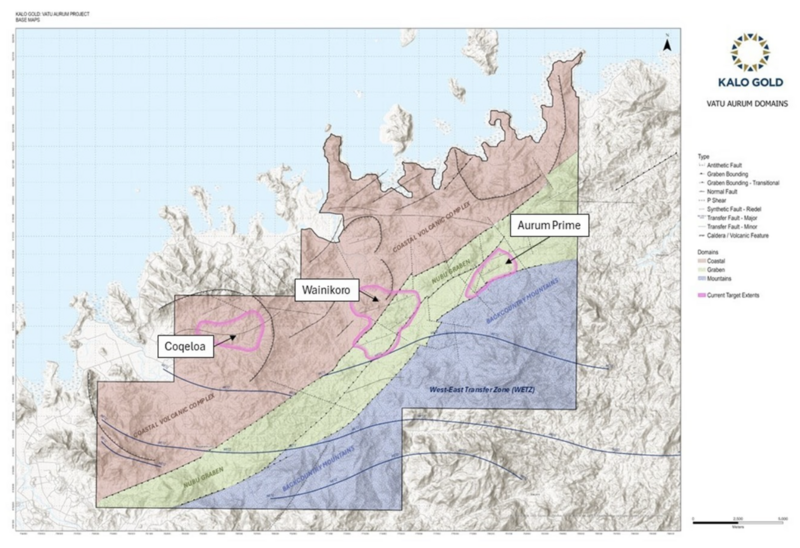
Kalo said exploration efforts will now focus on areas where the north-west to south-east fault network intersects the WETZ and the Nubu Graben, particularly near interpreted caldera-related volcanic features.
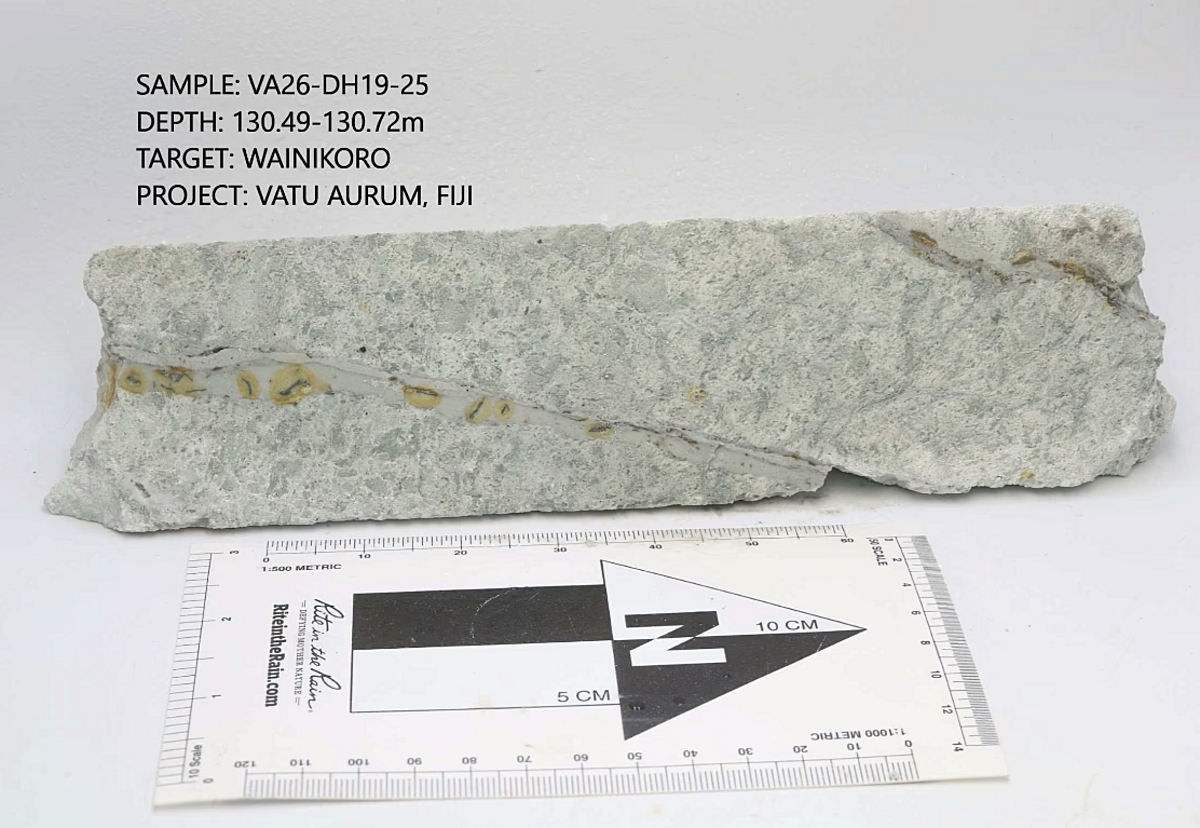
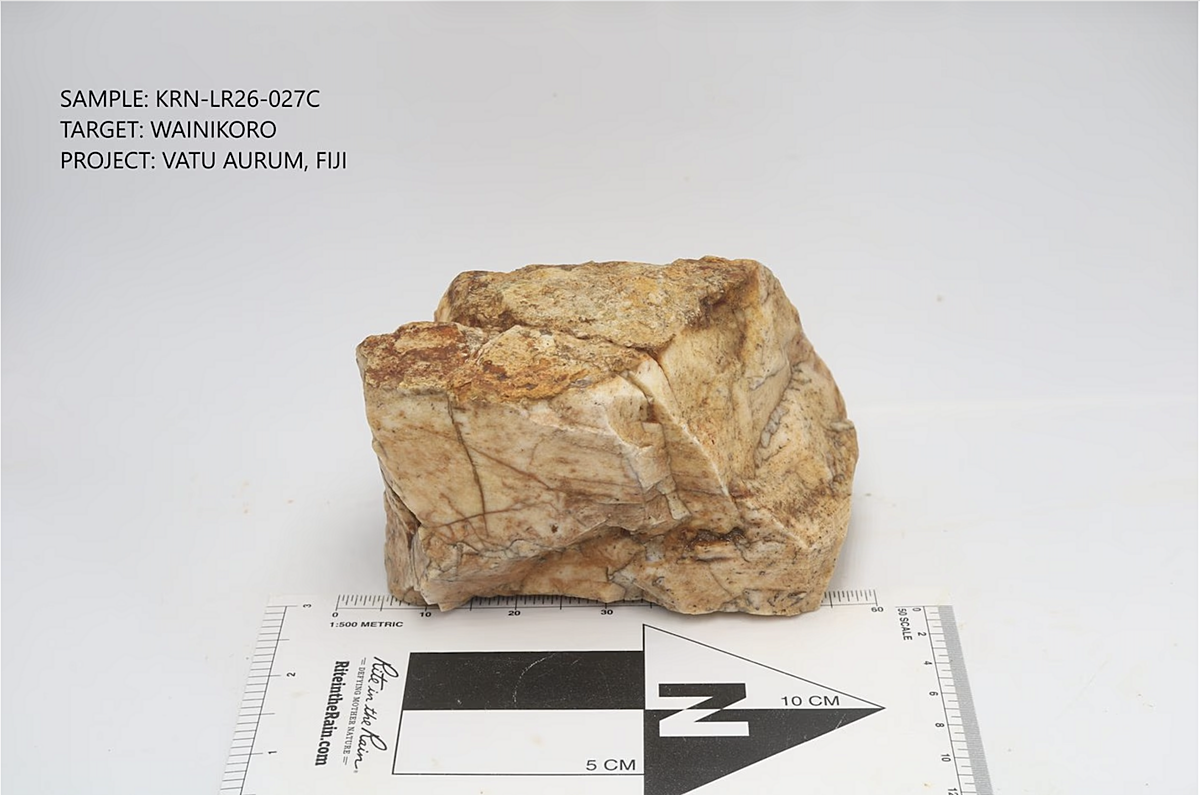
The company also highlighted the Wainikoro target, where a magnetic low coincides with arsenic and gold soil anomalies within structures linked to the WETZ.
President and Chief Executive Officer Terry Tucker said the reinterpretation represented an important shift in the company's understanding of the project.
"The most important interpretive shift in this update is the recognition that Vatu Aurum behaves as a single, multi-phase, structurally reactivated volcanic complex rather than as a series of separate prospects," Tucker said.
He said the updated framework, combined with ongoing trenching, mapping and soil sampling programmes, would help prioritise the next phase of exploration and target generation.
The company recently completed a 6,212-line-kilometre airborne magnetic survey flown at 100-metre spacing, with infill surveys at 50-metre spacing over priority target areas. Kalo said the final processed data are expected to improve the definition of fault systems, structural intersections and prospective exploration zones.
The Vatu Aurum Project comprises Special Prospecting Licences 1511 and 1464 and is focused on low-sulphidation epithermal gold systems in a volcanic back-arc setting on Vanua Levu.