Kalo Gold Corp. has confirmed the presence of a gold-bearing epithermal system extending over a 1.8-kilometre strike length at its wholly owned Vatu Aurum Project in Fiji, following results from two reconnaissance drill holes that have strengthened the company's confidence in the area's exploration potential.
The Vancouver-based gold explorer said drill holes VA26-DH18 and VA26-DH19 at the Wainikoro prospect intersected anomalous gold mineralisation associated with fault-controlled quartz veins, hydrothermal breccias and elevated arsenic and antimony, reinforcing its interpretation that the area hosts a structurally controlled epithermal gold system.
The two drill holes, spaced 1,027 metres apart, were designed to test regional fault structures, hydrothermal alteration and geophysical anomalies identified during earlier exploration work. The company said the programme was intended to refine its geological model and guide future drilling rather than define mineral resources.
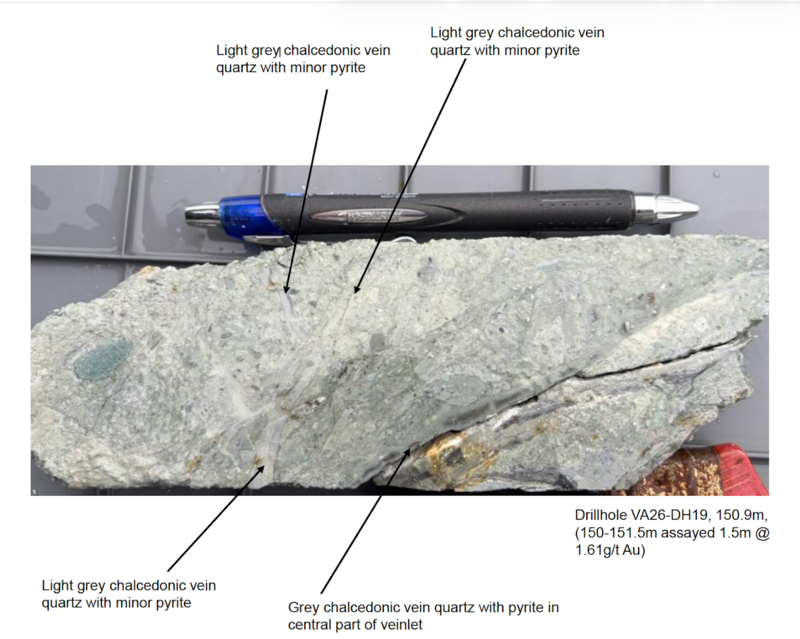
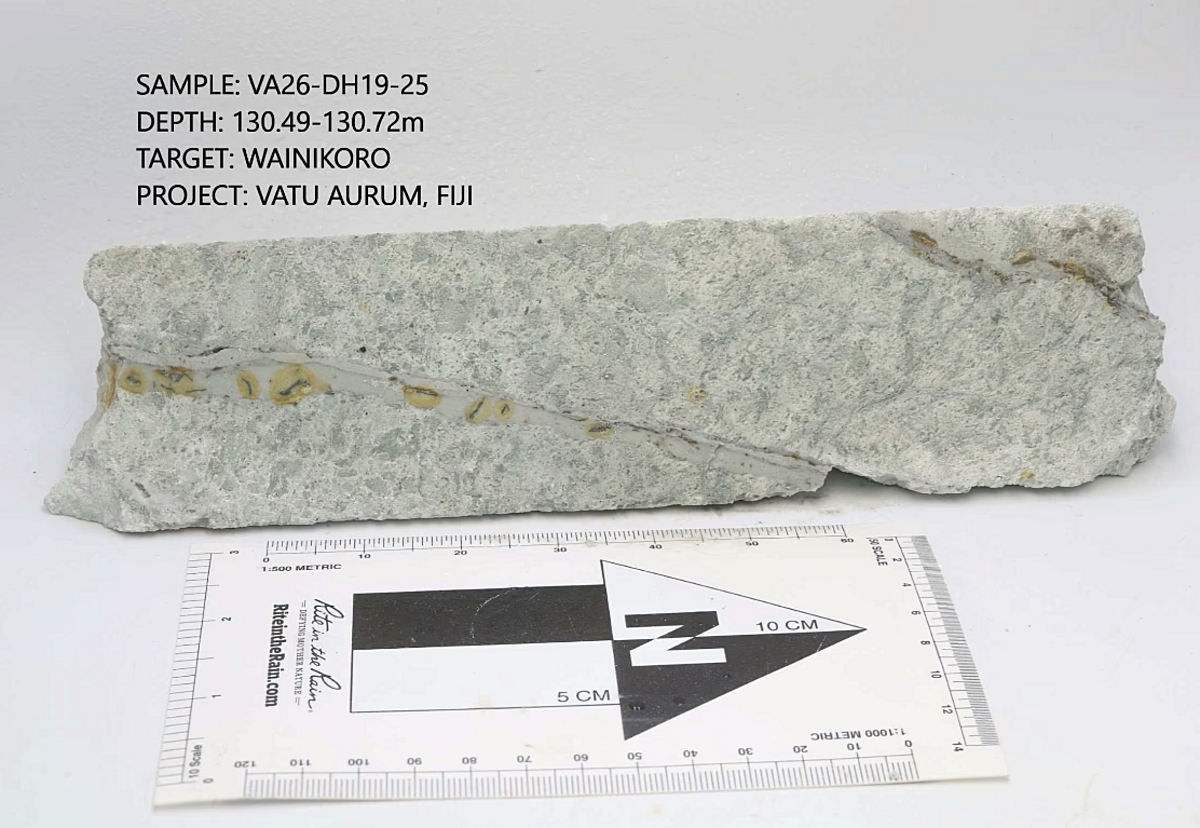
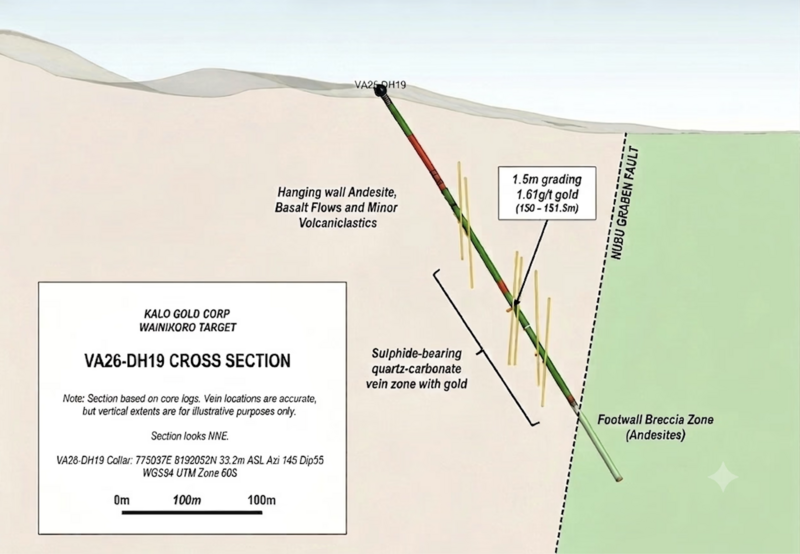
At the Kope Road North target, drill hole VA26-DH19 intersected multiple gold-bearing quartz veins within a broad hydrothermal system, including an interval grading 1.61 grams of gold per tonne over 1.5 metres. Additional gold-bearing intersections and widespread hydrothermal alteration indicate that mineralisation is associated with a major structural corridor known as the Nubu Graben fault.
Mineralogical analysis also identified arsenopyrite replaced by pyrite pseudomorphs, which the company said represents evidence of an early mineralising phase linked to gold deposition. The presence of arsenic and antimony, together with multiple generations of quartz veining, supports the interpretation that Wainikoro represents the upper levels of an epithermal gold system.
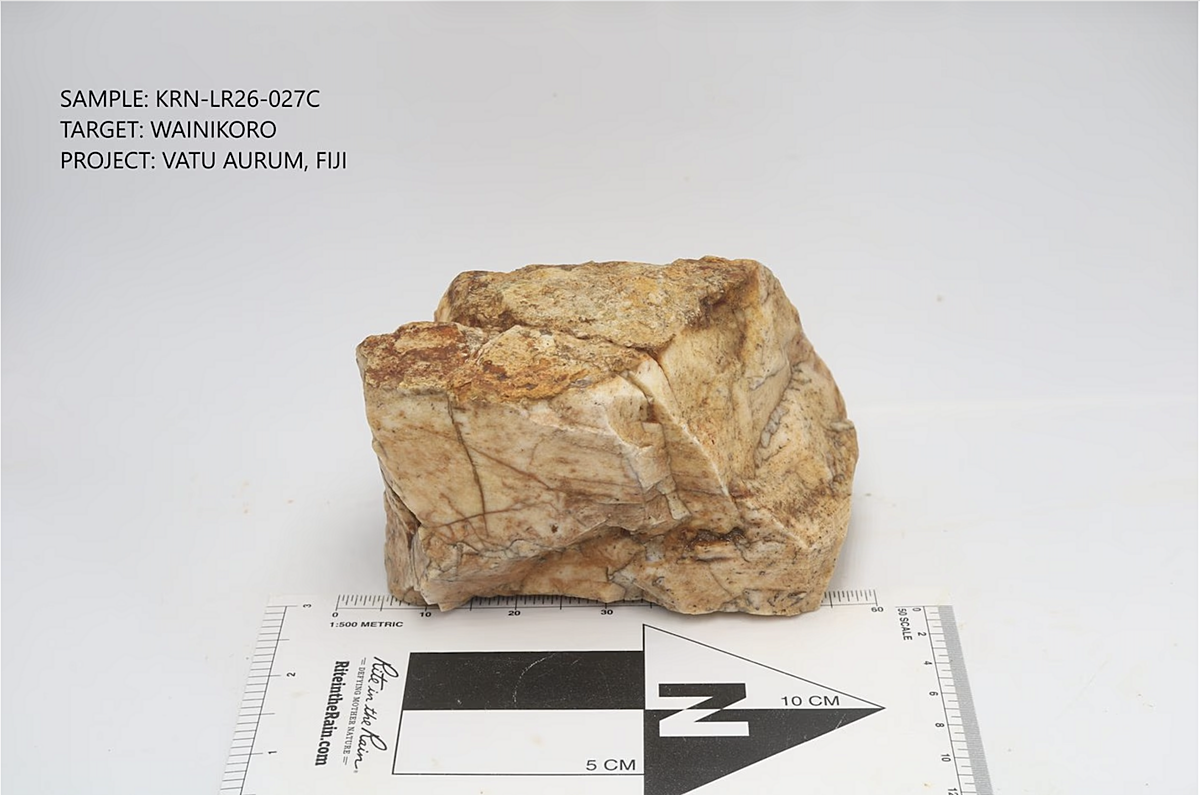
At the Kope Road South target, drill hole VA26-DH18 returned anomalous gold values associated with hydrothermal breccias and fault zones. Surface sampling in the surrounding area produced detectORE™ gold screening results of up to 1,920 detectORE units, equivalent to an estimated 1.92 grams of gold per tonne, indicating that gold-bearing hydrothermal activity extends beyond the principal magnetic target.
Kalo Gold President and Chief Executive Officer Terry Tucker said the results confirmed the scale of the Wainikoro system and highlighted the potential for multiple mineralised centres across the broader project area.
He said the combination of drilling results, airborne magnetic surveys and planned ground geophysical work would allow the company to prioritise future drilling with greater precision as it continued evaluating the scale and geological architecture of the Wainikoro epithermal system.
The company has engaged Fender Geophysics Pty Ltd to undertake controlled-source audio-frequency magnetotellurics, induced polarisation, and gravity surveys at Wainikoro, with field work scheduled to begin in mid-July, subject to logistical requirements. The geophysical programme is expected to refine drill targets before the next phase of exploration.
Kalo Gold's Vatu Aurum Project covers about 367 square kilometres on Vanua Levu and hosts a corridor of low-sulphidation epithermal gold targets that the company is systematically advancing through drilling, geochemistry, structural mapping and geophysical surveys.