November 19, 2025

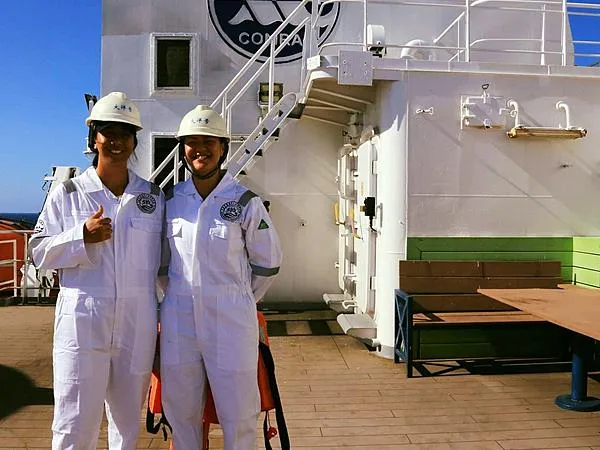
The Cook Islands has strengthened its scientific ties with China through a short marine research voyage aboard the Da Yang Hao, one of China’s leading deep-sea research vessels. A team of Cook Islanders joined the ship in Suva, Fiji, for a ~9-day cruise to Rarotonga, aiming to boost scientific collaboration and deepen understanding of the nation’s vast marine environment.

The Cook Islands delegation – led by the Seabed Minerals Authority (SBMA) through Edward Herman, John Parianos, Rima Browne, and Tanga Morris Jr – also includes representatives from the House of Ariki, the Government of the Cook Islands, and Te Ipukarea Society: Philip Vakatini Ariki, Troy Penno, and Alanna Smith.

According to officials, the voyage aims to strengthen “marine scientific collaboration” between the Cook Islands and the China Ministry of Natural Resources, with a focus on the “exchange of knowledge, research practices, and deep-sea science capabilities undertaken under Cook Islands jurisdiction and national research protocols.”

Through this joint effort, the Cook Islands continues to demonstrate its leadership in “science-driven ocean exploration,” contributing to a better understanding of “our Marae Moana, our marine ecosystems, and the deep-sea environments within our national waters.”

Knowledge gained from the mission will remain in the Cook Islands’ hands, supporting “responsible management, environmental protection, and informed decision-making for our ocean and our people.”

The Da Yang Hao is equipped with “state-of-the-art laboratories and cutting-edge ocean technology,” enabling the ship to collect high-value data that will inform “future research, environmental management, and policy development.”

The delegation is expected to arrive in Rarotonga during the second week of November 2025, weather permitting.

“Meitaki ma‘ata to all involved – this collaboration continues to showcase the Cook Islands’ leadership in marine science, stewardship, and partnership beneath the waves,” the statement reads.

Training and Onboard Education

During the “4-day transit from Fiji to the Cook Islands,” the team took part in a range of training drills and educational seminars to familiarise themselves with ship operations and onboard research systems.

From “safety drills and knot tying, to learning about the Da Yang Hao’s full spread of scientific equipment,” the Cook Islands team has been fully immersed in ship life. They have received a warm welcome and been integrated into the “Science Team to participate in the collection of marine scientific data during the research cruise.”

Once on-site, the plan is to “use and deploy a range of instruments to showcase the Da Yang Hao’s capabilities.”

Both “biological and geological data” will be collected, and, in line with the Cook Islands’ open science principles, “all data will be made publicly available to support open science and future marine research.”

November 05, 2025

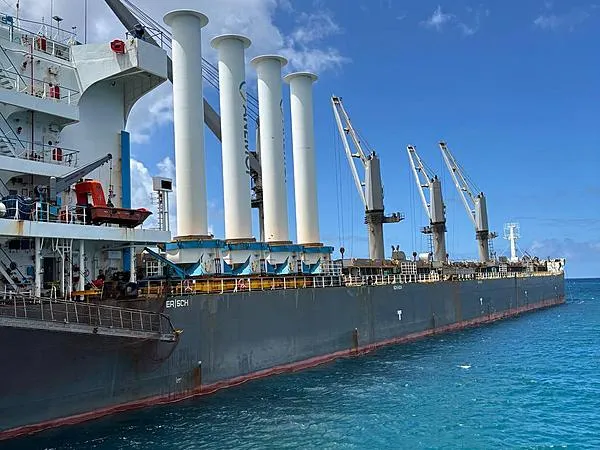
In the calm waters of N’Go Bay, a striking grey and red vessel with towering white cylindrical sails drew the attention of local residents on 31 October. Measuring 195 metres in length and capable of carrying 64,000 tonnes of ore, L’Afros is not just another bulk carrier—it represents a new chapter in sustainable maritime transport.

New Caledonia’s President of the Government, Alcide Ponga, visited the vessel accompanied by Mont-Dore Mayor Elizabeth Rivière. The L’Afros has been chartered by the MKM Group to ship nickel ore to China, but unlike conventional mineral carriers, it is partly powered by the wind.

The ship is equipped with the Anemoi Rotor Sail System, an innovative technology that uses rotating cylindrical sails to harness wind energy and assist propulsion. This hybrid system allows the vessel to cut its fuel consumption by 15 to 25 percent, saving around 100 tonnes of fuel on a single voyage between New Caledonia and China.

“This ship is a world first, and we are proud that New Caledonia has been chosen as one of its ports of call,” President Ponga said during the visit. “It is recognition of our expertise and proof of our determination to decarbonise the nickel value chain.”

For an island economy deeply linked to nickel exports, the arrival of L’Afros is more than a technical milestone—it’s a symbol of transition. The nickel sector, one of New Caledonia’s economic pillars, faces growing pressure to reduce emissions across its entire supply chain.

Jerémie Katidjo-Monnier, the government member in charge of ecological transition and climate change, also toured the ship with Jean-Louis d’Anglebermes, president of the Economic, Social and Environmental Council (CESE). He noted that innovations like L’Afros demonstrate how maritime transport—often seen as one of the hardest sectors to decarbonise—can make meaningful progress.

Maritime transport currently accounts for nearly 90 percent of global trade and about 3 percent of global greenhouse gas emissions, according to the International Maritime Organization (IMO). With shipping volumes expected to double by 2050, the sector’s carbon footprint poses a significant challenge.

The IMO and the United Nations have set ambitious goals to reduce shipping-related emissions by 70 percent by 2040. The L’Afros and similar projects form part of a growing international effort to meet that target. The issue was also at the heart of the Third United Nations Conference on the Ocean (UNOC 3) held in Nice last June, where countries renewed their commitments to sustainable ocean governance.

For New Caledonia, the docking of L’Afros is both symbolic and strategic. It reinforces the territory’s aim to position itself not only as a key nickel producer but also as a responsible player in the global energy transition.

As the ship’s tall rotor sails turned slowly in the bay’s breeze, officials and observers saw more than a vessel—they saw a vision of what a cleaner, smarter, and more sustainable maritime future could look like.

November 04, 2025

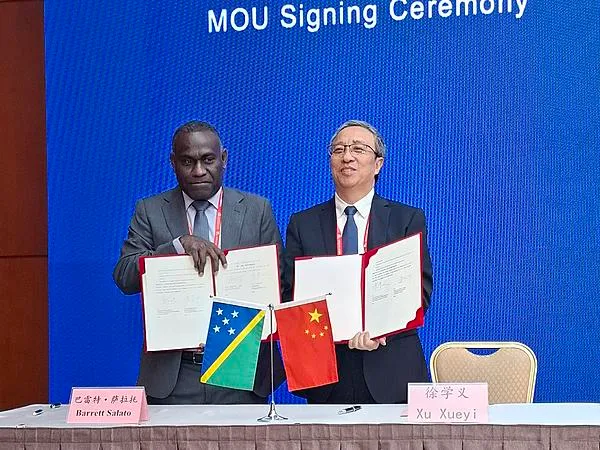
The Solomon Islands Ministry of Mines, Energy and Rural Electrification has formalised a new chapter in scientific cooperation with the signing of a Memorandum of Understanding (MoU) with the China Geological Survey (CGS).

The agreement was signed on 23 October 2025 in Tianjin, China by Solomon Islands Ambassador to China Barret Salato, on behalf of the Solomon Islands Government, and Xu Xueyi, Vice President of the China Geological Survey. The signing took place on the sidelines of the China Mining Conference, which ran from 23 to 25 October.

According to the Solomon Islands Ministry of Mines, the MoU provides a framework for strengthening collaboration in geoscientific research, data exchange, and capacity building. It will also support the Solomon Islands Geological Survey Division in upgrading its Geo-Chemical Laboratory — a crucial facility for analysing mineral samples and supporting the country’s growing resource sector.

The partnership is expected to foster joint research projects, staff training, and technology transfer, helping local geologists gain access to advanced tools and methodologies used in mineral exploration and earth sciences.

Director of the Geological Survey Division, Clinton Roga, welcomed the agreement, saying it represents a major opportunity for the Solomon Islands to improve its scientific and technical capacity. He noted that the collaboration would “enhance our ability to collect, analyse, and interpret geological data,” which in turn supports sustainable resource development and informed decision-making.

The Ministry said the partnership with the CGS aligns with the Solomon Islands Government’s commitment to responsible mineral development and knowledge-sharing across international scientific networks. According to the Ministry’s statement, the collaboration will not only strengthen institutional capacity but also contribute to national development goals by providing the country with more accurate geological information for planning and investment purposes.

The signing ceremony was witnessed by dignitaries from 15 countries and regional representatives, including officials from the Mineral Resources Authority of Papua New Guinea, highlighting the event’s regional significance and growing cooperation between Pacific and Asian geological agencies.

The China Mining Conference, where the MoU was signed, is among the world’s leading forums for discussing mining trends, geological research, and resource governance. The participation of the Solomon Islands delegation underscores the nation’s ongoing efforts to enhance partnerships and technical expertise in the mineral and energy sectors.

October 17, 2025

The exploration vessel Nautilus has begun an ambitious deep-sea mission to study the hidden ecosystems of the Cook Islands’ Marae Moana, deploying a groundbreaking 4K camera system that promises to reveal the ocean depths in unprecedented clarity.

For the first time, scientists are testing the MxD SeaCam, an ultra-high-resolution camera developed by DeepSea Power & Light in collaboration with the Monterey Bay Aquarium Research Institute. Encased in a titanium housing, the camera can capture crystal-clear imagery at depths reaching 5,500 metres, where sunlight fades and water pressure is immense.

“This is more than new tech — it’s about seeing Marae Moana in ways never possible before,” the Nautilus team said. “Every image helps our scientists identify deep-sea corals, sponges, and habitats that make our ocean unique.”

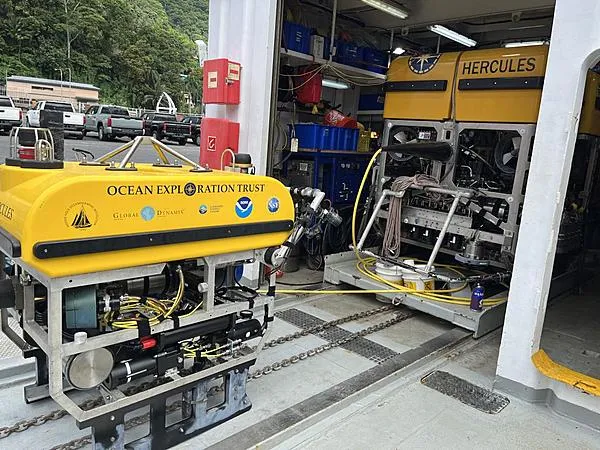
The camera is being tested aboard E/V Nautilus using remotely operated vehicles (ROVs) Hercules, Atalanta, and Little Hercules, as the team explores seamounts and abyssal plains across the Cook Islands’ vast marine territory.

Prime Minister Engages Live with Scientists at Sea

Cook Islands Prime Minister Mark Brown, who is the concurrent minister Responsible for Seabed Minerals, joined the expedition team via a live ship-to-shore interaction on Day 16 of the Deep-Sea Habitats of the Cook Islands Expedition (NA176).

Connecting in real time from Rarotonga, Brown spoke with Dr John Parianos and Tanga Morris Jr of the Seabed Minerals Authority (SBMA) Knowledge Management Division, Michael Parrish of the Ministry of Marine Resources, and Dr Antony Vavia.

Together, they discussed life at sea, recent discoveries within Marae Moana, and the importance of building Cook Islands’ capacity in deep-ocean science and stewardship.

Mapping the Unexplored Depths

The Ocean Exploration Trust (OET), with support from NOAA Ocean Exploration through the Ocean Exploration Cooperative Institute, is leading the 21-day mission — the final Nautilus expedition for 2025. The project was developed in close partnership with the Cook Islands Government and the Cook Islands Seabed Minerals Authority, following a formal request for U.S. scientific collaboration.

Located in the South-Central Pacific, the Cook Islands comprise 15 islands surrounded by nearly 2 million square kilometres of ocean — most of it still unmapped and unexplored. This deep-sea region includes vast abyssal plains, plateaus, and seamounts, forming part of Marae Moana, the Cook Islands’ large-scale marine managed area established to balance environmental protection with economic development.

Cutting-Edge Exploration

Aboard E/V Nautilus, the international science team — including six participants from the Cook Islands — will document seabed and biological diversity across the Manihiki Plateau and surrounding abyssal plains. Surveys will use ROV Little Hercules and ROV Atalanta for high-resolution imaging at depths between 4,500 and 5,500 metres, while ROV Hercules will operate at shallower depths of 1,500 to 3,800 metres to collect environmental data and physical samples.

During the expedition, both Hercules and Little Hercules will be equipped with the MxD SeaCam for field testing. The innovative 4K system integrates a Sony HDC-50 broadcast camera and a borosilicate dome, engineered to perform reliably in extreme subsea conditions.

“Collaborations like this showcase E/V Nautilus as a test platform for new technologies,” the OET said, noting that such projects highlight NOAA’s commitment to advancing ocean exploration through public–private partnerships.

Bringing the Ocean to the World

The entire expedition is being streamed live on NautilusLive.org, allowing audiences worldwide to follow the journey in real time. Using telepresence technology, viewers can engage with the crew, ask questions, and gain behind-the-scenes insights via social media and classroom connections.

Free educational Q&A sessions are also being offered to schools across the globe, providing a unique opportunity to interact directly with the scientists and engineers aboard.

This expedition marks the culmination of E/V Nautilus’s 2025 field season, which comprised six missions aimed at strengthening global understanding of the deep ocean. Data from these voyages will contribute to major international initiatives such as Seabed 2030, Beyond the Blue: Illuminating the Pacific, and the U.S. National Strategy for Ocean Mapping, Exploration, and Characterization.

Through open access to all collected data, NOAA and OET hope to build upon decades of deep-sea research — ensuring that the Cook Islands’ Marae Moana continues to inspire both scientific discovery and sustainable stewardship.
October 13, 2025

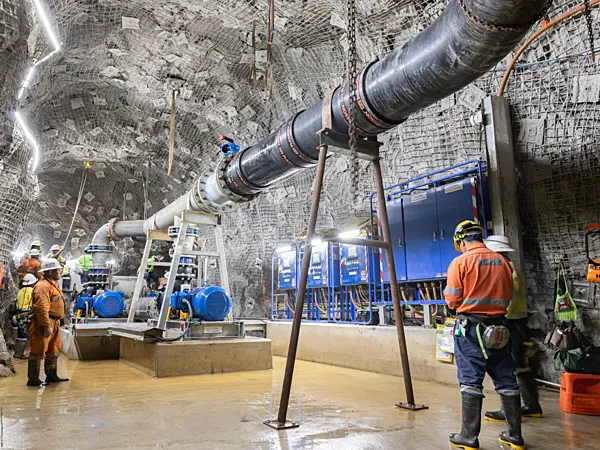
Ok Tedi Mining Limited (Ok Tedi) has successfully completed the construction of a critical underground pump station project that improves mine water management, enhances safety and delivers significant cost savings.

The project, which commenced in August 2024 and was completed in June 2025, was delivered incident-free and under budget, achieving a cost saving of US$1.2 million. The achievement underscores Ok Tedi’s commitment to safety and operational excellence.

With annual rainfall of around 10,000 millimetres experienced at the Mt Fubilan operation, the pump station is designed to manage the large volumes of rainwater discharged into the mine pit through shafts and depressurisation holes. The new system channels this water through 800-millimetre polypipes stretching 3.2 kilometres from the underground tunnel to the surface entrance, where it is safely discharged into the river system.

This engineering solution provides a safer, drier working environment for underground crews, enabling continuous productivity and improved working conditions.

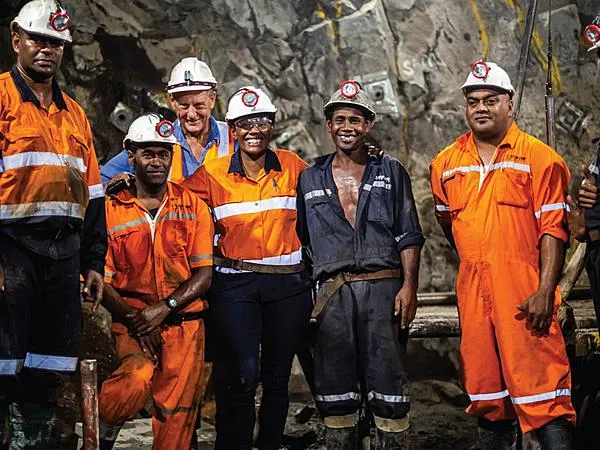
The successful delivery of this complex project was a collaborative effort involving three contractors — Tabubil Engineering (TE), the Major Projects Electrical Team and Milum Services Limited (Milum) — who worked closely with more than 40 Ok Tedi underground mining crew members, including Wokman Teleoks Limited (WTL) embedded contract miners.

The project, led by James Waisime, Manager Mine Support Service and Underground, brought together mining engineers, geotechnical engineers, structural engineers, surveyors, boilermakers, pump fitters, electricians and underground miners from the Mine Operations business unit and Major Projects Engineering Team.

“This was a true team effort,” said Mr Waisime. “The safe and timely completion of this project demonstrates the strength of collaboration across departments and our contractors. I’m proud of the commitment and professionalism shown by everyone involved.”

Managing Director and Chief Executive Officer Kedi Ilimbit congratulated the team for the successful completion of the project.

“As a world-class mine, it is imperative that we adopt global best practices. The underground pump station is among a number of projects undertaken by Ok Tedi to improve operational efficiency within our mine operation to ensure we continue to deliver results for the benefit of our shareholders – the people of Western Province and Papua New Guinea,” said Mr Ilimbit.

October 07, 2025

Lion One Metals Ltd. has reported solid progress at its 100 percent-owned Tuvatu Alkaline Gold Project in Fiji, achieving stronger production results and faster underground development as the mine moves deeper into commercial operations.

The Canadian gold miner said it produced 5,704 tonnes of material grading 10.60 grams per tonne (g/t) gold from its first shrinkage stope, marking a milestone in underground mining at Tuvatu. The company described the initial stope as “a success,” adding that it demonstrated the suitability of shrinkage mining for Tuvatu’s narrow high-grade veins.

Most of the production from the first stope took place between July and September and was blended with ore from other parts of the mine. A second, larger shrinkage stope — expected to yield 11,520 tonnes — is now being developed, with production scheduled to begin in November.

 The second shrinkage stope is expected to be twice as large as the first, the company said.

Lion One also reported a 70 percent increase in underground development rates between January and September this year. Monthly development advanced from 330.8 metres in January to 563.9 metres in September, allowing the company to access new production zones and speed up its capital development plans.

Chief Executive Officer Ian Berzins said the company was “very pleased both with the success of the shrinkage stope and with the increased development rates at Tuvatu.”

“These achievements have been made possible because of the new mining equipment and operational improvements initiated on site over the past several months,” Berzins said. “We’re excited for the next shrinkage stope to come online and for the arrival of still more new mining equipment as we continue to advance operations at Tuvatu.”

Boosting mine efficiency

The first shrinkage stope was located in Zone 2 on the northwest side of Tuvatu, targeting the Ura1 lode, which measures roughly 62 metres long, 24 metres high and 1.5 metres wide. Production began in July and has now been completed.

The second stope, twice the size of the first, lies in Zone 5 on the east side and focuses on the UR2 lode, measuring around 60 metres long and 50 metres tall. Production is expected to finish by mid-January 2026.

Shrinkage stoping, a technique suited to narrow, steeply dipping veins, allows miners to recover more ore with less dilution compared with traditional long-hole mining. Lion One said this method was “an optimal mining approach” for Tuvatu’s geology.

To support faster development, the company introduced productivity improvements and invested in new underground equipment, increasing the rate of large capital development by 126 percent and small development by 59 percent.

Large development rounds rose from 0.77 to 1.74 rounds per day, while smaller ore-zone development increased from 4.43 to 7.03 rounds per day.

Lion One modified its mining cycle by separating drilling and bolting operations to improve jumbo utilisation. It also converted a Caterpillar IT28 utility vehicle into a bolting platform and acquired an RES scissor lift and a third two-boom jumbo to expand its underground fleet.

“With a third jumbo and dedicated bolting equipment, we anticipate development rates will continue to improve,” the company said.

Leadership transition

In the same announcement, Lion One confirmed the retirement of Chief Operating Officer Patrick Hickey, who joined the company in 2021 and played a central role in constructing and commissioning the Tuvatu Gold Mine.

Chairman and President Walter Berukoff said: “On behalf of the Board and the entire Lion One team, I want to thank Patrick for his leadership and dedication during this critical period in the Company’s growth. Patrick’s contributions have laid the foundation for Tuvatu’s continued success, and we wish him all the best in his retirement.”

Hickey’s responsibilities will now be taken over by CEO Ian Berzins.

About Lion One Metals

Lion One Metals Ltd. is an emerging gold producer headquartered in North Vancouver, British Columbia. The company’s Tuvatu project, located on the island of Viti Levu in Fiji, includes an underground mine, pilot processing plant and assay laboratory. The broader Navilawa Caldera area, covered by the company’s exploration licence, hosts several promising mineralised zones.

The Tuvatu Alkaline Gold Project, which entered production in late 2023, remains Lion One’s flagship asset and one of the most significant new gold operations in the South Pacific.

September 22, 2025

Weir, a mining technology company, has redesigned its market-leading heavy-duty submersible slurry pump to deliver reliable performance in the harshest slurry environments.

Weir has made several design improvements to address the operational challenges miners face in submersible pumping applications.

The WARMAN® SHW-XTR heavy-duty submersible slurry pump uses a larger shaft and heavy-duty bearings to keep everything stable, run smoothly, and avoid motor failure from shaft deflection.

Weir has also raised the strainer off the ground and added protective legs to shield it from tools, debris, and other job site hazards.

To prevent fluid from entering the motor, Weir has developed a custom double mechanical seal with a pressure-balanced oil chamber that keeps water out and extends the life of the motor.

In line with Weir’s commitment to reducing the environmental impact of its products, the WARMAN® SHW-XTR pump uses a glycol-based cooling system that does not waste water. Its simplified design and standard materials reduce waste, and the biodegradable oil in the seal helps protect the environment in case of a leak.

Ian Ross, Weir Global Product Manager, Dewatering Solutions, said: "We’re fortunate to be redesigning this pump from a position of strength. The legacy WARMAN® SHW pump has been a mainstay in demanding applications in mining operations all over the world. Its hydraulics are trusted throughout the industry, which is why we’ve preserved these design elements and focused on making improvements elsewhere."

"We wanted to make the pump easier to maintain, which is why the WARMAN® SHW-XTR pump has fewer components and a smarter design. This will ensure it is easier to maintain and will also reduce the need for a large parts inventory," Ross said.

"Two of the key challenges across the mining industry today are longer lead times and higher costs, so it was important that these factors informed the decision we made. As a result, the WARMAN® SHW-XTR pump is a standardised product, meaning faster delivery and better availability of spare parts," he added.

Founded in 1871, The Weir Group PLC is one of the world’s leading engineering businesses, with a purpose to make its mining and infrastructure customers’ operations more sustainable and efficient. Weir’s highly engineered technology enables critical resources to be produced using less energy, water, and waste while reducing customers’ total cost of ownership.

Weir is ideally positioned to benefit from structural trends that support long-term demand for its technology, including the need for more essential metals to support economic development and carbon transition. The Group has approximately 12,000 employees operating in over 50 countries, with a presence in every major mining region of the world. Find out more at www.global.weir.
August 26, 2025

The Cook Islands government is considering extending its deep sea mining exploration licences as the nation approaches the end of its five-year exploration phase.

The Cook Islands is three-and-a-half years into the programme, which allows companies to gather data to assess the viability of extracting seabed minerals. Mining, referred to as “harvesting” by the Cook Islands Seabed Minerals Authority (SBMA), can only proceed if operators demonstrate to the government that it can be carried out without causing serious environmental harm.

Edward Herman, SBMA partnerships and cooperation director, in a recent article by RNZ, confirmed that an extension is under review.

“There is a likelihood of [the exploration licence] being extended because if we cannot get the data within the next year and a half it’s very likely that we’ll need to extend it,” Herman told the news service.

He acknowledged the difficulties faced by operators and regulators alike. “Sometimes licence holders can perform a lot of work within a year and a half but at the moment it’s tough. It’s very challenging, not only for our licence holders, but for us as an agency, as a regulator.”

Herman added that more baseline data is required before the government can make “an ethical, informed, science-based decision” on whether mining should proceed.

In the same article, Hans Smit, chief executive of Moana Minerals, one of the leading exploration companies, said an extension was “definitely” needed.

“If you just look at the time it takes for the Cook Islands to assess and evaluate our environmental permit application and our mining licence application, there’s not enough time,” he said. “If I were to submit tomorrow, I wouldn’t have an answer before my exploration licence expired.”

Smit projected that if approvals are granted, mining could start as early as 2028 or 2029. He said Moana Minerals had already mapped 15 per cent of the country’s exclusive economic zone and collected more than 100 hours of seabed nodule samples.

The company has finalised its mining system design and identified a vessel for conversion into a mining ship, while also developing a laboratory-proven metal extraction process.

“It’s not a question of if we go mining, it’s a question of when we go mining,” Smit said, adding that initial data indicated “reasonably dispersed” marine life across exploration areas.

But environmental groups remain cautious. Te Ipukarea Society president June Hosking said she feared the emphasis was on commercial viability rather than ecological protection.

“I personally think if they do honest exploration they would discover it’s not a good idea to mine—that it’s going to do too much damage to the environment and the only way to prove that is to do the exploration,” she said.

Hosking added: “It would be nice if people just left the whole thing alone, but humans aren’t like that.”

The debate over whether to extend exploration licences comes as the Cook Islands strengthens its role in global seabed minerals governance.

At the 30th Session of the International Seabed Authority Council in July, Acting Seabed Minerals Commissioner Beverly Stacey-Ataera reaffirmed the nation’s commitment to a regulatory regime “grounded in scientific evidence, fairness, and transparency.”

August 20, 2025

Great Pacific Gold Corp. has uncovered signs of a large-scale epithermal system and possible porphyry deposit at its Wild Dog project in Papua New Guinea, raising hopes of a significant discovery in one of the world’s most mineral-rich regions.

The Canadian miner said a diamond drilling programme is under way at the site on the island of New Britain. Early results have already shown high-grade mineralisation, including one hole that cut seven metres grading 11.2 grams per tonne gold equivalent  (5.5 g/t Au, 68.8 g/t Ag, 3.1% Cu) from a depth of 65 metres.

Ahead of drilling, the company conducted an airborne MobileMT geophysical survey, which revealed the scale of the underground system. The data suggests the epithermal vein structure extends more than 15 kilometres along strike and at least 1,000 metres deep.

Greg McCunn, chief executive of Great Pacific Gold, described the findings as a major step forward. “The Wild Dog structure is massive…Our current drilling programme is only testing about 10 percent of the overall system,” he said.

What excites the team most is the nearby Magiabe prospect, about 1.5 kilometres west of the Wild Dog veins. Geophysical models point to a potential porphyry copper-gold system nearly one kilometre wide and extending over two kilometres in depth, a scale likened to Papua New Guinea’s world-class Wafi-Golpu deposit.

Surface sampling has added weight to the porphyry model. One rock specimen from Magiabe returned 2.5 grams per tonne gold, 124 parts per million copper and 9.1 grams per tonne silver. Another carried copper grades of 0.25 percent along with gold, silver and molybdenum values.

McCunn said the company plans to keep drilling through the rest of 2025 to firm up the grade and scale of the Wild Dog system, while pushing Magiabe towards drill-ready status in 2026.

Magiabe adds a new dimension to the project as it complements the high-grade near-surface gold with the possibility of a large porphyry system beneath.

The Wild Dog area lies within Papua New Guinea’s “Ring of Fire,” a geologic arc that has produced some of the world’s largest copper and gold deposits. Historic explorers had suspected a porphyry system at Magiabe but drilling was never done. The latest survey, however, has “unmasked” the deeper anomaly, giving the company what it calls a high-priority target.

For now, the executive said that the focus remains on the drill rigs steadily working through the rugged terrain of East New Britain.

With more assays expected in the coming months, the company hopes to prove that Wild Dog is not only high-grade but also vast in scale — a combination that could transform the project into one of PNG’s next big mines.

August 15, 2025

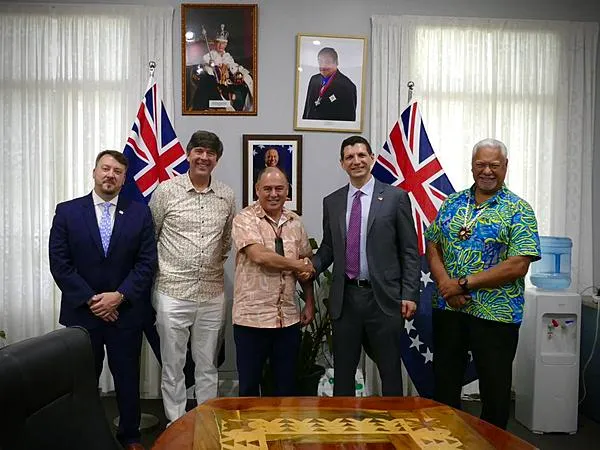
The Cook Islands and the United States have agreed to strengthen cooperation on scientific research and the responsible development of seabed mineral resources, marking a significant milestone in their partnership as the Pacific nation celebrated its 60th anniversary of self-government on 4 August.

The joint announcement reflects the shared recognition of the critical role seabed minerals play in developing and powering modern technologies. The Cook Islands, a regional leader in exploring its vast Exclusive Economic Zone (EEZ), views these resources as key to long-term economic growth and prosperity for its people.

The United States has begun discussions with the Cook Islands Government to support research that will guide exploration and ensure responsible development within the nation’s EEZ. US-linked companies are already at the forefront of deep seabed mineral research and exploration in the islands, underscoring the countries’ strong shared interests in the sector.

“This collaboration marks a new chapter in our relationship since we established diplomatic ties in 2023,” the two governments said in a joint statement. “We affirm our commitment to scientific advancement, mutual prosperity, economic self-reliance and environmental stewardship as we partner to map and research the Cook Islands’ seabed mineral resources.”

With its expansive maritime resources, the Cook Islands brings the natural endowment, while the United States contributes advanced oceanic research capabilities and technology. Together, the countries aim to ensure that exploration and development are underpinned by “gold standard science” and global best practices.

Both governments pledged to advance responsible seabed minerals development, deepen global understanding of the deep ocean and set a high benchmark for transparent management of seabed resources.

August 15, 2025

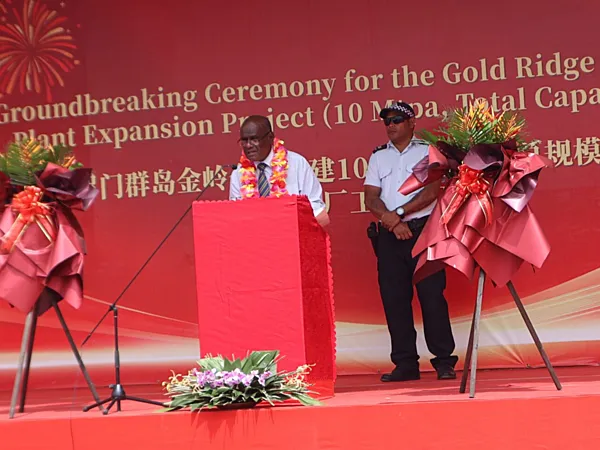
The Solomon Islands has taken a major step toward transforming its economy with the launch of the Goldridge Mine Processing Plant Expansion Project, a multi-billion-dollar investment expected to boost national revenue, create thousands of jobs and deliver lasting benefits for landowners and communities.

Speaking at the groundbreaking ceremony in Central Guadalcanal today, Prime Minister Jeremiah Manele called the expansion “the beginning of a new chapter for the Goldridge mining project,” hailing it as a driver of economic diversification and growth.

The SBD $6 billion project will triple the mine’s processing capacity to 13.5 million tonnes a year. Once operational, it is expected to generate around SBD $7.5 billion annually, including approximately SBD $2 billion in government revenue, SBD $400 million in royalties and dividends for landowners, and more than 1,200 direct jobs with an additional 3,500 indirect positions.

“This project aligns with our economic transformation agenda and will diversify our economy while creating thousands of opportunities for Solomon Islanders,” Manele said.

The prime minister reaffirmed his government’s pledge to modernise the mining sector through the Mineral Resources Bill, currently before Parliament. “The new bill will modernise the regulatory framework for mining, strengthen governance, ensure transparency, and improve revenue-sharing mechanisms for landowners,” he said.

Manele also underscored the need for responsible development. “With opportunity comes responsibility. Goldridge is a national asset, and it must be developed in a way that safeguards our environment, respects our people, and delivers lasting benefits,” he said.

He urged strong partnerships and compliance among the company, landowners and all levels of government. “The growth and success of the project must translate into tangible benefits for all – capacity building, economic empowerment, and shared prosperity. The growth of the mine must also be reflected in the growth of its key stakeholders – landowners, the provincial government, and the national government,” he said.

“With opportunity comes responsibility,” the Prime Minister added. “Together, we are laying the foundation for a transformative legacy at Goldridge Mine – one that will benefit GRML, the landowners, and the people of Solomon Islands.”

Manele was guest of honour at the groundbreaking ceremony, joined by Cabinet members of the Government for National Unity and Transformation, including Deputy Prime Minister Frederick Kologeto.

August 15, 2025

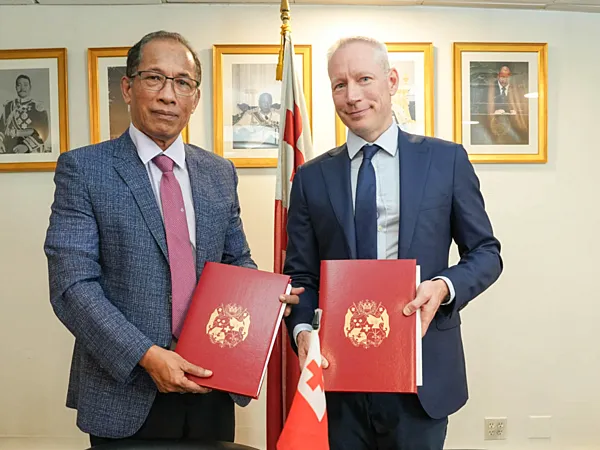
The Kingdom of Tonga and The Metals Company’s (TMC) subsidiary Tonga Offshore Mining Ltd. (TOML) have signed a revised sponsorship agreement aimed at strengthening Tonga’s stake in the future development of seafloor mineral resources.

The new pact updates the terms of their 2021 agreement ensuring that Tongans will continue to receive financial benefits, training, capacity-building and community programmes. It also provides for “continuity benefits” once commercial production begins whether by TOML or another TMC subsidiary.

Tonga’s Minister for Lands, Survey, Planning and Natural Resources Dr. ‘Uhila Moe Langi Fasi said the agreement signalled TOML’s willingness to deepen its commitments.

“It marks an important step toward ensuring that seabed minerals activities contribute meaningfully to Tonga’s long-term development goals — with transparency, fairness and environmental care at the core,” he said.

Tonga was among the first developing states to apply for a marine mineral exploration contract, taking a prominent role in advancing the rights of small island nations in the deep-sea minerals industry.

However, both Tonga and TMC have expressed frustration at the International Seabed Authority’s (ISA) failure to adopt exploitation regulations — known as the Mining Code — despite being required to do so by 2023 and pledging to complete it by 2025. The delays, they say, have hindered TOML’s ability to proceed with its planned commercial application in its contract area.

Gerard Barron, TMC chairman and chief executive, praised Tonga’s “instrumental leadership” in advocating for the responsible development of deep-sea minerals.

“We are proud to renew our partnership at this exciting moment as Tonga helps re-shape the way the world produces the key resources underpinning economic and global development,” he said. “Together we are determined to ensure that Tonga receives lasting transparent benefits for all Tongans.”

Tonga also acknowledged the regulatory certainty provided by the existing US seabed mining code under the Deep Seabed Hard Mineral Resources Act (DSHMRA) and a recent executive order by US President Trump which offers a stable framework for industry operations.

TMC, listed on Nasdaq, is developing what it describes as the world’s largest undeveloped resource of critical metals essential for energy, defence, manufacturing and infrastructure.

Through its subsidiaries it holds exploration rights in the Clarion Clipperton Zone of the Pacific Ocean sponsored by Tonga and the Republic of Nauru.

August 01, 2025

A new global survey of mining executives has delivered a sobering outlook for Oceania, with several Pacific jurisdictions pegged at the lower end of global investment rankings despite their untapped mineral wealth.

The Fraser Institute’s 2024 Annual Survey of Mining Companies, which assessed 82 jurisdictions based on geological potential and government policy, ranked Fiji, New Zealand, Papua New Guinea (PNG) and the Solomon Islands in the lower half of its Investment Attractiveness Index.

The survey was conducted between August and December 2024, drawing 350 responses from industry leaders whose companies reported a combined US$6 billion in exploration spending that year. The rankings reflect both the quality of a jurisdiction’s mineral endowment and the effectiveness of its regulatory and policy environment.

Fiji Emerges, Solomon Islands Lags

Fiji was the best-performing country in Oceania, ranking 31st, followed by New Zealand at 43rd. Papua New Guinea placed 57th while the Solomon Islands came in last at 84th, due to tied scores despite only 82 jurisdictions being listed.

The Solomon Islands again ranked among the least attractive places for exploration, weighed down by concerns over infrastructure, legal enforcement, and lack of skilled labour. It was also one of the lowest scorers in the policy index.

The country’s poor showing echoes similar results in 2023 and highlights the continuing challenge of attracting foreign capital despite abundant nickel and gold reserves.

PNG: A mixed picture

Despite being home to large-scale operations like Ok Tedi, Porgera and Lihir, PNG continues to struggle with inconsistent regulatory frameworks, land access issues, and concerns about political and social stability.

In the Policy Perception Index—a key component of the survey that rates jurisdictions on transparency, taxation, infrastructure and land rights—PNG ranked below many African and Latin American countries. Respondents cited regulatory uncertainty and permitting delays as major deterrents to investment.

The PPI, is a composite index that measures the overall policy attractiveness of the 82 jurisdictions in the survey. The index is composed of survey responses to policy factors that affect investment decisions.

The policy factors we examined include uncertainty concerning the administration of current regulations, environmental regulations, regulatory duplication, the legal system and taxation regime, uncertainty concerning protected areas and disputed land claims, infrastructure, socioeconomic and community development conditions, trade barriers, political stability, labor regulations, quality of the geological database, security, and labor and skills availability.

Still, the report acknowledged that PNG holds significant potential. With improved policy reforms, industry players believe the country could regain competitiveness.

The bigger picture

The Investment Attractiveness Index combines a jurisdiction’s geological appeal with its policy environment. According to the Fraser Institute, about 40 per cent of exploration investment decisions are influenced by public policy rather than geology alone.

This year’s global top three were Finland, Nevada and Alaska; while Ethiopia, Suriname and Niger occupied the bottom.

In contrast to Oceania’s mixed showing, North America and Europe dominated the top 10, driven by predictable regulatory systems, skilled workforces and favourable tax regimes.

A call for reform

While geologic and economic considerations are important factors in mineral exploration, a region’s policy climate is also an important investment consideration.

A significant share of mining professionals view policy factors across Oceana as especially challenging, reflecting concerns over regulatory uncertainties, infrastructure deficits, and governance—including land‑use and socioeconomic agreements—which collectively deter investment.

For Oceania, where many economies rely heavily on extractive industries, these rankings reinforce the need to address longstanding policy and governance gaps.

July 24, 2025

Canadian miner Lion One Metals Ltd. posted a strong quarter with record performance and C$16.3 million (US$11.9 million) in revenue from its Tuvatu Gold Mine in Fiji, supported by higher gold prices, increased recoveries and strong mill output.

In a quarterly update, the Vancouver-based firm said it sold 3,577 ounces of gold and 1,233 ounces of silver during the three months to June 30. Gold revenue jumped 24 percent from the previous quarter and 77 percent from the same period last year.

Operational records set

Lion One achieved record mill throughput of 33,726 tonnes, with 96 percent utilisation—its highest to date. Gold recovery rose to 84.1 percent in June, up from the previous 12-month average of 80.3 percent. The improvement was credited to mill upgrades and better carbon management.

The average gold head grade was 3.6 grams per tonne, slightly below expectations due to delays in mine development earlier this year. Ventilation work, which had held up progress in deeper zones, was completed in April.

 “With the Tuvatu gold mine still in the pilot plant stage of development, we have made great progress this quarter in laying the foundations for future success at Tuvatu,” Lion One CEO Ian Berzins said in a statement.  

Underground progress ramps up

Underground development hit a new high of 1,503 metres during the quarter. A record 545 metres was completed in May alone, thanks to the arrival of new mining equipment and ventilation upgrades. This compares to an average of 340 metres per month over the previous year.

More mining gear is expected to arrive in July and August, which the company believes will further boost underground activity.

The company’s first shrinkage stope is now fully developed, with production scheduled through the current quarter. Drilling in this zone returned high-grade gold intercepts, including 489.5 g/t over 0.4 metres.

Stronger outlook

Construction of a flotation circuit is underway and gold recovery is forecast to exceed 90 percent by the end of 2025. Tuvatu remains in the pilot production stage, but Lion One expects performance to continue improving.

“We have increased gold recoveries on the mill side and we have increased the rate of underground development on the mine side, both of which we expect to continue to improve moving forward. With production from the shrink stope coming online in July we anticipate this upcoming quarter to achieve even stronger results,” Berzins said.

Lion One Metals is a Canadian gold miner operating the 100% owned Tuvatu Alkaline Gold Project in Fiji. The project includes a high-grade underground mine, a pilot processing plant, an assay lab and a large exploration licence over the Navilawa Caldera.

July 24, 2025

Port Moresby – Australian gold miner St Barbara is reporting encouraging results from its recent drilling efforts at its Simberi operations in Papua New Guinea, where the company has found more gold mineralization and sulphide-rich rock directly beneath existing open-pit mines.

The new discoveries come from a large-scale drilling programme aimed at extending the life of Simberi by identifying deeper sources of gold beneath areas already being mined.

One of the most promising results came from the Samat deposit, where gold was found just below the current open-pit reserve. While the area had been only lightly drilled in the past, new holes revealed high-grade gold in sulphide rock—a denser material that requires different processing but can contain significant value.

Over the past year, St Barbara drilled more than 10,000 metres across 61 holes, targeting both known gold zones and unexplored areas. The latest campaign also included the first-ever diamond drilling at Samat, with results showing strong potential for expanding future mining below the existing pits.

Another key site, the Sorowar–Pigiput Trend, also delivered solid gold intercepts, including high-grade samples that reaffirm the area’s long-term value.

“The identification of additional sulphide mineralisation extending or located immediately below the current sulphide open pit Ore Reserve at Samat and Sorowar – Pigiput Trend is very positive news,” St Barbara Managing Director and CEO Andrew Strelein said in a statement.

Strelein said the company is looking forward to the results of the remaining 10 Samat drill holes to better understand the potential to define additional high-grade sulphide resources where historic diamond drilling is relatively sparse.

Most of the remaining assay results are expected during the September quarter.

“During the September quarter we anticipate the return of assay results for most of the remaining 20 resource definition, exploration and sterilisation holes drilled to date at Samat, Pigicow-Botlu, Pigibo North, PigiboBotlu and Pigiput Northeast Trend.”

St Barbara’s Simberi mine is located in New Ireland Province and forms part of the company’s broader presence in the Pacific, where it continues to explore and develop resources responsibly in partnership with local communities.

In a related development, St Barbara is edging closer to securing the future of its operations in Simberi, as its application for the early renewal of Mining Lease 136 (ML 136) moves into its final stages of review.

The company confirmed that the Mining Advisory Committee (MAC) convened a special meeting on Sunday, 6 July 2025, to assess the early renewal application, after an earlier meeting was rescheduled from late June. Following that session, the MAC sent a formal letter requesting clarifications on several items. St Barbara responded to the queries on 15 July—one day after receiving the letter.

The recommendation from the MAC is the final procedural step before a decision is made by Papua New Guinea’s Minister for Mining Rainbo Paita. However, the company noted that the Minister is travelling overseas until the end of July, with formal approval expected at the earliest in August 2025.

If approved, the renewed lease would extend the company’s tenure at Simberi through to 2038, aligning with the mine’s projected life under the Simberi Expansion Project, which is based on Proven and Probable Ore Reserves.

“The renewal of the Simberi Mining Lease is a key step towards unlocking the Sulphide Ore Reserves at Simberi and expanding gold production to over 200,000 ounces per annum,” In a Strelein said.

St Barbara has operated the Simberi mine since 2008. The lease renewal, once approved, is expected to pave the way for deeper sulphide mining and future investment in processing infrastructure to support increased output.

July 11, 2025

PORT MORESBY — Ok Tedi Mining Limited (Ok Tedi) is pleased to announce it has received clearance from Papua New Guinea’s Independent Consumer and Competition Commission (ICCC) for its purchase of the Misima Gold Project from Kingston Resources Limited (Kingston). This approval completes all conditions precedent required to finalise the transaction.

On 20 May 2025, Ok Tedi announced it would acquire the Misima Gold Project from Kingston for A$60 million (USD38 million), with additional contingent payments of up to A$35 million (USD22 million). With the ICCC's approval, the Misima Gold and Silver Project officially became an Ok Tedi entity as of 10 July 2025.

This acquisition marks a significant milestone under the company’s Growth 2050 Strategy, reaffirming Ok Tedi’s commitment to sustainable, nationally driven resource development.

“We are proud to welcome the Misima team into the Ok Tedi family,” said Ok Tedi Managing Director and CEO Kedi Ilimbit. “This acquisition signals a bold new chapter for Ok Tedi as we expand our footprint and future-proof our business for generations to come.”

The Misima Mine, which currently employs 31 people, will continue operating under existing employment terms during a structured integration phase.

“Ok Tedi is committed to ensuring a smooth transition and is working closely with employees, landowners, and local leaders to ensure the continued success of the project,” Mr Ilimbit added.
“This is more than a corporate transaction — it’s about PNG ownership, community partnership, and responsible growth.”

The Misima Gold and Silver Project is located 625 kilometres east of Port Moresby in Milne Bay Province and has a current mineral resource estimate of 3.8 million ounces of gold and 22.1 million ounces of silver.

Ok Tedi Mining Limited (OTML) is a majority state-owned enterprise that operates an open-pit copper, gold and silver mine located in the Star Mountains of Western Province, Papua New Guinea. The company exports copper concentrate to smelters and refineries in Japan, the Philippines, Indonesia, South Korea, India and Germany.

OTML has operated in the region for over 40 years, making significant contributions to development in Western Province through direct and indirect employment, royalties, compensation payments, and local business opportunities.

Its registered office and senior operational management are based in Tabubil, Western Province, with a representative office in Port Moresby and a marketing and logistics facility in Brisbane, Australia.