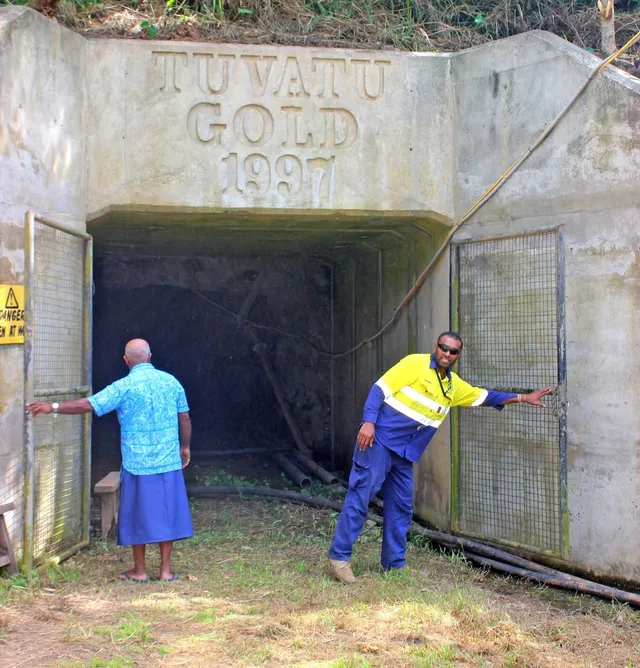
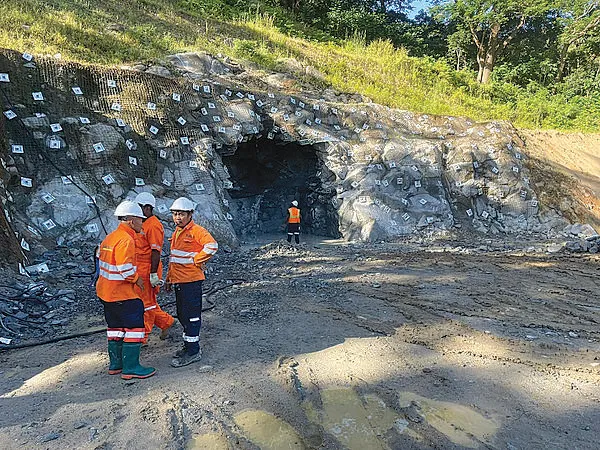
Canadian gold producer Lion One Metals Ltd. reported a record quarterly gold delivery of 4,678 ounces from its Tuvatu Gold Mine in Fiji, supported by higher production and improved mill throughput in the three months to September.
The company said on Tuesday that it recovered 3,796oz of gold from mill operations during the quarter ended September 30, up 15 per cent from 3,291oz in the previous quarter and 39 per cent from the quarter ended March 31.
A further 882oz came from the drawdown of gold held in the processing circuit and shipments of gold-bearing carbon for off-site processing, bringing total quarterly gold production to 4,678oz.
The average head grade was 4.3 grams of gold per tonne, while gold recovery reached 83.8 per cent. The mill processed 32,588 tonnes of mineralised material, with utilisation averaging 95.1 per cent.
Lion One said mill utilisation reached 97.4 per cent in August and 98.3 per cent in September, marking consecutive monthly records.
The increased throughput helped offset a slight decline in recovery from the previous quarter’s 84.9 per cent. Average head grade remained unchanged at 4.3 grams per tonne.
Underground development and safety
The company completed 1,539 metres of underground mine development during the quarter, including 359m of capital development and a record 1,181m of operating development.
Although development was down from 1,660m in the previous quarter, it remained above the long-term quarterly average of 1,445m recorded between January 2025 and September 2026.
Lion One said equipment availability affected capital development, with underground drilling jumbos available for 59 per cent of the quarter, partly because of unplanned downtime in September.
The company recorded one lost-time incident and two medical-aid incidents during the quarter. Its total recordable incident frequency rate improved to 1.83 incidents per 200,000 hours worked, compared with 4.37 in the previous quarter and 6.55 in the first quarter.
New underground drill begins operation
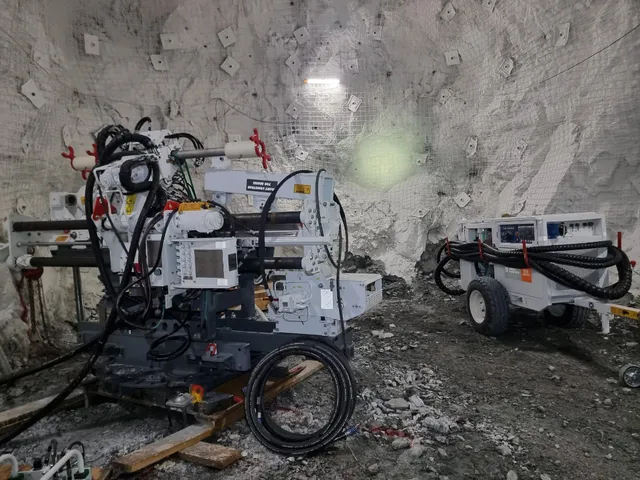
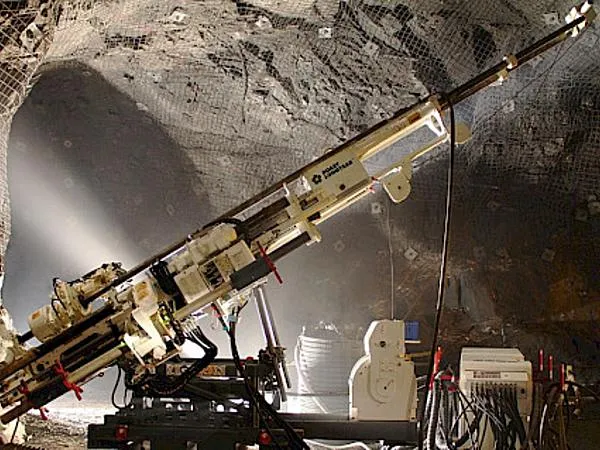
Lion One also confirmed that its new Boart Longyear LM90 underground core drill had arrived at Tuvatu ahead of schedule and entered operation following operator training.
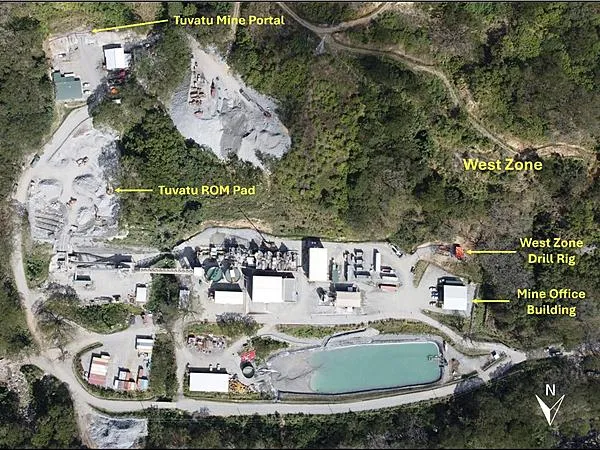
The drill will target the Zone 500 and West Zone from underground to support resource expansion and upgrades.
The company said the equipment would allow shorter, faster and lower-cost drill holes, with improved intersection angles in both areas.
The addition brings Lion One’s active drilling fleet to four underground drills and two surface drills.
Lion One, headquartered in North Vancouver, British Columbia, began operations at its wholly owned Tuvatu project in Fiji in late 2023. The project includes the underground gold mine, a pilot plant and an assay laboratory, while the company holds an exploration licence covering the wider Navilawa Caldera.
The latest results are preliminary operating figures. The company said its technical information had been reviewed and approved by William J. Witte, its principal adviser and qualified person under Canadian mineral project disclosure rules.
Fiji’s Cabinet has endorsed proposed reforms to the country’s mining laws, paving the way for new legislation aimed at strengthening landowner rights, improving mine safety and tightening regulation of mineral exploration, mining and quarrying.
The proposed Mineral Exploration and Mining Bill 2026 and Mine Safety Management Bill 2026 follow a review of the Mining Act 1965 and Quarries Act 1939, jointly conducted by the Ministry of Lands and Mineral Resources and the Fiji Law Reform Commission.
The review involved 62 stakeholder consultations nationwide, including landowners, mining operators, workers, affected communities and other stakeholders.
The review sought to address gaps in legislation that has governed Fiji’s mining and quarrying industries for decades. It also considered regulatory practices in other jurisdictions, including Australia and Papua New Guinea, to inform proposed changes to transparency, accountability and resource management.
The proposed legislation aims to improve benefit-sharing and compensation arrangements, strengthen landowner rights and promote greater transparency and accountability in the mining sector.
Land access and the distribution of mining benefits have been key issues in the reform process. The government has highlighted the importance of ensuring that mining communities benefit not only through royalties but also through employment, local procurement and greater participation in resource development.
The reforms also seek to improve workplace safety, environmental protection and dispute resolution, while introducing digital management systems to strengthen regulatory oversight of mining activities.
The government has also pursued more data-driven monitoring of mining operations. Filimoni Vosarogo, minister for lands and mineral resources, previously said a pilot system using sensors to monitor a tailings storage facility was being tested at the Tuvatu mine. The system is intended to help mine managers and government inspectors identify potential problems earlier.
Fiji’s mining sector produces gold and iron sand, among other mineral products, making the regulatory review relevant to both existing operators and prospective investors.
Before the proposed bills are tabled in Parliament, a special consultation will be held with the Bose Levu Vakaturaga, or Great Council of Chiefs, through the Ministry of iTaukei Affairs.
The proposed legislation would update the legal framework governing Fiji’s mining and quarrying industries, with implications for landowners, mining companies, workers and communities affected by resource development.
Augustus Minerals Ltd is preparing exploration programmes for two gold projects in Papua New Guinea, having compiled historical geological data and stepped up engagement with landowners while awaiting decisions on its exploration licenceapplications.
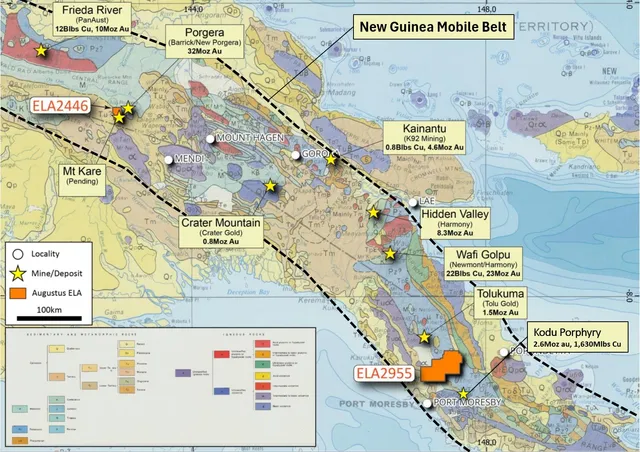
The Australian Securities Exchange-listed company said in a 15 October 2026 announcement that its subsidiary, ACM Contract Mining (PNG) Ltd, had completed a technical information memorandum for the Mt Kare gold and silver project in EngaProvince. It is also reviewing historical exploration records for the Vanapa River project in Central Province and considering an airborne magnetic survey.
Both projects remain at the application stage. The company has no guarantee of securing either licence, and its Mt Kare application remains contested.
Augustus holds the second-in-time exploration licence application for Mt Kare, about 15 kilometres from the Porgera gold mine. Private company Tribune Mt Kare Gold Ltd is first in line after the PNG Mineral Resources Authority removed the original first applicant, Global Mining Group Ltd, from the assessment list following a Supreme Court order on 30 May 2025.
The company said the licensing process could take time but maintained that its preparatory work would allow it to move quickly if approval were granted.
Mt Kare data review completed
ACM PNG purchased all available open-file historical exploration data for Mt Kare from the MRA in 2026 and commissioned Geosyntec Consultants Pty Ltd, based in Perth, Western Australia, to compile the information into a technical memorandum.
The review covers geological information and exploration activities dating back to the deposit's discovery in 1987 by Conzinc Riotinto of Australia. It examines the area's geology, geochemistry, mineralisation styles and historical mineral resource estimates.
The deposit has undergone substantial previous exploration. Drilling included an initial 2,000-metre diamond drilling programme in 2011, followed by further work that produced 58 diamond drill holes totalling 7,790 metres. Results released in 2013 validated historical high-grade intersections and identified gold and silver mineralisation, according to Augustus.
The company plans to use the compiled information to prepare for further exploration, subject to the grant of the licence.
Its proposed programme includes underground access and development, diamond drilling and feasibility studies. The company has also outlined the possibility of collecting bulk samples and assessing underground mining options, alongside further consideration of open-pit scenarios.
Augustus Executive Chairman Brian Rodan said Mt Kare shared geological characteristics with Porgera, including roscoelite mineralisation and high-grade gold zones.
However, the company cautioned that its position in the application process does not give it a current or contingent right to undertake exploration or development at Mt Kare. The application has not been granted, and there is no assurance that it will result in a licence.
Vanapa River project covers 1,900 square kilometres
At Vanapa River, ACM PNG holds exploration licence application ELA2955 over approximately 1,900 square kilometres in the Kira Koiari District of Central Province, about 35 kilometres from Port Moresby.
The project lies approximately 40 kilometres south-east along strike from the Tolukumagold mine, which Augustus identifies as a 1.5-million-ounce deposit.
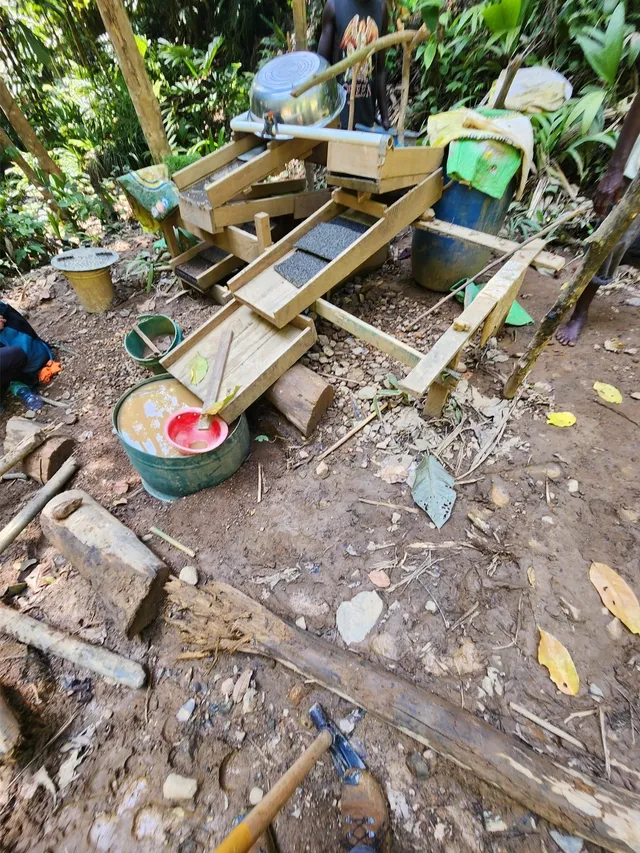
During a three-day site visit in October 2025, company personnel and local landowners inspected artisanal alluvial gold workings along the Vanapa River and its tributaries. The visit did not identify the source of the alluvial gold, the company said.
ACM PNG subsequently acquired available historical exploration data held by the MRA in Port Moresby and is reviewing the records. It is also seeking proposals for an airborne magnetic survey.
The proposed survey would help map geological structures, rock types and alteration beneath the area's thick tropical forest. These features could guide the identification of targets for further exploration, although the company has yet to report results from such a survey.
Augustus said the Vanapa River application lies within the New Guinea Metallogenic Belt, a mineralised corridor extending approximately 2,300 kilometres through Papua New Guinea. The belt hosts major gold and copper deposits, including Porgera, Lihir, Hidden Valley, Kainantu and Wafi-Golpu.
The company has also conducted introductory meetings with communities in the application area as it seeks to build relationships with customary landowners.
Landowner engagement and regional prospects
ACM PNG has held meetings with landowner representatives and officials from Enga, Hela and Central provinces during 2025 and 2026, according to the announcement.
The company said these discussions were intended to maintain communication with groups whose support and engagement are important to the progression of exploration licence applications in Papua New Guinea.
In September 2026, ACM PNG provided equipment, materials, food and other supplies to customary landowners seeking to re-establish a settlement at Mt Kare. The assistance followed a request from landowners and consultations with clan leaders, Augustus said.
The subsidiary has also registered an expression of interest with the MRA covering prospective areas in the Goroka region of the Highlands. It has held preliminary meetings with local landowner groups and continued engagement with officials and clan representatives.
Augustus said the acquisition of ACM PNG had strengthened its opportunity to pursue Mt Kare and identify other exploration prospects in Papua New Guinea.
The company is also exploring gold, copper and other mineral opportunities in Western Australia. Its Papua New Guinea strategy, however, remains dependent on the outcome of the licence applications and any subsequent exploration results.
Augustus said its work to compile historical data and engage with landowners had positioned it to advance the projects if the necessary approvals were secured. Neither the timing nor the outcome of the applications is certain.
Kalo Gold Corp has reported a high field-screening result from a new gold occurrence at its Wainikoro exploration area in Fiji, as the Canadian-listed explorer advances preparations for drilling planned for January 2027.
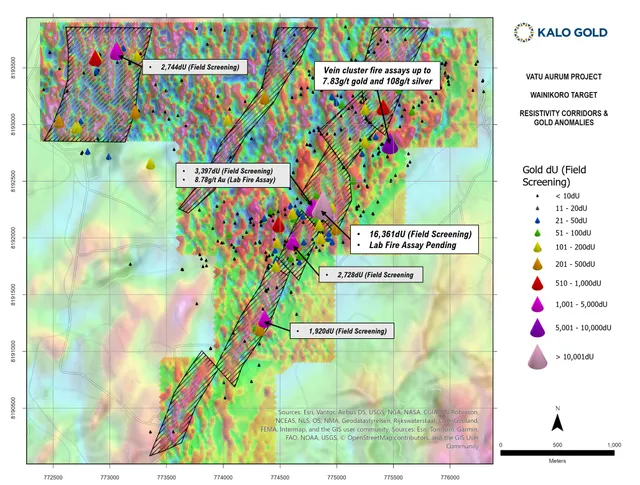
The company said a rock sample from Kope Road North returned 16,361 detectORE units, equivalent to an estimated 16.36 grammes of gold per tonne for contextual reference. Follow-up sampling also produced three additional elevated readings, expanding the area of interest at the company's 100%-owned Vatu Aurum Project on Vanua Levu.
Kalo stressed that the detectORE readings are semi-quantitative field-screening results, not certified laboratory assays. The estimated grades cannot be relied upon as definitive measurements of gold content.
The company plans to submit the highest-reading sample to ALS Ltd in Australia for fire-assay analysis and multi-element testing.
Follow-up samples return additional gold indications
The highest result came from sample KRN-LR26-G-035D, described as quartz-rich, silicified and brecciated tuff. The original outcrop had been disturbed by road construction, so the company collected samples from large pieces of rock uncovered at the site.
A subsequent sampling traverse returned readings of 3,956 units, equivalent to an estimated 3.96 grammes per tonne, from silica-rich breccia; 2,110 units, or about 2.11 grammes per tonne, from silicified brecciated tuff; and 863 units, or about 0.86 grammes per tonne, from silicified quartz-vein material.
Kalo said the results provided additional targets for geological mapping, geophysical surveys and trenching. However, the samples were selective rock samples and do not establish the average grade or continuity of mineralisation.
The Kope Road North occurrence is about 900 metres south-west of the New Vein Cluster, where previously reported certified assays returned up to 7.83 grammes of gold per tonne and 108 grammes of silver per tonne.
Both areas lie along an interpreted induced polarisation (IP) resistivity corridor. Kalo cautioned that their proximity does not demonstrate continuity of mineralisation.
Surveys and road works advance ahead of drilling
Kalo has completed a gradient-array IP survey at Wainikoro and is conducting controlled-source audio-frequency magnetotelluric (CSAMT) surveying to investigate the geometry and depth of interpreted resistivity corridors.
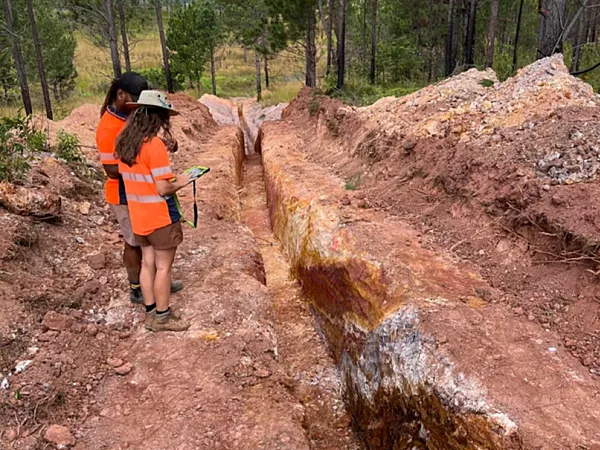
Mechanised trenching at Kope Road North is providing additional geological exposure to help assess the geophysical targets.
The company has also begun road upgrades to prepare for drilling during the wet season. About 1.6 kilometres of road improvements have been marked out, including the installation of three culverts and the placement of aggregate to improve access and safety.
Kalo plans to deploy one drill rig from January 2027 to test priority targets at Wainikoro. The schedule remains subject to factors including weather, ground access, equipment availability and financing.
President and chief executive Terry Tucker said the follow-up sampling had identified multiple gold responses around the original sample and that the company was moving towards systematic drill testing.
The company intends to combine the IP and CSAMT data with trenching, geological and structural mapping, geochemistry, field screening and certified laboratory assays to refine its geological model and prioritise drill targets.
Exploration targets remain unproven
Vancouver-based Kalo Gold is exploring the 367-square-kilometre Vatu Aurum Project, which comprises Special Prospecting Licences 1511 and 1464 on Vanua Levu. Its exploration programme focuses on a north-east-trending corridor of low-sulphidation epithermal gold targets, including Wainikoro and the flagship Aurum Prime area.
The company said its exploration work has identified multiple structurally controlled targets supported by drilling, trenching, soil geochemistry, structural mapping and airborne geophysics.
No mineral resource or mineral reserve has been estimated for the Vatu Aurum Project, and the targets remain conceptual.
Kalo said the results from the pending fire assay, together with ongoing geophysical work and trenching, would help determine the next steps in evaluating the Wainikoro targets.
A Solomon Islands Government technical team has completed a fact-finding mission to Papua New Guinea to examine its approach to mineral resources management, gold refining and downstream processing as Honiara prepares to strengthen its mining sector framework.
The delegation visited Port Moresby from 20 to 26 September, holding discussions with government agencies, financial institutions and private-sector operators on the policy, regulatory and institutional arrangements supporting PNG’s minerals industry.
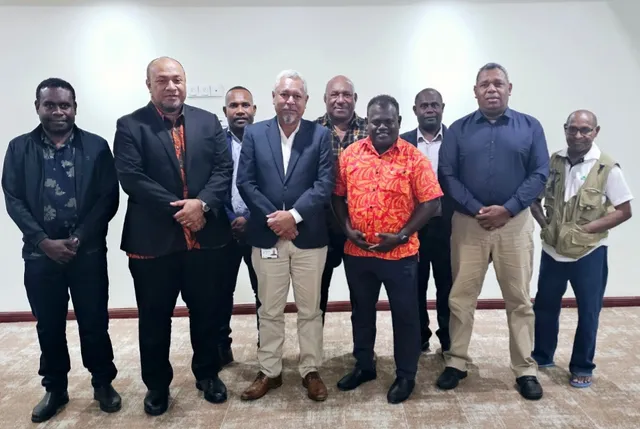
The mission was led by Chris Vehe, permanent secretary for mines, energy and rural electrification, and included senior officials from the Ministry of Mines, Energy and Rural Electrification and the Ministry of Finance and Treasury.
Sam Kaupa, mineral sector adviser to the Prime Minister’s Office, and Mckinnie Dentana, a former finance and treasury permanent secretary, also joined the delegation. Solomon Islands High Commissioner to PNG William Soaki helped coordinate the programme.
The team met representatives of the Mineral Resources Authority, Bank of Papua New Guinea, Kumul Minerals Holdings Ltd, Italpreziosi South Pacific Ltd and the Mineral Resources Development Company.
Discussions covered the roles of government agencies, state-owned enterprises, financial institutions and private companies in managing mineral resources, as well as opportunities to develop domestic refining and processing capacity.
The delegation also examined how downstream value addition could help retain more economic benefits from mineral resources within the country, including the opportunities and challenges involved in establishing local processing industries.
The visit comes as Solomon Islands works to strengthen its legislative and institutional framework for responsible and sustainable mineral development. A Mineral Resources Bill is expected to be presented to Parliament soon, according to the Solomon Islands Government.
The government said the mission provided an opportunity to study PNG’s practical experience and consider approaches that could inform its own policy, legislative and institutional development.
The Solomon Islands Government thanked its PNG counterpart, participating institutions and companies for sharing their technical knowledge and experience.
The High Commission of Solomon Islands in PNG said it looked forward to continued cooperation between the two countries as Honiara pursues the development of a responsible, sustainable and economically beneficial minerals sector.
Kalo Gold Corp. has identified electrum, a naturally occurring gold-silver alloy, in drill core from its Wainikoro prospect within the Vatu Aurum Project in Fiji, providing further insight into the mineralisation and potential drill targets.
The Vancouver-based company said on 29 September that the electrum was identified in 2026 drill core from its 100%-owned project during an MSc research study conducted by Heidi Walton of the Camborne School of Mines at the University of Exeter.
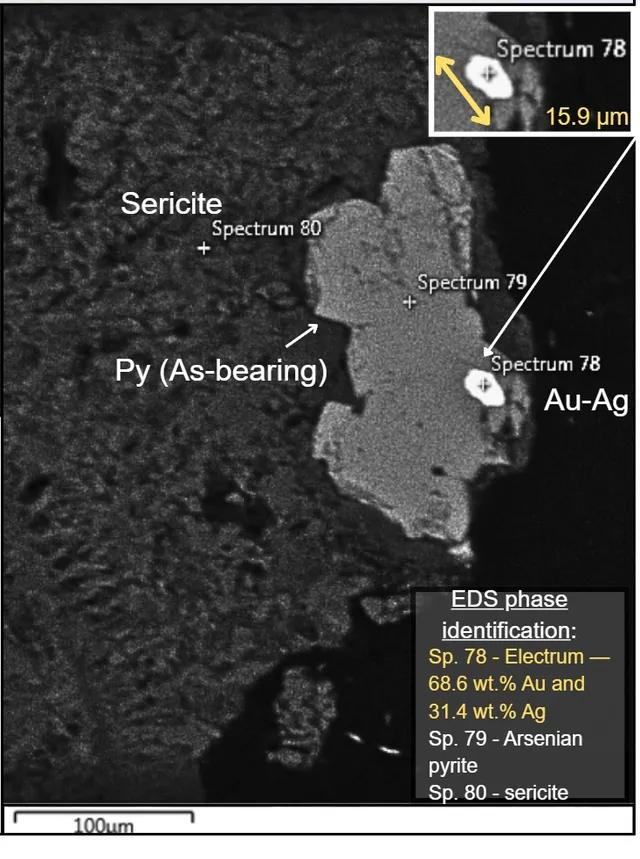
Scanning electron microscopy with energy-dispersive X-ray spectroscopy identified a discrete electrum grain measuring about 20 micrometres in drill hole VA26-DH19.
The grain contained approximately 68.6% gold and 31.4% silver by weight and occurred against the margin of an arsenian pyrite grain within a sericite-bearing matrix.
The sample was collected between 189.88 metres and 191 metres downhole and comprised polymictic volcanic breccia cut by quartz-carbonate veinlets and containing disseminated sulphides.
Kalo Gold president and chief executive Terry Tucker said the finding provided direct mineralogical evidence of a gold-silver phase within the Wainikoro hydrothermal system.
The company said the study supported a structurally controlled hydrothermal model in which repeated fracturing, brecciation and reopening of veins created pathways for mineralising fluids through volcanic rocks.
Additional analysis of drill core samples identified pyrite, arsenian pyrite, sphalerite, chalcopyrite and pyrrhotite associated with quartz-carbonate veining, sericite, chlorite and locally brecciated volcanic rocks.
Kalo Gold said the observed textures indicated multiple episodes of brittle fracturing, vein formation, reopening and sulphide deposition.
The principal assayed gold interval in VA26-DH19 returned 1.61 grams per tonne gold over 1.5 metres at about 150 metres downhole, a result previously reported by the company in June.
Material near the interval contained crackle brecciation, quartz-rich fracture infill, pyrite, arsenian pyrite and sphalerite.
The company said multivariate analysis of drill-core geochemistry also identified a broader gold-silver-arsenic-antimony-lead-molybdenum hydrothermal association.
Gold showed its strongest statistical relationships with lead, silver and molybdenum, while arsenic and antimony formed a broader pathfinder signature.
Prospectivity modelling identified areas where elevated gold and arsenic responses coincide with interpreted structural corridors. Kalo Gold said these areas would provide additional criteria for prioritising future trenching and drilling.
Surface mapping around trench TR009 and VA26-DH19 identified quartz and quartz-carbonate veins along northeast- and north-northwest-trending structures, while regional magnetic interpretation identified intersecting structural trends that may have created zones of increased permeability.
The company cautioned that only one discrete electrum grain was identified among the 12 polished thin sections examined. It said other fine-grained gold-bearing phases could remain undetected and that further mineralogical and gold-deportment studies would be required.
Kalo Gold also said the study does not establish the continuity, grade or economic significance of mineralisation at Wainikoro, with further trenching, drilling, assaying and mineralogical work required.
Canadian mineral exploration company Sankamap Metals Inc. is expanding its exploration programme at its 24,100-hectare Fauro property in Solomon Islands, with recent sampling identifying a new gold target in an area with no known historical sampling.
The company said on 29 September that its systematic prospecting programme had collected 829 samples across Fauro, with assay results for 798 samples still pending.
Recent silt sampling returned up to 6.78 grams per tonne (g/t) of gold from a previously unsampled area, while earlier surface sampling produced values of up to 116 g/t gold and 4% copper.
The results have prompted Sankamap to expand geological and geochemical work across the property as it seeks to refine existing exploration targets and identify new areas for further investigation.
Sankamap chief executive John Florek said the latest results provided further evidence of a gold-bearing system across the broader project area.
"During recent reconnaissance and prospecting activities, the exploration team encountered several drainages where local artisanal miners were actively panning for gold," Florek said.
"A representative grab sample of silt collected from one of these drainages returned 6.78 g/t Au, providing further evidence of an active gold-bearing system within the broader project area."
Fauro is located within a copper-gold metallogenic belt in the Solomon Islands that hosts major deposits including Lihir and Panguna. Sankamap said historical drilling, surface sampling and geophysical surveys have identified multiple prospective near-surface epithermal gold systems at Fauro.
At the Meriguna target, previous trenching returned 8 metres at 27.95 g/t gold and 14 metres at 8.94 g/t gold, while historical grab samples returned values of up to 173 g/t gold.
At Kiovakase, recent Sankamap sampling returned copper values of up to 4.09%, while limited historical shallow drilling at Fauro intersected 35 metres at 2.08 g/t gold.
The company plans to conduct an induced polarisation geophysical survey over high-priority targets to refine potential drill targets.
Sankamap is also planning an initial 2,000- to 3,000-metre drilling programme following the geophysical work.
The 2026-27 exploration programme is focused on geological mapping and geochemical sampling, with the company expanding its work into areas with limited or no historical exploration data.
Sankamap said the expanded dataset would be used to prioritise targets ahead of the planned geophysical surveys and drilling.
The Fauro property forms part of Sankamap's Oceania Project, which also includes the Kuma property in Solomon Islands. The company is listed on the Canadian Securities Exchange under the ticker SCU.
Solomon Islands has re-joined the Extractive Industries Transparency Initiative (EITI), with the UK government providing further support to help the country meet its transparency and governance commitments in the mining sector.
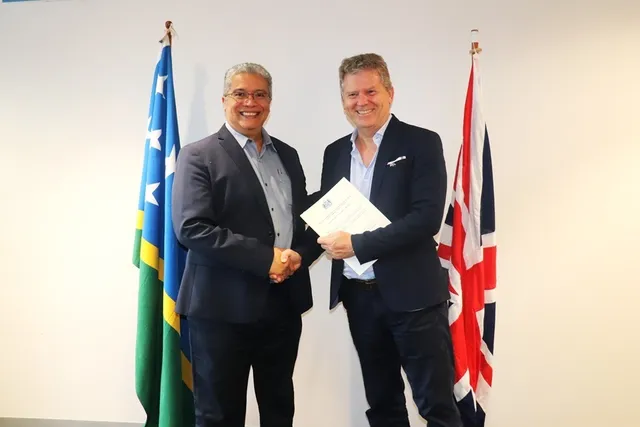
British High Commissioner Paul Turner and David Teika Dennis, permanent secretary of the Ministry of Finance and Treasury, formally launched the next phase of UK government support on 21 September.
The EITI Board welcomed Solomon Islands back as an implementing country on 16 September, following its withdrawal from the initiative in 2018 after failing to meet its commitments.
Under EITI requirements, Solomon Islands will now be expected to publish information on its mining sector to improve public management and transparency.
The UK government, working with the United Nations Development Programme (UNDP), has supported efforts to bring Solomon Islands back into the initiative and will continue assisting the country in meeting its EITI obligations.
The re-entry comes as Solomon Islands' mining sector is expanding, particularly in gold and nickel. Mining is expected to play a growing role in economic diversification, supported by the ramp-up of the Gold Ridge gold mine and the Kolosori nickel project.
"EITI can support Solomon Islands in strengthening its revenue collection and exports," Turner said.
"It is a win-win-win for government, local communities and for mining companies who will have greater export markets."
The EITI Board said it welcomed the government's renewed commitment to implementation and commended efforts by government, industry and civil society to promote a more equitable and environmentally responsible approach to mining decisions.
A new multi-stakeholder group comprising central and local government, mining companies, local communities and civil society will monitor activities across the sector.
The next phase of UK support will focus on developing a national plan for disclosing mining information across all provinces, strengthening the capacity of local stakeholders to monitor and report on the sector, and helping the government provide regular reports to the EITI Secretariat.
Turner said EITI membership could have a significant impact on Solomon Islands' mining sector.
"Membership of EITI has the potential to transform the mining sector in Solomon Islands," he said. "It will ensure that mining does not go the same way as logging did in this country."
The EITI Secretariat is based in Oslo, Norway.
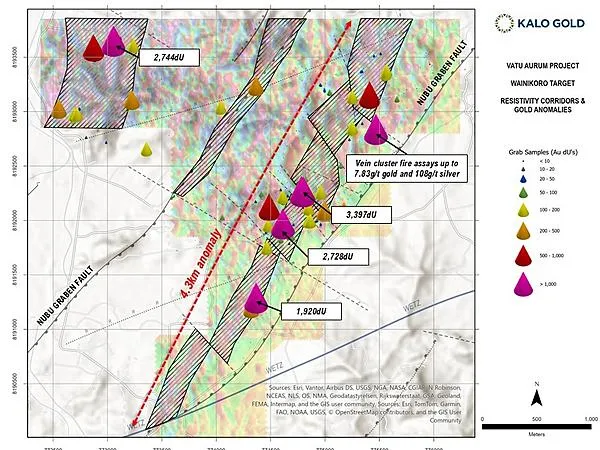
Kalo Gold Corp. has identified a 4.3-kilometre resistivity corridor at its Wainikoro target in Fiji, with gold results recorded along its length, including assays of up to 8.78 grams per tonne.
The Vancouver-based company said Sept. 24 that gradient array induced polarisation resistivity data had defined the principal corridor at its 100%-owned Vatu Aurum Project. The corridor remains open along strike.
Preliminary interpretation identified three predominantly north-south resistivity corridors. Elevated gold screening responses were concentrated along the margins of resistivity highs and lows within the main corridor and in a separate corridor about 2.5 kilometres to the west-northwest.
The eastern area returned up to 8.78 g/t gold by certified fire assay, while field screening of the same sample produced 3,397 detectORE units, which Kalo estimates at about 3.4 g/t gold. Several other results exceeded 1,000 dU, equivalent to about 1 g/t gold based on the company's estimates.
In the western area, field screening returned up to 2,744 dU, or an estimated 2.74 g/t gold.
The company said rock samples from the New Vein Cluster returned up to 7.83 g/t gold and 108 g/t silver. A previously reported chalcedonic quartz vein float sample returned 8.78 g/t gold, while a chalcedonic-banded epithermal quartz vein in silicified bedded tuff returned 4.78 g/t gold by certified fire assay.
Trenching across one of the eastern resistivity corridors exposed hydrothermally altered breccia, monomictic andesite breccia and andesitic wall rock. The hydrothermal breccia broadly corresponds with a resistivity-high area that may reflect silicification or quartz-rich cement.
Kalo said gold responses were not uniform throughout the breccia, with several occurring near lithological and geophysical margins. The company is evaluating whether contacts, secondary fractures and changes in permeability influenced mineralisation.
"The IP survey has given us a 4.3-kilometre resistivity corridor at Wainikoro with gold results along its length," President and CEO Terry L. Tucker said.
The company said the results support further evaluation of silicified hydrothermal breccias, resistivity margins and associated structural zones as priority exploration targets.
Kalo plans to begin controlled-source audio-frequency magnetotellurics, or CSAMT, surveying in late September and continue into October. The survey will test the width, orientation and depth continuity of the interpreted corridors, including potential branching, widening and crosscutting structures.
Additional work will include trenching, continuous channel sampling, structural mapping, alteration-mineralogy studies and certified laboratory analysis. The results will be integrated with existing geological, geochemical, induced polarisation, gravity, magnetic and radiometric data to refine targets for future drilling.
Kalo cautioned that not every resistivity feature is interpreted as mineralised, as resistivity contrasts can also reflect lithology, weathering, groundwater, clay content or survey effects.
The company also noted that grab, float and rock chip samples are selective by nature and may not represent mineralisation across the property.
Tighten the lead around the assayClarify the two corridor areas
Canadian miner Lion One Metals Ltd. has reported high-grade gold intercepts from underground drilling at its Tuvatu Alkaline Gold Project in Fiji, including 4.6 metres grading 82.28 grams per tonne of gold.
The results came from 4,370.2 metres of underground infill and grade-control drilling targeting extensions of the UR lodes in Zone 5, the company said in a Sept. 24 news release.
The drilling also returned 1 metre at 169.47 g/t gold, 1.1 metres at 153.94 g/t, 1.7 metres at 93.94 g/t and 0.3 metres at 285.13 g/t. The highest-grade individual intercept was 0.3 metres at 547.05 g/t.
Lion One said 30 of 34 completed drill holes intersected high-grade mineralisation, with most of the results located within 25 metres of underground development. The company expects the mineralisation to be incorporated into its mine plan within six months.
The drilling was conducted from the 1,160 and 1,082 underground drill stations. The former targeted mineralisation above the 1,150 level, while the latter targeted areas below the 1,066 level.
The Zone 5 drilling focused on the near-surface portions of the UR1 and UR2 lodes. Lion One said the UR2 lode has a strike length of about 620 metres and remains open along strike and at depth.
Lion One President and CEO Ian Berzins said the company was continuing to drill both Zone 5 and Zone 2 and was encountering high grades in both areas.
The company said the latest results included eight intercepts exceeding 100 g/t gold, following a previously reported intersection of 4.2 metres at 715.15 g/t gold from Zone 2.
Lion One operates the Tuvatu mine, which began operations in late 2023. The project includes the Tuvatu gold deposit, underground mine, pilot plant and assay laboratory. The company also holds an exploration licence covering the Navilawa Caldera, which contains multiple mineralised zones and exploration targets.
The reported drill intersections are downhole lengths, and true widths are not known, Lion One said. The company uses a 3 g/t gold cut-off for its high-grade composites.
This version follows AP style and British English, including metres, mineralisation, licence and programme-style usage where applicable.
Kalo Gold Corp has identified a new high-grade gold-silver vein target at its Vatu Aurum Project in Fiji, with reconnaissance rock sampling returning up to 7.83 grams per tonne gold and 108g/t silver.
The company said seven rock samples collected from a previously unsampled outcrop in the northeast of the Wainikoro target returned gold grades of up to 7.83g/t and silver grades of up to 108g/t. Five of the seven samples assayed above 2g/t gold, while three returned more than 4g/t gold.
The outcrop, named the New Vein Cluster, contains two intersecting sets of epithermal quartz veins exposed over approximately 15 metres of strike. The veins trend NNW-SSE and east-west, with neither set closed off at the exposed outcrop because both continue beneath overburden.
Kalo said the target is approximately 270 metres northeast of the principal Wainikoro graben structure, along the margin of a discrete magnetic low. It is also about 900 metres northeast of 2026 drill hole VA26-DH19 and occurs within predominantly andesitic volcanic rocks.
The company interprets the contrasting vein orientations and cross-cutting relationships as evidence of at least two episodes of veining and hydrothermal activity. The mineralisation displays textures and geochemical characteristics associated with a low-sulphidation epithermal system, including elevated gold, silver, arsenic, antimony, lead and zinc.
Highest-grade samples
The strongest result came from sample WKE-LR26-017A, which returned 7.83g/t gold and 99.7g/t silver. Another sample, WKE-LR26-025D, returned 4.02g/t gold and 105g/t silver.
Other samples included grades of 5.36g/t gold and 54.6g/t silver, 2.32g/t gold and 77.1g/t silver, and 2.10g/t gold and 33.7g/t silver.
Kalo president and chief executive Terry L. Tucker said the results were significant not only because of the grades but also because the mineralisation occurs across two intersecting vein orientations.
“What makes it more than a good rock sample is the structure,” Tucker said, adding that both vein sets remain open beneath cover and will be targeted through trenching and geophysical surveys.
Follow-up exploration planned
Kalo plans additional geological mapping, structural measurements, channel sampling and trenching across the New Vein Cluster to test the continuity of the veins beneath overburden.
A ground geophysical programme is also underway across Wainikoro, comprising gradient-array induced polarisation (IP), gravity and controlled-source audio-frequency magnetotellurics (CSAMT).
The gradient-array IP survey began on 31 July, with five of eight survey blocks completed. The remaining blocks are scheduled for completion by late September. Gravity surveying began on 14 August and is also scheduled to finish in late September, while CSAMT is expected to begin in late September and continue into October.
Kalo expects integrated interpretation and final geophysical reporting to be completed in November 2026.
The company said the geophysical results will be combined with geological mapping, soil geochemistry, airborne magnetic and radiometric data and laboratory results to refine the Wainikoro geological model and identify priority drill targets.
Kalo cautioned that the rock samples are selective in nature and may not be representative of mineralisation across the wider property. No mineral resource or mineral reserve has been estimated for the Vatu Aurum Project, and the exploration targets remain conceptual.
Kalo's 100%-owned Vatu Aurum Project covers 367 square kilometres on Vanua Levu, Fiji, where the company is exploring a northeast-trending corridor of low-sulphidation epithermal gold targets, including Wainikoro and the Aurum Prime area.
New high-grade gold results from Lion One Metals’ Tuvatu project in Fiji have highlighted geological similarities with Papua New Guinea’s Porgera mine, as the Canadian company continues underground drilling at one of Fiji’s emerging gold operations.
Lion One reported an intercept of 4.2 metres grading 715.15 grams per tonne gold, including 0.45 metres at 6,571.20 g/t, from underground drilling at its 100-per-cent-owned Tuvatu Alkaline Gold Project. The company said the result was the highest-grade assay returned from the project to date.
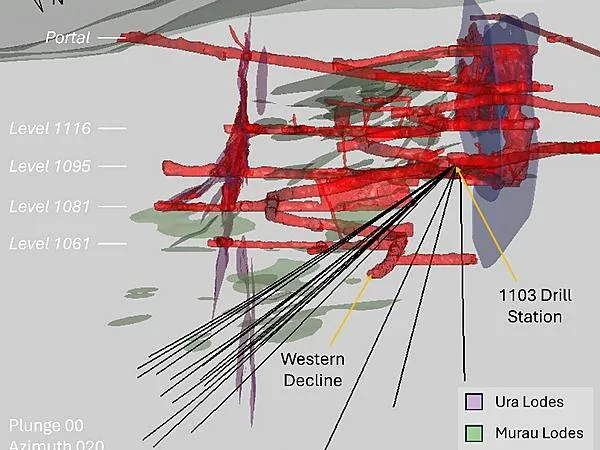
The drilling programme covered 3,337.3 metres of underground infill and grade-control drilling, targeting the southern and down-dip extensions of the Ura and Murau lodes in Zone 2. Fourteen of 18 drill holes intersected high-grade mineralisation, while three holes were abandoned.
Lion One said most of the high-grade intersections were located between 15 metres and 75 metres from existing underground development and within 50 metres vertically. The company expects the results to be incorporated into its mine plan over the next 12 months.
Porgera comparison
The latest results have particular relevance for PNG because of the similarities Lion One has identified between Tuvatu’s mineralisation and the alkaline gold systems at Porgera and Vatukoula in Fiji.
The 715.15 g/t intersection was located about 55 metres from the Western Decline and cut a shallow-dipping, roscoelite-bearing vein forming part of the Murau lode system.
Lion One said roscoelite mineralisation is a defining feature of alkaline gold systems and is directly associated with high-grade gold. Similar mineralisation occurs at Vatukoula and Porgera, which has produced more than 25 million ounces of gold.
The company also pointed to Porgera’s Stage II quartz-roscoelite-pyrite veins, which contain native gold and occur within Zone VII of the Roamane fault zone.
Zone VII produced 5.1 million ounces of gold at an average grade of 27 g/t, with individual veins locally containing hundreds to thousands of grams per tonne gold, according to Lion One.
Lion One said five assays from the latest 14 holes that intersected high-grade mineralisation returned more than 100 g/t gold, including the record 6,571.20 g/t result.
The company also noted that the Ura shrinkage stope at Tuvatu, located about 100 metres above the latest drilling, previously produced 5,704 tonnes at 10.6 g/t gold.
Underground expansion
Lion One president and chief executive Ian Berzins said the latest results demonstrated the potential to expand the Tuvatu resource through further underground drilling.
“We’re extremely pleased with the new results from our Zone 2 drilling,” Berzins said.
He said the 715.15 g/t result over 4.2 metres was the highest-grade intersection over width in Tuvatu’s history and came from an area with limited previous drilling.
“The Ura and Murau systems are a developing target and this type of intersect is testament to the potential of the system as we continue to drill and expand the resource at Tuvatu,” he said.
The Ura and Murau systems remain open at depth and along strike, presenting opportunities for further resource expansion, the company said.
The Murau structures, known locally as “flatmakes”, are shallow- to flat-dipping mineralised veins. They generally strike east-west and dip at about 20 degrees to the north or northwest, with mineral assemblages including quartz, roscoelite, arsenian pyrite and visible gold.
Lion One said the latest drilling is focused on areas outside its current resource and mine plan, with the results expected to support additional mining levels in Zone 2.
Drilling remains ongoing, with the company continuing to test the Ura and Murau lodes below existing underground workings.
The company said the Tuvatu project includes a high-grade gold deposit, underground mine, pilot plant and assay laboratory, with exploration continuing across the wider Navilawa Caldera.
New high-grade drilling results from Lion One Metals’ Tuvatu gold mine in Fiji have highlighted geological similarities with Papua New Guinea’s Porgera mine, including mineralization associated with quartz, roscoelite and visible gold.
Lion One reported an intersection of 4.2 meters grading 715.15 grams per tonne of gold from underground drilling at Tuvatu, including a 0.45-meter interval grading 6,571.20 grams per tonne.
The company said the latter was the highest-grade assay result ever recorded at Tuvatu.
Lion One reported the results from 3,337.30 meters of underground infill and grade-control drilling targeting the Ura and Murau lodes in Zone 2, below Level 1061.
Fourteen of 18 completed drill holes intersected high-grade mineralization, with most of the results located within 15 to 75 meters of underground development and within 50 meters vertically.
The company said the results could support the expansion of the mine plan, with the mineralized areas expected to be incorporated into the plan within the next 12 months.
The Ura and Murau systems remain open at depth and along strike and are outside the current resource in several areas, presenting potential for further resource growth.
Lion One said the headline 4.2-meter intersection was located about 55 meters from the Western Decline and intersected a shallow-dipping, roscoelite-bearing vein forming part of the Murau lode system.
Roscoelite mineralization is associated with high-grade gold in alkaline gold deposits. Lion One cited the Vatukoula mine in Fiji and Porgera in PNG as examples of deposits with similar mineralization.
At Porgera, the company said Stage II quartz-roscoelite-pyrite veins containing native gold are among the most significant mineralized structures in Zone VII of the Roamane fault zone.
Zone VII produced 5.1 million ounces of gold at an average grade of 27 grams per tonne, according to Lion One.
The company said individual veins in the zone locally contained gold grades ranging from hundreds to thousands of grams per tonne, similar to some of the results now being reported at Tuvatu.
Five assays from the latest Tuvatu drilling returned more than 100 grams per tonne of gold, including the 6,571.20 grams per tonne result.
Lion One President and Chief Executive Officer Ian Berzins said the latest drilling demonstrated the potential of the Ura and Murau systems.
“We’re extremely pleased with the new results from our Zone 2 drilling,” Berzins said. “The interval of 715.15 g/t gold over 4.2 m is the highest grade over width in the history of Tuvatu, and it’s located in close proximity to our underground workings in an area of limited drilling.”
The company said drilling is continuing at Tuvatu, with further work targeting resource expansion in Zone 2 and Zone 5.
Lion One said its drilling results were reported as downhole intervals, with true widths not yet known because of variability in structural orientation.
The company applies a 3 grams per tonne gold composite cutoff when reporting drill-hole intercepts.
Tuvatu is a 100%-owned alkaline gold project operated by Lion One in Fiji. The project includes the Tuvatu deposit, underground mine, pilot plant and assay laboratory, as well as an exploration licence covering the Navilawa Caldera.
Lion One said the company operates its own geochemical laboratory and diamond drilling fleet, with its laboratory accredited under the ISO/IEC 17025:2017 standard.
The Cook Islands Seabed Minerals Authority has clarified that a proposed corporate transaction involving seabed minerals explorer AOMC and Odyssey Marine Exploration does not alter the status of any exploration licence or give the companies ownership or control of seabed mineral resources.
The SBMA said the proposed transaction, disclosed through US Securities and Exchange Commission filings, is being assessed under Cook Islands law, with the interests of Cook Islanders central to the process.
The authority stressed that an exploration licence does not confer ownership of Cook Islands seabed minerals or automatically grant rights to commercially harvest minerals.
“No company owns or controls any part of the Cook Islands Exclusive Economic Zone or Marae Moana through an exploration licence,” the SBMA said.
Cook Islands seabed mineral resources remain under the country’s jurisdiction, it said.
The authority also addressed reports that the transaction could be completed in October, saying the timetable set by the companies does not determine the Cook Islands’ regulatory process.
“Company timelines do not set Cook Islands regulatory timelines,” the SBMA said, adding that the proposed transaction does not override Cook Islands law or determine any regulatory matter in advance.
The SBMA said its assessment covers issues including ownership and control, financial capability, compliance, royalties, taxation, environmental obligations and other regulatory requirements.
It has sought further information and assurances as part of the assessment, the authority said.
The Cook Islands remains in an exploration and research phase, with no commercial minerals harvesting approved or authorized under existing exploration licences.
Any proposal to move from exploration to commercial harvesting would remain subject to Cook Islands legal and regulatory requirements, including environmental assessment, public consultation where required and relevant decision-making processes.
The SBMA said public scrutiny of seabed minerals activities was important, but urged discussion to be based on verified information and an understanding of the regulatory framework.
“Commercial arrangements between companies do not decide the future of the Cook Islands seabed minerals sector,” it said. “That decision rests with the Cook Islands, through Cook Islands law, public process, and national decision-making.”
Solomon Islands Deputy Prime Minister Francis Sade has reaffirmed the government's commitment to ensuring the country's mineral wealth delivers greater economic benefits to its citizens, endorsing a policy of increasing national participation in the mining sector.
Sade welcomed Guadalcanal Premier Willie Atu's endorsement of the government's "First Bite, Better Bite" principle, which seeks to retain more value from the country's mineral resources within Solomon Islands.
Speaking on the government's mining agenda, Sade said the GREAT Coalition Government plans to establish a state-owned mining enterprise, a Mineral Holdings State-Owned Enterprise and a gold trading and buying framework under the Central Bank of Solomon Islands.
"These initiatives are designed to ensure that resource extraction drives national development, rather than merely accompanying it," Sade said.
The proposed reforms are intended to increase the country's participation across the mining value chain while ensuring that revenues from mineral extraction contribute more directly to national development.
Sade also addressed longstanding concerns over safety at the Gold Ridge mine, acknowledging recurring fatalities at the operation and stressing that worker safety and community welfare must remain central to mining policy.
"When resource wealth flows out while grief flows in, it is a clear reminder that minerals without justice do not enrich a people, they embitter them," he said.
The deputy prime minister said fair compensation for customary landowners and meaningful national participation in mining projects should be regarded as essential components of resource development rather than optional measures.
"Fairness, dignity and inclusion are the foundation for lasting peace on our resource sites and for the wellbeing of the communities who own the land," he said.
Sade said the government's approach reflects lessons learned from Guadalcanal's history and is aimed at creating a mining sector that delivers long-term economic and social benefits while strengthening public confidence in the country's natural resource governance.
Lion One Metals Ltd. has acquired a new Boart Longyear LM90 underground core drill as part of its strategy to expand production at the Tuvatu Alkaline Gold Mine, with the equipment expected to improve exploration and resource growth in two key mineralised zones.
The Canadian gold producer said the purpose-built underground drill will allow it to conduct deep and inclined drilling from underground for the first time, targeting the high-grade Zone 500 and West Zone at depth to expand and upgrade mineral resources.
Delivery of the LM90 drill is expected by mid-October 2026.
The new rig has a maximum drilling depth of 990 metres and can operate at any drilling angle, from vertically upward to vertically downward. Lion One said its flexibility would enable shorter, faster and more cost-effective drill holes compared with previous drilling campaigns, which were conducted from surface locations.
A dedicated underground drill station is being developed off Level 1051 of the Tuvatu mine, approximately 80 metres south of Zone 2. From there, the company will be able to drill laterally into Zone 500 and the West Zone, as well as target Zone 5 and extensions along strike.
Lion One President and Chief Executive Officer Ian Berzins said the purchase significantly strengthens the company's underground exploration capability.
"The LM90 is an important purchase for Lion One Metals as it significantly increases the versatility and capability of our underground drill fleet," Berzins said.
"We will be able to drill Zone 500 and the West Zone effectively from a dedicated drill station underground for the first time. We're excited to get the drill on site and start targeting those areas as soon as possible."
The LM90 will increase Lion One's active drill fleet to six units, comprising four underground drills and two surface drills. The company said the new drill is also more compact than its existing underground rigs, allowing it to be transported through smaller development drifts and reducing underground development costs.
Lion One began commercial production at Tuvatu in late 2023. The project includes the underground gold mine, processing plant and assay laboratory, while the company also holds exploration licences covering the broader Navilawa Caldera, which hosts multiple gold mineralisation targets.
The company said the new drill will support its long-term objective of expanding resources and increasing gold production from deeper parts of the Tuvatu deposit.
Follow on LinkedIn:
Pacific Business Review
Be the "First" to get our exclusive Digital Magazine & Weekly Newsletter.