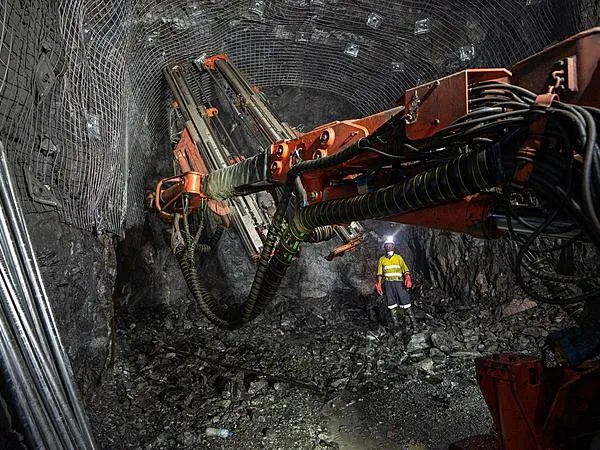
Canadian firm K92 Mining Inc. has reported a solid second-quarter performance for 2025, producing 34,816 ounces of gold equivalent (AuEq) and initiating commissioning of its new 1.2 million tonnes-per-annum (Mtpa) Stage 3 Process Plant at the Kainantu Gold Mine in Papua New Guinea.
The Q2 output represents a 43% jump compared to the same period in 2024. The company produced 32,375 ounces of gold, 1.54 million pounds of copper and 42,824 ounces of silver during the quarter, with sales reaching 28,864 ounces of gold, 1.27 million pounds of copper and 34,532 ounces of silver during the said period.
For the first half of 2025, total production reached 82,633 oz AuEq, putting the company ahead of its budget and on track to meet its full-year guidance of 160,000 to 185,000 oz AuEq.
Processing and mining operations surge
K92 processed 130,337 tonnes of ore in Q2, up 36% year-on-year and 26% from Q1 2025. The ore averaged a head grade of 8.9 grams per tonne AuEq, including 8.3 g/t gold, 0.55% copper and 12.1 g/t silver. Gold and copper recoveries remained strong at 93.3% and 94.9%, respectively—both exceeding the benchmarks outlined in the company’s updated Definitive Feasibility Study (DFS).
Mining activities remained robust, with 133,063 tonnes of ore mined across 13 active levels within the Kora and Judd deposits. Total underground material movement, including waste, reached 338,696 tonnes, making it the second-highest quarter on record despite five days of commissioning-related disruptions.
Stage 3 expansion hits key milestones
A major highlight of the quarter was the commencement of commissioning for the Stage 3 Expansion Process Plant in late June. The pre-commissioning work, including testing of the semi-autogenous grinding (SAG) and ball mills, was completed on schedule. Full commissioning is expected to be practically complete in the first half of Q4 2025.
Additional contracts were awarded in June for the pastefill filtration plant and the surface storage facility, while work continues on the underground pastefill plant. All three facilities are scheduled for commissioning by mid-Q1 2026. As of 30 June, 86% of the Stage 3 capital has been committed or spent, up from 75% at the end of March, with the expansion remaining within budget.
Supporting infrastructure projects completed in Q2 include a temporary power station, the first phase of a permanent power station, and the 160-room Kumian Creek camp for contractor accommodation—set to support future Stage 4 expansion activities.
Technology and mining front development
The transformation of the Kainantu underground mine is nearing completion with several upgrades due by Q3, such as a fully operational ore/waste pass, a new ventilation drive, and two raisebore ventilation shafts.
K92 has also finished upgrading its underground communications system, enabling surface-controlled tele-remote loaders, which were launched in June as the first step in automating and improving productivity.
Two new mining fronts have been developed: four new sublevels at the Twin Incline front and two at Lower Kora. Stoping operations in these areas are expected to begin in Q4.
Outlook remains strong
“K92 is on the cusp of transforming into a Tier 1 mid-tier producer,” said Chief Executive Officer John Lewins. “With commissioning of the Stage 3 Process Plant now underway, we’re entering a new era of growth. Our production for the first half of the year is ahead of budget, and we expect an even stronger performance in the second half, driven by increased throughput.”
Lewins added that the company remains on schedule for the full commissioning of key infrastructure by mid-2026, positioning K92 to significantly boost output and efficiency.
K92 Mining Inc. operates the high-grade Kainantu Gold Mine in Papua New Guinea’s Eastern Highlands Province. The company declared commercial production in 2018 and continues to grow its operations through plant expansions and exploration. It also holds the Blue Lake copper-gold project, which saw its maiden resource published in August 2022.
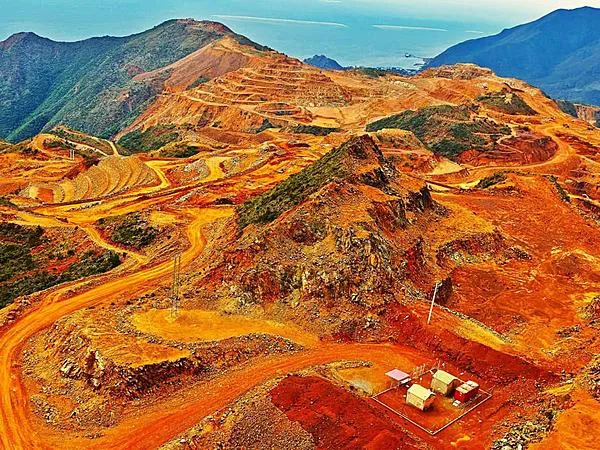
The blockade of the Népoui mining site in New Caledonia, which began on Monday, June 30, is now being lifted, signalling a significant breakthrough in talks between Société Le Nickel (SLN) and the customary authorities of the Ouaté tribe.
The lifting of the blockade follows discussions initiated in recent days and reflects SLN’s willingness to reopen dialogue with the local community. In a gesture of goodwill, the mining company has agreed to a six-month suspension of the disputed new security contract, the source of tensions that led to the protest.
“This period of suspension aims to foster a calm and respectful environment, conducive to better mutual understanding,” SLN said in a statement. “The shared objective remains to reach a balanced and satisfactory solution for all parties involved.”
The blockade was triggered by local opposition to the entry into force of a new security contract at the Népoui site. While the contract has not been revoked, the pause will allow for further consultations with the Ouaté tribe, which had voiced concerns over the terms and implications of the agreement.
Syrtis Surveillance, a locally based company led by a New Caledonian manager, was awarded the security contract after a competitive tender involving seven local firms. The contract, which spans an initial period of three years with two optional extensions, includes plans for workforce reinforcement and support from a mainland French partner to aid in skill transfer and professionalisation.
SLN emphasised that no jobs will be lost as a result of the contract change. Employees responsible for site security will retain their positions, with contracts being transferred to the new subcontractor.
However, the company had earlier warned that a prolonged blockade could trigger a force majeure clause, potentially suspending subcontracting contracts and dealing a heavy blow to the local economy. The Népoui site directly employs nearly 300 workers, with another 150 subcontractors — accounting for roughly half of all employment in the area.
The disruption had added to existing challenges, including the shutdown of the Thio site and halted ore shipments from Kouaoua following a serpentine fire on 24 May. With Népoui's operations jeopardised, SLN had raised concerns about the stability of ore supply to its Doniambo smelter, putting the continuity of the entire nickel production chain at risk.
SLN reiterated its commitment to dialogue, transparency, and respect for customary and contractual obligations, adding that it would continue working toward a collaborative resolution that benefits all stakeholders.
Follow on LinkedIn:
Pacific Business Review
Be the "First" to get our exclusive Digital Magazine & Weekly Newsletter.