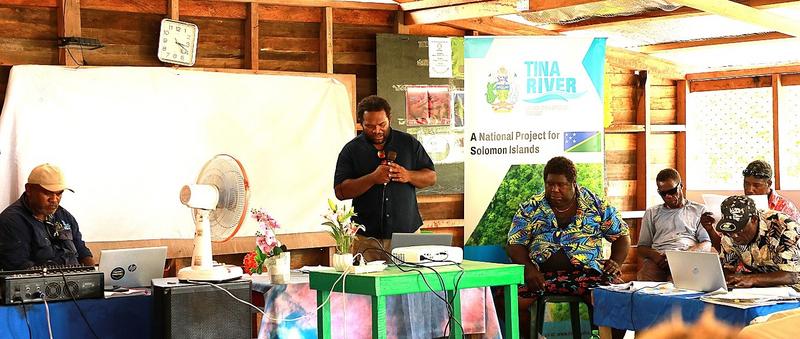
The Lasi Tribal Group in Central Guadalcanal has taken a step forward in advancing a proposed protected area in the Upper Tina Catchment, following a two-day consultation facilitated by the Tina River Hydropower Development Project (TRHDP) Project Office and government partners.
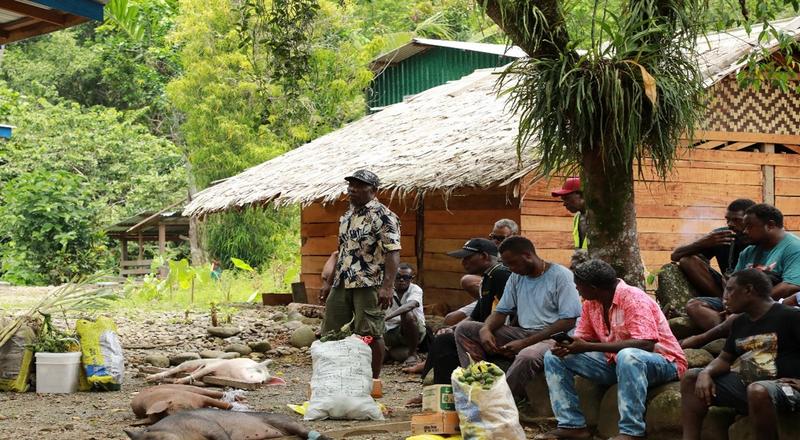
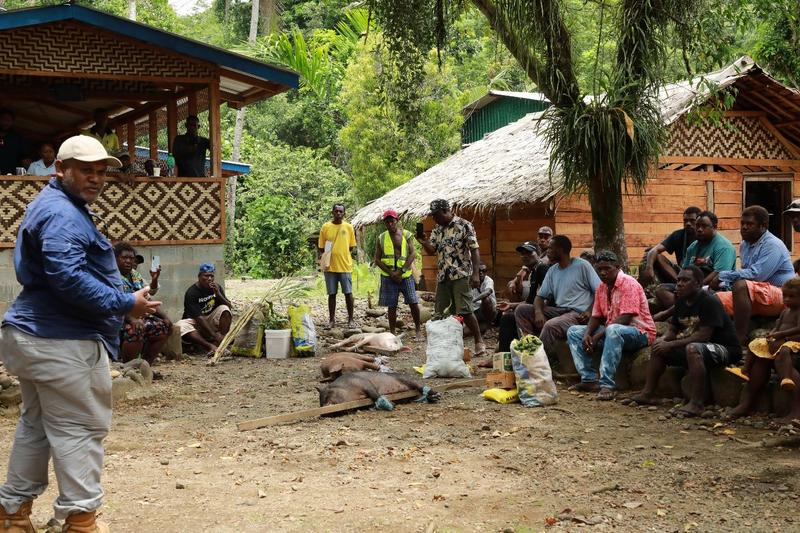
The consultation, held on Feb. 25–26 at Turaranga Community in Vulolo Ward, concluded with participants expressing in-principle support to progress the Barahau–Longa area through the Protected Areas Act 2010 process.
Discussions also identified the Resource Management Category as the preferred designation, subject to further customary consultations, boundary discussions and completion of legal requirements.
The sessions provided awareness on the protected areas process, enabled dialogue on customary land ownership and boundaries, and introduced a mapping exercise to identify taboo sites, cultural landmarks and tribal boundaries.
Participants also elected a Management Committee representing sister tribes to guide the next phase of the process, including engagement with neighbouring tribes and preparation of a draft management plan and budget.
Members of the Lasi Tribal Group expressed interest in continuing discussions on conservation arrangements for the Barahau–Longa area, contingent on further internal consultation and agreement.
The newly formed committee will coordinate with government agencies and development partners to progress documentation required under the protected areas framework.
As part of the consultation, participants undertook preliminary tribal mapping and agreed to engage neighbouring tribes on boundary alignment ahead of formal boundary-signing consultations.
The initiative forms part of a nationally recognised 12-step process for establishing protected areas, which includes community consultations, mapping, planning and eventual declaration by the Ministry of Environment, Climate Change, Disaster Management and Meteorology.
.jpg)
Officials said the process allows tribes to proceed at their own pace, guided by consensus and customary decision-making, an approach reinforced during earlier consultations in the Upper Tina Catchment in December 2025.
John Walenenea Jr., biodiversity officer for TRHDP, said the Lasi Tribal Group’s decision demonstrated strong local leadership and commitment to conservation.
“The Lasi Tribal Group’s decision reflects strong local leadership and a shared commitment to protect biodiversity, water resources and cultural heritage while allowing sustainable community use,” he said. “Today’s outcome moves us from awareness into action.”
Trevor Maeda of the Environment and Conservation Division said the Protected Areas Act provides a legal framework for customary landowners to safeguard their land.
“The Protected Areas Act provides a clear legal framework for customary landowners to safeguard their lands for future generations,” he said. “The Lasi community has taken a decisive step, and MECDM will continue to guide them through the remaining steps of the process.”
The Management Committee, based in the Bahomea region, is expected to convene with support from the Project Office to review meeting outcomes, undertake boundary consultations with neighbouring tribes and initiate a management plan and budget for the proposed area.
TRHDP’s biodiversity engagements in the Upper Tina Catchment aim to support community-led conservation by aligning customary processes with national requirements, with a focus on consensus-building, dispute resolution, boundary clarity and governance readiness.
The Tina River Hydropower Development Project is the first large-scale renewable energy project in the Solomon Islands, aimed at delivering more affordable electricity and improving access to cleaner, more reliable energy for communities. The project is being implemented by the Solomon Islands Government with financing and support from the Abu Dhabi Fund for Development, the Asian Development Bank, the Government of Australia, the Green Climate Fund, Korea EX-IM Economic Development Cooperation Fund, and the World Bank.