
Pacific island economies are expected to experience slower economic growth in 2026 as higher fuel and food prices, weaker tourism and rising import costs continue to weigh on activity despite government measures to cushion the impact, according to the Asian Development Bank's (ADB) latest economic outlook.
The ADB lowered its growth forecast for the Pacific to 3.3% in 2026, down from the 3.4% projected in April and below the region's estimated 4.2% expansion in 2025. Growth is expected to moderate further to 3.2% in 2027, while inflation is projected to remain elevated at 4.2% in 2026 before easing to 3.5% next year.
The bank said Pacific economies remain among the most vulnerable to external shocks because they rely heavily on imported fuel, food and construction materials. Higher energy prices, rising freight costs and supply chain disruptions have increased the cost of living and placed additional pressure on businesses and governments across the region.
"The Pacific's growth outlook is lowered to 3.3% in 2026 as higher fuel, food and input costs stemming from the conflict dampen economic activity despite government mitigation measures," the report said.
ADB said forecasts for several Pacific economies were revised lower as visitor arrivals fell short of expectations while import costs continued to rise. The bank also warned that prolonged disruptions in global energy markets, driven by the Middle East conflict, are expected to unwind only gradually, keeping inflationary pressures elevated across the region.
Among the region's largest economies, Papua New Guinea is forecast to grow 3.4% in 2026, slightly below the 3.6% projected in April and down from an estimated 4.7% growth in 2025. Inflation is expected to remain at 4.6% this year before easing to 4% in 2027.
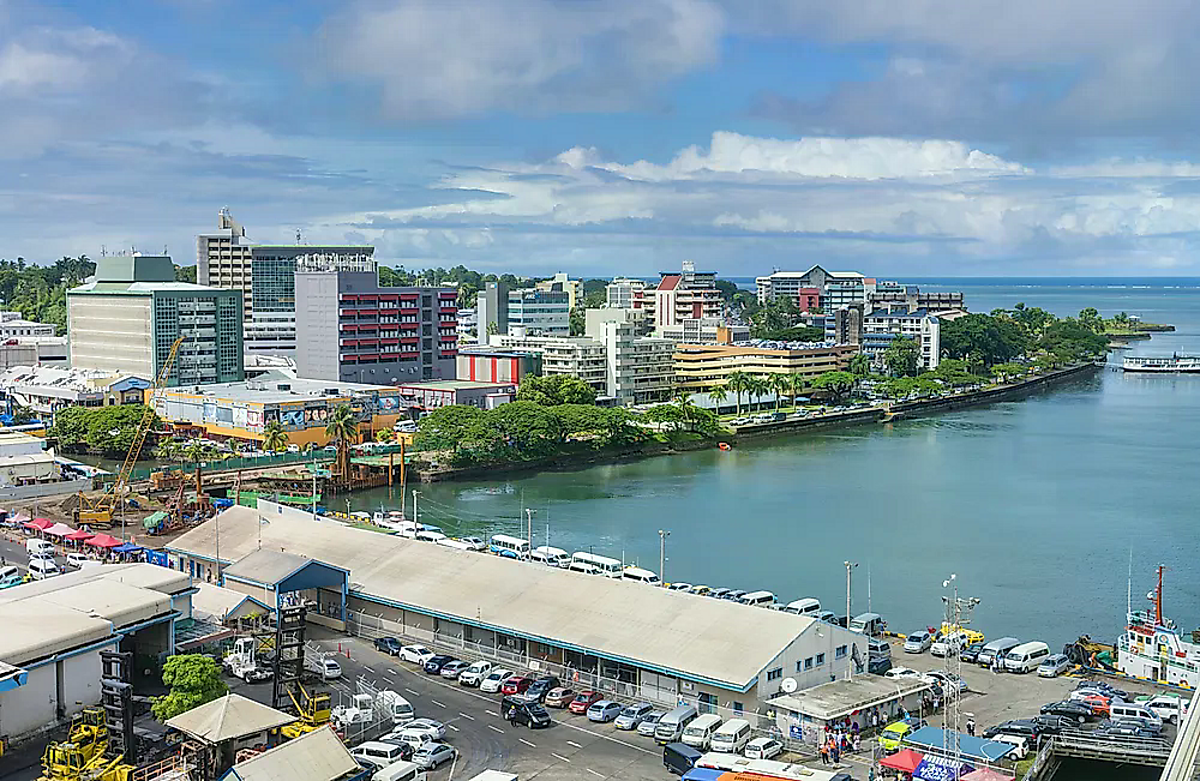
Fiji's economy is projected to expand 2.5% in 2026, lower than the 2.9% forecast in April, as softer tourism growth and higher import costs weigh on domestic activity. Inflation is expected to accelerate to 3.6% this year from deflation of 1.4% in 2025.
Elsewhere in the Pacific, Vanuatu is expected to post one of the region's strongest growth rates at 3.9%, while Palau is forecast to expand 3.6%, supported by continued tourism recovery. Solomon Islands and Papua New Guinea are each projected to grow 3.4%, while Kiribati is expected to expand 2.6%, Cook Islands 2.7%, Samoa 2%, and Tonga 2.3%.
Beyond slowing growth, the ADB warned that Pacific governments face mounting fiscal pressures as higher energy prices increase public spending while raising the cost of imports. Several small island economies are expected to record weaker primary fiscal balances this year as governments seek to shield households and businesses from rising living costs, even as higher borrowing costs and tighter global financial conditions constrain fiscal space.
The bank also cautioned that higher fertilizer prices could threaten food security across the region, while renewed geopolitical tensions, volatile energy markets and tighter global financial conditions remain key risks for Pacific economies that are highly dependent on imports and external demand.
Across developing Asia and the Pacific, ADB lowered its 2026 growth forecast to 4.9% from 5.1% projected in April, citing prolonged disruptions to global energy markets caused by the Middle East conflict. The bank raised its regional inflation forecast to 4.3% for 2026 from 3.6%, reflecting the impact of higher oil and gas prices, increased freight costs and supply chain disruptions.