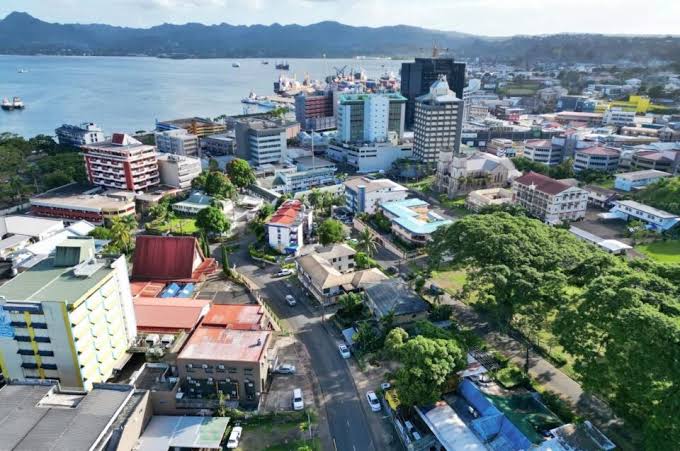
Fiji’s economy is showing resilience, supported by tourism, construction and strong remittance inflows, but rising fuel, freight and insurance costs are clouding the outlook for 2027.
Westpac has lowered its economic growth forecast for Fiji to 2.5 per cent in 2027, from its earlier projection, while maintaining its 2 per cent forecast for 2026.
The Reserve Bank of Fiji kept its policy rate unchanged at 0.25 per cent in October, seeking to support economic activity and maintain adequate foreign reserves amid mounting inflationary pressures.
Economic activity remained supported by a 3.7 per cent increase in visitor arrivals in the nine months to September, while remittances reached FJ$1.2 billion through August, up 32.7 per cent from the same period last year.
Construction activity and investment lending also remained firm, helping sustain domestic demand despite higher operating costs.
Westpac Pacific economist Shamal Chand said Fiji's dependence on imported petroleum exposed businesses to rising fuel, freight and insurance expenses, which were feeding into electricity, transport, construction and food distribution costs.
Annual inflation reached 6.8 per cent in September. Westpac's October outlook projected inflation would approach 8 per cent in November before easing to 7.4 per cent by the end of the year.
The bank also identified El Niño as a potential risk to agricultural production, water supplies and hydroelectric power generation.
Reserve Bank Governor Ariff Ali said the October 29 policy decision was intended to support economic activity while preserving adequate foreign reserves and managing inflation, which was being driven largely by higher import costs.
Westpac estimated Fiji's foreign reserves at about FJ$4.1 billion at the end of September, equivalent to 5.7 months of retained imports.
Productivity and investment key to longer-term growth
The World Bank's first Fiji Economic Update highlighted the need to improve productivity and attract greater private investment to broaden the country's economic base.
The bank forecast economic growth of 2.1 per cent in 2026, accelerating to 3 per cent by 2028.
However, it estimated Fiji would need to sustain annual growth of 4 to 6 per cent to achieve high-income status by 2050, compared with its historical growth rate of 2 to 3 per cent.
The World Bank identified agriculture, fisheries and renewable energy as sectors with potential to contribute more significantly to economic expansion.
It also pointed to the importance of improving workforce skills and participation, particularly among women, to strengthen productivity.
Meanwhile, Fiji's public debt declined from about 95 per cent of gross domestic product in 2021 to 76.9 per cent in 2025, although the World Bank expects debt to increase again.
The projected rise could constrain the government's capacity to respond to future economic shocks while financing infrastructure development and skills programmes.
For Australian businesses trading with Fiji, sustained tourism and construction activity continue to provide opportunities, although higher freight, energy and insurance costs remain key considerations in contract pricing and delivery planning.