Fiji and Australia have significantly deepened their strategic partnership after signing two landmark treaty-level agreements that expand cooperation on defence, security, trade, investment and regional development, marking what Fiji described as a new chapter in bilateral relations.
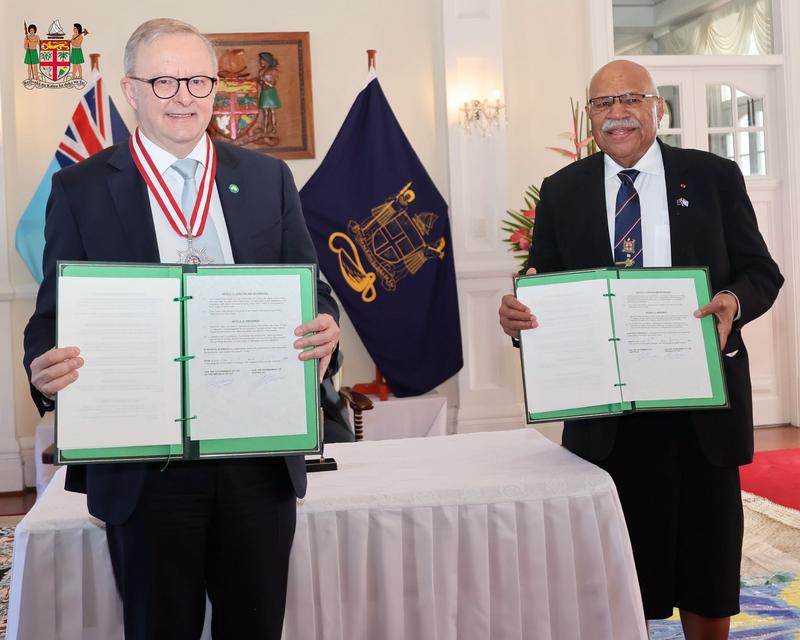
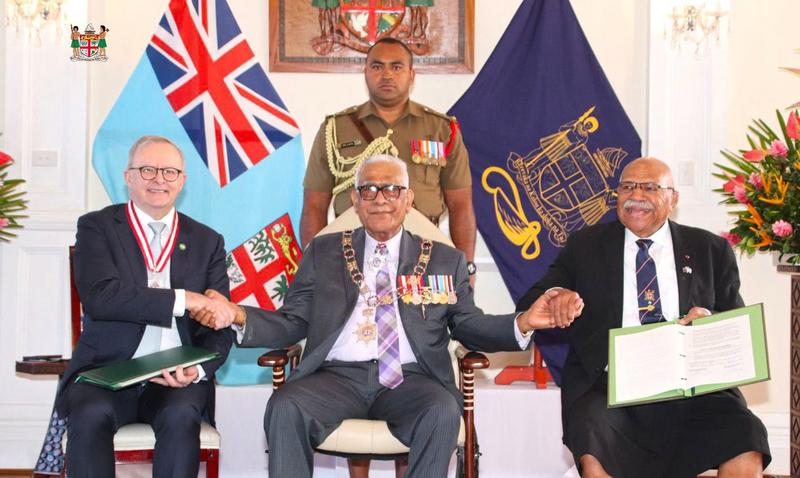
Fijian Prime Minister Sitiveni Rabuka and Australian Prime Minister Anthony Albanese signed the Ocean of Peace Alliance, also known as the Veitacini Treaty, and the Fiji-Australia Vuvale Union Treaty during a ceremony at the State House on Sunday, witnessed by President Ratu Naiqama Lalabalavu.
The agreements are the first treaty arrangements entered into by Fiji and formalise an expanded partnership aimed at strengthening sovereignty, regional security and economic cooperation while advancing the Blue Pacific agenda.
President Lalabalavu described the signing as a milestone in Fiji's nation-building journey, saying the agreements reflected decades of friendship founded on mutual respect, shared values and regional solidarity.
He said the treaties were built on the principles of partnership, integration and regionalism, while recognising the importance of national sovereignty.
"The challenges before us, whether climate change, regional stability or economic resilience, require precisely the kind of partnership that Fiji and Australia have nurtured and signed into history today," the President said.
Under the Ocean of Peace Alliance, both countries committed to protecting their sovereignty, strengthening mutual defence and security interests and contributing to peace and stability across the Pacific.
The Fiji-Australia Vuvale Union establishes a framework for closer cooperation across a broad range of sectors, including trade and investment, education, policing, border security, law enforcement and efforts to combat transnational organised crime. The agreement also seeks to operationalise the Blue Pacific Ocean of Peace Declaration while promoting democracy, stability and shared prosperity throughout the region.
Leaders reaffirm strategic partnership
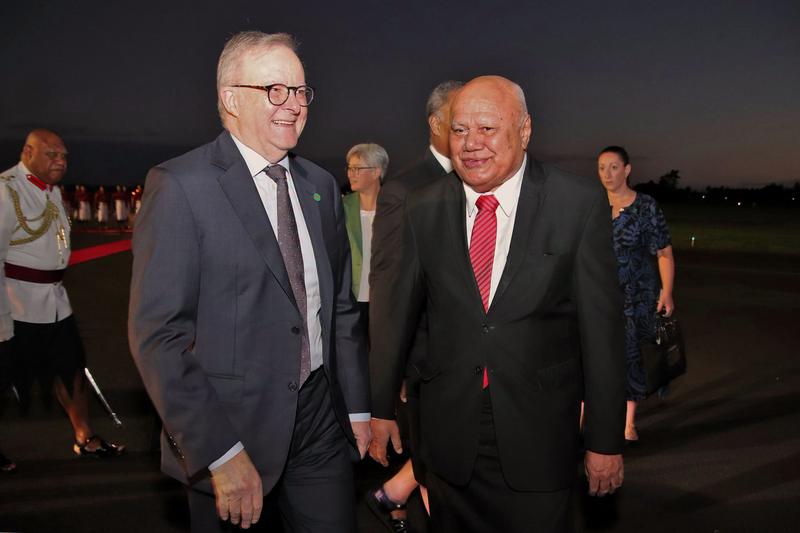
Following the signing ceremony, Rabuka and Albanese held bilateral talks, joined by Fiji's Minister for Foreign Affairs and External Trade Sakiasi Ditoka, Minister for Defence and Veteran Affairs Pio Tikoduadua, Australian Foreign Minister Penny Wong, Australian High Commissioner to Fiji Peter Roberts and senior officials from both governments.
The discussions focused on strengthening the longstanding Vuvale Partnership amid an increasingly complex geopolitical environment and growing regional challenges.
Rabuka welcomed Australia's continued support for Fiji's development priorities and described Australia as one of Fiji's closest and most trusted partners.
The leaders also acknowledged the contribution of approximately 5,200 Fijians employed across Australia under the Pacific Australia Labour Mobility (PALM) Scheme and discussed preparations for the upcoming Pacific Islands Forum Leaders Meeting in Palau, including regional climate resilience initiatives.
Both governments reaffirmed their commitment to promoting regional solidarity and ensuring the Pacific remains a region characterised by peace, resilience, security and shared prosperity.
Albanese receives Fiji's highest honour
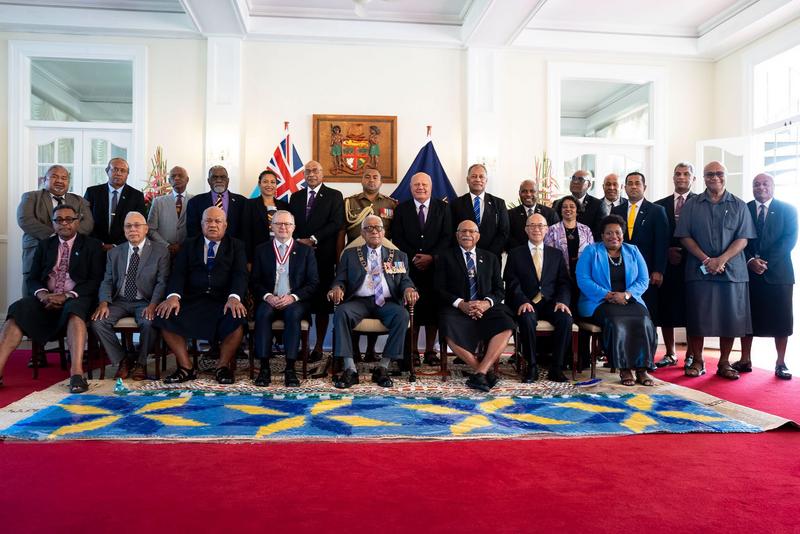
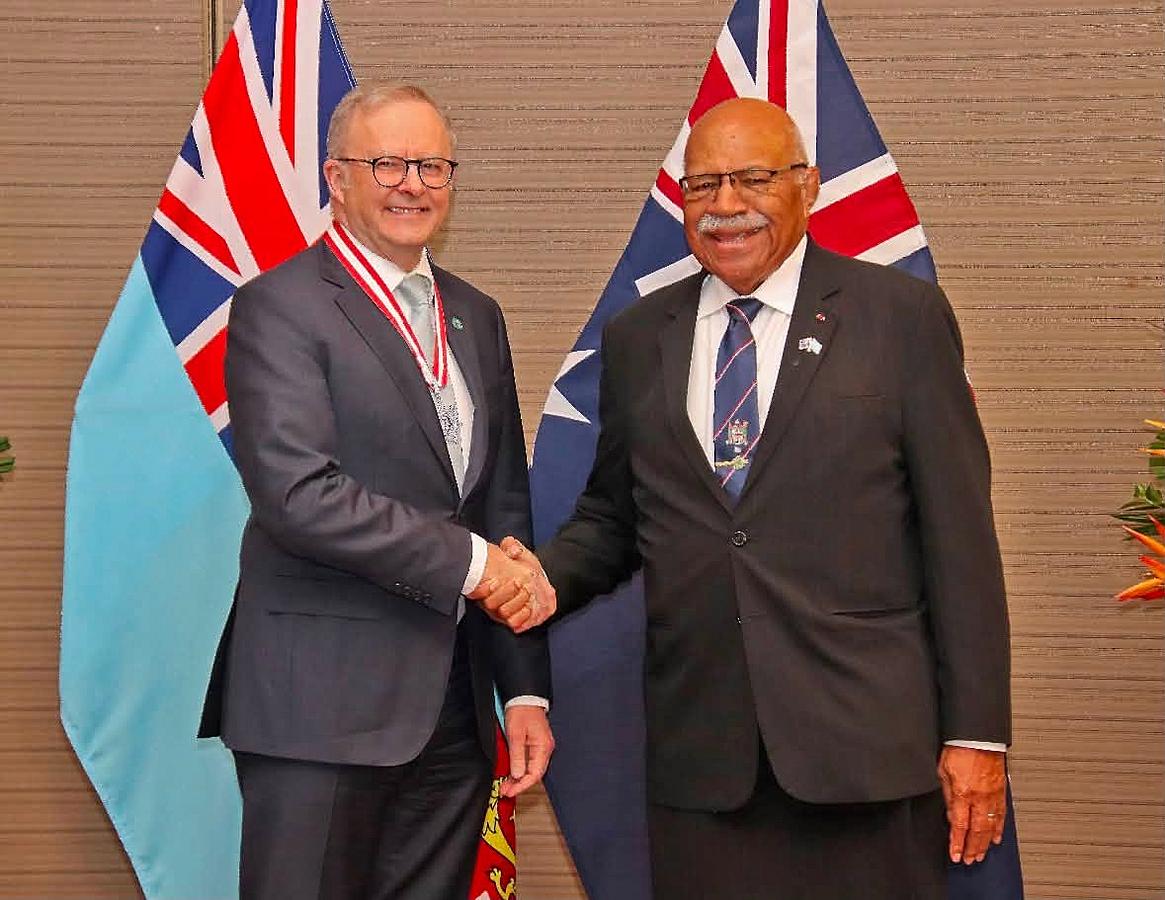
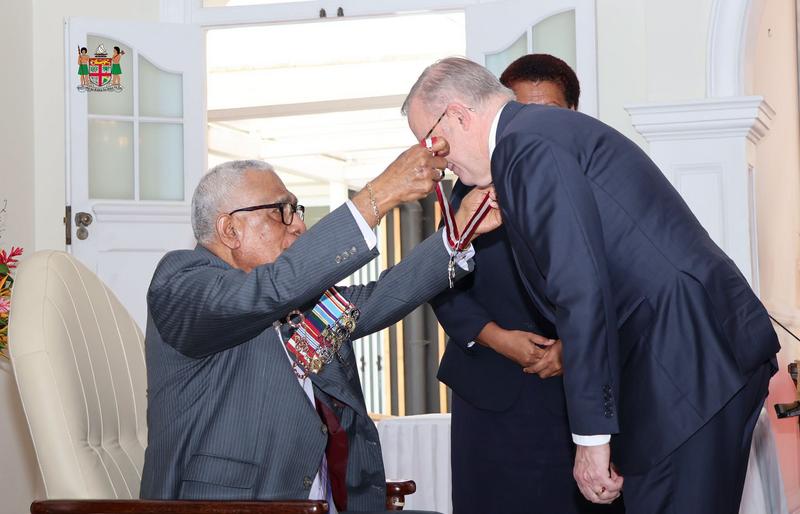
During the visit, President Lalabalavu conferred the Companion of the Order of Fiji (General Division) on Albanese, the country's highest national honour.
The award recognises eminent achievement and outstanding service to Fiji or humanity.
The President said the relationship between Fiji and Australia extends beyond diplomatic ties, highlighting the deep people-to-people connections forged through migration, education, employment and family relationships.
He also recognised Albanese's contribution to strengthening cooperation across diplomacy, trade, investment, education, health, aviation, defence, environmental protection and sport.
Senior members of both governments, including Cabinet ministers, members of the diplomatic corps and Australian officials, attended the investiture ceremony.
Skills hub to support workforce development
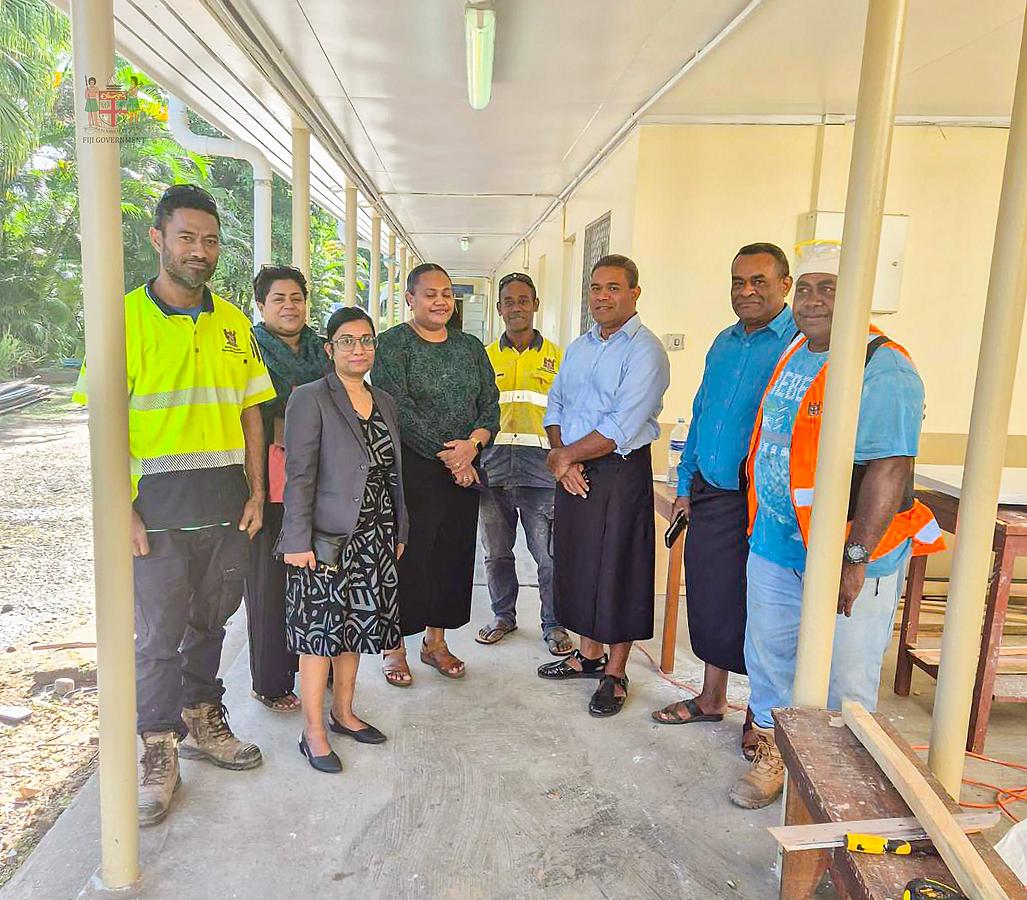
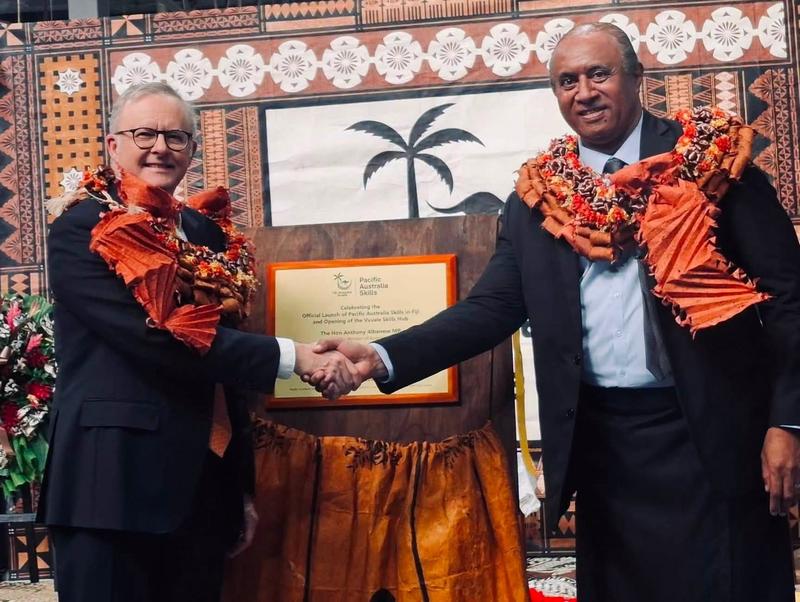
The visit also saw the official opening of the Pacific Australia Skills Hub in Suva, a refurbished vocational training facility established under the Fiji-Australia Vuvale Partnership.
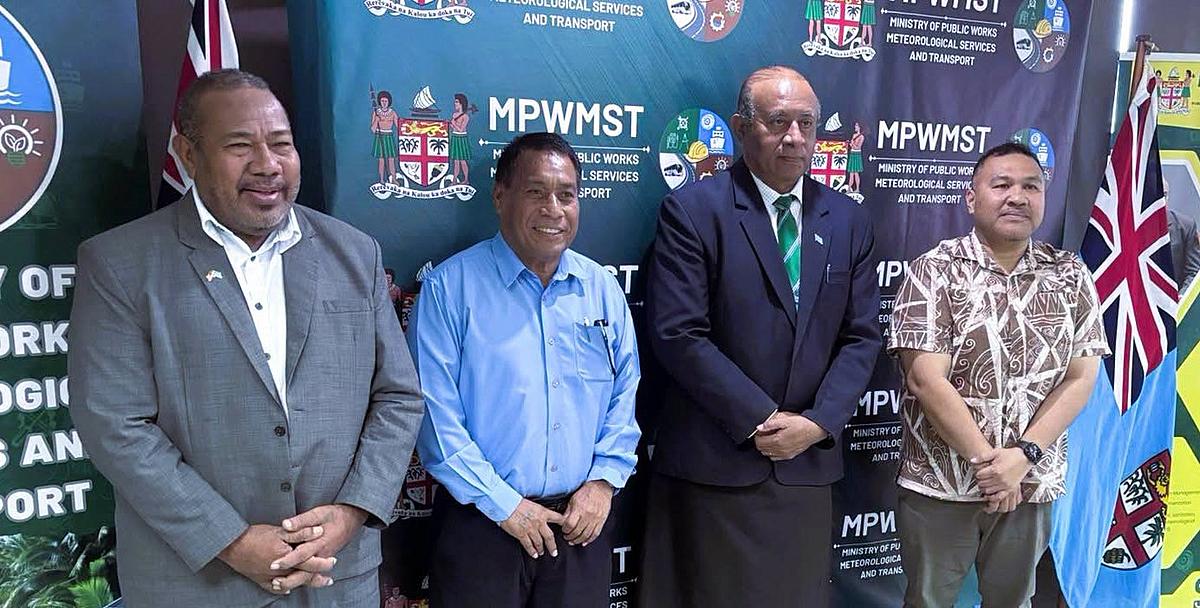
Opened by Albanese and Fiji's Minister for Public Works, Meteorological Services and Transport, Ro Filipe Tuisawau, the hub aims to expand technical and trade training to address skills shortages in Fiji's infrastructure and public works sectors.
The facility will provide training in areas supporting the construction and maintenance of roads, bridges, government buildings, water and sanitation infrastructure and transport networks, while also strengthening the capacity of local trainers.
Tuisawau said the hub comes at a critical time as the government seeks to attract and retain skilled workers to meet growing infrastructure demands. He said the initiative would create more opportunities for Fijians to access vocational training while supporting economic growth and improving public service delivery.
The opening coincided with the signing of the Fiji-Australia Vuvale Union Treaty, reinforcing cooperation between the two countries on workforce development, skills mobility and long-term economic development.
Visit concludes with stronger regional agenda
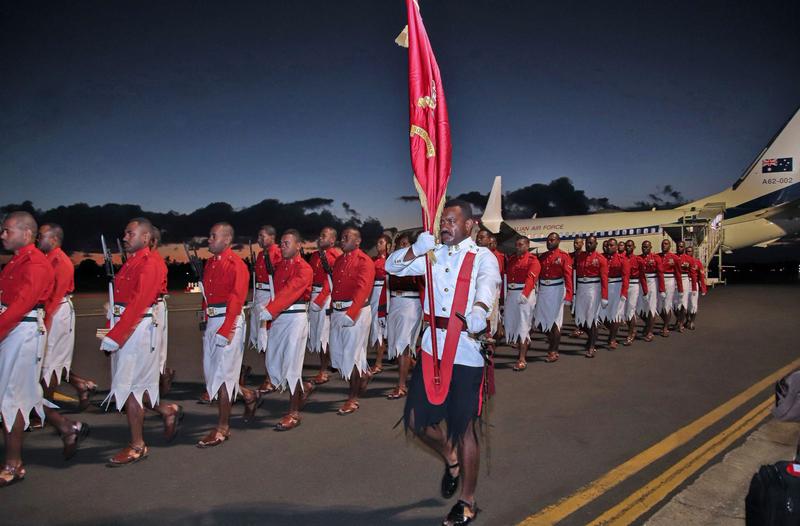
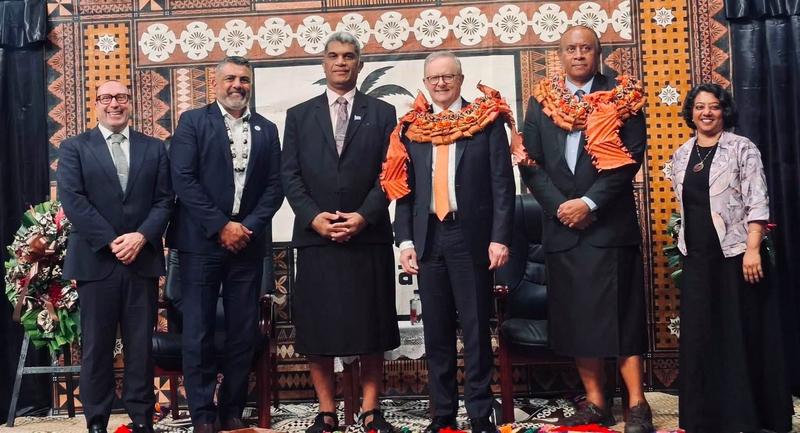
Albanese concluded his official visit to Fiji on Monday, departing from Nausori International Airport after a military farewell ceremony hosted by Deputy Prime Minister and Minister for Tourism and Civil Aviation Viliame Gavoka.
Fiji said the visit reinforced the strategic importance of its relationship with Australia and established a new framework for deeper collaboration across security, economic development and regional governance.
The new agreements are expected to strengthen bilateral cooperation in areas including trade and investment, education, border management, policing and national security while enhancing both countries' ability to address transnational crime and broader Pacific security challenges.
For Fiji, the signing of its first treaty arrangements represents a significant step in institutionalising one of its most important regional partnerships as both countries seek closer integration in response to evolving geopolitical, economic and climate-related challenges across the Pacific.