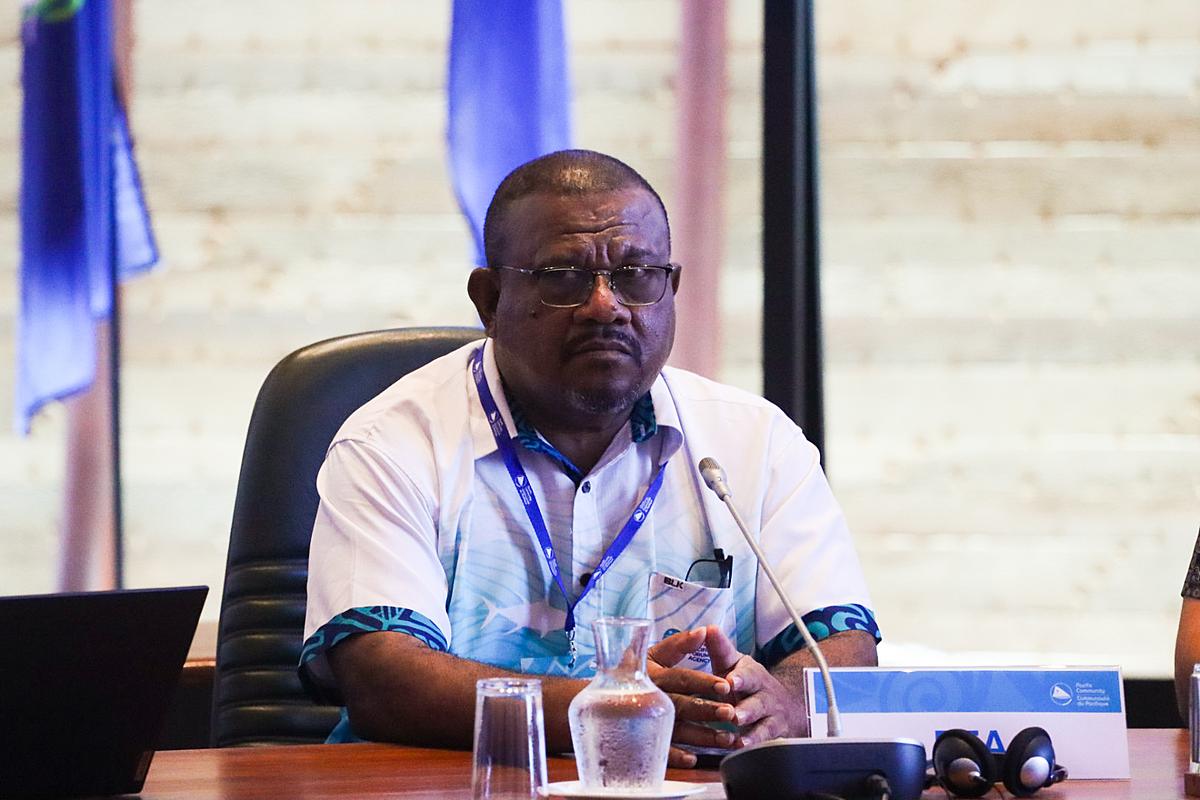
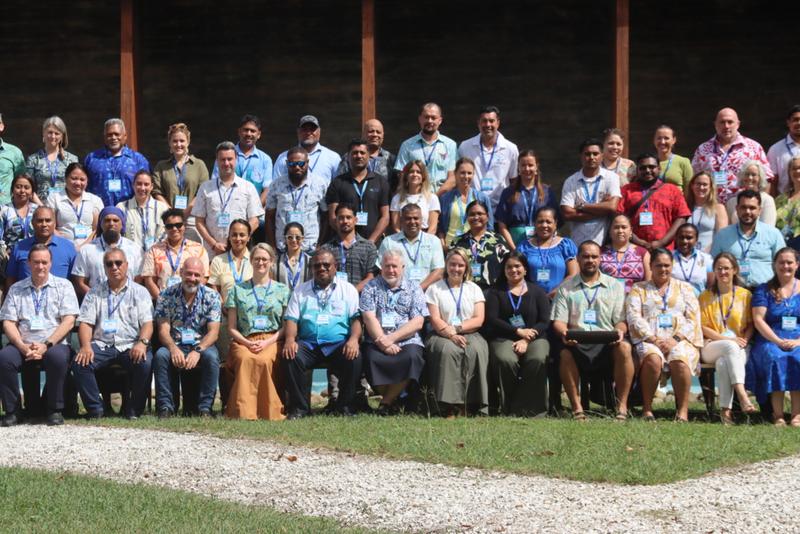
The Pacific Islands Forum Fisheries Agency (FFA) has reinforced its push for stronger regional coordination and policy alignment after participating in the 18th Heads of Fisheries Meeting convened by the Pacific Community (SPC) in Nouméa, New Caledonia.
The annual meeting, a key technical forum for Pacific fisheries leaders, brought together senior officials to review priorities across tuna management, coastal fisheries, and emerging challenges such as climate impacts and digital monitoring systems.
FFA Director-General Noan David Pakop engaged with SPC leadership on the sidelines, with both organisations agreeing to deepen institutional collaboration and accelerate harmonisation across regional programmes.
Discussions centred on improving coordination in monitoring, evaluation and learning systems, aligning technical assistance with national priorities, and expanding joint delivery mechanisms to enhance support for Pacific Island members.
The FFA, an intergovernmental body representing 17 Pacific Island countries, plays a central role in coordinating regional fisheries policy and ensuring the sustainable management of tuna stocks — one of the region’s most valuable economic resources.
At the meeting, fisheries officials also reviewed ongoing scientific and technical programmes, including tuna stock assessment work, observer training initiatives, and the rollout of electronic monitoring and reporting tools across the region.
The strengthened SPC–FFA collaboration reflects a broader push within the Council of Regional Organisations in the Pacific (CROP) to deliver more integrated, high-impact support, particularly as Pacific economies seek to maximise returns from fisheries while safeguarding sustainability.
For Papua New Guinea and other tuna-dependent economies, closer regional alignment is expected to improve policy coherence, strengthen compliance frameworks, and support value chain development amid shifting global seafood markets.