Fiji’s government is expanding efforts to diversify agricultural production in the country’s sugarcane belt, seeking to give smallholder farmers additional income opportunities while improving the long-term sustainability of agricultural land.
Agriculture, Waterways and Sugar Industry Minister Tomasi Tunabuna said diversification would complement, rather than replace, sugarcane production, which remains an important contributor to Fiji’s economy.
Speaking in Parliament, Tunabuna said 3,752 farmers, or 41.3% of the country’s cane farmers, collectively produced just 13.2% of total cane production in 2025.
He said the figures highlighted the need to give suitable smallholder farmers additional options to improve returns from their land.
“Diversification should not be viewed as an effort to move farmers away from sugarcane, but rather as a strategy to expand farmers’ economic choices and ensure land is utilised for activities that can deliver sustainable and productive returns,” Tunabuna said.
The government expects diversification to also support national food security, reduce reliance on imported food and strengthen rural livelihoods, while creating opportunities to supply the tourism sector, value-added industries and higher-value markets.
A key part of the strategy is a European Union-supported diversification study being undertaken with the Food and Agriculture Organization.
The study is assessing the feasibility of transitioning suitable areas within the cane belt to alternative high-value crop and livestock systems.
It will examine where sugarcane production remains commercially viable, where alternative crops could generate higher returns, and where integrated farming systems could be introduced. The study will also assess markets and value chains capable of supporting alternative agricultural activities.
Tunabuna said the first-phase report is expected to be completed by November 2026 and will guide consideration of a second phase, including potential pilot projects.
The government is also pursuing diversification initiatives while the study is underway.
Tunabuna cited the Fiji Water Citrus Project in the north as an example of how investment, land use and market opportunities could support alternative agricultural production.
Under Fiji’s 2026-27 National Budget, the Ministry’s Crop Production Division has also received funding specifically for crop diversification. The ministry is identifying and developing projects aimed at supporting smallholder sugarcane farmers.
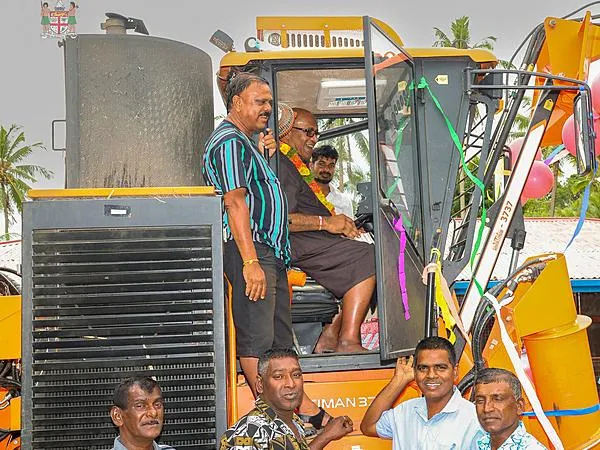
The government continues to provide assistance to cane farmers undertaking non-sugar crop activities through land preparation, small farming equipment, mechanisation, fertiliser and chemical support, agricultural advisory services, diversification projects and climate-smart agriculture.
Support also covers product development and value addition, as well as market alignment and development.
Tunabuna said the government would take a phased, evidence-based and market-driven approach to diversification.
“We do not want farmers to change crops without first understanding the production costs, available markets, value chains and potential returns,” he said.
“Our objective is to ensure that smallholder farmers have more choices, stronger and more resilient livelihoods, and the opportunity to achieve the best sustainable economic return from their land.”
The government said it would continue to support the sugar industry as a key pillar of Fiji’s agricultural economy while developing diversification opportunities aimed at strengthening the resilience and long-term sustainability of farming communities across the cane belt.