The Government for Reform, Empowerment, Accountability and Transformation (GREAT) Coalition has outlined policies aimed at expanding local businesses, reducing import dependence and preparing Solomon Islands for its planned graduation from least developed country status in 2027.
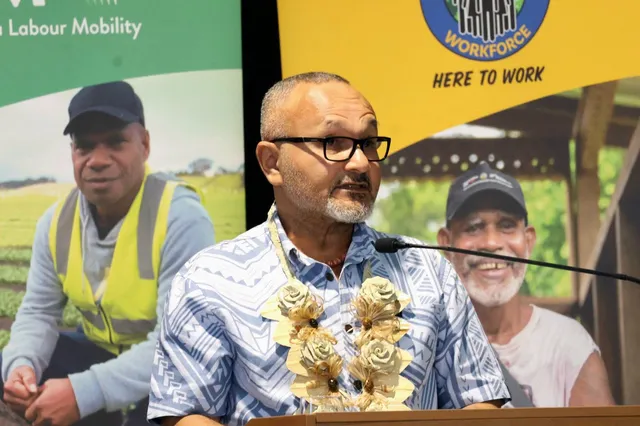
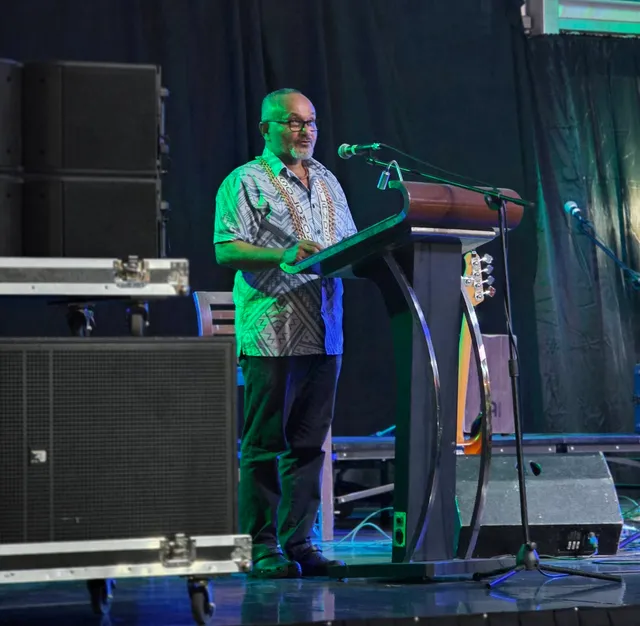
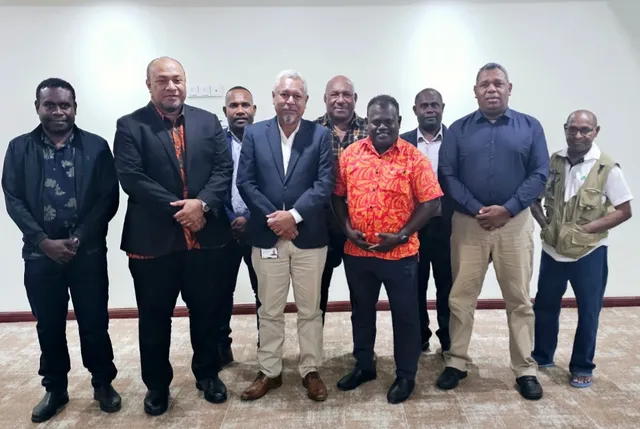
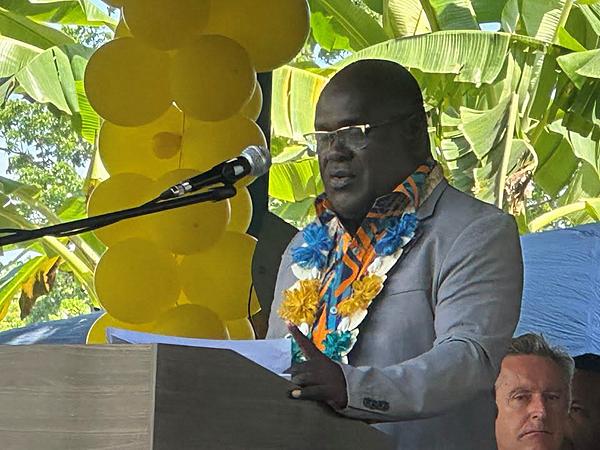
Commerce, Industry, Labour and Immigration Minister Harry Kuma announced the policy directions at the opening of the 2026 Annual National Trade Fair at SINU FOPA Village on Sept. 8.
Kuma said the government would prioritize increasing domestic production in food, fisheries, tourism and manufacturing, while encouraging the country to move from exporting raw resources toward downstream processing and value addition.
“We have been exporting logs, minerals, fish and crops in raw form, leaving the value-adding and profits to foreign nations. This must change,” Kuma said.
The government also plans to reduce import dependence, strengthen food security and create jobs through greater domestic production and processing.
Kuma identified micro, small and medium enterprises (MSMEs) as a key source of future employment and outlined measures including simplifying business registration, improving access to finance and markets, supporting value-added production and reforming government procurement to improve opportunities and payment access for small businesses.
The government also plans to strengthen the MSME Act and amend foreign investment legislation.
“Small businesses today can become major employers tomorrow,” Kuma said. “When we support one Solomon Islands business to grow, we are supporting families, employees, suppliers, farmers, transport operators and communities.”
Connectivity and digital trade
Improving road, maritime, aviation and digital connectivity is another priority, with the government seeking to better connect producers and tourism operators with domestic and international markets.
Kuma said the government would focus on expanding telecommunications coverage in productive and tourism areas, implementing the National E-Commerce Strategy, and promoting online marketing, digital payments and e-commerce platforms.
“Distance must no longer be a barrier,” he said, pointing to the potential for businesses in provinces such as Choiseul and Temotu to reach buyers in international markets.
The GREAT Coalition also plans to place youth, women, people with disabilities and provincial businesses at the center of its economic policies, while strengthening partnerships with educational and community institutions.
Kuma said economic growth must be both inclusive and environmentally sustainable, with innovation balanced against environmental protection and traditional knowledge.
“A Greater Solomon Islands Tomorrow cannot be built while half of our population remains on the margins of economic opportunity,” he said.
With Solomon Islands scheduled to graduate from least developed country status in 2027, Kuma said innovation and stronger domestic economic capacity would be needed to maintain growth without relying on special international concessions.
The government's National Development Strategy's eight pillars will guide its efforts to accelerate economic development and improve living standards, he said.
Kuma urged farmers to increase production and connect with markets, entrepreneurs to innovate, young people to develop skills and lead, investors to take a long-term approach, and consumers to buy local and support local businesses.
“Let us add value to our resources, create opportunities for our people, strengthen our businesses, and open the Solomon Islands to the world,” Kuma said.
The government also recognized the support of development partners, including Australia, New Zealand and China, as well as the private sector and exhibitors participating in the trade fair.