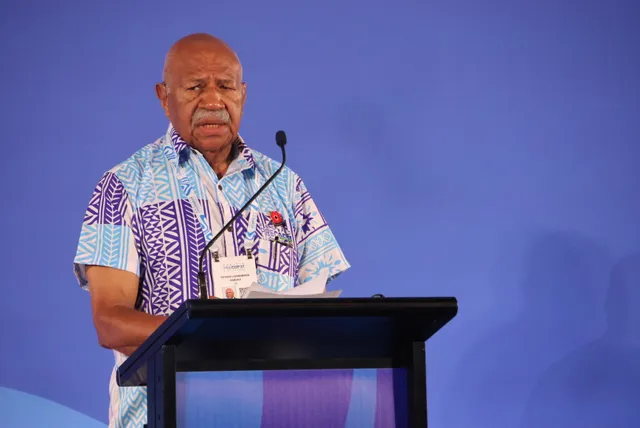
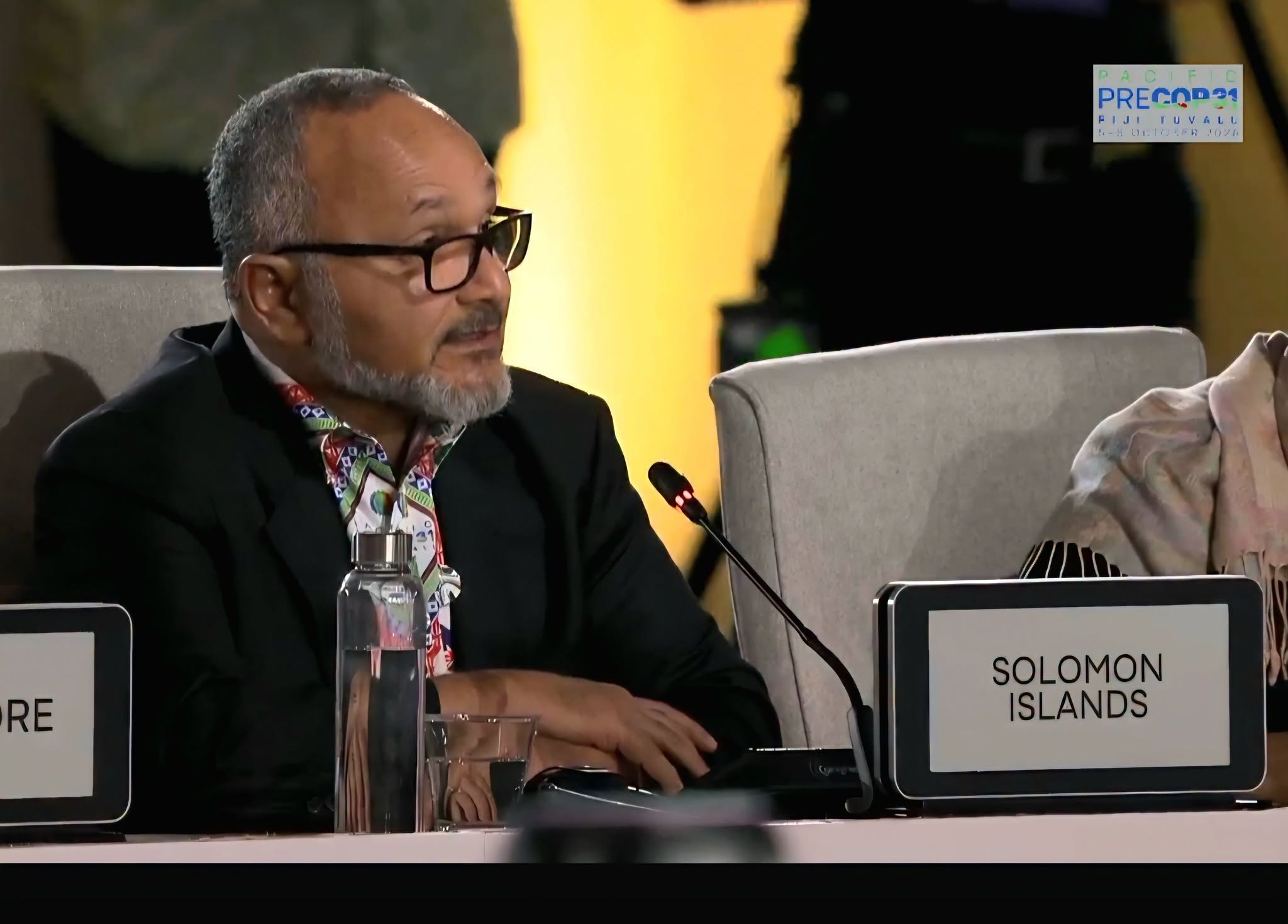
Solomon Islands Prime Minister Matthew Wale has called on major greenhouse gas emitters to make deep, economy-wide emissions cuts, warning that the world is on track to exceed the 1.5°C global warming threshold.
Addressing the leaders’ plenary at the Pacific Pre-COP31 meeting in Nadi, Wale said decades of climate negotiations had failed to deliver the ambition required under the Paris Agreement.
“COP31 cannot be another talkfest,” Wale said, urging Group of Seven (G7) countries to increase their climate ambition in line with their historical responsibility and major emerging economies, including BRICS members, to lead on emissions reductions.
He highlighted the scale of fossil fuel subsidies, citing International Monetary Fund estimates of US$7.43 trillion, which he said exceeded global climate finance of US$2.1 trillion in 2025 by more than three times.
“We are paying to fuel the overshoot,” he said.
Wale also criticised global spending priorities, noting that military expenditure reached nearly US$2.9 trillion last year, more than 16 times official development assistance, even as aid declined by almost a quarter.
“The shortfall in what reaches us is not because the world lacks money. It is because it lacks political will,” he said.
He called for climate finance to be grant-based, demand-driven and channelled through national systems. He also urged development partners, multilateral development banks and climate funds to use the Multi-Dimensional Vulnerability Index (MVI) when determining access to funding.
“Finance must follow vulnerability,” he said.
Wale further called for published disbursement timelines, independent tracking of pledges against actual delivery, full capitalisation of the Pacific-led Pacific Resilience Facility (PRF) and a strong third replenishment of the Green Climate Fund.
Solomon Islands calls for accessible climate finance
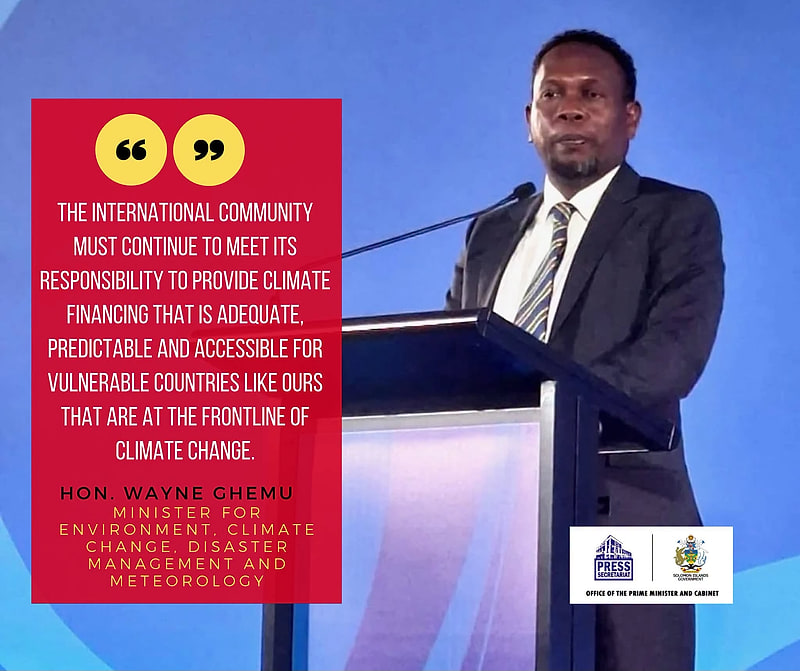
Solomon Islands Environment, Climate Change, Disaster Management and Meteorology Minister Wayne Ghemu echoed the call for climate finance that responds to the needs of vulnerable Pacific communities.
Speaking at Pre-COP31, Ghemu said adopting the MVI would better reflect the circumstances of small island developing states and help unlock development and climate finance from public and private sources.
He cited Tropical Cyclone Malia, which caused more than US$30 million in damage to Solomon Islands, as an example of why funding mechanisms must be suited to the needs of climate-vulnerable countries.
Ghemu said Pacific governments were strengthening their own financial management systems through measures such as climate budget tagging and linking public spending to vulnerability assessments.
“These reforms are about Pacific leadership, ownership and agency,” he said.
However, he stressed that stronger national systems did not diminish the responsibility of international partners to provide adequate and predictable funding.
“The international community must continue to meet its responsibility to provide climate financing that is adequate, predictable and accessible for vulnerable countries like ours that are at the frontline of climate change,” he said.
Ghemu also welcomed the PRF, which Pacific leaders backed at their September 2025 meeting in Honiara and which is already supporting community projects in nine Pacific countries.
He urged development partners to convert their pledges into paid-in capital to enable the facility to expand its support for climate resilience across the region.
The calls from both leaders underscore the Pacific's push for stronger emissions reductions, funding arrangements that account for countries' vulnerability, and greater accountability for climate finance commitments ahead of COP31.