
Fiji is strengthening its livestock sector by equipping agricultural officers and industry stakeholders with modern feed formulation skills and digital tools aimed at reducing production costs, improving animal nutrition, and increasing local livestock productivity.
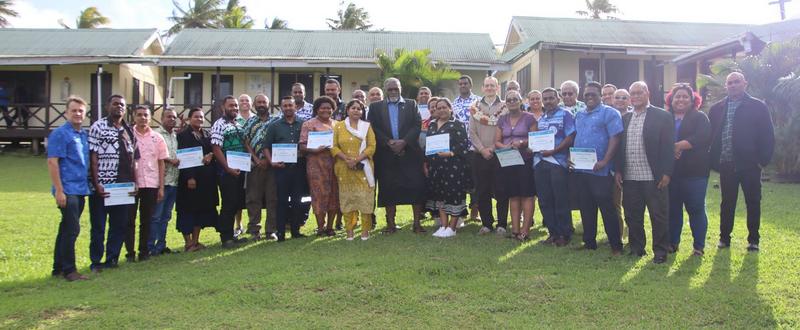
The Ministry of Agriculture, Waterways and Sugar Industry concluded a week-long Feed Formulation Training for the Pacific and introduced the FeedAccess Online Feed Formulation App during a regional training program held at the Animal Health and Production Office in Vatuwaqa.
Closing the program, Minister for Agriculture, Waterways and Sugar Industry Tomasi Tunabuna said the initiative forms part of the government's broader strategy to strengthen Fiji's livestock industry through innovation, capacity building, and greater use of locally available feed resources.
"The training focused on promoting the use of locally available feed resources such as cassava, copra meal, fish meal, and other agricultural by-products as cost-effective alternatives while ensuring that animal productivity and performance are maintained at optimal levels," Tunabuna said.
The training brought together agricultural extension officers, researchers, advisory officers, and livestock professionals from across Fiji, providing practical instruction in animal nutrition, feed formulation, and digital technologies that support livestock production.
Participants learned to evaluate the nutritional value of locally available feed ingredients and formulate balanced rations for different livestock species and production stages.
According to the ministry, feed accounts for between 65% and 75% of total livestock production costs, making feed efficiency a critical factor in improving farm profitability.
Tunabuna said developing expertise in least-cost feed formulation would enable extension officers to help farmers optimize livestock nutrition, reduce operating costs, and improve overall farm productivity.
A key component of the training was the introduction of the FeedAccess Online Platform, a digital application that allows users to formulate nutritionally balanced feed rations using smartphones, tablets, or computers without requiring specialized desktop software or complex spreadsheets.
Developed by France-based agricultural technology company FeedAccess, the platform enables farmers, researchers, extension officers, and feed manufacturers to calculate feed formulations using locally available raw materials while optimizing nutritional value and production costs.
Founded in 2013, FeedAccess provides a free digital feed formulation platform supporting 16 livestock and aquaculture species. The platform is currently used by more than 11,800 users across 185 countries.
FeedAccess Director and training facilitator Edouard Bault said the platform was designed to make feed formulation more practical and accessible for extension officers and livestock producers.
"Feed formulation should not be limited to specialists with advanced software," Bault said. "FeedAccess simplifies the process, allowing users to formulate balanced, least-cost rations using locally available feed ingredients. This helps farmers make informed decisions, reduce feed costs, and improve the productivity of their livestock."
Bault said the long-term success of the program would depend on participants applying their new knowledge in the field and sharing their expertise with livestock producers.
"By making better use of local feed resources, Pacific countries can reduce dependence on imported feeds while building more resilient and sustainable livestock production systems," he said.
The ministry said adoption of digital tools such as FeedAccess supports the objectives of the Fiji Livestock Sector Strategy, which identifies feed quality and affordability as major constraints to livestock development.
Tunabuna said expanding the technical capacity of ministry officers through practical technologies would help address these challenges while supporting national food security objectives.
He also acknowledged the contribution of Bault in delivering the technical training and thanked the Pacific Community (SPC) for partnering with the ministry to organize the regional program.
The minister encouraged participants to continue testing locally available feed ingredients, monitor livestock performance, and share their knowledge with farmers, students, and others involved in animal production.
The Ministry of Agriculture said it will continue investing in professional development and practical innovations that strengthen livestock productivity, improve food security, and support sustainable agricultural development in Fiji.