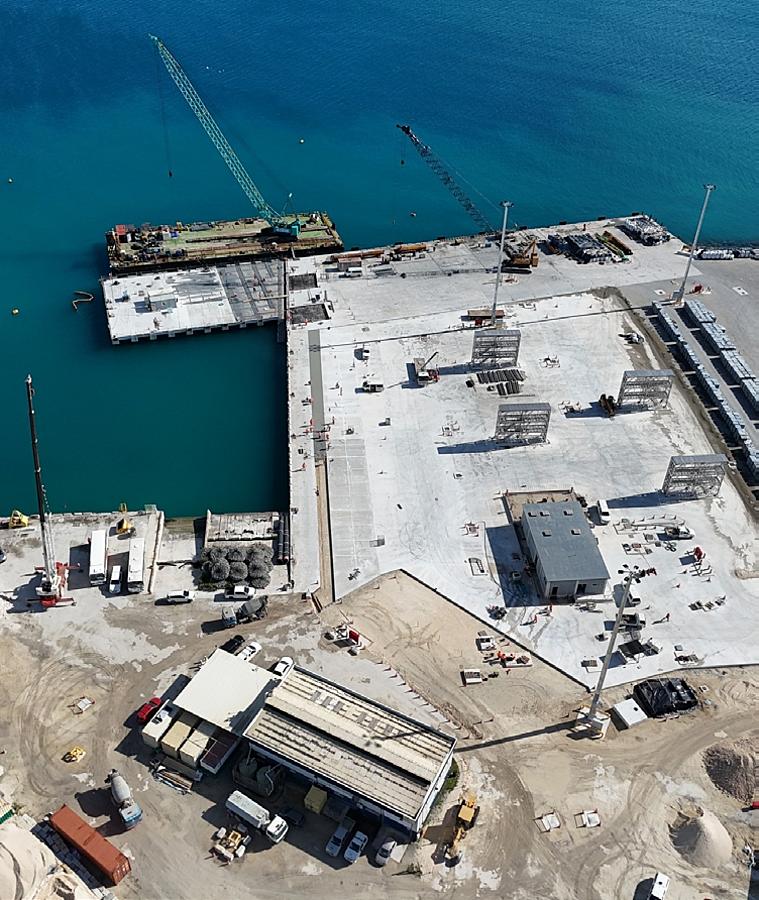
From digital infrastructure pipelines to climate-resilient planning, the Pacific Region Infrastructure Facility is redefining how governments and development partners plan, finance, and deliver infrastructure across one of the world's most geographically dispersed regions.
The Pacific faces one of the world's most complex infrastructure challenges. Small island economies spread across vast ocean distances must deliver transport, energy, water, telecommunications, and public infrastructure while contending with limited financial resources, high construction costs, vulnerability to climate change, and growing demands for sustainable development.
Against this backdrop, the Pacific Region Infrastructure Facility (PRIF) has emerged as a key regional platform for coordinating infrastructure investment, improving project planning, and helping governments prioritize projects that deliver long-term economic and social value.
According to the Pacific Region Infrastructure Facility Annual Report 2025, the organization significantly expanded its work during the year, introducing new digital planning tools, broadening technical assistance, and strengthening collaboration among governments and development partners across the Pacific.
A regional approach to infrastructure
Established in 2008, PRIF serves as a multi-partner coordination and technical assistance facility that helps Pacific governments improve infrastructure planning, investment coordination, and service delivery.
The facility supports 13 Pacific island countries—the Cook Islands, Fiji, Kiribati, the Republic of the Marshall Islands, the Federated States of Micronesia, Nauru, Niue, Palau, Samoa, Solomon Islands, Tonga, Tuvalu, and Vanuatu—while Papua New Guinea participates as an associate member. Development partners include the Asian Development Bank (ADB), the Australian Department of Foreign Affairs and Trade, the European Union, the European Investment Bank, the Japan International Cooperation Agency, New Zealand's Ministry of Foreign Affairs and Trade, the United States Department of State, and the World Bank Group.
Rather than financing infrastructure directly, PRIF focuses on improving how projects are identified, prioritized, prepared, and coordinated, ensuring governments and funding agencies make better-informed investment decisions.
Its current Phase V strategy, covering 2024 to 2027, places greater emphasis on climate resilience, disaster risk management, quality infrastructure, gender equality and social inclusion, and stronger regional cooperation.

Transforming infrastructure planning
One of the most significant changes underway is PRIF's shift from producing traditional infrastructure planning documents toward building institutional capacity within Pacific governments.
National Infrastructure Investment Plans (NIIPs), long regarded as the foundation of infrastructure planning across the region, are being redesigned to become living planning systems rather than static reports.
The updated approach embeds infrastructure planning within government budgeting and public investment processes, allowing countries to identify priority projects more efficiently while reducing reliance on external consultants.
During 2025, PRIF advanced work on the Solomon Islands National Infrastructure Investment Plan and the Vanuatu Infrastructure Strategic Investment Plan, while preparations were made for additional national planning updates across several Pacific countries in 2026. The revised methodology also places greater emphasis on climate resilience, environmental safeguards, economic analysis, and government ownership of investment decisions.
Creating a Pacific infrastructure marketplace
Perhaps PRIF's most transformative initiative during the year was the launch of the Pacific Infrastructure Pipeline, a digital platform designed to improve transparency across the region's infrastructure market.
The online database brings together more than 1,000 infrastructure projects and procurement packages, ranging from projects approaching tender to longer-term national investment priorities.
The platform enables governments, contractors, consultants, suppliers, and investors to search opportunities by country, sector, project value, procurement method, funding agency, implementation status, and expected timelines.
For Pacific businesses, early access to future procurement opportunities provides valuable time to develop technical capacity, form partnerships, and prepare competitive bids.
The platform also includes a searchable directory of Pacific businesses, making it easier for international contractors to identify local partners and increasing opportunities for domestic participation in major infrastructure projects.
PRIF expects the platform to become an increasingly important regional business development tool as additional governments and development partners continue uploading project information throughout 2026.

Climate resilience moves to the forefront
Climate adaptation has become central to Pacific infrastructure planning.
Recognizing that roads, ports, airports, water systems, and energy networks must withstand increasingly severe weather events, PRIF expanded technical assistance focused on integrating climate resilience into project design.
During 2025, the organization supported development of guidance on nature-based infrastructure solutions, introduced a Climate Co-Benefit Categorization Framework to improve climate reporting, and strengthened methods for incorporating climate and disaster risk assessments into national infrastructure planning.
Working groups also analyzed regional project pipelines to identify opportunities for coordinated investment and co-financing that support the Pacific Strategy 2050 and broader climate adaptation objectives.
Technical expertise expands across sectors
Demand for technical assistance continued to grow throughout the year.
PRIF implemented 18 technical assistance projects covering transport, energy, digital connectivity, urban development, environmental safeguards, infrastructure planning, and institutional strengthening.
Among the initiatives were development of the Pacific One Maritime Framework, regional digital readiness programs, electric vehicle standards, updated building codes, environmental and social safeguard frameworks, and water sector capacity-building initiatives.
The projects are intended not only to address immediate infrastructure needs but also to strengthen institutional capacity across Pacific governments and improve long-term project delivery.
Strengthening regional collaboration
Infrastructure development in the Pacific depends heavily on coordination among governments, multilateral institutions, and bilateral development partners.
To improve alignment, PRIF convened 26 sector and thematic working group meetings during 2025, bringing together representatives from development agencies, regional organizations, and Pacific governments.
These working groups focused on transport, energy, urban development, climate resilience, environmental safeguards, water and sanitation, digital infrastructure, and social inclusion, helping reduce duplication of assistance while identifying opportunities for joint investment.
The report notes that stronger collaboration is also improving the efficiency of infrastructure planning by encouraging governments and development partners to align investments with national priorities rather than pursuing isolated projects.
Investing in knowledge and capacity
Alongside project planning, PRIF continued investing in knowledge sharing and professional development.
During 2025, the facility launched a regional capacity development program, conducted six training sessions across the Pacific, organized five technical webinars, and hosted PRIF Week 2025 under the theme "Build Forward Better."
The event attracted 574 participants from 23 countries, bringing together policymakers, infrastructure agencies, financiers, development partners, consultants, academics, and private sector representatives to discuss emerging priorities and best practices for resilient infrastructure development.
Looking ahead
Development partners have committed USD14.98 million to support PRIF's current four-year phase, with USD5.55 million committed or contracted during 2025 and USD3.24 million disbursed over the year.
As infrastructure demand accelerates across the Pacific, PRIF's evolving role reflects a broader shift in regional development strategy. Beyond funding individual projects, the emphasis is increasingly on strengthening institutions, improving project readiness, enhancing regional coordination, and ensuring that infrastructure investments are resilient, inclusive, and economically sustainable.
For Pacific governments—including Papua New Guinea—these initiatives offer more than technical support. They provide a shared framework for developing infrastructure that is better planned, better coordinated, and better positioned to attract both development financing and private investment, helping lay the foundations for more resilient and connected economies across the region.