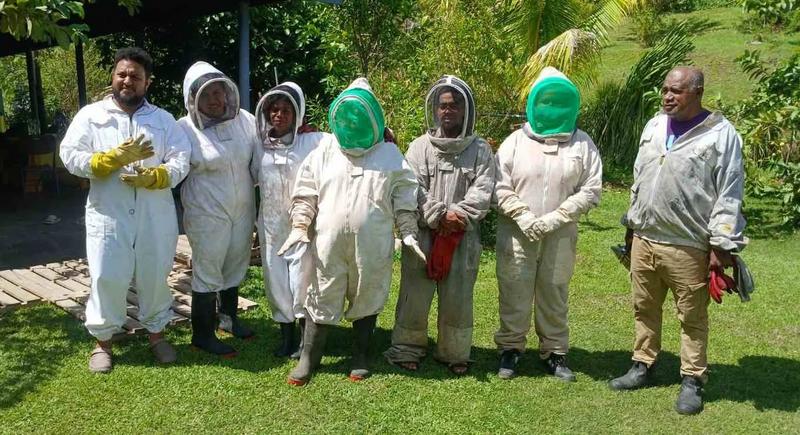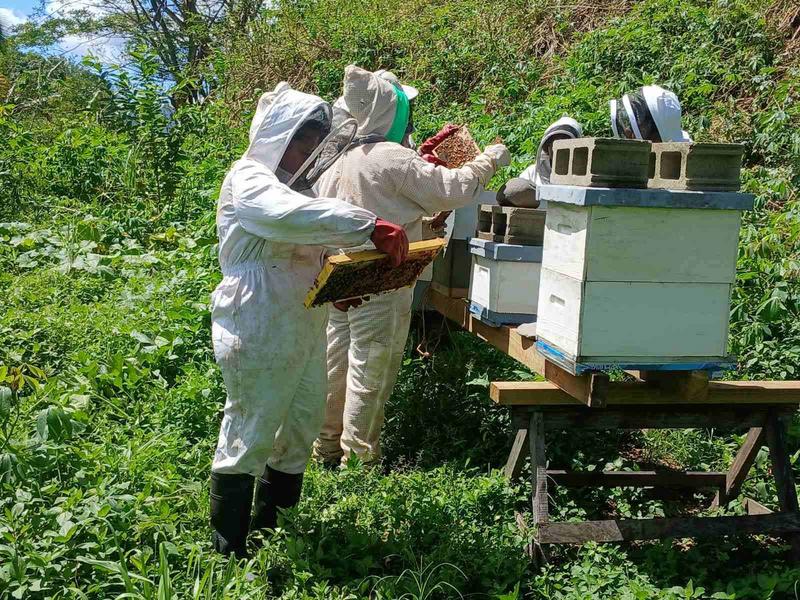
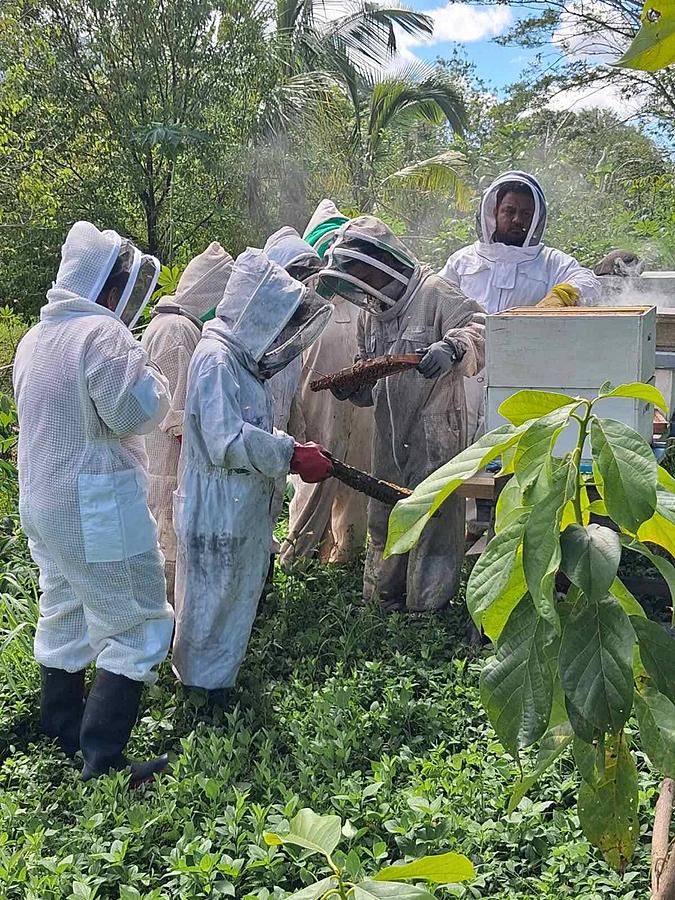
Ten farmers in Fiji have completed a four-day basic beekeeping training in Sabeto, Nadi, as part of efforts to strengthen climate-resilient agriculture and diversify rural incomes.
The training, conducted under the Farmer Field School activities of the Climate Smart Agriculture Programme, equipped participants with practical skills in bee biology, colony management, hive setup and honey harvesting, alongside pest and disease management.
Organisers said the initiative aims to help farmers integrate beekeeping into existing farming systems, creating additional income streams while supporting pollination and ecosystem health.
Beekeeping remains a small but growing subsector in Fiji’s agricultural landscape, driven by favourable tropical conditions and increasing demand for locally produced honey. Production is largely undertaken by smallholder farmers and backyard beekeepers, with common species including Apis mellifera (European honeybee) and Apis cerana (Asian honeybee).
Industry stakeholders have identified strong potential for expansion, particularly in niche markets such as organic and raw honey, beeswax products and value-added goods. However, the sector continues to face structural challenges, including limited technical expertise, vulnerability to pests and diseases, and the impacts of climate variability on flowering cycles and forage availability.
Government and development programmes have increasingly promoted beekeeping as a low-cost, climate-resilient livelihood option, especially for rural and outer island communities. Beyond income generation, bees play a critical role in crop pollination, contributing to productivity in fruit, vegetable and root crop farming systems.
The Sabeto training also introduced participants to opportunities in honey marketing and small-scale enterprise development, encouraging farmers to explore commercial pathways in the sector.
The initiative forms part of broader efforts to enhance food security, strengthen rural livelihoods and build resilience in Fiji’s agriculture sector. The training concluded on April 16.