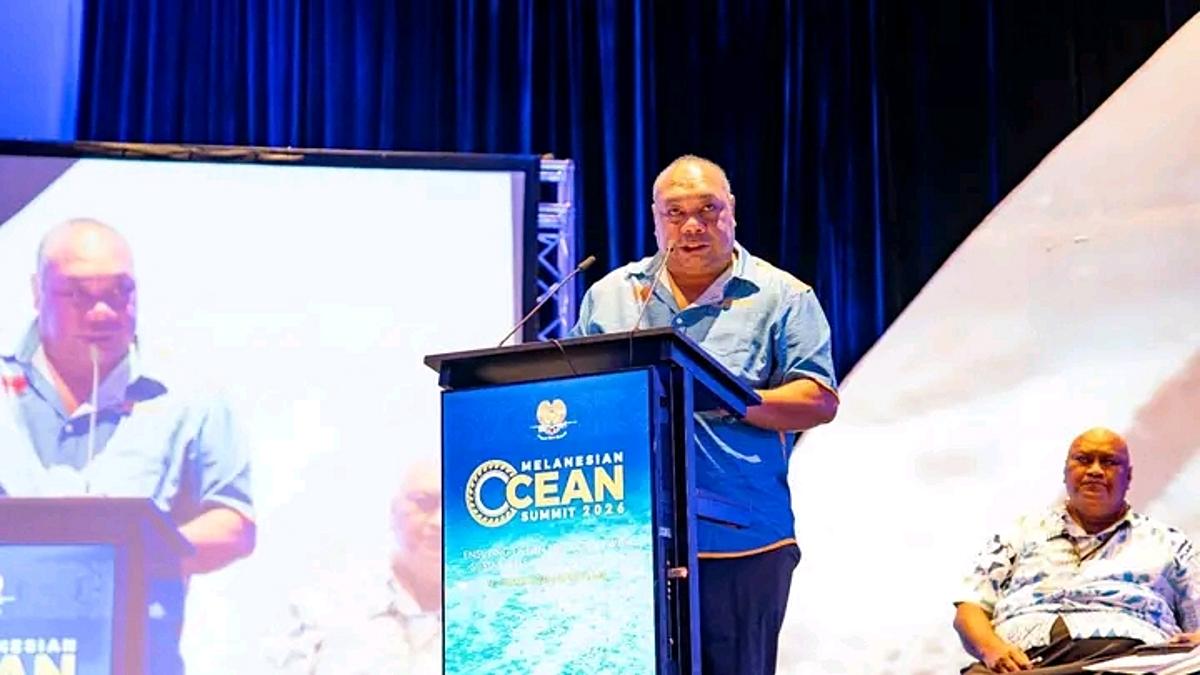
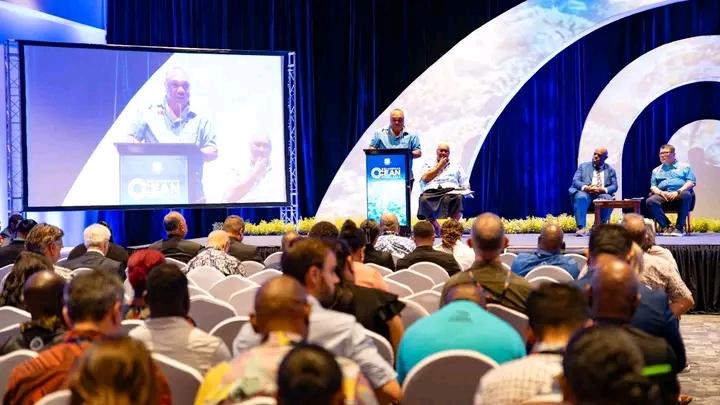
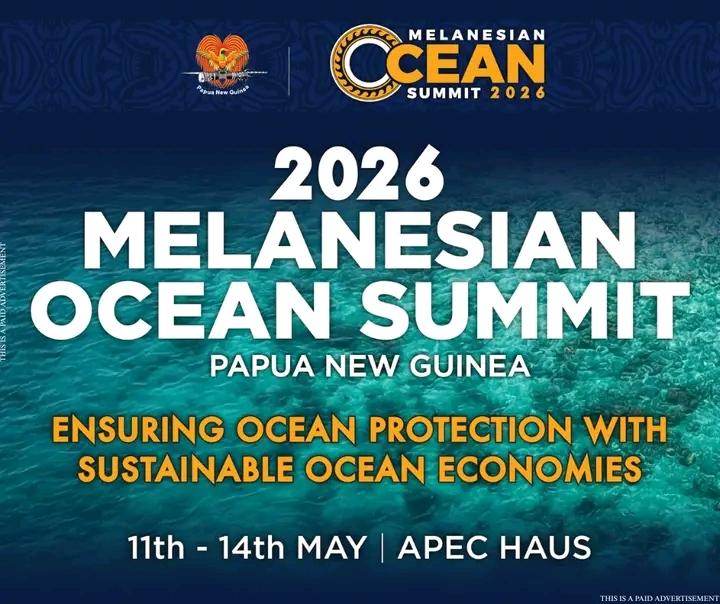
Papua New Guinea has strengthened its push to become a regional leader in sustainable ocean industries following the successful hosting of the inaugural 2026 Melanesian Ocean Summit at APEC Haus in Port Moresby from May 11–14.
Held under the theme “Ensuring Ocean Protection with Sustainable Ocean Economies,” the four-day summit brought together Pacific leaders, government representatives, researchers, development partners, and fisheries stakeholders to advance a regional strategy focused on marine conservation, fisheries development, climate resilience, and blue economy investment.
Closing the summit on May 14, the Minister for Fisheries and Marine Resources said the gathering had “transformed ambition into action, and solidarity into a shared Melanesian pathway for our ocean.”
The Minister said the summit demonstrated that Melanesian nations are increasingly viewing ocean protection and economic growth as interconnected priorities.
“Our ocean is not a frontier to be exploited, but a legacy to be stewarded,” the Minister said.
A major outcome of the summit was renewed commitment to the Melanesian Ocean Corridor of Reserves (MOCOR), a regional framework designed to protect marine ecosystems while supporting economic growth, coastal livelihoods, and food security.
Leaders reaffirmed support for the global “30 by 30” conservation target, which aims to protect 30 percent of the world’s oceans by 2030, while emphasizing that conservation initiatives must also deliver direct economic benefits to Pacific communities.
The Minister said discussions throughout the summit reinforced the importance of building “resilient blue economies” supported by sustainable financing, stronger fisheries management, renewable energy investment, and regional cooperation.
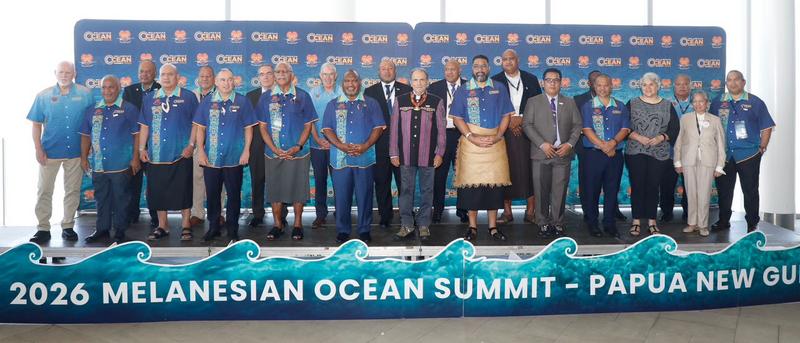
Business and investment opportunities linked to the blue economy emerged as a major focus throughout the summit.
Delegates discussed expanding sustainable fisheries industries, strengthening tuna value chains, developing blue carbon markets, improving marine tourism opportunities, and increasing climate-resilient coastal enterprises across Melanesia.
One of the major economic initiatives highlighted was the East New Britain Initiative for tuna value capture, aimed at increasing downstream processing and boosting returns from PNG’s fisheries sector.
“The takeaway is clear: the blue economy must be people-centred, climate-resilient, and anchored in sustainable fisheries,” the Minister said.
PNG also announced that it will host the Pacific-Led Innovation Tuna Forum later in 2026 in Port Moresby, positioning the country as a regional hub for fisheries innovation and sustainable tuna industry development.
The summit emphasized that marine protected areas should not only serve conservation purposes but also function as economic assets supporting fisheries productivity, food security, tourism growth, and climate adaptation.
“MPAs are not just conservation tools — they are food security, climate resilience, and economic engines,” the Minister stated.
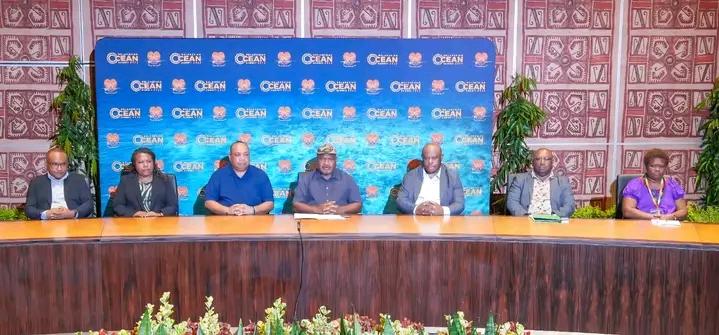
Pacific nations including PNG, Fiji, Vanuatu, and Palau shared experiences on locally managed marine areas and traditional conservation systems that have delivered positive environmental and economic outcomes for coastal communities.
Ocean finance discussions also featured prominently during the summit, with leaders acknowledging that long-term marine protection will require stronger governance systems, improved institutional capacity, and diversified financing mechanisms.
Delegates reviewed existing Pacific financing models, including the Micronesia Conservation Trust, the Coral Triangle Initiative Fund, and Niue’s ocean conservation credits system, as examples of innovative funding approaches for sustainable marine management.
The Minister said the challenge facing the region was “not only mobilising money, but building the systems to manage it.”
Leaders agreed that future financing for MOCOR would require stronger governance structures and Pacific-led investment mechanisms capable of supporting enforcement, scientific research, and community resilience programmes.
The summit further highlighted the growing economic importance of blue carbon ecosystems such as mangroves and seagrass habitats, which contribute to climate adaptation, coastal protection, and national emissions reduction goals.
In the high-value fisheries sector, Melanesian countries agreed to strengthen cooperation on bêche-de-mer management through coordinated licensing systems, stronger traceability measures, and regional branding standards aimed at increasing export value for sustainably sourced marine products.
The proposed Melanesian Bêche-de-mer Ocean Alliance will work through the MSG Fisheries Technical Advisory Committee to improve standards across the supply chain while maintaining national control over fishing quotas.
According to the Minister, “a traceability and branding regime will capture the premium for verified Melanesian provenance — turning sustainability into direct economic return for our fishers.”
The summit also addressed the growing economic risks associated with climate change, with scientists warning that warming oceans are already affecting tuna migration patterns and coastal fish stocks across the Pacific.
To strengthen regional scientific capability, delegates committed to establishing a Melanesian Ocean Research Hub linking universities and research institutions across the region.
Maritime security and fisheries enforcement were also identified as critical economic priorities.
PNG announced plans to establish a national Fusion Centre to improve monitoring, surveillance, and compliance operations targeting illegal, unreported, and unregulated fishing activities, marine pollution, and transboundary maritime threats.
“Without enforcement, paper parks fail,” the Minister said, while reaffirming regional cooperation against illegal fishing activities.
The summit additionally highlighted the role of Indigenous knowledge systems in sustainable resource management and economic resilience.
PNG committed K1 million towards establishing a National Cultural Research Fund and announced plans for an Institute of PNG Studies dedicated to cultural and traditional knowledge research.
Leaders concluded the summit by declaring that the Melanesian Ocean Corridor of Reserves had moved beyond the concept stage into a functioning regional framework capable of attracting investment, strengthening marine governance, and supporting sustainable economic development across the Pacific.
“The Melanesian Ocean Corridor of Reserves is not an aspiration — it is now a working framework, owned by us, designed by us, and ready to be financed and enforced by us,” the Minister said.
Vanuatu was confirmed as the host of the next Melanesian Ocean Summit in 2028.