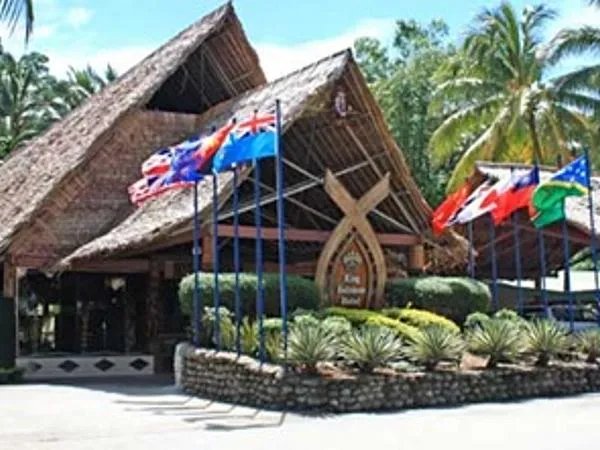
HONIARA, Solomon Islands — 9 July 2025 — One of Honiara’s most recognisable landmarks is preparing for a bold new chapter, as King Hotel and Resorts Limited (KHRL) embarks on a $45 million redevelopment of the King Solomon Hotel.
A joint venture between the Solomon Islands National Provident Fund (SINPF) Board and the O’Neill Remington Group (ORG), KHRL is combining local insight with regional investment to revitalise the iconic property — a move that signals strong confidence in the long-term potential of the Solomon Islands’ tourism and hospitality industry.
The redevelopment follows KHRL’s acquisition of the King Solomon Hotel property in late February 2025. The SINPF Board purchased a 55% shareholding in the hotel for $50 million, while ORG will contribute $45 million to fund the modernisation as part of its 45% stake.
All necessary building permits have been approved by the Honiara City Council, and construction is scheduled to begin in September, following the Pacific Islands Forum Leaders’ Meeting. Hotel operations will continue throughout the project, with all current staff retained during the transition.
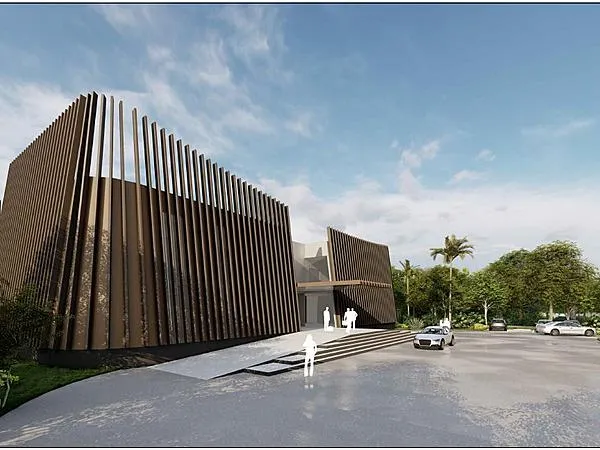
At the heart of the redevelopment is a bold architectural concept — three towering, modern “leaf hauses” along Hibiscus Avenue. Each will rise 18 metres high, merging traditional Solomon Islands design with contemporary building methods and hospitality standards.
The first leaf haus will feature a welcoming new hotel reception, café, public amenities and administrative offices. The second will house an open-plan commercial kitchen with cold and dry storage, an in-house bakery, butchery and an 80-seat restaurant. The third structure is set to become the home of Honiara’s first microbrewery and entertainment venue, complete with a bar and front-row views of the brewing process.
All three air-conditioned structures will be constructed using steel, expansive glasswork and composite roofing styled after traditional leaf houses. They will be connected by an elevated glass walkway running parallel to Hibiscus Avenue — a visual tribute to Honiara’s welcoming and safe urban environment.
“I am delighted that we are kicking off stage one of a multi-stage redevelopment of the hotel,” said SINPF Chairman Sir Dr Jimmie Rodgers. “The first stage, which will include construction and fit-out, is expected to cost an estimated 50 million dollars and take around 12 months to complete. Employment for around 80 local construction workers will be created during the stage one development.”
ORG Chairman Peter O’Neill reaffirmed his group’s commitment to the project and to the Solomon Islands.
“After seeing the strong performance of the King Solomon Hotel and the absolute support from locals and visitors alike to the changes since our involvement in late February this year, and the continued support of the government, I am very confident this further investment in the redevelopment of the hotel will yield strong financial results; excellent standards in hospitality in the nation’s capital; and provide new, long-term employment for Solomon Islanders,” O’Neill said.
“It will be an iconic building not just for Honiara, but for the entire Pacific — and a hospitality experience for locals and visitors alike that will set a new standard of excellence and fun in Honiara,” he added.
The King Solomon Hotel has long stood as a cultural landmark in the capital. With this redevelopment, it is set to become a symbol of growth, resilience and the future of Solomon Islands tourism — a destination where tradition and modernity meet under one roof.
HONIARA, Solomon Islands — Steady progress is being made on the new Honiara Aviation Complex Building, a key infrastructure component under the Second Solomon Islands Roads and Aviation Project (SIRAP2). The initiative is being implemented by the Ministry of Communication and Aviation (MCA) with support from the World Bank.
The contractor, China Railway Construction Engineering Group (CRCEG), has already completed the workers’ resting and storage areas and installed site noticeboards. Construction of the site office is also advancing steadily, while temporary utilities — such as water and electricity — are nearing completion.
Behind the scenes, technical work is moving forward. The finalisation of the Geotechnical Investigation Report marks a significant milestone, ensuring that the future structure will rest on solid, resilient foundations. In addition, final design documents have been submitted and are currently under review by the supervision consultant, Egis.
Foundation excavation works have also begun, signalling the transition into the next phase — structural construction. This brings actual progress under the design-and-build contract to 13 percent.
MCA Permanent Secretary Alwyn Danitofea underscored the importance of the facility in enhancing public service delivery.
“This new aviation complex building for MCA, CAASI, and Customs, Immigration, and Quarantine will ensure aviation work can be conducted faster and more efficiently,” he said.
The complex is being developed at Honiara International Airport and is seen as a critical investment to improve aviation management, operational coordination, and border control processes.
Looking ahead, the project team is focused on securing final stakeholder approvals for the design, implementing soil replacement in accordance with geotechnical specifications, and commencing concrete foundation works.
While early in its construction journey, the Honiara Aviation Complex is already laying the groundwork — literally and figuratively — for a more efficient and resilient air transport sector in the Solomon Islands.
The aviation complex is one of several transformative infrastructure projects being delivered under the SIRAP2 programme, which aims to improve connectivity, enhance safety, and unlock economic opportunities across Solomon Islands.
Other key projects include the construction of four new bridges in Malaita Province — Kolofe 1, Kolofe 2, Su’u Harbour, and Bira Bridges — to improve road connectivity and resilience; upgrades to major airports and airfields, including Honiara and Munda Airports, as well as the Santa Cruz (Lata) Airfield, to ensure safer and more reliable air transport; investments in air navigation systems in Makira-Ulawa and Temotu Provinces to enhance the safety of domestic flights; and support for regional airport maintenance to strengthen aviation infrastructure across the country.
Follow on LinkedIn:
Pacific Business Review
Be the "First" to get our exclusive Digital Magazine & Weekly Newsletter.