July 11, 2025

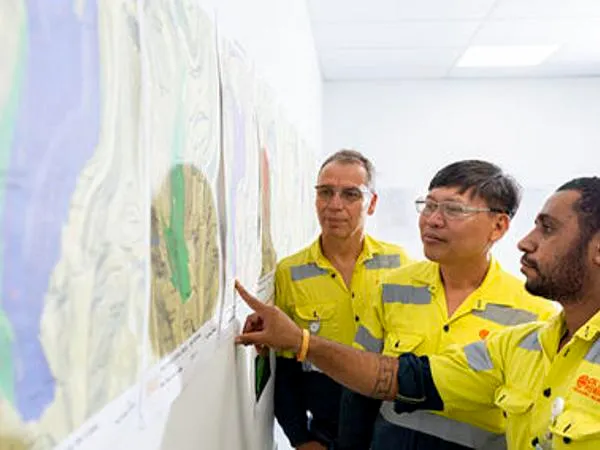
PORT MORESBY — Ok Tedi Mining Limited (Ok Tedi) is pleased to announce it has received clearance from Papua New Guinea’s Independent Consumer and Competition Commission (ICCC) for its purchase of the Misima Gold Project from Kingston Resources Limited (Kingston). This approval completes all conditions precedent required to finalise the transaction.

On 20 May 2025, Ok Tedi announced it would acquire the Misima Gold Project from Kingston for A$60 million (USD38 million), with additional contingent payments of up to A$35 million (USD22 million). With the ICCC's approval, the Misima Gold and Silver Project officially became an Ok Tedi entity as of 10 July 2025.

This acquisition marks a significant milestone under the company’s Growth 2050 Strategy, reaffirming Ok Tedi’s commitment to sustainable, nationally driven resource development.

“We are proud to welcome the Misima team into the Ok Tedi family,” said Ok Tedi Managing Director and CEO Kedi Ilimbit. “This acquisition signals a bold new chapter for Ok Tedi as we expand our footprint and future-proof our business for generations to come.”

The Misima Mine, which currently employs 31 people, will continue operating under existing employment terms during a structured integration phase.

“Ok Tedi is committed to ensuring a smooth transition and is working closely with employees, landowners, and local leaders to ensure the continued success of the project,” Mr Ilimbit added.
“This is more than a corporate transaction — it’s about PNG ownership, community partnership, and responsible growth.”

The Misima Gold and Silver Project is located 625 kilometres east of Port Moresby in Milne Bay Province and has a current mineral resource estimate of 3.8 million ounces of gold and 22.1 million ounces of silver.

Ok Tedi Mining Limited (OTML) is a majority state-owned enterprise that operates an open-pit copper, gold and silver mine located in the Star Mountains of Western Province, Papua New Guinea. The company exports copper concentrate to smelters and refineries in Japan, the Philippines, Indonesia, South Korea, India and Germany.

OTML has operated in the region for over 40 years, making significant contributions to development in Western Province through direct and indirect employment, royalties, compensation payments, and local business opportunities.

Its registered office and senior operational management are based in Tabubil, Western Province, with a representative office in Port Moresby and a marketing and logistics facility in Brisbane, Australia.

July 10, 2025

The Bank of Papua New Guinea (BPNG) has submitted its 2024 Annual Report and Financial Statements to the Minister for Treasury, in accordance with the Central Banking (Amendment) Act of 2024. The report captures a pivotal year marked by structural reform, digital innovation, monetary tightening, and renewed focus on institutional integrity.

The timely submission of the report reflects the Bank’s commitment to transparency, discipline and legal compliance. It outlines the central bank’s operational performance, policy direction and audited financial results for the year ending 31 December 2024.

“Publishing our Annual Report is more than a legal obligation. It is an important mechanism for communicating the work of the Bank and being accountable to the people of Papua New Guinea,” Governor Elizabeth Genia said.

The Bank recorded a net operating profit of K242.2 million (approx. US$65 million), a significant increase from K44.2 million (approx. US$11.8 million) in 2023. Operating income rose to K770.1 million (approx. US$207 million), largely due to stronger returns from foreign currency investments, while total expenditure was contained at K527.9 million (approx. US$142 million). The distributable profit remains under Retained Earnings, pending a decision by the Board.

In a separate press release, the Bank confirmed a dividend payment of K48.5 million (approx. US$13.1 million) to the National Government as part of its reporting process. This transfer reflects the allocation of distributable profit from the net operating profit of K242.2 million (approx. US$65 million), in accordance with statutory requirements following independent audit and review.

The process is consistent with international central banking and accounting standards, and forms part of the Bank’s annual financial cycle, the bank said.

Under the amended Central Banking Act, 80 percent of distributable profit is retained in the General Reserve Account until minimum capital thresholds are met. The Bank also recorded K837.8 million (approx. US$225 million) in unrealised gains transferred to the Unrealised Profits Reserve, and K114.1 million (approx. US$30.6 million) to the Gold Reserve, in line with international accounting standards. No funds were transferred to the General or Building Reserve accounts in 2024.

A major development during the year was the passage of the Central Banking (Amendment) Act 2024, which followed Phase II of the Independent Advisory Group (IAG) review. The legislation restructured the Bank’s governance and formally established a new Monetary Policy Committee (MPC), which will take over responsibility for setting monetary policy from 2025.

Throughout 2024, the Bank maintained a tightening monetary stance to address foreign exchange imbalances, contain inflation, and absorb excess domestic liquidity. Key reforms under an IMF-supported programme included the implementation of an interest rate corridor, adjustments to the cash reserve requirement (CRR), and the launch of weekly foreign exchange auctions.

By year-end, BPNG had conducted 26 foreign exchange auctions totalling more than US$1 billion, significantly reducing order backlogs and enhancing transparency. The kina depreciated by 6.8 percent against the US dollar during the year, under a managed "crawling peg" strategy intended to restore currency convertibility while managing inflation risks.

Despite currency depreciation, inflation remained contained. The trimmed mean inflation rate rose by just 3.3 percent over the year. However, the Bank noted that deposit and lending rates in the private sector were largely unresponsive to policy adjustments — highlighting continued weaknesses in the interest rate transmission mechanism.

Institutional reforms progressed in parallel. A new executive structure, aligned with the Bank’s Vision 2050 strategy, was approved by the Board. Each executive position is now explicitly linked to strategic priorities and key performance indicators.

Board Chair David Toua OBE commended the Bank’s operational discipline and ethics reforms. He acknowledged the dismissal of a number of staff involved in the manipulation of employee benefits, calling the swift action essential for maintaining the Bank’s credibility.
“Ethics is equally vital to governance,” Mr Toua said. “The integrity of BPNG must be beyond reproach.”

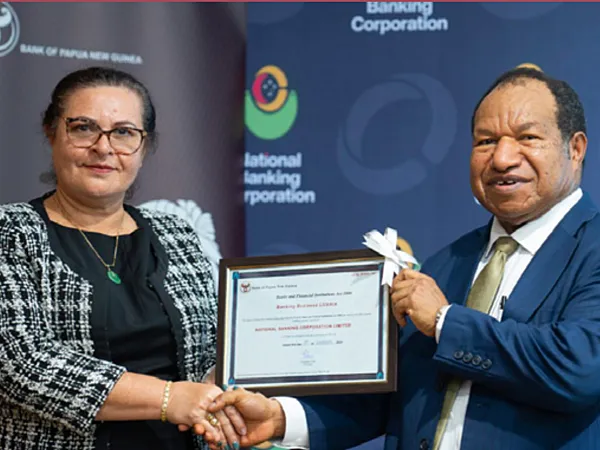
The Bank also continued to expand financial inclusion and digital innovation. It issued commercial banking licences to three new institutions: TISA Bank, Credit Bank PNG, and the state-owned National Banking Corporation (formerly People’s Micro Bank). These approvals marked the most significant expansion of PNG’s banking sector in years.

In March 2024, the Bank launched the Green Finance Centre in partnership with the Global Green Growth Institute (GGGI), the New Zealand Ministry of Foreign Affairs and Trade, and other development partners. The Centre supports the implementation of the Inclusive Green Finance Policy and aligns with PNG’s Third National Financial Inclusion Strategy.

The Bank also completed major technological upgrades, including enhancements to the Kina Automated Transfer System (KATS), expansion of mobile and digital payment services, and support for fintech development under its Regulatory Sandbox framework.

Regionally, BPNG maintained strong partnerships through forums such as the South East Asian Central Banks (SEACEN) group and the Pacific Islands Central Bank Supervisory College. It also contributed to PNG’s second Mutual Evaluation under the Asia Pacific Group on Money Laundering, which identified critical reforms needed to avoid grey-listing by the Financial Action Task Force (FATF).

Governor Genia reaffirmed the Bank’s long-term focus on inclusive growth, financial soundness, and institutional renewal. “None of this progress would be possible without the tireless work of our staff, the strategic guidance of the Board and the trust of the people of Papua New Guinea,” she said.

With the Monetary Policy Committee set to assume policy-making duties in 2025, and Vision 2050 implementation gaining momentum, the Bank of Papua New Guinea enters the new fiscal year with stronger financial, operational, and governance foundations, the report added.

July 10, 2025

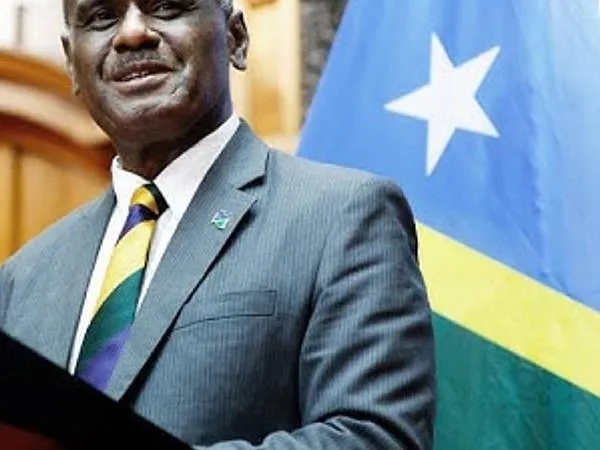
HONIARA, Solomon Islands — Prime Minister Jeremiah Manele has laid out a comprehensive development blueprint for the Solomon Islands under his newly formed Government for National Unity and Transformation (GNUT), anchored on four core pillars: unity and stability, economic transformation, infrastructure development and human capital growth.

Addressing the nation this week under the theme “Unity and Stability for Transformation and Prosperity,” Prime Minister Manele called on citizens and leaders alike to rise above political divisions and work collectively for national progress.

“Unity is not about agreeing on everything—it is about iu mi tugeda; honouring the greater good above personal gain,” the Prime Minister said. “Our strength lies in our diversity, resilience, and shared vision for a better tomorrow.”

Key Policy Priorities

PM Manele highlighted several major policy areas that will underpin GNUT’s agenda over the coming term. These include efforts to:

•  Diversify the economy by investing in agriculture, fisheries, tourism, and sustainable forestry and mining;

•  Accelerate transformative projects such as the Bina Tuna Processing plant and the Tina Hydro project;

•  Strengthen governance institutions and decentralise services to provincial governments;

•  Expand healthcare and education, with a particular focus on technical and vocational training.

“We must not merely manage the present; we must shape the future,” Manele declared, reinforcing his government's forward-looking approach.

Call for Stability

The Prime Minister also acknowledged the political turbulence of the past year and reaffirmed GNUT’s commitment to democratic integrity and national cohesion.

He urged all stakeholders to support the government's long-term development goals by putting aside partisan interests and embracing a common national purpose.

As the Solomon Islands embarks on a new political chapter, Manele’s address signals a determined push toward inclusive development, improved services and a stable foundation for transformation and prosperity.

July 10, 2025

The New Caledonian government is intensifying efforts to adapt to climate change as the Pacific territory experiences increasingly severe impacts, from rising sea levels and wildfires to extreme heat and flooding.

Climate scientists have confirmed that 2024 was the hottest year on record, and with global temperatures having already risen over 1.3 Degree Celsius in New Caledonia over the past 50 years, local authorities are acting urgently. The Intergovernmental Panel on Climate Change (IPCC) recently declared that the Paris Agreement’s goal of limiting global warming to 1.5 Degree Celsius is now out of reach.

“These alarming signals encourage us to redouble our efforts to combat these changes, which threaten our lifestyles, our ecosystems, and our economy,” the New Caledonian government said in a statement.

In response, New Caledonia has adopted a comprehensive Climate Change Strategy, officially approved by Congress on 29 April 2025. The strategy is the result of an inclusive process launched in 2024, involving more than 110 experts and over 2,700 public contributions. It outlines adaptation priorities across five sectors: agriculture and food transition, infrastructure and buildings, territorial planning and development, ecosystem preservation, and daily life.

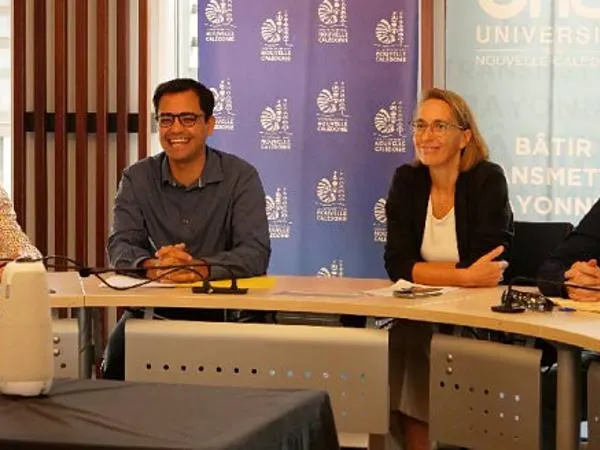
To sustain the momentum, the government—together with the University of New Caledonia (UNC)—will host the second edition of the Caledonian Climate Change Forum this year. The inaugural forum in April 2024 drew more than 400 participants at the Origin Cinema in Dumbéa.

"The government is implementing the New Caledonian Climate Change Strategy, which has just been passed by Congress," said Jérémie Katidjo Monnier. "It is essential that all stakeholders be able to share their experiences and projects, and that we find ways together to deploy this strategy across the country.

Monnier said that the success of this strategy depends in particular on all stakeholders sharing the most recent data in order to adapt their initiatives.

This year’s forum will feature roundtable discussions led by institutional officials, scientists, business representatives and community actors. Afternoon sessions will include focused mini-seminars on research, nature-based adaptation, sustainable agriculture, water management, and youth engagement.

"This forum is, of course, open to all Caledonians who have questions about climate change. They will be able to get answers from experts and stakeholders who work on this issue on a daily basis," added the government official.

A youth-focused platform will also allow young Caledonians to express their views directly to decision-makers. Alongside the sessions, a “village” of exhibitions and stands will showcase local associations and organisations working on practical climate adaptation initiatives.

The government’s commitment reflects a growing consensus in the region that climate adaptation is no longer optional but essential. As the Pacific faces rising environmental threats, New Caledonia hopes its strategy and inclusive approach will serve as a model for island resilience.

Participation in the round tables and seminars is by registration by clicking on the following link: https://docs.google.com/forms/d/e/1FAIpQLSdWKD8fpBaQ9frD7u0A1Kw6wEAY6Hb-RpmeI39Sq2nUsqVVZA/viewform
July 10, 2025

Minister for International Trade and Investment Richard Maru has declared his full support for the proposed 90-megawatt Kaugel Hydropower Project in the Southern Highlands Province, calling it a “transformational project of highest national priority.”

“The proposed K2.5 billion (USD 625 million) project, which will take four years to construct, has my highest support. This is a transformational project. We have a very high demand for cheaper, clean and reliable electricity in our country not only for our people but importantly to drive economic growth,” Maru said.

The minister called on all stakeholders to collaborate with the project’s proponents — including Kaugel Hydro Limited, landowners and the respective Provincial Governments of Southern Highlands, Enga and Western Highlands — to unlock the project’s potential and prioritise it for development.

“The Kaugel Hydropower Project is precisely the scale and quality of foreign direct investment PNG must prioritise. This hydro can provide long-term electricity to Porgera Mine, the proposed Baiyer and Ruti SEZ, Mt Hagen City and parts of Southern Highlands Province,” he said.

Maru also underscored the need for reliable electricity in the Highlands region, citing the deteriorating condition of the existing grid infrastructure including the Yonki hydro scheme, which is no longer able to meet demand.

“Persistent power outages stifle growth, deter investment and hold our people and country back from progress and development,” he said.

The minister also stressed the importance of securing broad community support and equitable benefits, especially for landowners and provincial governments involved.

“Clearly, we have to secure a social license for the project by securing clear landowner equity participation and business spin-off benefits, the participation in equity by the respective Provincial Governments and other benefits. These are critical issues that must be handled carefully and sensitively,” Maru stated.

According to the minister, the Kaugel Hydropower Project aligns with national goals for rural electrification, industrial development and the shift to low-emission energy systems.

He thanked Kaugel Hydro Limited Managing Director Karl Yalo and his team for their continued efforts to progress the project.

“We wish them every success to secure anchor customers to make the project bankable and we also hope that they can secure license from the National Energy Authority,” said Maru.

He added that his ministry and department remain fully committed to supporting the project.

“My Ministry and Department stands ready to champion this potential high impact and transformational project to demonstrate the unwavering commitment of the Marape-Rosso Government to renewable energy transition, equitable distribution of benefits and setting the foundations for a better and brighter future for our people and country as we celebrate 50 years of independence and chart our way forward for the next 50 years,” he said.

July 10, 2025

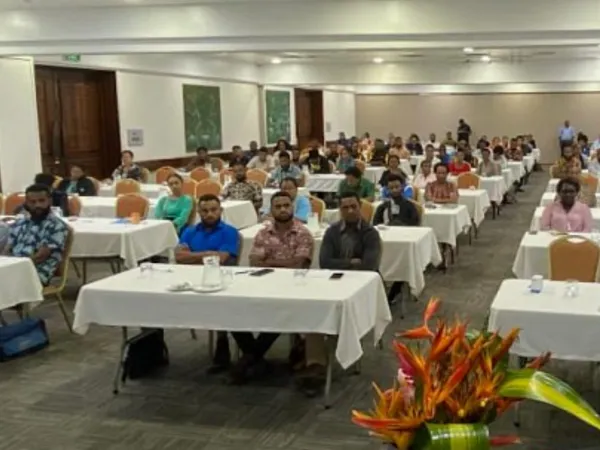
More than 350 human resources professionals in Port Moresby have received much-needed financial literacy training through a partnership led by PNGX Group Ltd, Comrade Trustees Services Ltd (CTSL) and the PNG Human Resources Institute (PNGHRI).

The most recent session, held on Friday, 4 July, drew over 220 PNGHRI members from various industries. It followed an earlier workshop attended by 140 participants just three weeks prior.

The initiative is part of PNGX’s wider push to promote financial inclusion, responsible investing and economic empowerment across the country.

The full-day training covered practical financial topics such as saving, budgeting, superannuation, estate planning and investing in the stock market. Delivered in collaboration with CTSL and PNGHRI, the sessions build on the financial literacy programme already being offered to CTSL members of the PNG Defence Force.

Participants were also introduced to the superannuation services offered by CTSL, underscoring the importance of long-term planning and secure retirement strategies.

“PNGX is proud to be a leader in investor education across the country,” said Elizabeth Wamsa, General Manager of PNGX. “We believe that a well-informed investment community is the backbone of sustainable economic growth. By equipping HR professionals with these vital skills, we are creating a ripple effect — empowering organisations to support the financial wellbeing of their employees, families and communities.”

In developing economies like Papua New Guinea, financial literacy can be a game-changer. It enables individuals to take control of their money, build household wealth and participate meaningfully in the capital market. For PNGX, these training sessions are just the beginning of a long-term vision to build a financially savvy generation.

Feedback from participants has been overwhelmingly positive. Many said the training not only improved their personal financial skills but also gave them practical tools they could apply in the workplace. Several said they were now confident in introducing financial wellness components into HR policies and staff support programmes.

That shift, they said, could boost employee satisfaction, improve retention and lift productivity — all vital outcomes in a competitive labour market.

The training initiative also aligns with PNGX’s long-term plans to roll out certificate and diploma-level courses for investors, finance professionals and company directors. It’s part of a broader commitment to help more Papua New Guineans access and thrive in the country’s growing investment economy.

PNGX Group is a diversifying business services company based in Port Moresby. Its wholly owned subsidiary, PNGX Markets Ltd, operates the national stock exchange. PNGX Markets is licensed and regulated by the Securities Commission of Papua New Guinea and is also the country’s designated National Numbering Agency.

The company is responsible for ensuring that securities trading is conducted in an orderly and fair market, and is committed to acting in the public interest with a strong focus on protecting investors.

July 10, 2025

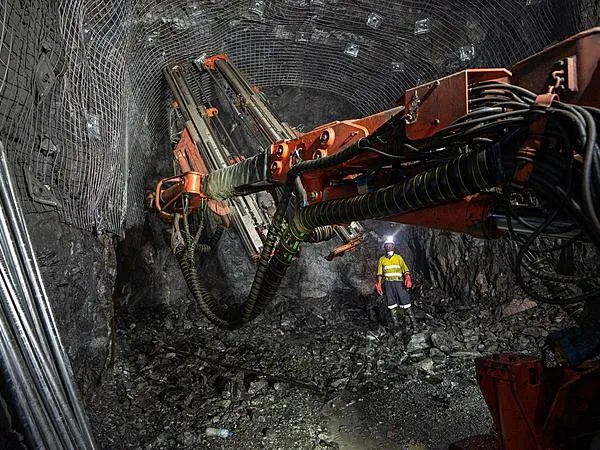
Canadian firm K92 Mining Inc. has reported a solid second-quarter performance for 2025, producing 34,816 ounces of gold equivalent (AuEq) and initiating commissioning of its new 1.2 million tonnes-per-annum (Mtpa) Stage 3 Process Plant at the Kainantu Gold Mine in Papua New Guinea.

The Q2 output represents a 43% jump compared to the same period in 2024. The company produced 32,375 ounces of gold, 1.54 million pounds of copper and 42,824 ounces of silver during the quarter, with sales reaching 28,864 ounces of gold, 1.27 million pounds of copper and 34,532 ounces of silver during the said period.

For the first half of 2025, total production reached 82,633 oz AuEq, putting the company ahead of its budget and on track to meet its full-year guidance of 160,000 to 185,000 oz AuEq.

Processing and mining operations surge

K92 processed 130,337 tonnes of ore in Q2, up 36% year-on-year and 26% from Q1 2025. The ore averaged a head grade of 8.9 grams per tonne AuEq, including 8.3 g/t gold, 0.55% copper and 12.1 g/t silver. Gold and copper recoveries remained strong at 93.3% and 94.9%, respectively—both exceeding the benchmarks outlined in the company’s updated Definitive Feasibility Study (DFS).

Mining activities remained robust, with 133,063 tonnes of ore mined across 13 active levels within the Kora and Judd deposits. Total underground material movement, including waste, reached 338,696 tonnes, making it the second-highest quarter on record despite five days of commissioning-related disruptions.

Stage 3 expansion hits key milestones

A major highlight of the quarter was the commencement of commissioning for the Stage 3 Expansion Process Plant in late June. The pre-commissioning work, including testing of the semi-autogenous grinding (SAG) and ball mills, was completed on schedule. Full commissioning is expected to be practically complete in the first half of Q4 2025.

Additional contracts were awarded in June for the pastefill filtration plant and the surface storage facility, while work continues on the underground pastefill plant. All three facilities are scheduled for commissioning by mid-Q1 2026. As of 30 June, 86% of the Stage 3 capital has been committed or spent, up from 75% at the end of March, with the expansion remaining within budget.

Supporting infrastructure projects completed in Q2 include a temporary power station, the first phase of a permanent power station, and the 160-room Kumian Creek camp for contractor accommodation—set to support future Stage 4 expansion activities.

Technology and mining front development

The transformation of the Kainantu underground mine is nearing completion with several upgrades due by Q3, such as a fully operational ore/waste pass, a new ventilation drive, and two raisebore ventilation shafts.

K92 has also finished upgrading its underground communications system, enabling surface-controlled tele-remote loaders, which were launched in June as the first step in automating and improving productivity.

Two new mining fronts have been developed: four new sublevels at the Twin Incline front and two at Lower Kora. Stoping operations in these areas are expected to begin in Q4.

Outlook remains strong

“K92 is on the cusp of transforming into a Tier 1 mid-tier producer,” said Chief Executive Officer John Lewins. “With commissioning of the Stage 3 Process Plant now underway, we’re entering a new era of growth. Our production for the first half of the year is ahead of budget, and we expect an even stronger performance in the second half, driven by increased throughput.”

Lewins added that the company remains on schedule for the full commissioning of key infrastructure by mid-2026, positioning K92 to significantly boost output and efficiency.

K92 Mining Inc. operates the high-grade Kainantu Gold Mine in Papua New Guinea’s Eastern Highlands Province. The company declared commercial production in 2018 and continues to grow its operations through plant expansions and exploration. It also holds the Blue Lake copper-gold project, which saw its maiden resource published in August 2022.

July 09, 2025

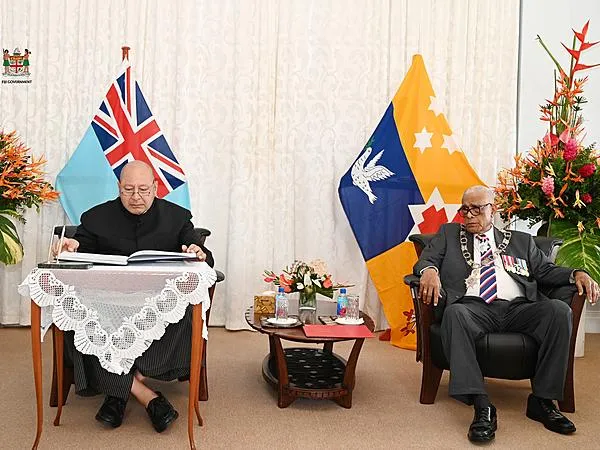
Fiji and Tonga reaffirmed their long-standing friendship and shared regional aspirations during a high-level courtesy call by His Majesty King Tupou VI on the President of the Republic of Fiji, Ratu Naiqama Lalabalavu.

The meeting, held in Suva, underscored the enduring partnership between the two Pacific Island nations, with both leaders expressing strong commitment to regionalism, climate action, and economic cooperation.

President Lalabalavu extended warm congratulations to Tonga for hosting the 4th Pacific Week of Agriculture and Forestry in Nukuʻalofa earlier this year, highlighting the sector’s importance to food security and sustainable livelihoods.

“Agriculture is a key pillar of food security and employment creation for future generations across the Pacific,” he said. “Tonga’s leadership in this space reflects its strong commitment to resilience and sustainable development.”

The Fijian President also lauded Tonga’s progress in digital transformation, citing the TongaPass system and the Digital Public Good for Identity Initiative as critical to inclusive service delivery.

On climate change, President Lalabalavu praised Tonga’s proactive stance, including efforts in community dialogue, land reform, and local-level risk monitoring. “These efforts demonstrate the Kingdom’s strong climate leadership and contribute meaningfully to our shared regional aspirations under the 2050 Strategy for the Blue Pacific Continent,” he said.

Reflecting on the Fiji-Tonga Business Mission in May 2025, led by Deputy Prime Minister Manoa Kamikamica, President Lalabalavu described it as a “revival of Pacific regionalism” and a practical response to common economic challenges such as high transport costs and vulnerable supply chains.

He expressed optimism that increased trade and investment between the two countries would open new opportunities in agriculture, fisheries, tourism, manufacturing, and digital services.

Cooperation between the two nations also extends to public administration and training, with President Lalabalavu highlighting the successful graduation of four Tongan correctional trainees in Fiji. He also recognised the recent presentation of credentials by Fiji’s Roving Ambassador to the Pacific, Ratu William Toganivalu, to King Tupou VI as a reaffirmation of diplomatic ties.

“The Roving Ambassador stands ready to respond to your calls at any time of need and to progress mutual areas of development cooperation,” the President said.

The Fiji Volunteer Scheme was also spotlighted as a mechanism through which Fijian professionals can support Tonga’s national development priorities in health, policing, and education.

President Lalabalavu expressed appreciation for Tonga’s formal interest in establishing a diplomatic presence in Suva. “It is with great honour that I welcome this initiative. Our teams will work together to explore suitable options to bring this vision to life,” he said.

On wider regional issues, the President called for renewed unity in confronting what he described as a “poly-crisis” threatening development gains—including climate disruption, economic distress, and transnational crime.

“Now more than ever, regionalism and solidarity must guide our response,” he urged.

Looking ahead to the Pacific Islands Forum Leaders Meeting in Honiara this September, he expressed confidence in the collective will of Pacific nations to adopt the Ocean of Peace Declaration, aligning with the shared vision of a resilient and united Blue Pacific.

In his response, His Majesty King Tupou VI paid tribute to the historic and cultural ties between Tonga and Fiji, describing the visit as a “celebration of kinship, mutual respect, and Pacific solidarity.”

“I am deeply honoured by the traditional ceremony of welcome and State Honours bestowed today, which is a reaffirmation of our enduring friendship,” he said.

The King noted the strong potential for deepened collaboration in trade, education, and capacity-building. “Our cooperation continues to deliver meaningful results for our people. We look forward to expanding these efforts in the spirit of unity, shared prosperity, and the Pacific Way,” His Majesty added.

July 09, 2025

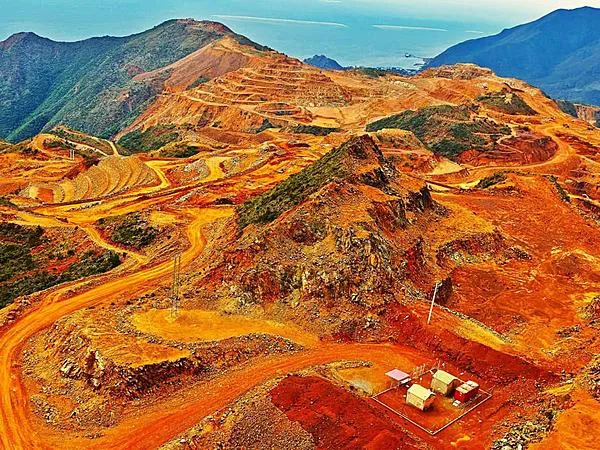
The blockade of the Népoui mining site in New Caledonia, which began on Monday, June 30, is now being lifted, signalling a significant breakthrough in talks between Société Le Nickel (SLN) and the customary authorities of the Ouaté tribe.

The lifting of the blockade follows discussions initiated in recent days and reflects SLN’s willingness to reopen dialogue with the local community. In a gesture of goodwill, the mining company has agreed to a six-month suspension of the disputed new security contract, the source of tensions that led to the protest.

“This period of suspension aims to foster a calm and respectful environment, conducive to better mutual understanding,” SLN said in a statement. “The shared objective remains to reach a balanced and satisfactory solution for all parties involved.”

The blockade was triggered by local opposition to the entry into force of a new security contract at the Népoui site. While the contract has not been revoked, the pause will allow for further consultations with the Ouaté tribe, which had voiced concerns over the terms and implications of the agreement.

Syrtis Surveillance, a locally based company led by a New Caledonian manager, was awarded the security contract after a competitive tender involving seven local firms. The contract, which spans an initial period of three years with two optional extensions, includes plans for workforce reinforcement and support from a mainland French partner to aid in skill transfer and professionalisation.

SLN emphasised that no jobs will be lost as a result of the contract change. Employees responsible for site security will retain their positions, with contracts being transferred to the new subcontractor.

However, the company had earlier warned that a prolonged blockade could trigger a force majeure clause, potentially suspending subcontracting contracts and dealing a heavy blow to the local economy. The Népoui site directly employs nearly 300 workers, with another 150 subcontractors — accounting for roughly half of all employment in the area.

The disruption had added to existing challenges, including the shutdown of the Thio site and halted ore shipments from Kouaoua following a serpentine fire on 24 May. With Népoui's operations jeopardised, SLN had raised concerns about the stability of ore supply to its Doniambo smelter, putting the continuity of the entire nickel production chain at risk.

SLN reiterated its commitment to dialogue, transparency, and respect for customary and contractual obligations, adding that it would continue working toward a collaborative resolution that benefits all stakeholders.

July 09, 2025

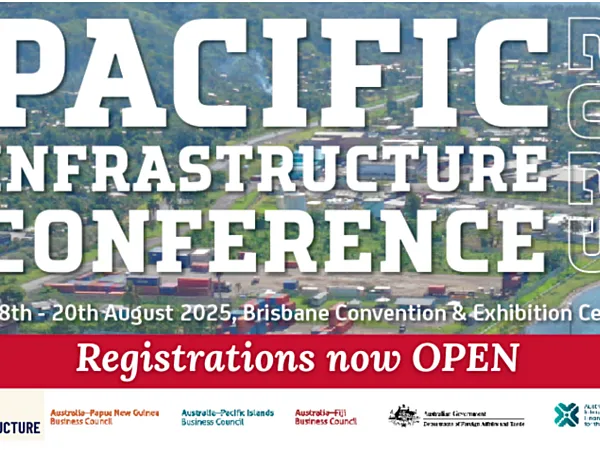
Expected to draw hundreds of leaders and stakeholders from across the region, the Pacific Infrastructure Conference 2025 will centre its discussions on accelerating sustainable infrastructure delivery, bridging financing gaps and advancing climate-resilient development across Pacific Island nations.

Set to be held in Brisbane, the conference will bring together ministers, senior government officials, industry leaders, development partners and multilateral agencies to align on pressing infrastructure priorities. With more than 600 participants anticipated, the event is poised to become the premier platform for forging regional cooperation, investment and innovation in infrastructure development.

Top of the agenda will be strategies to strengthen project pipelines, improve regional connectivity, and leverage blended financing models to meet increasing demand. Delegates will also examine how to ensure infrastructure projects are locally led, climate-smart and aligned with national development plans and the broader 2050 Strategy for the Blue Pacific Continent.

Speaking during Austrade’s Pacific Infrastructure Roadshow in Melbourne, Simon Gorman, president of the Australia Pacific Islands Business Council (APIBC), underscored the event’s value for those seeking to do business in the region.

“The Pacific Infrastructure Conference is expected to bring together between 600 and 800 participants from across the Pacific, including ministers, parliamentarians, contractors, and suppliers,” Gorman said. “It’s a unique opportunity to meet the region’s key decision-makers all in one place. If you’re serious about doing business in the Pacific, this event saves you a trip to 14 different countries – just come to Brisbane on those dates.”

The conference will focus on key infrastructure sectors—transport, energy, ICT, and urban development—while offering in-depth discussions on inclusive growth, environmental safeguards, and responsible lending practices. These themes will be guided by the Pacific Quality Infrastructure Principles, a regional framework aimed at promoting high-quality, sustainable investments with long-term social and economic impact.

With the Pacific Islands grappling with challenges such as geographic isolation, limited access to capital and heightened vulnerability to climate change, infrastructure development is central to building resilience, enabling trade and expanding access to essential services.

In recent years, governments and private partners have increased collaboration on infrastructure delivery, but funding shortfalls and implementation delays remain. The Pacific Infrastructure Conference 2025 offers a critical opportunity to close these gaps by fostering new partnerships and prioritising projects that are future-ready and community-focused.

An industry expo will run alongside the main sessions, offering organisations the chance to showcase technologies, services, and solutions aligned with the region’s infrastructure goals. Early registration is encouraged, with the APIBC noting strong interest across government, finance, and the private sector.

To register or learn more, visit the official conference website: https://www.pacificinfrastructureconference.com

The conference is expected to shape the next wave of regional infrastructure initiatives and reinforce a shared commitment to building a resilient and inclusive Pacific.