Lion One Metals Ltd has intersected high-grade gold mineralisation grading 44.39 grams per tonne (g/t) over 2 metres in its first underground drill hole targeting Zone 500 at the Tuvatu Gold Project in Fiji.
The result, from drill hole TGC-0709, includes an interval grading 66.11 g/t gold over 1.3 metres, with a particularly high-grade section of 158.76 g/t over 0.4 metres.
The hole also returned separate intervals grading 21.92 g/t over 0.4 metres and 27.57 g/t over 0.5 metres.
Lion One said the main intercept is located approximately 40 metres northwest of two previously reported high-grade intersections in Zone 500. These include 76.9 metres grading 20.86 g/t gold from drill hole TUG-141 and 20.1 metres grading 23.02 g/t from TUDDH-601.
The latest result comes from the company's first underground drilling campaign targeting Zone 500 since the initial discovery and definition programmes conducted between 2020 and 2022.
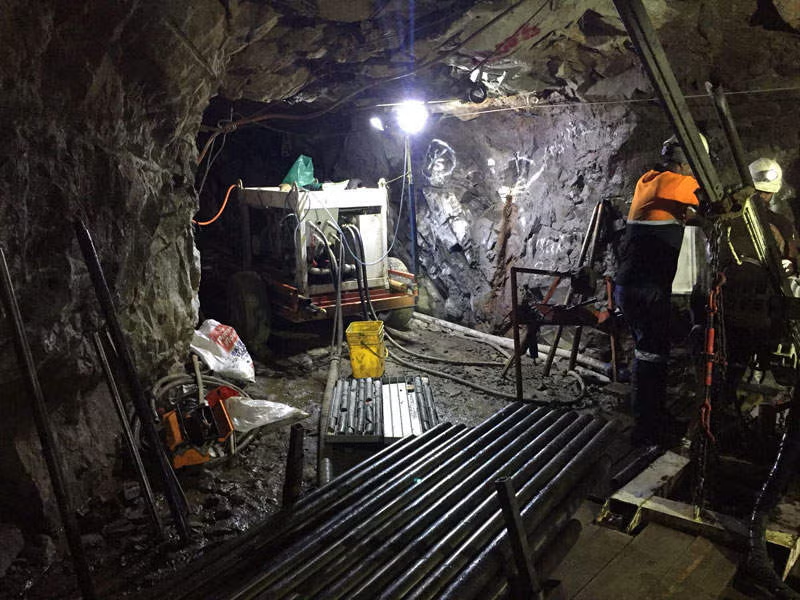
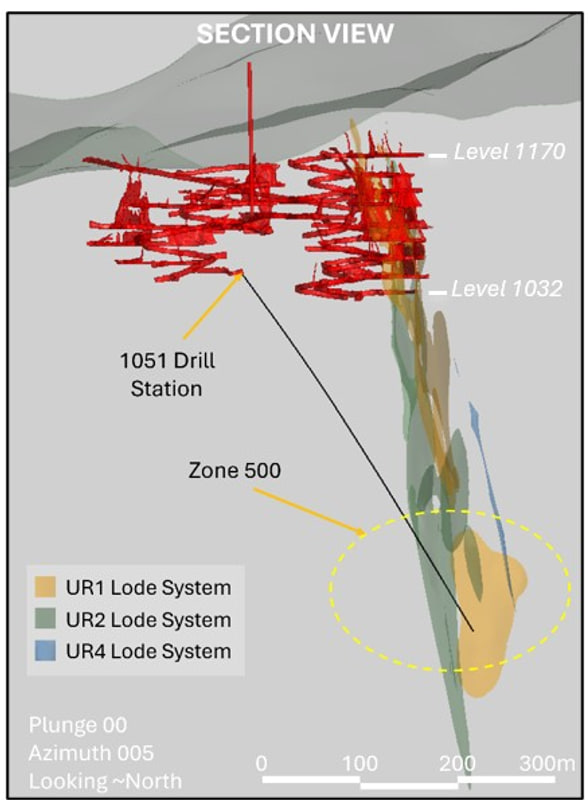
The drill hole was completed using a recently acquired Boart Longyear LM90 underground drill rig from the 1051 Drill Station, one of the lowest levels of the Tuvatu mine.
Lion One said the underground drilling approach would provide better drilling directions and inclinations to intersect the steeply dipping mineralised structures, improving the assessment of their true widths.
The company has planned eight drill holes targeting Zone 500 from the 1051 Drill Station, representing a total of 4,480 metres of drilling.
However, TGC-0709 deviated southwards and downwards from its planned trajectory. The hole was originally designed to reach a depth of 555 metres and intersect three mineralised structures but was terminated at 474.3 metres because of significant deviation and the reduced likelihood of intersecting the remaining targets.
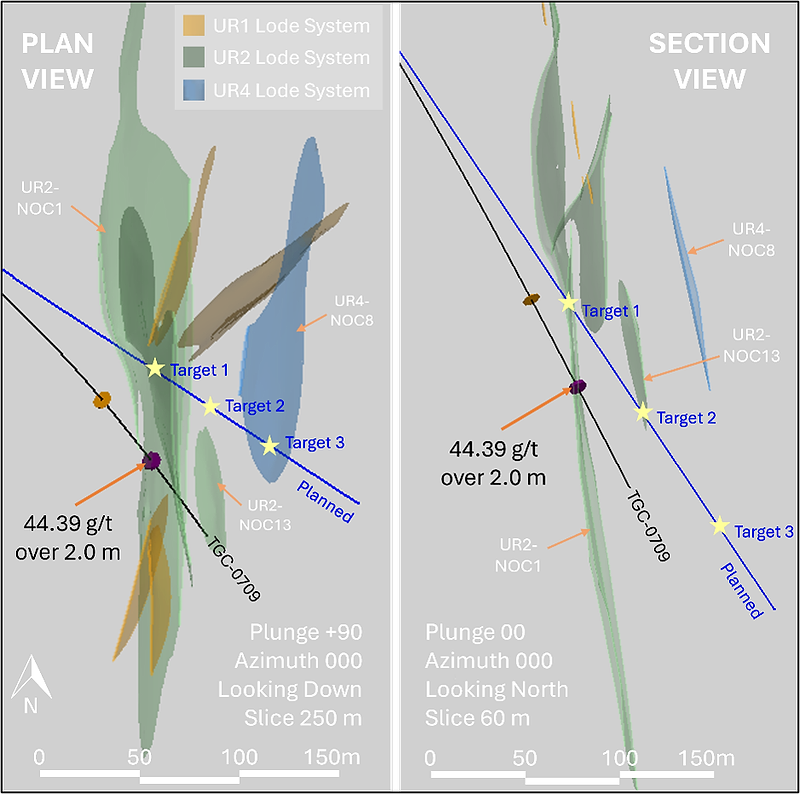
The hole intersected its first target, the UR2-NOC1 lode, approximately 60 metres from the planned position. The other two targeted structures, the northern and depth extension of the UR2-NOC13 lode and the depth extension of the UR4-NOC8 lode, were not intersected.
Lion One said it had adjusted the planned drill dips and azimuths of subsequent holes to account for the deviation. The second Zone 500 drill hole was nearing completion as of the November 25 announcement.
Despite the deviation, the company said the intersection confirmed significant gold mineralisation in the UR2-NOC1 structure, which forms part of the broader UR1 and UR2 lode system within Zone 500.
The 44.39 g/t intercept is particularly encouraging because it lies near two previously identified high-grade intersections in the UR2-NOC13 structure, supporting further underground exploration in the area.
The hole also returned an unexpected gold intersection grading 6.41 g/t over 0.4 metres at a downhole depth of 81.75 metres, above Zone 500. Lion One said this could represent a previously unidentified mineralised structure or an extension of an existing one.
Lion One president and chief executive Ian Berzins said the results demonstrated the quality of mineralisation in Zone 500 and the capabilities of the new underground drilling equipment.
The company said it was looking forward to continuing the drilling programme to identify additional high-grade gold mineralisation and expand the resource in this section of the mine.
Tuvatu operations
Lion One is a Canadian gold producer headquartered in North Vancouver, British Columbia, with operations at its wholly owned Tuvatu Alkaline Gold Project in Fiji.
The project includes the Tuvatu gold deposit, an underground mine, a pilot processing plant and an assay laboratory. Mining operations were established in late 2023.
The company also holds an extensive exploration licence covering the Navilawa Caldera, which hosts multiple mineralised zones and additional exploration targets.
Lion One reported the latest drilling intervals using a 3 g/t gold cut-off grade. The reported lengths represent downhole intersections, and their true widths have not yet been established because of variations in the orientation of the mineralised structures.
The company's chief geologist, Melvyn Levrel, reviewed and approved the technical information in the announcement under Canada's National Instrument 43-101 standards for mineral project disclosure.