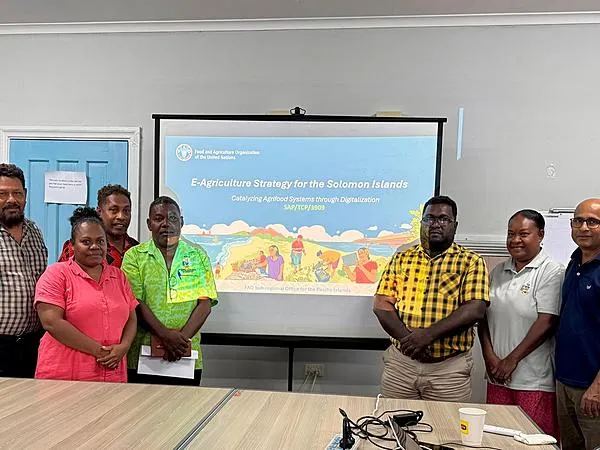
The Solomon Island's Ministry of Agriculture and Livestock (MAL), in partnership with the Food and Agriculture Organization of the United Nations (FAO), has successfully completed a two-day workshop on the Digital Farmer Registry (DFR) and the revalidation of the E-Agriculture Strategy, a national digital platform designed to register and manage information on farmers, their households, and farm activities.
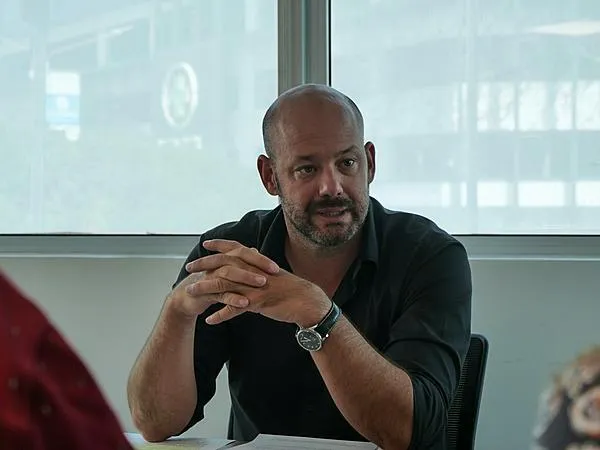
Simon Baete, Deputy Secretary Special Duties (DSSD) at MAL, opened the workshop by emphasizing the importance of agriculture as the backbone of the national economy, stating, “Agriculture remains the heart of our economy and the livelihood for most of our people.” He acknowledged the prevalent challenges facing the sector, including limited access to data and weak coordination among institutions.
“The Digital Farmer Registry and the E-Agriculture Strategy are critical initiatives that will enable us to collect accurate farmer data, improve planning, and strengthen agricultural services across the country,” he added.
Throughout the workshop, participants from various government ministries and partner organisations explored effective ways to implement the Digital Farmer Registry, the governance structures required, and the strategic guidance provided by the E-Agriculture Strategy for digital transformation in agriculture.
Baete remarked, “This is not just a technical discussion — it’s about shaping the future of agriculture in our country. Your ideas, experiences, and recommendations will help make these tools practical and impactful for our farmers and communities.”
MAL’s vision is to create a "modern, inclusive, and resilient agriculture sector powered by innovation and technology." The Deputy Secretary highlighted that a digital registry would help identify farmers and their produce — a crucial step for developing smarter policies and enhancing service delivery.
“This workshop is a vital step in our collaboration toward harnessing digital tools for the advancement of agriculture to a smarter, more connected agriculture sector,” he said.
Covering both subsistence and commercial farmers, the DFR will enhance transparency and coordination across government programs, helping ensure that assistance reaches genuine beneficiaries. It represents a key outcome under the FAO project, Catalyzing Agrifood Systems through Digitalization (TCP/SAP/3909).
The platform is fully interoperable with other national systems and follows Digital Public Infrastructure (DPI) principles of openness, inclusion, and reusability. It provides real-time data dashboards and mobile tools for enumerators, while allowing farmers to self-register online or via mobile devices.
FAO’s Digital Agriculture Specialist, Bandara Rotawewa, highlighted that the registry strengthens both agricultural governance and social protection linkages, improving the nation’s capacity to respond to shocks and invest in smallholders’ futures.
Twelve years after the last general agricultural census in 2012, agriculture in New Caledonia has undergone significant change. To obtain an accurate and up-to-date picture of the sector, the government of New Caledonia is launching a new agricultural survey at the end of 2025.
The survey, led by the Directorate of Veterinary, Food and Rural Affairs (DAVAR) in coordination with the provinces, the Chamber of Agriculture and Fisheries of New Caledonia (CAP-NC), and the Rural Agency, will be conducted with a representative sample of farms registered with the CAP-NC.
Unlike the comprehensive general census of 2012, the 2025 agricultural survey adopts an innovative and targeted approach. Nearly 1,500 farms will be interviewed out of the 3,200 registered with the CAP-NC. The information collected will include details on land area, crops, livestock, equipment, labour, and more.
Investigators from the partner organisations started fieldwork in October.
A Crucial Investigation
By providing a better understanding of the agricultural sector, the 2025 survey is a strategic tool for:
Updating agricultural data by municipality, territorial entity, and province;
Supporting public decision-making, including targeting aid, measuring impacts, and adjusting agricultural policies;
Establishing a reliable database for future studies and monitoring sector developments;
Meeting the information needs of professionals.
“By participating, operators contribute to raising awareness of the realities on the ground and preparing for the future of their sector,” the survey organisers said.
Coverage of the Entire Territory
Although the survey is not exhaustive, it will cover all areas of New Caledonia, including both large commercial farms and smaller non-commercial units located in tribal or peri-urban areas. The only requirement is registration in the CAP-NC agriculture and fishing register.
Guaranteed Confidentiality
As with all official surveys, the information collected will be protected by the General Data Protection Regulation (GDPR) and statistical confidentiality. No individual data will be disclosed without the written consent of the individuals surveyed.
Results Calendar
April 2026: Publication of a general overview of the results;
September 2026: Detailed thematic analyses;
December 2026: Publication of the full final report.
The survey is expected to provide a much-needed, contemporary snapshot of New Caledonia’s agricultural landscape, guiding policy decisions and supporting sector growth over the coming decade.
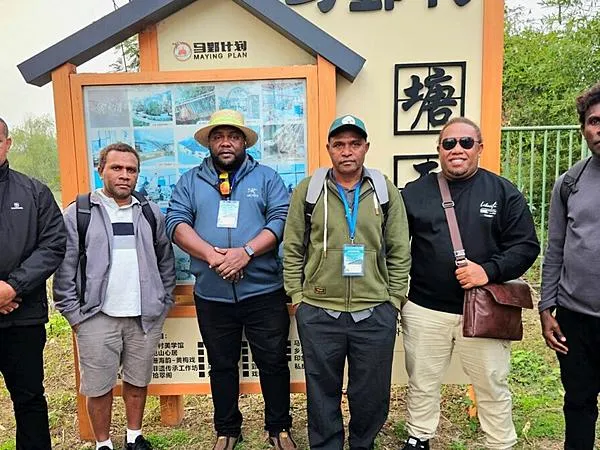
Six senior officers from the Ministry of Rural Development (MRD) have successfully completed a bilateral training seminar on ‘Rural Development’ in China last Friday.
The program was held from October 9th to 31st, 2025, at the Institute of Administration and Management (AMI) in Beijing, a training and research institution of the Ministry of Agriculture and Rural Affairs (MARA) of China.
The government of the People’s Republic of China (PRC), through its Ministry of Commerce, funded the program with the aim of enhancing communication and cooperation between the two nations.
It focused on key areas of rural development, including agricultural production, processing, and distribution; climate-smart agriculture; e-commerce; and the critical role of infrastructure in economic growth.
The officers’ participation was coordinated through the Chinese Embassy in Honiara and the Solomon Islands Government via the Ministry of Agriculture. Other participating ministries included the Ministry of Agriculture, the Ministry of Traditional Governance, the Ministry of Provincial Government, and representatives from the private sector.
The training seminar featured intensive training sessions and field visits to major high-tech agricultural companies and enterprises in Beijing and other provinces of China.
The MRD senior officers include:
The participation of MRD officers is part of the ministry’s ongoing efforts to capacitate and equip its officers with the technical skills needed to implement constituency development programs and initiatives nationwide effectively.
The training provided opportunities for participants to gain a better and deeper understanding of China’s achievements, policies, and experiences in poverty alleviation and rural agricultural revitalization.
“Having lifted over 800 million people out of poverty in the past four decades, China offers a valuable model for the Solomon Islands.
“Lessons learned will be crucial for informing and advancing rural development priorities and the Solomon Islands Government’s policies for National Unity and Transformation,” said MRD Deputy Secretary of Technical (DST) George Balairamo.
The program also offered an invaluable opportunity for officers to learn about China’s approaches to rural construction, infrastructure, and technological innovation. It also strengthened exchanges with Chinese experts and scholars, laying a foundation for future pragmatic cooperation.
“As part of the training, delegates undertook field visits to observe China’s rural modernization initiatives firsthand. These included an automated layer farm and various eco-tourism sites in Beijing. The delegation also traveled to Nanjing City in Jiangsu Province, where they met with officials from the Jiangsu Academy of Agricultural Sciences and the China-Pacific Islands Countries Agricultural Cooperation Demonstration Centre.
“In Jiangsu, visits included demonstration farms, a tea culture village, rural tourism sites, a tropical fruit cultivation eco-park, a brine duck production company, and a modern agricultural enterprise. Further visits to key agricultural production companies took place in Hefei City, Anhui Province.
“These field trips facilitated the exchange of ideas with local officials, agribusiness managers, and tourism operators, while also allowing participants to experience China’s rich culture and history,” Mr. Balairamo stated.
Meanwhile, Mr. Balairamo, on behalf of the ministry’s management, expressed gratitude to the Chinese Embassy in Honiara, the Chinese government, and the Institute of Administration and Management (AMI) in Beijing for making the training possible, enabling officers to acquire the necessary technical skills and knowledge to advance rural development priorities in their respective constituencies for the betterment of the country.
The contributions from the PRC Embassy underscore the growing partnership between the two nations, rooted in mutual respect and a shared vision for inclusive development.
The Fijian Government is advancing a major environmental and agricultural reform through the “Revitalising Ecosystems for Sustainable Agriculture and Resilience in Fiji” Project — a transformative initiative designed to restore degraded ecosystems, promote climate-smart agriculture, and strengthen rural resilience.
The Ministry of Environment and Climate Change, in collaboration with the Ministry of Agriculture and Waterways, hosted a Validation Workshop in Suva this week to review and finalise the project’s framework. The initiative is financed by the Global Environment Facility (GEF) and developed with the International Fund for Agricultural Development (IFAD), in partnership with the Fijian Government.
According to the GEF Work Program for the GEF Trust Fund (2024) and IFAD’s Project Design Report (2025), the RESAR project aims to “support the sustainable growth and resilience of Fiji’s rural economy through improved ecosystem management.” It addresses the challenges of land degradation, soil erosion, and declining biodiversity, which threaten livelihoods and food security across the islands.
Minister for Environment and Climate Change Mosese Bulitavu described the initiative as a vital step toward protecting Fiji’s biodiversity while enhancing the livelihoods and resilience of rural communities.
“Our forests, reefs, and mangroves are not just natural wonders – they are the backbone of our blue and green economies,” he said.
The project will focus primarily on Vanua Levu and Taveuni, adopting a whole-of-island approach that integrates ecosystem restoration with sustainable agricultural practices. Key interventions include reforestation, watershed rehabilitation, mangrove protection, and the introduction of climate-smart farming systems.
The project design documents indicate that RESAR will promote inclusive participation from local communities, women, and youth, ensuring equitable access to ecosystem services and livelihood opportunities. It will also support improved governance and institutional capacity in environmental management.
During the workshop, stakeholders validated the project’s direction, confirmed priority sites, and reviewed technical components ahead of its submission to GEF in December 2025. Full-scale implementation is expected to commence in 2027, following the completion of appraisal and approval processes.
The event brought together government ministries, non-governmental organisations, private sector representatives, and community leaders, reflecting a unified national commitment to sustainability.
Minister Bulitavu reaffirmed Fiji’s resolve to lead by example in the Pacific on ecosystem restoration and climate resilience:
“This project embodies our vision of a resilient, prosperous, and sustainable Fiji — one where our people and nature thrive together.”
The GEF and IFAD partnership marks a significant milestone in Fiji’s environmental policy landscape, combining global financing and technical expertise to build climate-resilient agriculture while safeguarding natural ecosystems.
Through the Revitalising Ecosystems for Sustainable Agriculture and Resilience Project, Fiji is charting a course toward a greener, more inclusive economy that places environmental stewardship at the heart of national development.
Aitken Spence Plantation Managements PLC has announced a landmark agricultural initiative in Fiji aimed at transforming the island nation’s commercial farming sector. The strategic undertaking brings together Sri Lanka’s plantation expertise and Fiji’s agricultural potential, with a focus on modernising farming systems, introducing sustainable agro-technology, and strengthening food security while boosting export growth.
The project follows a successful exploratory mission in 2024, during which an Aitken Spence delegation met with a broad range of Fijian stakeholders including government ministries, cooperatives, plantation operators, farm owners and food processors. Building on this foundation, the company is now securing land in Nawaicoba, Nadi to establish a pilot project that will introduce high-value horticultural and plantation crops such as papaya, pineapples, dragon fruit, berries, mangoes, coffee, tea, cinnamon, lime and passion fruit.
The initiative will combine advanced farming practices with modern processing technologies to create an integrated model for large-scale, sustainable agriculture.
“Fiji presents a wealth of opportunities for commercial farming,” said Dr Rohan Fernando, Board Director of Aitken Spence Plantations. “Our approach is comprehensive, combining innovation, sustainability and strong partnerships, with a focus not only on local consumption but on building export capabilities.”
The initiative has been facilitated by Investment Fiji, with strong support from the Ministry of Agriculture and other national stakeholders.
As one of the country’s key agencies promoting international collaboration, Investment Fiji played a pivotal role in encouraging Aitken Spence Plantation Managements PLC to venture into Fiji’s agricultural sector, connecting expertise and enabling the transfer of modern agricultural technologies to benefit the nation.
Kamal Chetty, Chief Executive Officer of Investment Fiji, underscored the importance of the partnership, noting that Aitken Spence Plantation Managements PLC’s investment is a great accomplishment for Fiji, and it’s a strategic success the agency have been working on since early 2024.
"This project supports the Government’s plan to grow our agriculture sector and achieve economic diversification," Chetty said.
The official also thank the Deputy Prime Minister and Minister for Trade, Co-operatives, MSMEs and Communications Manoa Kamikamica for his support in making the investment possible, starting with his initial conversations to encourage the company to invest in Fiji.
"We are excited about the potential of this investment, especially in how it will lift our rural economy. It will bring new farming technology, create jobs, and offer crucial support to our smallholder farmers by connecting them to new markets. This is how we turn foreign investment into shared prosperity for all Fijians," Chetty said.
Designed with sustainability at its core, the venture will integrate renewable energy solutions to optimise yields, minimise environmental impact, and ensure long-term viability.
The project is expected to not only expand Aitken Spence’s international footprint but also demonstrate how forward-looking partnerships can deliver inclusive growth — linking communities, markets and nations through agriculture.
The Ministry of Agriculture and Livestock (MAL) is realising the opportunity of advancing Public–Private Partnerships (PPPs) as a key strategy for transforming the agriculture and livestock sector in the Solomon Islands.
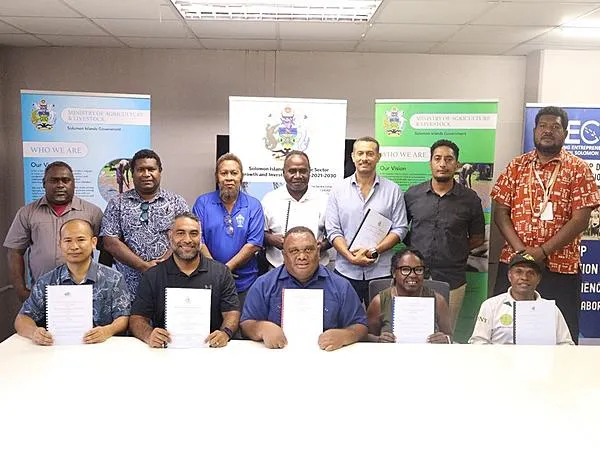
In recent collaborations, MAL has signed three Memoranda of Understanding (MoUs) with Liberty Holdings Limited, Sullivans (Solomon Islands), and the Young Entrepreneurs Council of Solomon Islands (YECSI), as well as with the Anglican Church of Melanesia Board of Mission (COMBM). These partnerships aim to enhance market linkages, strengthen agri-food supply systems, empower youth-led agribusiness initiatives, and support community-based agricultural enterprises.
Additionally, MAL has signed two agreements with Organic Products Limited and the Solomon Islands Agriculture and Livestock Development Limited (SIALDL). These agreements focus on strengthening organic value chains, promoting sustainable livestock production, supporting rice development, and expanding private sector investment in agribusiness and rural livelihoods.
Franklyn Derek Wasi, Minister for Agriculture and Livestock, emphasised the vital role of the PPP model in driving innovation, mobilising investment, and enhancing service delivery across the sector.
“The Ministry values the contributions of the private sector, youth-led enterprises, and faith-based organisations as essential partners in fostering agricultural growth. Through these partnerships, we are building a more inclusive, resilient, and commercially viable agriculture sector that benefits our farmers and communities,” Wasi said.
The Ministry of Agriculture and Livestock continues to encourage similar partnership approaches across all agriculture and livestock sub-sectors and remains dedicated to providing an enabling policy environment for private sector participation. By collaborating closely, government and business partners can unlock greater opportunities for value addition, job creation, and national food security.
MAL Permanent Secretary Dr Viulu, along with senior staff, witnessed the signing ceremony. The recipients of the MoUs and Memoranda of Agreement (MoAs) expressed their gratitude to the government for its trust and recognition, pledging their full commitment to advancing the development and growth of the agriculture sector and the nation’s economy.
All MoUs and MoAs were vetted by the Office of the Attorney General before the signing ceremony took place on 8 October.
The Ministry is expected to sign several more agreements with other service providers in the coming days to advance specific agricultural industries, including livestock, cocoa, coconut, root crops, vegetables, fruit trees, and other key crops.
One of the anticipated activities in the upcoming signing ceremony is the establishment of a second poultry hatchery in the country.
The Fiji Government has commended Agri Exchange, a PALM Scheme Approved Employer under the Costa Group, for setting a high standard in worker welfare by putting people first while running a successful business.
The Minister for Employment, Productivity and Industrial Relations Agni Deo Singh expressed his sincere appreciation to the company for its commitment to the well-being of Fijian workers in Australia.
“Beyond productivity, the company’s real strength lies in its care for workers’ well-being,” Minister Singh said. “They have improved accommodation facilities, upgraded safety measures, and created a workplace where every individual feels respected, valued, and supported. Their goal is simple: for every worker to go home healthy, happy, and proud of what they’ve achieved.”
Agri Exchange maintains a returning workforce of around 50 per cent, fostering experience, teamwork, and continuity.
Many new Fijian workers take two to three years to reach full productivity, and the employer invests heavily in training, mentoring, and ongoing support to help them succeed.
Singh highlighted the company’s compassionate approach, noting that management takes time to understand workers’ family circumstances and cultural needs. New recruits are engaged before deployment, with clear guidance on expectations and potential challenges.
This proactive approach has strengthened trust and communication, helping prevent issues such as absconding and ensuring a positive experience for all workers.
“This approved employer truly represents the spirit of the PALM Scheme,” the minister said.
“They treat workers with dignity and care, understanding that success is about people, not just profits. Their leadership sets a powerful example of ethical employment, and we are proud of their partnership with Fiji," he added.
The minister also reaffirmed the Fiji Government’s commitment to ethical labour mobility, ensuring that every PALM Scheme partnership benefits both workers and the communities they serve.
Fijian workers themselves expressed their gratitude for the opportunity to work in Australia and to be employed by Agri Exchange. Many have returned season after season, with some re-engaged for more than six years, praising the company for its supportive and respectful work environment.
Fijian workers said they were privileged to be part of a workplace that cares for them, values their contribution, and supports their well-being.
The Pacific Islands Forum Secretariat has welcomed the entry into force of the World Trade Organization (WTO) Agreement on Fisheries Subsidies on 15 September 2025. The agreement entered into force following ratifications from Tonga, Brazil, Kenya and Vietnam — meeting the two-thirds requirement needed to bring it into effect.
The Fisheries Subsidies Agreement prohibits harmful fishing subsidies that support illegal, unreported and unregulated (IUU) fishing, the fishing of overfished stocks, and fishing in unregulated high seas where no competent management authorities exist.
The agreement was adopted at the WTO’s Twelfth Ministerial Conference (MC12) in Geneva in 2022. MC12 also agreed that negotiations would continue towards a comprehensive agreement that includes disciplines on overcapacity and overfishing, with appropriate and effective special and differential treatment for developing and least-developed countries.
Pacific Islands Forum Secretary-General Mr. Baron Waqa congratulated the WTO, and in particular Pacific WTO members, on this significant achievement.
“This agreement will contribute to the sustainable management of fish stocks in the Pacific region by reducing harmful subsidies to IUU fishing and overfished stocks. While this is an important first step, I urge WTO members to continue work towards completing the additional provisions on subsidies to overcapacity and overfishing,” Waqa said.
“I wish to acknowledge the critical support and assistance provided by Ambassador Mere Falemaka and her team in our Pacific Islands Forum Permanent Delegation in Geneva, as well as our CROP agencies, to all our Pacific WTO members during the negotiations of the agreement," he added.
The Fisheries Subsidies Agreement contributes to the 2050 Strategy for the Blue Pacific Continent under the thematic pillar on Oceans and Environment, and to the achievement of Sustainable Development Goal (SDG) 14.6.
A new Fisheries Subsidies Committee will oversee the implementation of the agreement and manage the Fish Fund, which will support developing countries in meeting their obligations.
Director of Programmes and Initiatives at the Pacific Islands Forum Secretariat Zarak Khan said the Fish Fund was an innovative instrument that would be very helpful in assisting Pacific WTO members to implement their obligations under the agreement.
Four out of eight Pacific WTO members — Australia, Fiji, New Zealand and Tonga — have ratified the agreement. The remaining members are working through their respective national processes to secure ratification mandates before the WTO’s Fourteenth Ministerial Conference in March 2026 in Cameroon.
The Agreement on Fisheries Subsidies is the WTO's first multilateral agreement with environmental sustainability at its core. It prohibits government support for illegal fishing activities and the overexploitation of fish stocks, contributing to the protection of marine life.
At the meeting, Director-General Ngozi Okonjo-Iweala received the instruments of acceptance of the agreement from Brazil, Kenya, Vietnam and Tonga, bringing the total number of acceptances over the two-thirds threshold needed for the agreement to enter into force.
In her address to the WTO membership, Director-General Okonjo-Iweala said: “At a time when the international trading system faces profound challenges, the Agreement on Fisheries Subsidies sends a powerful signal that WTO members can work together in a spirit of cooperation and shared responsibility to deliver solutions to global challenges. The entry into force of this agreement stands as a reminder that many of the biggest challenges we face are more effectively addressed at the multilateral level. People and nations need a multilateralism that delivers — which is why today is so reassuring.”
DG Okonjo-Iweala signed the official depositary notification of the agreement’s entry into force and handed it to General Council Chair Ambassador Saqer Abdullah Almoqbel of Saudi Arabia, marking the official integration of the agreement into the WTO legal framework.
Ambassador Almoqbel said that the agreement is a testament to the shared vision for sustainable global fisheries.
"Acceptance of the protocol has demanded not just the engagement of our ambassadors and delegates here in Geneva, but also genuine political will and careful coordination in capitals. It is thanks to our collective resolve and commitment that we witness its entry into force today," Almoqbel said.
The General Council chair also announced that Mali and Oman have ratified the agreement and will be depositing their instruments of acceptance in the near future.
Members hailed the agreement as a major milestone for the WTO, emphasising that it confirms their commitment to the multilateral trading system and to a more sustainable planet. They also pledged to begin implementing the agreement, underscoring the key role it will play in restoring fish stocks, protecting the livelihoods of fishing communities, and promoting food security.
By establishing rules that prohibit the worst forms of harmful fisheries subsidies, the WTO Agreement on Fisheries Subsidies will help protect the world’s fish stocks and the livelihoods of hundreds of millions of people who depend on fisheries for food, income and employment.
Prime Minister Jeremiah Manele officially witnessed the signing of a shareholding agreement between Kolombangara Forestry Plantation Ltd. (KFPL), the Kolombangara Landowners Trust Foundation (KLTF) and new investor New Forest.
Prime Minister Manele praised the collaboration, saying it follows his government’s efforts through a Cabinet subcommittee to transfer plantation estate land titles owned by KFPL to the KLTF, and to allocate 20 percent of Investment Corporation of Solomon Islands (ICSI) shares to Kolombangara Islands Investment Ltd. (KIIL), representing landowner interests.
The prime minister lauded the partnership, calling it a “testament to trust” and a shared commitment to generating long-term value for shareholders, communities and the nation.
Welcoming New Forest, a Certified B Corporation known for its social and environmental standards, Prime Minister Manele emphasised the alignment of the investor’s expansion plans with government policies promoting reforestation and sustainable development.
He also encouraged the partnership to foster downstream processing, highlighting the potential for smallholder forestry plantations on nearby islands such as New Georgia, Choiseul and other parts of the Western Province to supply raw materials.
The prime minister expressed hope that, with the new partnership and expansion strategy, job creation will exceed 1,000 positions, benefiting both direct and contracted workers.
Manele underscored the government’s commitment to creating a business environment marked by fairness, transparency and equitable sharing of economic benefits.
He called on all stakeholders — including the national government, provincial authorities, landowners and investors — to provide strong and consistent support for the success of KFPL, describing it as a model the Solomon Islands can replicate in other sectors.
"Today’s signing ceremony represents a crucial step in empowering landowners to actively participate in major commercial ventures, advancing national priorities such as job creation, infrastructure development, environmental protection and inclusive prosperity," he said.
The Ministry of Forestry has broadened its agenda beyond timber to highlight the vast potential of non-timber forest products (NTFPs) such as sandalwood, agarwood, bamboo, candlenut and dilo, which officials say can create new industries, boost exports and strengthen rural livelihoods.
Minister for Fisheries and Forestry Alitia Bainivalu on 30 September told Parliament that NTFPs could “bolster Fiji’s economy and support community livelihoods” while positioning the country in billion-dollar global markets.
“Historically, Fiji’s forests have been valued primarily for timber,” Bainivalu said. “However, NTFPs—such as sandalwood, bamboo, agarwood, coconut, and traditional materials—offer significant economic opportunities, with global markets worth billions of dollars annually.”
Expanding scope of forestry
The ministry said that for the first time, NTFPs have been given prominence in the draft Forest Bill 2025, which mentions them more than 10 times. The bill is expected to be tabled in Parliament by November.
At the same time, consultations are underway for a National NTFP Strategy, with a full consultation planned before the end of the year to secure stakeholder input.
Community planting initiatives are also being scaled up under the government’s 30 Million Trees in 15 Years programme, with sandalwood and candlenut identified as priorities.
Research and development
Among the flagship projects are plans for 60 hectares of sandalwood plantations in Tailevu and Bua, the monitoring of existing resources, and research into improved breeds.
On agarwood, more than 4,800 trees have been planted at Nasavusavu, supported by the establishment of Fiji’s first agarwood oil processing facility in partnership with local communities. Officials estimate the venture could generate up to US$167 million in potential revenue.
Bamboo, meanwhile, has emerged as a key innovation sector. In partnership with the Global Green Growth Institute and New Zealand’s Ministry of Foreign Affairs and Trade, Fiji has begun inventory trials and sent 16 Fijian craftsmen to Indonesia for specialist training.
On World Bamboo Day 2025, Fiji signed an agreement with Indonesia to deepen industry collaboration and strengthen the bamboo value chain.
Economic and cultural value
NTFPs range from plant-based resources such as medicinal plants, resins and oils, to animal products including honey and bushmeat, as well as traditional materials used in handicrafts and cultural practices.
Sandalwood (Yasi) remains Fiji’s flagship NTFP, generating over F$12 million in exports between 2010 and 2022. But Bainivalu said other products—such as candlenut and dilo oil—are gaining recognition in the cosmetics industry, while bamboo presents “a sustainable material for construction and handicrafts” that also contributes to climate change mitigation.
Challenges and opportunities
Despite the promise, officials concede that the sector faces challenges, including a lack of processing facilities, quality standards and sustainable harvesting practices, particularly on customary lands.
Bainivalu said these gaps underscore the urgency of policy reforms. “Developing NTFPs offers a pathway for inclusive, sustainable growth that benefits both the economy and rural communities across Fiji,” she said.
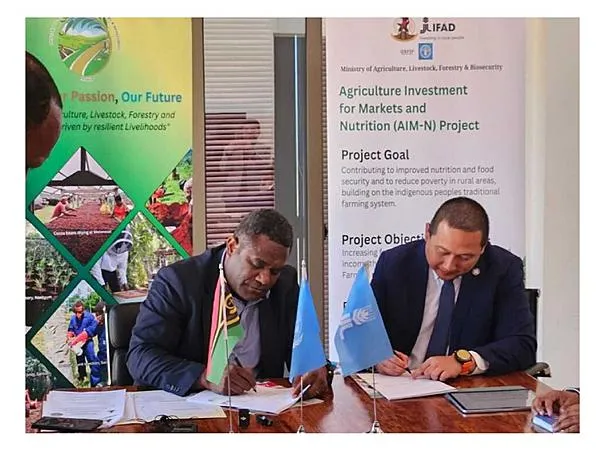
The International Fund for Agricultural Development (IFAD) and the Government of Vanuatu have launched an $11 million partnership to boost food security and nutrition for more than 15,000 people in what the United Nations ranks as the world’s most climate-vulnerable country.
The Agricultural Investment for Markets and Nutrition–Vanuatu (AIM-N) project will build on indigenous farming systems to help families grow, buy and eat more nutritious food, while creating sustainable economic opportunities in rural areas.
Although nearly 90 per cent of Vanuatu households grow vegetables, low productivity has left the population vulnerable to malnutrition. Nearly one third of children under five are stunted, while one in five adults is overweight — a situation worsened by growing dependence on cheap imported foods.
“This partnership is a critical investment in the health and prosperity of Vanuatu’s rural people,” said Candra Samekto, IFAD Country Director for the Pacific Islands. “AIM-N empowers small-scale farmers, especially women and youth, by linking nutrition directly to agriculture and markets. It’s about more than earning a living; it’s about building a healthier future, proving our shared commitment to transforming food systems from the ground up.”
Under the initiative, IFAD and the Ministry of Agriculture, Livestock, Forestry, Fisheries and Biodiversity (MALFFB) will work with communities to establish kitchen gardens, strengthen local food procurement for six secondary boarding schools, and develop farmer–buyer partnerships. Farmers will also be supported to improve crop quality, gain business skills, and access better prices.
Competitive grants will be made available to women’s groups to back nutrition-focused and labour-saving initiatives, while secondary schools will source food from nearby farms to improve student diets.
The total project cost is $11.3 million, with $6.1 million from the Global Agriculture and Food Security Program (GAFSP) channelled through IFAD. The private sector will provide $2.1 million, the Vanuatu government and communities $1.7 million, and the Food and Agriculture Organization (FAO) will manage another $1.4 million from GAFSP.
The programme will be rolled out in the provinces of Malampa, Penama and Tafea, benefitting 15,350 people in 65 rural communities where subsistence farming remains the main livelihood.
The initiative forms part of IFAD’s Strategy for Engagement in Small Island Developing States 2022–2027, and its broader approach to resilience-building in fragile contexts.
Since its founding in 1978, IFAD has channelled more than $25 billion in grants and concessional loans to rural development projects worldwide.
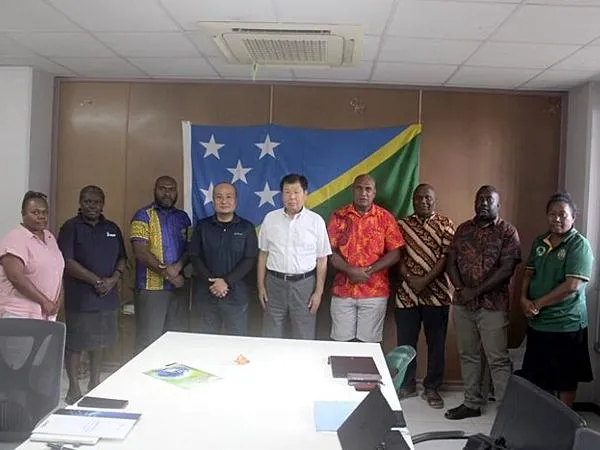
The Commodities Export Marketing Authority (CEMA) has taken another step in its efforts to revive Solomon Islands’ agricultural sector, leading a mission to Brisbane to explore partnership opportunities with Applied Nutrition Pty Ltd, a well-established manufacturer of livestock feed premixes and nutritional supplements.
The delegation was led by CEMA Director Simon Chottu and Board Director Joseph Huta. The mission focused on identifying practical collaborations that could advance the authority’s Strategic Transformation Plan, which aims to modernise farming and improve food security across the country.
Discussions centred on two key opportunities. The first, the Local Feeds Project, seeks to develop customised nutritional supplements for poultry, pigs, and cattle using home-grown ingredients such as copra meal, cassava, and rice bran. The second involves exploring the export of copra meal — both organic and non-organic — to Australia, potentially opening up fresh markets for coconut growers and processors in Solomon Islands.
“This partnership is very much in line with the government’s policy on agricultural diversification and food security,” Mr Chottu said. “It offers us a chance not only to cut down on imported feeds but also to create new value-adding opportunities for our farmers.”
Mr Huta added that the economic potential was equally important. “By creating value-added production chains, we can deliver stronger financial benefits for farmers and cooperatives. This is about ensuring that agriculture works for rural households and communities.”
Applied Nutrition’s Technical Director, Dr Michael Evans, welcomed the initiative. He expressed the company’s enthusiasm for building long-term relationships with Solomon Islands’ stakeholders. “We see great potential in these discussions, and we are committed to working together to achieve outcomes that are beneficial for both sides,” he said.
The next phase of the collaboration will involve compiling ingredient data and conducting further assessments to prepare for pilot projects and future export readiness.
This initiative is part of the Solomon Islands Government’s wider push to revitalise CEMA, empower rural farmers, diversify exports, and strengthen the country’s food security. For many in the agricultural sector, it represents a practical pathway towards resilience and sustainable growth.
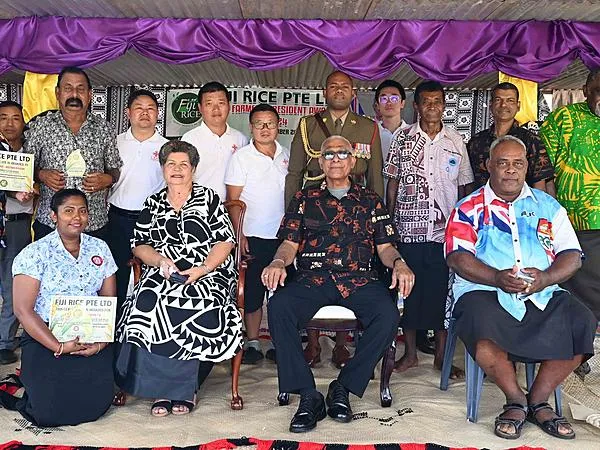
President of the Republic of Fiji Ratu Naiqama Lalabalavu has challenged the Ministry of Agriculture and Fiji Rice Farmers Limited to strengthen their support for local farmers by providing the necessary resources to grow Fiji’s rice industry.
Speaking at the Rice Farmers Awards held in Muanidevo Sanatan Dharam Primary School at Dreketi, President Lalabalavu emphasised that rice has become a staple food in Fiji, local production cannot meet demand, necessitating imports. He cited Thailand’s success in rice and cassava production, noting how the Southeast Asian nation not only plants but also exports on a large scale.
“Rice has been around in Fiji for many years, but to ensure that we become self-sufficient and for the industry to thrive, we must all work together — Government, industry stakeholders, and farmers alike,” President Lalabalavu said.
He reaffirmed Government's commitment to the sector, highlighting the $115.3 million allocation for agriculture in the 2025–2026 National Budget — a $14 million increase from the previous year — with $2.7 million directed specifically towards rice research, farming, and irrigation schemes.
The Head of State also acknowledged Fiji Rice Limited’s achievements, including an increase in paddy supply from 1,301 tonnes in 2024 to 1,654 tonnes in 2025, with Viti Levu’s contribution growing from 17 tonnes to 119 tonnes over the same period. He attributed this progress to the Government-driven drainage programme and the operationalisation of the Nailaga Rice Mill in Ba.
At the same time, he noted areas requiring further investment, particularly in milling and paddy storage facilities, while commending Fiji Rice Limited’s $150,000 investment in planting grants that supported 182 farmers nationwide during the 2024 season.
The Head of State encouraged subsistence farmers, women, and youth to pursue opportunities in rice farming, noting that of Fiji’s 672 registered rice farmers, only 38 are women. He urged greater use of Ministry of Agriculture extension services and stronger collaboration across the sector.
“On behalf of a grateful nation, I thank rice farmers, your efforts to sustain us are noted, acknowledged, and appreciated. But I also remind our stakeholders that for Fiji’s rice industry to reach its full potential, we must continue to invest, innovate, and work hand-in-hand,” the President said.
Sharing similar sentiments Cabinet Ministers present including the Deputy Prime Minister and Finance Minister Hon Biman Prasad, Minister for Agriculture Hon Tomasi Tunabuna and Minister for Environment and Climate Change Hon Mosese Bulitavu emphasised their commitment to work together to assist rice farmers grow the industry.
The Fiji Rice Board Chairman, Mr. Raj Sharma, acknowledged the President's call for greater action and outlined the company’s plans to further strengthen the sector.
“Fiji Rice Limited is committed to modernising rice farming in Fiji by investing in farm mechanisation, upgrading storage facilities such as at the Nailaga Mill, and expanding training and irrigation projects for our farmers. We are also exploring new research collaborations to improve crop yield and sustainability,” Mr Sharma said.
He added that Fiji Rice would continue to work closely with the Ministry of Agriculture and farmer associations to reduce the nation’s rice import dependency and increase local production for food security.
As part of the ceremony, outstanding farmers and contributors to the rice industry were recognised in the following award categories:
· Youth Farmer
· Best New Farmer – Northern Division
· Best New Farmer – Western Division
· Lifetime Contribution
· Special Contribution – China Rice & SRIF
· Highest Paddy Supplier
· Best iTaukei Farmer
· Best Female Farmer
· Best Overall Farmer – 2025 Season
The President congratulated all recipients and commended sponsors for their commitment to uplifting farming communities. “Accolades are not just rewards, but also reminders of the lessons learned through the year. Let us continue to grow this industry together,” he said.
Fiji imported over $50 million worth of rice in 2022, equivalent to roughly 37,000 metric tonnes, while only 880 tonnes were produced locally. The Government has therefore made rice production a national priority, with increased investment and collaboration aimed at closing the gap, reducing the import bill, and building a resilient, self-sufficient Fiji.
The Minister for Multi-Ethnic Affairs and Sugar Industry, Charan Jeath Singh, on 5 September handed over the Pre-Season Burnt Cane Rehabilitation Grant to sugarcane farmers in Sabeto, Nadi, underscoring government’s drive to revitalise the struggling sugar industry.
Addressing the farmers, Singh said the government was determined to bring the sector back to its former strength by boosting production and adopting modern solutions.
“We are working to revive this vital industry and bring it back to what it used to be. The government is committed to supporting our farmers and ensuring the future sustainability of sugar,” he said.
Singh also highlighted the Coalition Government’s plans to build a new sugar mill in Rakiraki, with expressions of interest already advertised. The project, he said, would open a new chapter for Fiji’s sugar industry.
On the persistent labour shortage, Singh said the ministry was pursuing overseas recruitment while expanding mechanisation across the sector. Programmes such as tractor service providers and fertiliser applicators are already in place, with specialised harvesters for hilly terrain expected soon.
He revealed that the Government of India had pledged support through 12 drones for fertiliser application and a mobile soil testing laboratory, which will strengthen research and innovation in sugar farming.
The minister said several grants and assistance programmes were available to help farmers increase yields and adopt modern practices. He urged growers to plant recommended cane varieties and rely on advice from the Sugar Research Institute of Fiji to improve productivity.
“The future of the sugar industry lies in modernization, research, and farmer support. Together, we will build a resilient and thriving sugar sector for Fiji,” Singh said.
Farmers who attended the handover welcomed the assistance, describing it as timely support that would help them recover from challenges faced in recent seasons.
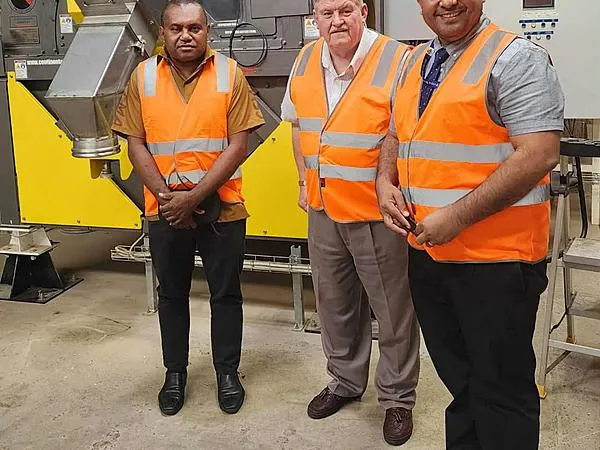
A major milestone for Solomon Islands agriculture began as three Japanese specialists arrived in Honiara on 3 September to install the country’s first-ever Vapor Heat Treatment (VHT) facility, a technology designed to open global export markets for local fruit growers.
The experts were welcomed in a high-level meeting at the Ministry of Agriculture and Livestock (MAL), where they met Permanent Secretary Dr. Samson Viulu and senior officials before commencing work on the installation at Henderson.
“With the arrival of VHT technology, we are stepping into a new era of export readiness,” Dr. Viulu said. “This breakthrough offers our farmers the opportunity to shift from subsistence farming to commercial production, increase their yields, and explore new market opportunities regionally and internationally.”
The VHT facility represents years of planning and determination by MAL. Dr. Viulu noted that the project’s visible progress would reassure farmers and encourage greater production. “The public will finally see that the installation is happening, and it will hopefully increase production at the farm level as it opens doors for farmers across the nation,” he said.
VHT is an advanced, chemical-free quarantine method that uses controlled hot, humid air to eliminate pests such as fruit flies from fresh produce. Unlike traditional treatments, the process preserves the natural taste, appearance, and nutritional quality of fruits while ensuring they meet international biosecurity standards.
The technology requires precise installation and calibration. The three Japanese specialists bring technical expertise to adapt the system for Solomon Islands’ diverse fruits, ensuring the facility can treat multiple varieties effectively.
MAL also plans to invite stakeholders to specialised training on VHT operations, equipping local farmers, exporters, and biosecurity officers with the knowledge needed to maximise its benefits. Once operational, the facility is expected to boost commercial production and give exporters confidence in accessing regional and international markets.
Officials emphasised that the VHT project is more than just a technical upgrade. It marks a transformative step in building a modern, competitive agriculture sector capable of supporting sustainable growth.
“This initiative reflects our commitment to strengthening food security, empowering farmers, and positioning Solomon Islands as a credible player in the export market,” Dr. Viulu said.
The installation is scheduled to continue over the coming weeks, with testing and training set to follow before the facility becomes fully operational.
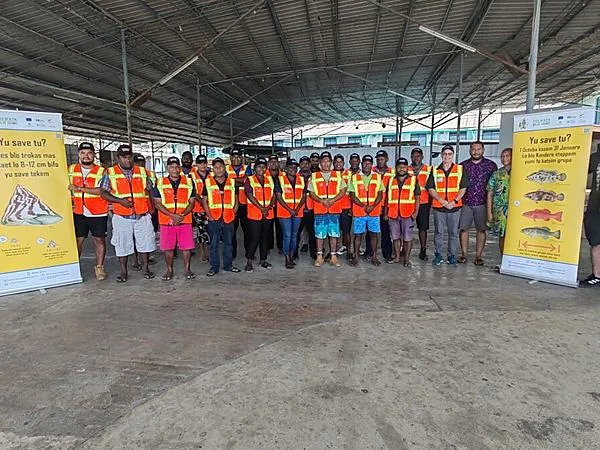
Provincial fisheries officers from across Solomon Islands gathered in Honiara, not only to sharpen their inspection skills but also to reaffirm their role as protectors of the sea and the communities who depend on it.
The Ministry of Fisheries and Marine Resources (MFMR), with support from the Pacific Community (SPC) and New Zealand Ministry for Primary Industries’ Te Pātuitanga Ahumoana a Kiwa (Te Patui), hosted the week-long Provincial Monitoring, Control, Surveillance and Enforcement (MCS+E) Refresher Training for inshore fisheries from 18 to 22 August.
The training was designed to refresh technical knowledge while placing equal emphasis on community trust and cultural identity. Officers explored new ways of engaging with people, from using awareness toolkits and audience-mapping techniques to identifying respected local “champions” who could encourage voluntary compliance. Trainers stressed that kastom remains central to successful enforcement, with cultural values giving legitimacy to modern fisheries laws.
Practical exercises were at the heart of the programme. Officers conducted inspections at Honiara’s Central Market, restaurants and retail outlets, practising structured introductions, inspection protocols and safety procedures. Each activity ended with debrief sessions to refine their methods. Scenario-based exercises built confidence in casefile management, incident reporting and maintaining evidentiary standards—reinforcing that good record-keeping is key to fairness as well as prosecution.
For many participants, the week was about more than enforcing regulations. It was a reminder of their dual responsibility—as enforcers of the law and as stewards of coastal resources for future generations. “We are not just inspectors,” one officer shared during the reflection session. “We are guardians for our communities.”
The refresher training underscored the need to balance law, ethics, culture and communication in fisheries compliance. By bringing these elements together, officers left not only with improved skills but also with a renewed commitment to serve their people with professionalism and integrity.
“This programme is part of our vision to manage fisheries sustainably for the benefit of all Solomon Islanders,” the MFMR said in a statement.
The SPC provided financial support for the training. Facilitators included Mark Nicholson (Team Leader), William Sokimi Jnr, Hugo Nguyen, Jeff Dunlop of Te Patui and MFMR’s Mark Seda.
Follow on LinkedIn:
Pacific Business Review
Be the "First" to get our exclusive Digital Magazine & Weekly Newsletter.