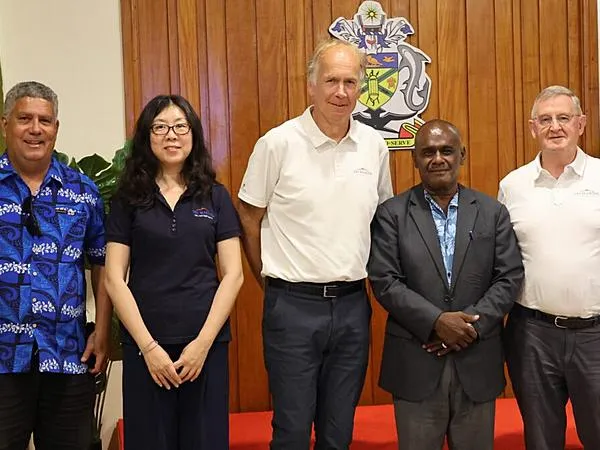
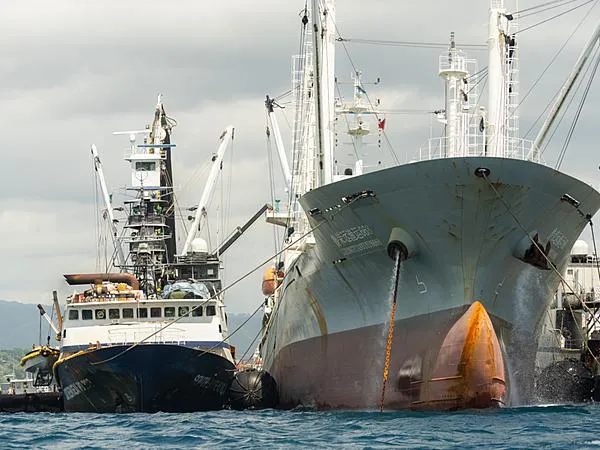
A delegation from Bolton Group and Tri Marine, key players in the global tuna and seafood supply chain, has commended the Solomon Islands government for its support of the country’s fisheries sector during a meeting with Prime Minister Jeremiah Manele.
Bolton and Tri Marine, which jointly own National Fisheries Development (NFD) and SolTuna Ltd in Noro, briefed the Prime Minister on their operations and ongoing investments in the country.
The delegation praised the Government, particularly the Ministry of Fisheries and Marine Resources, for maintaining an enabling legislative environment and providing consistent institutional support.
They also highlighted improvements in public service delivery in Noro and described the Government as a cornerstone investor in the sector.
SolTuna and NFD are among the country’s largest private-sector employers, producing around 140 tonnes of tuna daily and generating approximately SBD 201 million in domestic sales in 2025.
Prime Minister Manele reaffirmed the Government’s recognition of the sector’s importance, citing its contributions to the national economy, employment and community development.
“The contribution of Bolton and Tri Marine to our national development is both substantial and enduring,” he said.
Discussions also addressed operational challenges facing the industry, including rising fuel costs, taxation pressures and the impact of the new value-added tax (VAT) regime.
The delegation shared technical expertise to support the Bina Harbour project, signalling potential for deeper collaboration between the Government and industry stakeholders.
Prime Minister Manele said the Government remains committed to addressing legislative concerns, fast-tracking reforms to ensure reliable and affordable electricity, and fostering a conducive business environment.
The meeting reflects ongoing engagement between the Government and major industry participants as the Solomon Islands seeks to strengthen its fisheries sector and attract continued investment.
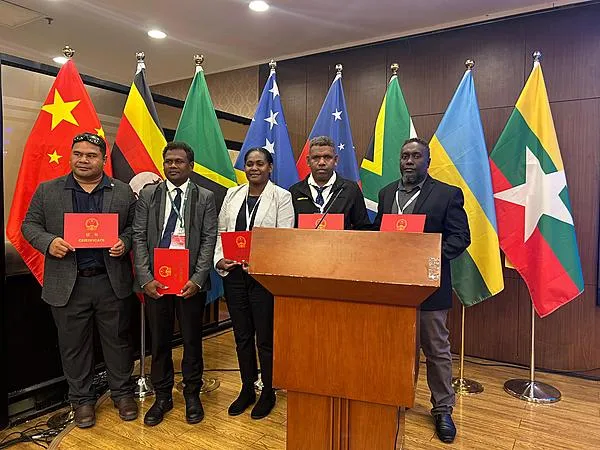
Officials from the Solomon Islands Ministry of Agriculture and Livestock Development (MALD) participated in an international seminar on green development and cooperation in China, as the government looks to strengthen sustainable growth strategies in the agriculture sector.
Planning Department Director Danny Lehe and Extension Department Acting Deputy Director Petra Urahora represented MALD at the programme, held from March 11 to 24, 2026. The seminar convened policymakers and experts from developing countries to exchange approaches on green growth, sustainability and international cooperation.
The programme combined lectures, group discussions and field visits, exposing participants to policy frameworks and practical models that integrate economic development with environmental protection and social inclusion.
Lehe said the delegation gained insights into digital agriculture tools, renewable energy investments and planning strategies that align economic growth with climate and environmental objectives.
“We learned how green development can support sustainable economic growth, reduce poverty and address climate change. The seminar highlighted the importance of international cooperation, technology transfer and capacity building in delivering long-term results,” he said.
He added that sustainable development requires coordinated policies that balance economic expansion with environmental stewardship and inclusive governance.
Discussions also underscored the role of strong public institutions and integrated planning in advancing rural development. Case studies presented during the seminar showed how investments in education, improved market access and policy coordination can accelerate poverty reduction.
MALD said the lessons are directly relevant to the Solomon Islands, particularly in advancing renewable energy adoption, strengthening digital infrastructure and promoting research-driven, climate-resilient agricultural practices.
The ministry reaffirmed its commitment to applying these insights to national development priorities and to deepen partnerships that support sustainable and inclusive growth.
MALD also acknowledged the Solomon Islands Ministry of Education and Human Resources Development for facilitating participation, as well as the Embassy of the People’s Republic of China in Honiara for supporting travel arrangements.
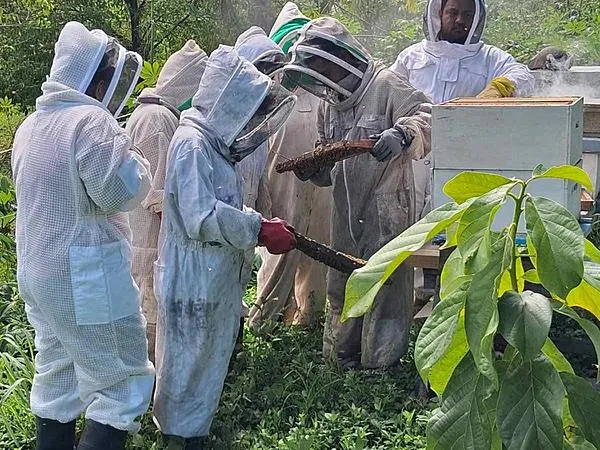
Ten farmers in Fiji have completed a four-day basic beekeeping training in Sabeto, Nadi, as part of efforts to strengthen climate-resilient agriculture and diversify rural incomes.
The training, conducted under the Farmer Field School activities of the Climate Smart Agriculture Programme, equipped participants with practical skills in bee biology, colony management, hive setup and honey harvesting, alongside pest and disease management.
Organisers said the initiative aims to help farmers integrate beekeeping into existing farming systems, creating additional income streams while supporting pollination and ecosystem health.
Beekeeping remains a small but growing subsector in Fiji’s agricultural landscape, driven by favourable tropical conditions and increasing demand for locally produced honey. Production is largely undertaken by smallholder farmers and backyard beekeepers, with common species including Apis mellifera (European honeybee) and Apis cerana (Asian honeybee).
Industry stakeholders have identified strong potential for expansion, particularly in niche markets such as organic and raw honey, beeswax products and value-added goods. However, the sector continues to face structural challenges, including limited technical expertise, vulnerability to pests and diseases, and the impacts of climate variability on flowering cycles and forage availability.
Government and development programmes have increasingly promoted beekeeping as a low-cost, climate-resilient livelihood option, especially for rural and outer island communities. Beyond income generation, bees play a critical role in crop pollination, contributing to productivity in fruit, vegetable and root crop farming systems.
The Sabeto training also introduced participants to opportunities in honey marketing and small-scale enterprise development, encouraging farmers to explore commercial pathways in the sector.
The initiative forms part of broader efforts to enhance food security, strengthen rural livelihoods and build resilience in Fiji’s agriculture sector. The training concluded on April 16.
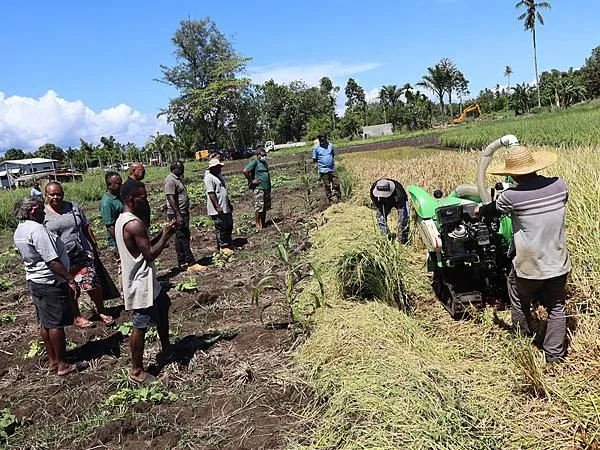
The Ministry of Agriculture and Livestock Development (MALD) has received 142 expressions of interest (EOIs) under its 2026 call for proposals for two flagship initiatives aimed at strengthening domestic food production and reducing reliance on imports.
The EOIs cover the Commercial Rice Development Programme (CRDP) and the Poultry Production Strengthening Programme (PPSP), both central to the government’s push to expand commercial agriculture and improve food security in the Solomon Islands.
Officials said the strong response underscores growing confidence among local farmers and agribusinesses in agriculture as a viable investment sector, particularly in poultry production.
Poultry dominates investor interest
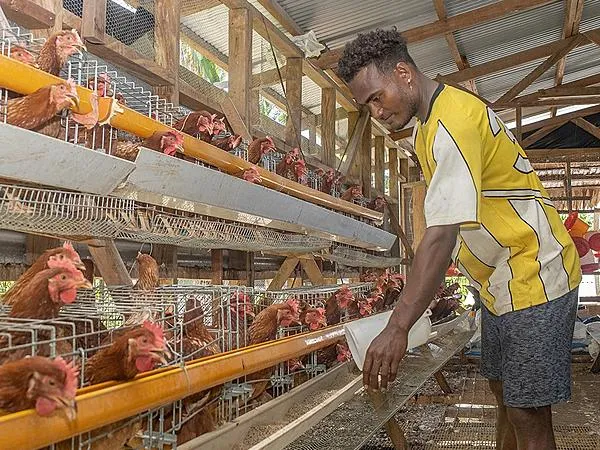
Of the total submissions, the majority were linked to poultry-related ventures, including broiler and layer farm proposals. MALD said this trend reflects increasing awareness of the commercial potential of poultry, driven by rising domestic demand and relatively shorter production cycles compared with other agricultural activities.
The ministry noted that stakeholders are showing readiness to scale up operations and invest in expanding local supply chains for poultry products, which remain heavily reliant on imports.
The PPSP is designed to address persistent bottlenecks in the sector, including high feed costs, limited availability of quality day-old chicks, and gaps in veterinary support and extension services. By targeting these constraints, the programme aims to improve productivity, strengthen market access, and support the long-term sustainability of the poultry industry.
Rice sector lags despite policy push
In contrast, interest in rice farming under the CRDP was comparatively lower, highlighting ongoing structural and investment challenges in the subsector.
MALD said this signals the need for more targeted interventions, including awareness campaigns, technical support, and incentives to encourage participation in domestic rice production.
The CRDP focuses on scaling up rice farming in key production areas such as Guadalcanal and Malaita Province, with the aim of reducing dependence on imported rice—a major component of national food consumption.
Officials said boosting local rice output remains critical to improving food security and insulating the country from global price volatility and supply disruptions.
Part of broader agriculture strategy
The EOI process forms part of MALD’s wider strategy to address longstanding constraints in the agriculture sector, including limited production capacity, underdeveloped value chains, and heavy reliance on imported food.
By promoting commercially viable farming models, the ministry aims to stimulate private-sector participation, enhance rural incomes, and build more resilient food systems.
MALD will now proceed to the evaluation phase, which includes screening and shortlisting applicants, followed by detailed technical planning and eventual project implementation.
The ministry commended applicants for their strong participation and said it remains committed to supporting investments that align with national development priorities and contribute to sustainable agricultural growth.
Breakdown of EOIs
While MALD has yet to release a full disaggregated dataset, officials indicated that poultry-related submissions accounted for the majority of the 142 EOIs, with a smaller share allocated to rice development proposals.
Further details on shortlisted projects and funding allocations are expected to be announced following the completion of the evaluation process.
The Ministry of Agriculture and Livestock Development is advancing a series of initiatives aimed at transforming the agriculture sector and supporting economic growth in the Solomon Islands.
Permanent Secretary Samson Viulu said during a quarterly ministerial update this week that the ministry is implementing key projects and reforms to strengthen agricultural productivity and market access.
Among the flagship programmes is the Agriculture Investment for Markets and Nutrition (AIM-N) Project, a six-year, $20 million initiative currently benefiting more than 18,000 people in Western and Choiseul provinces, with planned expansion to Isabel Province. The project is designed to improve food security, nutrition and rural incomes.
In parallel, the Solomon Islands Agriculture and Rural Transformation (SIART) Project is progressing across Guadalcanal, Malaita and Makira/Ulawa, with a focus on boosting agricultural production and improving market linkages.
The ministry is also supporting small and medium-sized agribusinesses through the Commercial Agriculture Development Project Support Fund. Recent beneficiaries include Kokonut Pacific, Varivao Holding Limited and Malo Kitchen.
Additional initiatives include the Coconut Cocoa Revolving Fund, the establishment of a national cattle breeding centre, and the National Poultry Industry Development Initiative.
“These efforts are reinforcing the role of agriculture as a key pillar of economic development in the Solomon Islands,” Viulu said.
Overall, the ministry said the projects are progressing as planned and are expected to contribute to the continued transformation of the agriculture sector while supporting broader economic growth.
Fiji’s kava industry has transformed into the country’s top agricultural export over the past 15 years, with export earnings exceeding FJD53 million and supporting more than 14,500 farming households.
The shift from subsistence production to a commercialised export sector has been driven by rising demand in key markets including Australia, New Zealand and the United States, alongside improvements in quality standards and supply chains.
Export growth underpinned by policy and market reforms
The expansion reflects sustained support from the Pacific Horticultural and Agricultural Market Access Plus Program, which has worked with the Government of Fiji and industry stakeholders to strengthen biosecurity, plant health and export readiness.
Interventions have included the development of national quality standards, certification systems and support for market access initiatives, particularly Australia’s commercial kava import framework introduced in 2019.
The programme has enabled more than 5,500 farming households to access international markets, contributing to higher rural incomes and increased export volumes.
Industry scaling with new production models
The sector’s current growth phase, which began around 2021, is characterised by product diversification, improved quality assurance and entry into mainstream retail channels.
Green kava processing has emerged as a key innovation, reducing processing time and increasing income across supply chains. One model has delivered income gains of about 26% among participating households, alongside broader productivity improvements.
Fijian kava products are now stocked in major retail outlets in Australia, marking a shift from informal trade to formal commercial distribution.
Economic role expands beyond exports
The broader kava economy is estimated to exceed FJD190 million when domestic consumption and informal trade are included, reinforcing its role as a key rural livelihood across major growing regions such as Kadavu, Bua and Cakaudrove.
The sector has also demonstrated resilience despite past shocks, including export bans, climate impacts and cyclone damage, with recovery driven by stronger systems and rising global demand.
Sustainability risks remain
Despite rapid growth, stakeholders warn of structural risks that could affect long-term stability.
These include plant health threats such as dieback disease and nematodes, the need for stronger regulatory frameworks, and limited industry coordination.
Gender disparities also persist, with women underrepresented in commercial production and trade.
The report calls for continued reforms in regulation, plant health management and industry organisation to sustain growth and avoid future boom-bust cycles.
The Solomon Islands government is stepping up efforts to advance the Bina Harbour development in Malaita, a flagship fisheries project aimed at transforming the country’s tuna industry and capturing greater economic value from its marine resources.
The Ministry of Fisheries and Marine Resources has prioritised the project in the 2026 budget, allocating SB$120 million to support early-stage works, including a domestic jetty and preparatory infrastructure.
The Bina Harbour initiative centres on establishing a tuna port and processing facility designed to enable onshore processing, a shift seen as critical to increasing domestic value capture from one of the country’s most important natural resources.
Government officials say technical groundwork is progressing, including hydrological assessments, geotechnical investigations and site planning to ensure the project meets environmental and operational requirements.
A feasibility study is also under way, alongside broader technical studies covering water supply, wastewater systems and supporting infrastructure for both the facility and surrounding communities.
The Bina Harbour project is structured as a potential public-private partnership, with support from development partners including the International Finance Corporation, Australia and New Zealand.
Authorities are simultaneously pursuing regional tuna supply arrangements with neighbouring Pacific countries to ensure a reliable flow of raw materials once operations begin.
Major economic ambitions
The development is widely regarded as one of the most significant economic projects in Solomon Islands, with projections indicating it could generate around $400 million in economic value over 15 years and create more than 1,600 jobs.
Some estimates suggest employment impacts could be even higher when including indirect jobs and construction-phase activity, with thousands of roles expected across the value chain.
The total investment required for the broader development — including port infrastructure, utilities and processing facilities — is expected to exceed $200 million.
Officials have described the project as a cornerstone of efforts to diversify the economy, reduce reliance on raw fish exports and stimulate development in Malaita Province, where employment opportunities have historically been limited.
Long development timeline
Despite strong government backing, the project has faced delays over the years due to land ownership issues, financing complexities and the need for extensive environmental and technical studies.
Authorities say those challenges are being addressed through landowner consultations, environmental safeguards and coordinated planning with development partners.
Recent milestones include the endorsement of a site layout design for the port and processing plant, with plans that allow for future expansion while minimising environmental impact and ensuring community acceptance.
The government has emphasised that the project is now moving through a critical preparatory phase, with the aim of positioning Bina Harbour as a viable investment opportunity for global tuna operators.
Strategic significance
The fisheries sector already contributes significantly to the Solomon Islands economy, accounting for about 10% of government revenue, and officials see the Bina Harbour project as key to scaling that contribution further.
By enabling domestic processing and strengthening supply chains, the project is expected to support industrial growth, increase export earnings and improve economic resilience.
Authorities say the long-term goal is to establish Bina Harbour as a major regional fisheries hub, anchoring sustainable development and delivering broad-based economic benefits across the country.
Newly appointed Agriculture and Livestock Development Minister Nestor Giro has signed two funding agreements under the Commercial Agriculture Development Support Project, underscoring the Solomon Islands government’s push to strengthen local agribusinesses.
A total of SBD780,000 has been awarded to two enterprises, with Varivao Holdings Limited receiving SBD700,000 and Malo Kitchen granted SBD80,000. The funding is drawn from the Commercial Agriculture Development Project Support Fund, which supports small and medium-sized agribusinesses in acquiring equipment and enhancing value-added production.
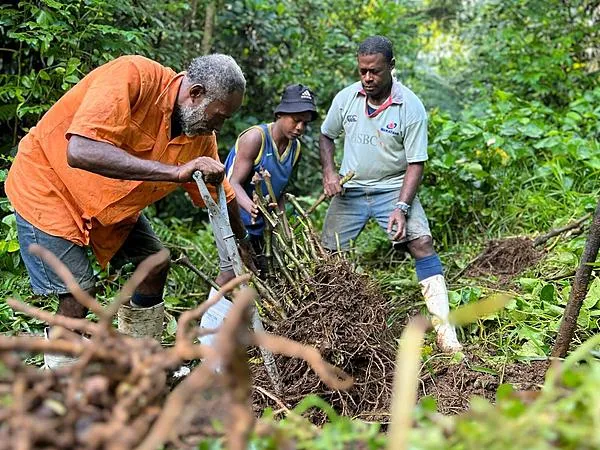
Varivao Holdings plans to invest in cold storage, roofing materials, labour, a grafting machine, and cassava processing and packaging equipment, in line with its approved work plan. Malo Kitchen will use its allocation to upgrade equipment and improve processing facilities to meet food safety and production standards.
Speaking at the signing ceremony, Giro urged recipients to utilise the funds effectively, noting that they were selected following a rigorous assessment process.
“On behalf of the Government of Solomon Islands, I congratulate you both. Please ensure that the funds are fully utilised to support the growth of your business investments,” he said.
Malo Kitchen managing director Susan Timi described the funding as a milestone that would significantly improve operations, while Varivao Holdings human resource manager Redley Theomae said the support would benefit both the company and the communities it serves.
Varivao Holdings is currently the sole major exporter of cassava to Australia, having shipped nine containers last year and two containers so far this year, including both tubers and grated cassava. Malo Kitchen sources ginger from provincial women farmers to produce ginger-based products, as well as breadfruit flour and turmeric goods.
The signing marks Giro’s first official engagement since being sworn in earlier this week. The ministry said it will continue supporting agribusiness development under the GNUT Agriculture Policy to expand opportunities for local enterprises and strengthen rural economies.
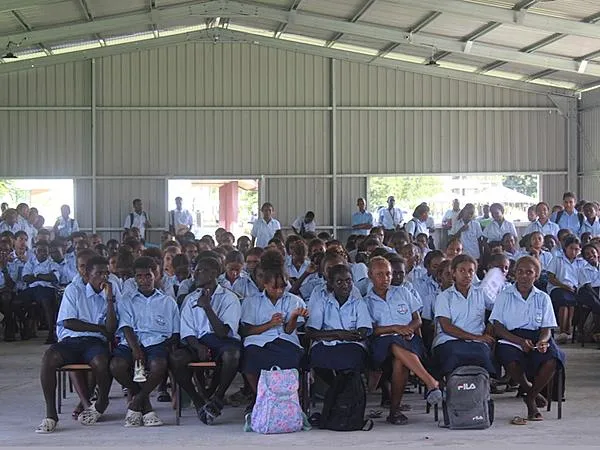
Biosecurity Solomon Islands (BSI), under the Ministry of Agriculture and Livestock, successfully conducted its first school awareness program for 2026 at Betikama Adventist College, marking the start of its school outreach activities for the year.
The event was officiated by the school’s Head of Department for Agriculture, Mr Kendrick Tango’eha Tahea, and attended by students from Forms 1 to 7 in the school’s new hall. A team of three officers from different units within Biosecurity Solomon Islands delivered the awareness session, representing the Surveillance Unit, the Biosecurity Emergency Coordination Centre (BECC), and the Publicity and Information Unit.
The presentation introduced students to the history and role of biosecurity in Solomon Islands, including the transition from the former Solomon Islands Agriculture Quarantine Service to Biosecurity Solomon Islands.
It also explained how biosecurity helps protect agriculture, the environment, the economy and public health, while highlighting the country’s links to key international biosecurity organisations and frameworks such as the WTO, IPPC, WOAH and WHO.
At the end of the program, Deputy Principal Mr Kelly Patovaki commended the awareness session and encouraged students to view agriculture as a promising future career path, particularly in specialised areas such as biosecurity.
Biosecurity Publicity Officer Leon Boso said school awareness would remain one of BSI’s key priorities in 2026, with plans to target more major schools throughout the year.
“While communication platforms such as social media, radio and signboards remain important, face-to-face awareness continues to be one of the most effective ways to share information directly with communities,” the officer said. “When combined with other communication methods, awareness efforts can help information reach the public more effectively and create lasting understanding through repetition and engagement.”
Boso emphasised that students are future leaders and play an important role in spreading awareness to families and communities.
He highlighted that invasive alien species (IAS) are an increasing national threat. These include harmful exotic plants, animals, pests and disease-causing organisms that can spread and severely impact biodiversity and livelihoods. Key concerns highlighted were rabies, a zoonotic disease that can be transmitted from animals to humans; African swine fever, which threatens the pork industry; Banana Wilt Associated Phytoplasma (BWAP), which poses a significant risk to banana and coconut production; and cocoa pod borer, which continues to threaten the cocoa industry.
The officer further stressed that biosecurity cannot address these challenges alone and that every citizen has a role to play by reporting any unusual insect, pest, disease or damage affecting crops or animals to the Ministry of Agriculture and Livestock.
Biosecurity Solomon Islands extended its sincere appreciation to Betikama Adventist College for inviting the team to deliver the awareness session.
Through programs like this, Biosecurity Solomon Islands aims to strengthen public understanding and encourage shared responsibility in protecting Solomon Islands from harmful pests and diseases.
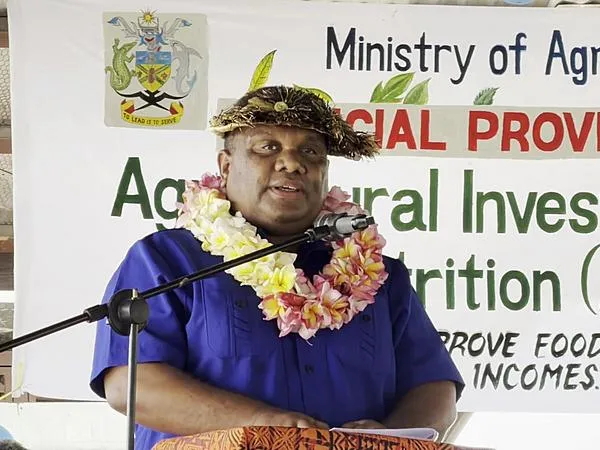
The Ministry of Agriculture and Livestock Development has launched the Agriculture Investment for Markets and Nutrition (AIM-N) Project in Western Province, aiming to strengthen agriculture, improve nutrition and boost rural incomes.
The project was officially launched in Gizo by Minister for Agriculture and Livestock Development Franklyn Derek Wasi in partnership with the Western Provincial Government led by Premier Billy Veo.
The event brought together provincial leaders, representatives from the education, health and agriculture sectors, women’s groups and members of the AIM-N project team.
Wasi said the initiative represents a renewed commitment to farmers, fisherfolk, rural women and youth, and to the future of agriculture and nutrition in the Solomon Islands.
“Today marks more than the commencement of a project. It marks a renewed commitment to our farmers, fisherfolk, rural women and youth, and to the future of agriculture and nutrition in our country,” he said.
He said Western Province has long played an important role in the country’s agricultural and fisheries production, producing commodities such as cocoa, coconut, root crops and marine resources that sustain thousands of rural households.
Wasi said the project aims to create long-term systems that expand economic opportunities in rural communities.
“This initiative is not about short-term assistance. It is about building systems. It is about creating opportunity and transforming rural livelihoods in a way that is sustainable and inclusive,” he said.
He added that farmers continue to face challenges including limited market access, climate risks, post-harvest losses and inadequate infrastructure.
The AIM-N project is implemented through a partnership between the Ministry of Agriculture and Livestock Development and the International Fund for Agricultural Development (IFAD).
The programme will support stronger market linkages for farmers, improved productivity and climate resilience, nutrition-sensitive agriculture, greater participation of women and youth in agribusiness and institutional strengthening at both national and provincial levels.
Wasi emphasised that women and young people will play a central role in the programme.
“If we are serious about rural transformation, we must ensure that women have access to productive resources, finance and leadership opportunities. We must also create pathways for young people to see agriculture not as subsistence but as enterprise,” he said.
Premier Veo welcomed the initiative and thanked the national government and development partners for including Western Province in the programme.
He said the project would strengthen service delivery to rural communities by providing technical and financial support to farmers and families, enabling them to produce nutritious food while generating sustainable incomes.
Veo also highlighted the importance of public awareness during implementation to ensure communities understand how they can participate in the programme.
Western Province Minister for Agriculture and Forestry Isaac Jenty said the project aligns with the Western Provincial Agricultural Sector Plan 2023–2027 and supports efforts to strengthen smallholder farming and agricultural value chains.
Western Province Minister for Education Gordon Zebo said the initiative would also help promote healthier school environments by supporting the reintroduction of school gardens and encouraging the consumption of nutritious local food.
Meanwhile, Western Province Minister for Health Kenneth George said improving nutrition is essential to addressing the country’s growing non-communicable disease crisis, noting that such illnesses account for around 60 to 70 percent of deaths in the Solomon Islands.
The AIM-N Project is a six-year programme valued at about $20 million. Launched nationally in July 2025, it aims to improve food security, nutrition and rural incomes for more than 18,000 people, representing about 6,100 households in Choiseul, Isabel and Western provinces.
A Solomon Islands government cabinet sub-committee overseeing reforms to the Commodities Export Marketing Authority (CEMA) has conducted an official visit to Central Islands Province to support plans aimed at revitalising rural commodity markets and strengthening agricultural exports.
The CEMA Cabinet Sub-Committee visited the province from March 4 to 7 at the invitation of the Central Provincial Government, as part of efforts to align provincial development priorities with the government’s economic transformation agenda.
During the visit, the delegation briefed provincial leaders on the CEMA Revitalisation and Recapitalisation Strategy (2021–2027), which aims to restore the authority’s commercial trading functions, improve market access for farmers and expand value-added processing and export opportunities.
The strategy focuses on strengthening supply chains for key commodities including coconut and cocoa, two major agricultural products for rural communities.
Central Islands Province Premier Kenneth Sagupari said the province was ready to support initiatives that deliver concrete development outcomes. He pointed to proposed projects including a coconut refinery, the revitalisation of the Hakama Agriculture Centre and plans for a Special Economic Zone.
Members of the delegation met with provincial officials, ward representatives, church leaders and farmers to discuss ways to increase copra and cocoa production, establish commodity clusters and develop downstream processing and export markets.
The group also conducted a site visit to agricultural land at Hakama earmarked for future development.
Simon Chottu, director of the CEMA Cabinet Sub-Committee, said the reforms are aimed at strengthening rural commodity value chains and improving farmers’ access to reliable markets.
“The CEMA revitalisation is about reconnecting rural farmers to reliable markets and strengthening commodity value chains,” he said.
Central Islands Province is one of the country’s key agricultural areas, producing an estimated 3,300 to 3,800 metric tonnes of copra each year, valued at between SBD$15 million and SBD$18 million.
The government said the visit underscores efforts to strengthen cooperation between national and provincial authorities and to translate national economic policies into practical opportunities for rural communities.
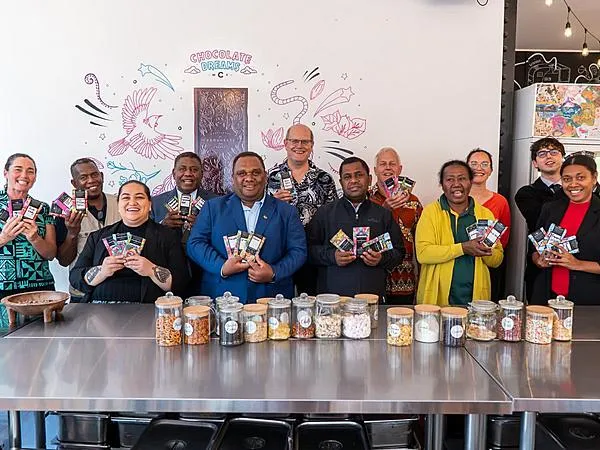
Solomon Islands ministers and officials visited the Wellington Chocolate Factory this week as part of a broader trip to New Zealand aimed at strengthening agricultural partnerships and expanding market opportunities for Pacific farmers.
Minister for Agriculture and Livestock Development Franklyn Derek Wasi and Minister for Health and Medical Services Paul Bosawai led the Solomon Islands delegation, which met with Grow Asia Pacific (GAP) to discuss initiatives supporting farmers in the Solomon Islands.
During the visit, Grow Asia Pacific outlined its work with Solomon Islands farmers to improve production and promote sustainable and climate-smart agricultural practices.
The organisation also showcased Rautini, a social enterprise trading company established in 2022 to connect Pacific farmers and processors with markets in New Zealand.
Cocoa beans remain Rautini’s flagship export product, with the Wellington Chocolate Factory among its clients using beans sourced from Solomon Islands growers in its chocolate products.
The visit provided the delegation with an opportunity to see how Solomon Islands cocoa is processed and used by one of New Zealand’s leading craft chocolate producers.
Chocolatiers at the Wellington Chocolate Factory guided the delegation through the process of making chocolate bars using cocoa beans sourced directly from farmers in Guadalcanal.
Officials said the visit highlights the growing links between Solomon Islands agriculture and international markets, particularly in value-added products such as specialty chocolate.
The delegation also thanked the Wellington Chocolate Factory for hosting the visit and Grow Asia Pacific for providing insights into opportunities to strengthen agricultural value chains and trade partnerships.
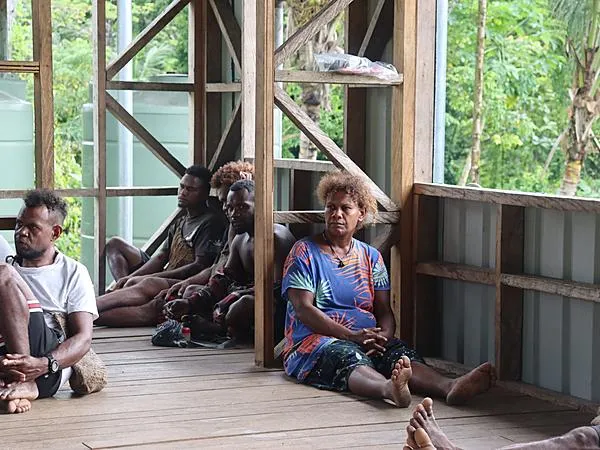
The Alisuri Sustainable Livelihood Association in Marokafo village, an inland community in the northern region of Malaita Province, is helping women save money to support their families.
The association is one of 45 Agribusiness Producer Organisations (ABPOs) in Malaita Province supported by the Solomon Islands Agriculture Rural Transformation (SIART) Project — a partnership between the Ministry of Agriculture and Livestock and the World Bank.
Through active involvement in the management and production of cocoa, women in the community have established a Women’s Savings Club, which now forms part of their ABPO.
“We started off with each woman giving their contributions to the saving club,” the women told a SIART team that recently visited the community.
The club currently has 32 members, comprising wives and children of local farmers who are members of the ABPO in Marokafo village.
ABPOs are groups of farmers and agri-entrepreneurs who work together to access markets, financing and support services.
“Through our support towards our cocoa farms, we have been able to save money to meet our family obligations,” the women said.
When the SIART team conducts farmer training in the area, the association engages the Women’s Savings Club to provide catering services.
“Just recently we supported the association in clearing nurseries for our farmers who are members of the association and they paid us for the labour. This is an example of how women in our community are benefitting,” they said.
Chairman of the Alisuri Sustainable Livelihood Association, Elton Eteka, said the ABPO has 29 household farmers, with women also registered as members.
Each household maintains between 200 and 4,000 cocoa trees. The association purchases wet beans from its members as well as from farmers in surrounding communities before processing them. SIART supports the ABPO with processing facilities and a revolving fund to initiate the purchase of wet beans.
The association transports the dried beans to buyers in the provincial capital, Auki, and shares the profits with member households.
“When each household harvests, they leave aside money for women to save in their saving club,” Eteka said.
“One good thing about the saving club is when the association pays for wet beans and is short of cash, our association borrows money from the saving club and repays it with interest, which helps in growing the women’s savings,” he added.
The association also allows women to purchase wet beans from farmers, process them and sell the dried product, with all earnings directed to the savings club.
During peak season, individual farmers in Marokafo village can earn up to $6,000 from a single harvest.
For the association, Eteka said that after purchasing wet beans from farmers, it can generate up to $50,000 in a fortnight during high crop periods.
SIART remains committed to working with ABPOs in rural communities to increase agricultural production and, more importantly, improve livelihoods in rural areas.
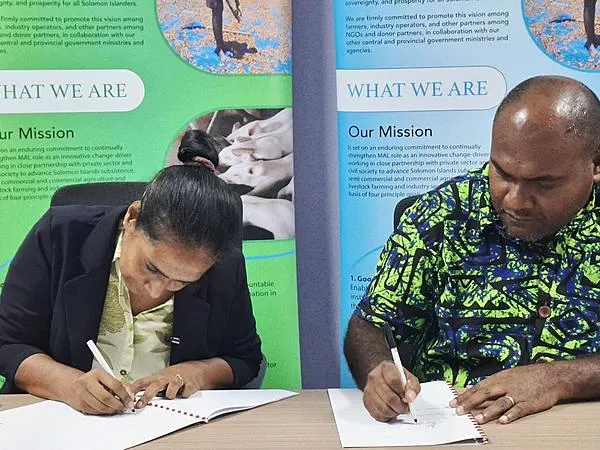
The Ministry of Agriculture and Livestock Development (MALD) and World Vision Solomon Islands (WVSI) signed a Memorandum of Understanding (MOU) earlier this week at MALD headquarters in Honiara, reaffirming their shared commitment to promote sustainable and resilient livelihoods across the Solomon Islands.
The MOU was signed by MALD Permanent Secretary Dr Samson Viulu and WVSI National Director Ms Asuntha Charles.
In his remarks, Dr Viulu highlighted that the process of finalising the MOU reflected the strong commitment of both partners to support Solomon Islanders through resilient livelihood opportunities.
“It took some time to reach this agreement, but the benefit of taking time is ensuring it meets the expectations of all parties. The Ministry is pleased to move forward with this MOU,” Dr Viulu said.
He added that the partnership aligns with the government’s two main policy priorities for the agriculture sector: making agriculture attractive at all levels of society and enabling people to earn a sustainable living from it.
“We see that young people are increasingly less interested in agriculture, which is a common challenge across many island nations. Our goal is to make agriculture appealing by providing opportunities for people to earn an income. When people have income, they have choices—whether to buy food, produce food, or invest. This is the impact we want agriculture to achieve,” he explained.
Meanwhile, WVSI National Director Ms Asuntha Charles said World Vision looks forward to working closely with MALD to reach rural communities nationwide.
“This MOU binds World Vision and the Ministry to a greater purpose: reaching communities and ensuring food security for vulnerable people, especially children. Despite the challenges of climate change, we want communities to know their resources can become productive,” Ms Charles said.
She added that the agreement represents hope for families, particularly mothers who plant crops to feed their children, pay for school fees, and create employment opportunities for future generations.
“This MOU is a commitment between the government and World Vision to work together to ensure food security for every person in the Solomon Islands. At World Vision, we believe that when families are flourishing, children thrive. We want future generations to have access to healthy, chemical-free food that supports their growth and development.”
The MOU will be effective for a two-year period, from February 2026 to February 2028.
The Pacific Islands Forum Fisheries Agency (FFA) has released a new report examining global tuna markets and trade trends in the Western and Central Pacific Ocean (WCPO), highlighting major shifts in the international tuna industry and their implications for Pacific Island countries and territories.
Titled Tuna Markets and Trade Dynamics: Western and Central Pacific Ocean, the report finds that global tuna markets are undergoing significant change, driven by shifting consumer demand, supply chain disruptions, inflation, geopolitical uncertainty and increasing sustainability requirements.
Funded by the Japan Promotion Fund, the report provides up-to-date market and industry analysis to help FFA members better understand current conditions and emerging trends in the global tuna sector. It underscores the Pacific region’s importance as the source of more than half of the world’s tuna supply, while noting that much of the processing, trading and retail activity continues to take place outside the region, limiting value capture by coastal states.
Covering the period from 2022 to 2025, the report analyses global tuna industry and trade dynamics from the perspective of Pacific Island countries, which supply more than half of the world’s tuna and play a leading role in sustainable fisheries management. It finds that global tuna markets are becoming increasingly competitive and volatile, shaped by shifting consumer demand, rising sustainability and traceability expectations, and external pressures such as climate impacts, fuel and logistics costs, and geopolitical uncertainty.
While large multinational firms continue to dominate processing, branding and retail markets, Pacific Island countries remain the cornerstone of the global tuna industry through their stewardship of WCPO tuna resources and regional management frameworks such as the Vessel Day Scheme.
The report also examines recent industry and trade developments in the WCPO tuna fishery, including the role of major global firms, emerging Asian players, Pacific-led initiatives, and evolving environmental, social and governance (ESG) and trade trends. It notes that Chinese and Philippine companies continue to expand their influence across fishing, processing and trading through vertical integration and strategic investment.
The analysis highlights that Pacific Island countries hold their greatest leverage at the point of resource ownership and access, where regional cooperation has successfully secured value from the fishery with relatively low risk. It cautions that expanding into harvesting and onshore processing can expose countries to high commercial and financial risks in a highly competitive global value chain, particularly where scale, market access and branding power are limited.
Instead, the report points to Pacific-led pathways that build on existing strengths, including sustainability leadership, traceability and strategic market engagement, as more effective approaches to increasing economic returns, strengthening bargaining power and supporting long-term development outcomes for Pacific peoples.
FFA Director-General Noan David Pakop said the report underscores the importance of evidence-based decision-making.
“These insights help our members understand how global developments are shaping the Pacific tuna industry,” Pakop said. “They support better planning to manage risks, identify opportunities and secure long-term economic benefits from sustainably managed tuna resources.”
The report provides valuable context for policymakers, fisheries managers and industry stakeholders as the region responds to a rapidly changing global seafood market while safeguarding tuna stock sustainability. It builds on earlier FFA market studies and supports regional initiatives such as the East New Britain Initiative.
The publication forms part of FFA’s ongoing work to provide members with timely market intelligence and practical analysis to strengthen the region’s collective position in global tuna trade.
Get full report here: https://www.ffa.int/download/tuna-industry-and-trade-dynamics-and-the-western-and-central-pacific-ocean/?fbclid=IwY2xjawPvkF5leHRuA2FlbQIxMABicmlkETFWVHM4OEVoZ2N6d1VDSlNwc3J0YwZhcHBfaWQQMjIyMDM5MTc4ODIwMDg5MgABHt4Ed08i6L_j7T5NpUieXKfYmSYn1_IyGtrGzCpgKnkgCVGLoshqyyKPz9Rx_aem_U28Q4fR4INPwUVGzC4d08g
Minister for Agriculture and Livestock Development Franklyn Derek Wasi has announced ambitious national targets to revitalise the poultry industry in the Solomon Islands.
Wasi outlined the targets while delivering opening remarks at a consultation meeting with local poultry farmers, emphasising the ministry’s commitment to addressing key challenges and promoting sustainable growth in the sector.
While acknowledging the efforts of local producers, Wasi said poultry farmers continue to face significant constraints, particularly the high cost of feed and the unreliable supply of day-old chicks.
“I understand that the biggest challenges you face are the high cost of feed and the unreliable supply of day-old chicks. These challenges place you at a disadvantage and make it difficult to compete with cheaper imported eggs and poultry products,” Wasi said.
National poultry industry targets
The Ministry of Agriculture and Livestock Development (MALD) aims to achieve the following targets within the next three years:
Establishment of a new hatchery at KGVI Farm with a capacity of 10,000 eggs, supported by the Food and Agriculture Organization and the European Union.
Procurement of mini feed mills to enable local production of poultry and piggery feed.
Development of 100 hectares of maize and corn farms on Guadalcanal to supply raw materials for domestic feed production.
Establishment of the Solomon Islands’ first commercial feed mill for poultry and piggery.
Establishment of the country’s first parent flock breeding centre to locally produce fertile eggs.
Distribution of 20,000 birds to 20 selected farmers this year, including feed and essential farm equipment.
Major infrastructure investments, including a World Bank-funded slaughterhouse nearing completion at KGVI Farm, as well as plans to acquire animal transport trucks and a mobile slaughter unit to support farmers outside Honiara.
Wasi said the initiatives are expected to significantly increase domestic egg and poultry production, with a target to reduce retail prices to SBD25 per tray of eggs and SBD50 per whole chicken by the end of this year or early next year.
He said achieving these targets would enable the government to introduce higher taxes on imported poultry products and, in the longer term, impose import restrictions.
The strategy also promotes the establishment of poultry cooperatives to improve organisation, marketing and long-term sustainability.
Wasi stressed the importance of strong collaboration between MALD and poultry farmers, particularly accountability among those who have previously received government support.
“Together, we will rebuild the poultry industry into a vibrant, profitable and affordable sector that improves livelihoods and strengthens food security in the Solomon Islands,” he said.
During the consultation, farmers shared experiences operating farms with flock sizes ranging from 1,000 to 5,000 birds. Key challenges raised included high feed costs, unreliable chick supply, limited veterinary services, inadequate farm infrastructure and high bird mortality rates. Farmers also expressed concern about the impact of cheaper imported eggs and poultry products on local production and incomes.
Wasi said future ministry support would prioritise committed poultry farmers to ensure a reliable supply and sustainable industry growth.
In closing, he urged all past recipients of Solomon Islands Government support to submit reports detailing how previous funding was used.
“If past recipients wish to be considered for further funding, you must first submit reports on how previous assistance was utilised. Without this, MALD will not consider you for additional support,” he said.
MALD Permanent Secretary Dr. Samson Viulu assured farmers their concerns have been incorporated into the National Poultry Strategy 2026–2028.
The ministry reaffirmed that collaboration, accountability and continued engagement with farmers remain central to building a resilient and sustainable poultry industry in the Solomon Islands.
Follow on LinkedIn:
Pacific Business Review
Be the "First" to get our exclusive Digital Magazine & Weekly Newsletter.