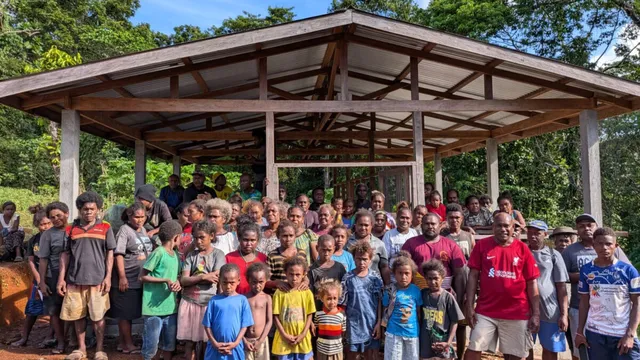
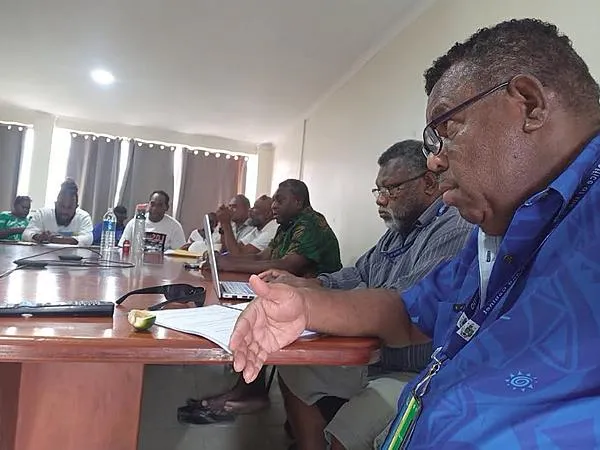
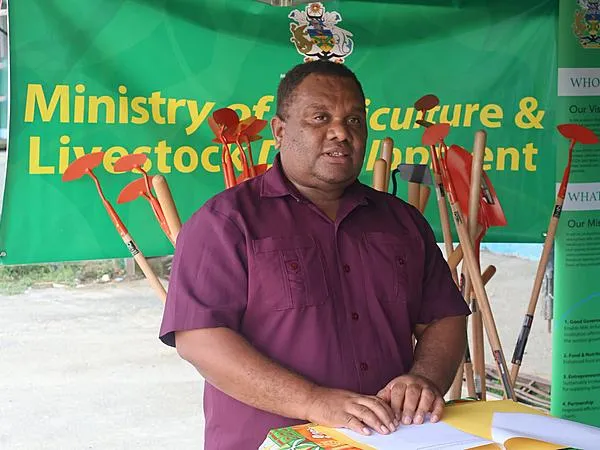
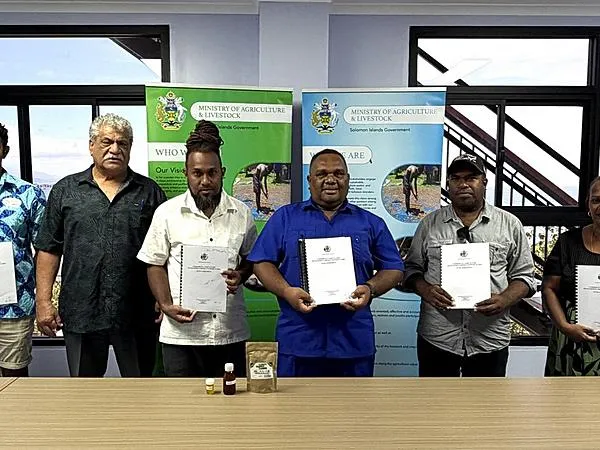
The Solomon Islands Agriculture Rural Transformation (SIART) Project has completed a series of two-day training sessions for pig farmers in South Malaita to improve livestock management, animal health and agribusiness skills.
The training involved members of five agribusiness producer organisations (ABPOs): the Waiasi Piggery Farmers Association, Mamanaha Indigenous Piggery Farmers Association, Apatarau Tribe, Kauhata Piggery Project and Ikoru Raku Farmers Association.
The initiative forms part of SIART's support for rural agricultural enterprises through funding, capacity-building and technical assistance aimed at improving livelihoods and agricultural productivity.
In Malaita Province, the project supports 16 ABPOs engaged in pig farming, representing an investment of SBD6.9 million.
The sessions were facilitated by SIART project representatives and livestock officers from the Ministry of Agriculture and Livestock (MAL) based in Malaita Province.
SIART Agribusiness Officer for Malaita Province Betty Arumae said the training covered pig husbandry, animal health, production quality, marketing, promotion and different farming systems.
She said the sessions were tailored to the needs of local farmers and included practical guidance on constructing suitable pig housing, providing clean water, preparing feed from locally available ingredients, and caring for sows and piglets.
The animal health component focused on identifying symptoms of common pig diseases and understanding appropriate prevention and treatment measures.
Farmers also received guidance on managing their operations as businesses, including keeping records of mating and farrowing dates, litter sizes, feed mixtures and quantities, and medication use.
The training also introduced participants to quality pig production for the market, focusing on raising healthy, lean pigs efficiently to meet customer preferences and market demand.
Fr Steven Unu'iwao of the Waiasi Piggery Farmers Association in Waipina Village, South Malaita, said the training provided practical knowledge that could help rural communities manage their pig farms and agribusinesses.
He said the sessions and practical demonstrations were particularly valuable because they introduced information that participating farmers had not previously encountered.
Unu'iwao added that the knowledge gained could improve pig farming operations and strengthen the community's agribusiness activities supported by SIART.
He said agricultural activities remained central to livelihoods in rural and remote communities, making practical training important for farmers in the provinces.
The training forms part of SIART's broader efforts to strengthen Solomon Islands agriculture through capacity-building, market linkages and sustainable farming practices.
Funded by the World Bank, SIART is implemented by the Ministry of Agriculture and Livestock.
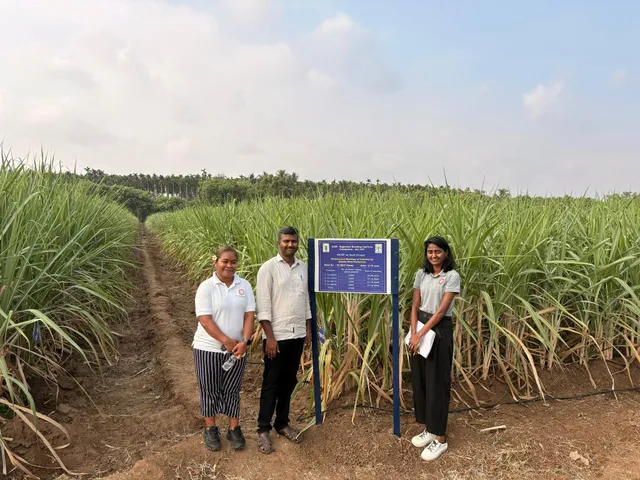
Fiji’s government is expanding efforts to diversify agricultural production in the country’s sugarcane belt, seeking to give smallholder farmers additional income opportunities while improving the long-term sustainability of agricultural land.
Agriculture, Waterways and Sugar Industry Minister Tomasi Tunabuna said diversification would complement, rather than replace, sugarcane production, which remains an important contributor to Fiji’s economy.
Speaking in Parliament, Tunabuna said 3,752 farmers, or 41.3% of the country’s cane farmers, collectively produced just 13.2% of total cane production in 2025.
He said the figures highlighted the need to give suitable smallholder farmers additional options to improve returns from their land.
“Diversification should not be viewed as an effort to move farmers away from sugarcane, but rather as a strategy to expand farmers’ economic choices and ensure land is utilised for activities that can deliver sustainable and productive returns,” Tunabuna said.
The government expects diversification to also support national food security, reduce reliance on imported food and strengthen rural livelihoods, while creating opportunities to supply the tourism sector, value-added industries and higher-value markets.
A key part of the strategy is a European Union-supported diversification study being undertaken with the Food and Agriculture Organization.
The study is assessing the feasibility of transitioning suitable areas within the cane belt to alternative high-value crop and livestock systems.
It will examine where sugarcane production remains commercially viable, where alternative crops could generate higher returns, and where integrated farming systems could be introduced. The study will also assess markets and value chains capable of supporting alternative agricultural activities.
Tunabuna said the first-phase report is expected to be completed by November 2026 and will guide consideration of a second phase, including potential pilot projects.
The government is also pursuing diversification initiatives while the study is underway.
Tunabuna cited the Fiji Water Citrus Project in the north as an example of how investment, land use and market opportunities could support alternative agricultural production.
Under Fiji’s 2026-27 National Budget, the Ministry’s Crop Production Division has also received funding specifically for crop diversification. The ministry is identifying and developing projects aimed at supporting smallholder sugarcane farmers.
The government continues to provide assistance to cane farmers undertaking non-sugar crop activities through land preparation, small farming equipment, mechanisation, fertiliser and chemical support, agricultural advisory services, diversification projects and climate-smart agriculture.
Support also covers product development and value addition, as well as market alignment and development.
Tunabuna said the government would take a phased, evidence-based and market-driven approach to diversification.
“We do not want farmers to change crops without first understanding the production costs, available markets, value chains and potential returns,” he said.
“Our objective is to ensure that smallholder farmers have more choices, stronger and more resilient livelihoods, and the opportunity to achieve the best sustainable economic return from their land.”
The government said it would continue to support the sugar industry as a key pillar of Fiji’s agricultural economy while developing diversification opportunities aimed at strengthening the resilience and long-term sustainability of farming communities across the cane belt.
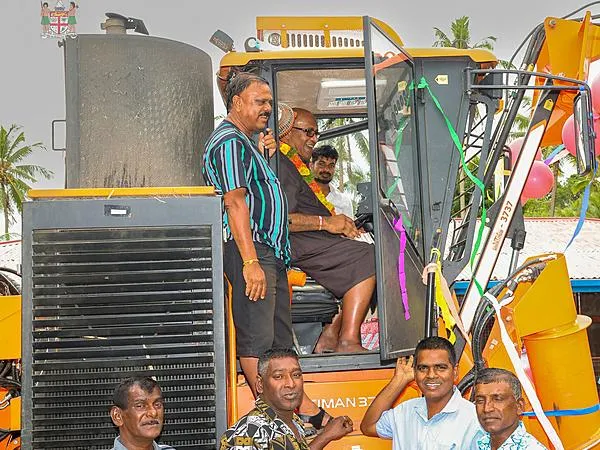
Farmers in Fiji's Naleba and Bucaisau areas have bought their own mechanical sugarcane harvester to reduce reliance on contractors and help ensure crops are harvested and delivered to the Labasa Mill on time.
The 12-member Bucaisau Farmers' Cooperatives Ltd. acquired the harvester with support from the government, Fiji Development Bank and contributions from cooperative members.
The Cooperative Development Fund provided a $100,000 grant, while the Fiji Development Bank provided loan financing. Members contributed $10,000 towards the purchase and strengthening of the cooperative.
Cooperative member Navindra Jas said the group was originally established in 2017 as Naleba Cane Farmers Cooperative Ltd. but remained inactive for several years. With assistance from the Department of Cooperatives, it was revived in 2025 and renamed Bucaisau Farmers' Cooperatives Ltd.
Jas said the cooperative was revived to collectively own and operate harvesting machinery, reduce dependence on outside contractors and make the equipment available to other farmers in the Naleba and Bucaisau areas.
Deputy Prime Minister and Minister for Industries, Commerce and Business Development Manoa Kamikamica said at the harvester handover on Sept. 23 that the initiative demonstrated how cooperatives could help farmers overcome challenges that would be difficult to address individually.
"A cooperative is, at its heart, a simple but powerful idea: that people achieve more by pooling their resources, their labour and their voice than they ever could standing alone," Kamikamica said.
He said access to machinery and financing could be significant challenges for cane farmers, while cooperatives allow members to share costs and acquire equipment that may otherwise be beyond the reach of individual farmers.
Kamikamica said government support extended beyond grants and loans to strengthening cooperative boards, improving financial management and building the systems needed to sustain cooperatives.
Jas said the cooperative plans to acquire additional types of sugarcane farming equipment, allowing it to provide more services to its members and other farmers in the area.
Kamikamica said the revival of the Bucaisau cooperative demonstrated the value of farmers working together around a shared goal.
"When a cooperative succeeds, it is not an abstract statistic that improves — it is a family that harvests its crop on time, a member's income that grows, a community that gains the confidence to plan further ahead, and a livelihood that becomes more secure," he said.
The harvester is expected to support farmers supplying the Labasa Mill by improving access to machinery during the harvest season and reducing reliance on external contractors.
Tighten the story for news styleSharpen the lead with the investment
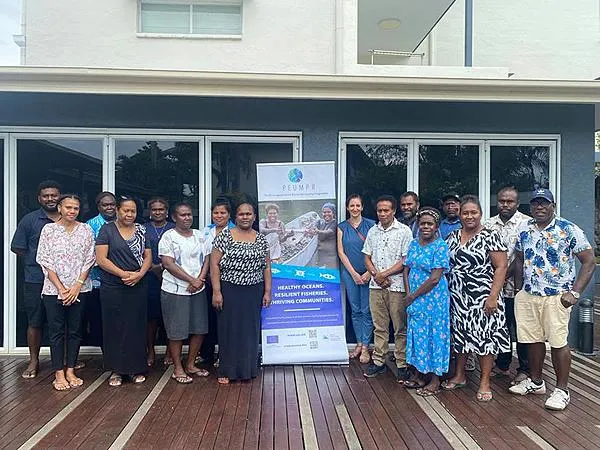
The Ministry of Fisheries and Marine Resources (MFMR) has launched its Gender Equality, Disability and Social Inclusion (GEDSI) Strategy 2026–2030, setting a five-year framework for making the country's fisheries sector more inclusive.
Endorsed in April, the strategy will integrate gender equality, disability inclusion and social inclusion across MFMR policies, programs, services and decision-making.
Director of Fisheries Edward Honiwala said women, youth and marginalized groups have long contributed to fisheries value chains but their roles and voices have not always been recognized.
“Together we can build a fisheries sector that uplifts every voice, values every contribution and leaves no one behind,” Honiwala said.
The strategy replaces a gender mainstreaming strategy developed more than a decade ago that focused primarily on inshore fisheries. The new framework takes a broader approach covering MFMR's work and the wider fisheries sector, including greater participation by persons with disabilities and other marginalized groups in fisheries management, development and decision-making.
Honiwala said Solomon Islands is among the few Pacific countries with a fisheries-specific GEDSI strategy.
The strategy includes objectives, targets, indicators and an implementation plan, with its development informed by consultations with communities and stakeholders.
Technical assistance was provided by the Pacific Community (SPC) through the Pacific-European Union Marine Partnership (PEUMP) Programme, with support continuing under PEUMP II, funded by the European Union.
WorldFish also provided guidance through the Pathways project, funded by the Australian Department of Foreign Affairs and Trade.
The launch followed a three-day GEDSI training program for MFMR staff held from Aug. 31 to Sept. 2 in Honiara. The training provided staff with practical tools for assessing how fisheries policies, programs and decisions affect different groups.
MFMR will now implement the strategy across its divisions, with responsibilities, timelines and monitoring mechanisms established to track progress over the next five years.
PEUMP II, which runs from 2026 to 2030, supports Pacific countries in addressing declining coastal fisheries resources, marine biodiversity threats, climate change and sustainable economic development. It also promotes GEDSI and a human rights-based approach to ensuring more equitable participation in the region's blue economy.
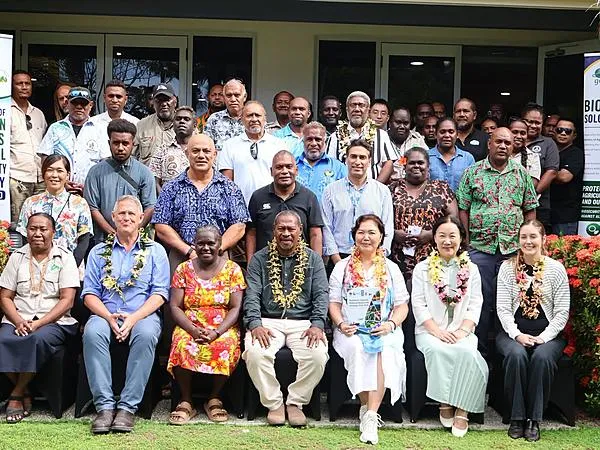
The Ministry of Agriculture and Livestock Development (MALD), through Biosecurity Solomon Islands (BSI), has launched a 10-year strategy to strengthen the country's defenses against pests, diseases, invasive species and other biosecurity threats.
The Solomon Islands National Biosecurity Strategy 2026–2036 was officially launched on Sept. 8, 2026, in partnership with the United Nations Development Programme (UNDP).
The strategy establishes a national framework to protect agriculture, food security, biodiversity, livelihoods and the economy, while strengthening the country's capacity to detect and respond to emerging biosecurity risks.
Agriculture and Livestock Development Minister Nestor Giro said agriculture remains a cornerstone of the national economy and a key source of food, income and opportunities for rural communities.
He said strong biosecurity is necessary to protect farmers, agricultural production, investments and access to markets.
The strategy sets out six priority areas: sustainable financing; an engaged and supportive public; stronger partnerships; a capable workforce; expanded safeguarding; and improved risk assessment and risk reduction.
Giro called on government agencies, farmers, communities, businesses and development partners to work together on implementation.
BSI Director Jean Eroa Manepora acknowledged support from Australia, New Zealand and China, as well as UNDP and the Global Environment Facility, for assistance including technical support, training, equipment, surveillance and institutional development.
UNDP Resident Representative Tuya Altangerel said biosecurity extends beyond border controls and invasive species management, encompassing the protection of people, livelihoods, agriculture, fisheries, biodiversity, food security, trade, tourism and the broader economy.
She said biosecurity risks are becoming more complex because of climate change, expanding trade and travel, changing land-use patterns and biodiversity loss.
Altangerel said government, communities, farmers, businesses, travelers and development partners all have a role in strengthening the country's biosecurity system.
The strategy's vision — “Safeguarding, Collective Action and People Centred” — is captured in the message, “Iumi Protektim. Waka Tugeda. Fokus Blong Pipol,” or “Protect together, work together, and keep people at the centre.”
Implementation of the 10-year roadmap will focus on strengthening institutions, surveillance and border biosecurity, equipping frontline officers, raising public awareness, improving coordination and enabling earlier detection and faster responses to emerging threats.
The launch marks the start of implementation of the national strategy, with the government seeking to build a more resilient biosecurity system to protect Solomon Islands' agricultural sector, environment, livelihoods and economic future.
The Pacific Islands Forum Fisheries Agency (FFA) has received the Margarita Lizárraga Medal from the Food and Agriculture Organization of the United Nations (FAO), recognising the collective leadership of Pacific Island countries in responsible fisheries management.
FAO Director-General Dr Qu Dongyu presented the medal to FFA Director-General Noan David Pakop during the opening of the 37th Session of the FAO Committee on Fisheries (COFI37) at FAO headquarters in Rome.
Mexico's representative, José Luis Delgado, whose government supports the award, attended the presentation.
The Margarita Lizárraga Medal is awarded every two years to a person or organisation that has demonstrated distinction in applying the FAO Code of Conduct for Responsible Fisheries.
Accepting the award on behalf of FFA's 17 members and its secretariat, Pakop said the recognition belonged primarily to the Pacific nations that had worked collectively to safeguard their fisheries resources.
“For more than four decades, they have demonstrated what can be achieved when Pacific nations stand together, share responsibility and act collectively to safeguard their sovereign fisheries resources,” Pakop said.
He also credited generations of Pacific fisheries leaders, officials, scientists, observers, enforcement officers and communities for their efforts to ensure the region's ocean continues to sustain its people.
Pakop acknowledged past and present FFA Secretariat staff for their technical expertise and commitment, as well as the contributions of the Pacific Community (SPC), the region's fisheries science provider.
He also recognised the partnership of the Western and Central Pacific Fisheries Commission and the Parties to the Nauru Agreement.
The Pacific is home to the world's largest tuna fishery, which supports national economies, food security and livelihoods and is closely linked to the cultures and identity of Pacific peoples.
Through regional cooperation and sustained investment in fisheries data, science, monitoring and enforcement, FFA members have worked to maintain the health of the region's major tuna stocks.
Over its 47-year history, FFA has supported its members in developing cooperative approaches to tuna fisheries management, strengthening monitoring, control and surveillance, combating illegal, unreported and unregulated fishing and upholding their sovereign rights over fisheries resources.
Pakop said the award recognised the region's achievements but also highlighted the challenges ahead.
“Climate change, economic pressures, emerging technologies and increasingly complex maritime threats require us to remain vigilant and united,” he said.
“FFA accepts this honour with humility and renewed determination. We remain committed to working with FAO, our regional partners and the wider international community in support of sustainable fisheries and the wellbeing of our people.”
Pakop said he hoped the recognition would strengthen international commitment to protecting oceans and fisheries and advancing the principles of the FAO Code of Conduct for Responsible Fisheries.
“On behalf of the FFA Membership and Secretariat, I extend our sincere appreciation to the Committee and FAO for this distinguished honour,” he said.
“Iumi tugeda – together we can.”
The FAO established the Margarita Lizárraga Medal in honour of Margarita Lizárraga, a Mexican fisheries specialist who played a central role in promoting the FAO Code of Conduct for Responsible Fisheries.
The medal is presented every two years to an individual or organisation that has served with distinction in applying the Code.
SUVA, Fiji — Fiji and China are strengthening their longstanding agricultural partnership through expanded cooperation in research, technology, training, food security and climate-smart agriculture.
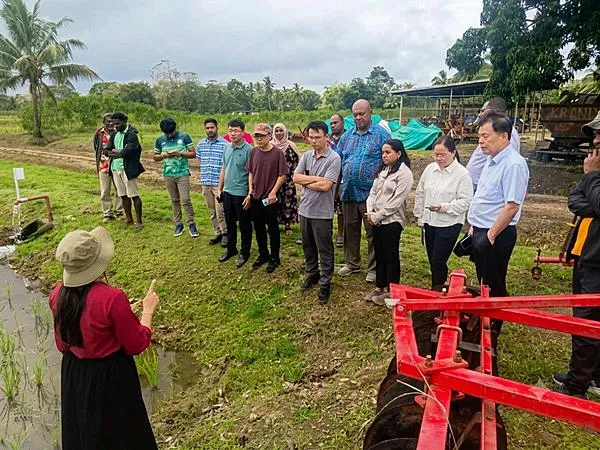
The partnership was highlighted at the Fiji-China Agricultural Cooperation Visit and Technical Symposium at Koronivia Research Station, bringing together policymakers, researchers, technical experts and industry stakeholders from both countries.
Deputy Secretary for Agriculture Development at the Ministry of Agriculture, Waterways and Sugar Industry, Dr Tekini Nakidakida, said the symposium provided an opportunity to review the achievements of more than a decade of cooperation and identify priorities for its next phase.
Nakidakida said agricultural cooperation between Fiji and China has continued since 2012 through eight agreements, memorandums of understanding and contracts covering rice research, Juncao technology, waterways infrastructure and capacity building, with five remaining active.
The partnership has delivered improvements in rice research and mechanisation, Juncao technology, waterways development and technical capacity.
With Chinese technical support, five local rice varieties have been improved, while demonstration sites have been established at Koronivia, Dreketi and Vanua Levu. Modern equipment, including planters, tractors, harvesters and driers, has also been introduced to Fiji's rice sector.
Juncao technology has expanded beyond mushroom cultivation to livestock feed and land and riverbank restoration. More than 2,500 farmers have been trained, with four commercial mushroom enterprises established.
The China-Pacific Island Countries Juncao Technology Demonstration Centre, inaugurated in Fiji in 2023, has further strengthened Fiji's role as a regional hub for the technology, Nakidakida said.
Chinese technical expertise has also supported river dredging works on the Ba, Rewa, Navua and Sigatoka rivers, which the ministry said have delivered benefits for community safety and livelihoods.
Since 2012, more than 140 Ministry of Agriculture officers have received training in China in areas ranging from hybrid rice seed production to climate-smart agriculture and leadership.
Nakidakida said the cooperation has evolved through practical experience in adapting technology to Fiji's farming conditions.
“It is precisely this kind of open, continuing dialogue that today’s symposium represents,” he said.
Chinese Embassy Chargé d’Affaires a.i. Wang Yuan said agricultural cooperation was “injecting new impetus into the sound growth of our bilateral relations.”
Wang said the programme represented a practical step toward translating the Global Development Initiative into action and implementing the understanding reached by the leaders of Fiji and China to deepen agricultural cooperation.
He said the training programme was tailored to local needs and aimed at addressing challenges facing Fijian farmers, including climate change, labour shortages, limited access to appropriate technology and marketing difficulties.
The programme covers the breeding and cultivation of citrus, rice, sugarcane, sweet potato and potato, alongside practical field sessions.
Wang also highlighted the agricultural experience of Fujian Province, saying technologies and practices adapted to local conditions could provide useful lessons for Fiji.
He said the training could serve as a bridge for sustained agricultural exchanges between the two countries, including greater cooperation in agricultural technology, talent development and food processing.
Looking ahead, Nakidakida identified protected cropping technology, reducing food loss and waste, expanded rice and crop research, climate-smart agriculture, and agricultural trade and investment as priority areas for future cooperation.
Protected cropping technology could also support Fiji's tourism sector by strengthening domestic food production and supply, he said.
“For Fiji, this partnership strengthens our food security, supports our farmers’ livelihoods, and builds our resilience to climate change,” Nakidakida said.
He encouraged participants to ensure the symposium produces clear priorities and practical follow-up actions.
The five-day programme combines indoor technical presentations led by visiting Chinese experts with afternoon field demonstrations. The programme is designed to provide participants with technical knowledge and hands-on experience relevant to Fiji's agricultural conditions.
The Ministry acknowledged the Government of the People's Republic of China, the Chinese Embassy and the visiting delegation for their continued commitment to strengthening agricultural cooperation between Fiji and China.
A landowning cooperative in Tailevu is turning customary land into commercial opportunities through agriculture, forestry and private-sector partnerships, with the Fiji Government backing the initiative as a model for rural enterprise.
Twenty-two members of the Mataqali Solevu Cooperative in Naivuruvuru Village, Verata, Tailevu, are developing a five-year plan to turn 809 acres of customary land into a platform for commercial activity and new income opportunities.
The cooperative, registered on May 5 this year, comprises 15 men and seven women. As the largest landowning group in the Tikina of Verata, it has adopted a Strategic Development Plan covering 2026 to 2030 and has already begun commercial development of its land.
Deputy Prime Minister and Minister for Industries, Commerce and Business Development Manoa Kamikamica said the initiative demonstrated how customary landowners could take a more active role in developing their economic future.
“This is not ad hoc development. This is a mataqali planning its future with the same rigour we would expect of any serious commercial enterprise,” Kamikamica said during the signing of a memorandum of understanding between Mataqali Solevu and Food Processors Fiji Limited, alongside the handover of financial assistance at Naivuruvuru Village.
Dalo farming provides first commercial opportunity
Agriculture is among the first commercial activities being developed under the cooperative's plan.
The group planted 19,000 dalo on part of a 200-acre area allocated for commercial farming between January and July this year. Following a visit to the site, Food Processors Fiji Limited committed additional funding to support the planting of another 15,000 dalo.
The expansion is expected to generate returns of up to FJ$75,000 for the cooperative.
Kamikamica said the project demonstrated the direct economic potential of customary land when combined with structured planning and commercial partnerships.
“The income in question is actual income, flowing directly from your land back into your own community,” he said.
The minister said the development reflected the government's broader objective of supporting landowning communities to move from custodianship toward enterprise.
“This is exactly the model my Ministry wants to see replicated across Fiji: landowners moving from custodianship to enterprise,” he said.
Forestry and community businesses
Mataqali Solevu is also working with the Ministry of Forestry to assess 150 acres of Silver Quangdong planted around two decades ago.
Suitability testing is scheduled for October, with commercial logging planned from 2027, subject to the outcome of the assessment.
The cooperative is also planning a canteen and bakery intended to provide services to the wider Tikina of Verata, adding another potential source of local economic activity to its development programme.
Kamikamica said partnerships between landowning units and the private sector could provide a foundation for broader rural economic development.
“Partnerships of this kind, between the private sector and landowning units, are precisely how we will grow Fiji’s rural economy from the ground up,” he said.
The Ministry will continue supporting Mataqali Solevu as it finalises its Strategic Development Plan, business plan and cash-flow projections. Business Assistance Fiji has also agreed to subsidise training for the cooperative by 70%.
The development model combines customary land ownership with commercial planning, agricultural production, forestry and community-based businesses, giving Mataqali Solevu several potential revenue streams while keeping economic activity within the local community.
The initiative illustrates the potential for structured landowner development to create rural enterprises, diversify income and strengthen local economic participation through partnerships between communities, government agencies and private-sector businesses.
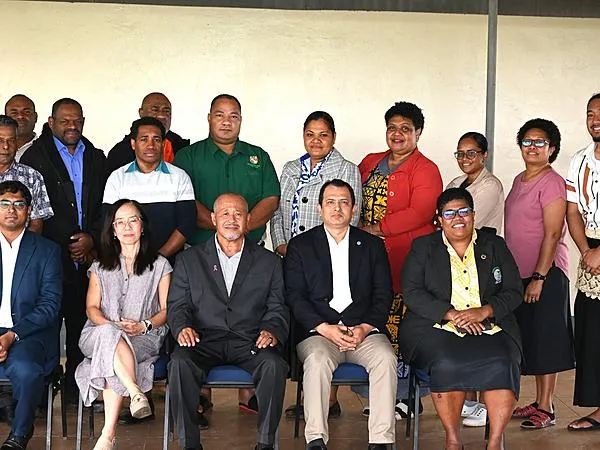
Fiji’s Ministry of Agriculture and Waterways is strengthening its capacity to develop, assess and coordinate agricultural investment proposals through a four-day training program on economic and financial analysis under the Food and Agriculture Organization’s (FAO) Hand-in-Hand Initiative.
The training, which opened at the JICA Training Room at the Koronivia Agriculture Research Station, brings together participants from Fiji and Tonga and is supported by the FAO Investment Centre, the FAO Subregional Office for the Pacific and the FAO Country Office.
Permanent Secretary for Agriculture and Waterways Dr Andrew Tukana said the program forms part of broader efforts to modernize and institutionalize agricultural investment planning in Fiji.
“Our longer-term objective is to modernise and institutionalise the Ministry’s investment-planning process,” Tukana said.
He said the ministry intends to develop a standard investment-planning manual or operating procedure to guide the preparation and review of major agricultural investment proposals.
According to Tukana, the proposed system would establish minimum requirements for evidence, analysis, consultation, quality assurance and approvals, helping ensure that investment proposals meet consistent standards regardless of who prepares them.
The training comes as Fiji, Tonga and other Pacific nations prepare for the FAO Hand-in-Hand Investment Forum in Rome in October, where Fiji is expected to present investment opportunities in breadfruit, pineapple, coconut and cocoa.
While describing the Rome forum as an important milestone, Tukana said Fiji’s focus must extend beyond the event and toward establishing a sustainable framework for agricultural investment planning.
“The quality of an investment plan should not depend only on one officer, one consultant or one short-term project. It should become part of how the Ministry operates – connecting technical design, economic and financial analysis, budgeting, implementation, monitoring and accountability,” he said.
The training will equip participants with practical tools to assess the economic and financial viability of agricultural investments, including evaluating whether projects are realistic, beneficial to farmers and businesses, capable of generating broader economic value and resilient to changes in market conditions.
Tukana urged participants involved in preparing proposals for the Rome forum to critically review the analyses supporting proposed investments, including data sources, assumptions and information gaps.
He emphasized that future agricultural investment submissions should be transparent, evidence-based and clearly identify the challenges being addressed, intended beneficiaries, resource requirements, expected value creation and risk-management measures.
Addressing the challenge of limited agricultural data in many Pacific countries, Tukana said data gaps should not be used to conceal uncertainties or overstate assumptions.
“Where evidence is limited, be transparent, consult technical experts and industry stakeholders, and clearly identify what needs further verification,” he said.
Tukana also encouraged participants to share the knowledge gained during the training with colleagues, saying the long-term success of the initiative depends on building a broader pool of investment-analysis practitioners across Fiji and Tonga.
“FAO provides catalytic technical assistance. It is our duty to learn, adapt what is useful to our context and produce impact from what we have learned,” he said.
“Sustainability begins when this knowledge becomes part of our institutional practice rather than remaining with a project, consultant or individual officer.”
He acknowledged FAO’s support and thanked technical facilitators Mr Kundan and Mr Raushan for sharing their expertise with participants.
The training is expected to help develop stronger agricultural investment proposals that are commercially attractive, climate-responsive and aligned with the needs of farmers and rural communities.
Officials said the initiative will also strengthen cooperation between Fiji and Tonga while supporting Pacific Small Island Developing States in improving how agricultural investment opportunities are developed and presented to potential investors.
The training will continue over four days at the Koronivia Agriculture Research Station.
The 48th Bourail Fair drew about 22,000 participants over the weekend, bringing together agriculture, livestock and handicraft businesses while highlighting the contribution of rural industries to New Caledonia's economy.
The annual event officially opened on Aug. 14, with the first day dedicated to industry professionals and providing an opportunity for government officials to engage with agricultural and craft-sector representatives.
Government President Milakulo Tukumuli, accompanied by Christopher Gygès, Méryl Marlier and Philippe Blaise, met with industry stakeholders and producers involved in promoting New Caledonian agricultural products.
The government delegation held discussions with agricultural-sector representatives during a breakfast organised by the Office for Marketing and Cold Storage (OCEF).
The discussions provided an opportunity to examine issues affecting the agricultural sector and the role of industry organisations in supporting producers and strengthening local supply chains.
The delegation also met with the Chamber of Trades and Crafts (CMA), in the presence of its president, Elizabeth Rivière.
Discussions focused on the chamber's priorities and outlook, including support for craftspeople and vocational training.
The meetings come as New Caledonia's agricultural and craft sectors seek to maintain economic activity and strengthen opportunities for local producers and businesses.
Cultural exchange
The fair also provided a platform for cultural cooperation between New Caledonia and New Zealand.
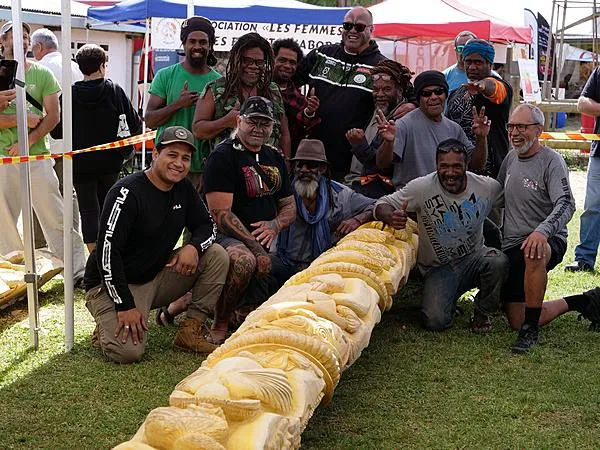
Tukumuli, alongside New Zealand Consul General Mary Thurston, Bourail Mayor Patrick Robelin and the Republic's delegated commissioner for the Southern Province, Catherine Merkcx, attended the inauguration of the monumental sculpture “La pirogue des peuples” (The Peoples' Canoe).
The sculpture was created during a cultural residency in Bourail involving Kanak and Māori sculptors, highlighting cultural links between the Pacific communities.
Focus on local priorities
The government delegation later met with Bourail Mayor Patrick Robelin at the town hall for a formal meeting focused on the municipality's priorities.
The discussions included challenges facing the municipality as a result of declining government funding allocations.
The meeting provided an opportunity for the local and territorial authorities to discuss issues affecting Bourail and the resources available to address them.
The 48th Bourail Fair serves as a showcase for New Caledonia's agricultural industries, rural expertise and handicrafts, bringing producers, businesses, government representatives and communities together.
The event's strong attendance underscored the continued importance of agriculture, livestock and local craftsmanship to the territory's economic and social life.
Kava farmers in Faifatala’a, West Kwara’ae, Malaita province could unlock significant economic opportunities as the Solomon Islands government and private-sector buyers explore ways to expand production and connect growers with export markets.
The potential was highlighted during a meeting between the Productive Sector of the Prime Minister’s Office Policy Implementation, Monitoring and Evaluation Unit, the Ministry of Commerce, Industry, Labour and Immigration, the Faifatala’a Kava Association and New Zealand-based kava buyer Serenco Labs.
Serenco Labs is already purchasing commercially suitable kava from Faifatala’a, but farmers have struggled to consistently meet buyer demand.
The main constraints include transporting harvested kava from the mountainous area to the buying point in Auki, poor road access, harvesting and post-harvest processing challenges, unreliable energy, quality control and limited commercial capacity.
Faifatala’a currently has about 45 households, 19 hectares of established kava and 102,000 plants in the ground.
Based on a planning assumption of 1 kilogram of saleable dried kava per mature plant at SBD300 per kilogram, the existing plants represent a theoretical production potential of 102 tonnes and an indicative gross farm-gate value of SBD30.6 million.
About 12,950 three-year-old plants are expected to provide the first significant commercial harvest from January 2027.
The proposed Faifatala’a Pilot Production Community and Auki Provincial Kava Hub 2026–2031 seeks to address production and market constraints through a plantation-to-market model covering production, transport, processing, quality assurance, value addition and export.
The programme targets the planting of 225,000 new plants annually, equivalent to about 45 hectares. At full production, each annual planting cohort could generate about SBD67.5 million in gross farm-gate value under the stated planning assumptions.
A Serenco Labs representative highlighted the quality of Solomon Islands kava, particularly its high kavalactone content. Strong overseas buyer interest suggests that the key challenge is increasingly the ability of farmers to produce, aggregate, process and reliably supply commercial volumes.
The company also highlighted the potential for kava farming to generate income within rural communities, including opportunities for Solomon Islanders currently working overseas under the Pacific Australia Labour Mobility scheme to consider investing their labour in commercial production at home, provided markets and supporting infrastructure are available.
Improved connectivity between Faifatala’a and Auki is seen as critical to the proposed expansion.
Better road access could reduce transport costs and post-harvest losses, increase the volume of kava reaching Auki and strengthen links between farmers, the proposed provincial kava hub and export markets.
The initiative therefore places the Ministry of Infrastructure Development in a key position to support the emerging kava industry.
The proposed Auki Kava Hub would provide facilities for aggregation, quality assurance, drying, grinding, packaging, value-added products and export preparation, with renewable energy also proposed to support processing operations.
The initiative aligns with the GREAT Coalition’s focus on indigenous small and medium-sized enterprises, local content and value addition.
For the Productive Sector of PIMEU, the project demonstrates the Iumi Tugeda approach by bringing together indigenous producers, government, infrastructure development, private-sector investment and international markets.
If the key constraints are addressed, Faifatala’a could turn its existing kava resources into sustained household incomes, rural employment, indigenous businesses and export earnings.
The longer-term goal is to establish Faifatala’a as a commercially viable pilot that could be replicated in other kava-growing communities across Solomon Islands.
The government has placed Bina Harbour, coastal livelihoods, food security and stronger protection of Solomon Islands’ fisheries resources at the centre of its 90-day delivery plan for the fisheries sector.
Responding to the Governor-General’s Speech from the Throne, Minister for Fisheries and Marine Resources Polycarp Paea said the sector must deliver greater economic and social value to Solomon Islanders while protecting marine resources for future generations.
“Fisheries must continue to provide food, jobs, export earnings and public revenue. At the same time, we must retain more value in Solomon Islands and manage our marine resources responsibly for future generations,” he said.
The Ministry’s August-December 2026 90-day implementation plan will focus on:
the Bina Harbour tuna processing plant;
coastal livelihoods and seaweed farming;
electronic monitoring and fisheries traceability;
fisheries legislation and community-based management;
the Aruligo GIFT Tilapia Project; and
stronger monitoring, control and surveillance of Solomon Islands’ waters.
At Bina Harbour, the government will advance the business case, financing strategy, statutory approvals, land and community arrangements, enabling infrastructure and investor engagement.
It will also continue discussions with development and commercial partners and pursue regional tuna-supply arrangements, while protecting customary rights and ensuring affected communities are meaningfully involved.
“Our approach will protect customary rights, ensure meaningful participation by affected communities and avoid major commitments until the necessary safeguards, financing and responsibilities are clear,” Paea said.
Bina Harbour will remain the central new fisheries investment priority through April 2028, alongside efforts to strengthen existing processing at Noro and increase local tuna landings, domestic processing and value addition.
Beyond tuna processing, the ministry will support seaweed farmers, fishers’ associations and cooperatives to improve production, access to finance and markets, cold storage and bargaining power.
Stronger fisheries centres and supply chains are expected to reduce spoilage and ensure more income reaches coastal households.
The government will also expand aquaculture and seaweed farming, support farmer training and explore commercially viable processing and responsible blue-enterprise opportunities.
“Diversification must create livelihoods without transferring unsustainable pressure from one resource to another,” Paea said.
Stronger traceability and enforcement
The ministry will strengthen electronic reporting, port and landing systems, catch documentation and traceability to improve transparency, compliance and access to high-value export markets.
“These improvements will provide greater transparency from vessel to port and from port to processor. They will strengthen detection of non-compliance and demonstrate that Solomon Islands tuna is legally caught and fully traceable,” Paea said.
Stronger monitoring, control and surveillance — including observer and inspection capabilities, coordinated patrols and port state measures — will help protect Solomon Islands’ sovereign fisheries rights and deter illegal, unreported and unregulated fishing.
The Aruligo GIFT Tilapia Project will be prepared for reliable hatchery production, farmer training and provincial aquaculture support. Fisheries legislation and community-based management will also be strengthened to support the sustainable use of coastal resources.
The ministry will further strengthen research, workforce development and institutional systems, ensuring major initiatives have clear leadership, milestones, risk-management measures and reporting arrangements.
The 90-day plan is the first delivery window of a wider programme extending to April 2028. The ministry will report regularly on progress, constraints and corrective actions while working with provincial governments, customary rights holders, industry, communities, development partners and regional fisheries organisations.
“Our fisheries resources are among the nation’s greatest assets. Our duty is to manage them wisely, defend them firmly and convert them into lasting opportunities for our people — not only for today, but for the generations that will follow,” Paea said.
The Solomon Islands government plans to establish 10,000 hectares of new cocoa and coconut plantations as part of its strategy to revitalise the agriculture sector, create rural jobs and boost export earnings.
Agriculture and Livestock Development Minister Franklyn Derek Wasi announced the target while delivering his ministerial response to the Speech from the Throne in Parliament on Wednesday.
Wasi said expanding cocoa and coconut production would be a key priority under the GREAT Coalition Government's plan to strengthen agriculture and improve the livelihoods of Solomon Islanders.
"Our traditional cash crops, cocoa and coconut, remain among the country's most valuable agricultural export commodities," he said.
"The Government is committed to supporting the establishment of new plantations while rehabilitating ageing farms through improved planting materials, farmer support programmes, and better pest and disease management."
The ministry will also expand plant nurseries, improve drying and storage facilities, and strengthen agricultural extension services to help farmers increase productivity and improve crop quality, he said.
Wasi said the 10,000-hectare target was expected to increase agricultural exports, enhance food and income security, and support rural economic development across the country's provinces.
He said the government remained committed to building a modern, resilient and commercially competitive agriculture sector through strategic investment, partnerships and practical support for farmers.
Agriculture continues to play a central role in the Solomon Islands economy, with cocoa and coconut among the country's leading agricultural export commodities and a key source of income for rural communities.
The Fiji government has handed over an excavator worth FJD 105,000 to the Nakaubeqa Cooperative in Rewa Province under its Farm Mechanisation Programme, aiming to improve agricultural productivity and strengthen food security.
Minister for Agriculture, Waterways and Sugar Industry Tomasi Tunabuna presented the machine to the cooperative in Waiqanake Village, with the government funding two-thirds of the cost and the cooperative contributing the remaining FJD 35,000 under a cost-sharing arrangement.
Tunabuna said the investment reflected the government's commitment to equipping farmers with modern machinery to improve efficiency and build a more resilient agricultural sector.
"This excavator is an investment in the future of the Nakaubeqa Cooperative and the livelihoods of its members," he said.
Established as a farming cluster in April 2021 at the Lakena Agriculture Station, the Nakaubeqa Cooperative has since grown into a registered commercial farming cooperative with 12 active members, including several young farmers.
The cooperative initially received 90 hours of land preparation support through the Ministry's Machinery Outsource Programme during the 2021–2022 financial year. As operations expanded, demand for mechanised services increased.
During the last financial year, the cooperative used 275 hours of excavator services valued at about FJD 22,000, accounting for nearly half of the Machinery Outsource Programme allocation for Rewa Province.
The cooperative grows dalo, cassava, vudi, watermelon, ginger, chillies, cabbage and a range of fruit crops, including citrus, soursop, coconuts and avocado. Its produce is sold at the Suva and Lami municipal markets, while monthly dalo shipments to Sai Yee Foods generate between FJD 3,000 and FJD 5,000, depending on market prices.
Income from farming has enabled members to invest in homes, vehicles, farm equipment and new business ventures, while supporting their families and expanding agricultural operations.
The cooperative plans to diversify into agro-processing within the next three to five years by harvesting, peeling and vacuum-packing produce for higher-value markets.
Nakaubeqa Cooperative President Uraia Rabakele welcomed the government's continued support, saying the excavator would improve land preparation, lower production costs and help members expand farming activities.
He said the Ministry's technical guidance had been instrumental in transforming the group from a small farming cluster into a commercially viable cooperative.
The excavator is expected to improve land preparation, increase production efficiency, reduce operating costs and support the cooperative's long-term growth as a sustainable agricultural enterprise.
India and Fiji have reaffirmed their commitment to expanding agricultural cooperation, with both countries looking to build on a five-year partnership that spans agricultural research, technology transfer, capacity building, mechanization and market access.
Indian High Commissioner to Fiji Suneet Mehta paid a courtesy visit to Fiji's Minister for Agriculture, Waterways and Sugar Industry Tomasi Tunabuna to discuss matters of mutual interest and explore opportunities to strengthen bilateral cooperation in agricultural development, innovation, capacity building and knowledge sharing.
Tunabuna acknowledged India's longstanding support for Fiji's agricultural sector and welcomed continued collaboration to strengthen food security, improve farmers' livelihoods and promote sustainable agricultural development.
The meeting comes as the two countries continue implementing the India-Fiji Memorandum of Understanding on Cooperation in Agriculture and Allied Sectors, signed in June 2021, which established a framework for collaboration across agricultural research, technology transfer, infrastructure development, training, investment and agricultural trade.
The agreement covers cooperation in a broad range of areas, including dairy and coconut industry development, rice production, root crop diversification, horticulture, food processing, water resources management, agricultural mechanization, animal husbandry, pest and disease management, post-harvest processing, breeding and agronomy. It also promotes joint ventures between private companies, investment in agricultural value addition and downstream processing, and direct trade in agricultural products.
A key feature of the agreement is the establishment of an Indo-Fiji Joint Working Group, tasked with identifying priority projects, coordinating implementation and addressing phytosanitary issues that affect agricultural trade. The group meets alternately in India and Fiji to recommend new areas of cooperation.
Agriculture has also become a key pillar of broader India-Fiji relations. During Fijian Prime Minister Sitiveni Rabuka's official visit to India in August 2025, the two countries agreed to expand cooperation in agriculture, agro-processing, trade and investment, while signing a memorandum of understanding between India's National Bank for Agriculture and Rural Development (NABARD) and the Fiji Development Bank to strengthen rural financing. India also announced assistance for mobile soil testing laboratories and agricultural drones to support Fiji's sugar industry and improve farm productivity.
Both governments said they remained committed to deepening the longstanding relationship between India and Fiji, underscoring the role of agricultural cooperation in supporting food security, climate resilience and sustainable rural development in the Pacific.
The Solomon Islands Ministry of Agriculture and Livestock Development (MALD) has awarded SBD 1.34 million in grants to four indigenous agribusinesses under the Commercial Agriculture Development Project (CADP), supporting the government's push to expand value-added agriculture, strengthen market access and improve rural livelihoods.
The funding will support downstream processing, post-harvest development and farmer-to-market linkages in line with the GREAT Government's agriculture policy, which aims to increase domestic production, create jobs and raise rural incomes.
The largest grant of SBD 724,000 was awarded to Cathliro Commodities Development Ltd. to complete a chocolate processing factory in Honiara. SOLKAVA Exporter received SBD 313,940 to upgrade its processing facilities, meet international quality standards and procure kava from provincial farmers. Goshen Enterprise was allocated SBD 200,000 to purchase taro, improve transportation and provide post-harvest training for farmers in Malaita Province, while MNEM Investment received SBD 106,000 to procure, process and package kava for domestic and export markets.
Agriculture and Livestock Development Minister Franklyn Derek Wasi said the grants reflect the government's commitment to strengthening indigenous enterprises and promoting partnerships that generate employment and expand economic opportunities in rural communities.
He urged recipients to use the grants responsibly, noting that the funds are public resources intended to support sustainable agricultural development and improve livelihoods across the Solomon Islands.
Recipients said the funding would enable them to expand processing capacity, improve product quality, increase exports and create more reliable markets for local farmers. Several also highlighted the potential to generate employment and strengthen participation by women and young people in agricultural value chains.
The grant agreements require recipients to use the funding only for approved activities, submit regular financial and progress reports, and comply with government monitoring and auditing requirements.
The grants form part of the Commercial Agriculture Development Project, which supports the Solomon Islands government's efforts to modernize agriculture through greater private-sector participation, value-added processing and stronger market linkages. Agriculture remains one of the country's largest sources of employment and income, particularly in rural areas, where most Solomon Islanders depend on farming for their livelihoods.
Follow on LinkedIn:
Pacific Business Review
Be the "First" to get our exclusive Digital Magazine & Weekly Newsletter.