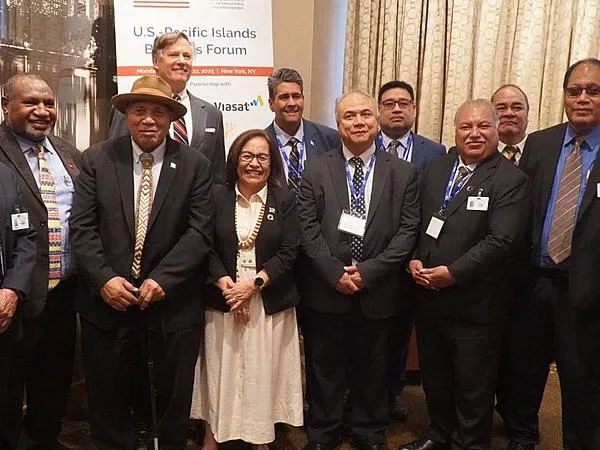
Prime Minister James Marape has urged the United States and its business community to deepen trade and investment ties with the Pacific, stressing that the region should be seen as a hub of opportunity rather than a recipient of aid.
Speaking at the US–Pacific Islands Business Forum on 22 September Prime Minister Marape said Pacific Island countries were redefining themselves as “big ocean nations” with resources and opportunities second to none.
“We may be called small island states, but we are in fact big ocean nations,” Prime Minister Marape said during the event, held on the sidelines of the United Nations General Assembly (UNGA) and hosted by the Business Council for International Understanding (BCIU) in partnership with Newmont, Viasat and Atlas Air.
“Our seas, our airspace, our forests and our human capital are immense. The Pacific holds more than $3 billion worth of tuna and fisheries resources every year, yet our citizens remain among the lowest per capita earners in the world. This must change," he added.
Shared values with the United States
Marape expressed gratitude for the recognition of Papua New Guinea’s 50th Independence Anniversary and highlighted the shared values between the Pacific and the United States.
“We are all democratic nations, we are all free-market economies, and we are largely Christian nations,” he said. “These are the same values that the United States embodies and leads with globally. We congratulate the US on its upcoming 250th anniversary of independence — a true testimony to the miracle of democracy and free-market economy.”
Moving beyond aid
The Prime Minister called on Washington to shift from aid and grants towards sustainable partnerships built on fair trade and private-sector investment.
“Aid and grant relationships are subservient; trade relationships elevate human dignity,” he emphasised. “We welcome US companies to invest in fisheries, green energy, tourism, downstream processing and infrastructure. The Pacific must become a hub of prosperity, not dependency.”
American companies already investing
Marape acknowledged major US companies already operating in Papua New Guinea, including ExxonMobil, Newmont, Hilton and Marriott, and invited more American firms to expand into the region.
He pointed to ExxonMobil’s liquefied natural gas (LNG) project — the single largest foreign direct investment in PNG since independence — as proof that the country could host and sustain long-term ventures.
A Pacific vision
Concluding his remarks, Prime Minister Marape described the Pacific as a critical partner for global prosperity and environmental stewardship.
“Our Blue Continent is more than a collection of islands — it is the world’s largest carbon sink, with oceans and forests that help sustain the planet,” he said. “Together with US companies and global partners, we can build a Pacific that is prosperous, dignified and respected.”
Solomon Islands has joined more than 100 countries in supporting a new international declaration to protect humanitarian workers facing increasing risks in conflict and crisis zones.
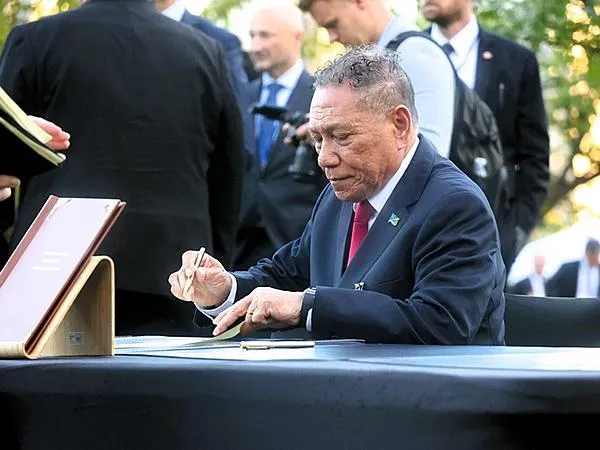
Foreign Affairs Minister Hon Peter Shanel Agovaka signed the declaration on behalf of Solomon Islands on 21 September at the United Nations precinct in New York.
The initiative, led by Australia’s Foreign Minister Senator Penny Wong, has gained wide backing from UN member states committed to safeguarding those who risk their lives to deliver aid to vulnerable communities.
The declaration responds to the alarming rise in attacks on humanitarian personnel worldwide. The year 2024 was recorded as the deadliest for aid workers, with hundreds killed, injured or kidnapped, most of them local staff serving their own communities. This erosion of respect for international humanitarian law has fuelled urgent calls for stronger global protection measures.
The text commits countries to strengthen accountability systems, ensure prompt and independent investigations when harm occurs, adopt victim- and survivor-centred approaches to justice, and systematically monitor incidents. It also underscores the role of the UN Security Council in taking action against those who endanger humanitarian staff.
By signing the declaration, Solomon Islands reinforced its partnership with Australia and the wider international community in advancing justice, accountability and the safety of aid workers.
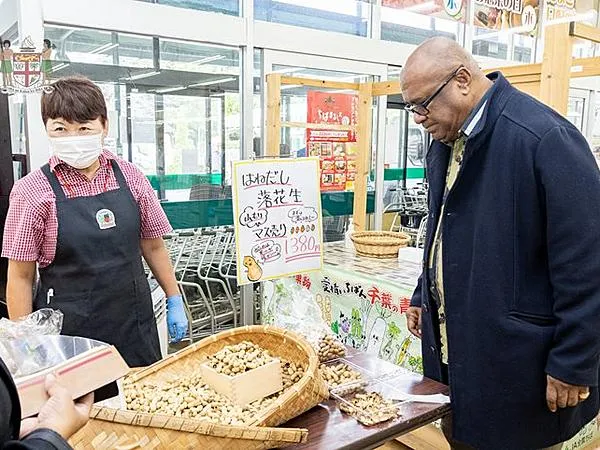
Deputy Prime Minister and Minister for Trade, Cooperatives, MSMEs and Communications visited the Chiba Toukatu Agricultural Cooperative (JA Chiba Toukatu) in Tokyo, Japan.
The visit, part of the Deputy Prime Minister's official programme for the Fiji-Japan Business Mission and Fiji’s National Day at the World Expo 2025 in Osaka, reflected Fiji’s partnership with Japan, which has thrived for more than 50 years.
It also provided an opportunity to study Japan’s successful agricultural cooperative model and to explore how its principles might be adapted to Fiji’s context.
“The JA Chiba Toukatu experience is a clear demonstration of how cooperative enterprises can empower communities,” Kamikamica said.
“As Fiji and Japan mark over five decades of friendship, we look forward to drawing inspiration from this model to advance our own cooperative sector," he added.
JA Chiba Cooperative was formed through the consolidation of several cooperatives, including JA Chiba Kenhoku, JA Kashiwa-shi and JA Nishi-Funabashi, followed by a 2017 merger with JA Tokatsu Futaba.
It now operates with a share capital of ¥1.76 billion (FJ$26.8 million) and a membership base of 18,882, comprising 7,168 regular members and 11,714 associate members.
The JA Group Chiba provides a wide range of services, including general coordination and management consulting, credit and economic support (purchasing and marketing), mutual insurance, welfare assistance, media and information services, publishing and cultural activities as well as travel services.
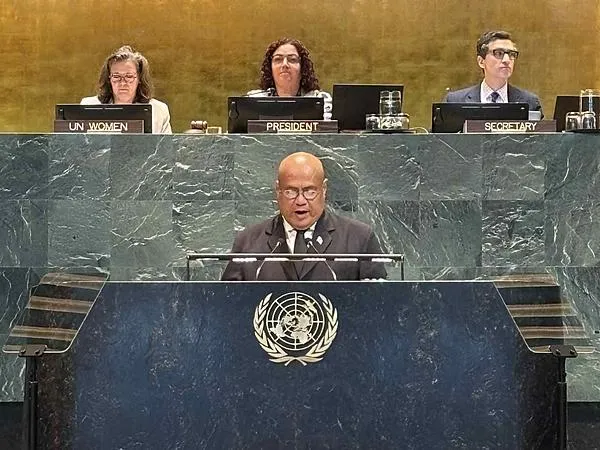
Pacific leaders have reaffirmed their commitment to gender equality and the empowerment of women and girls at the United Nations, underscoring that progress in this area is inseparable from broader human rights, sustainable development and climate justice.
Speaking at the High-Level Meeting commemorating the 30th anniversary of the Fourth World Conference on Women and the Beijing Platform for Action, Fiji Prime Minister Honourable Sitiveni Rabuka described the Beijing Conference as “a historic milestone in the global movement for gender equality” that continues to guide international efforts.
Rabuka outlined Fiji’s priorities across critical areas, including poverty, education, health, capacity building, violence against women, women and armed conflict, women and the economy, women in power and decision-making, human rights of women, women and the media, and the wellbeing of the girl child.
“Within those critical areas, Fiji is making progress on its commitment to an inclusive environment, ensuring gender equality through family law reforms and adopting laws such as Fiji’s Domestic Violence Act 2009, the Child Welfare Act 2010, and the Employment Relations Act, as well as other national regulations addressing violence against women, child protection, and employment rights,” he said.
“Today is a celebration — a celebration of the invaluable contributions that women make in our lives. But it is also a solemn reminder of the urgent need to eliminate violence, discrimination, and inequality that persist in many societies," he added.
He stressed that gender equality must begin with strong political will and accountability from leaders, noting that women, who make up more than half the world’s population, should never have their empowerment debated or delayed.
Rabuka added that Fiji’s legal and institutional frameworks provide adequate protection for women and girls and enable authorities to address discrimination and hold perpetrators accountable. “We aim to ensure that gender equality is institutionalised within government structures, further supporting our Department of Women, Children, and Social Protection,” he said.
“As a developing country, Fiji is working to ensure that our daughters inherit a future where equality is a lived reality and not just an aspiration,” he concluded.
For his part, Tuvalu Prime Minister Feleti Penitala Teo also addressed the assembly, declaring that “protecting Tuvaluan women is protecting Tuvalu’s future.”
“Thirty years after the Beijing Platform for Action, Tuvalu reaffirms its commitment to gender equality,” Teo said, citing constitutional guarantees against sex-based discrimination and the adoption in 2024 of a National Gender Equity Policy aimed at mainstreaming women’s empowerment and protection from violence across all sectors.
He acknowledged persistent challenges, noting that one in two women in Tuvalu experiences intimate partner violence and that women remain underrepresented in governance, with no women currently in Parliament and only eight out of 48 seats held by women in local councils.
Teo further highlighted the link between gender equality and climate change. “For Tuvaluan women, climate change is not a distant threat; it is stripping away rights day by day,” he said, warning that environmental pressures continue to undermine women’s livelihoods and cultural heritage.
“The resilience of Tuvaluan women is extraordinary, yet resilience must never be mistaken for consent to injustice,” he added, urging governments to recognise the inseparability of gender equality and climate justice.
The Beijing+30 meeting, attended by more than 160 world leaders, also focused on the Action Agenda, which calls for closing the gender digital divide, tackling poverty among women and girls and strengthening women’s participation in peace and security.
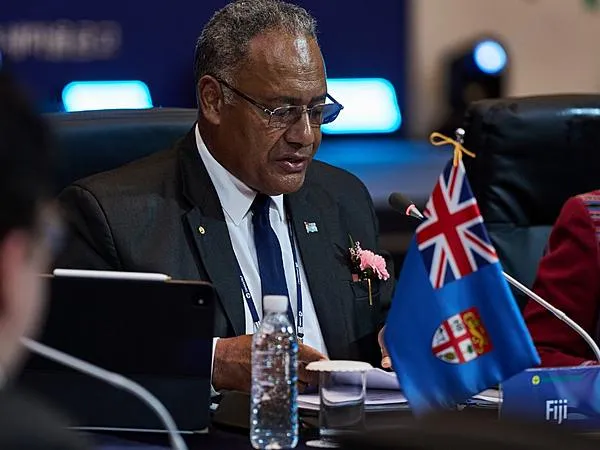
Fiji’s Minister for Rural and Maritime Development and Disaster Risk Management Sakiasi Ditoka has hailed the Saemaul Undong (SMU) initiative as a catalyst for rural transformation, citing its positive impact in three pilot communities.
Speaking at the Saemaul Undong Ministerial Conference, Ditoka expressed Fiji’s gratitude to the Government and people of the Republic of Korea for their generosity and continued support. He said the programme was going beyond infrastructure delivery to reshape how rural Fijians viewed and led development, guided by the principles of diligence, self-help and cooperation.
“Through the Saemaul Undong programme, we are not only building facilities, but we are also strengthening community leadership, instilling financial discipline, and nurturing a culture of self-reliance. The true transformation lies in building the mindset and resilience of our people,” Ditoka said.
The minister pointed to achievements in the three pilot villages of Mau in Namosi, and Silana and Namasimasi in Tailevu. These included upgrading village halls and health facilities, developing eco-tourism ventures, constructing resilient evacuation centres, establishing cooperative income-generating projects and improving waste management, sanitation and agricultural practices.
From these pilots, he said, key lessons had emerged such as strengthening the savings culture, ensuring good governance, enhancing financial literacy and encouraging sustainable income projects. These, he stressed, were essential to building resilient, inclusive and sustainable rural development.
“As we celebrate these achievements, we must also remember that this progress has been made possible through the generosity of the Korean people. We remain committed to using this support wisely, transparently, and accountably. Mau, Silana, and Namasimasi now stand as living examples of how Saemaul Undong can be adapted and thrive in the Pacific,” Ditoka said.
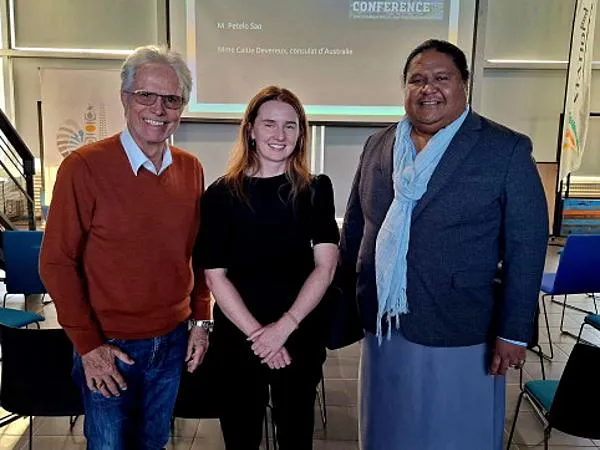
A New Caledonian delegation led by government member for construction and technological innovation Petelo Sao travelled to Brisbane from August 18 to 20 to participate in the Pacific Infrastructure Conference 2025, a key regional event focused on sustainable infrastructure.
A follow-up meeting was held on September 9 for participants to share feedback on their experience at the conference, which takes place every two years and gathers leaders as well as public and private stakeholders to discuss infrastructure challenges and opportunities across the Pacific.
Sao said New Caledonia’s participation underscored the country’s commitment to innovation and regional cooperation. “Our presence at this conference was not only about showcasing New Caledonia’s know-how but also about engaging with partners on the challenges we all face, from climate change to limited financing options,” he said.
Strong turnout
This year’s conference drew more than 650 delegates, 80 speakers and over 40 exhibitors from about 20 countries. Thematic sessions led by Pacific leaders were fully booked, reflecting growing interest from consultancies, construction companies and lenders in regional projects.
Highlights included the Asian Development Bank sending one of its largest delegations to a Pacific economic event, with around 25 representatives joining roundtable discussions and bilateral meetings. Pacific leaders, including Sao, also presented their infrastructure priorities in thematic sessions that attracted wide attention.
The private sector played a prominent role, with chambers of commerce and business representatives actively participating and helping shape infrastructure priorities.
Showcasing New Caledonia
For New Caledonia, the conference provided a high-profile platform. Sao delivered a presentation outlining the territory’s reconstruction plan and highlighted projects on climate change adaptation, decarbonisation and innovation. He also introduced the New Caledonia Construction Standard (RCNC) and discussed the recent certification of Sland, a material derived from recycled slag.
“Slag was at the heart of certain debates since it could be of particular interest to the Pacific islands affected by erosion,” Sao said.
Another highlight was the signing of a memorandum of understanding between the Pacific Islands and Australia Business Council (APIBC) and New Caledonia Trade and Invest, aimed at strengthening regional economic ties.
The delegation also included representatives from the private sector, such as Bleuscope, SLN, Secal, Tokuyama and Arbe, who explored opportunities through bilateral exchanges with regional partners.
“The Pacific Infrastructure Conference is more than just a forum — it is a place where projects take shape, partnerships are forged and the future of Pacific infrastructure is discussed,” Sao said.
Prime Minister Hon. Jeremiah Manele met with the French Ambassador to the Pacific, Her Excellency Veronique Roger-Lacan, for bilateral talks on the sidelines of regional engagements in Port Moresby.
The ambassador congratulated Prime Minister Manele on Solomon Islands’ successful hosting of the 54th Pacific Islands Forum Leaders’ Meeting in Honiara. The Prime Minister briefed her on key outcomes, including:
• Endorsement of the new Partnership Policy • Signing of the Pacific Resilience Facility Treaty • Declaration on Peace in the Blue Pacific
“We are pleased with the outcomes of the Forum Leaders’ Meeting, and we look forward to working with our partners to implement these initiatives,” Manele said.
The two leaders discussed the situation in New Caledonia, with Ambassador Roger-Lacan outlining France’s commitment to an inclusive and peaceful process.
“France is committed to an inclusive and peaceful process in New Caledonia, and we stress the importance of dialogue and non-violence,” she said.
Manele reaffirmed Solomon Islands’ support for constructive regional dialogue and cooperation. “As Chair of the PIF Troika, we will continue to support constructive regional dialogue and cooperation on this issue,” he said.
The leaders also explored opportunities for bilateral collaboration, including:
• The Heritage Museum project in Temotu Province • France’s Green Airports initiative and regional air connectivity • Technical cooperation in policing and health • Support for Solomon Islands students conducting research through the Pacific Community (SPC)
“We are excited about the potential for collaboration between our countries, and we look forward to continuing the dialogue,” Manele said.
Both sides agreed to continue discussions at the upcoming Pacific Community meeting in Tonga and during Ambassador Roger-Lacan’s visit to Solomon Islands later this year.
Prime Minister Jeremiah Manele met with U.S. officials and Pacific leaders at the U.S.–Pacific Islands Forum Roundtable in Port Moresby. As Chair of the Pacific Islands Forum, he emphasized the importance of partnerships that respect national and regional priorities.
"Partnerships must respect both national and regional priorities," said Prime Minister Manele. "We remain committed to ensuring future engagements align with the newly endorsed Leaders Policy on Partnerships and the long-term objectives of the Pacific 2050 Strategy."
The Prime Minister highlighted key regional initiatives, including the Pacific Resilience Facility Treaty and the Blue Pacific Ocean of Peace Declaration. "These initiatives aim to strengthen climate and disaster resilience and ensure Pacific priorities are defined and advanced by the region itself," he said.
Prime Minister Manele also acknowledged the U.S. payment of US$60 million to the Pacific Islands Forum Fisheries Agency, supporting sustainable fisheries management. "We appreciate the U.S. commitment to sustainable fisheries management through the South Pacific Tuna Treaty," he said.
On nuclear legacy issues, Prime Minister Manele called for continued support to safely manage unexploded ordnance from World War II. "We need continued support to protect Pacific communities and future generations from the risks of unexploded ordnance," he stressed.
Prime Minister Manele also congratulated Papua New Guinea on its 50th Independence Anniversary, highlighting the importance of nation-building in the Pacific. "Nation-building in the Pacific relies on cultural heritage, resilient communities, and a shared determination to secure a prosperous future for all Pacific peoples," he said.
Through this roundtable, Prime Minister Manele reaffirmed the value of the partnership between the United States and the Pacific Islands Forum. "We recognize U.S. contributions to development, security, maritime safety, disaster preparedness, and economic growth, and emphasize that all collaborative efforts must remain aligned with Pacific priorities," he said.
Prime Minister Jeremiah Manele has reaffirmed his government’s commitment to the creation of the Melanesian Ocean Reserve (MOR), pledging ministerial resources to advance the world’s first Indigenous-led, multi-national ocean reserve.
The announcement was made on the margins of the 54th Pacific Islands Forum in Honiara, where Manele emphasised the Reserve’s groundbreaking approach to ocean governance, blending Indigenous knowledge, modern science, and regional political leadership.
Expected to span more than 6 million square kilometres — an expanse as vast as the Amazon rainforest — the Reserve will operate across the Exclusive Economic Zones (EEZs) of the Solomon Islands, Papua New Guinea, Vanuatu, and New Caledonia. It will safeguard some of the most biologically rich and culturally significant seas on Earth.
“Never before have countries united across entire EEZs to enshrine Indigenous governance, constitutional authority, and ancestral stewardship as the foundation of large-scale ocean protection,” Manele said. “The ocean has always been our garden, our market, and our home. Today, we take further steps toward making that truth the law.”
From vision to delivery
The intention to form the Reserve was first announced earlier this year by Manele at the United Nations Oceans Conference in Nice, France, with backing from ministers representing Papua New Guinea, Vanuatu, and New Caledonia.
This week’s declaration established a Ministerial Platform to accelerate negotiations on the MOR Declaration and to coordinate with development partners for financial support. Officials described the platform as a mechanism to ensure the initiative moves beyond words to tangible delivery, with Indigenous authority embedded at its core.
The Four Paddles
Two senior ministers — Bradley Tovosia, Minister for Fisheries and Marine Resources, and Polycarp Paea, Minister for Environment, Climate Change, Disaster Management and Meteorology — unveiled the “Four Paddles,” the core programmes that will drive the Reserve forward.
These include:
Monitoring and management of the ocean
Indigenous-led investment in sustainable ocean economies
Sustainable transport and reconnection of island peoples
Integration of modern science with customary wisdom
Minister Paea said the approach represented a unifying vision. “We eat from and live in the ocean, but we have been retreating from it as other ways of life start to dominate. The MOR is a unifying approach that makes sense of the different ways of protecting our Ocean.
“The paddle for knowing the ocean uses science and research to build from our existing ancestral knowledge, rather than replacing it. The transport and reconnection paddle will ensure that our people return to the ocean for transport and movement, filling it up with our life and our attention.”
For Minister Tovosia, the Reserve is also an economic blueprint: “The Melanesian Ocean Reserve is a framework to mainstream the ocean in our economic thinking. Through the ocean transparency paddle, we aim to observe our full ocean space, so we can see who is doing what, and leverage our population across the islands in monitoring and reporting. With the indigenous investment paddle, we look forward to our indigenous Solomon Islanders becoming direct participants in the fisheries value chain, instead of being spectators.”
Taking momentum global
Led by the governments of the Solomon Islands, Papua New Guinea, and Vanuatu — in partnership with the Islands Knowledge Institute (IKI) and Nia Tero — Pacific leaders are set to take the MOR’s momentum to Climate Week in New York later this month to engage with partners on financing and scaling up the initiative.
For Manele, the Reserve represents more than a conservation tool. It signals a turning point for ocean governance itself — one where Indigenous voices and traditions take their rightful place at the helm of global sustainability.
Prime Minister Jeremiah Manele has called for a fundamental shift in how Pacific nations think about progress, urging a Pasifika-centred approach to development that draws on the region’s own philosophies, traditions, and values.
Speaking on at the “Netweaving the Soul of Pasifika Development” symposium — a joint initiative of the Solomon Islands National University (SINU) and Pasifika Communities University (PCU) held at the Aquatic Centre — Prime Minister Manele reflected on the 60-year development journey of Pacific Island countries.
He said much of that journey had been shaped by Western models of governance, economic growth, and social progress.
“These Western frameworks have guided our leaders and institutions for decades, but today they are showing signs of strain,” Manele said. “We must ask ourselves whether these models are helping our people thrive — or merely survive.”
Universities as catalysts for new thinking
The Prime Minister underscored the role of universities in reimagining development. He encouraged SINU and PCU to draw upon Pasifika philosophies, ethical traditions, and spiritual worldviews as the basis for fresh thinking.
Quoting the late Papua New Guinean statesman and philosopher Bernard Narokobi, Manele stressed the importance of seeing “the human person as part of an interdependent world with plants, animals, and the spirit world.”
He argued that such perspectives could help Pacific societies shape development pathways that are more aligned with their identities and realities.
Confronting contemporary challenges
Manele also addressed the complex challenges confronting the region, including climate change, the rise of artificial intelligence, political instability, and pressing social issues such as gender-based violence and the spread of drugs.
To meet these, he floated the idea of a regional Thought Leaders Network to support decision-makers in interpreting challenges through Pasifika lenses rather than relying on imported models.
“The question we must ask is: Where is our Pasifika Development Soul? This is about understanding who we are, what development means for our people, and shaping narratives that truly reflect our values and context,” he said.
Bridging academia and leadership
The Prime Minister expressed hope that the symposium would generate ideas to strengthen the link between academia and Pacific leaders.
By drawing on the region’s cultural strengths and lived realities, Manele suggested, Pacific nations could craft development approaches that are both resilient and authentic — ensuring future progress is rooted in the soul of Pasifika itself.
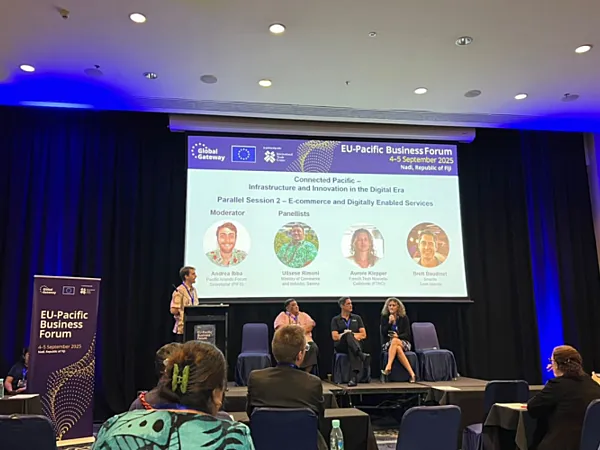
The first EU-Pacific Business Forum convened in Nadi on 4–5 September, drawing together government officials, business leaders, and development partners to explore new avenues of trade and investment between the two regions.
Over two days, the Forum featured panel discussions, networking events, and direct business-to-business and business-to-government meetings. Sessions covered a wide spectrum of priorities — from renewable energy and climate resilience to sustainable aquaculture, port development, tourism, and digital infrastructure — underscoring the shared aspirations of Europe and the Pacific to strengthen ties in the Blue Pacific economy.
One of the most dynamic exchanges came during a breakout session on “E-commerce and Digitally Delivered Services,” moderated by Andrea Ibba, Pacific E-commerce Coordinator at the Pacific Islands Forum Secretariat.
The conversation delved into the realities Pacific entrepreneurs face when entering the digital economy. Ulisese Rimoni, Fair-trading Officer at Samoa’s Ministry of Commerce and Industry; Brett Baudinet, founder of Cook Islands-based SmartieApp; and Aurore Klepper, Director of French Tech Nouvelle-Calédonie, each shared perspectives on both the barriers and the potential of e-commerce in the region.
Among the challenges highlighted were infrastructure gaps, regulatory delays, payment obstacles, and shortages of digital skills. Yet, the panellists also pointed to concrete opportunities — from policy alignment and EU partnerships to targeted support for start-ups.
A call for practical solutions
Key proposals from the session included establishing a Pacific digital trade legal partnership to boost payments, skills, and consumer trust; creating direct funding mechanisms for digital projects without multiple intermediaries; fast-tracking regulatory frameworks to give businesses clearer ground rules; and forging stronger ties with EU firms to access specialised technical expertise.
Other ideas raised were exploring open banking to drive fintech innovation and investing in the social and cultural aspects of entrepreneurship to keep talent anchored in Pacific communities.
Ibba reminded participants that many of these requests resonate with the Pacific Regional E-commerce Strategy and Roadmap, endorsed by Forum Trade Ministers in 2021. That roadmap is being advanced through the Pacific E-commerce Initiative, which provides the region with a structured governance framework — including the Pacific E-commerce Committee, its Private Sector and Development Partners Sub-committees, and the Pacific E-commerce Alliance.
He also underlined the importance of the supporting systems: “Workshops and panels are valuable, but what businesses are asking for is action. The Pacific E-commerce Initiative, with its governance and knowledge platforms, is already in place. What we need are partners who are ready to contribute, whether through finance, technology, or capacity building.”
Linking business to regional frameworks
The Initiative, Ibba noted, is backed by a monitoring and evaluation system as well as the Pacific E-commerce Portal — a regional public good that provides data, resources, and training materials for both government and private sector use.
By weaving together the experiences of businesses with existing regional strategies, the Forum highlighted how EU-Pacific cooperation in the digital economy can become more inclusive, resilient, and responsive to real-world needs.
As the Forum closed, the message was clear: the Pacific is not just seeking dialogue but tangible partnerships that can help the region take its next leap in digital trade.
A quiet but meaningful shift is coming to New Caledonian households as the government and the Office des Postes et Télécommunications de Nouvelle-Calédonie (OPT-NC) move to cut costs and simplify internet access for families.
On 29 August, government member in charge of digital affairs, Christopher Gygès, stood alongside OPT-NC chair Naïa Wateou and director Thomas De Deckker to announce what many Caledonians have long been waiting for — affordable internet without the burden of a fixed-line subscription.
Last June, Gygès had tasked OPT-NC to find a solution to end the unpopular monthly billing of the so-called “landline premium” for households that rely solely on the internet but no longer use a home telephone.
“The objective was above all to give Caledonians a choice and to act directly on their purchasing power,” Gygès said, calling the reform “a major first step” made possible through OPT-NC’s determined efforts.
Helia: A New Chapter in Connectivity
From 1 December 2025, the operator’s fibre offer under the “Helia” brand will deliver internet speeds of up to 1 Gb/s for 2,300 francs a month — a drop from the current 2,650 francs. Most importantly, it will no longer be tied to a compulsory landline subscription.
For households, this translates to average savings of 1,255 francs per month, depending on the package they hold. “Customers will see savings ranging from 350 to 1,900 francs, alongside a tenfold increase in internet speed to match their growing needs,” explained De Deckker.
In all, the reform is expected to inject 440 million francs a year into household purchasing power, benefitting at least 49,000 families across the territory.
“This is a significant investment for OPT-NC,” said Wateou. “Our goal is to meet the daily needs of Caledonians without jeopardising the public service mission that OPT fulfils throughout the country.”
From Fixed Lines to Family Packs
While the change is already a welcome relief for many, OPT-NC views it as only the beginning of a broader transformation. By 2026, the operator plans to roll out new packages where landline telephony becomes optional, alongside family packs that would allow data to be shared across mobile devices.
“The teams are already working on these next steps,” De Deckker noted, underscoring the company’s drive to adapt to lifestyles that are increasingly digital.
The shift comes at a time when landline use is in steep decline. Current figures show that 63 percent of OPTimo internet customers make no outgoing calls from their fixed lines, while 85 percent use less than 30 minutes of voice per month. In contrast, demand for faster internet continues to rise, fuelled by 4K streaming, remote work, online gaming, and cloud services.
For families juggling costs and trying to stay connected, the change signals more than just faster downloads or cheaper bills — it represents a small but vital measure of breathing room.
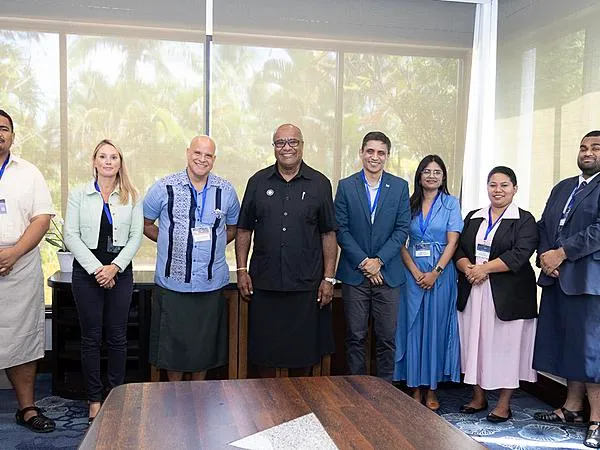
Fiji is deepening its collaboration with the International Trade Centre (ITC) to enhance trade opportunities, empower local entrepreneurs and drive the growth of micro, small and medium enterprises (MSMEs).
Deputy Prime Minister and Minister for Trade, Cooperatives, MSMEs and Communications, Manoa Kamikamica, reaffirmed Fiji’s commitment during a bilateral meeting with ITC on the margins of the EU-Pacific Business Forum in Nadi.
He welcomed ITC’s support in delivering technical training for Fijian officials and entrepreneurs, particularly in the MSME sector.
“By equipping our people with the right tools and skills, we can better position Fijian products in international markets,” Kamikamica said.
Talks centred on strengthening Fiji’s competitiveness in high-value commodities such as kava, coconuts, vanilla and tuna. Officials also discussed new areas of collaboration, including improving packaging and branding, expanding market access for women entrepreneurs and enhancing export readiness.
ITC representatives shared insights from successful programmes in the Caribbean and Papua New Guinea, underscoring the organisation’s global track record in capacity building.
Kamikamica expressed interest in adapting similar strategies to Fiji’s context, with an emphasis on post-harvest processing, renewable drying technologies and product certification.
As part of the partnership, the Ministry will work with ITC to establish a SheTrades Chapter in Fiji.
SheTrades, an ITC initiative, connects women entrepreneurs with buyers, investors, training and financing to expand their participation in international trade. It operates through an online platform, regional hubs and global events such as SheTrades Global, which link women with potential partners and markets.
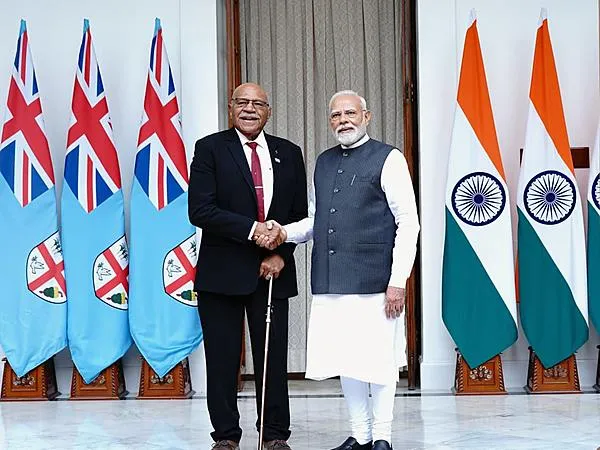
Prime Minister Sitiveni Rabuka of Fiji met with Indian Prime Minister Narendra Modi at Hyderabad House, reaffirming the warmth and mutual respect that continue to define the longstanding friendship between the two nations.
The talks highlighted deep historical ties, shared values, and a commitment to strengthening cooperation across multiple sectors for the prosperity of both peoples.
Rabuka conveyed greetings on behalf of the Fijian government and people, congratulating India on its 79th Independence Day. He praised India’s transformation over recent decades and expressed gratitude for the hospitality extended to his delegation.
The two leaders reviewed the full spectrum of bilateral relations and regional priorities. They reaffirmed plans for collaboration in defence, health, agriculture, agro-processing, trade and investment, small and medium enterprises, co-operatives, culture, sports, education, and skills development.
Key projects and priorities
Discussions included outcomes from the 3rd Forum for India–Pacific Islands Cooperation (FIPIC-3), particularly the landmark 100-bed Super Speciality Cardiology Hospital in Suva. Rabuka confirmed that land registration for the project has been completed, paving the way for the signing of a memorandum of understanding. The hospital, he said, will strengthen Fiji’s healthcare sector and serve the wider Pacific region.
Both leaders reiterated their commitment to a free, open, secure, and inclusive Indo-Pacific. Rabuka reaffirmed Fiji’s support for the Indo-Pacific Oceans Initiative, aligning it with his “Ocean of Peace” vision to promote peace, security, and prosperity in the region.
He also welcomed India’s continued role as a dialogue partner of the Pacific Islands Forum, noting the importance of alignment with the 2050 Strategy for the Blue Pacific Continent.
At the multilateral level, Rabuka thanked India for its partnership in global forums and emphasised the need for reformed multilateralism to reflect accountability, inclusivity, and equity in addressing global challenges.
New agreements signed
The meeting also featured the signing of five memoranda of understanding and agreements designed to deepen bilateral cooperation:
Fiji Development Bank (FDB) – National Bank for Agriculture and Rural Development (NABARD), India: Collaboration on rural development, agricultural financing, and financial inclusion.
Bureau of Indian Standards (BIS) – Fiji Department of National Trade Measurement and Standards (DNTMS): Cooperation in the field of standardisation.
National Institute of Electronics and Information Technology (NIELIT), India – Pacific Polytechnic, Fiji: Capacity building, skills training, and upskilling.
Confederation of Indian Industry (CII) – Fiji Commerce and Employers Federation (FCEF): Strengthening economic and commercial ties.
HLL Lifecare Ltd., India – Fiji Ministry of Health and Medical Services: Supply of medicines under India’s Jan Aushadhi Scheme.
Both leaders described the agreements as a step towards building a “broad-based, inclusive, and forward-looking partnership” that will advance the development goals of Fiji and India alike.
The Governments of Papua New Guinea and Solomon Islands have taken a decisive step to strengthen their economic and cultural bonds with the soft launch of the Papua New Guinea–Solomon Islands Business Council.
Held in Port Moresby, the event brought together leaders from government and business, with both Prime Ministers hailing the initiative as a milestone in Melanesian cooperation.
Solomon Islands Prime Minister Jeremiah Manele, MP, extended his warm congratulations to the council’s founders, describing the launch as a timely platform for deeper private-sector collaboration.
“The establishment of this Council represents a new chapter in our economic partnership. I am confident that it will grow from strength to strength and evolve into a vital mechanism for advancing mutual prosperity,” he said.
Manele underlined the council’s role as a forum for dialogue, networking and innovation, opening avenues for trade and investment. He also met with PNG business leaders during the launch, listening to their aspirations and reaffirming his government’s readiness to pursue stronger partnerships.
“As close neighbours and enduring partners, our futures are closely linked. Enhanced private sector collaboration will not only stimulate economic growth but will also reinforce the bonds of friendship and understanding that unite our peoples,” Manele said.
Courtesy call on PNG Governor-General
Prime Minister Manele paid a courtesy call on the Governor-General of Papua New Guinea, Grand Chief Sir Bob Dadae, at Government House.
During their brief meeting, he conveyed gratitude on behalf of the government and people of Solomon Islands for the long-standing relationship between the two Melanesian nations. He acknowledged the enduring diplomatic ties established 47 years ago on 7 July 1978, when Solomon Islands gained independence from Britain.
“On behalf of the government and people of Solomon Islands, I thank Papua New Guinea for its continued friendship and assistance, which have significantly contributed to our national development,” Manele said.
The Prime Minister noted PNG’s support in critical sectors such as business investment, education, border surveillance, police, security, and sports. Both leaders reaffirmed their commitment to enhancing “brotherly ties” rooted in shared culture, geography and history, which also laid the foundation for the Melanesian Spearhead Group (MSG) in 1988.
Manele was accompanied on the visit by former Solomon Islands Governor-General Sir Frank Kabui and Rick Hou, for Small Malaita.
‘Brothers and sisters’
Prime Minister James Marape, welcomed Manele to Papua New Guinea, calling the visit a reaffirmation of “deep historical, cultural, and economic ties” between the two Melanesian nations.
“Sometimes, friends you can choose, but brothers and sisters you are born into. Papua New Guinea and Solomon Islands are family, and we will continue to coexist into the future,” Marape said, drawing warm applause from guests.
Marape reflected on the shared seafaring and trading traditions of both countries, saying independence in 1975 for PNG and 1978 for Solomon Islands had merely formalised an age-old connection.
He also congratulated Solomon Islands on its preparations to host the Pacific Islands Forum in Honiara this month, pledging PNG’s full support. “When Solomon Islands celebrates its 50th anniversary in 2028, Papua New Guinea will be there in full force,” he said.
From aid to trade
Looking to the future, Marape stressed the importance of shifting from aid dependency to deeper trade and economic engagement. He pointed out that more than 60 PNG businesses are already operating in Solomon Islands, spanning telecommunications, banking, oil palm and tourism.
“Papua New Guinea remains the largest foreign investor in Solomon Islands, a sign of the growing partnership,” he said.
Marape further endorsed Manele’s “Melanesian Oceans” initiative, a regional vision for sustainable use of fisheries and marine resources. “Our oceans hold some of the world’s richest tuna stocks. Together, Melanesia must shape our own destiny and ensure resources benefit our people,” he said.
Tourism and people-to-people links
Marape encouraged greater tourism exchanges, saying Solomon Islands offered experiences that complemented PNG’s own emerging industry. “Papua New Guinea is still growing in tourism, but our cousins in Solomon Islands will look after you well. They are not an extension of PNG — they are a proud nation of their own,” he said.
The Prime Minister also confirmed that Manele will return to Port Moresby next week to join PNG’s 50th Independence Anniversary celebrations, alongside more than 15 Pacific leaders travelling from Honiara after the Forum.
Closing his address, Marape cited a Melanesian proverb on fire and family unity: “We are placed at the heart of Melanesia. As leaders, we must be friends to all, enemies to none.”
Manele, before flying on to Australia, joined Marape in a charity golf event on Friday morning, rounding out a visit that was as much about personal connection as political and economic partnership.
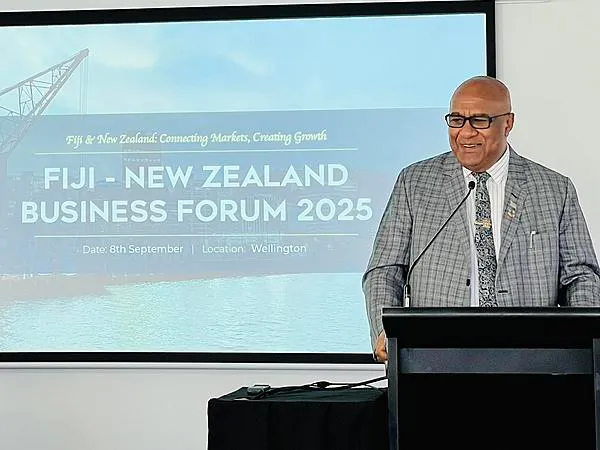
Deputy Prime Minister and Minister for Trade, Co-operatives, Micro, Small and Medium Enterprises and Communications Manoa Kamikamica has reaffirmed Fiji’s commitment to strengthening its economic ties with New Zealand, calling for “dialogue to turn into delivery.”
Speaking at a Mini-Business Forum in Wellington, Kamikamica led a strong Fijian business delegation to champion the vision set by Prime Ministers Sitiveni Rabuka and Christopher Luxon to double bilateral trade to NZ$2 billion by 2030.
“Our partnership with New Zealand is anchored in trust and shared values,” Kamikamica told the gathering of officials, industry leaders and business representatives. “The challenge before us is to translate this goodwill into balanced trade, stronger investment flows, and concrete benefits for our businesses and people.”
He underlined Fiji’s ambition to create a world-class investment environment. “Fiji is shaping a business environment that listens to investors, learns from global best practice, and leads with credibility. Come to Fiji with a credible project, and you will find one front door, one digital track, and one team committed to getting you to yes.”
Kamikamica added that Fiji is positioning itself as a reliable hub for Pacific trade and connectivity, with reforms guided by digital transformation. “Investment doesn’t flow just because of incentives. It flows when businesses see consistency, stability, and a country that honours its commitments — that is the Fiji we are building,” he said.
The Deputy Prime Minister identified agriculture, tourism, renewable energy and digital connectivity as key sectors for collaboration. He encouraged New Zealand businesses to partner with Fijian farmers through structured buying arrangements, expand into experience-based and eco-tourism, co-invest in renewable energy, and capitalise on Fiji’s growing digital infrastructure.
Kamikamica urged businesses to think long term: “Look beyond transactions and build partnerships that create value, resilience and shared prosperity.”
He concluded with a clear message of urgency. “The roadmap has been agreed, the political will exists, and the private sector is engaged. Now is the time to turn dialogue into delivery.”
The Mini-Business Forum also marked the launch of the wider Fiji Business Mission programme. Over the coming week, the delegation will take part in bilateral meetings, investment roundtables, site visits, and the annual Fiji–New Zealand Joint Business Council Conference in Auckland.
Follow on LinkedIn:
Pacific Business Review
Be the "First" to get our exclusive Digital Magazine & Weekly Newsletter.