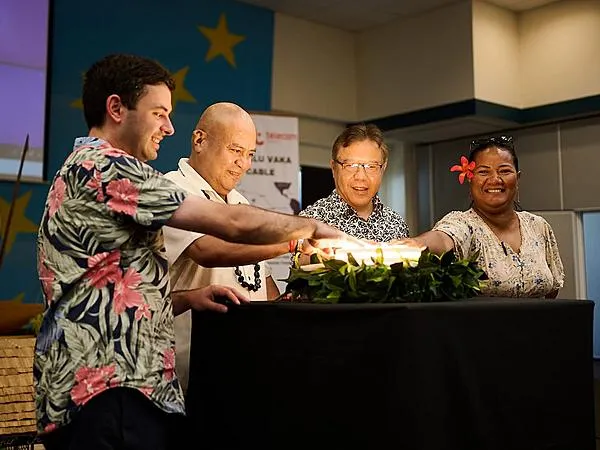
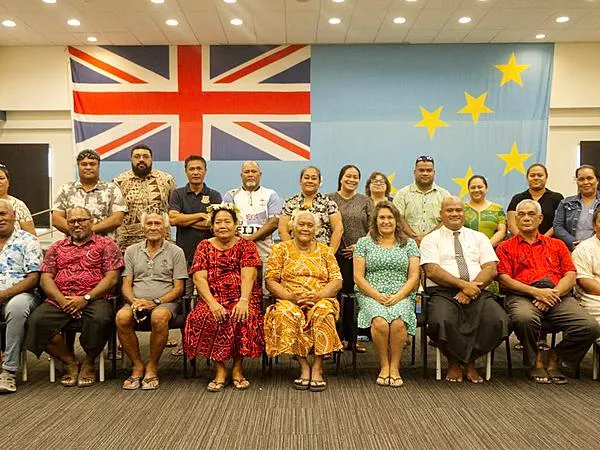
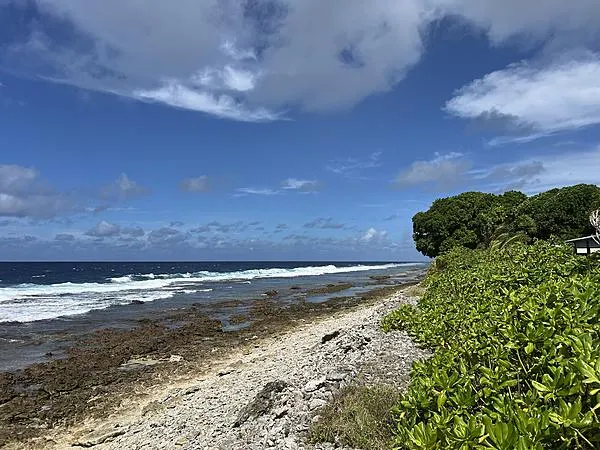
Tuvalu has entered a new digital age with the successful connection of the Vaka Cable, the nation’s first international subsea cable system, which promises to deliver faster, more reliable and more affordable internet to its people.
The historic launch was celebrated in Funafuti alongside the Government of Tuvalu, Tuvalu Telecommunications Corporation (TTC), Google and development partners including Australia, Japan, New Zealand, Taiwan and the United States. The project represents a major step forward in the island nation’s digital transformation and regional connectivity.
The Vaka Cable links Tuvalu to the Bulikula cable system, establishing the country’s first direct international fibre connection. The project, valued at an estimated USD56 million (about AUD80 million), was fully grant-funded, with Australia contributing up to USD37 million (AUD53 million) through the Australian Infrastructure Financing Facility for the Pacific (AIFFP) under the Falepili Union partnership.
Australian High Commissioner to Tuvalu Rachael Moore said the project underscores Australia’s long-term commitment to supporting Tuvalu’s sustainable development and digital future. “Through the Falepili Union, we are helping ensure that every Tuvaluan can access the opportunities of a connected world,” she said.
Tuvalu Telecommunications Corporation Chief Executive Officer Tenanoia Simona expressed deep gratitude to donor partners, saying, “The first subsea cable project for Tuvalu represents a significant milestone in the nation's journey toward digital transformation. This development is a critical step in realising Tuvalu’s vision of a digitally connected nation, providing enhanced opportunities for education, healthcare, and economic growth. We extend our deepest gratitude and Fakafetai Lasi to our dedicated donor partners.”
The Vaka Cable—named after the traditional Tuvaluan canoe vaka, a symbol of exploration, resilience, and unity—embodies the spirit of connectivity and progress. Historically, the vaka carried communities across vast oceans for trade and cultural exchange. Today, it symbolises a digital bridge linking Tuvalu to the global community, empowering the island nation to navigate the opportunities of the digital economy.
Once operational, the cable is expected to improve internet speeds, reliability, and affordability for families, schools, health workers, and businesses across the archipelago. Enhanced connectivity will also strengthen Tuvalu’s disaster response systems, facilitate e-government initiatives, and attract digital entrepreneurship and tourism opportunities.
The project’s long-term impact will be felt across key sectors such as education and healthcare, where better access to online learning and telemedicine services will improve social inclusion and quality of life. By bridging the digital divide, the Vaka Cable stands as a tangible step towards a more connected, resilient, and prosperous Tuvalu.
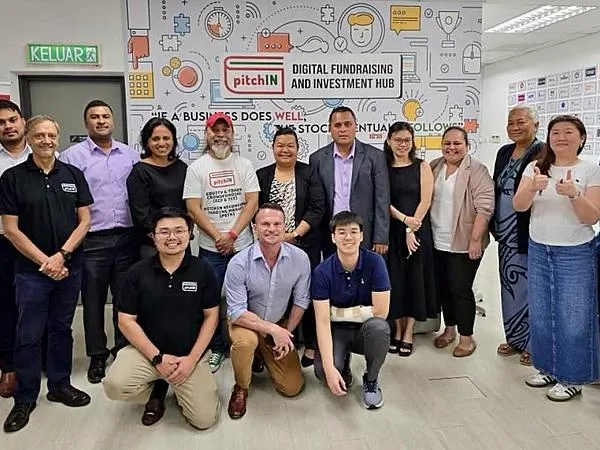
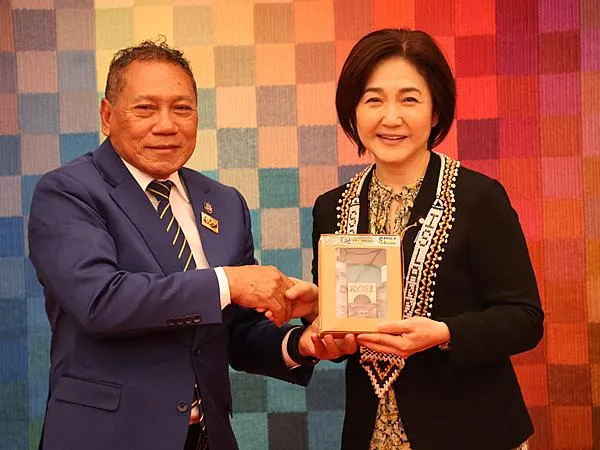
A Fijian delegation, including representatives from the Reserve Bank of Fiji, Ministry of Trade, Co-operatives, MSMEs and Communications, and the Fiji Investment Corporation Limited, visited Malaysia in August to learn from the country’s experience with equity crowdfunding (ECF) and peer-to-peer lending (P2PL).
The study tour was organised by the Pacific Private Sector Development Initiative (PSDI) as part of its support for Fiji’s Access to Business Funding Act 2025, which enables the establishment of innovative financing mechanisms aimed at broadening access to finance for businesses.
During the visit, participants met with the Securities Commission Malaysia to explore Malaysia’s regulatory frameworks for ECF and P2PL, as well as successful platform practices. The group also discussed Malaysia’s co-investment fund, MyCIF, which co-invests alongside private investors in ECF and P2PL campaigns. The delegation examined how the Securities Commission engages with institutions that support micro, small, and medium-sized enterprises (MSMEs).
The Fijian delegation said they valued the opportunity to exchange insights on how P2PL operates in Malaysia and how such innovative financing tools can empower MSMEs. Participants noted that they came away with a deeper understanding of the different business models for ECF and P2P lending, as well as the potential benefits of introducing P2PL before ECF in Fiji, given P2PL’s simpler structure and more sustainable returns.
Participants also reported gaining a clearer appreciation of the importance of building public awareness and understanding of innovative financing mechanisms prior to launching any platforms. They learned about developing supportive structures such as co-investment funds and tax incentive schemes to encourage participation by investors and small businesses, and how to design targeted capacity-building programmes for platform providers, regulators, issuers, and investors.
The visit further underscored the need for strong governance and transparency requirements for entities operating innovative financing platforms, including fit-and-proper standards for key personnel and robust investor disclosure obligations.
Insights from the Malaysia study tour have already informed an action plan for the Ministry of Trade, Co-operatives, MSMEs and Communications and the Reserve Bank of Fiji to guide the phased establishment of P2PL and ECF platforms. The plan includes steps to develop regulatory guidelines, implement capacity-building and awareness initiatives, and secure broader government and stakeholder support for innovative financing in Fiji.
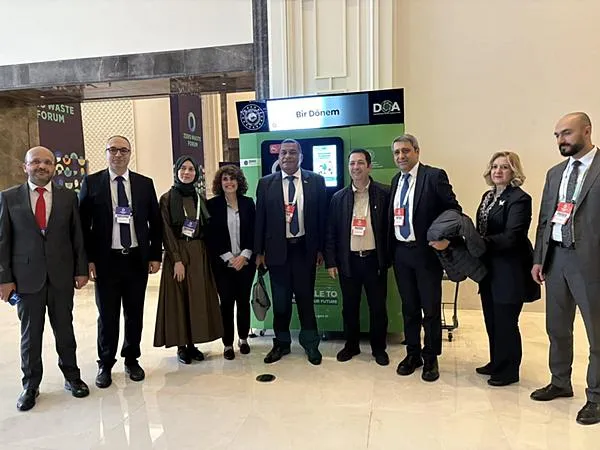
Fiji and Turkey have reaffirmed their long-standing bilateral partnership with renewed discussions on waste management and sustainable environmental development.
Minister for Housing and Local Government Maciu Nalumisa met with a high-level delegation from the Turkish Ministry of Environment, Urbanisation and Climate Change, led by Deputy Director-General for Environmental Management Haluk Şahin Yasg to discuss future cooperation in the environmental sector.
The talks aimed to strengthen technical collaboration in waste management, reflecting Fiji’s ongoing efforts to promote sustainable environmental practices and build institutional capacity.
“The Government of Fiji welcomes the renewed partnership with Turkey as an opportunity to share expertise, access technology, and improve waste-management systems across the country,” Minister Nalumisa said. “We recognise the importance of international cooperation in tackling waste and climate challenges that affect all island nations.”
The meeting also reviewed the history of diplomatic cooperation between the two countries, which began during the Turkey–Pacific Islands Forum hosted in Istanbul in 2008, and was later reaffirmed at the 2014 multi-country forum chaired by then Turkish Foreign Minister Ahmet Davutoğlu. Both events laid the groundwork for ongoing dialogue between Turkey and Pacific Island nations on issues of climate change, development assistance, and sustainable growth.
Building on that foundation, both governments have now agreed to explore the establishment of a Memorandum of Understanding (MoU) that will formalise joint initiatives on waste management and environmental protection. The proposed MoU is expected to include areas such as waste collection, recycling infrastructure, landfill management, and technical training.
Officials said discussions would continue over the coming months to develop a concrete action plan, including identifying pilot projects and capacity-building programmes.
According to recent government reports, Fiji has been prioritising waste management as part of its broader environmental agenda. Earlier this year, the government signed a Transaction Advisory Services Agreement with the Asian Development Bank (ADB) to establish a new sanitary landfill and rehabilitate four open dumpsites in the Western Division — a project that aligns closely with the areas of cooperation now being explored with Turkey.
Turkey, through its Ministry of Environment and the Turkish Cooperation and Coordination Agency (TİKA), has also expressed readiness to provide technical expertise and potential funding assistance to Pacific nations in addressing solid-waste challenges and supporting sustainable urban development.
“The discussions reaffirm both Fiji’s and Turkey’s shared commitment to advancing sustainable waste solutions that protect communities, ecosystems, and future generations,” Minister Nalumisa said.
As Fiji continues to strengthen partnerships under its national environmental strategy, the collaboration with Turkey marks another step toward achieving cleaner cities and improved waste-management systems across the Pacific region.
The Solomon Islands National Statistics Office (SINSO) has announced the successful completion of the 2024 National Economic Establishment Census (NEEC), covering all principal business locations across the nine provinces and the capital, Honiara.
Supported technically and financially by the World Bank under the Capacity Building for Statistics and Audit (CAPSA) project, the census utilised 55 enumerators and 18 team leads to identify and register formal and informal business establishments in the region.
The NEEC collated comprehensive data on business characteristics, including industry classification (for example manufacturing, trade, services), number and type of workers (hired vs non-hired), location data, legal status, ownership, turnover classes and other business-demography information. The methodology and full findings are detailed in the main report; this release provides selected highlights and a link to the richer dataset.
Key findings
The census estimates a total of 22,567 business establishments in the Solomon Islands. Of these:
By region the distribution is as follows:
In terms of economic activity (ISIC level 1):
Methodology and next steps
The census canvassed 108 wards (out of a total of 183) selected in proportion to population density. In those wards, all streets were surveyed and business activities identified using digital tablets to register establishments. For the remaining 75 wards an imputation method was applied, drawing on the 2019 Population & Household Census and the NEEC results to estimate numbers of establishments and employment size.
SINSO emphasises that while the census provides an “excellent estimate of the visible economy with a more or less permanent location”, certain industries — for example small construction firms, transport sector operations, mining and the financial sector — may be less well covered by the census. For some of these, more authoritative data sources already exist, so census results for those sectors are omitted in the publication.
The next milestone will be the launch of the Annual Economic Survey (AES) later in 2025. The AES will draw a sample from the new Statistical Business Register (SBR) developed from the NEEC and will collect detailed data on business revenues, costs and employment. The outcomes will feed into improved business statistics and a new estimate of GDP. SINSO stated:
“We count on the cooperation of the business community in achieving this new milestone.”
With this NEEC, SINSO and its partners have laid a robust foundation for economic statistics in the Solomon Islands. The rich dataset enables policymakers to track business demography, identify sectoral and regional patterns, and strengthen the Statistical Business Register — a key tool for future economic monitoring. The predominance of trade (78.3 %) highlights the central role of commerce in the local economy, and the nearly even split between formal and informal establishments underscores the significance of the informal sector for livelihoods.
The forthcoming AES in 2025 will build on this foundation by shifting from counts of establishments to deeper performance metrics, facing the challenge of integrating both visible and less-visible elements of the economy.
Tuvalu has launched its first-ever Oceans Policy consultations, officially beginning the process to protect and sustainably manage the nation’s marine resources.
In his opening remarks, Secretary in the Office of the Prime Minister Fakasoa Tealei emphasised the deep cultural and economic importance of the ocean to Tuvalu’s way of life.
“Our ocean is not just our boundary — it is our identity, our history, our economy, and our future,” Tealei said.
The consultations, held in Funafuti, are designed to encourage active participation from island communities and to integrate traditional knowledge with modern ocean management practices. The discussions aim to develop a framework for sustainable marine resource governance, ensuring that community voices are at the centre of policymaking.
The two-day consultations are divided between the southern and northern islands. On the first day, representatives from Vaitupu, Nukufetau, Funafuti and Nukulaelae will participate, while the second day will include delegates from the northern islands of Nanumaga, Nanumea, Niutao and Nui.
As Tealei stated, “This policy will be shaped by your voices — your experiences, your concerns, and your ideas.”
He added that the initiative reflects Tuvalu’s determination to safeguard its ocean for future generations. “Together, we aim to ensure a sustainable future where our ocean continues to sustain generations to come,” he said.
According to the Government of Tuvalu, the National Oceans Policy will provide an overarching framework to guide the sustainable use, conservation and management of the country’s vast ocean space and marine resources. It forms part of Tuvalu’s broader commitment under its Te Namo Initiative and aligns with global efforts to achieve Sustainable Development Goal 14 (Life Below Water).
The Government has described the policy as a “critical step” in integrating national priorities on climate resilience, food security and the blue economy, while strengthening coordination among ministries, traditional leaders and local communities.
The Oceans Policy consultations represent a major step toward establishing Tuvalu’s first national framework for ocean governance — one that balances conservation, economic opportunity and the preservation of cultural heritage.
The Solomon Islands delegation has celebrated its National Day at the World Expo 2025 in Osaka–Kansai, Japan, with heartfelt tributes to Japan, moving cultural performances, and a strong message on ocean conservation.
Leading the celebrations, Minister of Foreign Affairs and External Trade Peter Shanel Agovaka praised Japan for successfully hosting the global event, which has brought together more than 160 countries and organisations under the theme “Designing Future Society for Our Lives.”
“Solomon Islands is privileged to be part of this global gathering. The Expo not only allows us to showcase our unique culture and identity on the world stage but also provides valuable opportunities to engage in meaningful dialogue and exchange with other nations,” Agovaka said.
Delivering the Solomon Islands’ statement during the National Day celebration, Minister Agovaka extended warm greetings from the Government and people of Solomon Islands and thanked guests for joining the celebration. He also reaffirmed Solomon Islands’ commitment to strengthening ties with Japan and other Expo partners.
The minister shared the stage with Japan’s Parliamentary Vice Minister for Foreign Affairs Ikuina Akiko, alongside officials from the Osaka Expo Committee and Osaka city. He also highlighted the enduring friendship between the two nations, recalling that Japan has been a steadfast partner in Solomon Islands’ development journey since the establishment of diplomatic relations in 1978, just after independence.
“Japan has been a steadfast partner in Solomon Islands’ development journey, with major contributions,” Agovaka said.
Thousands of visitors visited the Solomon Islands booth, which was located in a pavilion shared with Pacific, Caribbean and African countries. The exhibit showcased locally made products, cultural artefacts and videos highlighting the nation’s tourism and heritage.
Later that evening, Minister of Commerce, Industry, Labour and Immigration Harry Kuma commended officials and Japanese partners for their tireless efforts in ensuring Solomon Islands’ successful participation in the Expo.
Speaking at a dinner marking the conclusion of the National Day festivities, Kuma expressed heartfelt gratitude to the dedicated staff at the Solomon Islands Pavilion.
“I must recognise the remarkable sacrifices made by three dedicated staff members at the Solomon Islands Pavilion. Your commitment to remain far from home and your loved ones is both commendable and sincerely appreciated,” Kuma said.
He also extended appreciation to the Government and people of Japan for their invaluable support. “On behalf of the Government and people of Solomon Islands, I would like to express our profound gratitude to the Government and people of Japan for their invaluable support, which has greatly facilitated our participation,” he added.
Kuma also commended Mr Kitano of the Kitano Group of Companies, Commissioner General of the Solomon Islands, for his leadership and support at the Expo. The dinner, attended by guests and Solomon Islands students in Japan, featured cultural performances and reaffirmed the strong bonds between the two nations.
A highlight of the celebrations was the powerful performance by the Solomon Islands theatre group I Dig a Dream, which captivated audiences with its moving portrayal of life in coastal communities and a passionate plea for ocean conservation.
The show began with a depiction of a village family’s simple life before evolving into a dramatic call to action to protect the ocean from the impacts of climate change. The performance drew enthusiastic applause from the crowd and was described as one of the most inspiring cultural showcases at the Expo.
The I Dig a Dream group’s performance underscored the Solomon Islands’ message that culture and art can serve as powerful tools to raise awareness about global challenges.
The Solomon Islands official delegation included Minister Agovaka, Commerce Minister Kuma, Tourism and Culture Minister Hon. Choylin Yim Douglas, government officials and the performance group.
Through its participation, the Solomon Islands demonstrated pride in its culture, deep friendship with Japan and commitment to promoting sustainability and ocean protection on the world stage.
Adaptation to the devastating impacts of climate change for Pacific communities is not a choice but a matter of survival, a Solomon Islands climate negotiator has stressed.
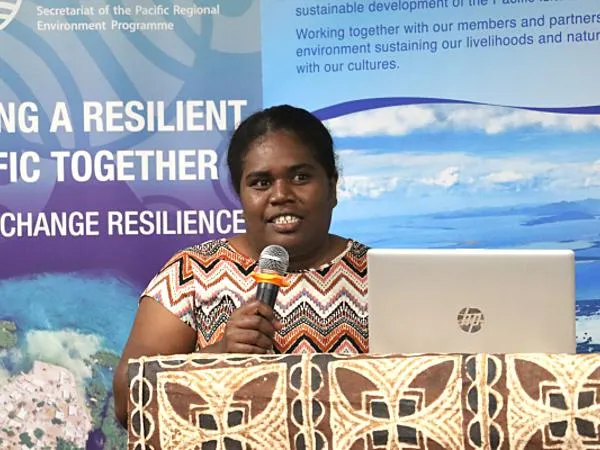
As Pacific climate negotiators convened in Samoa, Melissa Horokou of the Solomon Islands Ministry of Climate Change said adaptation remains a top priority for her country and for all Pacific nations.
“Adaptation for the Solomon Islands, as other Pacific countries can relate to, is really a matter of survival when it comes to the devastating impacts of climate change — it’s either you learn to live and adapt to the change, or you will struggle,” she said.
“Heading to COP30 in Belem, adaptation continues to be a priority, as well as mitigation and other key thematic areas. These are critical to our survival.”
Horokou is among Pacific negotiators meeting in Apia to strategise and finalise preparations for the Thirtieth Conference of the Parties to the United Nations Framework Convention on Climate Change (UNFCCC COP30), which will take place in Belem, Brazil, from November 10 to 21, 2025.
Focus on the Global Goal on Adaptation
In the lead-up to COP30, Pacific nations are working collectively to refine indicators under the Global Goal on Adaptation (GGA), a key outcome area of the Paris Agreement that seeks to strengthen global resilience to climate impacts.
“The main thing for us right now is to finalise the indicators we have on the Global Goal on Adaptation. That’s on top of our priority list — we need to ensure our priorities, and the needs of our communities, are reflected and captured in these indicators,” Horokou said.
“I’m not sure we can have a finalised list by Belem, however I am optimistic because the work has started in getting everyone to understand the indicators and finding common ground. So I’m hopeful for a good outcome on this," she added.
The GGA uses around 100 indicators categorised under seven thematic areas—water, food, health, ecosystems, infrastructure, poverty, and cultural heritage—and four adaptation cycle areas: impact assessment, planning, implementation, and monitoring, evaluation and learning (MEL). These are being negotiated under the UAE–Belem Work Programme to track progress toward the UAE Framework for Climate Resilience.
Strengthening the Pacific voice
The Pacific Small Island Developing States (PSIDS) pre-COP30 meeting, held from 7 to 9 October and chaired by Tuvalu, serves as one of the last opportunities for Pacific countries to consolidate their positions ahead of the global conference.
“COP provides a platform for us to discuss these critical issues which impact us. It’s an opportunity for Pacific countries to amplify our priorities and our voices, and that’s why I am excited and privileged to be part of this process,” Horokou added.
The meeting, hosted at the Secretariat of the Pacific Regional Environment Programme (SPREP) headquarters in Apia, is supported by Climate Analytics and OneCROP, with funding from the Government of Australia through the project “Strengthening Pacific Leadership in International Climate Change Engagement.”
Representatives from the Cook Islands, Fiji, the Federated States of Micronesia, Kiribati, Niue, Palau, Papua New Guinea, the Marshall Islands, Samoa, the Solomon Islands, Tonga, Tuvalu, and Vanuatu are attending. The discussions focus on the Pacific’s priority thematic areas and strategies to ensure strong regional positions at COP30.
SPREP, as Chair of OneCROP, leads coordination of Pacific engagement in international climate change negotiations under the UNFCCC, working closely with Tuvalu as Chair of PSIDS to advance collective aims and strengthen the Pacific’s role in global climate discussions.
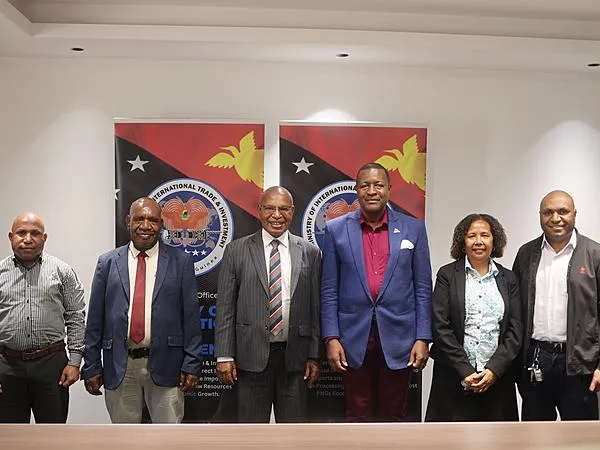
The Marape-Rosso Government has begun the mid-term review of Papua New Guinea’s National Trade Policy (NTP) 2017–2032, aimed at strengthening the country’s trade strategy in response to evolving global and domestic conditions.
The review, spearheaded by the National Trade Office (NTO) with support from the European Union Delegation to PNG, was announced by Minister for International Trade and Investment Richard Maru.
The NTP, first launched in 2017 under the O’Neill Government when Maru was Minister for Trade, Commerce and Industry, is the country’s guiding framework for promoting trade and investment.
Minister Maru said the review was essential to ensure the policy remained relevant and effective, saying “PNG’s trade performance and policy implementation over the past eight years need a thorough assessment so successes can be built and shortcomings addressed."
“The review will help PNG align its trade policy with recent domestic priorities such as the Medium-Term Development Plan 4 and post-COVID economic recovery, and external developments like environmental considerations, new market opportunities in Asia and evolving World Trade Organization rules," he added.
He added that the review would allow PNG to “adopt international best practices, foster stakeholder engagement, and ultimately ensure that trade policy remains effective and relevant.”
The mid-term review will focus on three core areas:
Minister Maru also outlined key issues for the review team to consider, including:
The NTO will lead the review process, but Maru underscored the importance of wide-ranging consultations.
“The private sector and SMEs are being consulted to understand the on-the-ground impacts of the trade policy and persistent business barriers,” he said. “Civil society and academic experts can offer insights on inclusiveness like the impacts on small farmers or women traders and provide evidence-based critiques.”
He added that the review was an opportunity to realign the NTP with current realities, ensuring that its strategies remain “fit for purpose in the face of climate change impacts, advances in information technology, commodity price fluctuations, potential global trade disruptions due to US tariffs, and shifting investment patterns.”
The draft of the new National Trade Policy is expected to be presented to Minister Maru and the National Executive Council by October 15, 2025, for approval ahead of its official launch later this year.
In a move that strengthens regional cooperation and environmental protection in the Pacific, Tuvalu has formally submitted its Instrument of Ratification for the Noumea Convention end of September. This enters into force on the thirtieth day from the date of deposit.
The Noumea Convention, formally known as the Convention for the Protection of Natural Resources and Environment of the South Pacific Region is a multilateral comprehensive umbrella agreement for the protection, management and development of the marine and costal environment.
The Secretariat of the Pacific Regional Environment Programme (SPREP) is the Secretariat for the Convention that now has 13 signatories, those being Australia, Cook Islands, Federated States of Micronesia, Fiji, France, Republic of Marshall Islands, Nauru, New Zealand, Papua New Guinea, Samoa, Solomon Islands, United States of America, and now Tuvalu.
“We congratulate Tuvalu in becoming a Party to the Noumea Convention joining efforts to protect and conserve our Pacific Ocean and environment,” said Mr Sefanaia Nawadra, Director General of SPREP.
“This is our very own Pacific multilateral environment agreement that respects the economic and social value of our natural resources and environment and values the traditions and cultures of our Pacific people. It is the legal framework by us, for us. We welcome Tuvalu into the Noumea Convention and are empowered by the potential this has for a safer environment and Pacific people.”
The Noumea Convention entered into force in 1986 and is the legal framework to address accelerating degradation of the world’s oceans and coastal areas through the sustainable management and use of marine and coastal environments.
There are two protocols under the Noumea Convention, one is the Protocol for the Prevention of the South Pacific Region by Dumping to prevent, reduce and control pollution by dumping of others wastes and other matter in the South Pacific.
There is also the Protocol Concerning Cooperation in Combatting Pollution Emergencies in the South Pacific Region to enhance cooperation among the Parties to protect the region from threats and effects of pollution incidents.
“It is a proud moment for us to unite with our SPREP family and become a Party to the Noumea Convention, we know that together we are stronger and having legal framework of this Agreement behind us propels us in the right direction,” said Dr Soseala Tinilau, the Director of the Department of Environment of Tuvalu.
“Tuvalu faces so many challenges as a small island nation, protecting our people and our environment is a priority for us. We are constantly working to address the impacts of climate change, we see the benefits of being a Party to both the Waigani and Noumea Conventions in saving our natural environment that sustains our people, as crucial for us all.”
The Noumea Convention works in partnership with the Waigani Convention for which SPREP is also the Secretariat. Formally known as the Convention to Ban the Importation into Forum Island Countries of Hazardous and Radioactive Wastes and to Control the Transboundary Movement and Management of Hazardous Wastes within the South Pacific Region, Tuvalu is already a Party to this.
The Waigani Convention works to reduce and eliminate transboundary movements of hazardous and radioactive waste as well as minimise the production of hazardous and toxic wastes in the Pacific region and to ensure that disposal of wastes in the Convention area is completed in an environmentally sound manner.
Parties to the Waigani Convention which entered into force in 2001 include Australia, Cook Islands, Federated States of Micronesia, Fiji, Kiribati, New Zealand, Niue, Papua New Guinea, Samoa, Solomon Islands, Tonga and Tuvalu.
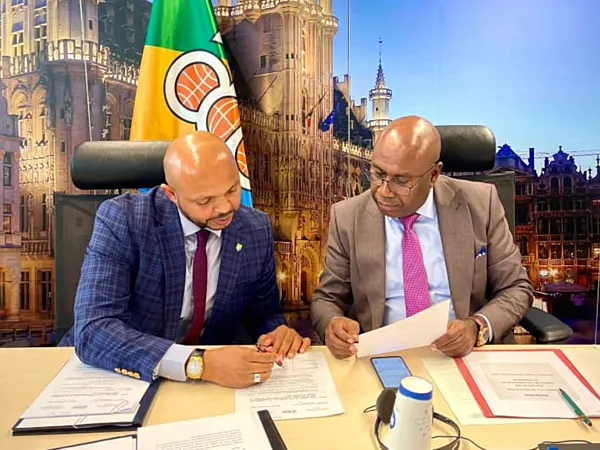
Solomon Islands has formally assumed the Presidency of the Organisation of African, Caribbean and Pacific States (OACPS) for a six-month term, from 1 August 2025 to 30 January 2026, following the handover from the Kingdom of Eswatini.
During this period, Minister for Foreign Affairs and External Trade Peter Shanel Agovaka will serve as President of the OACPS Council of Ministers. Moses Kouni Mose, Solomon Islands’ Ambassador to the European Union, will chair the OACPS Committee of Ambassadors.
In accepting the Presidency during a meeting of the Bureau of the OACPS Committee of Ambassadors, Mose expressed deep gratitude to the Pacific ACP Group and the OACPS Secretariat for their confidence in Solomon Islands’ leadership, pledging to advance the organisation’s priorities in line with its objectives and reform agenda.
The Solomon Islands Presidency will focus on the following key priorities:
Financial sustainability: Securing timely member-state contributions, addressing budget shortfalls, and clearing Secretariat liabilities to ensure operational stability.
Summit preparations: Supporting the successful convening of the 11th OACPS Heads of State and Government Summit in Malabo, Equatorial Guinea, in March 2026, with emphasis on advancing the priorities of Small Island Developing States (SIDS).
Implementation of the Samoa Agreement: Facilitating joint OACPS–EU meetings, including the Joint Council of Ministers, the Parliamentary Assembly, and inter-institutional dialogues.
Council of Ministers leadership: Overseeing the 120th Session of the OACPS Council of Ministers later this year, to set the organisation’s strategic agenda.
Institutional reform: Strengthening OACPS governance, enhancing efficiency, and advancing reforms to secure the organisation’s long-term sustainability.
“The Solomon Islands Presidency will use its good offices to work with all members and partners to ensure continuity, stability and progress in the work of the OACPS,” Mose said.
The Solomon Islands will next chair the Council of Ministers meeting in December 2025, to be presided over by Minister Agovaka.
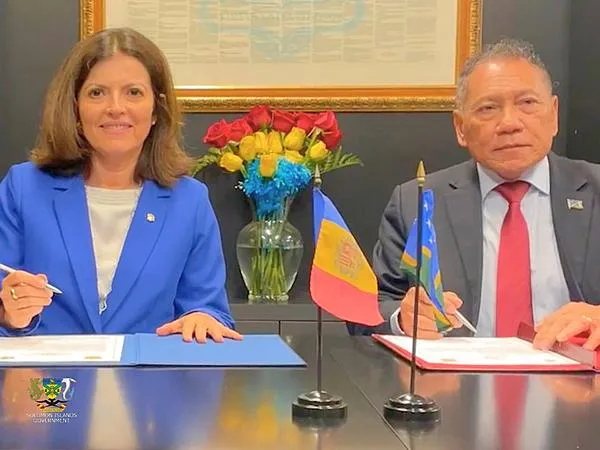
Solomon Islands has formally established diplomatic relations with the Principality of Andorra. The signing ceremony took place at the Permanent Mission of Andorra to the United Nations in New York.
The agreement was signed by the Ministry of Foreign Affairs and External Trade (MFAET) and the Ministry of Foreign Affairs of Andorra. Peter Shanel Agovaka, Minister for Foreign Affairs and External Trade, joined Andorra’s Minister of Foreign Affairs, Imma Tor Faus, for the ceremony.
Minister Tor Faus described the occasion as an important milestone, marking the start of a new relationship between the two countries. She noted that Andorra and Solomon Islands, though geographically distant, share common values in areas such as environmental protection, cultural heritage, and sustainable tourism.
She highlighted Andorra’s membership in the Mountain Partnership and its commitment to protecting marine biodiversity under the BBNJ Agreement, acknowledging Solomon Islands’ strong advocacy on climate change and ocean health.
Tourism was identified as a potential area for collaboration, with Andorra proposing discussions on a visa exemption agreement to encourage travel, cultural exchange, and closer ties between the two peoples.
Minister Agovaka welcomed the new partnership, saying it supports Solomon Islands’ foreign policy of “friends to all and enemy to none” and opens opportunities for greater dialogue and cooperation.
The Principality of Andorra is a small landlocked country in the Pyrenees mountains between France and Spain, with a population of about 85,000. It is one of Europe’s oldest states, established in 1278, and is governed under a unique co-principality system in which the President of France and the Bishop of Urgell in Spain serve as joint ceremonial Heads of State, alongside a Prime Minister and parliament.
Tourism and retail sales form the backbone of Andorra’s economy. The country uses the euro as its currency and, while not a member of the European Union, is active in international organisations such as the United Nations, the Council of Europe, and the OSCE.
The establishment of relations with Andorra expands Solomon Islands’ network of diplomatic partners and opens new avenues for cooperation, particularly in tourism, environmental protection, and sustainable development.
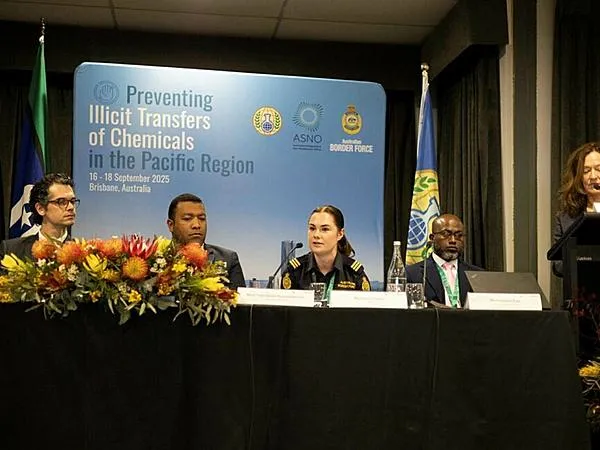
Customs and government officials from 13 Pacific nations responsible for implementing the Chemical Weapons Convention were recently trained in Brisbane on detecting and preventing the illegal movement of toxic chemicals, as part of ongoing efforts to strengthen regional security.
The week-long programme, run by the Organisation for the Prohibition of Chemical Weapons (OPCW), brought together officers from Australia, Fiji, Papua New Guinea, Solomon Islands, Tonga, Samoa, Timor-Leste, Cook Islands, Federated States of Micronesia, Marshall Islands, Palau, Tuvalu and Vanuatu.
“Our Blue Pacific has strong commitments to peace and security, and Pacific Customs administrations are instrumental in turning those commitments into action,” said Nancy Oraka, head of the Oceania Customs Organisation (OCO). “By sharing intelligence, building capacity together, and working alongside partners such as OPCW, the World Customs Organisation, the United Nations Office on Drugs and Crime, and our OCO Members, we are reinforcing a united Pacific shield against emerging threats while keeping legitimate trade moving for the benefit of our island communities.”
The training featured practical demonstrations of advanced detection equipment, including X-ray scanning systems, chemical trace detectors and detector dogs. Officers also learned about concealment methods used in chemical smuggling, such as hiding dangerous substances in refrigerated containers and other cargo.
“The ABF experts showed us how to use special technology to detect these chemicals better. Watching them use the equipment helped us understand the process,” said Tammy Luitolo from the Solomon Islands Customs and Excise Division.
The Australian Border Force Container Examination Facility provided real-world scenarios that officers could take back to their home countries.
The training builds on decades of Pacific leadership in creating nuclear-free zones. The region’s 1985 Rarotonga Treaty established the South Pacific as nuclear-free, with more recent commitments under the Boe Declaration and the 2050 Pacific Strategy extending that peace-focused approach.
“Pacific nations signed the Rarotonga Treaty in 1985 to create a Nuclear-Free South Pacific,” said Mohammed Ajaz, Customs Enforcement Adviser for the Oceania Customs Organisation. “Now we face a new challenge – weak enforcement of Chemical Weapons Convention standards could allow dangerous dual-use chemicals to spread throughout the region.”
The stakes extend beyond the Pacific itself – as a major maritime crossroads, stronger chemical weapons enforcement here protects both local communities and global security.
“Working together with other countries helps stop illegal toxic chemicals,” Ms Luitolo said, highlighting how collaboration strengthens individual nations’ efforts.
Officers also committed to updating their countries’ chemical profiling systems and creating joint standard operating procedures for handling dangerous substances.
Ajaz said the training was part of building what he called a “united Pacific shield” – combining intelligence sharing, capacity building and international partnerships to stop threats while keeping legitimate trade flowing.
“Our Blue Pacific has strong commitments to peace and security, and Pacific Customs administrations are instrumental in turning those commitments into action,” he said. “By sharing intelligence, building capacity together, and working alongside partners such as OPCW, the World Customs Organisation, the United Nations Office on Drugs and Crime, and our OCO Members, we are reinforcing a united Pacific shield against emerging threats while keeping legitimate trade moving for the prosperity of our island communities.”
This marks the second consecutive year OPCW has run chemical weapons training specifically for Pacific nations.
“The hands-on sessions with the ABF Container Examination Facility and sharing knowledge with Asia/Pacific state countries enhanced our ability to manage chemical incidents effectively,” said Meli Serunituacoko, a customs officer from the Fiji Revenue and Customs Service.
For smaller Pacific nations like Tuvalu, the training represents a significant opportunity to build capacity that might otherwise be difficult to access.
Falesala Imalesa Kofe, Senior Collector Preventive at the Tuvalu Customs Department, said her key takeaway from the workshop was “the importance of international cooperation in preventing the misuse of chemical materials.”
“I gained hands-on exposure to practical tools and methods that I had not used before,” Mrs Kofe said. “Going forward, Tuvalu will seek assistance from OCO, OPCW and other partners in ensuring these practices are embedded into our national operations.”
She added that the training’s impact extended beyond individual participants. “I am committed to integrating these approaches into our work and mentoring colleagues so the benefits extend not just to those attending but to others that have not attended this OPCW training,” she said.
For many participants, the training reinforced that protecting their island communities from chemical threats was not just about enforcement – it was about education, clear regulations and working together across the vast Pacific.
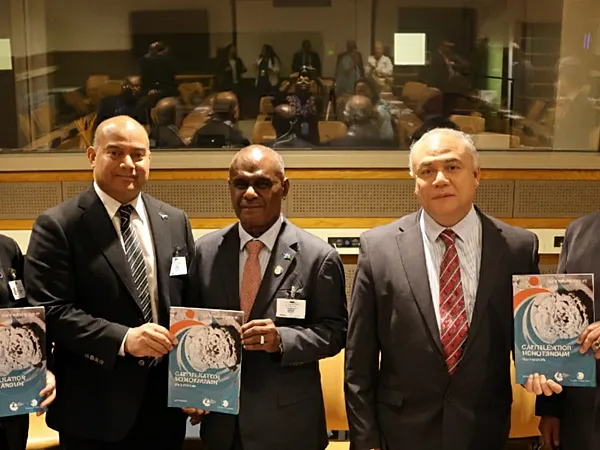
As part of the Pacific Islands Forum Leaders’ broader engagement at UNGA80, the PRF Partners Roundtable Talanoa was convened at the UN Headquarters on 23 September. The event marked the launch of the PRF Capitalisation Memorandum for Investors and officially opened the global pledging window for the next 15 months from September 2025 to December 2026.
At the launch, Forum Chair and Prime Minister of Solomon Islands Jeremiah Manele remarked, “We call on our partners to recognise and invest in the PRF as a credible, innovative and transformative self-financing solution, that is a feasible and sustainable alternative to the issue of scarce public resources.”
Building on the historic signing of the agreement establishing the PRF at the 54th Pacific Islands Forum Leaders’ Meeting two weeks ago in Honiara, the event provided an opportunity to showcase the Pacific’s bold vision and leadership on the global stage.
In recognition of the facility’s game-changing impact, development partners expressed strong support for the PRF. Ireland pledged €3 million ahead of the Talanoa, Portugal announced a €1 million pledge, and Germany, through the president of the 80th Session of the UN General Assembly, affirmed a €5 million contribution. This brings total pledges to $166 million to date.
Reiterating the importance of the PRF, United Nations Under-Secretary-General and High Representative Rabab Fatima said, “The PRF is urgent because Pacific nations face the most severe climate threats. The PRF changes this equation. It brings resources directly to the communities that need them most – before crisis becomes catastrophe.”
The PRF Talanoa attracted high-level participation from Ireland, Germany, Portugal, Norway, Japan and the United Kingdom.
“Your investment will strengthen the resilience of our Pacific communities, transform their lives and create lasting benefits for our people and the planet – now and for future generations,” remarked Dr. ‘Aisake Valu Eke, prime minister of the Government of the Kingdom of Tonga.
Demonstrating Forum Leaders’ strong commitment to establishing the PRF, the president of the Republic of Nauru David Adeang deposited his instrument of ratification, becoming the second Forum member after Tonga – the host of the PRF – to do so since the treaty signing in Honiara.
The PRF Roundtable Talanoa is part of a high-level capitalisation advocacy campaign to raise the facility’s initial target of $500 million.
“This is our moment to show the global community that our solidarity, leadership, vision, courage and decisive action are the key to humanity’s survival where no one is left behind,” Tuvalu Prime Minister and Chair for Pacific Small Island Developing States (PSIDS) Feleti Penitala Teo OBE said in his closing remarks.
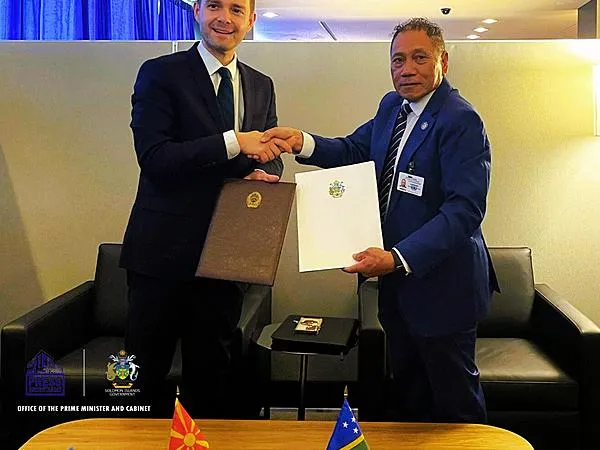
Solomon Islands has formalised diplomatic relations with the Republic of North Macedonia following the signing of a joint communique on the sidelines of the 80th Session of the United Nations General Assembly in New York on 23 September 2025.
The agreement was signed by Solomon Islands Minister of Foreign Affairs and External Trade Peter Shanel Agovaka and North Macedonia’s Foreign Minister Timčo Mucunski.
During the meeting, Agovaka said the establishment of diplomatic ties reflected both countries’ shared commitment to “fostering friendship, cooperation, and mutual respect among nations, regardless of size or distance.”
The two ministers agreed that Solomon Islands and North Macedonia share common values and aspirations for peace, sustainable development and joint action on challenges such as climate change and economic inequality.
The new bilateral partnership is expected to open avenues for cooperation in trade, education, cultural exchange and multilateral advocacy. Agovaka said Solomon Islands looked forward to leveraging North Macedonia’s experience in governance and regional integration while offering the Pacific perspective to enrich global dialogue.
He added that establishing diplomatic relations with North Macedonia reinforced Solomon Islands’ foreign policy of being “friends to all, enemies to none,” while broadening its diplomatic footprint beyond traditional allies.
The signing marked what Agovaka described as a historic milestone, as he expressed gratitude on behalf of the Government and people of Solomon Islands to North Macedonia for “warmly embracing this new partnership.”
North Macedonia, officially known as the Republic of North Macedonia, is a landlocked country in Southeast Europe on the Balkan Peninsula. It borders Greece to the south, Albania to the west, Kosovo and Serbia to the north, and Bulgaria to the east, with Skopje as its capital.
The country is notable for Lake Ohrid, one of Europe’s oldest and deepest lakes, shared with Albania, which is recognised for its unique biodiversity and more than 200 endemic species.
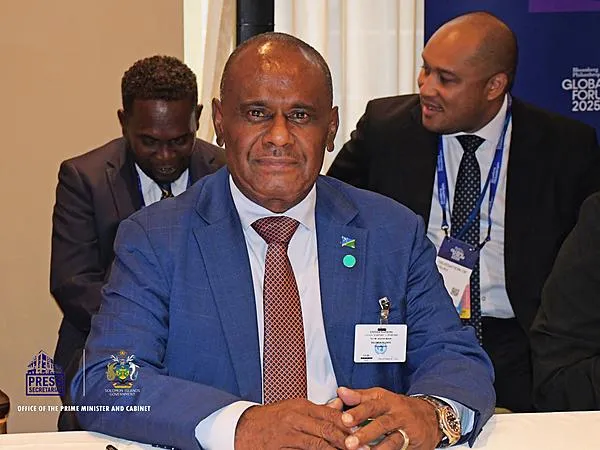
Prime Minister Jeremiah Manele underscored Solomon Islands’ leadership in advancing ocean conservation and sustainable development during a high-level roundtable at the 2025 Bloomberg Philanthropies Global Forum in New York.
The forum, held alongside the United Nations General Assembly, convenes world leaders, philanthropists and private sector representatives to explore solutions to pressing global challenges. Through discussions and side events, participants exchanged ideas, built partnerships and identified actionable solutions on issues including climate resilience, ocean governance and sustainable economic development.
During the roundtable at The Plaza Hotel, Manele shared Solomon Islands’ perspective on regional and global ocean governance. He pointed to the historic ratification of the Biodiversity Beyond National Jurisdiction (BBNJ) Agreement, which reached its 60-country threshold this week and is expected to enter into force in early 2026.
While welcoming the milestone, he stressed that the treaty’s effectiveness will depend on being complemented by strong conservation and sustainable-use measures within national jurisdiction. He said only through this dual approach could the health and resilience of the world’s oceans be secured.
The Prime Minister also highlighted the Melanesian Ocean Reserve (MOR) initiative, a Solomon Islands-led effort integrating Indigenous knowledge with modern science to safeguard biodiversity and deliver sustainable economic benefits for Ocean Peoples.
“The BBNJ Agreement and regional initiatives like the Melanesian Ocean Reserve illustrate the growing momentum toward collaborative ocean governance. Solomon Islands remains committed to protecting our oceans for current and future generations,” Mr Manele said.
He also noted the importance of regional collaboration, philanthropy and innovative partnerships to implement ocean conservation strategies effectively.
Other leaders who joined the roundtable included Fiji’s Prime Minister Sitiveni Rabuka; Wesley Simina, President of the Federated States of Micronesia,; Feleti Teo, Prime Minister of Tuvalu, along with representatives from philanthropic and international organisations.
Fiji has pledged to increase its energy sector emissions reduction target from 30 to 36 percent.
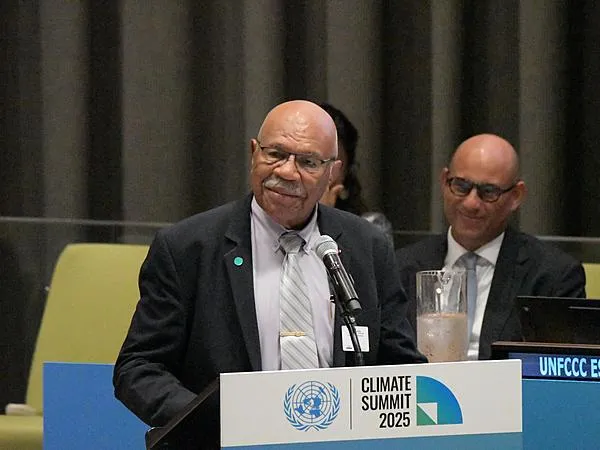
Prime Minister Sitiveni Rabuka announced the commitment at the UN Secretary-General’s Special High-Level Event on Climate Change held on the sidelines of the 80th session of the United Nations General Assembly.
In his address, Rabuka said Fiji’s Nationally Determined Contributions (NDCs) served as the country’s prospectus to access the finance, technology and expertise needed to supplement national resources.
“Fiji is firmly committed to harnessing indigenous forms of energy and the phasing out of fossil fuels,” he stated. “We also target to produce 100% of our electricity from renewable energy sources by 2035.”
The Prime Minister stressed the urgent responsibility of major emitters, citing the recent International Court of Justice Advisory Opinion which confirmed that states have a binding obligation to act in line with science, fairness and equity.
“Large polluters must take substantial, rapid, and sustainable measures to reduce greenhouse gas emissions. COP30 in Belém must be a turning point,” he urged, calling on leaders to show courage, political will, and ambition to secure a sustainable future for all.
The high-level event provided a platform for countries to present their upcoming NDCs and outline new climate commitments.
Meanwhile, Rabuka has called for urgent reforms to the global financial system to better support vulnerable nations, particularly Small Island Developing States (SIDS), in achieving the Sustainable Development Goals (SDGs).
Speaking at the Biennial Summit for a Sustainable, Inclusive and Resilient Global Economy held on the sidelines of the 80th session of the United Nations General Assembly, Rabuka highlighted the USD$4 trillion financing gap faced by developing countries. He also pointed to the added strain of climate change and frequent natural disasters on Fiji’s economy.
He stressed that building sustainable and resilient economies requires greater investment in infrastructure, health and education.
“Our plight is urgent. We need a financial system that is cognizant of our reality,” he said.
The Prime Minister urged international financial institutions to adopt the Multi-dimensional Vulnerability Index (MVI) when assessing the challenges faced by SIDS, and called on leaders to implement the Seville Compromise to help close the funding gap.
“As we march into the final quarter of the 2030 Agenda, we must scale up efforts to meet our commitments, especially for nations in special situations like SIDS,” Rabuka concluded.
Follow on LinkedIn:
Pacific Business Review
Be the "First" to get our exclusive Digital Magazine & Weekly Newsletter.