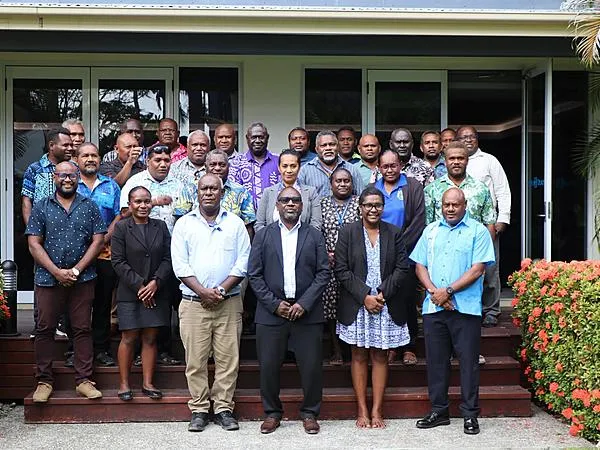
The Solomon Islands government has stepped up its legislative and policy reform agenda, with the Prime Minister's Policy Implementation, Monitoring and Evaluation Unit (PIMEU) holding a second round of consultations with the Ministry of Commerce, Industry, Labour and Immigration.
The consultation, led by PIMEU's Legislative and Policy Reform Subcommittee with support from the Prime Minister's Office Productive Sector Unit, reviewed the ministry's work program, legislative priorities and policy reforms to align them with the GREAT Coalition government's agenda.
The ministry oversees business regulation, cooperatives and SMEs, industry development, immigration, labour, trade disputes, foreign investment, companies and charitable trusts, making it central to efforts to improve the country's investment climate.
Permanent Secretary Riley Mesepitu said closer collaboration with the Prime Minister's Office would help accelerate long-delayed reforms.
Among the ministry's priorities are modernising immigration services through electronic passport and visa systems, updating laws governing foreign investment, companies and business regulation, and reviewing labour legislation and wage policies to support economic growth while protecting workers' rights.
"Our objective is to create a modern, efficient and investor-friendly regulatory environment," Mesepitu said, adding that the government also aims to promote indigenous participation in the economy while advancing digital transformation.
Head of the Productive Sector Unit Nixon Kua said the consultations would help ensure ministries receive the legal and policy support needed to implement reforms more effectively and improve public services.
The consultation program will continue across government ministries as part of the GREAT Coalition's broader efforts to strengthen governance, modernise legislation, improve service delivery and create a more enabling environment for sustainable economic growth and private sector development.
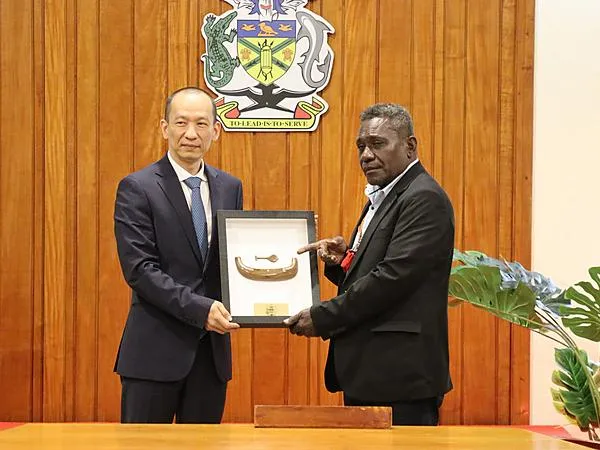
Solomon Islands Acting Prime Minister Gordon Darcy Lilo received a delegation from the International Department of the Communist Party of China (CPC) during a courtesy visit on July 24, with both sides reaffirming their commitment to strengthening political party exchanges and bilateral cooperation.
The delegation was led by Zhao Hongtao, deputy director general of the CPC International Department, who is visiting the Solomon Islands to deepen engagement between political parties in the two countries.
During the meeting, Lilo and Zhao discussed opportunities to share experiences in party development and governance while acknowledging the differences between the Solomon Islands' multi-party political system and China's single-party system.
Lilo said the Solomon Islands could learn from the CPC's experience in governance and China's economic development.
"What matters is that Solomon Islands parties can learn from the success of the CPC in governing and building China into one of the successful and strong nations in the world today," he said.
Lilo also said he admired China's development strategies and reaffirmed the Solomon Islands' commitment to the One China Principle, adding that China's territorial integrity should be respected.
Beyond political cooperation, Lilo said the Solomon Islands was keen to learn from China's economic growth and its success in lifting millions of people out of poverty.
Zhao shared the CPC's experience in governance and reiterated the party's willingness to support political party development in the Solomon Islands while expressing respect for the country's multi-party system.
He said the CPC's achievements were reflected in China's long-term political stability and its transformation from an agrarian economy into the world's second-largest economy.
"Our vision is to share our experience and success to help others succeed in their aspirations and to contribute towards building a harmonious world for everyone," Zhao said.
The visit forms part of ongoing efforts to strengthen political dialogue and cooperation between the Solomon Islands and China following the establishment of diplomatic relations between the two countries in 2019.
House of Salt was named Fiji's National SME of the Year at the Fiji Development Bank (FDB) National Small and Medium Enterprise (SME) Awards 2025, where President Ratu Naiqama Lalabalavu praised entrepreneurs for driving economic growth, innovation and community development.
Speaking at the awards ceremony in Suva on July 24, the president described small and medium-sized enterprises (SMEs) as the "social and economic pillars" of Fiji and the country's "engine room," highlighting their role in creating jobs, improving livelihoods and strengthening the national economy.
"In today's rapidly evolving global economy, innovation is no longer optional but a necessity," Lalabalavu said, adding that businesses embracing change are best positioned to compete.
He said innovation is often reflected in practical improvements that boost productivity, sustainability and market access, and stressed the need for strong partnerships among government, educational institutions, industry and development partners to support entrepreneurs.
The president also emphasized that knowledge, technology, skills and opportunities should be accessible to entrepreneurs regardless of their location, enabling more Fijians to transform business ideas into successful enterprises.
He urged successful businesses to mentor emerging entrepreneurs, saying business growth should create opportunities not only for owners but also for employees, suppliers and local communities.
Held under the theme "Ignite, Innovate and Inspire," the annual awards recognized outstanding SMEs across multiple sectors.
2025 FDB National SME Awards winners
National SME of the Year: House of Salt
Best Agri-business SME: Shahils Party Ice and Frozen Supplies
Sustainable SME: House of Salt
Best Emerging SME: Leone Vulaca Prosthetic and Orthotic Centre
Women Entrepreneur of the Year: Alchemus Prime
Youth Entrepreneur of the Year: Nailed It
Best Businessperson of the Year: Resonance Entertainment
Best Cooperative SME: Lavena Coastal Walk Eco-Tourism Co-operative Limited
Best Maritime SME: Delaivuna Farm Fresh Eggs
Lalabalavu also acknowledged the Fiji Development Bank's longstanding role in supporting enterprise development and helping local businesses grow through financing and capacity-building initiatives.
Fiji has reaffirmed its commitment to a safe, inclusive and digitally connected Pacific after joining regional leaders at the Pacific ICT Ministers Meeting in Port Moresby, where ministers endorsed new initiatives to strengthen digital cooperation and accelerate the region's digital transformation.
Led by Minister for Policing and Communications Ioane Naivalurua, Fiji joined other Pacific nations in endorsing the Digital Technologies and AI Principles for the Pacific, a framework intended to guide the responsible and ethical use of emerging technologies while supporting innovation, economic growth and Pacific values.
Ministers also reaffirmed their commitment to addressing the challenges posed by social media and advancing the Pacific Islands Digital Transformation Action Plan, with priorities including cybersecurity, digital resilience and the development of future-ready digital economies.
On the sidelines of the meeting, Naivalurua held discussions with Australia's Special Envoy to the Pacific on expanding digital cooperation under the Vuvale Partnership, including telecommunications resilience, cyber safety and digital skills development.
The minister also met with the Deputy Secretary-General of the International Telecommunication Union (ITU), thanking the organization for its technical support and reiterating Fiji's interest in hosting the ITU Pacific Area Office to strengthen the country's role as a regional hub for telecommunications policy and digital innovation.
During the visit, Naivalurua received a briefing from the Fiji High Commission on bilateral relations with Papua New Guinea, met members of the Fijian community in Port Moresby during a Talanoa session, and visited Vodafone PNG, where he commended the Fijian management team for expanding telecommunications infrastructure through the partnership between Amalgamated Telecom Holdings (ATH), the Fiji National Provident Fund (FNPF) and Vodafone Fiji.
Fiji's delegation, comprising senior government officials and technical experts from the Ministry of Policing and Communications, also participated in technical sessions and policy discussions aimed at advancing digital transformation, cybersecurity and regional digital cooperation across the Pacific.
Pacific Islands Forum (PIF) members have adopted a new regional aid-for-trade strategy for 2026–2030, setting out a coordinated agenda to strengthen trade, digital commerce, connectivity and climate-resilient economic development across the Blue Pacific.
The Pacific Aid for Trade Strategy (PAfTS) 2026–2030 builds on the previous five-year framework and aligns regional trade initiatives with the 2050 Strategy for the Blue Pacific Continent, positioning trade and investment as key drivers of sustainable economic growth and resilience.
The strategy was endorsed by Pacific Islands Forum trade ministers in July 2025 and serves as the principal framework for coordinating regional aid-for-trade programs over the next five years. It emphasizes member-led implementation, stronger coordination among development partners and targeted investments in areas that can deliver regional benefits.
Under the new framework, the Pacific will continue prioritizing e-commerce, trade facilitation, services, quality infrastructure, connectivity, trade agreements and value chains such as kava and apiculture, while introducing trade and environment as a new strategic priority.
The strategy recognizes that environmental challenges—including climate change, biodiversity loss and pollution—pose significant risks to Pacific economies but also present opportunities through greener trade policies, sustainable value chains and environmentally sound technologies. Rather than creating a standalone program, environmental priorities will be integrated across all regional trade initiatives.
Digital trade also features prominently in the strategy, with the Pacific Islands Forum Secretariat aiming to expand the region's e-commerce ecosystem to reduce geographic barriers, lower business costs and help diversify Pacific economies.
The strategy notes that around 30% of recommendations under the Pacific Regional E-commerce Strategy had been implemented by the end of 2024, with work now shifting toward updating the strategy and accelerating implementation.
Improving regional connectivity remains another central objective. The framework calls for stronger transport, aviation, digital, energy and people-to-people links to reduce the effects of geographic isolation and strengthen regional economic integration.
Trade facilitation is also expected to receive greater attention after the strategy noted that Pacific Island developing economies recorded a trade facilitation implementation rate of 42% in 2023, well below the global average of 69%, underscoring the need for more efficient border procedures and streamlined trade systems.
The strategy also places greater emphasis on strengthening the Pacific's participation in global and regional trade agreements by providing technical assistance and policy support to member countries. It calls for continued engagement in World Trade Organization negotiations, implementation of regional trade agreements and exploration of new trade opportunities that benefit Pacific economies. The framework further promotes stronger private sector participation, recognizing businesses as the primary drivers of trade-led growth and investment. It also encourages greater inclusion by integrating gender equality, disability and social inclusion considerations into regional trade initiatives where practical. Through these measures, the strategy aims to make Pacific trade more competitive, inclusive and resilient over the next five years.
The strategy further seeks to expand opportunities in services trade, which accounted for 56.4% of regional GDP and 53% of total employment in 2023, while supporting emerging digitally enabled services alongside tourism. Continued support is also planned for regional kava and apiculture initiatives to strengthen export value chains, improve market access and promote rural livelihoods.
Pacific Islands Forum Secretary General Baron Divavesi Waqa said the strategy provides a practical roadmap for collective regional action at a time of growing economic and geopolitical uncertainty.
"The successful implementation of the PAfTS depends on the active and coordinated engagement of all stakeholders, including Forum Members, the Pacific Islands Forum Secretariat, development partners and implementing partners," Waqa said in the strategy's foreword.
Implementation will be overseen through member-driven regional committees, with progress reported annually to Forum trade officials and biennially to Forum trade ministers. Monitoring frameworks will also incorporate gender equality, disability and social inclusion considerations where feasible, ensuring regional trade initiatives deliver broad-based economic benefits across Pacific communities.
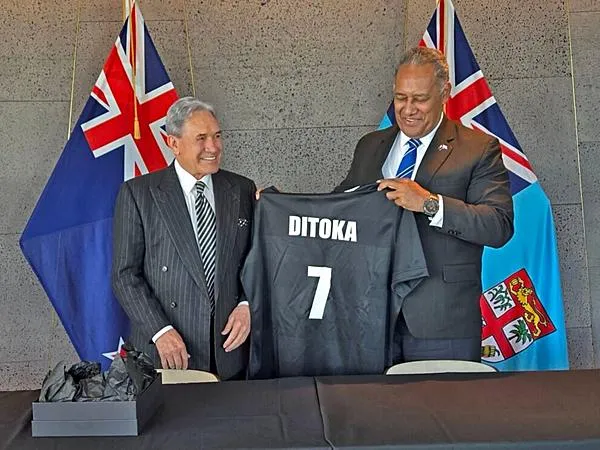
Fiji and New Zealand have strengthened their bilateral relationship with the signing of the refreshed Duavata Partnership 2026–2030, committing to deeper cooperation in trade, security, climate action and sustainable development over the next five years.
The agreement was signed in Auckland by Fiji's Minister for Foreign Affairs and External Trade, Sakiasi Ditoka, and New Zealand's Minister of Foreign Affairs, Winston Peters.
Ditoka described the renewed partnership as an important step in advancing one of Fiji's closest international relationships.
The refreshed framework succeeds the inaugural 2022–2025 Duavata Partnership and is anchored in the Fijian concept of duavata, meaning "working together" or "partnership." It outlines a shared commitment to building a more resilient, secure and prosperous Blue Pacific region.
Both governments welcomed the continued expansion of bilateral trade, which has reached FJD 1.9 billion, and reaffirmed their goal of increasing two-way trade to FJD 2 billion by 2030.
The agreement also reinforces cooperation on a range of regional priorities, including climate change, maritime security, disaster preparedness, transnational crime and sustainable economic development.
Fiji and New Zealand further pledged support for Pacific-led approaches to regional challenges, reaffirming their commitment to the Pacific Islands Forum's 2050 Strategy for the Blue Pacific Continent and the Ocean of Peace initiative.
The two countries said cooperation under the renewed Duavata Partnership would strengthen regional solidarity while promoting peace, resilience and sustainable development across the Pacific.
First signed in March 2022, the Duavata Partnership serves as the primary framework guiding bilateral relations, high-level engagement and mutual accountability between Fiji and New Zealand. The renewed agreement sets the strategic direction for cooperation through 2030.
Solomon Islands Prime Minister Matthew Wale has held talks with United States Deputy Secretary of State Christopher Landau in Washington, D.C., reaffirming bilateral ties and advancing discussions on infrastructure, energy and investment cooperation.
The meeting at the U.S. State Department focused on strengthening the long-standing partnership between the two countries, with the proposed Bina Harbour development emerging as a key priority.
According to a statement from the Solomon Islands government, Landau highlighted Washington's strong interest in supporting the Bina Harbour project, with both sides agreeing to continue discussions on potential U.S. involvement.
Wale also outlined his government's priorities for the next two years, identifying opportunities to expand cooperation in the energy sector and through financing and development initiatives under the U.S. Development Finance Corporation (DFC) and the Millennium Challenge Corporation (MCC).
The prime minister reaffirmed his government's commitment to strengthening relations with international partners while highlighting the historical ties between Solomon Islands and the United States.
Landau welcomed the government's renewed approach to international partnerships and reaffirmed the United States' commitment to supporting Solomon Islands through DFC and MCC programs aimed at expanding development opportunities.
He also encouraged Solomon Islands to engage more actively with the U.S. private sector to attract investment that would generate economic benefits for the country.
The meeting marks another step in efforts by both governments to deepen bilateral cooperation and broaden collaboration in infrastructure, energy and economic development.
Vanuatu is strengthening its disaster recovery governance through new sector-specific guidelines and a proposed disaster financing framework aimed at improving post-disaster coordination, accelerating recovery efforts and building long-term resilience to climate and natural hazards.
Government agencies, development partners, technical experts, civil society organisations and financial institutions gathered in Port Vila for a national consultation workshop to review three key recovery instruments covering housing, energy and disaster recovery financing.
The workshop was organised by the Department of Strategic Policy, Planning and Aid Coordination (DSPPAC), through the Disaster Recovery Coordination Unit, in partnership with the Department of Urban Affairs and Planning, the National Disaster Management Office and the Department of Energy.
The initiative forms part of the Strengthening Recovery Capacities Vanuatu Project, supported under the African, Caribbean and Pacific (ACP)-European Union programme on strengthening disaster risk governance and recovery capacities and implemented by the United Nations Development Programme (UNDP).
Participants reviewed the proposed Housing Sector Recovery Guideline, Energy Sector Recovery Guideline, and Disaster Financing Strategy and Recovery Financing Architecture, which are intended to strengthen institutional coordination and provide practical guidance for post-disaster recovery.
The consultation comes as Vanuatu continues to face increasing climate and disaster risks. The government estimates that natural disasters cost the country about 6 per cent of gross domestic product annually, while recent events—including Tropical Cyclones Judy and Kevin and the 2024 Port Vila earthquake—have underscored the need for stronger recovery systems.
Disaster Recovery Coordination Unit manager Peter Korisa, speaking on behalf of the Director of DSPPAC, said recovery efforts must go beyond rebuilding damaged infrastructure.
"Recovery cannot simply mean rebuilding what was lost. Rather, recovery must strengthen resilience, reduce future risk and support long-term sustainable development," Korisa said.
He noted that while Vanuatu already has national policies, including the National Sustainable Development Plan, National Disaster Recovery Framework, National Energy Road Map, National Housing Policy and National Disaster Risk Financing Policy, translating those frameworks into practical operational guidance remains a key challenge.
UNDP Vanuatu Area Coordinator Sherryl Mahina said strengthening nationally led recovery systems is becoming increasingly important as climate-related disasters become more frequent and severe.
"Small Island Developing States such as Vanuatu remain at the frontline of climate and disaster-related challenges," Mahina said.
"Recovery is not only about restoring infrastructure and services. It is about strengthening governance systems, restoring livelihoods, reducing future risks, protecting the most vulnerable and ensuring communities emerge stronger after disasters."
She said the consultation aimed to bridge the gap between policy and implementation by developing practical guidance for housing, energy and disaster financing.
The proposed housing recovery guideline focuses on resilient building standards, improved data collection, insurance mechanisms and technical support for community-led reconstruction.
Meanwhile, the energy guideline outlines measures to strengthen recovery planning, resilience standards and coordination mechanisms for restoring electricity infrastructure after disasters.
Department of Energy Director Matthew Tassale said reliable electricity is essential to national recovery efforts.
"After disasters, the energy system is one of the priorities for recovery," Tassale said.
"Electricity is essential for healthcare services, communications, water supply, education, livelihoods and emergency coordination. Strengthening energy recovery planning helps ensure communities can recover faster and more safely while reducing future risks."
He said resilient energy planning is particularly important for remote and outer island communities, where prolonged power disruptions can have significant social and economic consequences.
Participants also reviewed Vanuatu's proposed disaster financing strategy, including options for financing instruments, resource mobilisation, institutional arrangements and disaster reserve funding mechanisms to improve the country's ability to finance future recovery efforts.
The workshop concluded with a series of technical recommendations and governance reforms that will be incorporated into the final versions of the guidelines and financing strategy before they are submitted for government endorsement.
Once adopted, the new frameworks are expected to provide government agencies and development partners with clearer procedures, institutional responsibilities and financing mechanisms to support faster recovery, restore essential services and livelihoods more effectively, and strengthen resilience against future disasters.
The Strengthening Recovery Capacities Vanuatu Project supports Vanuatu's broader efforts to enhance disaster preparedness and recovery in line with the Sendai Framework for Disaster Risk Reduction, the Paris Agreement and the United Nations Sustainable Development Goals.
Pacific Island countries have adopted a regional strategy aimed at improving access to climate finance, strengthening institutional capacity and promoting innovative funding mechanisms to help address the region's growing climate challenges.
The Pacific Regional Climate Finance Access and Mobilisation Strategy 2025-2030, endorsed by Pacific Islands Forum Economic Ministers in March 2025, seeks to help Pacific Island countries better access, manage and deploy climate finance for climate adaptation, mitigation, and loss and damage initiatives.
The strategy was developed by the Pacific Islands Forum Secretariat (PIFS) following a technical assessment of climate finance in Pacific Island countries and forms part of the implementation framework under the Pacific Roadmap for Economic Development and the 2050 Strategy for the Blue Pacific Continent.
PIFS said Pacific Island countries remain among the world's most climate-vulnerable nations but continue to face significant barriers in securing international climate finance because of limited institutional capacity, complex funding requirements and the need for stronger technical expertise in preparing funding proposals.
According to the strategy, Pacific Island countries received a total of US$3.4 billion in climate finance between 2010 and 2021, with 59 per cent allocated to adaptation projects, 31 per cent to mitigation initiatives and 10 per cent to cross-cutting programmes. More than half of the funding came from multilateral development banks, while bilateral donors and dedicated climate funds accounted for the remainder.
However, the strategy estimates the region requires around US$13.2 billion in climate finance by 2030, leaving a substantial funding gap despite increased international support.
PIFS said climate finance delivery continues to be constrained by complex application procedures, stringent eligibility requirements, limited absorptive capacity and project-based funding models that often bypass national budgeting and financial management systems.
The strategy sets out four priority areas: strengthening institutional capacity, improving access to climate finance, enhancing the management and utilisation of climate funding, and promoting innovative financing mechanisms.
Among the measures proposed are simplifying access to international climate funds, supporting more Pacific countries to secure direct accreditation with major climate finance institutions, expanding public-private partnerships and improving project management and financial oversight.
The strategy also promotes new financing approaches, including green and blue bonds, debt-for-climate swaps, carbon pricing mechanisms, climate insurance products and regional climate investment platforms to mobilise additional public and private capital for climate resilience projects.
Under the implementation roadmap, PIFS aims to help at least three Pacific Island countries secure direct accreditation to the Green Climate Fund or other international climate funds by 2029, facilitate the issuance of at least one green or blue bond, establish an operational regional climate investment platform and support the completion of at least one debt-for-climate swap by 2030.
PIFS will coordinate implementation through an expanded regional Climate Finance Working Group involving regional organisations, multilateral development banks, United Nations agencies and other climate finance partners, while ensuring climate finance remains aligned with national development plans and climate priorities across Pacific Island countries.
Pacific island economies are expected to experience slower economic growth in 2026 as higher fuel and food prices, weaker tourism and rising import costs continue to weigh on activity despite government measures to cushion the impact, according to the Asian Development Bank's (ADB) latest economic outlook.
The ADB lowered its growth forecast for the Pacific to 3.3% in 2026, down from the 3.4% projected in April and below the region's estimated 4.2% expansion in 2025. Growth is expected to moderate further to 3.2% in 2027, while inflation is projected to remain elevated at 4.2% in 2026 before easing to 3.5% next year.
The bank said Pacific economies remain among the most vulnerable to external shocks because they rely heavily on imported fuel, food and construction materials. Higher energy prices, rising freight costs and supply chain disruptions have increased the cost of living and placed additional pressure on businesses and governments across the region.
"The Pacific's growth outlook is lowered to 3.3% in 2026 as higher fuel, food and input costs stemming from the conflict dampen economic activity despite government mitigation measures," the report said.
ADB said forecasts for several Pacific economies were revised lower as visitor arrivals fell short of expectations while import costs continued to rise. The bank also warned that prolonged disruptions in global energy markets, driven by the Middle East conflict, are expected to unwind only gradually, keeping inflationary pressures elevated across the region.
Among the region's largest economies, Papua New Guinea is forecast to grow 3.4% in 2026, slightly below the 3.6% projected in April and down from an estimated 4.7% growth in 2025. Inflation is expected to remain at 4.6% this year before easing to 4% in 2027.
Fiji's economy is projected to expand 2.5% in 2026, lower than the 2.9% forecast in April, as softer tourism growth and higher import costs weigh on domestic activity. Inflation is expected to accelerate to 3.6% this year from deflation of 1.4% in 2025.
Elsewhere in the Pacific, Vanuatu is expected to post one of the region's strongest growth rates at 3.9%, while Palau is forecast to expand 3.6%, supported by continued tourism recovery. Solomon Islands and Papua New Guinea are each projected to grow 3.4%, while Kiribati is expected to expand 2.6%, Cook Islands 2.7%, Samoa 2%, and Tonga 2.3%.
Beyond slowing growth, the ADB warned that Pacific governments face mounting fiscal pressures as higher energy prices increase public spending while raising the cost of imports. Several small island economies are expected to record weaker primary fiscal balances this year as governments seek to shield households and businesses from rising living costs, even as higher borrowing costs and tighter global financial conditions constrain fiscal space.
The bank also cautioned that higher fertilizer prices could threaten food security across the region, while renewed geopolitical tensions, volatile energy markets and tighter global financial conditions remain key risks for Pacific economies that are highly dependent on imports and external demand.
Across developing Asia and the Pacific, ADB lowered its 2026 growth forecast to 4.9% from 5.1% projected in April, citing prolonged disruptions to global energy markets caused by the Middle East conflict. The bank raised its regional inflation forecast to 4.3% for 2026 from 3.6%, reflecting the impact of higher oil and gas prices, increased freight costs and supply chain disruptions.
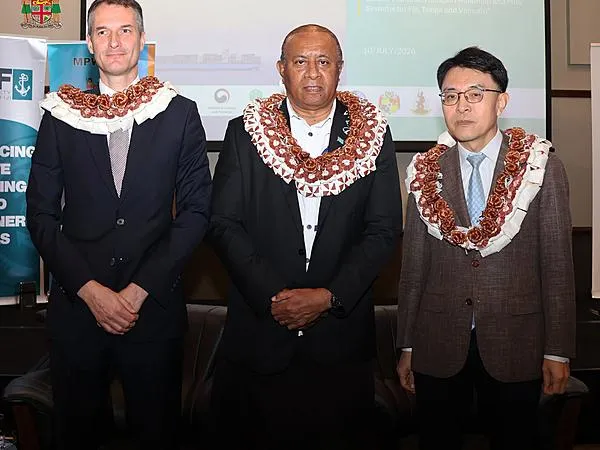
Fiji is developing its first Low-Carbon Maritime Transport Roadmap as part of efforts to modernize the country's shipping sector, reduce greenhouse gas emissions and support regional decarbonization goals.
The roadmap will provide a framework for transitioning Fiji's maritime industry toward lower-carbon operations while improving maritime data systems and supporting the Pacific Blue Shipping Partnership's 2030 and 2050 decarbonization targets.
Fiji's Minister for Public Works, Meteorological Services and Transport, Ro Filipe Tuisawau, announced the initiative during the opening of a stakeholder workshop on decarbonizing the maritime sector in Suva on July 10.
"For Fiji, maritime transport is not simply another sector, it is our lifeline," Tuisawau said.
He noted that shipping is essential for connecting Fiji's more than 300 islands, supporting trade, tourism and fisheries, and ensuring the delivery of essential goods and services to communities across the archipelago.
The minister said the roadmap will help prepare Fiji's maritime sector for a low-carbon future while aligning with the country's development priorities and international climate commitments.
He also reaffirmed Fiji's support for an ambitious and equitable global transition through the International Maritime Organization (IMO), while emphasizing the need for financial support, technology transfer and capacity building to help Small Island Developing States meet decarbonization goals.
The one-day stakeholder workshop brought together government agencies, industry representatives and development partners to provide technical and policy input into the roadmap, strengthen maritime monitoring, reporting and verification (MRV) systems, and improve maritime data collection.
Tuisawau said the roadmap is expected to strengthen connectivity between Fiji's islands, improve the resilience of the country's transport network and encourage innovation and investment in cleaner shipping technologies.
The consultation was organized by Fiji's Ministry of Public Works, Meteorological Services and Transport and the Global Green Growth Institute (GGGI), in partnership with the Republic of Korea's Ministry of Oceans and Fisheries.
The initiative forms part of broader regional efforts to decarbonize maritime transport, a critical sector for Pacific island economies that depend heavily on shipping for trade, mobility and economic development.
Fiji and Kiribati have reaffirmed their commitment to deepen cooperation on infrastructure development, renewable energy and climate resilience as the two Pacific island nations seek to address common development challenges.
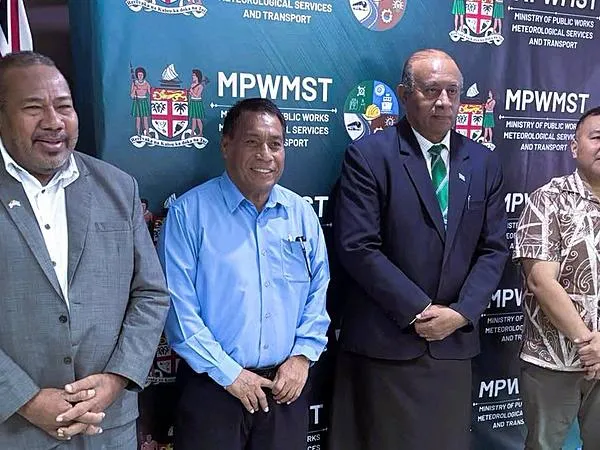
Fiji's Minister for Public Works, Meteorological Services and Transport, Ro Filipe Tuisawau, met with Kiribati's Minister for Infrastructure and Sustainable Energy, Tekeeua Tarati, at the Ministry's headquarters in Suva to discuss opportunities for closer collaboration.
The ministers exchanged views on infrastructure development, renewable energy, water security, maritime transport and sustainable development, with a focus on practical solutions for Small Island Developing States facing the impacts of climate change.
The discussions also highlighted Fiji's progress in expanding renewable energy, promoting electric vehicles, adopting sustainable construction practices and modernizing the maritime sector to reduce greenhouse gas emissions.
Tuisawau said Fiji remains committed to sharing its knowledge and experience with Pacific neighbors to help strengthen regional resilience and support sustainable development.
Both ministers agreed to pursue closer cooperation in developing climate-resilient infrastructure, enhancing energy security, improving water systems and strengthening maritime connectivity between Pacific island nations.
The meeting reflects ongoing regional efforts to improve essential infrastructure and services while advancing low-carbon development strategies that address the unique vulnerabilities of island economies to climate change and rising sea levels.
Fiji and Kiribati are among Pacific nations working to expand regional partnerships as they seek to improve infrastructure resilience, accelerate the transition to clean energy and strengthen sustainable economic development across the region.
Fiji's Real Estate Agents Licensing Board (REALB) and Fiji National University (FNU) have signed a memorandum of understanding (MoU) to strengthen professional standards in the country's real estate sector through structured education, industry-focused training and continuing professional development.
The agreement, signed at FNU's Nabua Campus, establishes a framework for delivering training that aligns with licensing requirements while equipping real estate practitioners with the technical knowledge, ethical standards and practical skills needed in the profession.
The initiative combines REALB's regulatory oversight with FNU's training expertise through its National Training and Productivity Centre. It is expected to create clearer career pathways for aspiring real estate professionals while enabling licensed agents and salespersons to upgrade their skills through ongoing education.
Fiji's Minister for Finance, Commerce and Business Development, Esrom Immanuel, said the partnership is aimed at strengthening institutions and building a more professional and accountable real estate industry.
"This partnership is about investing in people, strengthening institutions and laying the foundation for a more professional, accountable and future-ready real estate sector," he said during the signing ceremony.
Immanuel noted that for many Fijians, purchasing a home is the largest financial commitment they will ever make, making it essential that property transactions are handled by competent and ethical professionals.
He said while legislation provides the framework for regulating the industry, public confidence depends on continuous learning, ethical conduct and professional excellence.
"Public confidence cannot be achieved through legislation alone. It is built through continuous learning, ethical practice, accountability and a shared commitment to professional excellence," he said.
The minister also commended REALB for broadening its role beyond regulatory compliance to include professional development, saying regulators have a responsibility to help build the professions they oversee.
He encouraged REALB and FNU to benchmark their training programs against international best practices while ensuring they remain relevant to Fiji's land tenure system, legal framework and cultural context.
Immanuel said the real estate profession is undergoing rapid change as technologies such as artificial intelligence, digital marketing platforms, virtual property inspections and data-driven decision-making become more widely adopted.
He said future practitioners will need to combine technological capabilities with strong ethical standards and customer service to meet evolving market expectations.
Officials said the partnership is also expected to create new employment opportunities for young Fijians seeking careers in the increasingly specialized property sector while supporting workforce development through accessible and practical training.
The collaboration forms part of the Coalition Government's broader efforts to strengthen professional standards, improve consumer confidence and develop industries that contribute to Fiji's long-term economic growth.
As Fiji's property market continues to expand, officials said the agreement is expected to help develop a new generation of skilled and trusted real estate professionals, supporting greater confidence among homebuyers, investors and businesses in one of the country's key economic sectors.
Twenty-nine vendors from Laqere Market in Nasinu have completed a two-day cooperative management training program designed to strengthen the governance, financial management and long-term sustainability of their cooperative as Fiji continues to promote cooperatives as drivers of inclusive economic development.
The participants are members of the Laqere iTaukei Vendors Cooperative Ltd., which was established in 2025. The training was delivered at Laqere Market by the Ministry of Commerce and Business Development's Department of Cooperative Business through the Cooperative Training College.
The program focused on cooperative governance, leadership, financial management, record keeping and the legal responsibilities of registered cooperatives under Fiji's Co-operatives Act. Participants also received practical instruction on budgeting, bookkeeping, financial reporting and enterprise management to improve accountability and support better business decision-making.
Speaking at the closing ceremony, Director and Registrar of Cooperatives Iosefo Koroidimuri said the success of any cooperative depends on discipline, perseverance and sustained effort.
Quoting Genesis 3:19, Koroidimuri said the passage serves as a reminder that lasting success is achieved through hard work rather than shortcuts.
"It all equates to hard work and to be successful we must take one step at a time," he said.
"You have your targets, your business forecast and the goals you want to achieve as a cooperative, but getting there requires hard work and commitment. There are no shortcuts in business. Every step along the journey matters and every challenge presents an opportunity to grow."
Nasinu Town Council Special Administrator Jone Tuiono congratulated the vendors for investing in skills development and encouraged them to embrace continuous learning despite their years of experience in market trading.
He said significant development planned for Nasinu in the coming years would create new economic opportunities and urged the cooperative to position itself for future growth by applying sound governance practices and investing wisely.
Cooperative member Anaseini Vuidreketi said the training encouraged members to critically assess their operations and address weaknesses before they became larger problems.
She said members gained a clearer understanding of governance, financial management and bookkeeping, while recognizing that transparency, accountability and unity are as important as generating profits in ensuring the cooperative's long-term success.
The Cooperative Management Training forms part of the Cooperative Training College's ongoing outreach program, which aims to strengthen community-based cooperatives across Fiji by equipping members with practical business and governance skills.
The ministry said the program combines internationally recognized cooperative principles with the traditional Fijian concept of solesolevaki—collective community effort—to help communities establish resilient enterprises, improve livelihoods and create sustainable economic opportunities.
Vanuatu is advancing a series of economic initiatives aimed at strengthening investment, improving public sector project delivery and expanding its fisheries industry, even as diplomatic tensions with New Caledonia have cast uncertainty over regional trade.
The Asian Development Bank (ADB) has approved a US$10 million grant to help Vanuatu improve the delivery of public investment projects, strengthen public financial management and implement reforms to create a more attractive environment for private investment.
The funding comes as the country continues to recover from successive natural disasters while addressing capacity constraints that have slowed the implementation of major infrastructure projects.
According to ADB, the programme will strengthen government project management, improve procurement and regulatory processes, and accelerate infrastructure delivery to better utilise development financing and encourage domestic and foreign investment.
The reforms are also expected to provide a more predictable pipeline of opportunities for businesses involved in infrastructure, engineering and professional services.
Meanwhile, a proposed fish processing plant on Efate has moved closer to development after Sino-Van Fisheries reaffirmed its commitment to establishing the facility near Port Vila despite delays related to land issues.
The company said the project would allow more tuna harvested in Vanuatu waters to be processed domestically rather than exported overseas, helping retain more value within the local economy.
Industry stakeholders expect the plant to generate hundreds of jobs while supporting packaging, logistics and transport businesses, boosting export earnings and strengthening food security.
The project is regarded as one of the most significant planned investments in Vanuatu's fisheries sector in recent years and is expected to enhance the country's position as a regional seafood exporter.
At the same time, diplomatic tensions have emerged between Vanuatu and New Caledonia following New Caledonia's decision to suspend official trade cooperation after Vanuatu hosted leaders of the pro-independence Front de Libération Nationale Kanak et Socialiste (FLNKS), who reiterated support for Vanuatu's sovereignty claim over the disputed Matthew and Hunter Islands.
Despite the political disagreement, there have been no restrictions on imports, exports or commercial shipping, and cross-border trade continues.
Two-way merchandise trade between the two territories is estimated at between A$8 million and A$13 million annually, covering exports of fresh produce, beef, kava, seafood and timber from Vanuatu, while New Caledonia supplies construction materials, machinery, food products and consumer goods.
Although the immediate economic impact is expected to be limited, businesses involved in shipping, tourism and regional trade are expected to monitor developments closely as prolonged diplomatic tensions could eventually affect broader commercial relations.
The latest developments underscore Vanuatu's efforts to strengthen economic resilience through institutional reforms, strategic investment and value-added industries while navigating regional geopolitical challenges.
Papua New Guinea and Solomon Islands have reaffirmed their commitment to strengthening economic cooperation, with trade, investment, transport and resource development taking centre stage during talks between Prime Minister James Marape and Solomon Islands Prime Minister Jeremiah Manele.
The discussions, held in Port Moresby in June, reviewed progress in bilateral trade, shipping and aviation connectivity, labour mobility, and opportunities to deepen collaboration in mining, fisheries and agriculture.
While regional security and cooperation were also discussed, both leaders underscored the importance of expanding commercial links and improving the movement of goods, services and people between the two neighbouring Melanesian nations.
The talks highlighted a broader push towards greater regional economic integration, with Papua New Guinea regarded as Solomon Islands' largest Melanesian economy and an increasingly important source of investment, technical expertise and commercial partnerships.
The two governments said improved transport links and streamlined trade arrangements could reduce business costs, strengthen supply chains and create new opportunities for exporters, importers and tourism operators.
Mining emerged as a key area for future collaboration. Marape said Papua New Guinea was prepared to share its expertise in developing a modern mining industry and welcomed greater participation by PNG companies in future resource projects in Solomon Islands.
Such cooperation could create opportunities for engineering firms, contractors, training providers and professional services companies with experience in the mining sector.
The leaders also reaffirmed their commitment to strengthening cooperation in fisheries, recognising the industry's importance to economic growth and food security across the Pacific.
Closer collaboration in fisheries management and downstream processing is expected to support export growth, generate employment and add value to marine resources.
Although trade between the two countries remains relatively modest, both governments expect commercial activity to increase as transport connectivity improves and businesses expand beyond their domestic markets.
The leaders said stronger bilateral engagement would also complement wider regional initiatives under the Melanesian Spearhead Group and the Pacific Islands Forum, where economic resilience, trade and private sector development remain key priorities.
For Papua New Guinea, stronger commercial ties with Solomon Islands reinforce its role as a leading economy in Melanesia while supporting greater regional investment and cross-border business partnerships.
Follow on LinkedIn:
Pacific Business Review
Be the "First" to get our exclusive Digital Magazine & Weekly Newsletter.