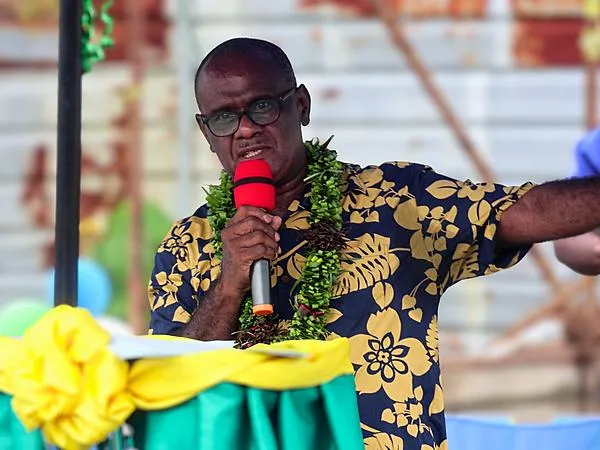
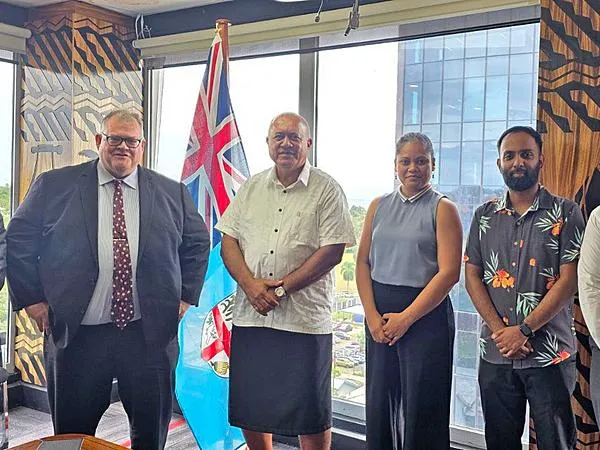
Jeremiah Manele has outlined a pipeline of road and bridge projects for Malaita Province, as the government moves to scale up infrastructure delivery under the Second Solomon Islands Roads and Aviation Project.
Speaking at the handover of the Su’u and Bira bridges, Manele said additional financing of about $41 million from the World Bank is being secured to support new developments in the province.
The planned projects include construction of the Fiu River Bridge, road sealing works from Kwaisuliniu to Dala Market Junction, and upgrades to the road link between Kilu’ufi Hospital and Guwaunaru’u Airfield. The programme also covers the replacement of the Dala and Fote bridges with modern structures.
Procurement processes are also advancing for further works, including the sealing of a 12-kilometre road from Guanaru’u to Kwaisuliniu and the rehabilitation of 21 kilometres of East Road from Baratalo to Atori to climate-resilient standards.
Manele said the investments are aligned with the government’s broader objective of delivering infrastructure that is resilient, inclusive and supportive of long-term development.
The government has also committed more than SBD 40 million through the National Transport Fund to support ongoing infrastructure maintenance across Malaita.
He underscored the importance of coordination between the national government, Malaita Provincial Government, development partners and local communities in delivering the projects.
Government releases noted that the Su’u and Bira bridges form part of a broader effort to improve year-round accessibility in Malaita, particularly for rural communities that are often cut off during heavy rainfall. The structures are designed to enhance connectivity between economic centres, health facilities and schools.
Local media reports said the projects are expected to support agricultural supply chains by reducing transport bottlenecks and travel times, allowing farmers to bring produce to markets more efficiently. Improved road conditions are also seen as critical to lowering logistics costs in the province.
Coverage also highlighted that the Second Solomon Islands Roads and Aviation Project places strong emphasis on climate-resilient design standards, including elevated bridge structures and reinforced road surfaces to withstand flooding and extreme weather events.
Separately, reports underscored that continued coordination with the World Bank and other development partners will be key to ensuring timely delivery, with procurement and contractor mobilisation identified as critical next steps in advancing the pipeline of works.
Master planning has emerged as a central tool in addressing climate vulnerability and rapid urbanisation challenges across Pacific cities, according to discussions at the Seventh Pacific Urban Forum in Papua New Guinea.
Delegates at the forum highlighted how Pacific urban centres are increasingly exposed to overlapping risks, including cyclones, flooding and rising sea levels, compounded by accelerating population growth and strain on infrastructure and services.
A special session on resilient urban development, co-hosted by the Pacific Climate Change Centre of the Secretariat of the Pacific Regional Environment Programme and Tonga’s National Spatial Planning Authority Office under the Ministry of Lands and Surveying, underscored the importance of structured, long-term planning frameworks.
A key priority identified was the integration of customary land tenure systems with modern planning approaches to support inclusive and sustainable urban growth.
“By actively engaging local communities and local leaders, we gain valuable insights into cultural practices,” said Tupou Lauaki, senior urban planner at Tonga’s National Spatial Planning Authority Office.
Urban planners at the forum warned that coastal subsidence, environmental degradation and the expansion of informal settlements are intensifying risks across the region, placing additional pressure on housing, transport networks and essential utilities.
“We’ve seen these dynamics particularly pronounced in growing urban centres such as Suva and Honiara, where population growth is outpacing planning systems and resource capacity,” said Cindy Vunagi, director of physical planning at the Solomon Islands’ Ministry of Lands, Housing and Survey.
Participants said master planning provides governments and communities with a framework to anticipate and manage risks, integrate climate adaptation measures and ensure equitable access to land, infrastructure and economic opportunities.
“In the Pacific context, master planning must go beyond conventional urban design,” said Tuileva Tuileva, noting the need to balance customary land systems with formal planning frameworks to safeguard cultural identity while enabling development.
Discussions also focused on how to manage rapid urbanisation, limit the growth of informal settlements and incorporate indigenous knowledge into formal planning systems. Emerging solutions such as renewable energy, resilient infrastructure and appropriate smart technologies were also explored in light of resource constraints.
“Effective master plans in the region must be community-driven, ensuring local ownership and participation, climate-resilient, integrating adaptation and disaster risk reduction, and flexible and adaptive,” said Jeffrey Kaitip, director of the Department of Urban Affairs and Planning at Vanuatu’s Ministry of Internal Affairs.
Panellists from across the Pacific shared practical experiences and policy approaches, highlighting both ongoing challenges and innovations in national planning systems.
In closing, Alexei Trundle of the University of Melbourne said master planning must be carefully implemented to avoid alienating communities from customary lands, despite its potential to strengthen climate resilience.
The forum, held from March 24 to 26 and hosted by the Government of Papua New Guinea and the National Capital District Commission of Port Moresby, brought together representatives from governments, development partners, civil society, academia and the private sector to address the future of Pacific urban development.
Pacific Island countries are stepping up efforts to strengthen private sector development, recognising its central role as the backbone of their economies and a key driver of long-term growth, employment and innovation.
The private sector remains the region’s largest employer and a major contributor to productivity, competition and wealth creation. It also plays a critical role in reducing poverty by generating jobs and improving living standards across Pacific economies.
Policymakers across Forum Member countries are now moving to elevate private sector development ambitions by promoting reforms that improve the business environment, address market failures and support enterprise creation. Efforts are also under way to enhance the capacity of Pacific businesses to participate more actively in domestic, regional and global markets.
At the national level, governments have introduced a range of initiatives, including private sector development strategies, public-private partnerships and targeted industry incentives. However, officials say the absence of a coordinated regional framework has limited the ability to fully leverage shared strengths across the Pacific.
To address this gap, the Pacific Regional Private Sector Strategy (PRPSS) was mandated by Forum Trade Ministers in 2021, aimed at driving sustainable and resilient economic growth, job creation and innovation across the region.
The inaugural strategy, covering 2025 to 2030, places a strong emphasis on micro, small and medium enterprises (MSMEs), widely regarded as the engine of Pacific economies. MSMEs are expected to play a pivotal role in economic diversification, employment generation and the promotion of entrepreneurship.
Globally, MSMEs account for between 50% and 60% of GDP, represent about 90% of businesses and contribute roughly 70% of employment. However, their full economic contribution in Pacific Island countries remains difficult to quantify due to high levels of informality and limited data collection systems.
Under the theme “Strengthening Foundations for Resilient and Inclusive MSME Growth,” the strategy aims to build a more supportive business environment and address structural challenges that constrain MSME development.
The plan focuses on six priority areas: improving the business enabling environment; supporting business growth and innovation; expanding access to finance; building resilience to economic shocks; promoting inclusive entrepreneurship; and strengthening regional dialogue.
Officials said the strategy seeks to ensure that women-led, youth-led and rural enterprises, as well as businesses in the informal sector, are given equal opportunities to grow, formalise and contribute to economic activity.
Implementation will take place over five years, with a focus on “regional collective actions” — joint initiatives undertaken by multiple countries to maximise resources and address shared challenges. These actions will be carried out in collaboration with technical agencies, development partners and international organisations.
Where regional approaches are not feasible due to differing national contexts, the strategy allows for tailored country-level interventions.
A mid-term review is planned to assess progress and enable adjustments in response to evolving economic conditions and emerging opportunities.
Officials said the strategy is designed to complement existing national reforms, while fostering deeper regional integration, knowledge-sharing and cooperation across Pacific economies.
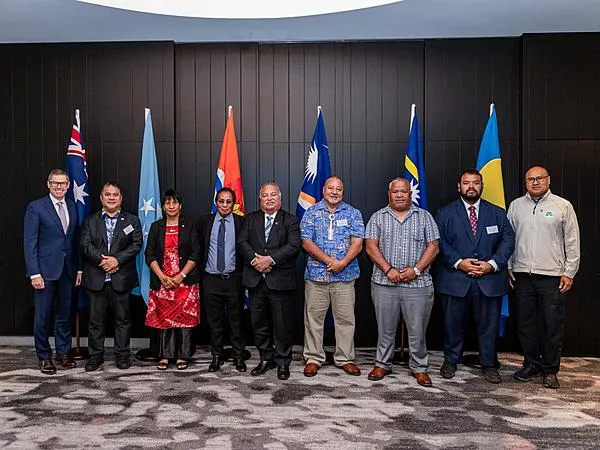
The government of Nauru has welcomed the outcomes of the inaugural North Pacific Aviation Summit in Canberra, agreeing on practical steps to strengthen vital air links across the North Pacific.
The summit underscored Nauru’s role in operating the North Pacific Connector (NPC) service, a regional air corridor linking Australia with several North Pacific states, and highlighted strong backing from regional partners and Australia to secure its long-term commercial sustainability.
Operated by Nauru Airlines, the NPC connects Brisbane with destinations across Micronesia, including Nauru, Kiribati, the Marshall Islands and the Federated States of Micronesia. The service was established to address longstanding connectivity gaps in a region characterised by small, dispersed populations and commercially challenging aviation routes.
The NPC has carried more than 55,000 passengers and 800 tonnes of freight, supporting essential travel, cargo movement and access to services, while strengthening social, cultural and economic ties between Australia and the North Pacific.
Partner governments committed to a range of measures to improve the route’s viability, including fee waivers, expanded access to night-time landings, increased use of the NPC by government officials and closer alignment of aviation and tourism policies to support demand.
These measures reflect a broader recognition that aviation in the North Pacific operates under structural constraints, including high operating costs, limited infrastructure and thin passenger volumes, requiring coordinated government support to remain viable.
Minister for Transport Maverick Eoe Appi has described the NPC as a “lifeline” for communities and economies, highlighting its role in enabling medical travel, government services, trade and regional mobility. He also expressed pride in Nauru’s role in operating the service on behalf of the region.
Australia’s role as a key partner was also highlighted, with the summit reflecting wider regional cooperation efforts to strengthen connectivity, economic integration and resilience across Pacific island countries.
Next steps include written commitments from participating governments by 6 May and a virtual follow-up meeting by mid-May, with joint work on a long-term sustainability framework for the NPC to continue over the next two years.
The summit signals a shift toward a more coordinated, multi-government approach to supporting regional aviation, positioning the NPC as a critical transport link rather than a purely commercial service.
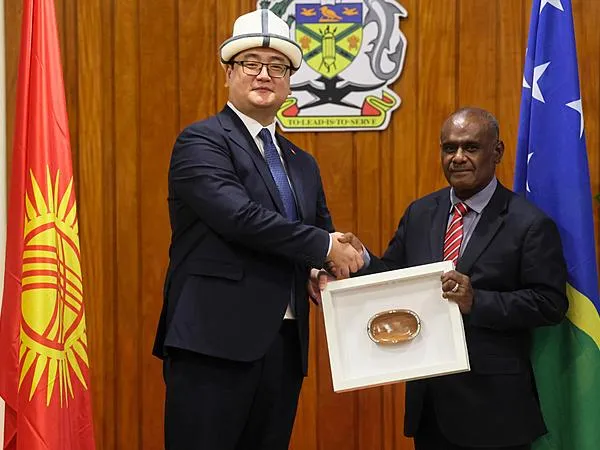
Prime Minister Jeremiah Manele held a bilateral meeting with Anvar Anarbaev, special envoy of the president of the Kyrgyz Republic, at the Office of the Prime Minister and Cabinet in Honiara.
The meeting marked an important step in strengthening diplomatic relations between Solomon Islands and the Kyrgyz Republic, building on more than a decade of formal ties since 2014. Both sides reaffirmed their shared commitment to multilateralism, the principles of the United Nations Charter and cooperation within international frameworks.
Discussions focused on enhancing bilateral cooperation and advancing shared interests at the United Nations. Manele welcomed the visit as an opportunity to deepen engagement and explore practical areas of collaboration, including sustainable development and institutional cooperation.
Anarbaev briefed the prime minister on the Kyrgyz Republic’s candidature for a non-permanent seat on the United Nations Security Council for the 2027–2028 term. The visit forms part of the country’s outreach to partners to garner support for its bid.
The leaders also exchanged views on the importance of inclusive and equitable representation in global decision-making, particularly for developing countries and small island developing states. Manele reiterated Solomon Islands’ long-standing position on the need for comprehensive reform of the Security Council to better reflect current global realities.
The meeting also covered shared global challenges, including climate change, sustainable development and international security, underscoring the importance of continued dialogue and cooperation.
Manele thanked Anarbaev for his visit and reaffirmed Solomon Islands’ interest in strengthening bilateral relations with the Kyrgyz Republic.
The Kyrgyz Republic is a landlocked country in Central Asia bordered by Kazakhstan, Uzbekistan, Tajikistan and China. It has been a member of the United Nations since 1992. Solomon Islands and the Kyrgyz Republic established diplomatic relations in 2014.
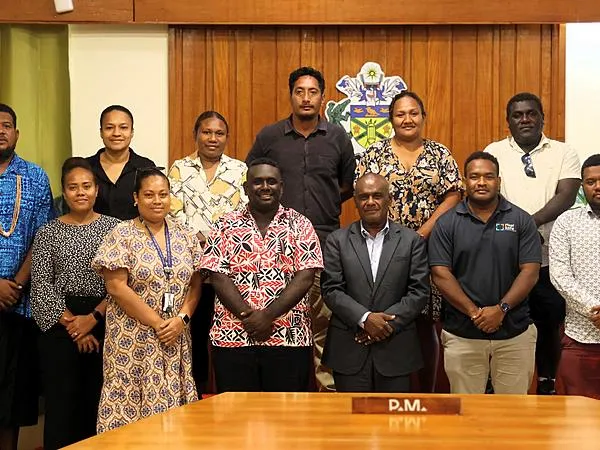
Prime Minister Hon. Jeremiah Manele has commended the Young Entrepreneurs Council Solomon Islands (YECSI) for its continued efforts in empowering young entrepreneurs and creating opportunities for youth across the country.
The Prime Minister made the remarks when the YECSI Board and transitioning members paid a courtesy visit to him on 13 March 2026 to present the organisation’s 2025 Annual Report and provide a comprehensive briefing on the progress achieved over the past two years.
YECSI Chairman Limahl Totogi expressed profound gratitude to the Government for National Unity and Transformation (GNUT), observing that while the Board’s visit in 2024 was to seek urgent support, the current meeting served to report on the tangible results of that partnership.
Totogi highlighted that, with the strategic support received from the Government, 2025 has become a benchmark year for the YECSI programme. He introduced the YECSI team and transitioning members in attendance, who represented entrepreneurs operating in sectors such as agriculture, transportation, digital technology and waste management.
Totogi noted that YECSI now maintains representation across all provinces, ensuring that the Government’s reach extends to young entrepreneurs in even the most remote areas, such as Temotu.
The Chairman specifically acknowledged the critical intervention of the GNUT Government, which sustained YECSI when external funding ceased. Since that intervention, membership has grown to over 180 members across 23 sectors.
A central pillar of this success has been the SBD 3 million in funding support from the Ministry of Culture and Tourism, which was utilised to provide SBD 1.9 million in direct business grants for 24 new ventures and SBD 2.1 million to assist members in formalising their businesses.
Further support included a SBD 500,000 revolving fund from the Ministry of Agriculture and Livestock for agriculture value chains, alongside technical assistance from the Ministry of Commerce, Industry, Labour and Immigration, and the Ministry of Women, Youth, Children and Family Affairs (MWYCA).
In response, Prime Minister Manele thanked the YECSI Board for the presentation of their 2025 Annual Report and acknowledged the organisation’s vital role in helping a growing youth population create its own economic opportunities.
The Prime Minister also noted the importance of cross-ministerial support provided to YECSI, acknowledging that where MWYCA may face limitations in direct entrepreneurial support, other productive line ministries have successfully stepped in.
He emphasised that this collaborative approach ensures that young entrepreneurs receive specialised support from ministries relevant to their respective sectors.
The Prime Minister highlighted fisheries and other productive industries as sectors for further exploration and assured the Board that he would convey their appreciation to the respective ministers.
He also welcomed support from bilateral partners, including the People’s Republic of China, in areas such as e-commerce and digital entrepreneurship.
Prime Minister Manele further encouraged YECSI members to remain resilient amid global economic uncertainties and fuel price volatility, noting that the nation must remain mindful of the challenges ahead.
He wished the YECSI Board and its members continued success in their efforts to support young entrepreneurs across the country.
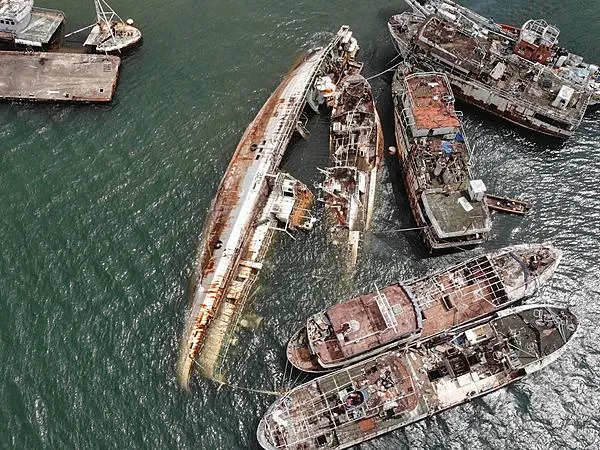
The Government of Fiji says progress is being made in clearing abandoned fishing vessels from Suva Harbour, as authorities move to improve marine protection and ensure safe operations at the country’s busiest port.
Fiji Ports Corporation Limited, with support from the Joint Maritime Environment Committee, has reduced the number of derelict vessels within port limits to 20 as of February 2026, down from 44 in 2024.
During 2025, authorities removed 13 vessels from the harbour, with most scuttled at approved coordinates designated by the Maritime Safety Authority of Fiji.
Since January, a further seven vessels have been cleared. Six longline fishing vessels — Xinya 10, Xinya, Gui Yuan Yu 60002, Gui Yuan Yu 60003, Gui Yuan Yu 60005 and Gui Yuan Yu 60006 — were restored to operational condition and have left Suva’s port limits. Another vessel, Winstar, was scuttled at approved offshore coordinates.
Prime Minister Sitiveni Rabuka said the removals were critical to protecting the marine environment, ensuring navigational safety and maintaining port integrity, while also safeguarding the customary fishing rights of iTaukei communities.
The government also acknowledged support from the Waitt Foundation, which has contributed to the removal of high-risk vessels.
Funding arrangements were revised in late January, with financial support now channelled directly through Fiji Ports Corporation Limited for contractor payments. The company is finalising onboarding processes, including compliance screening and application procedures.
Authorities expect the updated funding structure with the Waitt Foundation to be completed by April, with full-scale removal operations targeted to be in place by then.
The government said it aims to strengthen collaboration with partners to advance maritime sustainability, environmental protection and resilience across Fiji’s maritime sector.
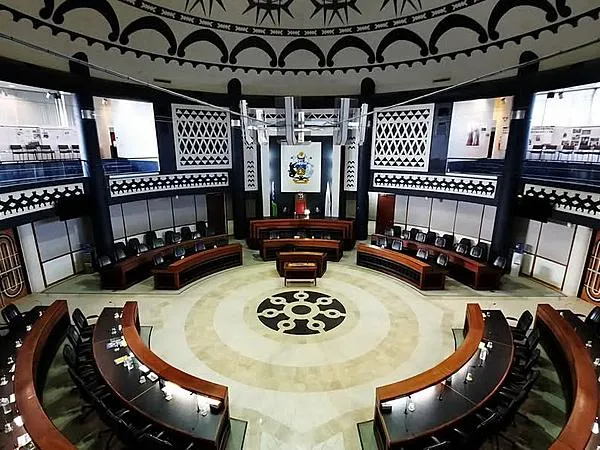
The Bills and Legislation Committee (BLC) of the National Parliament will begin a provincial inquiry into the Mineral Resources Bill 2025 and the Value Added Tax Bill 2025 in Isabel Province.
Committee members will depart Honiara 16 March 2026, with public hearings scheduled to begin in Buala on 17 March.
The inquiry is intended to give leaders, stakeholders and communities an opportunity to present their views, experiences and concerns on the two proposed pieces of legislation.
Discussions are expected to focus on issues relating to mineral exploration and mining activities, as well as the proposed value-added tax system.
The Mineral Resources Bill 2025 seeks to modernise the legal framework governing mineral exploration and mining in Solomon Islands. Key provisions address licensing arrangements, land access, environmental protection and benefit-sharing for landowners and communities.
Meanwhile, the Value Added Tax Bill 2025 proposes the introduction of a VAT system to replace the Goods Tax Act (Cap. 122), Sales Tax Act (Cap. 125) and Stamp Duties Act (Cap. 126). The proposed reform aims to strengthen government revenue while improving the efficiency of the national taxation system.
The committee began its inquiry into the Mineral Resources Bill in September 2025, conducting hearings in Honiara and Guadalcanal Province. Provincial visits form part of the committee’s effort to gather views from communities across the country before presenting its findings and recommendations to Parliament.
During the visit to Isabel Province, the committee will also pay a courtesy call on the provincial premier and the Isabel Provincial Executive.
Meetings are also planned with the provincial secretary, the speaker of the provincial assembly and the clerk to the assembly ahead of the public hearings.
Witnesses expected to appear before the committee include provincial government representatives, provincial administration officials, community leaders, landowners, civil society organisations and members of the private sector.
Members of the Bills and Legislation Committee travelling to Isabel Province are Chairman John Maneniaru; Leader of Opposition Matthew Cooper Wale; Leader of the Independent Group Manasseh Maelanga; John Deane Kuku; George Temahua; David Gina; and Freda Tuki.
Staff from the National Parliament Office will accompany the committee to provide administrative, research and logistical support during the inquiry.
The delegation is expected to return to Honiara after the completion of hearings on 20 March 2026.
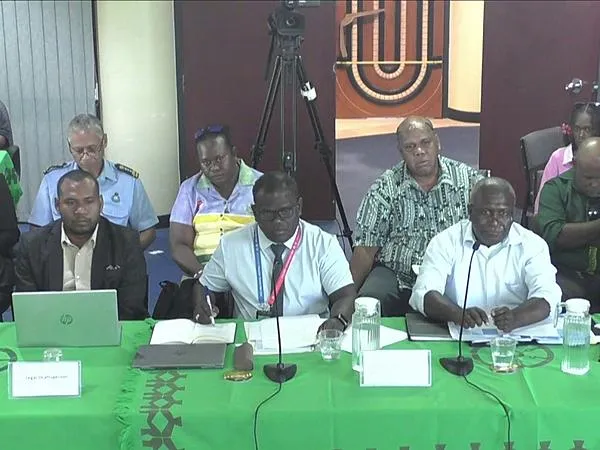
The Bills and Legislation Committee (BLC) of the National Parliament of Solomon Islands has commenced its inquiry into the Value Added Tax Bill 2025, a proposed law aimed at reforming and modernising the country’s tax system.
The inquiry began on March 11, with the committee examining the proposed legislation that seeks to simplify and modernise how taxes on the consumption of goods and services are imposed and collected in Solomon Islands.
If enacted, the bill will replace several existing tax laws by introducing a Value Added Tax (VAT) system aligned with those used across many Pacific economies and international jurisdictions.
Under the proposal, the Goods Tax Act (Cap.122), Sales Tax Act (Cap.125), and Stamp Duties Act (Cap.126) would be repealed and replaced by the new VAT framework.
The legislation forms part of Solomon Islands’ broader tax reform programme launched in 2007. As part of related reforms being pursued through separate legislative processes, most import duties may be reduced, except for those imposed on motor vehicles, fuel, alcoholic beverages, sugary drinks, selected plastics and tobacco. The current accommodation levy on tourist accommodation may also be removed.
Officials from the Ministry of Finance and Treasury (MoFT) and the Government Legal Draftsperson appeared before the committee as the sponsoring authority to present the bill.
However, after initial discussions, the committee adjourned the hearing to a later date, potentially on Friday this week or another date yet to be confirmed. The adjournment will allow the ministry to provide additional technical information through a detailed presentation to assist the committee’s deliberations.
During the session, ministry officials also informed the committee that they plan to conduct a workshop for all 50 Members of Parliament to ensure lawmakers fully understand the technical aspects of the proposed legislation before the committee resumes its hearings.
The BLC is also expected to invite a range of stakeholders to present submissions as part of the inquiry process. These include the Central Bank of Solomon Islands, the Solomon Islands Chamber of Commerce and Industry (SICCI), Our Telekom, commercial banks, the Chinese Association, the Solomon Islands Bar Association (SIBA), the Solomon Islands National Provident Fund (SINPF), the Economic Association of Solomon Islands (EASI), state-owned enterprises, tourism operators, the Guadalcanal Provincial Government and the Honiara City Council.
Meanwhile, the committee is set to begin its provincial inquiry next week into the Mineral Resources Bill 2025.
Further updates on the inquiry into the Value Added Tax Bill 2025 will be provided once the next hearing date is confirmed.
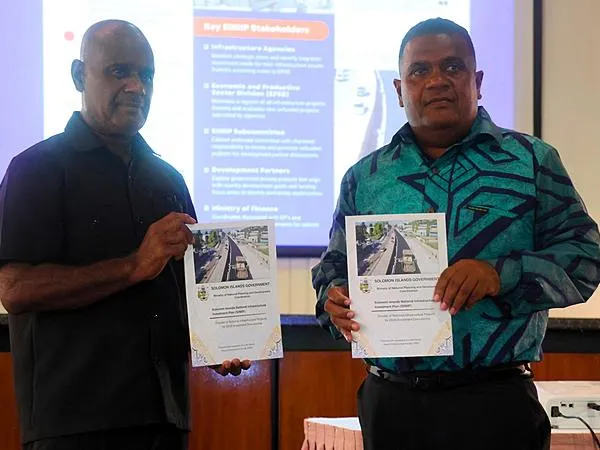
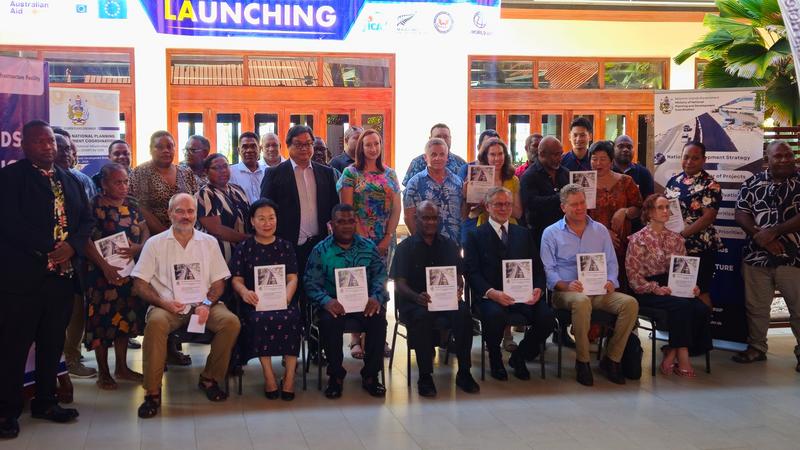
Solomon Islands Prime Minister Jeremiah Manele has launched the Solomon Islands National Infrastructure Investment Plan (SINIIP) 2026 Dossier, outlining more than SBD$19 billion ($2.2 billion) in proposed infrastructure projects aimed at supporting economic growth and improving public services.
The plan was unveiled in Honiara on March 9 during a launch event attended by government ministers, diplomats, development partners, state-owned enterprises, private sector representatives and civil society organisations.
The SINIIP serves as a national planning framework designed to identify and prioritise major infrastructure projects across the country. The 2026 dossier consolidates proposals submitted by government ministries, provincial governments, state-owned enterprises and other stakeholders into a single pipeline of priority projects.
Manele said infrastructure development is central to the government’s development agenda and aligns with the Government of National Unity and Transformation’s policy pillars of economic transformation, infrastructure development, unity and stability, and human capital development.
“Infrastructure is not simply about roads, ports, power systems or buildings. Infrastructure is about opportunity. It is about connecting our islands, empowering our people, strengthening our economy and building resilience for future generations,” he said.
According to the government, the updated investment plan aims to ensure infrastructure projects are properly planned, prioritised and implemented to deliver inclusive and sustainable development outcomes.
The framework also helps coordinate discussions with development partners and investors to mobilise financing for projects aligned with national priorities.
Several major projects have already progressed under the plan, including the Tina River Hydropower Project, solar and electricity grid expansion in Malaita, and the near completion of the National Broadband Programme, which has installed 98 telecommunications towers to expand connectivity across the country.
The government has also reported progress in social infrastructure, including 22 health projects valued at approximately SBD$3.7 billion and 37 education initiatives, including upgrades to secondary schools and facilities at Solomon Islands National University.
Key priority sectors identified under the 2026 infrastructure dossier include transport connectivity, renewable energy and information and communication technology, water supply and sanitation, health and education infrastructure, as well as facilities supporting fisheries, agriculture and commerce.
Manele acknowledged the role of development partners supporting infrastructure development in Solomon Islands, including the Pacific Region Infrastructure Facility and institutions such as the Asian Development Bank, World Bank Group and Japan International Cooperation Agency.
“As we look forward to celebrating our 50th Independence anniversary in 2028, the Government is committed to a clear and coordinated infrastructure investment pathway that aligns with our national development priorities and reflects our shared ambition for inclusive and sustainable economic growth,” he said.
He added that strong partnerships between government, development partners, the private sector and communities would be essential to ensure successful implementation of the plan.
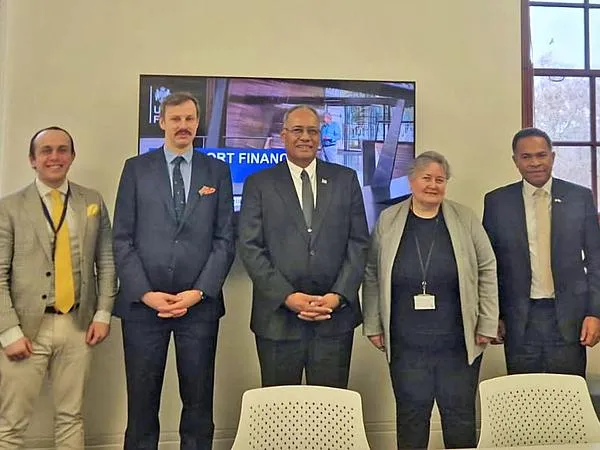
Fiji is seeking to deepen economic and security cooperation with the United Kingdom, with Foreign Affairs and External Trade Minister Sakiasi Ditoka holding a series of meetings in London aimed at advancing infrastructure investment, maritime security and employment opportunities for Fijians.
The discussions took place on the margins of the 26th Commonwealth Foreign Affairs Ministers Meeting on March 8.
Ditoka met representatives of UK Export Finance (UKEF) to explore financing mechanisms that could support high-impact infrastructure projects in Fiji, particularly in transport systems, water infrastructure, agricultural supply chains and strategic road networks.
According to the Ministry of Foreign Affairs, the talks focused on mobilising investment into sectors that can strengthen Fiji’s productive capacity, reduce the cost of doing business and improve connectivity across the country.
UKEF outlined financing structures designed to support large-scale capital projects involving British technical expertise, particularly in transport infrastructure and engineering services.
Such investments could improve logistics efficiency, strengthen the resilience of critical infrastructure and support growth in sectors including tourism, agriculture and trade.
Ditoka said Fiji’s infrastructure development strategy increasingly prioritises projects that generate long-term national returns through higher productivity, improved service delivery and stronger economic resilience.
As a next step, the government will develop investment-ready proposals for UKEF’s consideration through the Cabinet Sub-Committee on Infrastructure Development. The projects will be aligned with national planning frameworks to ensure they are economically viable and capable of attracting external financing.
UKEF representatives noted that successful partnerships require clearly defined project concepts, strong economic justification and integration within national budget frameworks. Financing from the agency also requires identifiable “UK content” in project delivery, reflecting its mandate to support British expertise and services.
Ditoka welcomed the engagement and said Fiji could leverage British financing and technical expertise to advance strategic infrastructure projects.
Fiji’s High Commissioner to the United Kingdom Jovilisi Suveinakama and First Secretary Paulini Cakacaka also attended the meeting.
Separately, Ditoka held talks with UK Minister of State for Defence Lord Coaker to strengthen defence and security cooperation between the two countries.
One key outcome was the continued operationalisation of the Fiji–UK Ship Rider Agreement, which enables joint operations to combat illegal, unreported and unregulated fishing across Fiji’s maritime domain.
A Royal Navy vessel is scheduled to visit Fiji in April and May to conduct joint operations, training and maritime surveillance with Fijian authorities.
The discussions also highlighted employment opportunities for Fijians in British defence forces. Fiji offered to support recruitment through structured pre-deployment orientation programmes drawing on the experience of Fijian veterans who have served abroad.
The two sides also discussed cooperation in sport and public sector training. The United Kingdom expressed support for Fiji hosting three matches in the upcoming Nations Championship in July, which is expected to boost tourism and international visibility.
Fiji is also developing a training programme for civil servants serving in diplomatic missions overseas, aimed at strengthening the country’s diplomatic representation and operational capacity.
The Fijian government will now work with the United Kingdom to develop a structured action plan to implement the agreed areas of cooperation.
Pacific leaders are calling for stronger global investment in ocean sustainability. More than 150 government, finance and philanthropic leaders gathered in Suva this week for Pacific Ocean Finance Week, an event aimed at advancing funding and coordination for sustainable ocean management.
The gathering was convened by the Office of the Pacific Ocean Commissioner in partnership with Conservation International, Rare and the Bezos Earth Fund, with support from the UK Foreign, Commonwealth and Development Office.
It marks one of the region’s largest coordinated efforts to align international financing with Pacific-led ocean priorities.
Pacific Ocean Commissioner Dr Filimon Manoni said: “For the Pacific, the ocean is our home, our livelihoods, our supermarket, our futures fund and endowment fund. For many of us in the region, that is all we have. The ocean serves as the only and exclusive source of life, of vitality and of economic development, fuelling our very nation-building aspirations. Pacific nations are world leaders in solutions, innovation and commitment to safeguarding the ocean. Global partners must now match this with meaningful investment. The course is charted; this is the moment to act for our ocean and our future.”
During the week, Dr Manoni advanced the establishment of the Pacific Ocean Finance Group, a new regional mechanism to coordinate funding and guide investment toward priority ocean action.
Dr Manoni emphasised that greater transparency and sharing of ocean finance intelligence and data across the Pacific will help identify gaps, strengthen partnerships, support long-term planning and speed up delivery.
“The Office of the Pacific Ocean Commissioner will support Pacific leaders in coordinating their commitments to the ocean, including through capacity building that will help countries access and secure finance,” said Dr Manoni.
The event brought together governments, regional organisations, investors and ocean experts to exchange practical solutions and financing pathways tailored to Pacific needs.
Mere Lakeba, interim vice president of Conservation International’s Pacific Program, said: “The Pacific is a global leader in ocean management, but we need funding to match this ambition. We also need to strengthen our systems behind ocean finance so that our institutional capacity and resource coordination can feed into our growing pipeline of ready-to-fund projects. This is vital to close the SDG 14 funding gap and deliver on existing commitments that bring lasting benefits for people and nature across the region.
“Pacific Ocean Finance Week is helping make that happen — building partnerships that channel resources to communities, support marine protection and turn regional commitments such as the 2050 Strategy for the Blue Pacific Continent into real results.”
During the week, the Office of the Pacific Ocean Commissioner, the Government of the United Kingdom and the Bezos Earth Fund convened high-level dialogues and technical sessions to advance country-led ocean finance solutions. Through its First Wave grants under the Unlocking Blue Pacific Prosperity Initiative, the Bezos Earth Fund is supporting Pacific governments to establish and sustainably finance large-scale marine protection aligned with the 2050 Strategy for the Blue Pacific Continent.
The sessions showcased practical pathways to mobilise new resources, strengthen livelihoods and align philanthropic, bilateral and multilateral partners behind durable, Pacific-designed ocean protection frameworks befitting the region’s role as steward of the world’s largest “blue lung”.
“Pacific leaders have charted an ambitious course for ocean protection. Our role as the funding community is to support that vision with the kind of long-term, reliable financing that turns commitments into lasting results,” said Nicola Thomson of the Bezos Earth Fund. “We welcome opportunities like Pacific Ocean Finance Week to collaborate with Pacific regional organisations, governments and other funders to align philanthropic and public finance behind Pacific-designed solutions that protect the world’s largest blue lung while strengthening resilience and livelihoods across the region.”
The event follows the signing of a memorandum of understanding between the British High Commission in Fiji, Conservation International and the Office of the Pacific Ocean Commissioner to deliver the Sustainable Blue Pacific Initiative, a partnership designed to strengthen marine governance, community-led monitoring and sustainable financing across the region. Supported through the UK government’s Climate Action for a Resilient Asia programme, the initiative will help Pacific countries advance national ocean priorities and build long-term regional readiness for high seas protection.
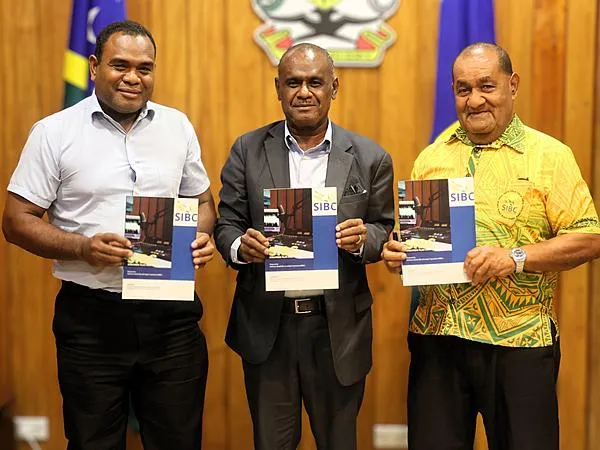
Solomon Islands Broadcasting Corporation (SIBC) Board Chairman Solomon Kalu and Chief Executive Officer Johnson Honimae paid a courtesy visit to Prime Minister Jeremiah Manele today at the Prime Minister’s Office to present SIBC’s Strategic Plan 2026–2030 and provide an update on the broadcaster’s operations.
Since its removal as a State-Owned Enterprise (SOE) on 27 June 2022, SIBC has transitioned from a profit-oriented entity to a national broadcaster operating under the Office of the Prime Minister and Cabinet (OPMC).
During the meeting, Mr Kalu and Mr Honimae briefed the Prime Minister, who is also the minister responsible for SIBC, on the vision and priorities outlined in the Strategic Plan. Developed with support from the New Zealand Government, the plan provides a roadmap for the organisation and its staff, outlining key priorities to strengthen SIBC’s services to the people of Solomon Islands.
Prime Minister Manele welcomed the Strategic Plan and reaffirmed the Government’s commitment to strengthening the national broadcaster as a key institution supporting unity and stability across the country.
“SIBC plays a central role in promoting unity and stability, which is one of the Government for National Unity and Transformation’s fundamental policy pillars, Unity and Stability. Hence, we see SIBC as an important institution for the Government,” Prime Minister Manele said.
Chief Executive Officer Johnson Honimae thanked the Prime Minister and the Solomon Islands Government for their continued support for the national broadcaster, including the annual SBD 5 million subvention grant.
He also acknowledged the Government’s decision to release the grant in full rather than in instalments, noting that the support is critical to sustaining SIBC’s operations and services to communities across the country.
Key strategic priorities discussed during the meeting included upgrades to broadcasting infrastructure. Work is currently underway in Lata, Temotu Province, with support from the Prime Minister’s Office to improve radio coverage for communities in the province.
SIBC also highlighted the upgrade of its AM transmission system at Henderson as a priority project. The 1035 AM medium-wave band remains one of the most widely accessed platforms for listeners, particularly in Honiara, Guadalcanal, Malaita, and parts of the Central and Western provinces.
The current AM system operates at only about 50 per cent of its capacity, limiting its reach and signal strength. Upgrading the system would significantly improve signal quality and coverage, enabling more reliable access to news and information for a larger portion of the population.
The broadcaster also noted that shortwave transmission on 5020 kHz at Henderson remains an important channel for audiences in remote islands during morning and evening hours, reinforcing the need to maintain and strengthen national transmission capabilities. SIBC continues to explore partnerships and support to enhance these critical broadcasting systems.
In television, SIBC is also exploring collaboration with Telekom Television (TTV) to broadcast content through one of its channels, while discussions on partnership arrangements continue.
SIBC also maintains working arrangements with Solomon Telekom Company Limited, including the use of its towers to transmit FM signals in Malaita and Western Province, helping to expand access to broadcasting services across the country.
The courtesy visit reaffirmed the strong partnership between SIBC and the Government and highlighted the broadcaster’s central role in informing, connecting and serving Solomon Islanders across the archipelago.
The Ministry of Policing and Communications is advancing a major legislative review aimed at modernizing Fiji’s telecommunications regulatory framework to support the country’s expanding digital economy.
Minister for Policing and Communications Ioane Naivalurua said the first round of stakeholder consultations was successfully completed from 23 to 27 February, bringing together key industry participants to help shape a future-ready telecommunications environment.
The consultations allowed stakeholders to provide insights and recommendations as the government seeks to update policies governing the telecommunications sector.
The review will cover several critical areas, including wireless telecommunications deployment, Internet of Things (IoT), over-the-top (OTT) services, spectrum management, consumer protection, competition, universal service, network security and regulatory governance.
Naivalurua said the government aims to ensure that Fiji’s telecommunications framework supports digital transformation, economic growth, infrastructure investment and inclusive connectivity.
He added that strengthening the regulatory framework will also help position Fiji as a regional digital hub.
The legislative review is being supported by the International Telecommunication Union to ensure alignment with international best practices.
Telecommunications legislative expert Scott Minehane of Windsor Place Consulting has been engaged to provide technical guidance throughout the review process.
The ministry expressed appreciation to the International Telecommunication Union for its continued support as Fiji works to strengthen its digital future.
Regional growth and trade resilience are under renewed scrutiny as Pacific Trade Invest (PTI) launched the 2026 Pacific Islands Export Survey, inviting businesses across 16 Forum Island Countries to participate in the region’s only longitudinal study of exporter sentiment.
The survey comes at a time when global trade conditions are increasingly shaped by evolving tariff settings, geopolitical competition, freight volatility, labour constraints and climate-related pressures. PTI said it is critical that Pacific businesses ensure their voices are reflected in the evidence shaping regional economic priorities.
Conducted every two years since 2014, the survey has generated more than a decade of primary research tracking exporter performance, confidence, barriers and emerging opportunities. In a region where comprehensive private sector statistics remain limited, it remains one of the few credible sources of regionally generated data.
The Secretary General of the Pacific Islands Forum, Baron Divavesi Waqa, said the initiative aligns with the region’s long-term vision under the 2050 Strategy for the Blue Pacific Continent.
“Our 2050 Strategy for the Blue Pacific Continent calls for a resilient, inclusive and sustainable regional economy shaped by Pacific priorities and Pacific voices. The survey provides an important avenue for exporters and tourism operators to contribute directly to this shared endeavour, strengthening the evidence that supports regional cooperation and coordinated economic action,” Waqa said.
Recognising tourism as a core services export, the survey explicitly includes businesses that sell to international visitors. PTI said strong participation from tourism operators would strengthen the overall dataset and ensure service exports are fully represented alongside goods exports in regional reporting.
The survey, which takes about 10 minutes to complete and is mobile-friendly, is open to goods and services exporters, tourism businesses, chambers of commerce and industry associations. Participants are encouraged to share the survey through their networks to broaden representation in regional trade policy discussions.
PTI Network General Manager Caleb Jarvis said strong participation would be critical to ensuring business perspectives are reflected in regional trade and economic deliberations.
“In 2024, participating businesses identified freight costs, market access constraints and labour shortages among the most significant barriers to growth. Strong participation in 2026 — across all operators, big and small — will ensure the evidence reflects the breadth of business conditions across our region and strengthens the case for practical, targeted support,” Jarvis said.
Founded in 1979, Pacific Trade Invest facilitates trade and investment in the Pacific and works to strengthen export capability and international market access for businesses across the region.
The survey is available at: pti.mobi/PacificIslandsExportSurvey2026-5
The Government of Fiji and the Millennium Challenge Corporation (MCC) have taken a significant step toward advancing private sector-led growth and strengthening economic ties between Fiji and the United States.
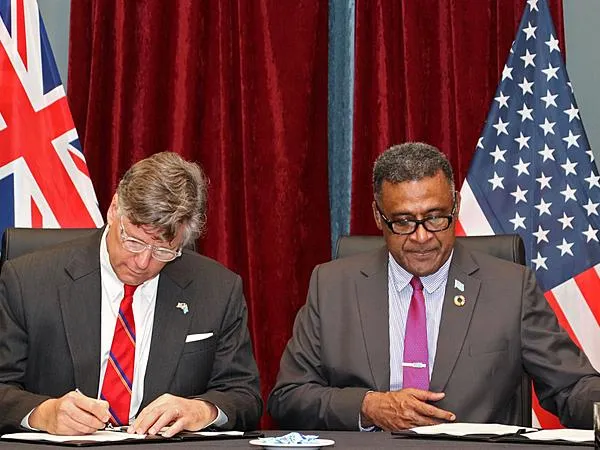
The Compact Development Funding Agreement was signed by U.S. Deputy Secretary of State Christopher Landau and Fiji’s Minister for Finance, Commerce and Business Development, Esrom Immanuel.
The agreement enables joint technical work to design projects aimed at enhancing Fiji’s economy while creating new opportunities for U.S. trade and investment.
“This is more than an agreement — it is a catalyst for prosperity. By working with Fiji, we aim to design a compact that drives investment, opens new markets for American companies and strengthens the foundation for a free and open Indo-Pacific,” Landau said.
“This agreement reflects Fiji’s commitment to good governance, economic freedom and growth-oriented investment,” Immanuel said. “Together, we will address key development challenges and deliver lasting benefits for Fijians.”
Fiji was selected by the MCC Board in August 2025 to develop a compact programme, recognising the country’s reform momentum and its role as a regional hub for transport, business, healthcare and workforce development.
MCC compacts are five-year agreements that fund programmes addressing key constraints to economic growth. The new agreement launches a data-driven design process to identify priority sectors and develop projects aligned with Fiji’s long-term development objectives and shared strategic interests in the Pacific.
MCC continues to expand its engagement in the Pacific, with ongoing or developing programmes in Solomon Islands, Kiribati and Tonga.
To date, MCC has committed nearly $115 million to support Pacific Island countries in addressing structural economic challenges and strengthening connections to global markets and U.S. businesses.
The Millennium Challenge Corporation is an independent U.S. government agency focused on promoting sustainable economic growth through results-based foreign assistance. Its grants support large-scale infrastructure, policy reforms and economic modernisation initiatives.
Follow on LinkedIn:
Pacific Business Review
Be the "First" to get our exclusive Digital Magazine & Weekly Newsletter.