




January 19, 2026

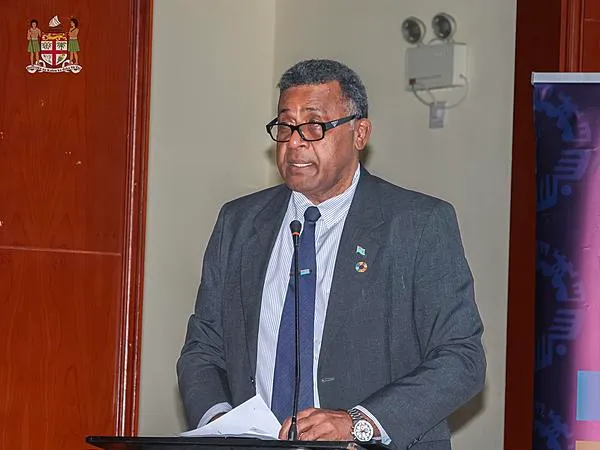
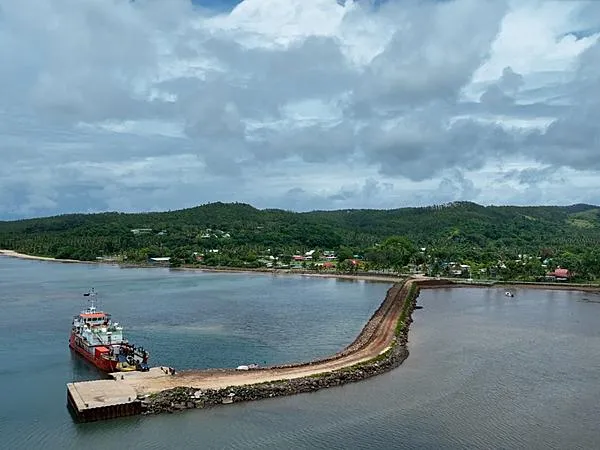
As the sun rose over Tubou village, Lakeba became the setting for a moment its people have awaited for generations, as a high-level delegation led by Deputy Prime Minister and Minister for Tourism and Civil Aviation Viliame Gavoka visited the island for the first time.

The visit signalled Lakeba’s formal entry into Fiji’s national tourism conversation, placing the quiet heart of Lau firmly on the map of future development discussions.

Gavoka was accompanied by the United Nations resident coordinator, representatives of the International Organization for Migration, and officials from government agencies and non-government organisations. More than a ceremonial call, the visit underscored emerging opportunities for the island and the wider Lau Group.

For Mata ni Tikina Kelepi Gucake, the occasion carried deep significance for the community.

“This is not just a visit,” he said. “It is the beginning of a future we have carefully planned for.”

Lakeba’s historical importance predates modern tourism. In the 19th century, during the era of tribal warfare, the island served as a strategic port under the influence of Tongan warlord Enele Maʻafu. Ships once anchored off its shores, bringing traders, craftsmen and missionaries, and establishing Lakeba as a centre of commerce, diplomacy and cultural exchange between Fiji, Tonga and the wider Pacific.

Only five months after the installation of the Tui Nayau, the island has begun implementing its Strategic Development Plan for 2026–2031. Developed through traditional processes, the plan is set to be presented directly to families, yavusa and tokatoka, ensuring that development initiatives are rooted in community participation.

Tourism development, long concentrated in western Viti Levu, is now being reimagined for Lau. During the visit, delegates inspected potential tourism sites and visited historically significant locations, including Nakaukilagi, the former residence of Ratu Sir Lala Sukuna; the chiefly burial grounds; and the stone marking the arrival of Christianity to Fiji through Lau.

Beyond heritage tourism, plans for Lakeba include the expansion of the airstrip, upgrading of the wharf to accommodate cruise liners, and improvements to roads, water supply and communications — infrastructure needs that have long challenged outer-island communities.

For Lakeba, the visit represents both a return to its historic role as a place of connection and exchange, and a renewal of that legacy, reshaped to meet the aspirations of a new generation.

January 16, 2026

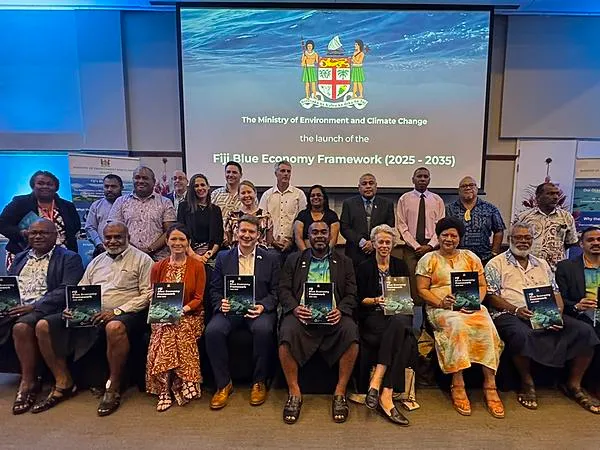
Fiji has taken a major step towards securing a sustainable and resilient ocean future with the official launch of the Fiji Blue Economy Framework 2025–2035, unveiled on January 15 in partnership with the Ministry of Environment and Climate Change and Blue Prosperity Fiji.

The Framework was officially launched by the Minister for Environment and Climate Change, Hon. Mosese Bulitavu, and sets out a clear national direction for ocean-based development, ensuring economic growth is balanced with the protection of marine ecosystems.

In his address, Minister Bulitavu underscored the responsibility of safeguarding Fiji’s natural resources for future generations, drawing on traditional values.

“Na vanua kei na kena iyaubula e isolisoli vei keda. Me da qarava vakamatua me baleti ira na noda kawa mai muri,” he said, which translates to: The land and the living things in it are a gift to us. It belongs to those who come after us. Let us look after this gift wisely.

The minister said the Framework lays a strong foundation for growing Fiji’s ocean economy while protecting the marine environment and delivering long-term benefits to communities.

“This Framework provides a strong foundation for growing Fiji’s ocean economy in a way that protects our marine environment while delivering lasting benefits for communities and future generations,” Bulitavu said.

The launch follows Cabinet’s endorsement of the Fiji Blue Economy Framework 2025–2035, which serves as a strategic roadmap for sustainable ocean-based economic development and inclusive prosperity.

Briefing stakeholders, Permanent Secretary for Environment and Climate Change Dr. Sivendra Michael explained that the Framework is not an action or implementation plan, but a guiding document that outlines key principles and considerations to inform and shape Fiji’s Blue Economy development across sectors.

Developed through extensive and inclusive consultations, the Framework provides overarching policy direction for all national Blue Economy initiatives, while allowing ministries, organisations and sectors to design and implement actions aligned with their respective mandates.

Aligned with Fiji’s National Development Plan, National Ocean Policy and commitments under the Paris Agreement, the Framework aims to sustainably manage 100 per cent of Fiji’s ocean space and fully protect at least 30 per cent by 2030. It also recognises the critical role of communities, women, youth and small enterprises as custodians of Fiji’s Blue Economy vision.

As a Big Ocean State, Fiji’s ocean territory is more than 70 per cent larger than its landmass and supports the livelihoods of nearly 90 per cent of Fijians who live along the coast. The Framework prioritises the protection of marine ecosystems, sustainable fisheries, climate-resilient tourism, renewable ocean energy and conservation-led enterprises.

The Fiji Blue Economy Framework 2025–2035 marks a significant milestone in advancing a fair, resilient and prosperous future through the sustainable use and protection of the country’s ocean resources.

January 16, 2026

The Ministry of Agriculture and Livestock Development (MALD), through its Commercial Agriculture Development Project, has handed over a grant worth SBD750,000 to Kokonut Pacific Solomon Islands (KPSI) to support the purchase of a cocoa butter press machine.

Presenting the cheque, Minister for Agriculture and Livestock Hon. Franklyn Derek Wasi said the support reflects the government’s strong commitment to promoting agribusiness growth and strengthening the agriculture sector in Solomon Islands.

Minister Wasi said the assistance aligns with MALD’s policy priority of positioning agriculture as the economic backbone of the country, and also forms part of preparations for Solomon Islands to host the FAO Small Island Developing States (SIDS) Solutions Forum from June 22 to 26.

“The forum will involve multiple ministries engaged in food systems and will highlight innovative approaches and successful public-private partnerships that strengthen agriculture and agribusiness across the Pacific Island Countries,” he said.

KPSI Managing Director Bob Pollard welcomed the support, noting the direct benefits it will deliver to cocoa farmers.

“I’m pleased to be standing here on behalf of Kokonut Pacific and all the farmers we represent,” Pollard said. “To put this into context, the current cocoa farm-gate price is around SBD30 per kilogram. With the butter-making machine, we will be able to purchase beans at SBD40 per kilogram, providing a premium price to our farmers.”

He said the investment will allow KPSI to share improved margins with growers, resulting in meaningful income gains at the farm level.

“The impact is very real for our farmers. We genuinely appreciate the confidence and trust the Ministry has placed in the mid-farm sector,” Pollard said.

The cocoa butter press machine is a key component of cocoa and chocolate processing, enabling the conversion of cocoa liquor into two high-value products—cocoa butter and cocoa cake, which is further milled into cocoa powder. This ensures full utilisation of the cocoa bean while improving efficiency and profitability.

Modern hydraulic presses allow precise control of fat content to meet varying chocolate specifications, while solvent-free mechanical processes preserve the natural flavour, aroma and functional properties of cocoa butter. Controlled processing temperatures also help prevent product degradation.

The Commercial Agriculture Development Program Support Fund was established by MALD to help small- and medium-scale agribusinesses acquire critical equipment needed to strengthen value-addition operations.

MALD said enhancing local processing capacity supports its broader objectives of improving food security, promoting commercial agriculture and increasing farmer incomes. By enabling agribusinesses to move further into value addition, the ministry aims to reduce reliance on imported food products, support import substitution and strengthen national economic resilience.

January 14, 2026

Remote health facilities across Vanuatu are now safer, brighter, and better equipped, following the completion of all planned solar installations under the Australian Government-funded REnew Pacific program.

Respond Global’s HELPR-1 team completed the project in record time, delivering Vanuatu’s first fully operational REnew Pacific project since the program launched in March 2025.

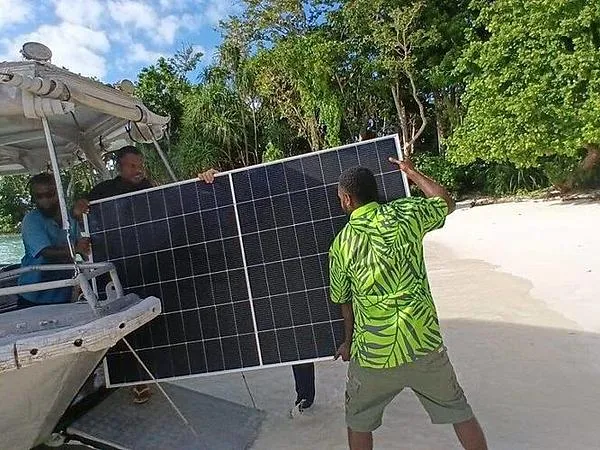
The initiative, carried out in partnership with Vanuatu’s National Green Energy Fund, installed 20 new off-grid solar systems and refurbished 20 existing systems across all six provinces. The final installation was completed at Mamalu Vanua Dispensary in Naviso, which had never before had proper electrification.

HELPR-1 now provides reliable solar power to some of Vanuatu’s most remote clinics and hospitals, improving healthcare access for more than 80,000 people.

Australian High Commissioner to Vanuatu, Max Willis, described the project as “an early Christmas present for remote communities.”

“As one of the first REnew Pacific projects to start and the first to finish, HELPR-1 shows the strength of the Vanuatu-Australia partnership,” he said. “These systems strengthen local health services, ensure vital equipment can operate when needed, and help communities overcome the challenges of distance and isolation.”

The project delivered upgrades tailored to each facility, including energy-efficient lighting, battery systems, water pumps, and priority medical equipment. Facilities such as Quatvaes Hospital and Saramauri Health Centre can now operate x-ray machines, ultrasounds, and other diagnostic tools for the first time. Local health workers were trained to maintain the new systems, ensuring long-term reliability.

Dr Basil Leodoro, Director of HELPR-1 Operations at Respond Global, said: “When the power is stable, care is safer. This work means more emergencies handled on site, safer deliveries for mothers and babies, and greater confidence for our health workers every day.”

REnew Pacific is the Australian Government’s $75 million program to expand off-grid renewable energy in rural and remote communities across the Pacific and Timor-Leste. It is part of the $350 million Pacific Climate Infrastructure Financing Partnership (PCIFP) and is implemented by Palladium through the Australian Infrastructure Financing Facility for the Pacific (AIFFP).

January 14, 2026

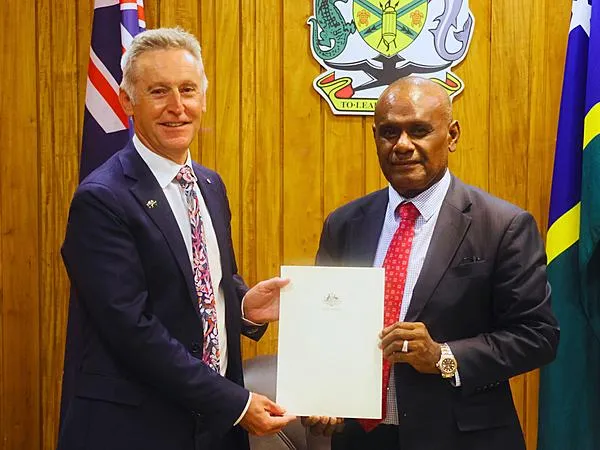
 Prime Minister Jeremiah Manele received Australian High Commissioner-designate Jeff Roach in Honiara on 14 January 2026, formally accepting his letter of introduction and reaffirming the strong partnership between the two countries.

Roach, a senior career officer with the Australian Department of Foreign Affairs and Trade, presented his official credentials along with a personal message from Australian Prime Minister Anthony Albanese. The leaders exchanged views on priority areas for bilateral cooperation, underscoring a shared commitment to a continued, respectful partnership.

Prime Minister Manele welcomed Roach back to Honiara, acknowledging his extensive experience in the Pacific.

Roach has previously led Australian initiatives on the Tuvalu-Australia Falepili Union and the Nauru-Australia Treaty, and has served as High Commissioner to Vanuatu and Deputy Head of Mission to the United Nations in Geneva.

On trade and economic development, the Prime Minister emphasised the importance of cooperation as Solomon Islands prepares to graduate from Least Developed Country (LDC) status in 2027.

“Trade and economic cooperation is very important to Solomon Islands as we move towards LDC graduation, and PACER Plus remains important and critical for our country,” Prime Minister Manele said, noting that a Transition Strategy is already in place to manage the phasing out of special LDC support measures.

The Prime Minister also highlighted the Pacific Australia Labour Mobility (PALM) scheme, which has helped address youth unemployment. He proposed exploring further opportunities in Early Childhood Education, building on the success of Solomon Islanders currently employed in Australia’s aged care sector.

“Solomon Islands appreciates the opportunities for our people under the PALM scheme, and we are looking at further areas for cooperation including Early Childhood Education,” he said.

Prime Minister Manele thanked Australia for its continued support in health, education, policing, and infrastructure, citing projects such as the Tina River Hydro Project and partnerships under the Australian Infrastructure Financing Facility for the Pacific (AIFFP). He also acknowledged the strong “people-to-people links” through sports, church, and education that strengthen the bilateral relationship.

Regional leadership was also discussed, with the Prime Minister noting his role as Chair of the Pacific Islands Forum (PIF).

“As Chair of the Pacific Islands Forum, Solomon Islands will play a crucial role in leading the Pre-COP31 Summit, which will be an important opportunity for Pacific Island countries to present our collective issues,” he said.

Prime Minister Manele concluded by wishing Roach, who has also held postings in France and Laos, every success in his new role, expressing confidence that the relationship between Solomon Islands and Australia would continue to grow.

January 14, 2026

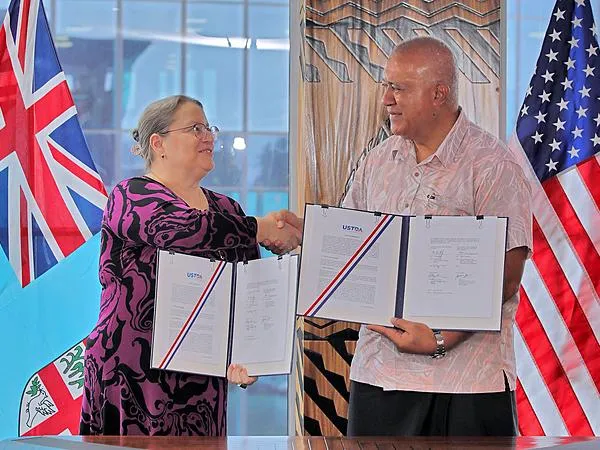
The Ministry of Policing and Communications and the United States Government have formalised a grant agreement on ICT Modernisation Technical Assistance, reinforcing bilateral cooperation to strengthen Fiji’s digital infrastructure and cybersecurity capabilities.

The agreement was formally handed over by the Minister for Policing and Communications, Ioane Naivalurua, together with the outgoing United States Ambassador to Fiji, Marie Damour. Officials from the Ministry and representatives of the United States Trade and Development Agency (USTDA) were also present at the ceremony.

Under the agreement, USTDA will fund a comprehensive technical review of the Government of Fiji’s existing information and communications technology network. The assessment is expected to be completed later this year and will provide recommendations to modernise government ICT systems, improve interoperability and enhance overall network resilience.

Minister Naivalurua acknowledged the support of the United States Government, saying the initiative aligns closely with Fiji’s National Digital Strategy 2025–2030, which aims to position the country as a leading digital economy in the Asia-Pacific region.

“This partnership supports our vision of a modern, secure and inclusive digital Fiji, where government services are efficient, resilient and accessible to all citizens,” Naivalurua said.

He noted that modernising ICT infrastructure is critical not only for service delivery but also for national security, disaster response and economic competitiveness, particularly as Fiji continues to expand e-government services and digital connectivity across outer islands.

The Minister also highlighted progress on the National Cybersecurity and Resilience Strategy, emphasising the Government’s focus on safeguarding public-sector networks, protecting sensitive data and strengthening Fiji’s preparedness against cyber threats.

Ambassador Damour said the grant reflects the United States’ commitment to supporting Fiji’s digital transformation and promoting secure, reliable and transparent ICT systems across the Pacific.

The ICT modernisation initiative is expected to complement ongoing regional efforts to strengthen digital governance, support private-sector innovation and improve connectivity, particularly in underserved and rural communities.

Minister Naivalurua reaffirmed the importance of sustainable international partnerships in advancing Fiji’s digital agenda, saying collaboration with trusted partners is essential to ensuring a secure, reliable and resilient digital future.

“This agreement demonstrates how international cooperation can support long-term national development while strengthening institutional capacity and protecting critical systems,” he said.

January 14, 2026

The Ministry of Agriculture and Livestock (MAL) has reaffirmed its strong commitment to supporting agribusiness development as a key driver of economic growth, rural development and food security in Solomon Islands.

MAL Permanent Secretary Dr Samson Viulu made the statement as a five-day Human and Institutional Capacity Development Workshop, hosted by the Agri-Business Incubation (ABI) Centre, got underway in Honiara. The ABI Centre is a partnership between the Ministry of Commerce, Industry, Labour and Immigration (MCILI) and the Ministry of Agriculture and Livestock.

Dr Viulu said agriculture remains the backbone of the country’s economy, not only for food production but also as a critical pathway for income generation and sustainable livelihoods, particularly for rural communities.

“The Government, through the Ministry of Agriculture and Livestock, is fully committed to promoting agribusiness as a profitable and attractive sector for all Solomon Islanders. Our focus is to empower farmers, youth, women and entrepreneurs to move beyond subsistence farming into commercially viable agribusiness enterprises,” he said.

He noted that the Ministry’s approach aligns with the top policy priorities of the GNUT Government, including making agriculture attractive across all levels of society and putting more money into the hands of the people.

Dr Viulu emphasised that agriculture must be viewed not only as a means of producing food, but also as a business opportunity capable of generating steady income and improving living standards.

Through initiatives such as the Agribusiness Innovation and Incubation Centre, donor-supported programmes, and projects implemented in partnership with organisations including the Food and Agriculture Organization (FAO) and other development partners, the Ministry is supporting value-adding, downstream processing and improved market access for agricultural products.

“We are encouraging a shift from traditional practices to value addition and innovation. For example, instead of continuing the same copra production practices over generations, we want farmers and young people to explore processing, packaging and other value-adding opportunities that generate higher returns,” he said.

The Ministry is also placing strong emphasis on youth participation in agribusiness, noting that many young Solomon Islanders engage in agricultural work overseas due to better income opportunities.

“The lesson is clear: when agriculture is profitable, our people are willing to engage in it,” Dr Viulu added.

He said the Ministry remains committed to working closely with stakeholders, development partners and the private sector to strengthen agribusiness ecosystems across the country, with a particular focus on rural areas where the majority of the population depends on agriculture for their livelihoods.

“This is about transforming agriculture into a modern, profitable and sustainable sector that supports economic growth, social stability and long-term national development,” Dr Viulu said.

January 13, 2026

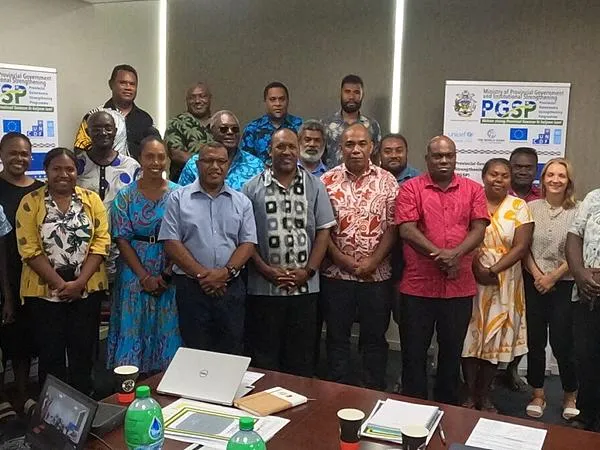
The Solomon Islands' Ministry of Provincial Government and Institutional Strengthening (MPGIS) hosted a week‑long peer learning exchange with a high‑level delegation from Vanuatu’s Department of Local Authority, strengthening regional collaboration on decentralisation, risk‑informed development, and performance‑based provincial financing under Solomon Islands’ Provincial Capacity Development Fund (PCDF).

The programme, part of the Provincial Governance Strengthening Program (PGSP), brought together officials from both countries to share experiences, discuss best practices, and examine mechanisms for linking provincial funding to transparent financial processes and measurable service delivery outcomes.

The exchange focused on four key objectives: strengthening cooperation on risk‑informed development, exchanging success factors and risk mitigation strategies, promoting mutual learning on decentralised financing mechanisms using the PCDF, and documenting best practices to inform policy dialogue in Vanuatu.

Director General of MPGIS highlighted the value of addressing decentralisation and ensuring service delivery to communities. He thanked UNDP Governance for Resilience for funding the exchange and acknowledged the full participation of ministry staff.

“We truly appreciate this opportunity and are happy to be here,” he said. Reflecting on the exchange, he added: “I can see that provinces have been able to deliver local infrastructure and services more reliably by tying funding to transparent financial processes and clear performance standards. The shared experiences have taught us many lessons.”

Deputy Secretary for Governance Michael Pasikeni outlined Solomon Islands’ decade‑long experience piloting and scaling the PCDF. Since 2008, the fund has mobilised around SBD350 million in government and donor support, completing 1,600 capital projects across nine provinces. These investments have enhanced infrastructure and services in education, health, agriculture, sanitation, water supply, roads, electricity, bridges, and sports, creating more than 8,000 jobs in rural communities.

The programme has also strengthened governance outcomes. Two provinces have maintained clean audit reports for more than three consecutive years, and 56 per cent of provinces have moved out of the audit disclaimer zone, reflecting improved public financial management.

MPGIS showcased progress under the World Bank–funded Integrated Economic Development and Community Resilience (IEDCR) project, implemented in partnership with UNCDF and UNICEF. To date, 173 Ward Development Committees (WDCs) have been established, enabling communities to identify and implement micro‑projects that support climate adaptation and resilience.

Former PCDF Joint Oversight Committee member and Secretary to the Prime Minister, Dr. Melchior Mataki, emphasised the role of national leadership in aligning funding with local realities.

“Communities need to take charge of their own resilience, but they can’t do it alone,” he said. “When national frameworks align with local realities, and funding genuinely supports provincial delivery, systems become stronger and more sustainable.”

Permanent Secretary of MPGIS, Dr. Derek Futaiasi, underscored the importance of aligning national policy with provincial implementation. “We’re working on systems that set solid national standards while giving provinces the flexibility to find their own way,” he said. “When policies are aligned, and we invest in tools—such as digital systems—services reach people faster and public resources are used more effectively.”

Dr. Futaiasi closed the exchange by thanking the Vanuatu delegation for their participation. “We’ve learned a lot from each other about decentralised financing,” he said. “I’m excited to continue working together and translate these lessons into policies that strengthen resilience, transparency, and service delivery in our communities.”

The Vanuatu delegation was led by Director General Mr. Leith Veremaito and included officials from the Department of Local Authority, the Department of Strategic Planning, Policy and Aid Coordination, and a UNDP Sub‑regional Resilience Specialist. Solomon Islands participants included the MPGIS Permanent Secretary, his deputy secretaries, the Chief Technical Advisor of PGSP, senior officials from PGSP, IEDCR project management unit staff, and representatives from the World Bank and UNDP.

Delegates visited key PCDF-funded projects, including the Mataga bridge, the Agricultural Storage House, and a new provincial chamber under construction at Mamara, before returning to Vanuatu on December 11.

January 11, 2026

The Asian Development Bank (ADB) has appointed Azusa Sato as Regional Director of its Pacific Subregional Office, based in Suva, Fiji.

Sato will continue to develop ADB’s strong client relationships and manage seven offices in the Cook Islands, Fiji, Kiribati, Niue, Samoa, Tonga, and Tuvalu. She will lead engagement with member countries and partners and oversee the implementation of ADB’s country partnership strategy for Fiji, as well as ongoing work guided by ADB’s Pacific Approach for other countries. She will also contribute to the development of ADB’s new Pacific Approach 2026–2030.

“I’m tremendously excited and honoured to be a part of ADB’s energetic and dynamic Pacific team serving the region. Together, we will work with clients to improve the quality of life of Pacific Islanders,” said Sato. “I am particularly keen to implement innovative solutions and lead strategic dialogue in line with ADB’s priorities, while recognising the Pacific’s unique vulnerabilities. The unwavering and invaluable contributions of development partners will also be strongly recognised.”

Sato has over 17 years of professional experience, including 10 years at ADB. Prior to her new appointment, she served as Senior Advisor to the ADB President, where she advised on strategic corporate priorities and participated in high-level policy dialogues with Pacific Heads of State on domestic and regional challenges.

Sato joined ADB in 2016 as a Health Specialist in the Southeast Asia Department. In 2019, she moved to ADB’s Indonesia Resident Mission as a Social Sector Specialist and was promoted to Senior Social Sector Specialist in 2021.

A national of the United Kingdom, Ms. Sato holds a doctorate in health policy and a master’s in population and development from the London School of Economics. She also earned a bachelor’s degree in economics from Cambridge University.

ADB is a leading multilateral development bank supporting inclusive, resilient, and sustainable growth across Asia and the Pacific. Working with its members and partners to solve complex challenges together, ADB harnesses innovative financial tools and strategic partnerships to transform lives, build quality infrastructure, and safeguard the planet. Founded in 1966, ADB is owned by 69 members—50 from the region.

January 11, 2026

Fiji is intensifying efforts to address the global biodiversity finance gap, estimated at an alarming US$700 billion annually, as the country works to align national financing systems with international biodiversity targets under the Kunming–Montreal Global Biodiversity Framework (GBF).

According to the Little Book on Investing in Nature, meeting the GBF’s ambitious goals will require countries to mobilise significant new resources, improve the efficiency of existing spending, and eliminate financial flows that harm biodiversity. The scale of the challenge demands transformative change across economies and societies.

In Fiji, the Biodiversity Finance Initiative II (BIOFIN) is leading national efforts to close this gap through innovative and sustainable financing solutions. Central to this work are two cornerstone assessments — the Policy and Institutional Review (PIR) and the Biodiversity Expenditure Review (BER) — first developed in 2017 to analyse Fiji’s fiscal, policy and institutional frameworks, as well as biodiversity-related spending and financing gaps.

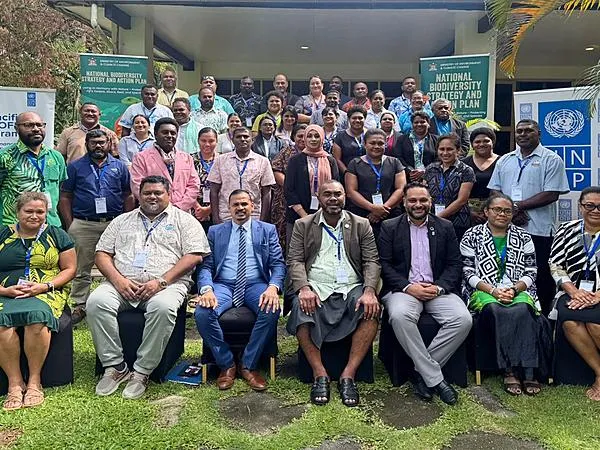
With global priorities evolving and national circumstances changing, the original reports are now being updated to ensure they remain relevant and actionable. To this end, the United Nations Development Programme (UNDP) and the Ministry of Environment and Climate Change have partnered to review and revise the PIR and BER, integrating updated recommendations into Fiji’s National Biodiversity Strategy and Action Plan (NBSAP). The process also aims to align Fiji’s biodiversity financing approach with the GBF and contribute to the achievement of the Sustainable Development Goals (SDGs).

The revised reports will form the foundation for the development of a Biodiversity Finance Plan (BFP), a requirement under Target 19 of the GBF. The plan will identify Fiji’s national biodiversity finance gaps, propose measures to reduce harmful financial flows, and outline strategies to generate additional resources while improving spending efficiency.

A validation workshop, held from 12 to 15 January 2026, has brought together key stakeholders to review and endorse the updated PIR and BER, provide technical feedback, and agree on next steps towards government approval and implementation. The workshop is designed as a consultative platform to strengthen collaboration and ensure that proposed reforms align with both national priorities and global commitments. It will also pave the way for the next phase of work, including the Finance Needs Assessment (FNA) and the formal development of Fiji’s Biodiversity Finance Plan.

Minister for Environment and Climate Change Mosese Bulitavu said Fiji must move beyond fragmented approaches to conservation financing.

“We cannot continue to protect biodiversity with fragmented projects and financial systems. BIOFIN is about fixing how Fiji plans, tracks, and governs biodiversity finance because without disciplined financing, conservation will always fall short of national development. This work is about ensuring that every dollar spent strengthens resilience, protects livelihoods, and delivers long-term value for our people and our economy," Bulitavu said.

UNDP Pacific Office in Fiji Resident Representative Munkhtuya Altangerel said biodiversity underpins Fiji’s resilience and national identity but faces growing pressure.

“Biodiversity is the foundation of our food systems, our resilience, and our identity as a nation. Yet, it faces increasing pressure from habitat loss, invasive species, pollution, and climate change. Addressing these challenges requires more than good intentions; it requires finance strategies that are coherent, adequate, and aligned with national priorities," Altangerel said.

Beyond technical assessments, the BIOFIN workshop signals a broader commitment to communities that rely on healthy ecosystems for livelihoods, food security and protection from climate impacts.

By strengthening biodiversity finance planning and governance, Fiji is positioning nature at the heart of sustainable development — empowering communities today while safeguarding the country’s rich natural heritage for generations to come.

January 09, 2026

Fisheries Officers Collect Tilapia Fry for Research, Growth, and Community Support

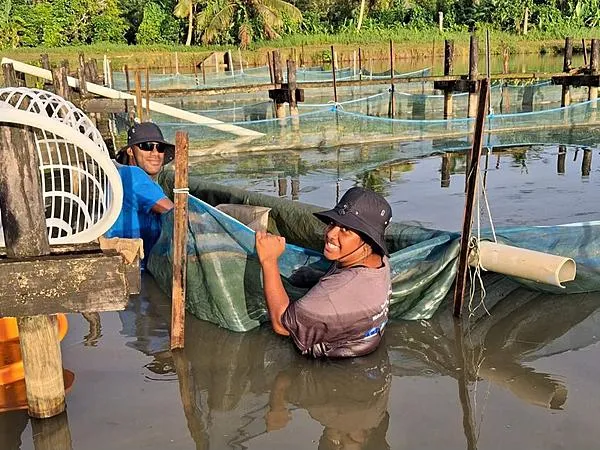
Fisheries officers at the Naduruloulou Research Station have been actively engaged at the start of the year in the systematic collection of tilapia fry from government ponds as part of the Ministry of Fisheries’ ongoing aquaculture research, development, and community support efforts.

In the first days of 2026, officers focused on harvesting fry from earthen pond SP3, retrieving fry from 14 breeding hapas — specialized enclosures designed to optimise natural spawning. The setup maintained a breeding ratio of approximately 100 females to 50 males to enhance fry production. On Wednesday, the team continued its work at earthen pond SP1, collecting fry from nine additional breeding hapas. These early stages of fish development are critical for later growth and distribution to both research programmes and rural farmers.

The work at Naduruloulou forms part of a broader government strategy under the Fiji Ministry of Fisheries’ Aquaculture Development Plan 2024–2028, which aims to expand sustainable aquaculture, boost food security, and support income generation in rural communities. The plan highlights tilapia as one of nine priority species for national aquaculture growth, alongside oysters, prawns, seaweed, and others, with targets to elevate domestic production and reduce imports while increasing export potential.

The Ministry’s Aquaculture Division oversees operations at Naduruloulou, one of the country’s key freshwater hatcheries responsible for fry production, distribution, and technical support to farmers across Fiji. The division’s mandate includes monitoring cultured species, providing extension services and training, coordinating hatchery operations, and ensuring the sustainable management of aquaculture resources for national food security.

Recent Ministry activities in other parts of Fiji demonstrate a continued push to strengthen tilapia farming throughout rural areas. For example, aquaculture teams in the Northern Division have collected thousands of tilapia fry for on‑farm grow‑out and have distributed fry to women’s groups and individual farmers to support income‑earning opportunities and bolster local food supplies.

According to government officials, these efforts not only contribute to research and genetic stock improvements but also play a vital role in community development by providing healthy, high‑quality fry that serve as the foundation for productive fish farms. The Ministry says that supporting farmers with fry supply, training, and technical advisory services strengthens the blue economy, enhances rural livelihoods, and helps Fiji move toward its aquaculture development goals set out for the mid‑2020s.

January 08, 2026

Pacific Towing (PacTow) has successfully refloated the grounded Coral Expeditions cruise vessel Coral Adventurer (IMO 9838644).

The refloating operation was completed on the afternoon of December 30, 2025, near Dregerhafen, approximately 65 miles north-east of Lae, Papua New Guinea.

Following the vessel’s grounding, Pacific Towing was engaged to lead the salvage and recovery operation. The successful outcome was achieved through prompt and professional coordination between the crew onboard Coral Adventurer and shore-based support teams from Coral Expeditions, the National Maritime Safety Authority (NMSA), and Pacific Towing.

Pacific Towing’s diving and salvage specialists coordinated the refloating operation, with support from the PacTow tug Langila (IMO 9018933).

“We are very pleased with the result of this operation,” said Gerard Kasnari, General Manager of Pacific Towing.

“Our rapid response and the strong teamwork demonstrated by all parties ensured a safe and efficient refloat, while maintaining safety, the integrity of the vessel and protection of the marine environment as our top priorities," he added.

Pacific Towing is Papua New Guinea’s and Melanesia’s market leader in marine services and salvage, with operations extending across the broader region. The company has been operating for nearly 50 years and is a full member of the International Salvage Union (ISU) and the International Spill Control Organisation (ISCO).

Pacific Towing provides marine services to both upstream and downstream oil and gas clients, as well as a wide range of other industry sectors. The company owns and operates a fleet of 21 vessels and maintains its own Australian-trained and certified commercial dive team.

Employing more than 200 people, of whom 97 per cent are national employees, Pacific Towing is committed to workforce development and diversity. The company partners with the Australian Government on female cadetship training programmes.

With operations across Papua New Guinea’s major ports and in the Solomon Islands, Pacific Towing is headquartered in Port Moresby at its dedicated tug base and HACCP-certified camp. The company is ISO certified to international standards ISO 9001, ISO 14001 and ISO 45001.

January 06, 2026

Motibhai Group has announced plans to develop a new, purpose-built distribution centre in Labasa, a move aimed at improving supply chain efficiency across Fiji’s Northern Division and supporting sustainable economic growth.

The modern facility will strengthen the company’s logistics and distribution operations while contributing to the broader development of Vanua Levu and the Fijian economy.

Key features include a warehouse of more than 1,500 square metres with a mezzanine level, open unloading area and a seven-metre height designed to support efficient storage and logistics operations. The development will also include a 192-square-metre ground-floor office block and a 185-square-metre first-floor manager’s flat to enable on-site administration and operational oversight.

Safety and resilience measures form a central part of the project. These include a setback block wall with fire-rated doors along the eastern boundary, backup water tanks and a new on-site fire hydrant. Drainage infrastructure will be upgraded with stone pitching to control erosion and ensure long-term reliability and low maintenance. The facility will also integrate solar energy systems as part of Motibhai Group’s commitment to environmentally responsible business practices.

The project’s architectural and design consultants are LHM, with Engineered Design providing geotechnical, civil and structural engineering services, and Irwin Alsop Pacific PTE LTD delivering building services engineering. Construction will be undertaken by Total Infrastructure Fiji PTE Ltd, with a scheduled construction timeframe of 44 weeks.

“This new Distribution Centre represents a major investment in the Northern Division, totaling just over FJ$8.5 million,” said Jinesh Patel, executive director of Motibhai Group. “It reflects our long-term commitment to the people of Northern Division, improving service delivery, resilient infrastructure, and sustainable environmental practices.”

Investment Fiji Chief Executive Officer Kamal Chetty welcomed the development, describing it as an example of high-impact domestic investment in the North.

“The Motibhai Group’s new Distribution Centre is a prime example of the high-impact domestic investment we are seeing in the North,” Mr. Chetty said. “This facility not only strengthens the region's supply chain capacity but also generates meaningful employment and improves the standard of services available to the people of Vanua Levu. We remain committed to facilitating such projects that align with our national goals of sustainable growth and infrastructure modernisation.”

Motibhai Group also acknowledged the support of Investment Fiji for facilitating regulatory requirements with relevant authorities and recognising the capital investment, employment opportunities and growth potential the project brings to the Northern Division.

The company said the new distribution centre underscores its confidence in the Northern Division and its intention to invest in modern, resilient and environmentally responsible infrastructure.

January 06, 2026

The Pacific Islands Forum Secretariat has recently released a new annual report outlining regional e-commerce priorities for 2026, aimed at guiding coordinated action and investment across the Pacific’s digital trade ecosystem.

The Pacific E-commerce Priorities Report 2025 draws on three online surveys of members of the Pacific E-commerce Committee and its two sub-committees representing the private sector and development partners. The findings provide a multi-stakeholder view of the most urgent areas for implementation in 2026.

The surveys focused on measures in the Pacific Regional E-commerce Strategy and Roadmap with the lowest levels of implementation, as identified in the strategy’s 2024 monitoring and evaluation report. Of the strategy’s 54 measures, respondents were asked to prioritise action on 31 that remain least advanced.

Key priorities for regional action in 2026 identified by respondents include:

  • Trade facilitation and logistics: Development of regional freight assistance packages to address high shipping costs that continue to constrain Pacific businesses.

  • Electronic payment solutions: Improved interoperability between payment providers and partnerships with major financial institutions to enhance the quality and inclusiveness of digital financial services.

  • Legal and regulatory frameworks: Adoption of UNCITRAL model laws and international e-commerce standards to strengthen trust and cross-border consistency.

  • E-commerce skills development: Training and upskilling for businesses, women entrepreneurs and policymakers to enable broader participation in the digital economy.

  • Access to finance for e-commerce: Support for credit guarantee schemes, innovation grants and alternative financing options for Pacific micro, small and medium-sized enterprises and start-ups.

The report also highlights ongoing initiatives aligned with these priorities, including payment system upgrades in Fiji and Vanuatu, the introduction of e-transaction laws, and the rollout of digital skills programmes. However, it notes that progress has been limited in some critical areas, particularly regional freight assistance.

By identifying areas of agreement among governments, the private sector and development partners, the report is intended to support planning and investment decisions and keep regional efforts aligned with the Pacific’s digital trade transformation goals.

The Pacific E-commerce Priorities Report will be published annually in the fourth quarter to provide an updated assessment of challenges and opportunities in the region’s digital economy. For more information, stakeholders can contact the Pacific Islands Forum Secretariat at ecommerce@forumsec.org
January 05, 2026

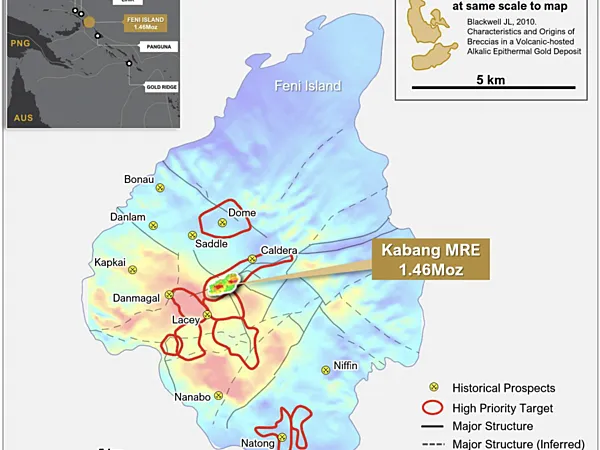
Adyton Resources Corporation has engaged Global Ore Discovery to advance an integrated exploration programme at its 100% owned Feni gold-copper project in Papua New Guinea.

The appointment brings Global Ore’s epithermal and porphyry expertise to support targeting and technical oversight as Adyton seeks to expand resources at the Kabang prospect and assess district-scale potential across Feni Island. The work will be undertaken alongside Adyton’s in-house technical team, including expert consultant Dr. Erin Johns.

Global Ore consultants have already completed a site visit, relogging drill core to assess alteration, lithology and structural controls on gold mineralisation at Kabang. Adyton said preliminary observations indicate similarities between the geological and structural setting at Feni and those at the Lihir gold mine, owned and operated by Newmont, supporting the project’s large-scale potential.

The engagement follows a technical workshop held in late October 2025 at Global Ore Discovery’s headquarters, where historical and current datasets were reviewed alongside comparable alkalic-style gold-copper systems globally. The review culminated in a technical action plan to guide next steps.

Global Ore has initiated an integrated reinterpretation of geological, structural, geophysical and hyperspectral data, with the aim of delivering a high-resolution three-dimensional geological model to optimise drill targeting for ongoing resource expansion at Kabang.

The consultants have also identified priority areas for follow-up sampling of outcropping gold mineralisation and visually confirmed higher-grade copper mineralisation in drill core beneath and lateral to the existing resource.

“Engaging Global Ore Discovery marks the next significant expansion of our discovery efforts at Feni Island,” said Tim Crossley, Adyton’s chief executive officer.

January 05, 2026

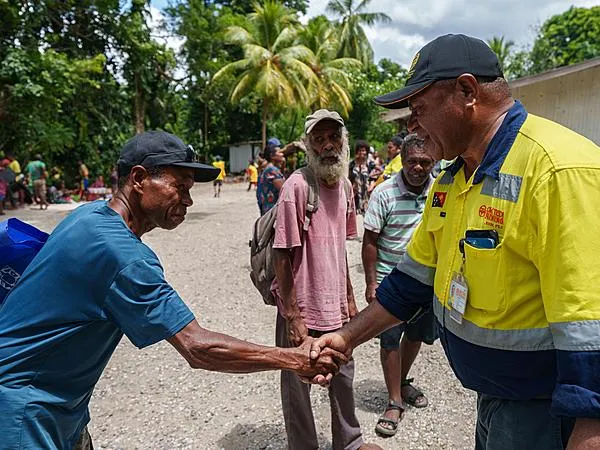
Ok Tedi Mining Limited has unveiled a five-year plan to redevelop the Misima Gold Project following its acquisition from Kingston Resources in May 2025. The company aims to start construction within the two-year term of the exploration lease.

The plan includes early investment in community infrastructure to benefit local residents before production begins.

“We’re not waiting until production to make a difference. Roads, power, water, and support for schools and the hospital will start early. These improvements will benefit communities long before the mine is operational," said Jesse Pile, Ok Tedi general manager for Social Performance and Sustainability.

Pile spoke during the company’s first community engagement on Misima from 1–4 December 2025. The engagement marks the beginning of ongoing consultations with stakeholders through the three phases of the project: Detailed Feasibility & Permitting, Construction, and Production.

Ok Tedi will conduct detailed exploration at the Umuna, Ewatinona, and Kulumalia pits to optimise mine plans and plant designs. Baseline environmental and social studies will also be carried out. The company expects to secure necessary approvals from the Conservation and Environment Protection Authority (CEPA) and the Mineral Resources Authority (MRA) by mid-2027.

Following permitting, major infrastructure works will start from mid-2027 to mid-2029 to prepare the site for full-scale operations.

Commercial production is scheduled to begin after plant commissioning, bringing significant economic benefits to the region.

“The above early phases are critical. It’s where we lay the groundwork for everything that follows, detailed exploration, environmental and social studies, and permitting. This is about doing things right from the start leveraging from Ok Tedi’s 40 years of operational experience," Pile said.

He said that once permits are granted, construction will turn Misima into a hub of activity, creating jobs, spin-off business, and long-term benefits for the island.

Ok Tedi will also continue investing in critical infrastructure during the first phase to support both the community and the project. “Community support is the foundation of this project. We’ve seen incredible positivity from Misima people, and we will continue to engage openly, transparently, and honestly,” Pile said.

January 04, 2026

The Ministry of Agriculture and Livestock (MAL), in partnership with the Food and Agriculture Organization of the United Nations (FAO), has formally concluded the Promoting Innovative Farming Systems to Improve Vegetable Production project with an End of Project Workshop held in Honiara.

The two-year project, funded by FAO and valued at USD 40,000, was led and implemented by MAL’s Research and Development Department. It focused on promoting protected vegetable cultivation to enhance productivity, increase farmer incomes, and improve household nutrition across the Solomon Islands.

The workshop provided an opportunity for stakeholders to review achievements and validate results, as well as to discuss recommendations for sustaining and scaling up protected cultivation systems. The project demonstrated that protected cultivation is a viable strategy for food security and income generation, while strengthening institutional capacity within MAL and among farmers, producers, and value-chain actors.

FAO’s pilot activities engaged farmers, government counterparts, and technical partners, demonstrating promising results even under challenging climatic conditions. The initiative emphasised capacity building, strengthened farmer organisations, improved market access, post-harvest handling, use of digital tools, and youth engagement. FAO plans to continue supporting the Solomon Islands Government by scaling up successful practices, including applied research and collaboration with national universities and regional partners.

Key achievements of the project include the construction of a demonstration greenhouse facility at the King George Research Centre, a pilot research trial comparing greenhouse and field vegetable production, the development of five practical manuals and fact sheets covering vegetable nursery and production management, and the conduct of two farmer training workshops. Nutrition and market development activities were also implemented, including awareness sessions, cooking demonstrations, and a domestic market analysis.

A draft working paper to guide policy and promote the adoption of protected cultivation is expected to be handed over to MAL in early 2026. The Research and Development Department noted that the project aligns with its mandate to advance agricultural innovation and productivity through evidence-based research.

MAL continues to develop improved crop varieties and livestock breeds suited to local conditions and market demands, while promoting sustainable farming practices that conserve water, enhance soil fertility, and reduce environmental impact. Collaboration with national and international research institutions ensures access to modern agricultural technologies, helping to strengthen the resilience and profitability of the Solomon Islands’ agricultural sector.

The project underscores the importance of innovative farming approaches in enhancing food security, boosting local incomes, and supporting sustainable rural development, providing a model for future initiatives across the Pacific region.

January 04, 2026

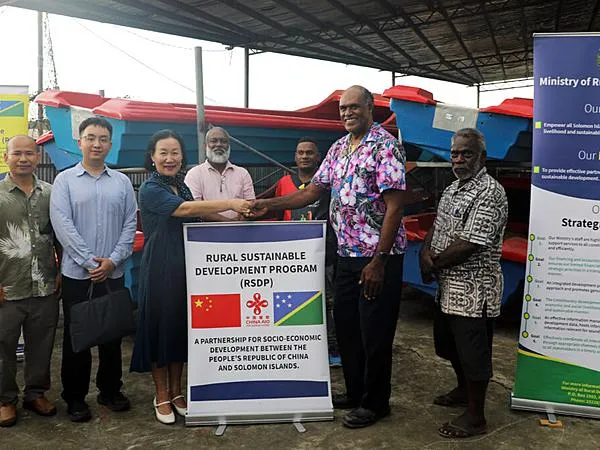
The Rural Sustainable Development Program (RSDP), funded by the People’s Republic of China, has allocated SBD $1.5 million to support seaweed farming in West Are’are Constituency, reinforcing its ongoing impact on rural communities.

The funding, provided as project goods and materials, will be distributed directly to seaweed farmers to increase production and sustain livelihoods. Items include 15 boats, 15 outboard motors, 600 rolls each of 6mm and 2mm seaweed ropes, 21 rolls of seaweed netting, 21 rolls of seaweed plastic, and other essential materials to support farming operations.

The investment forms part of China’s continued commitment, through RSDP, to sustainable development and community empowerment, promoting long-term prosperity and self-sufficiency.

The project goods were handed over in Honiara on 23 December 2025, in a ceremony attended by the West Are’are Constituency office and representatives from the Chinese Embassy. The handover reflects the partnership between the two nations and their shared goal of supporting rural livelihoods.

The constituency office confirmed that the full funding will be used for seaweed farming, directly benefiting local communities and supporting sustainable economic growth. Plans are underway to explore further development, including processing and refining seaweed to secure better returns for farmers.

Representatives from the Chinese Embassy highlighted that the initiative marks a new chapter of practical cooperation under RSDP. The programme aims to improve social and economic development in rural areas and includes capacity-building and training opportunities to transfer knowledge and empower communities. China’s experience in rural poverty alleviation is cited as a model for enhancing livelihoods in the Solomon Islands.

Government representatives welcomed the support, noting RSDP’s role in improving rural lives and acknowledging the trust placed in the Ministry of Rural Development to implement the programme effectively. Collaboration with suppliers and constituency offices has been key to delivering projects successfully.

Launched in 2023, RSDP is a partnership between China and the Solomon Islands Government, aligning with China’s broader Global Development Initiative and the Solomon Islands’ National Development Strategy 2016–2035. The programme primarily targets rural and semi-urban communities, enhancing social and economic infrastructure, promoting income-generating activities, and addressing food security and climate resilience.

Seaweed farming has emerged as a vital source of income in coastal communities, providing opportunities for households to supplement their earnings and improve food security. By investing in essential equipment and materials, RSDP aims to increase the scale and efficiency of production, allowing farmers to supply both local and export markets more effectively.

The initiative also emphasises environmental sustainability. Seaweed farming is a low-impact aquaculture activity that supports coastal ecosystems and reduces dependence on overfished marine resources. By promoting responsible farming practices, the programme contributes to preserving marine biodiversity while strengthening community livelihoods.

Training and capacity-building form a core component of the project. Farmers will receive guidance on modern cultivation techniques, quality control, post-harvest handling, and potential value-adding activities such as processing seaweed into products for food, cosmetics, and industrial use. These efforts are expected to increase income potential and create new employment opportunities within the constituency.

The programme is expected to generate ripple effects beyond direct participants. By fostering local entrepreneurship and stimulating small-scale business activities, RSDP investments can encourage broader socio-economic growth within West Are’are, improving access to education, healthcare, and essential services.

RSDP’s long-term vision is to create resilient rural communities that can sustain economic growth independently. By combining material support, training, and community engagement, the initiative aims to build the capacity of constituents to respond to challenges such as climate change, market fluctuations, and resource scarcity.

With approximately 80 per cent of the Solomon Islands’ population residing in rural areas, projects like this are seen as essential to national development. By strategically investing in sectors such as seaweed farming, the RSDP demonstrates a model of targeted, impactful development that prioritises both economic and social outcomes.

December 17, 2025

The Government of Fiji today launched its first-ever Micro, Small and Medium Enterprise (MSME) Strategic Plan 2025–2030 alongside the National MSME Database, a move aimed at creating a more inclusive, data-driven and resilient MSME sector.

The initiatives are designed to build a stronger, smarter and more connected ecosystem to support entrepreneurs across Fiji, from urban centres to rural and maritime communities. The launch highlighted the Government’s commitment to placing MSMEs at the centre of the country’s economic transformation, backed by partnerships and a clear focus on delivery.

The Minister for Finance, Commerce and Business Development, Hon. Esrom Immanuel, described MSMEs as “the heartbeat of Fiji’s economy” and said the launch of the Strategic Plan and MSME Database would turn national vision into practical action through stronger coordination, improved data and more targeted support.

The Government also acknowledged the United Nations Economic and Social Commission for Asia and the Pacific (ESCAP) for its assistance in developing the MSME Strategic Plan.

By 2030, the Strategic Plan aims to raise MSME contribution to GDP to 40 per cent, narrow the finance gap, and streamline access to essential services and technologies. Key priority areas include data and coordination, co-operative development, regulation, entrepreneurship support, access to finance, market access, and workforce and skills development.

“By prioritising inclusivity, this Strategic Plan ensures that no entrepreneur is left behind—whether they are in remote islands, part of the informal sector, or among Fiji’s vibrant youth- and women-led enterprises. This inclusive approach is not only visionary, but essential for building a truly equitable economy,” said Ms Armida Salsiah Alisjahbana, Under-Secretary-General of the United Nations and Executive Secretary of ESCAP.

MSME Database and Digital Access

Effective 5 January 2026, the National MSME Database, accessible through the MSME Portal (www.msmeportal.gov.fj), will serve as a single online entry point to five major grant programmes administered by the Ministry of Commerce and Business Development.

The integrated digital platform is intended to simplify access to government support and improve service delivery, particularly for women- and youth-led enterprises and MSMEs operating in rural and maritime areas.

“The launch of Fiji’s National MSME Database marks a major step forward in turning strategy into action,” said Ms Munkhtuya Altangerel, Resident Representative of the UNDP Pacific Office in Fiji.

Focus on Implementation

The Permanent Secretary for the Ministry of Commerce and Business Development, Mr Shaheen Ali, said the launch marked a shift from planning to delivery.

“We have put in place the systems needed to translate policy intent into practical support that MSMEs can actually use. The Strategic Plan provides clear direction, while the MSME Database gives us a practical tool to deliver support in a more coordinated, transparent and data-driven way,” Mr Ali said.

“Our focus now is on implementation—ensuring that grants, services and support reach MSMEs efficiently, particularly women- and youth-led enterprises and those operating in rural and maritime areas. That is where these reforms will make a real difference.”

Partnerships and Acknowledgements

The Government also recognised the Pacific Digital Economy Programme and the Solevaka Development Accelerator Project, jointly implemented by the United Nations Development Programme (UNDP), the United Nations Capital Development Fund (UNCDF) and UN Trade and Development (UNCTAD), with support from the governments of Australia, New Zealand and the European Union.

Minister Immanuel expressed gratitude to development partners, industry leaders and MSME representatives for their contributions, noting that their insights helped ensure that both the Strategic Plan and the MSME Database reflect the real needs of Fijian entrepreneurs.

“With a shared vision and unity of purpose, the Government is confident that these initiatives will play a central role in building a more prosperous, inclusive and resilient Fiji," Immanuel said.
December 17, 2025

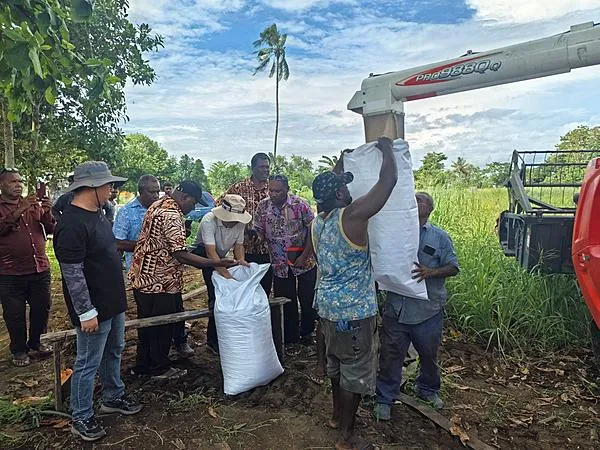
The Ministry of Agriculture and Livestock (MAL) is pleased to announce a significant breakthrough in rice production, demonstrating that rice can be successfully cultivated on loamy sandy soils with proper irrigation and effective soil management practices.

The MAL Rice Research and Demonstration Farm has shown that with the right technologies and agronomic approaches, rice productivity can be substantially improved — a development that has positive implications for food security and rural livelihoods across the Solomon Islands.

“This achievement is a testament to the Ministry’s commitment to promoting innovative agricultural technologies to boost the productivity and production of key commodities,” said Mr. Michael Tanisapa, Deputy Director of Extension, Ministry of Agriculture and Livestock.

The successful harvest, completed yesterday afternoon, marks a major milestone in the Ministry’s rice research and development efforts and reinforces the potential for expanding rice cultivation in areas previously considered marginal for the crop.

Recent Developments in Rice and Agricultural Efforts

  • The Government, through MAL, has been actively strengthening public‑private partnerships to drive agricultural growth and support rice development alongside other commodities. Recent agreements with private sector partners and agribusinesses aim to enhance market linkages and sustainable production systems, including rice cultivation initiatives.
  • A major Agriculture Investment for Markets and Nutrition (AIM‑N) project, jointly funded by the International Fund for Agricultural Development (IFAD), Global Agriculture and Food Security Program (GAFSP), and the Solomon Islands government, is underway to improve food security, nutrition, and climate resilience. While focused broadly on agricultural systems, the project supports community‑based production of diverse food crops and strengthens rural farming systems that complement rice development goals.
  • Expanded land use planning and partnerships have been formalised for agricultural innovation. An agreement to establish a national hub for agricultural research and training in Isabel Province includes plans for a Rice Research and Demonstration Centre, which will support continued innovation and capacity building in rice production.

These strategic efforts come at an important time, as reducing dependency on imported rice remains a priority for national food security. Increasing local rice production through research, partnerships, and farmer support is expected to help mitigate the country’s heavy reliance on expensive imports. (Historical data shows previous initiatives aimed at boosting rice cultivation and reducing import dependence.)

Key Highlights:

  • Successful rice cultivation achieved on loamy sandy soil.
  • Project utilised targeted irrigation and effective soil management techniques.
  • Enhanced public‑private collaborations to support rice and broader agricultural sectors.
  • National policy and international partnerships backing sustainable food production.
  • Strategic land and research infrastructure developments underway.

The Ministry looks forward to building on this success to scale up rice cultivation and strengthen the local agriculture sector for the benefit of farmers and communities throughout the nation.

December 17, 2025

The National Steering Committee of the Agriculture Investment for Market and Nutrition (AIM-N) Project has held its inaugural meeting on 16 December, marking the formal start of oversight for the six-year initiative.

The meeting was chaired by Solomon Island's Ministry of Agriculture and Livestock Permanent Secretary Dr. Samson Viulu, who also serves as the committee’s chairman.

Discussions focused on the project’s strategic direction, the committee’s oversight role, endorsement of the terms of reference, review and approval of the 2026 Annual Work Plan and Budget, validation of selection criteria for project recipients in Western, Choiseul and Isabel provinces, and the project’s decision-making processes.

The committee includes representatives from government ministries, donor partners, the private sector, civil society organizations, academia and research institutions, as well as provincial secretaries from the three participating provinces.

AIM-N has a total budget of $19 million and is financed through a mix of loans and grants from the International Fund for Agricultural Development and the Global Agriculture and Food Security Program. The Ministry of Agriculture and Livestock is the project’s implementing agency.

Following the meeting, Viulu described the session as successful. “Overall, the meeting was successful because we received a lot of feedback and had rich discussions, particularly from the three provincial secretaries whose provinces were selected for the project, as well as from the permanent secretaries of government ministries present,” he said.

“Contributions from other stakeholders including people with special needs were also well noted and appreciated," he added.

AIM-N Project Manager Samantha Maeke said the meeting was a key milestone, saying that 'the successful convening of this first National Steering Committee meeting marks a major milestone for the AIM-N Project."

“While it demonstrates strong government leadership and coordination in guiding the project, it also reinforces strong collaboration across relevant government ministries, the private sector, civil society organisations, and people with special needs representatives," she said.

Maeke said the committee’s approval role is critical to implementation.

“There are certain key governance, planning and operational documents within the project, such as the Annual Work Plan and Budget, that require NSC approval,” she said. “Without this approval, project funds cannot be released. We are pleased that the 2026 Work Plan and Budget has been approved.”

Provincial leaders welcomed the project and signaled their readiness to participate. Isabel Province Supervising Provincial Secretary Rex Manase said the province looks forward to implementation.

“As a province, we are willing to work with all stakeholders involved in implementing the project,” he said. “While we acknowledge coordination challenges, we are very much looking forward to seeing the project carried out in Isabel Province.”

Choiseul Province Provincial Secretary Geoffrey Pakipota thanked the ministry for selecting his province.

“I want to thank MAL for identifying our province as one of the project areas,” he said. “For Choiseul, this project is a major boost and a trigger for agricultural development, and we look forward to its implementation.”

Western Province Provincial Secretary Patrick Toiraena said the project would help address long-standing challenges.

“We see the AIM-N project as an important intervention that will add value to what our farmers and the province are already working on,” he said. “Logistics and resources are a challenge for our people, but this project will support rural farmers and our growing population, while also helping to reduce non-communicable diseases by improving nutrition and food security in the province.”

The project targets 65 rural communities, schools and organizations and is expected to benefit more than 18,000 people, with women making up 50% of beneficiaries and youth 20%. It aims to improve nutrition and food security, reduce rural poverty and build resilient farming systems by strengthening indigenous traditional farming practices.

The steering committee meets twice a year. Its next meeting is tentatively scheduled to be held in Choiseul Province in 2026. Provinces not included in AIM-N are covered under other initiatives, including the World Bank-funded Solomon Islands Agriculture Rural Transformation project implemented by the ministry.

December 16, 2025

The Ministry of Agriculture and Livestock (MAL), through the World Bank-funded Solomon Islands Agriculture Rural Transformation (SIART) Project, is equipping 43 young professionals with practical experience in the agricultural sector.

The Young Professionals programme is part of SIART’s initiative to strengthen the country’s agricultural sector by fostering a new generation of trained agricultural workers while enhancing the capacity of MAL offices to support farmers. The recruited professionals serve as junior extension officers, assisting Agribusiness Producer Organisations (ABPOs) and linking with MAL offices in Guadalcanal, Malaita, and Makira/Ulawa Provinces.

ABPOs are farmer and agribusiness groups that work collectively to access markets, financing, and support services, aiming to increase production and improve sales. SIART Program Manager William Okekini said the young professionals have already made a significant impact.

“These graduates are significantly boosting the capacity of provincial MAL offices to support ABPO development, business plan implementation, recordkeeping, and grant monitoring. They are also helping build a new generation of trained agricultural workers for the Ministry and the country as a whole,” Mr. Okekini said.

Before deployment, young professionals receive extensive training covering cocoa agronomy, farm management, pest and disease management, post-harvest processing, recordkeeping, financial management, and marketing.

Veronika Alawai, based in northern Malaita, supports three ABPOs involved in cocoa and coconut production. She said the programme has provided valuable skills in working with farmers, conducting trainings, and developing work plans.

“As an agriculture graduate, working with the project is very helpful as further down my career I will be able to utilise the abilities and qualities that I have developed from working as a young professional,” she said.

Ruth Maeabulo, working with four ABPOs in West Kwaio, Malaita Province, said the project has already helped communities earn additional income and improve infrastructure. “For me personally, working as a young professional is about developing my career as an agriculture officer while supporting my communities,” she said.

The SIART Project aims to increase agricultural production and improve market access in selected value chains in Guadalcanal, Malaita, and Makira/Ulawa. Beyond immediate training and exposure, the programme provides long-term opportunities for full-time employment with the Ministry of Agriculture, contributing to a more resilient and sustainable agricultural sector in the Solomon Islands.

December 16, 2025

Fiji’s business community came together in grand style on Saturday, November 29, at the Sheraton Fiji Golf & Beach Resort for the 33rd Prime Minister’s International Business Awards (PMIBA) 2025, drawing over 700 guests for an elegant gala recognising the nation’s top-performing companies.

Organised by Investment Fiji and supported by sponsors including major sponsor FIJI Water, the awards celebrated excellence across 18 categories, recognising achievements in sectors ranging from manufacturing, agriculture, tourism and services to innovation and export. A total of 18 winners were honoured, reflecting the diversity and dynamism of Fiji’s business landscape.

The awards, themed “Navigating Global Winds – Resilience, Innovation and Sustainable Growth,” highlighted companies demonstrating exceptional performance, sustainable practices, and a commitment to innovation despite global economic challenges. Attendees included business leaders, industry partners, government representatives and stakeholders, who praised the event as a platform that celebrates resilience, growth, and competitiveness in both local and international markets.

Delivering the keynote address on behalf of the Prime Minister and Minister for Foreign Affairs, Civil Service & Public Enterprise, Hon. Sitiveni Rabuka, Member of Parliament Hon. Manoa Kamikamica, the Chief Guest, emphasised the critical role of the private sector in Fiji’s economic future.

“Fiji’s private sector remains a vital driver of our economy, creating jobs, boosting exports and supporting diversification. With 212 investment projects worth over $6.2 billion in the pipeline and foreign direct investment forecasted to grow by 23%, this reflects strong confidence in the stability and direction of our economy,” Hon. Kamikamica said.

Investment Fiji Chair Ms. Jenny Seeto highlighted the quality of entries, noting over 200 applications were received this year. “The calibre of entries reflects the strength and ambition of Fiji’s business sector. I congratulate all our winners and finalists, and sincerely thank our sponsors whose support forms the backbone of these awards,” she said.

FIJI Water Associate Vice President Susie Waqanibaravi added, “FIJI Water is proud to support a platform that recognises business excellence and the leaders driving Fiji forward. We extend our warmest congratulations to Rosie Holidays as the Supreme Award winner, as well as all other category winners. Vinaka vakalevu to Investment Fiji for delivering another remarkable celebration of business achievement.”

Key Category Winners:

  • Supreme Award (FIJI Water): Rosie Holidays

  • Premier Large Business Operating Internationally (BSP Financial Group Limited): Fiji Airports Ltd

  • Premier Medium Business Operating Internationally (Westpac Fiji): Vuvale Outsourcing Pte Ltd

  • Premier Small Business Operating Internationally (DHL Express Fiji): Bula Coffee

  • Excellence in Innovation (Swire Shipping): DUCO Consultancy Pte Ltd

  • Excellence in E-Commerce Transformation (HFC Bank): Fiji Airways

  • Best Sustainability Initiative (Tropik Wood Industries Ltd): Waste Recyclers (Fiji) Ltd

  • Employer of the Year (Fiji National Provident Fund): Motibhai & Company Ltd

  • Excellence in Service (Tower Insurance): Rosie Holidays

  • Executive of the Year (Telecom Fiji): Mesake Nawari – Fiji Airports Ltd

  • Excellence in Outsourcing (Vodafone Fiji): KPMG Advisory (Fiji) Pte Ltd – Fiji Dynamic Delivery Centre

  • Excellence in Fisheries (Reserve Bank of Fiji): Pacific Fishing Company Ltd

  • Excellence in Agribusiness Innovation (Ministry of Agriculture & Waterways): Food Processors (Fiji) Pte Ltd

  • Excellence in Forestry (Ministry of Forestry): Tropik Wood Industries Ltd

  • Excellence in Yasana (Provincial) Aspiration (iTaukei Executive Forum): Rewa Provincial Holding Company Ltd

  • Recognition Awards: Jay Singh – Crowne Plaza Nadi Bay Resort & Spa, Damodar North Pte Ltd, Tappoo Group of Companies

The PMIBA remains one of Fiji’s most prestigious business accolades, reaffirming the partnership between government and the private sector in building a resilient, innovative, and sustainable economy. The evening served as both a celebration of past achievements and an inspiration for continued excellence in the years ahead.

December 16, 2025

The Pacific’s collective effort to strengthen ocean resilience and community well-being has been bolstered through the launch of the Pacific Ocean Initiative – Sustainable Protection and Management of Coastal and Marine Ecosystems for Community Resilience. The programme was formalised in December 2025 through a partnership between the Secretariat of the Pacific Regional Environment Programme (SPREP) and the Agence Française de Développement (AFD).

Backed by an €8 million AFD grant over five years, the Pacific Ocean Initiative is a regional programme designed to protect coastal and marine biodiversity, strengthen ecosystem resilience, and support sustainable development across Pacific Island countries and territories. The initiative brings together SPREP and the Pacific Community (SPC) to coordinate activities with Pacific governments, scientific and technical partners, and non-governmental and civil society organisations, addressing shared ocean challenges and promoting food and economic security for Pacific communities.

The initiative will benefit 18 Pacific Island countries and territories, including Fiji, Kiribati, Marshall Islands, Solomon Islands, Samoa, Tonga, Vanuatu, Timor-Leste, New Caledonia, French Polynesia, and Wallis and Futuna.

SPREP Director General Sefanaia Nawadra described the programme as “a bold and collective commitment to safeguard the ecosystems that sustain our communities, cultures, and economies.” He added, “By fostering knowledge sharing and regional collaboration, this programme aims to strengthen the capacity of Pacific nations to protect, sustainably manage and restore their coastal and marine ecosystems and resources.”

AFD Head in Fiji, Elodie Vitalis, emphasised the importance of the Pacific-led initiative. “Protecting the Pacific Ocean means safeguarding the beating heart of this region. Together with SPREP and SPC, we are joining forces to restore vital ecosystems, support the communities whose livelihoods depend on the ocean, and strengthen the capacity of Pacific Island countries to face the impacts of climate change,” she said.

The Pacific Ocean Initiative aligns with the Blue Pacific 2050 Strategy, which seeks to ensure sustainable and resilient development across the region. The initiative focuses on strengthening regional and local expertise for sustainable management of marine and coastal resources through three components: enhancing regional collaboration and national capacity, supporting community-level co-management of coastal resources, and providing project management, monitoring, and evaluation. SPREP will lead the regional coordination and management components, while SPC will oversee community-based ecosystem management.

Expected outcomes include the development of a regional community of practice for coral reef monitoring, improved coral restoration through inter-reef connectivity, and healthier, more resilient communities through sustainable coastal fisheries management.

By fostering a forward-looking partnership between SPREP, SPC, and AFD, the Pacific Ocean Initiative aims to ensure that the region’s marine ecosystems are sustainably managed, resilient to climate change, and capable of supporting prosperous and sustainable communities for generations to come.