Fiji has enacted its first comprehensive tourism legislation, replacing the Hotel and Guest Houses Act 1973 with a broader regulatory framework aimed at supporting the long-term growth, governance and sustainability of one of the country’s most important economic sectors.
The Tourism Bill No. 10 of 2026 was passed into law on May 28, establishing the new Tourism Act 2026, which introduces updated provisions covering tourism enterprise registration, national tourism standards, sustainability and compliance measures, and protections for indigenous and cultural knowledge.
The legislation also seeks to strengthen participation by communities and micro, small and medium enterprises in the tourism sector, which remains a major contributor to employment, foreign exchange earnings and rural development in Fiji.
Deputy Prime Minister and Minister for Tourism and Civil Aviation Viliame Gavoka said the new law reflects the transformation of Fiji’s tourism industry over recent decades and aligns with the government’s broader tourism development strategy.
“Over the last 20 years, Fiji has doubled its visitor numbers. Our communities are more deeply involved in tourism than ever before, and the expectations of travellers and investors alike have changed significantly. It is time our laws reflected that reality,” Gavoka said.
Fiji now receives close to one million visitors annually, supported by a wide network of hotels, resorts, tour operators and community-based tourism experiences, including hiking, camping and short-term accommodation platforms such as Airbnb.
The previous legislation governing the sector dated back to the 1970s, when Fiji’s tourism industry was significantly smaller and less diversified.
The enactment of the Tourism Act also follows broader government efforts to strengthen tourism and aviation as central pillars of Fiji’s economic development strategy.
Earlier this year, Gavoka told Parliament that the ministry’s tourism development approach is guided by the “Five A’s” of tourism growth — access, accommodation, attractions, amenities and actors — aimed at ensuring infrastructure, investment and community participation work together to expand the sector.
Among the key initiatives under the strategy is the World Bank-supported Na Vualiku Tourism Development Programme, which seeks to unlock tourism potential in Vanua Levu through airport upgrades, improved infrastructure and expanded opportunities for local businesses.
Runway upgrades at Labasa Airport are expected to improve connectivity and boost investor confidence in Fiji’s northern region, while tourism development is also being expanded in maritime and rural areas, including the Lau group.
The Tourism Act 2026 also builds on earlier policy work by the government, including the Fiji Tourism Policy 2025–2035 and the Fiji Tourism Standards Framework Guidance Note, which were introduced as part of preparations for Fiji’s first dedicated tourism law.
Officials previously said the policy and standards framework would help establish clearer expectations around quality, sustainability, safety and service across the tourism industry while supporting responsible and inclusive growth.
The proposed framework is also expected to streamline tourism-related licensing, create greater consistency across regulations and clarify the roles of the Tourism Department and Tourism Fiji.
According to the government, the Tourism Act 2026 was developed through consultations with industry representatives, community groups, government agencies and tourism operators across the country.
“This legislation did not happen overnight,” Gavoka said. “It was shaped by the voices of communities, operators, and stakeholders from across the country.”
The Hotel and Guest Houses Act 1973 will be formally repealed once the new Tourism Act comes into force on a date to be determined by the minister.
The government said the new framework is intended to support sustainable tourism development while strengthening industry oversight and aligning the sector with current market expectations and investment trends.
Farmers from the Labuhila Coffee Farmers Association participated in a hands-on training session in Lumakanji, Guadalcanal, aimed at improving coffee production and increasing income opportunities.
The training, held on May 18 and 19, was funded through the Solomon Islands Agriculture Rural Transformation (SIART) Project under the Ministry of Agriculture and Livestock Development.
The SIART Project, funded by the World Bank and implemented by the ministry, seeks to strengthen the agriculture sector by increasing production, improving market access and enhancing rural livelihoods.
The program supports farmers in Malaita, Guadalcanal and Makira-Ulawa through training, infrastructure support, agribusiness development and extension services.
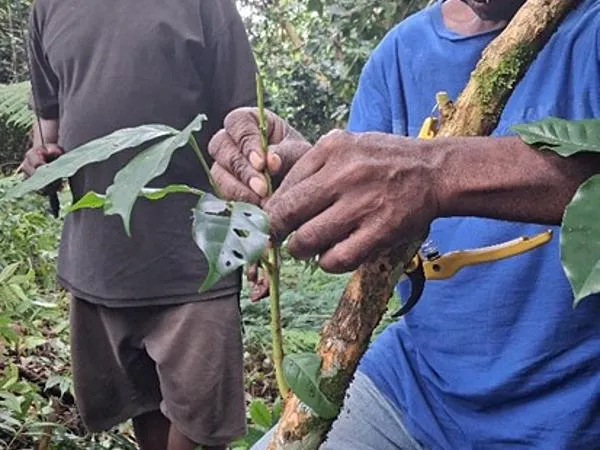
The training was led by Ministry of Agriculture and Livestock Development Research Officer Geoffrey Oliouou and focused on pruning and grafting techniques for coffee production.
Farmers were trained on pruning methods aimed at managing tall trees, removing unwanted growth after harvest, improving light penetration and stimulating productive branch development.
Participants also learned about the timing and follow-up care needed to protect coffee trees after pruning.
“The objective of this training is to equip farmers with practical skills that will directly improve coffee productivity and quality,” Oliouou said.
“By applying proper pruning and grafting techniques, farmers can rehabilitate existing trees, introduce improved varieties, and increase yields in a sustainable way,” he added.
The grafting component covered both top and side grafting techniques for nursery seedlings and mature trees, allowing farmers to replace low-yielding trees and accelerate production of marketable coffee.
A representative of the Labuhila Coffee Farmers Association said the training had provided practical knowledge that farmers could immediately apply in their farms and communities.
Farmers and organizers also highlighted ongoing challenges affecting coffee production in the highlands, including poor road access and limited market linkages that increase transportation costs and reduce farmer returns.
Participants noted that coffee, despite its potential as a major cash crop alongside cocoa and coconut, has received limited attention and support in recent years.
Through SIART funding, the training also provided materials for hands-on learning activities.
Organizers emphasized the need for continued support through access to quality seedlings, regular extension services and infrastructure investment to ensure technical improvements translate into sustainable income gains.
The Labuhila Coffee Farmers Association plans to apply the training through demonstration plots, community refresher programs and advocacy for improved market access and institutional support.
The Fiji government is stepping up efforts to reduce the country’s rice import bill while strengthening food security and supporting local farmers through a series of agricultural initiatives.
The government said immediate measures are being implemented to increase local rice production and reduce reliance on imported rice.
These include expanding rice cultivation programs in suitable agricultural areas and distributing improved and climate-resilient rice seed varieties to farmers.
Authorities are also strengthening mechanization support for land preparation and harvesting while supporting upgrades to rice mills and post-harvest processing facilities.
The government said it is encouraging youth participation and commercial investment in rice farming through targeted incentives and training programs.
Fiji is also working with development partners and research institutions to modernize the country’s rice industry and improve productivity.
As part of broader reforms, the government plans to implement a conditional import tariff framework aimed at managing rice imports while encouraging local production.
Officials are also conducting market demand and consumer preference surveys to better understand domestic rice consumption trends.
Additional measures include policy interventions and institutional reforms designed to strengthen the domestic rice sector and improve long-term sustainability.
The government said technology integration would also play a key role, including the use of precision farming, digital monitoring systems and energy-efficient processing across rice production and supply chains.
The initiatives form part of the government’s broader commitment to building a more resilient, sustainable and self-sufficient agricultural sector in Fiji.
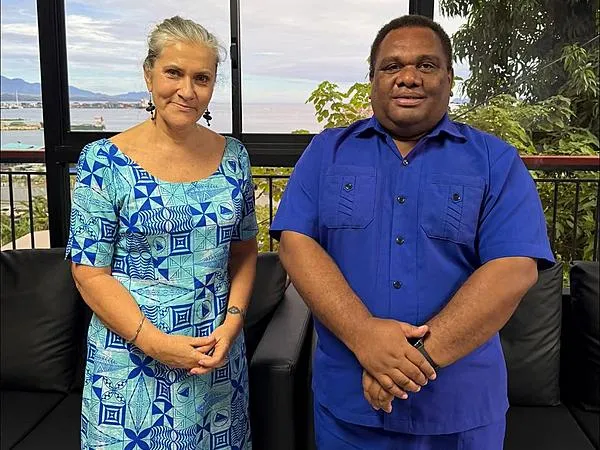
Agriculture and Livestock Development Minister Franklyn Derek Wasi has received a courtesy call from Karen Mapusua, director of the Land Resources Division at the Pacific Community, at the ministry’s headquarters in Honiara.
Mapusua and her team are in Solomon Islands to support the country as it assumes the chairmanship of the Pacific Heads of Agriculture and Forestry Services (PHOAFS).
Solomon Islands led its first regional meeting following the formal handover from the Kingdom of Tonga during the opening of the 11th PHOAFS virtual meeting on Wednesday.
Wasi welcomed Mapusua and her delegation and acknowledged the support provided by the Pacific Community in assisting Solomon Islands in taking up the chairmanship of the regional body.
Mapusua briefed the minister on the agenda for the current PHOAFS virtual meeting and preparations required for Solomon Islands to host the next PHOAFS meeting in the country next year.
Solomon Islands is scheduled to host the Pacific Week of Agriculture and Forestry, a week-long regional event, in Honiara at the end of May 2027.
The Pacific Heads of Agriculture and Forestry Services is a regional platform that brings together senior agriculture and forestry officials from Pacific island countries and territories to coordinate policy priorities, food security initiatives, climate resilience efforts and regional agricultural cooperation.
The Pacific Week of Agriculture and Forestry is held every two years and is regarded as the region’s premier agriculture and forestry event, bringing together ministers, technical experts, researchers, development partners and private sector representatives to discuss food security, biosecurity, sustainable rural development and climate resilience.
Regional organizers said the 2025 Pacific Week of Agriculture and Forestry in Tonga focused on the themes of “more regeneration, more productivity and more resilience,” highlighting growing regional attention on climate adaptation, sustainable farming systems and agricultural research collaboration across Pacific island economies.
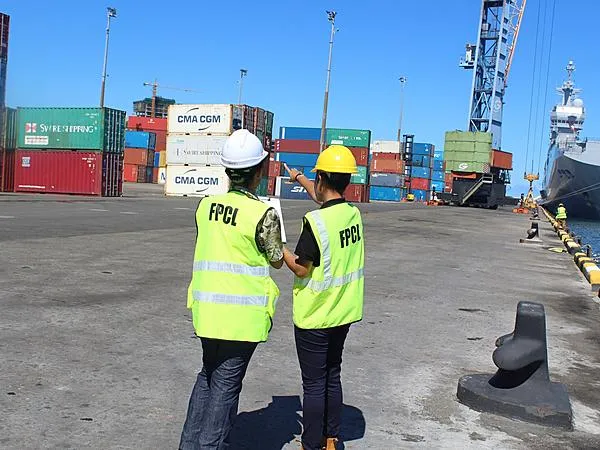
The Fiji government has welcomed the announcement made following the Quad Foreign Ministers Meeting confirming support for the development of Fiji’s ports.
The Quad comprises the United States, Australia, India and Japan.
In a statement, the Fiji government said the development and modernization of the country’s port infrastructure remains a key national priority aligned with Fiji’s National Development Plan.
The government said consultations between central government agencies and development partners are ongoing, with the Ministry of Finance leading efforts on the development of Fiji’s compact with the United States Millennium Challenge Corporation.
Fiji said improving port efficiency and strengthening the business regulatory environment are important to enhancing maritime connectivity and supporting regional economic integration.
The government added that more efficient port infrastructure would help build more resilient and connected Pacific economies.
“Fiji welcomes engagement with partners that support Fiji’s long-term development priorities and contribute towards improving regional connectivity and shared prosperity across the Pacific,” the statement said.
The Quad announcement was made following a meeting of foreign ministers in New Delhi, where the four countries reaffirmed their commitment to strengthening infrastructure, maritime security and economic resilience across the Indo-Pacific region. The grouping said cooperation with Pacific island countries would remain a strategic priority.
According to the joint statement issued after the meeting, the Quad partners intend to coordinate closely with the Fiji government on the development of port infrastructure and related activities aimed at improving regional connectivity and supply chain resilience. The initiative forms part of broader efforts to support trusted and sustainable infrastructure development in the Pacific.
Australian Foreign Minister Penny Wong described the initiative as “the strongest ever commitment from the Quad to the Pacific,” saying the Fiji port project would serve as “a practical demonstration” of the grouping’s ability to deliver “high-quality, resilient infrastructure” in partnership with Pacific countries and in response to regional priorities, according to Fiji Broadcasting Corporation News.
The proposed support for Fiji’s ports comes amid increasing international focus on strategic infrastructure investment in the Pacific, where regional governments have sought greater financing and technical assistance to improve transport links, trade efficiency and economic integration across island economies.
Kalo Gold Corp. says it has completed almost half of a high-resolution airborne magnetic survey at its Vatu Aurum gold project in Fiji, as the company advances exploration targeting across the 367 square kilometre project area on Vanua Levu.
The company said 2,764 line-kilometres of the planned 6,212 line-kilometre heli-magnetic survey had been completed as of April 29, with 3,448 line-kilometres remaining.
The survey is being flown at 100-metre line spacing, with tighter 50-metre spacing planned over priority target areas to improve structural and geological interpretation across the project.
Kalo Gold said favourable weather conditions had supported productive daily flights, with operations focusing on completing tighter grid coverage where conditions allow.
The survey is being conducted using a helicopter-mounted tri-sensor magnetometer system capable of collecting total magnetic intensity and horizontal gradient data to better identify subtle structural features and geological contacts.
The company expects the remaining survey work to be completed in the coming days, subject to operating conditions and final line spacing requirements.
Kalo Gold said the airborne magnetic program forms a key part of its exploration strategy at Vatu Aurum and is expected to improve understanding of the project’s structural framework.
The survey aims to support the identification of fault systems and structural corridors, mapping of intrusive bodies and alteration zones, and refinement of drill targets across the Aurum Prime and Wainikoro prospects.
Final processed datasets, including magnetic intensity data and geophysical grids, will be integrated with existing geological and geochemical information to support future exploration targeting.
The technical information in the update was prepared and approved by Andrew Randell, principal geoscientist of SGDS-Hive and technical director of the Vatu Aurum Project.
Kalo Gold is focused on advancing low-sulphidation epithermal gold targets across a northeast-trending corridor extending from Matailabasa to Nayaroyaro on Vanua Levu. The company said previous exploration, including drilling, trenching and soil geochemistry, has identified multiple structurally controlled gold targets across the project.
Sandvik on 26 May launched AutoMine® Aura, a first-of-its-kind underground mining automation platform fully engineered for the future. The release represents the most significant evolution of AutoMine® since its introduction more than 20 years ago.
AutoMine® Aura transforms every layer of the AutoMine® platform, delivering full situational awareness with zero blind spots, enabling higher utilisation and consistent productivity in complex underground environments. The platform introduces a new navigation system with 3D perception — the most advanced and productive in the industry — which has been proven to move more than 15% additional material in one of the world’s harshest underground mines.
The platform integrates with existing networks and access control systems, eliminating the need for infrastructure changes. This evolution of the underlying platform enables mines to fully leverage future technologies while continuing to support current operations.
AutoMine® has achieved almost nine million hours without a lost time injury (LTI) since its launch, and safety remains foundational to its next generation. AutoMine® Aura builds on the proven safety principles and access control systems already in use today, while 3D perception and adaptive intelligence further enhance these capabilities. This strengthens safety in increasingly dynamic environments.
Operators also benefit from a wider, more intuitive interface that delivers full awareness of the mine environment. This enables the remote supervision and control of multiple machines, reducing exposure to dust, noise, vibration and other on-site hazards. The enhanced operator experience supports both safety and productivity, while also contributing to workforce development by transitioning operators into more technology-focused roles.
AutoMine® Aura will initially launch on underground loaders, with the platform set to expand across additional Sandvik product lines over time.
“AutoMine® is already a world-leading solution, proven across more than 140 mines globally,” said David Hallett, Vice President – Automation at Sandvik. “It has defined automation in mining for more than two decades across both surface and underground operations. With AutoMine® Aura, we have not built the next version; we have built an entirely new platform. The navigation system with 3D perception is the first of its kind in the industry, and the productivity gains — including moving more than 15% additional material — have been proven and validated at customer sites. This demonstrates what this technology means for our customers and for the future of mining.”
AutoMine® Aura will be presented to the global mining industry at Sandvik’s upcoming Future of Mining event in Tampere, Finland, from September 1–3, 2026.
Sandvik Group Sandvik is a global, high-tech engineering group providing solutions that enhance productivity, profitability and sustainability for the manufacturing, mining and infrastructure industries. The company is at the forefront of digitalisation and focuses on optimising customers’ processes. Its world-leading offering includes equipment, tools, services and digital solutions for machining, mining, rock excavation and rock processing. In 2025, the Group had approximately 42,000 employees and revenues of about SEK121 billion across more than 150 countries.
Business Area Mining Mining is a business area within the Sandvik Group and a leading global supplier of equipment, tools, parts, services, digital solutions and sustainability-driven technologies for the mining and construction industries. Application areas include rock drilling, rock cutting, loading and hauling, tunnelling, ground support and quarrying. In 2025, sales were approximately SEK69 billion, with about 18,000 employees. For further information, visit mining.sandvik.
Cook Islands Prime Minister Mark Brown has called for greater financial support for Pacific renewable energy transitions, describing the shift away from imported fuel as an economic security strategy rather than a climate concession.
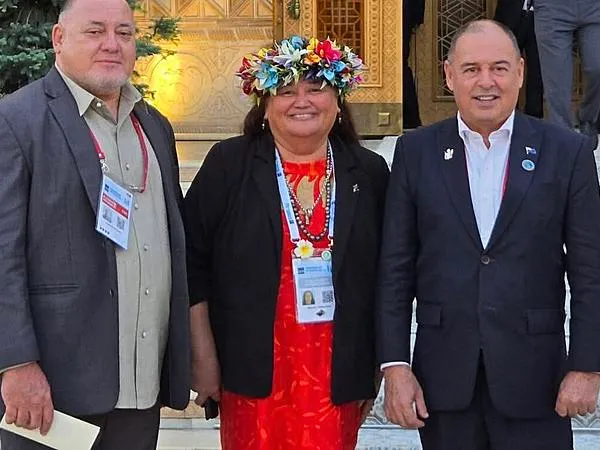
Speaking at the 59th Annual Meeting of the Asian Development Bank, or ADB, in Samarkand, Brown said Pacific Island countries remain highly exposed to global fuel price shocks and supply disruptions due to dependence on imported energy.
“The Pacific energy transition is not a climate concession. It is an economic security strategy. The same investments that lower our emissions also lower our exposure to the next global shock,” Brown said in his Governor’s Statement.
Brown said the Cook Islands was working closely with the ADB on financing solutions aimed at strengthening energy security and accelerating renewable energy development across Pacific Island countries.
“The Cook Islands is working closely with the ADB on financial solutions that support security of supply for Pacific Island countries, and that fast-track our energy transition to renewables,” he said.
The prime minister said the financing initiatives would support renewable energy projects across the Pa Enua, including solar farms, battery storage systems and electricity grid upgrades aimed at reducing long-term reliance on imported fuel.
Brown also highlighted domestic conservation measures currently underway in the Cook Islands, including coordination work led by the Energy Response Technical Working Group involving government agencies, the tourism sector and communities.
“Conservation is a real lever. Every litre saved is fuel for our hospital, our schools, our airports,” he said.
During the meeting, Brown urged the ADB to expand innovative financing tools for Pacific small island developing states, including blended finance, climate-linked financing mechanisms and local currency debt conversion measures to reduce exposure to foreign exchange risks.
He said concessional financing access for Pacific states should continue to reflect vulnerability to economic and climate shocks rather than income levels alone.
“Graduation thresholds were not designed for economies that can lose a year of gross domestic product in a single cyclone, or absorb a global energy shock with no domestic substitute,” Brown said.
Brown also welcomed the ADB’s developing work on critical minerals and called for Pacific small island states to be actively included in related initiatives.
The prime minister said the Cook Islands currently generates just over 30 percent of its electricity from renewable energy sources and aims to increase that figure to 60 percent by 2030.
“We will use this period to push our renewable energy goals harder, not slower,” Brown said.
The Vanuatu government says it remains committed to rebuilding national carrier Air Vanuatu but warned that future financial support for the airline must be accompanied by major structural reforms to prevent further losses.
The issue was raised during oral questions in the first ordinary session of the 2026 Parliament after Malekula Member of Parliament Hymak Anatole questioned the staffing status of Air Vanuatu and called on the government to complete the airline’s restructuring process following liquidation.
Responding in Parliament, Deputy Prime Minister and Finance Minister Johnny Koanapo said Air Vanuatu was gradually rebuilding under a new board after “starting from almost nothing.”
“Some progress is happening at our level as a company, especially with the new board that came in, and we are trying to restore the company from almost nothing,” Koanapo said.
The minister acknowledged that the airline requires a significant capital injection from the government but said authorities remain cautious after years of heavy public spending on the carrier.
“We spent a lot of taxpayers’ money on the company and then found out that the structure of the company was too heavy from top to bottom,” he said.
Koanapo said Air Vanuatu had 170 permanent employees as of December 2025, although the government was still assessing whether current staffing levels were appropriate given the airline’s limited operations.
At present, the carrier is primarily operating domestic services and does not yet have international aircraft in operation.
The minister said the government was exploring options to rebuild the airline’s fleet and assets, including expansion of domestic aircraft capacity.
“Today we have Twin Otters, and one more is coming next month as announced by the Prime Minister. We also have the ATR, which is still on lease,” he said.
Koanapo said improvements had already been seen in operational performance and staff morale, including reductions in flight delays.
However, he confirmed that the airline continues to post substantial financial losses.
“If you look at the financial statement of the company from 2024 to 2025, it does not make any profit; it makes a big loss,” he said.
The minister revealed that the government had already provided VT1.1 billion to cover aircraft-related obligations and said additional capital would still be required to revive the airline.
“Apart from that, today Air Vanuatu needs a capital injection, and for us to resurrect the airline, we need a capital injection,” he said.
Koanapo added that the government did not want to continue injecting funds into the airline without broader changes to the company’s structure and operations.
On international operations, the deputy prime minister confirmed that the International Air Transport Association, or IATA, was in the process of restoring Air Vanuatu’s “NF” airline code, which would support future codeshare agreements and international partnerships.
“We have to be optimistic about the future of Air Vanuatu. We will not let go of Air Vanuatu,” he said.
Koanapo also confirmed that the government continues to negotiate with Airbus regarding the VT2 billion Airbus matter involving the airline.
He said a recent delegation visited Airbus headquarters in Toulouse, where discussions were held on legal and contractual issues linked to the aircraft agreement.
According to Koanapo, Airbus requested that negotiations continue privately through its Singapore office, with another round of discussions expected before the end of the year as the government works to restore Air Vanuatu’s international services.
The Metals Company, or TMC, says it is advancing plans for commercial-scale polymetallic nodule recovery in the Pacific Ocean following new regulatory and operational milestones linked to its deep-sea mining projects in the Clarion-Clipperton Zone.
In a first quarter corporate update, TMC announced that it had signed a commercial agreement with offshore engineering company Allseas for the development, commissioning and operation of what it described as the first commercial polymetallic nodule collection system.
The system is expected to have a production capacity of 3 million wet tonnes of nodules annually, with commissioning targeted to begin in the fourth quarter of 2027, subject to regulatory approvals.
TMC said the offshore collection system would operate in the Clarion-Clipperton Zone, an area of the Pacific Ocean containing polymetallic nodules used in energy, manufacturing, infrastructure and defense applications.
The company also announced that the US National Oceanic and Atmospheric Administration, or NOAA, determined that TMC USA’s consolidated application for an exploration license and commercial recovery permit complies with requirements under the Deep Seabed Hard Mineral Resources Act.
According to TMC, the application covers an area named TMC USA A in international waters of the Pacific Ocean and expands the proposed commercial recovery area to about 65,000 square kilometers.
TMC said it expects the NOAA permitting process to conclude before the end of the first quarter of 2027.
The company’s subsidiaries, Nauru Ocean Resources Inc., or NORI, and Tonga Offshore Mining Ltd., or TOML, also submitted environmental datasets to the International Seabed Authority’s DeepData database covering exploration activities in the Clarion-Clipperton Zone.
TMC said the submission included data from 777 equipment deployments and more than 4,800 environmental samples, generating about 76,000 biological records and 69,185 geochemical data points across the water column and seafloor environment.
Chairman and Chief Executive Officer Gerard Barron said the company continued to advance regulatory, engineering and offshore production activities tied to commercial nodule recovery operations.
“We believe we are uniquely positioned not only to maintain our first-mover advantage, but also to help accelerate development of a broader U.S.-led nodule industry,” Barron said.
Fiji is strengthening its presence in global trade discussions while advancing Pacific priorities through increased engagement with international and regional trade partners, according to Minister for Foreign Affairs and External Trade Sakiasi Ditoka.
Speaking in Parliament, Ditoka said Fiji participated in the 14th World Trade Organization Ministerial Conference in Cameroon, where the country promoted priorities related to fisheries subsidies, agriculture, e-commerce, WTO reform and dispute settlement.
The minister said Fiji also hosted the 11th European Union-Pacific Interim Economic Partnership Agreement Trade Committee Meeting in Suva, alongside a Global Sourcing Workshop conducted with the European Union to support value-added opportunities in the fisheries sector.
Ditoka said Fiji’s growing role in regional and international trade discussions has been reflected through invitations from both Australia and New Zealand to participate in their respective Trade Ministers’ meetings.
He said the invitations underscored the strength of Fiji’s relationships with key partners and growing recognition of the country’s voice within regional and global trade forums.
According to Ditoka, Fiji’s expanding trade engagement supports the country’s ambition to position itself as a regional trade, logistics and distribution hub.
He said the engagements are expected to create new opportunities for investment, trade and long-term economic growth while strengthening Fiji’s role in advancing Pacific trade interests internationally.
The Parliament of the Cook Islands has formally declared itself an AI-enabled legislature, becoming one of the first parliaments in the Pacific to adopt artificial intelligence tools aimed at improving transparency, efficiency and public access to parliamentary services.
The initiative was supported by the United Nations Development Programme through the Pacific Parliamentary Effectiveness Initiative, with funding assistance from New Zealand’s Ministry of Foreign Affairs and Trade.
UNDP said it partnered with the Cook Islands Parliament to help establish the foundations for responsible adoption of artificial intelligence within parliamentary operations.
Parliament Clerk Tangata Vainerere said the introduction of AI tools followed a deliberate and carefully governed process designed to support parliamentary functions rather than replace human oversight and decision-making.
“The introduction of the tool reflected a deliberate and carefully governed process to introduce artificial intelligence into parliamentary services not to replace human judgment, but as a tool to bridge real operational gaps,” Vainerere said.
Staff members have undergone training on both AI platforms introduced under the initiative, while a formal AI Governance Protocol and Declaration signed by the Clerk outlines clear boundaries governing the technology’s use.
According to the framework, parliamentary authority, accountability and decision-making functions will remain fully human-led.
UNDP congratulated the Parliament of the Cook Islands and Pacific Group AI for collaborating on the initiative, describing the project as an important step toward digital transformation and institutional strengthening within Pacific legislatures.
The development reflects growing regional interest in the use of artificial intelligence across public sector institutions while emphasizing governance safeguards, transparency and responsible deployment practices.
The Cook Islands initiative also aligns with broader efforts across the Pacific to modernize parliamentary systems and improve public engagement through digital technologies.
The Solomon Islands government has officially launched a five-year Japan-backed agricultural research project aimed at strengthening national food security through improved sweet potato production systems and seedling management.
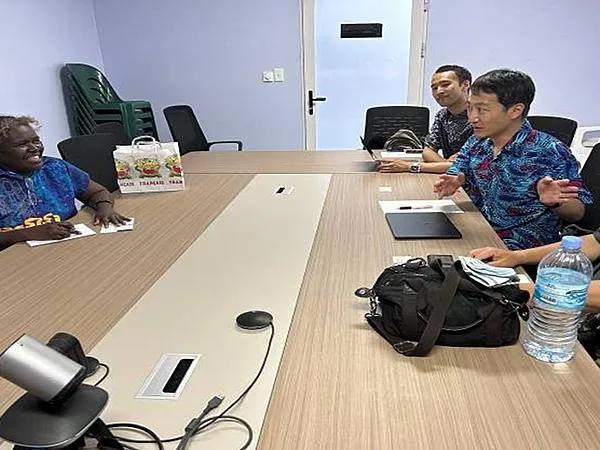
The Ministry of Agriculture and Livestock Development, or MALD, last week welcomed Japanese researchers and partner institutions to Honiara to commence activities under the SATREPS project titled “Implementation of a Comprehensive Sweet Potato Seedling Management System for National Food Security.”
The initiative forms part of the Science and Technology Research Partnership for Sustainable Development, or SATREPS, program, a Japanese government-supported framework promoting international joint research to address global challenges.
The project is funded through the Japan International Cooperation Agency, or JICA, and the SATREPS program, with implementation scheduled from April 2025 to March 2030.
MALD officials met representatives from Japanese research institutions including the University of Tokyo, Tokai University and the National Agriculture and Food Research Organization to finalize implementation arrangements and discuss collaborative research activities.
The project will be jointly implemented by MALD and Solomon Islands National University alongside the Japanese partner institutions.
A Collaborative Research Agreement between MALD and the University of Tokyo was signed in Honiara on March 2, 2026, formalizing research cooperation arrangements between the institutions.
Project implementation officially commenced on May 17 following the arrival of Japanese researchers in Honiara.
MALD officials said the partnership would support the government’s efforts to strengthen food security and improve agricultural productivity across the Solomon Islands.
Sweet potato remains one of the country’s key staple crops, particularly among rural communities, making the project strategically important for national food supply and rural livelihoods.
Researchers involved in the project will focus on improving seedling management systems, pest control measures, cultivation practices, genetic resource research and the development of certified virus-free seedlings.
The visiting Japanese delegation also toured several agricultural research and production facilities including the Tenaru Field Experiment Station, MAL Henderson Crop Health Research laboratories, KG Farm and Kastom Garden.
Discussions during the visits focused on field research activities and future collaboration opportunities under the program.
MALD said a project coordinator and an in-country researcher are expected to arrive in June or July to support ongoing implementation and coordination activities in Honiara.
Procurement activities under the project are also set to begin, including the acquisition of tractors, tillage equipment and related farm machinery.
The project will also support establishment of a tissue culture laboratory and associated facilities, as well as the construction of net houses for planting materials research and production.
As part of the partnership, four MALD research staff members will travel to Japan from July 8 to 15 for technical training linked to project outputs.
Additional training and capacity-building activities are expected to take place in both Japan and the Solomon Islands throughout the duration of the project.
MALD said the initiative is expected to strengthen national food security, enhance agricultural research capacity and support long-term agricultural development in the Solomon Islands.
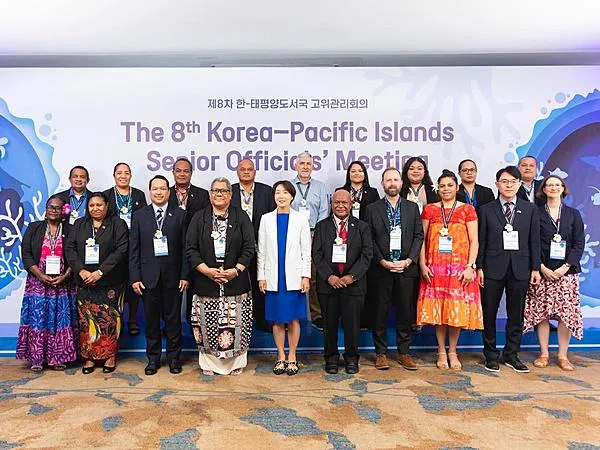
NADI, Fiji — Senior officials from the Republic of Korea and Pacific Islands Forum members reinforced commitments to deepen regional cooperation on climate action, maritime affairs, fisheries and economic resilience during the 8th Korea–Pacific Islands Senior Officials’ Meeting held in Nadi on May 21.
The meeting brought together representatives from the Republic of Korea and Pacific Islands Forum member countries as part of ongoing efforts to advance the ROK–Pacific Partnership and align cooperation with the 2050 Strategy for the Blue Pacific Continent.
The meeting was co-chaired by Republic of Korea Deputy Minister for Political Affairs Ms. Eui-hae Chung and Solomon Islands High Commissioner to Fiji His Excellency Joseph Ma’ahanua, representing the Pacific Islands Forum chair.
In opening remarks, Ma’ahanua said the meeting was timely as the region prepares for the 2027 Korea–Pacific Islands Foreign Ministers’ Meeting, while building on momentum from the 2023 Leaders’ Summit and the 2025 Foreign Ministers’ Meeting discussions.
“It is essential that our cooperation remains aligned with Pacific priorities, including those articulated in the 2050 Strategy for the Blue Pacific Continent,” Ma’ahanua said.
“Equally important is ensuring Pacific ownership and visibility; our region is not only a Leader in shaping and implementing initiatives that affect our future.”
Chung said the Republic of Korea would continue supporting sustainable development priorities identified by Pacific Island countries under the regional strategy framework.
“As a globally responsible country, the Republic of Korea will continue to support the sustainable development of the Pacific Island countries in accordance with the priorities set out in the 2050 Strategy for the Blue Pacific Continent,” Chung said.
She also highlighted opportunities for future cooperation in energy-related sectors amid evolving global energy challenges, expressing hope that cooperation between Korea and Pacific Island countries would continue in a mutually beneficial and sustainable manner.
Officials also acknowledged Korea’s continued support through the ROK–PIF Cooperation Fund and reaffirmed collaboration on projects aligned with priorities endorsed by Pacific Islands Forum leaders.
Senior officials received briefings from agencies under the Council of Regional Organisations in the Pacific as well as Korean agencies on implementation of the 2025 ROK–Pacific Islands Forum Cooperation Fund.
The meeting also featured presentations on emerging business and investment opportunities in the Pacific, including contributions from Nabou Green Energy and the Korea Overseas Fisheries Association.
Presenters highlighted the growing importance of sustainable investment and private sector participation in supporting regional development priorities across the Pacific.
Outcomes from the discussions are expected to help shape the agenda for the next Korea–Pacific Islands Foreign Ministers’ Meeting scheduled for 2027.
The Republic of Korea has been a Dialogue Partner of the Pacific Islands Forum since 1995.
The Pacific Tourism Organisation has selected Fiji as the host of the South Pacific Tourism Exchange, or SPTE, in 2027 following a vote by the organisation’s Board of Directors during a meeting in Nadi last week.
The decision came after the board considered expressions of interest from Fiji and Tahiti Tourisme to host the Pacific region’s flagship tourism trade event.
According to the SPTO, the board approved in principle Fiji as the venue for SPTE 2027 and directed the organisation’s secretariat to continue engagement with Fiji on final arrangements.
The outcome reinforces Fiji’s standing as a regional tourism hub and reflects industry confidence in the country’s ability to stage one of the Pacific’s largest tourism business events.
SPTE is regarded as the Pacific’s leading tourism marketplace, bringing together international buyers, tourism operators and national tourism offices from across the region. The annual event is aimed at strengthening partnerships, expanding visitor demand and generating business opportunities for Pacific tourism stakeholders.
SPTO Chief Executive Officer Christopher Cocker said the board’s decision highlighted Fiji’s continued leadership in regional tourism development.
“SPTE is one of the Pacific’s most important tourism platforms, and Fiji has consistently demonstrated its capability to host high-quality regional events that deliver real value to the tourism industry,” Cocker said.
“The Board recognised Fiji’s strong commitment to the current SPTE structure and its ongoing support for regional tourism collaboration. Hosting SPTE 2027 will provide another important opportunity to showcase not only Fiji, but the wider Pacific tourism product to international markets,” he added.
The board also acknowledged Fiji’s support for the current arrangement of holding the Fiji Tourism Exchange, or FTE, alongside SPTE, noting the operational and commercial benefits the format provides to tourism operators and international buyers.
During discussions, Fiji also proposed that if SPTE is hosted elsewhere in future years, the event should subsequently return to Fiji for the following two consecutive years, reflecting the country’s long-term commitment to regional tourism growth.
The announcement comes as Pacific tourism operators continue efforts to strengthen post-pandemic recovery, improve market visibility and deepen regional cooperation.
Further details on SPTE 2027, including dates and programme arrangements, are expected to be confirmed following consultations between SPTO and Tourism Fiji.
The Government of Fiji is advancing a strategic economic reform partnership with the United States through the Millennium Challenge Corporation compact development process, with planned reforms targeting ports infrastructure and the business regulatory environment.
Prime Minister Sitiveni Rabuka told Parliament that the recently signed agreement between Fiji and the US government was a Compact Development Funding Agreement rather than the final Millennium Challenge Corporation compact agreement.
Rabuka was responding to a question from Opposition leader Inia Seruiratu on the status of the Millennium Challenge Corporation, or MCC, engagement between Fiji and the United States.
“The Millennium Challenge Corporation is an independent agency of the United States Government that partners with countries demonstrating commitment to good governance, economic freedom, institutional accountability and investment in their people,” Rabuka said.
He said the engagement aligns with the coalition government’s development priorities, including strengthening economic resilience, improving infrastructure, promoting private sector-led growth, creating jobs, enhancing trade competitiveness and improving the ease of doing business.
The agreement establishes the framework for detailed analysis, stakeholder consultations and programme design for a potential future MCC compact programme in Fiji.
Cabinet endorsed the Compact Development Funding Agreement in February 2026. The agreement was signed on Feb. 28, 2026, between the Fijian government, through the Ministry of Finance, and the MCC, represented by US Deputy Secretary of State Christopher Landau.
Under the arrangement, Fiji will receive as much as $12 million in grant funding to support technical studies, feasibility assessments, stakeholder consultations and the establishment of a dedicated Compact Development Team.
Rabuka said the funding would not add to Fiji’s debt burden because it is structured as a grant rather than a loan facility.
“This is grant funding and not a loan facility. It supports Fiji’s efforts to identify and address structural constraints affecting economic growth and national productivity,” he said.
Following initial consultations and scoping work, the government identified ports and the business regulatory environment as the next focus areas in the compact development process.
Rabuka said both sectors are central to Fiji’s broader economic transformation agenda and align with the National Development Plan and the government’s long-term reform priorities.
The government will continue consultations with the MCC, development partners, private sector stakeholders and civil society organisations throughout the process to ensure the programme remains nationally driven and aligned with Fiji’s long-term economic objectives, he said.
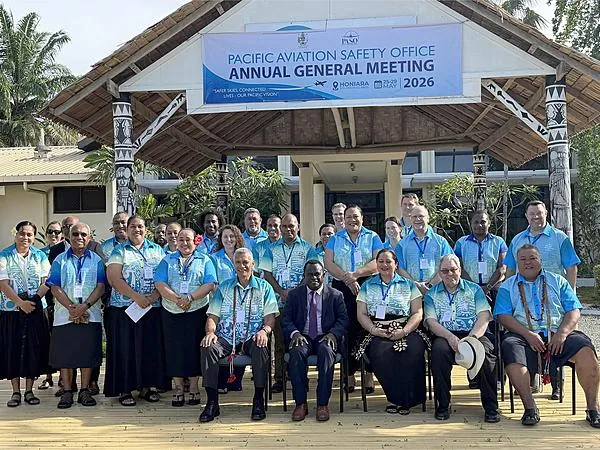
The Solomon Islands government has called for stronger regional cooperation to improve aviation safety and security across the Pacific during the opening of the 22nd Pacific Aviation Safety Office, or PASO, Council Meeting and Annual General Meeting in Honiara.
Speaking at the opening ceremony, Solomon Islands Minister for Communication and Aviation Frederick Kologeto said Pacific countries must work collectively to maintain safe and reliable air connectivity amid rising global and regional challenges.
The meeting, hosted in Honiara this week, brought together PASO council members, regional delegates and international aviation representatives under the theme “Safer skies, connected lives – Our Pacific Vision.”
Kologeto thanked PASO founding members for establishing the regional aviation safety framework and acknowledged the organisation’s council members, management and logistics teams for hosting the annual gathering in Solomon Islands.
He also recognised the Tandai House of Chiefs during a traditional welcome ceremony for visiting delegates.
Kologeto said aviation remains critical for Pacific economies and communities, linking remote island nations to trade, tourism and international markets.
“Aviation connects our people, supports our economies and enables participation in the global community,” he said.
The minister outlined several aviation projects currently being pursued by the Solomon Islands government, including the development of a 10-year aviation master plan focused on growth, resilience and sustainability.
He said the government is also upgrading and sealing provincial runways to support Dash 8 aircraft operations and improve domestic connectivity between Honiara and outer provinces.
Other initiatives include the construction of new air traffic control towers at Honiara International Airport and Munda Airport, as well as reviews of aviation legislation aimed at strengthening the country’s regulatory framework.
Kologeto said Pacific aviation faces increasing pressure from global instability, including volatility in fuel prices linked to ongoing conflict in the Middle East.
He said Pacific island countries are particularly vulnerable because of geographic isolation, long air routes and limited economies of scale.
“These pressures affect connectivity, affordability and the ability to sustain compliance with international safety and security standards,” he said.
Kologeto said aviation safety and security must remain closely aligned as Pacific states respond to emerging operational and regulatory risks.
He acknowledged PASO’s role in helping member states implement International Civil Aviation Organization, or ICAO, standards and recommended practices, but said additional progress was required across the region.
The minister endorsed the Comprehensive Oversight Implementation Framework, or COIF, and urged PASO to accelerate implementation to ensure all member countries receive support equitably.
“Solomon Islands, like many of our member states, is still awaiting its full turn under this initiative. No country should be left behind,” he said.
Kologeto also welcomed ICAO’s participation in the meeting, including workshops focused on aviation regulatory arrangements and institutional strengthening.
He said the ICAO Implementation Support Roadmap aligns with priorities identified during a recent regional ministers meeting aimed at strengthening PASO and accelerating aviation reforms across member states.
On discussions surrounding the Review of Regional Architecture, Kologeto said PASO should remain an independent regional aviation regulatory body.
“Any reforms must strengthen PASO, enhance its capability, and reinforce its mandate — not absorb or dilute it,” he said.
The minister called on regional leaders to strengthen PASO, fully implement COIF and reinforce aviation safety and security standards across the Pacific.
The 22nd PASO Council Meeting and Annual General Meeting concludes on Thursday in Honiara.
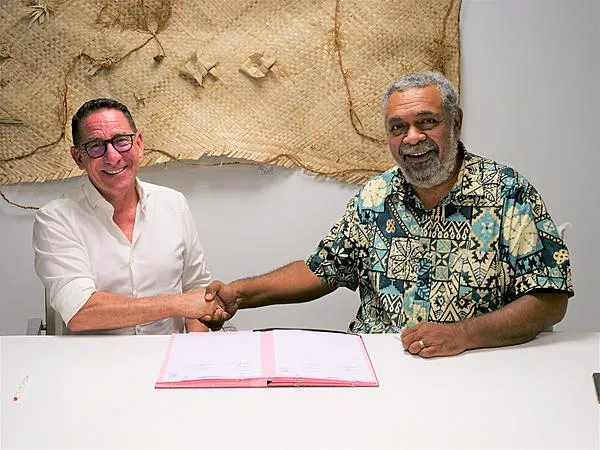
The Autonomous Bougainville Government (ABG) and Steamships Trading Company (Steamships) are pleased to announce the signing of a Memorandum of Understanding (MOU) establishing a framework for collaboration between ABG institutions, traditional land custodians and Steamships.
The MOU follows a longstanding series of consultative engagements between traditional land custodians, key ABG departments and Steamships aimed at strengthening alignment on the land engagement process in Bougainville.
These engagements brought together the Office of the Chief Secretary; the Department of Lands, Physical Planning, Environment, Conservation and Climate Change; the Department of Community Government and District Affairs; the Department of Commerce, Trade, Industry and Economic Development; and the Department of Justice and Legal Services, providing a platform to work together to address key land management matters.
This collaborative process will assist the ABG in sustainably developing land with titleholders and future developers, allowing the government to realise its full economic potential for the benefit of the people of Bougainville.
Steamships holds title to properties in Central Bougainville acquired prior to the Bougainville Crisis. Noting that this process commenced in 2021, the company reaffirmed its steadfast commitment to working through a structured and considered consultative process in partnership with traditional land custodians and the government to address the various complexities associated with undertaking such critical foundational work.
This collaborative process is guided by a focus on responsible investment, stakeholder engagement and alignment with Bougainville’s broader economic priorities. As a responsible developer, Steamships emphasised that its future decisions will consider opportunities to support local economic participation, employment and sustainable development outcomes.
Representatives from the ABG and traditional land custodian groups welcomed the consultative and collaborative approach.
The formalisation of this framework marks a significant step in strengthening cooperation between government, traditional land custodians, the private sector and foreign investors as Bougainville continues its recovery and development journey toward independence.
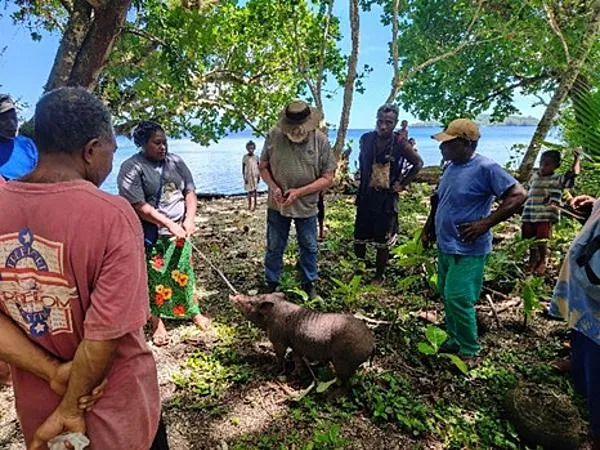
A livestock outreach programme conducted by the Solomon Islands Agriculture and Rural Transformation, or SIART, initiative is helping strengthen food security and improve farming practices in rural communities across Makira Province.
Through activities including livestock outreach, agribusiness support and extension services, the programme aims to build the capacity of rural farmers and improve long-term livelihoods.
Led by senior officers from the Livestock and Extension departments, the outreach covered the communities of Su’Ena, Hakanipua, Makia, Mwanipua, Tawarodo and Sungesau.
The programme combined classroom-style awareness sessions with practical demonstrations focusing on livestock disease prevention, animal nutrition, husbandry practices and biosecurity measures.
Farmers also received hands-on training in basic procedures such as pig castration and proper animal handling techniques.
A community representative from Makia welcomed the initiative, saying the programme had provided practical knowledge that would directly benefit local households.
“This programme has helped us better understand how to care for our animals,” the representative said.
“We have learned practical skills that will improve the health of our livestock and support our families’ livelihoods.”
Veterinary services formed a key component of the outreach, with livestock treated for common conditions including parasitic infections such as mange and worm infestations.
Programme officers said many of the conditions identified were preventable through improved hygiene and feeding practices.
A livestock officer from the Ministry of Agriculture and Livestock Development, or MALD, said the initiative aimed to strengthen rural livelihoods through practical training and improved animal health management.
“Our goal is to empower farmers with the knowledge and skills needed to prevent disease and improve productivity,” the officer said.
“Programmes like this are essential in strengthening rural livelihoods and ensuring sustainable livestock development.”
The touring team said limited knowledge of animal husbandry remained a major challenge in many rural communities, but outreach initiatives such as the SIART programme played an important role in bridging knowledge gaps and supporting long-term capacity building.
Despite logistical challenges, including transport and equipment constraints, the programme successfully delivered training, treatment and advisory services to participating communities.
Officials said the initiative was expected to contribute to improved livestock productivity, stronger food security and more sustainable rural livelihoods across Makira Province.
The Union of Hotels of New Caledonia has signed a statement of intent with the New Caledonian government to support preparations for the 14th Festival of Pacific Arts and Culture, or FESTPAC, scheduled to be held in the French Pacific territory in 2028.
The agreement was signed on May 21 by Mickaël Forrest and Philippe Etwiller as part of broader efforts to strengthen accommodation capacity and tourism readiness ahead of the regional cultural event.
According to the parties, the agreement aims to improve coordination between the government and the hotel sector to ensure delegations from Pacific countries and territories are accommodated under optimal conditions during FESTPAC 2028.
The partnership will focus on increasing the territory’s accommodation capacity, promoting Oceanian culture within tourist establishments, strengthening communications around the festival, improving the experience for delegates and visitors, and supporting the economic recovery of the hotel industry.
The government said FESTPAC represented a major opportunity to showcase New Caledonia’s cultural identity and tourism sector across the Pacific region and internationally.
Under the proposed cooperation framework, both parties will explore initiatives including the promotion of hotels and accommodation venues as spaces for cultural experiences, the development of dedicated FESTPAC travel packages, and the creation of a “FESTPAC 14 Partner Hotel” label offering tariff advantages for participating establishments.
The partnership will also seek to align the values of FESTPAC with sustainability goals and the promotion of local identity across participating hotel operators.
FESTPAC is one of the Pacific region’s largest cultural gatherings, bringing together artists, performers and cultural representatives from across Oceania to celebrate and preserve Indigenous and Pacific cultural heritage. The 14th edition will be hosted by New Caledonia in 2028.
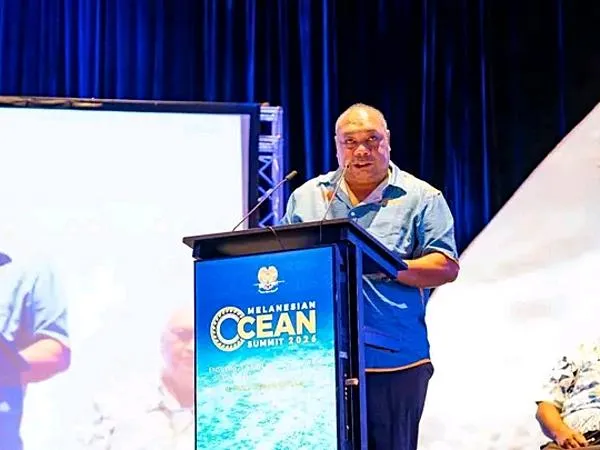
Papua New Guinea has strengthened its push to become a regional leader in sustainable ocean industries following the successful hosting of the inaugural 2026 Melanesian Ocean Summit at APEC Haus in Port Moresby from May 11–14.
Held under the theme “Ensuring Ocean Protection with Sustainable Ocean Economies,” the four-day summit brought together Pacific leaders, government representatives, researchers, development partners, and fisheries stakeholders to advance a regional strategy focused on marine conservation, fisheries development, climate resilience, and blue economy investment.
Closing the summit on May 14, the Minister for Fisheries and Marine Resources said the gathering had “transformed ambition into action, and solidarity into a shared Melanesian pathway for our ocean.”
The Minister said the summit demonstrated that Melanesian nations are increasingly viewing ocean protection and economic growth as interconnected priorities.
“Our ocean is not a frontier to be exploited, but a legacy to be stewarded,” the Minister said.
A major outcome of the summit was renewed commitment to the Melanesian Ocean Corridor of Reserves (MOCOR), a regional framework designed to protect marine ecosystems while supporting economic growth, coastal livelihoods, and food security.
Leaders reaffirmed support for the global “30 by 30” conservation target, which aims to protect 30 percent of the world’s oceans by 2030, while emphasizing that conservation initiatives must also deliver direct economic benefits to Pacific communities.
The Minister said discussions throughout the summit reinforced the importance of building “resilient blue economies” supported by sustainable financing, stronger fisheries management, renewable energy investment, and regional cooperation.
Business and investment opportunities linked to the blue economy emerged as a major focus throughout the summit.
Delegates discussed expanding sustainable fisheries industries, strengthening tuna value chains, developing blue carbon markets, improving marine tourism opportunities, and increasing climate-resilient coastal enterprises across Melanesia.
One of the major economic initiatives highlighted was the East New Britain Initiative for tuna value capture, aimed at increasing downstream processing and boosting returns from PNG’s fisheries sector.
“The takeaway is clear: the blue economy must be people-centred, climate-resilient, and anchored in sustainable fisheries,” the Minister said.
PNG also announced that it will host the Pacific-Led Innovation Tuna Forum later in 2026 in Port Moresby, positioning the country as a regional hub for fisheries innovation and sustainable tuna industry development.
The summit emphasized that marine protected areas should not only serve conservation purposes but also function as economic assets supporting fisheries productivity, food security, tourism growth, and climate adaptation.
“MPAs are not just conservation tools — they are food security, climate resilience, and economic engines,” the Minister stated.
Pacific nations including PNG, Fiji, Vanuatu, and Palau shared experiences on locally managed marine areas and traditional conservation systems that have delivered positive environmental and economic outcomes for coastal communities.
Ocean finance discussions also featured prominently during the summit, with leaders acknowledging that long-term marine protection will require stronger governance systems, improved institutional capacity, and diversified financing mechanisms.
Delegates reviewed existing Pacific financing models, including the Micronesia Conservation Trust, the Coral Triangle Initiative Fund, and Niue’s ocean conservation credits system, as examples of innovative funding approaches for sustainable marine management.
The Minister said the challenge facing the region was “not only mobilising money, but building the systems to manage it.”
Leaders agreed that future financing for MOCOR would require stronger governance structures and Pacific-led investment mechanisms capable of supporting enforcement, scientific research, and community resilience programmes.
The summit further highlighted the growing economic importance of blue carbon ecosystems such as mangroves and seagrass habitats, which contribute to climate adaptation, coastal protection, and national emissions reduction goals.
In the high-value fisheries sector, Melanesian countries agreed to strengthen cooperation on bêche-de-mer management through coordinated licensing systems, stronger traceability measures, and regional branding standards aimed at increasing export value for sustainably sourced marine products.
The proposed Melanesian Bêche-de-mer Ocean Alliance will work through the MSG Fisheries Technical Advisory Committee to improve standards across the supply chain while maintaining national control over fishing quotas.
According to the Minister, “a traceability and branding regime will capture the premium for verified Melanesian provenance — turning sustainability into direct economic return for our fishers.”
The summit also addressed the growing economic risks associated with climate change, with scientists warning that warming oceans are already affecting tuna migration patterns and coastal fish stocks across the Pacific.
To strengthen regional scientific capability, delegates committed to establishing a Melanesian Ocean Research Hub linking universities and research institutions across the region.
Maritime security and fisheries enforcement were also identified as critical economic priorities.
PNG announced plans to establish a national Fusion Centre to improve monitoring, surveillance, and compliance operations targeting illegal, unreported, and unregulated fishing activities, marine pollution, and transboundary maritime threats.
“Without enforcement, paper parks fail,” the Minister said, while reaffirming regional cooperation against illegal fishing activities.
The summit additionally highlighted the role of Indigenous knowledge systems in sustainable resource management and economic resilience.
PNG committed K1 million towards establishing a National Cultural Research Fund and announced plans for an Institute of PNG Studies dedicated to cultural and traditional knowledge research.
Leaders concluded the summit by declaring that the Melanesian Ocean Corridor of Reserves had moved beyond the concept stage into a functioning regional framework capable of attracting investment, strengthening marine governance, and supporting sustainable economic development across the Pacific.
“The Melanesian Ocean Corridor of Reserves is not an aspiration — it is now a working framework, owned by us, designed by us, and ready to be financed and enforced by us,” the Minister said.
Vanuatu was confirmed as the host of the next Melanesian Ocean Summit in 2028.
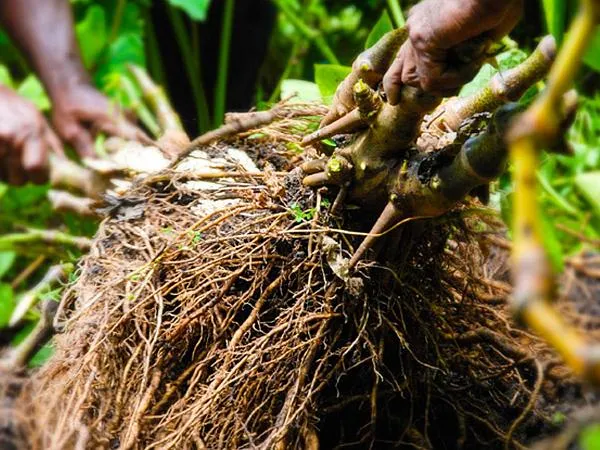
Australia’s imports of Pacific kava remained elevated in the first quarter of 2026 despite a decline from late-2025 levels, as exporters continued to benefit from expanded market access under Australia’s Kava Pilot Program.
According to a quarterly update released by Pacific Trade Invest Australia, Australia imported 42,906 kilograms of kava during the January-to-March quarter, down 14.5 percent from 50,161 kilograms in the previous quarter.
However, import volumes were still 24 percent higher than the 34,548 kilograms recorded in the first quarter of 2025, indicating continued year-on-year growth in demand for Pacific kava products.
Fiji remained the largest supplier to the Australian market, exporting 22,577 kilograms during the quarter through 217 registered businesses. Vanuatu recorded the strongest quarterly growth performance, shipping 15,921 kilograms, up 19.5 percent from the previous quarter and marking the country’s highest quarterly export volume to date.
The report noted that Vanuatu’s exports had increased consistently quarter-on-quarter throughout 2025 and into 2026, except for a slight dip in the fourth quarter of 2025, reinforcing its position as Australia’s second-largest Pacific kava supplier by volume.
Tonga exported 3,388 kilograms during the quarter, while Papua New Guinea shipped 1,020 kilograms. Smaller cumulative volumes were also recorded from Samoa and Solomon Islands.
Australia’s Kava Pilot Program was launched in 2019 and gradually expanded to allow commercial imports from Dec. 1, 2021. The initiative was designed to improve market access for Pacific exporters while maintaining import controls and food safety standards.
Under the current arrangements, exporters must comply with Australian food safety, packaging and labelling requirements, while importers may also require permits from Australia’s Office of Drug Control depending on shipment volumes and intended use.
The report said evolving consumer preferences were increasingly shaping the market, particularly demand for high-quality and consistently processed kava products linked to the wellness and functional beverage sectors.
Sergine Morin Tahun, owner and director of Tahun Kava Export, said consumers were becoming more informed about kava quality and sourcing standards.
“The biggest opportunities right now include the growing demand for high-quality, clean, and consistent kava products in markets like Australia,” Tahun said.
She added that exporters continued to face challenges related to freight costs, compliance procedures and maintaining reliable supply chains from Pacific island producers.
Pacific Trade Invest Australia said the market was becoming increasingly sophisticated, with compliance, quality assurance and consumer education emerging as critical factors alongside export volumes.
The government of New Caledonia and the French Development Agency have signed an agreement to finance a strategic study aimed at strengthening and structuring the territory’s social and solidarity economy sector following economic disruption linked to the May 2024 unrest.
The initiative was presented by Naïa Wateou alongside representatives of the French Development Agency, commonly known as AFD.
Officials said the study would help establish a clearer framework for the development of the social and solidarity economy, or SSE, which includes organisations such as cooperatives, associations, mutual societies, foundations and socially oriented enterprises prioritising social and environmental outcomes alongside economic activity.
Authorities described the sector as an important tool for improving resilience, strengthening social cohesion and supporting inclusive economic recovery in New Caledonia after the social and economic impacts of the events of May 2024.
The initiative follows the adoption of country law No. 2025-13 on August 18, 2025, which formally established a regulatory framework for the social and solidarity economy in the territory.
The legislation defines the sector around principles including social utility, democratic governance and regulated profit management.
Wateou said the new study would provide government with the operational tools and updated data needed to better identify and support SSE actors across the territory.
“Without a regulatory framework, we have no way of recognising the actors in the social and solidarity economy,” Wateou said.
The study mission, financed by AFD for nearly 7.5 million CFP francs, will include mapping and inventory work on the SSE sector, assessment of funding access conditions and analysis of sector support needs, including governance, project engineering and economic model sustainability.
The project will also examine opportunities for accessing public, national and international financing and develop recommendations for a long-term territorial strategy for the sector’s development.
Julie Doiteau said the agency considered it important to support local authorities in strengthening the sector.
“For the AFD, it was natural to support the government and its partners in carrying out this study,” Doiteau said, describing the initiative as a step toward addressing challenges faced by SSE organisations in the territory.
Officials said the agreement would help lay the foundation for a more structured and sustainable development pathway for social and solidarity economy activities in New Caledonia.
French Tech New Caledonia has secured French Tech Capital status for 2026–2028, becoming only the second French overseas territory to receive the designation as the Pacific territory accelerates efforts to position itself as a regional technology and innovation hub.
The announcement was formally made on May 12 at Station N in Noumea during a joint press conference involving Christopher Gygès, High Commissioner Jacques Billant, Southern Province Assembly President Sonia Backès and French Tech New Caledonia president Hatem Bellagi.
Officials described the recognition as a major institutional milestone that strengthens New Caledonia’s standing within France’s national innovation ecosystem and enhances its international credibility among investors, entrepreneurs and strategic partners.
“This is a real recognition for New Caledonia, and this status brings greater visibility at the national and international levels,” Gygès said, noting that the local tech sector only began emerging in 2019.
Authorities said the new designation would provide greater institutional legitimacy and increased access to national programmes, funding opportunities and policy discussions alongside other French Tech capitals.
The achievement follows six years of coordinated ecosystem-building since New Caledonia obtained the French Tech Community label in 2020. The initiative has been driven through partnerships involving the government of New Caledonia, OPT-NC, the Chamber of Commerce and Industry of New Caledonia, the Technopole and local startup companies.
Since then, authorities have launched several initiatives aimed at supporting digital entrepreneurship and economic diversification, including the Tech for Good programme focusing on GreenTech, BlueTech, SocialTech and DeepTech sectors.
New Caledonia has also increased participation in international technology events, including VivaTech, French Tech Days Overseas and regional innovation forums in the Pacific and New Zealand.
In October 2024, New Caledonia hosted the second edition of the Overseas French Tech Days under the theme “So Tech, So Good,” bringing together about 400 participants, 40 experts and representatives from six French Tech communities across overseas territories and the Pacific region. The closing ceremony was attended by French Minister for Overseas Territories François-Noël Buffet.
Regional expansion is also being driven through plans for the Pacific Tech Hub project, which aims to connect South Pacific technology ecosystems, strengthen regional collaboration and establish Noumea as a strategic Indo-Pacific digital hub.
The territory has additionally introduced regulatory and financing tools to support startup development, including Young Innovative Company status adopted in 2020 and crowdfunding initiatives such as Invest In Pacific.
Officials said New Caledonia’s presence at the 2025 VivaTech conference generated more than 1,700 visitors, nearly 1,000 business leads and over 80 million CFP francs in economic benefits. Local startups also secured international recognition, including the “HR Innovation Award” for Optimal RH in 2024 and the “Tech for Change Award” for FireTracking in 2025.
For the 2026 VivaTech event, New Caledonia plans to expand its footprint with a 70-square metre pavilion featuring eight startups and 16 partners, including a dedicated investment promotion area showcasing the territory’s business environment and innovation ecosystem.
French Tech New Caledonia said the next phase of development would focus on scaling national programmes, deepening regional integration and supporting long-term economic diversification through technology, digital transformation and innovation.
Follow on LinkedIn:
Pacific Business Review
Be the "First" to get our exclusive Digital Magazine & Weekly Newsletter.